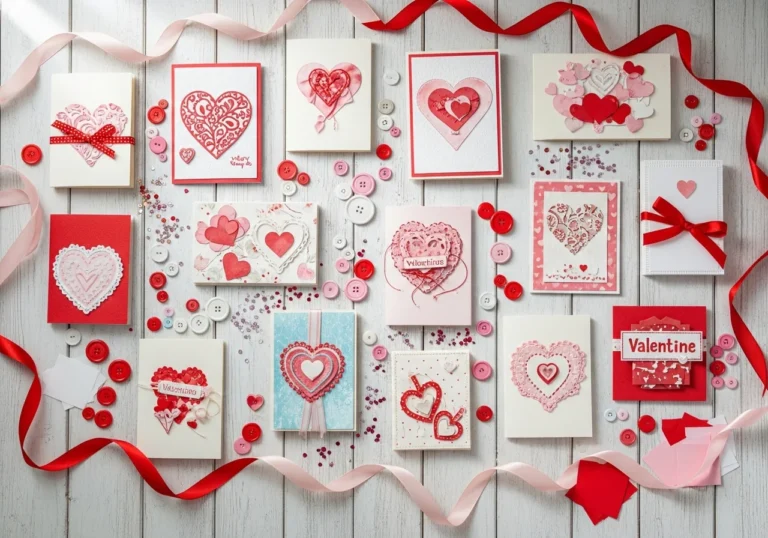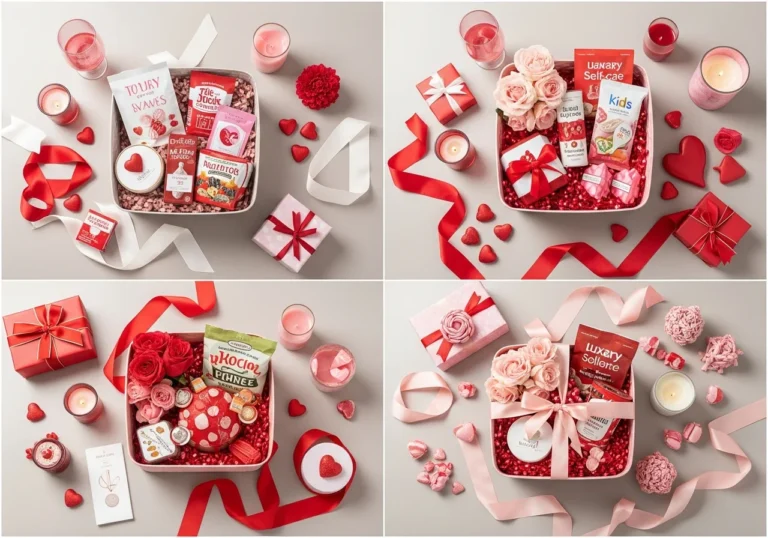
14 Easy Valentines Day Tables To Style An Unforgettable Romantic Setting
Creating a beautifully styled Valentine’s Day table transforms an ordinary dinner into a memorable romantic experience that celebrates your relationship. The right table setting communicates thoughtfulness and effort while establishing an atmosphere that encourages connection and conversation. Whether you’re planning an intimate dinner for two or hosting a small gathering, a well-designed tablescape serves as the foundation for an unforgettable evening.
Many people feel intimidated by table styling, assuming it requires professional design skills or expensive materials. The reality is that stunning Valentine’s Day tables can be created with accessible elements, strategic planning, and attention to detail. The most effective tablescapes balance visual appeal with functionality, ensuring your table looks beautiful while remaining comfortable and practical for actual dining.
This comprehensive guide presents fourteen distinct approaches to Valentine’s Day table styling, ranging from classic romantic elegance to contemporary minimalist designs. Each style offers unique aesthetic qualities while remaining achievable for home decorators at any skill level. These ideas provide frameworks you can adapt based on your personal taste, available resources, and the specific mood you want to create for your Valentine’s celebration.
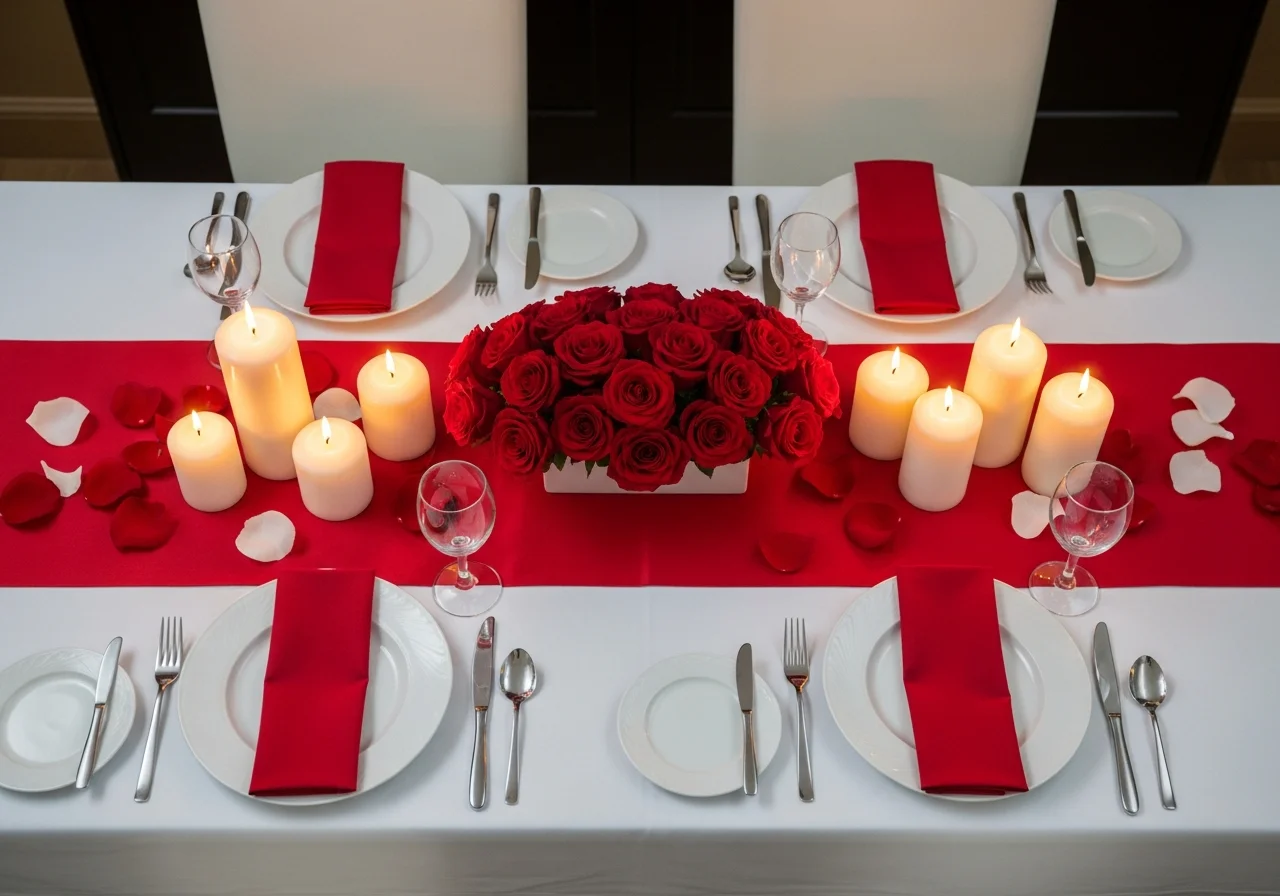
Classic Red and White Elegance
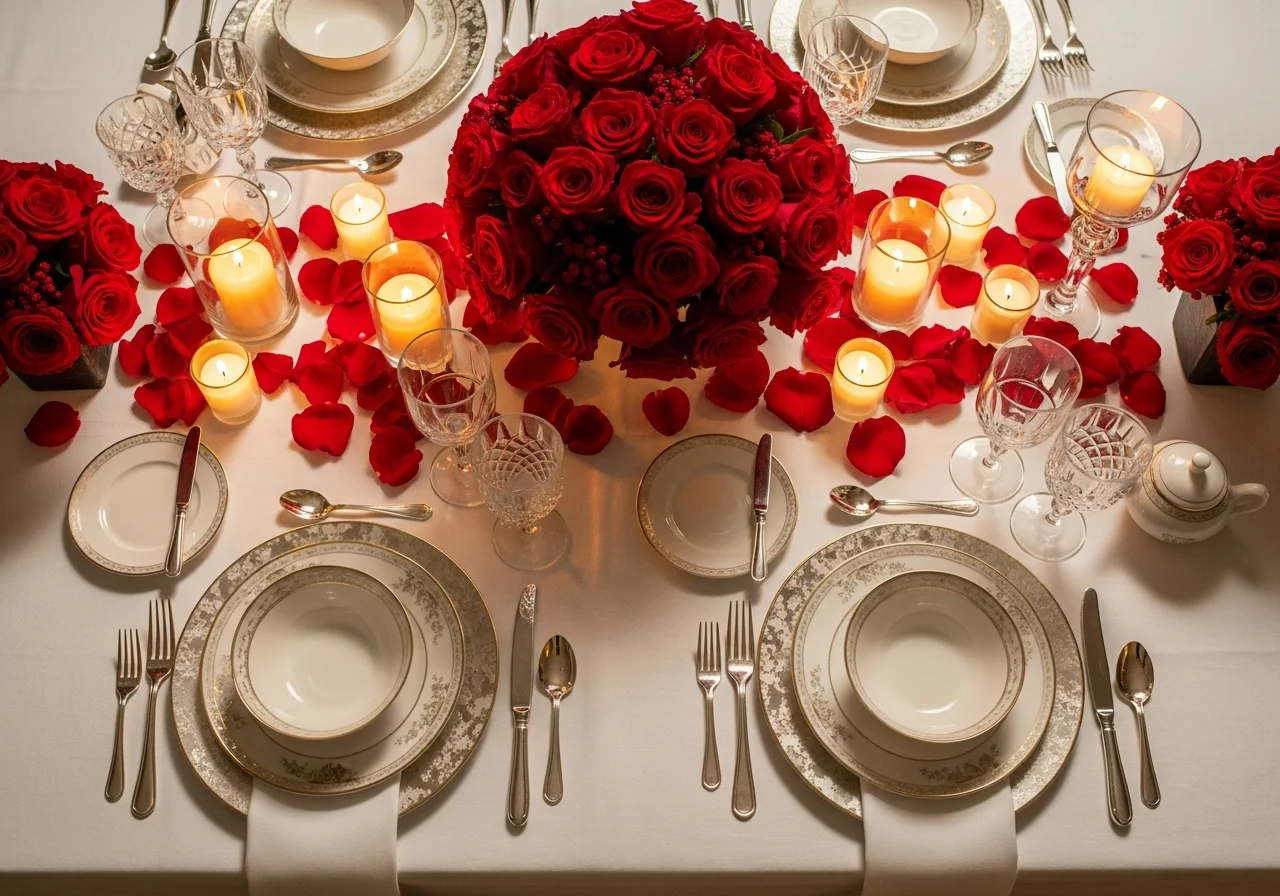
The timeless combination of red and white creates an instantly recognizable Valentine’s aesthetic that never goes out of style. This traditional approach works beautifully for those who appreciate classic romance and want their table to unmistakably celebrate the holiday. The key to executing this style successfully lies in balancing these bold colors to avoid overwhelming the space.
Start with a crisp white tablecloth as your foundation, providing a clean canvas that makes red accents pop dramatically. Layer a red table runner down the center to create visual interest and define the table’s focal point. Choose white dinnerware with simple, elegant lines that won’t compete with your colorful elements. Add red napkins folded into interesting shapes or secured with decorative rings that coordinate with your overall design.
The centerpiece for this classic style should incorporate both colors thoughtfully. Consider a low arrangement of red roses in a white vase, allowing guests to see each other across the table without obstruction. Intersperse white candles of varying heights throughout the arrangement, creating depth and dimension while providing romantic lighting. Scatter rose petals in both colors across the table surface for an extra touch of romance that doesn’t interfere with place settings or serving dishes.
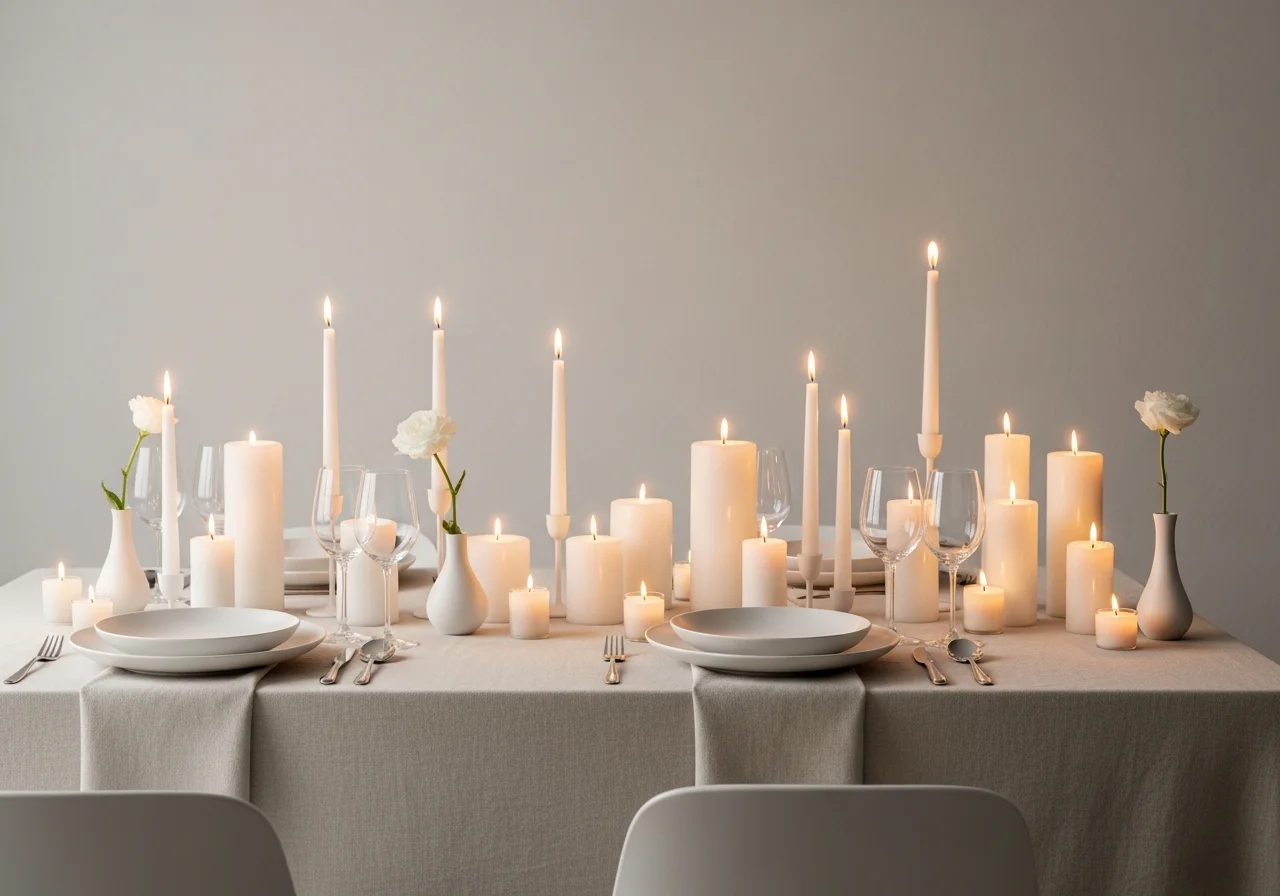
Candlelit Intimate Minimalism
Sometimes the most romantic settings emerge from restraint rather than abundance. A minimalist approach to Valentine’s Day table styling focuses on quality over quantity, allowing each carefully chosen element to shine. This style works particularly well for small spaces or couples who prefer understated elegance to elaborate displays.
Select a neutral tablecloth in cream, soft gray, or natural linen to establish a calm foundation. Choose simple white or neutral-toned dinnerware with clean lines that embody modern sophistication. The real magic in this style comes from lighting, with candles serving as the primary decorative element. Use an assortment of pillar candles, votives, and tealights in varying heights, creating a forest of flickering flames down the table’s center.
Keep floral elements minimal and intentional. A single stem in a bud vase at each place setting or a small cluster of white flowers in a simple vessel provides just enough softness without cluttering the space. The beauty of this approach lies in its emphasis on the dining experience itself, with fewer distractions allowing conversation and connection to take center stage. The abundant candlelight creates natural warmth and intimacy while the uncluttered surface feels both luxurious and calming.
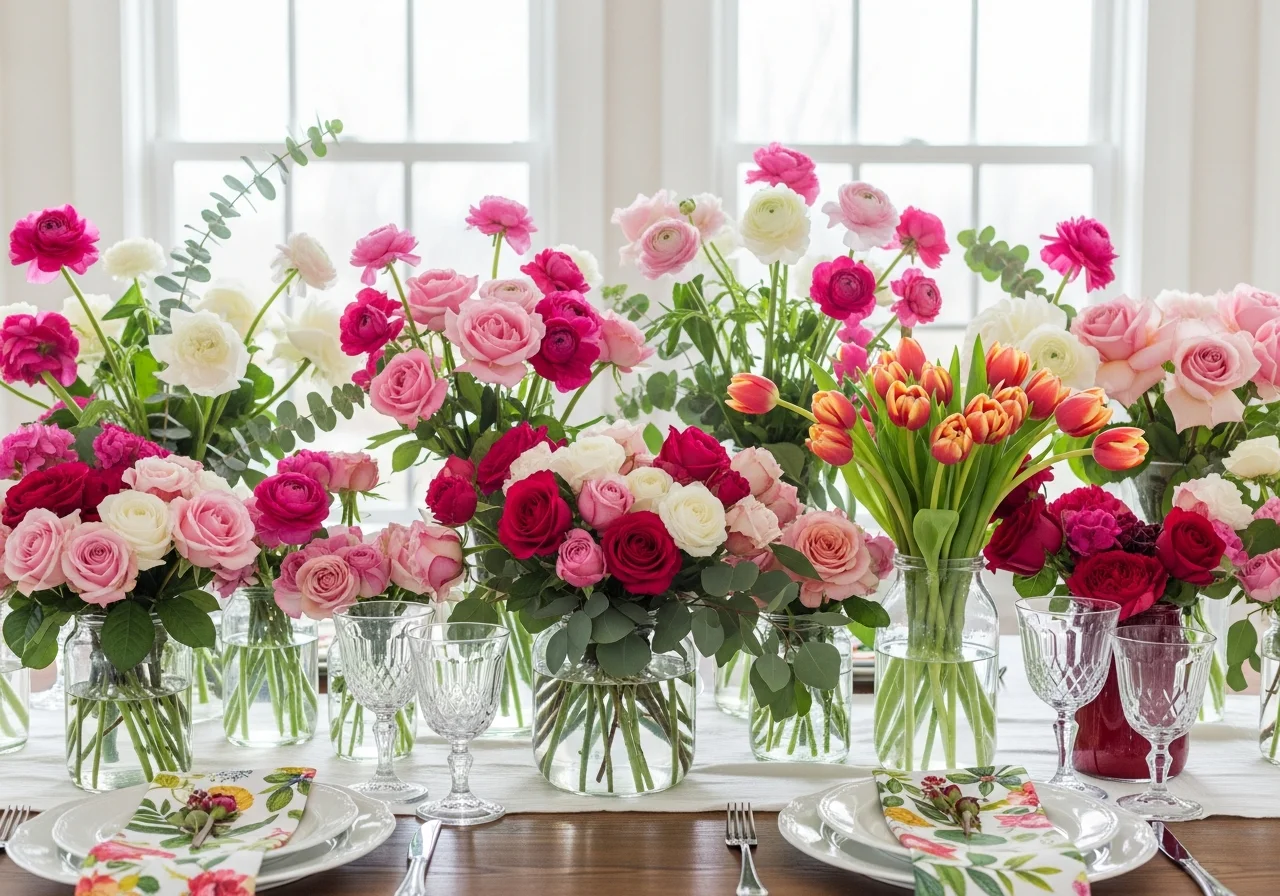
Garden-Inspired Floral Romance
Bringing garden beauty indoors through an abundance of fresh flowers creates a Valentine’s table that feels alive and vibrant. This approach celebrates natural beauty while establishing a romantic atmosphere through color, fragrance, and organic textures. The garden-inspired style works wonderfully for those who love florals and want their table to feel like a romantic outdoor escape.
Choose flowers in shades of pink, red, and white, mixing different varieties to create visual interest and textural variety. Roses serve as the obvious choice, but consider incorporating ranunculus, peonies, tulips, or carnations depending on availability and budget. Create a lush centerpiece by arranging flowers at different heights in vintage containers, mason jars, or simple glass vases clustered together.
Extend the garden theme throughout your table setting with floral-patterned napkins or china if you have them. If your dinnerware is solid-colored, add botanical elements through printed menu cards or place cards featuring pressed flowers or botanical illustrations. Layer greenery like eucalyptus or fern beneath and around your floral arrangements to enhance the garden feeling. Consider using moss, small potted plants, or even vegetable elements like artichokes for unexpected textural interest that reinforces the natural theme.
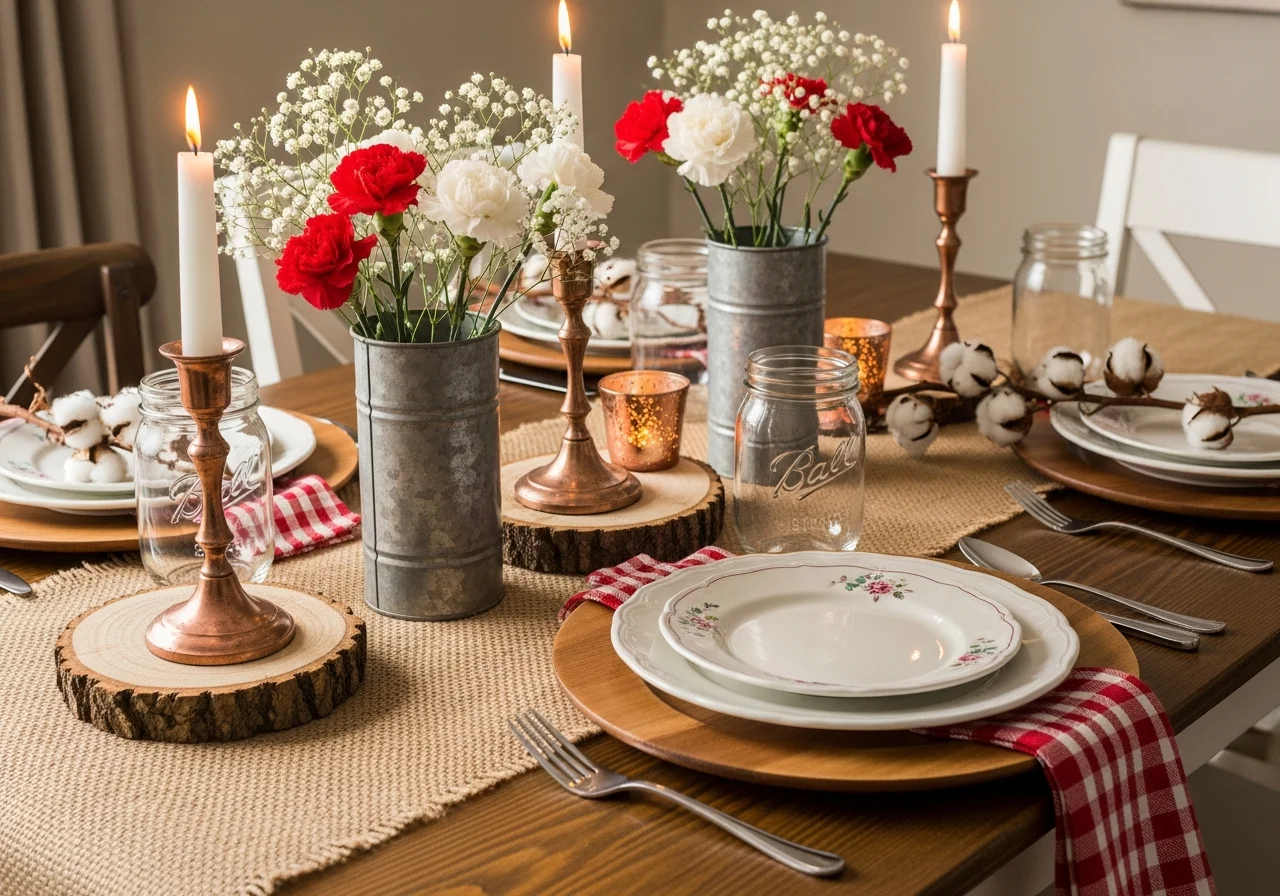
Rustic Farmhouse Charm
The rustic farmhouse aesthetic brings warmth and approachability to Valentine’s Day table styling through natural materials and vintage-inspired elements. This style feels comfortable rather than precious, perfect for couples who want romance without formality. The farmhouse approach celebrates imperfection and handmade quality over polished perfection.
Begin with a table runner made from burlap, natural linen, or even reclaimed wood planks to establish the rustic foundation. Use mismatched vintage plates, mason jar glasses, and silverware with a worn patina to reinforce the collected-over-time aesthetic. Incorporate wood elements through chargers, serving boards, or even tree slice placemats that add natural texture.
Create centerpieces using galvanized metal containers, vintage milk bottles, or wooden crates filled with simple flowers like carnations, baby’s breath, or dried flowers. Add warmth through copper or brass candle holders that develop beautiful patina over time. Include natural elements like pinecones, wheat stalks, or cotton stems for textural variety. The key to successful farmhouse styling is embracing the imperfect and handmade, allowing each element to tell a story while contributing to an overall feeling of comfortable, lived-in romance.
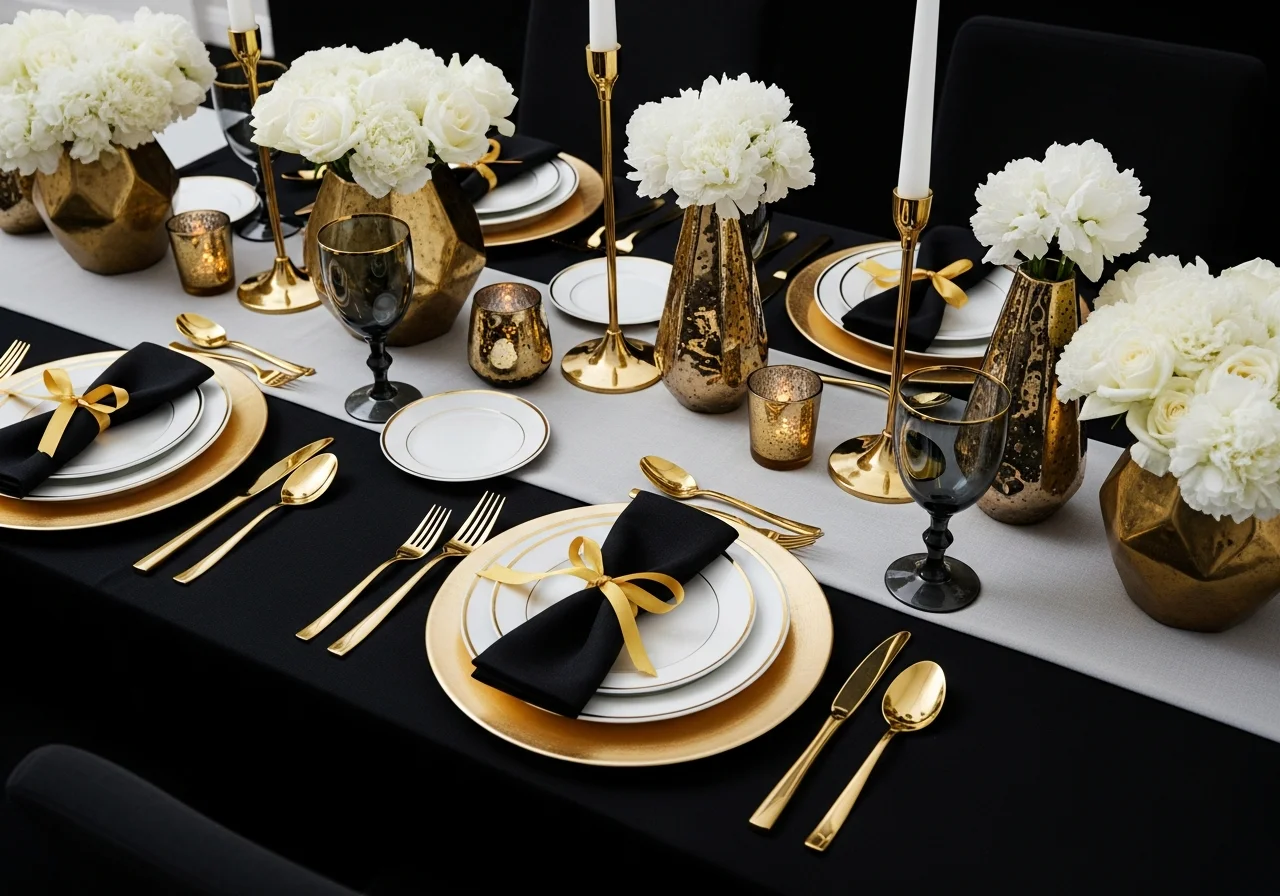
Modern Black and Gold Sophistication
For a contemporary take on Valentine’s Day table styling, the combination of black and gold creates dramatic sophistication that feels current and unexpected. This approach appeals to couples who prefer modern aesthetics and want to celebrate Valentine’s Day without traditional pink and red color schemes. The result is elegant, grown-up romance with visual impact.
Use a black tablecloth or table runner as your bold foundation, immediately establishing a dramatic backdrop for lighter elements. Choose white or gold-rimmed dinnerware that stands out beautifully against the dark background. Add black napkins tied with gold ribbon or secured in gold napkin rings for coordinated polish. Incorporate gold flatware if available, or use traditional silver that provides elegant contrast.
Create your centerpiece using gold vases or candleholders filled with white flowers or greenery. The combination of black, white, and gold creates striking visual contrast while maintaining sophistication. Add metallic gold chargers beneath your dinner plates to define each place setting and reflect candlelight beautifully. Include geometric elements through angular vases, faceted candleholders, or modern sculptural pieces that reinforce the contemporary aesthetic. This style proves that Valentine’s tables can be romantic while maintaining a modern, fashion-forward sensibility.
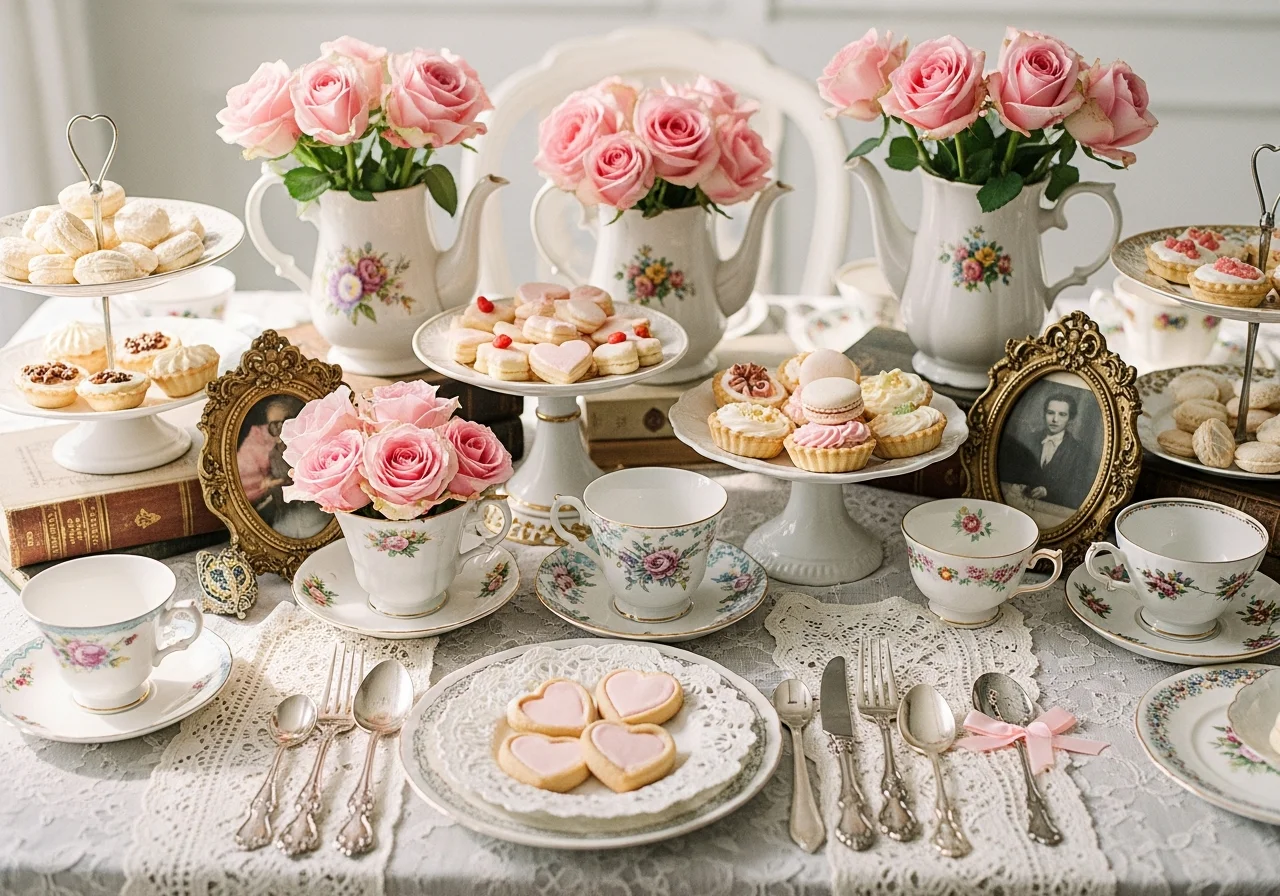
Vintage Tea Party Romance
Drawing inspiration from vintage tea parties creates a Valentine’s table that feels nostalgic, delicate, and inherently romantic. This style works beautifully for daytime Valentine’s celebrations or for those who love antiques and vintage aesthetics. The tea party approach emphasizes pretty details and collected treasures that tell stories.
Hunt for vintage teacups, saucers, and plates at antique stores, thrift shops, or family collections. The beauty of this style lies in mixing patterns rather than matching, creating an eclectic but cohesive look through shared color palettes or similar styles. Use a vintage lace tablecloth or lace doilies as placemats to enhance the delicate, feminine aesthetic. Incorporate antique silverware with ornate patterns that add to the collected feeling.
Create centerpieces using vintage teapots filled with soft pink or white flowers. Include vintage books, old photographs in ornate frames, or antique perfume bottles as decorative accents that add layers of interest. Serve treats on vintage cake stands and use sugar bowls and cream pitchers as part of your table decoration. The key to this style is embracing the beauty of aged and cherished items, allowing imperfections to add character rather than detract from the overall design. Each piece contributes to a story of enduring romance and timeless elegance.
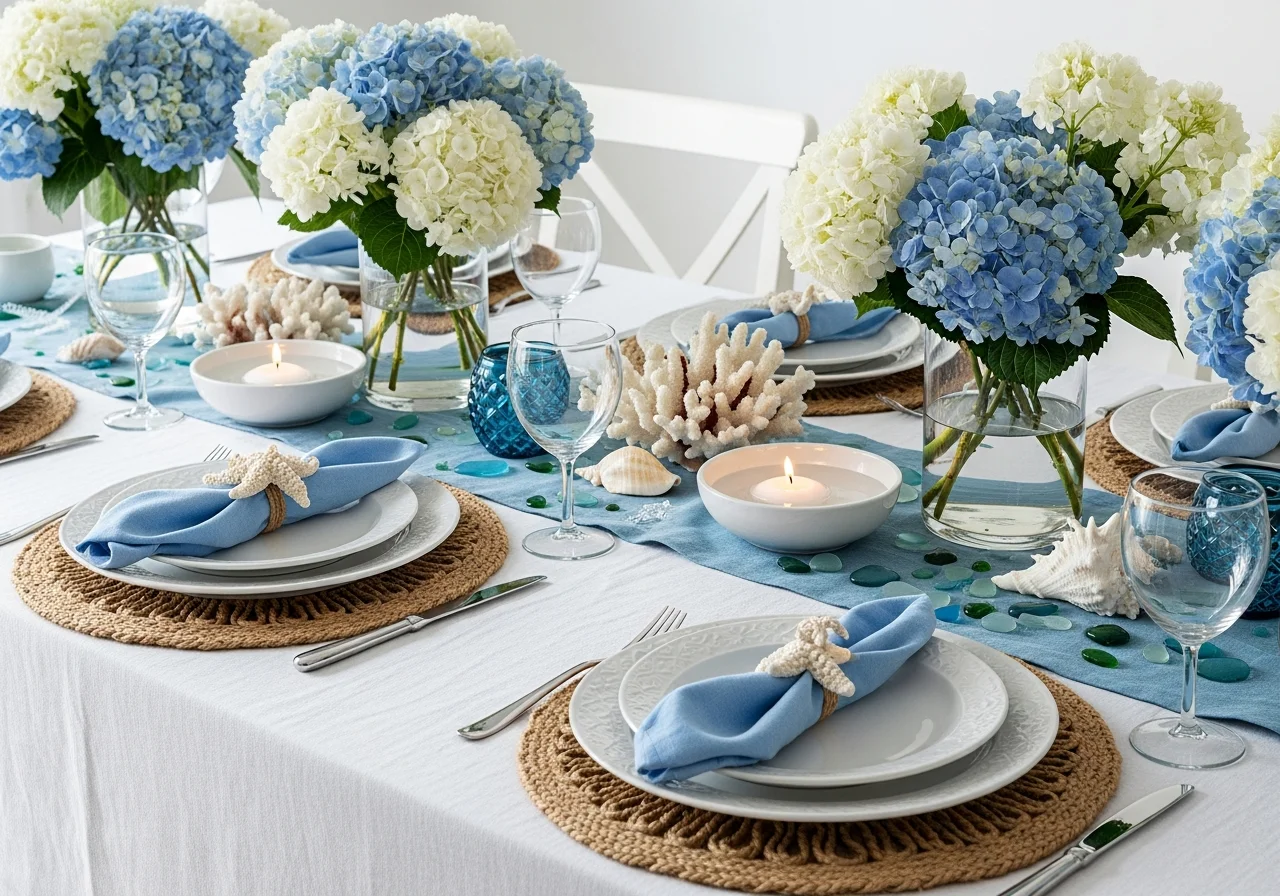
Coastal Blue and White Serenity
Valentine’s Day doesn’t have to follow traditional color schemes. A coastal-inspired approach using shades of blue and white creates a calming, romantic alternative that feels fresh and unexpected. This style works particularly well in warmer climates or for couples who associate romance with beach memories and ocean views.
Use a white or natural linen tablecloth as your base, evoking sand and shorelines. Incorporate various shades of blue through napkins, glassware, or decorative accents ranging from pale sky blue to deep navy. Choose white or blue-toned dinnerware, potentially incorporating patterns like coral, shells, or fish if you have coastal-themed dishes. Add texture through natural fiber placemats made from jute or seagrass.
Create centerpieces using white and blue flowers like hydrangeas, delphiniums, or white roses in clear glass or blue ceramic vases. Incorporate coastal elements like coral pieces, shells, sea glass, or even sand in clear containers as table decorations. Use blue-tinted candle holders or float candles in shallow bowls of water for ambiance that references the ocean. This unexpected Valentine’s palette creates romance through serene beauty rather than traditional passionate reds, offering a refreshing alternative that feels personal and memorable.
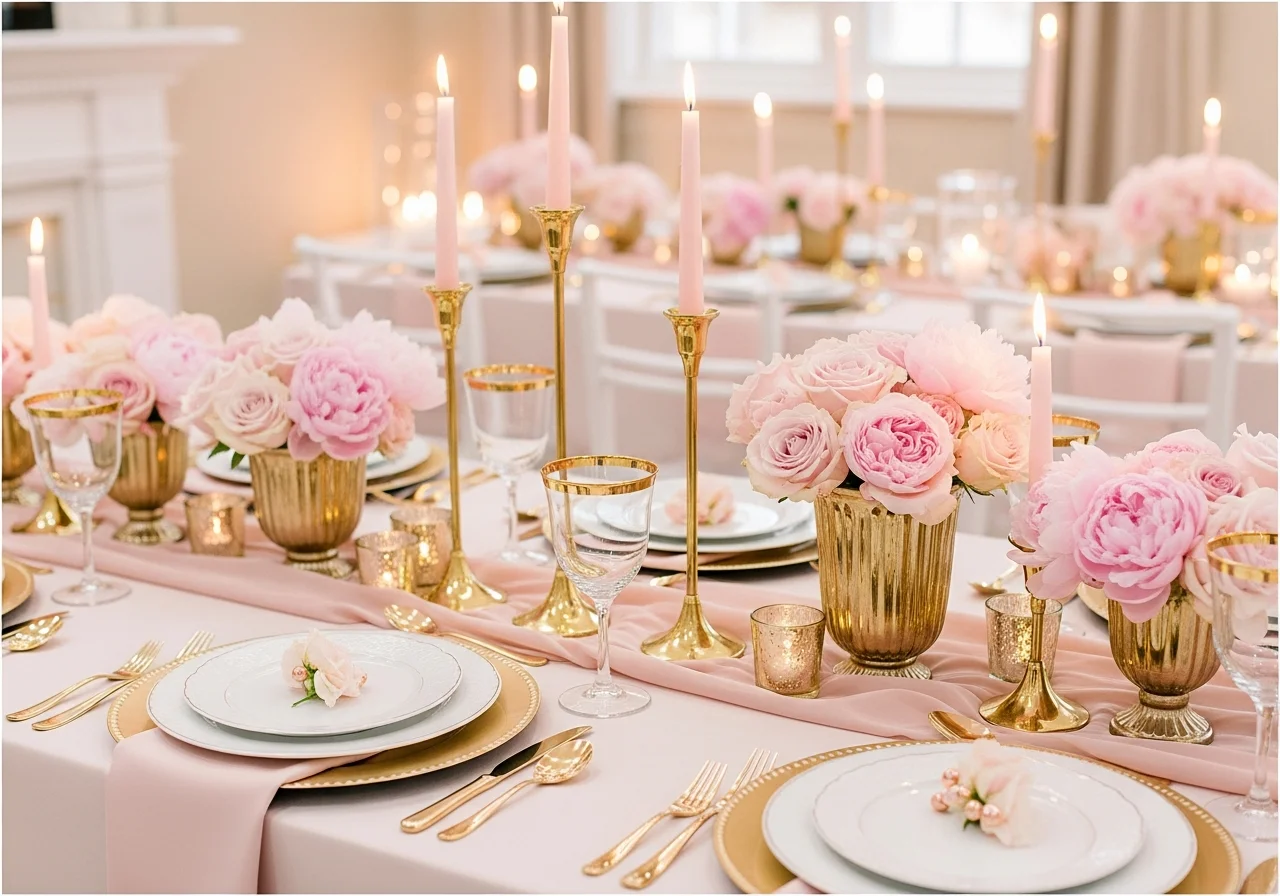
Elegant Gold and Blush Pink
The combination of soft blush pink with metallic gold creates a Valentine’s table that feels romantic, feminine, and luxurious without being overly traditional. This sophisticated color palette works for both modern and classic table settings, offering versatility while maintaining undeniable elegance. The result is a grown-up romantic aesthetic with contemporary appeal.
Begin with a blush pink tablecloth or use white linens with blush pink napkins to introduce the soft color without overwhelming the space. Incorporate gold through chargers, flatware, or the rims of dinnerware to add glamorous shine. Choose glassware with gold accents or use clear glass that allows other elements to shine through. The key is balancing these colors so neither dominates, creating harmony between the soft and metallic tones.
Design your centerpiece using blush pink flowers like roses, peonies, or ranunculus in gold vases or containers. Intersperse gold candle holders at varying heights to create visual interest and reflect light beautifully. Add subtle gold accents through decorative objects, napkin rings, or place card holders. Consider using rose gold as an alternative to yellow gold for a more contemporary, romantic feeling. This color combination photographs beautifully and creates an atmosphere that feels special and celebratory while remaining sophisticated and tasteful.
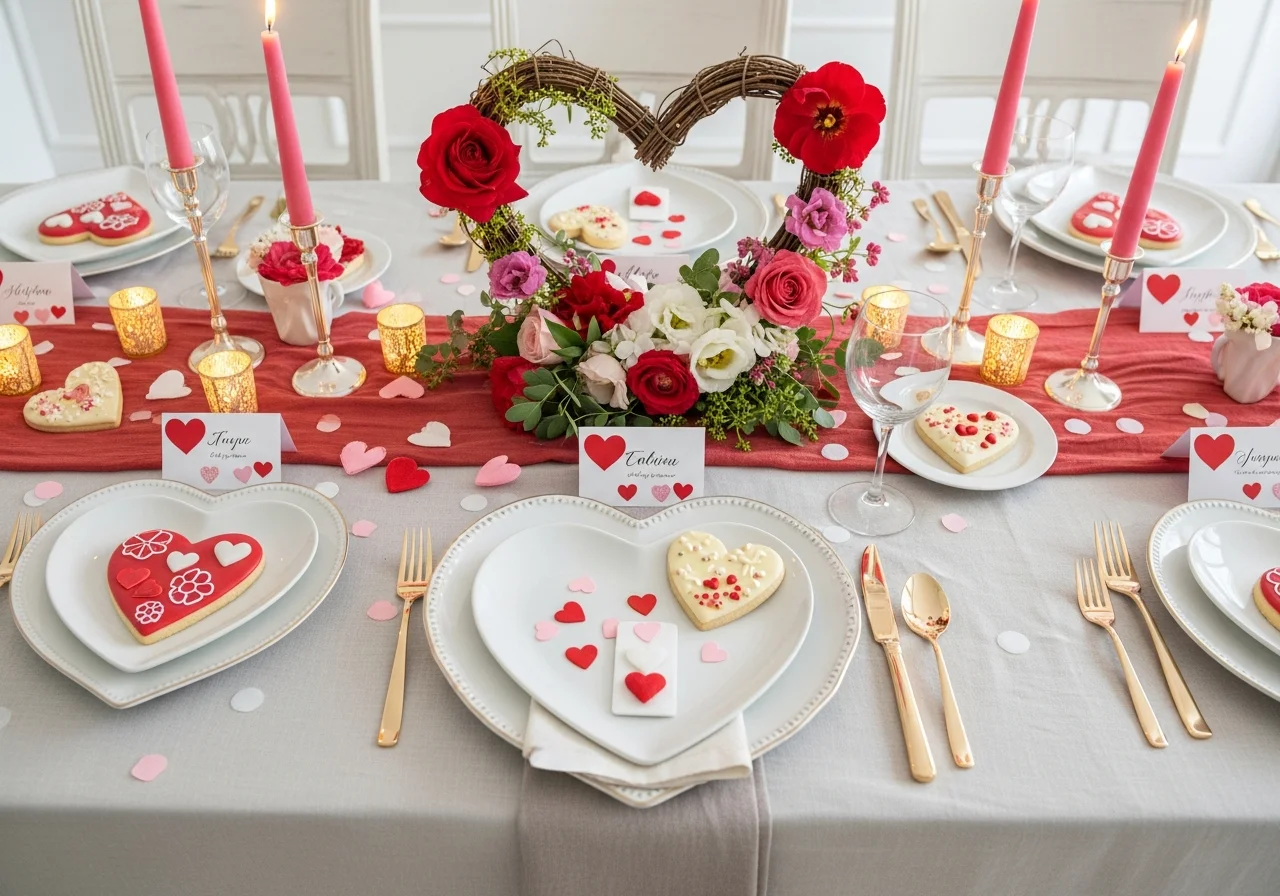
Whimsical Heart Motif Display
Embracing Valentine’s Day symbolism directly through heart motifs creates a playful, unabashedly romantic table that celebrates the holiday with enthusiasm. This approach works well for those who love traditional Valentine’s imagery and want their table to feel joyful and festive. The challenge is incorporating hearts without the design feeling juvenile or overwhelming.
Use heart-shaped elements strategically rather than covering every surface. Consider heart-shaped plates or bowls as statement pieces while keeping other dinnerware simple. Create a centerpiece featuring a heart-shaped wreath or arrangement as your focal point. Incorporate heart-shaped cookies, chocolates, or other treats as both decoration and dessert. Use heart-shaped confetti sparingly as table scatter, providing festive touches without cluttering the surface.
Balance the playful heart motif with sophisticated elements that ground the design. Choose a neutral tablecloth and elegant dinnerware to provide visual rest areas between heart-decorated elements. Use quality materials and avoid plastic decorations that can make the table feel cheap rather than celebratory. Incorporate hearts in unexpected ways like heart-shaped folded napkins, heart-themed place cards with calligraphy, or subtle heart patterns in your table linens. The goal is celebrating Valentine’s imagery while maintaining a table that feels appropriate for adult dining and romance.
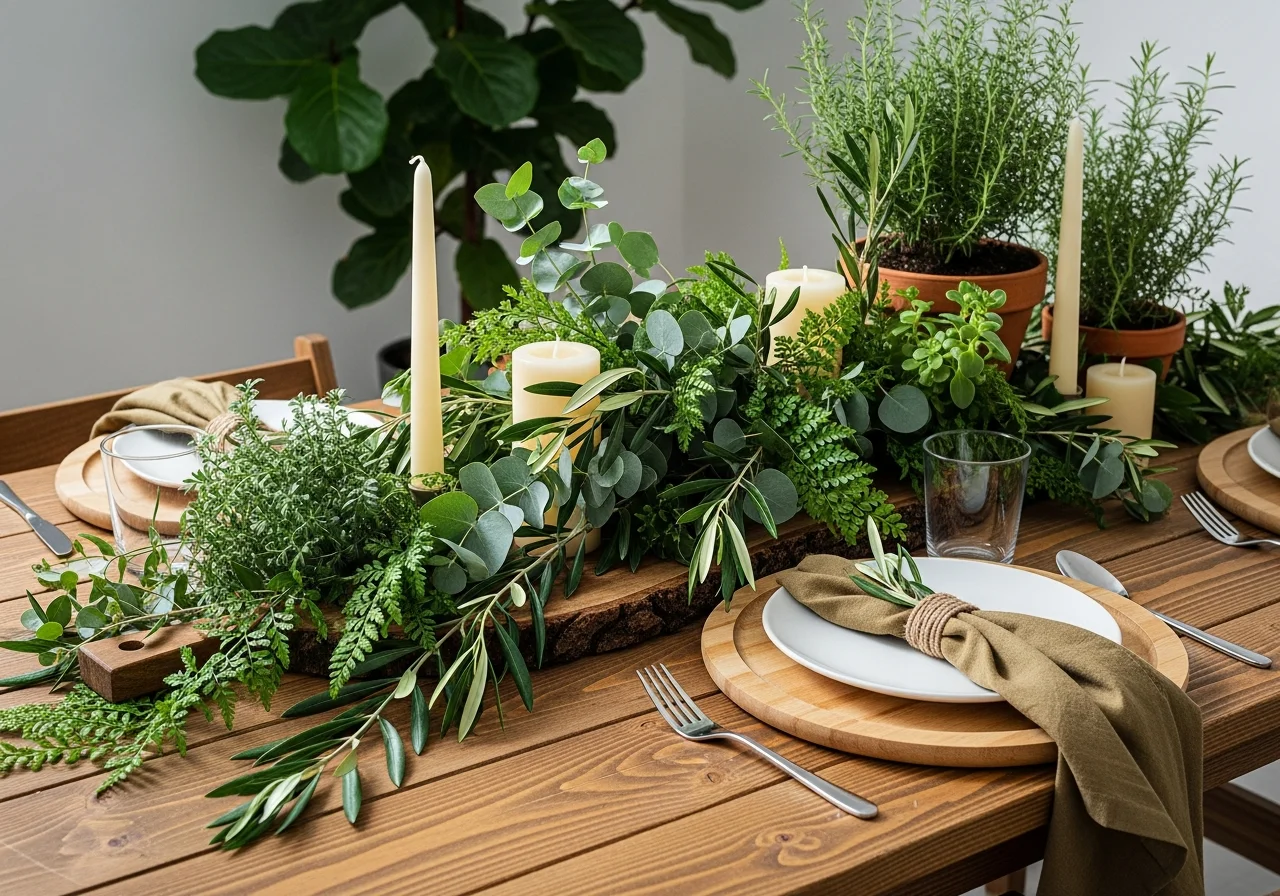
Natural Wood and Greenery
Creating a Valentine’s table dominated by natural wood tones and lush greenery offers an organic, earthy approach to romantic styling. This aesthetic appeals to those who prefer natural materials and botanical elements over traditional Valentine’s colors and decorations. The result feels grounded, peaceful, and romantically connected to nature.
Use a wooden table without covering it, allowing the natural grain and texture to serve as your foundation. If your table isn’t wood, add wooden chargers, cutting boards as serving pieces, or a wooden table runner to introduce the material. Choose simple white or cream dinnerware that doesn’t compete with the natural elements. Incorporate earth-toned napkins in sage green, warm brown, or natural linen.
Create abundant centerpieces using various types of greenery like eucalyptus, ferns, olive branches, or even herbs like rosemary and lavender. Mix different textures and shades of green to create visual interest without relying on flowers. Add subtle romance through cream or white candles nestled within the greenery. Consider incorporating potted plants, terrariums, or small succulents as both decoration and potential favors guests can take home. This approach proves that Valentine’s tables don’t need traditional romantic colors to create an atmosphere of love and connection. The natural elements create a calming, grounding environment that encourages meaningful conversation and presence.
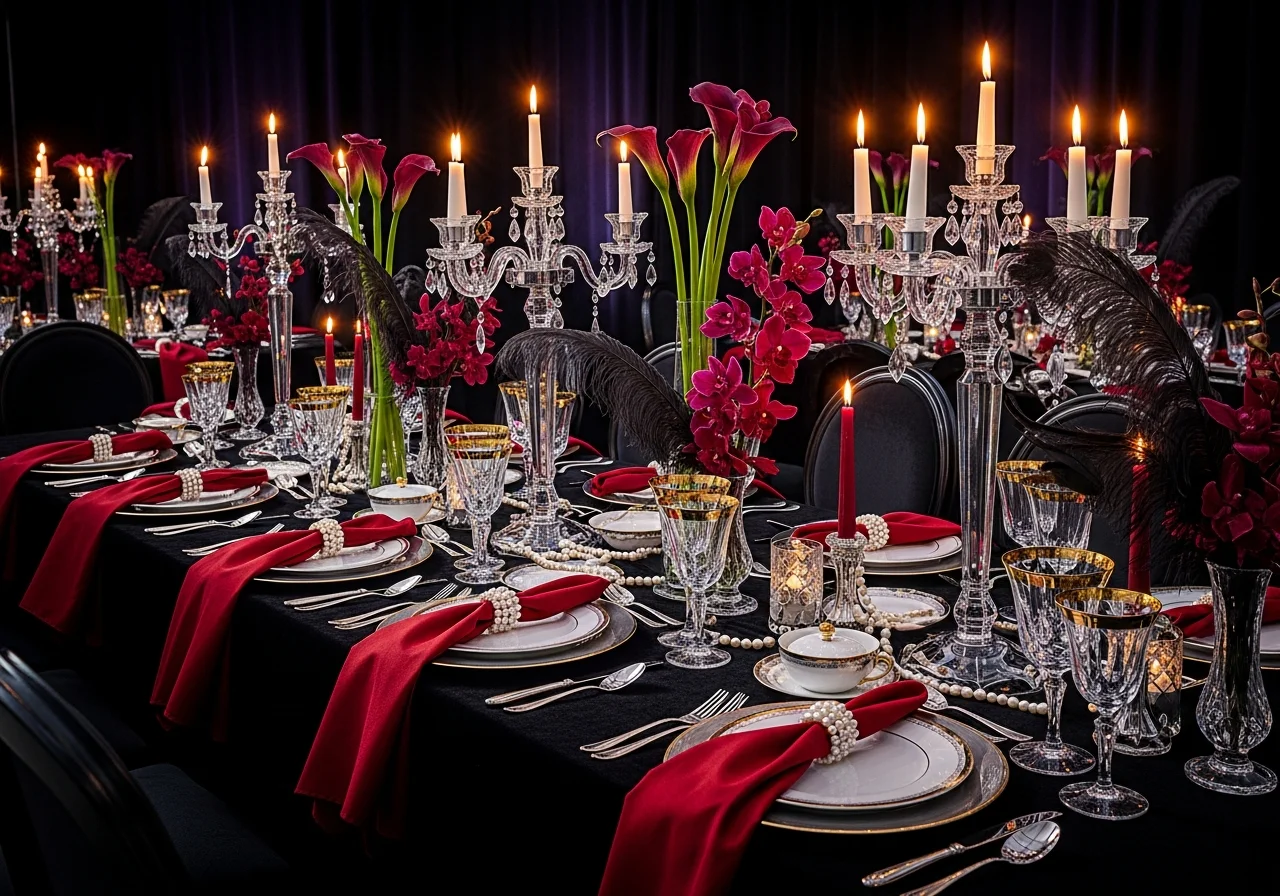
Hollywood Glamour Elegance
Drawing inspiration from old Hollywood glamour creates a Valentine’s table with dramatic sophistication and timeless elegance. This style appeals to those who love classic movies, vintage fashion, and the golden age of Hollywood romance. The aesthetic emphasizes luxury, drama, and polished perfection that feels like stepping into a romantic film.
Use a black, white, or deep jewel-toned tablecloth as your dramatic foundation. Choose elegant dinnerware with gold or platinum rims that evoke fine dining from cinema’s golden era. Incorporate crystal glassware, preferably vintage or vintage-inspired pieces that catch light beautifully. Use luxurious fabric napkins in silk or high-quality cotton, possibly in deep red or emerald green for dramatic color.
Create centerpieces featuring dramatic flowers like calla lilies, orchids, or deep red roses in elegant tall vases that add height and grandeur. Include crystal or silver candelabras with tapered candles for theatrical lighting that references classic films. Add touches of ostrich feathers, pearls, or vintage jewelry as unexpected decorative elements that enhance the glamorous feeling. Consider using black and white photographs of classic Hollywood couples as place cards or table decorations. This style transforms your dining area into a scene from a romantic classic film, where every detail contributes to an atmosphere of timeless elegance and sophisticated romance.
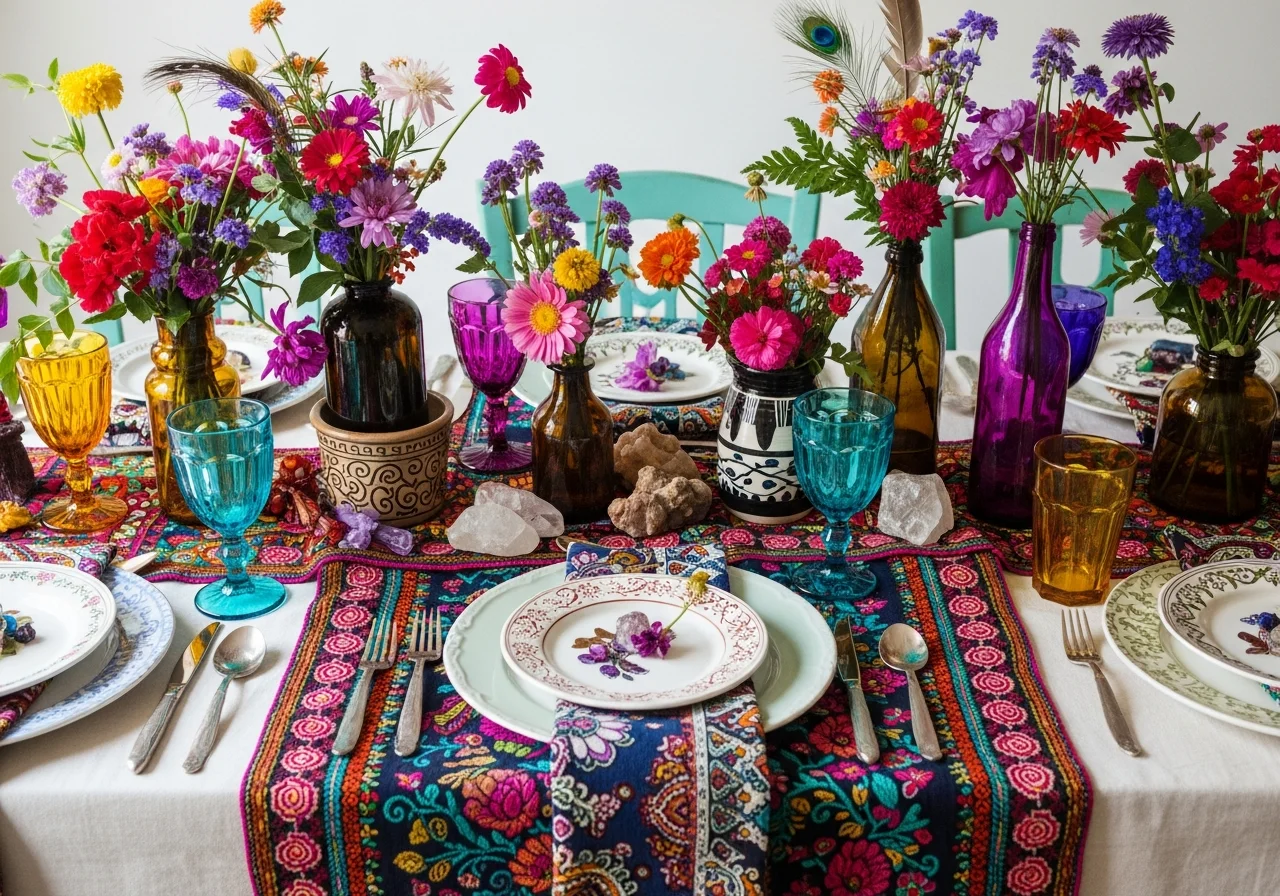
Bohemian Eclectic Mix
The bohemian approach to Valentine’s table styling embraces color, pattern, texture, and an anything-goes aesthetic that feels creative and personal. This style works for artistic couples who prefer unconventional beauty and want their table to reflect individual personality rather than following traditional design rules. The result is vibrant, unexpected, and full of character.
Layer multiple textiles with different patterns and colors to create a rich, collected foundation. Mix vintage embroidered tablecloths with colorful runners, patterned napkins, and textured placemats in combinations that shouldn’t work but somehow do. Use mismatched vintage plates in various colors and patterns, embracing the eclectic rather than seeking uniformity. Incorporate colorful glassware in jewel tones like purple, turquoise, or amber.
Create centerpieces using an abundance of colorful flowers in mismatched vessels like vintage bottles, painted mason jars, or ethnic pottery. Mix in unusual elements like feathers, crystals, vintage scarves, or ethnic textiles that add layers of visual interest. Include candles in various colors, sizes, and holders that contribute to the eclectic mix. The beauty of bohemian styling lies in trusting your instincts and combining elements you love without worrying about whether they traditionally belong together. This approach creates a Valentine’s table that tells a personal story and reflects authentic individual style rather than following prescribed romantic aesthetics.
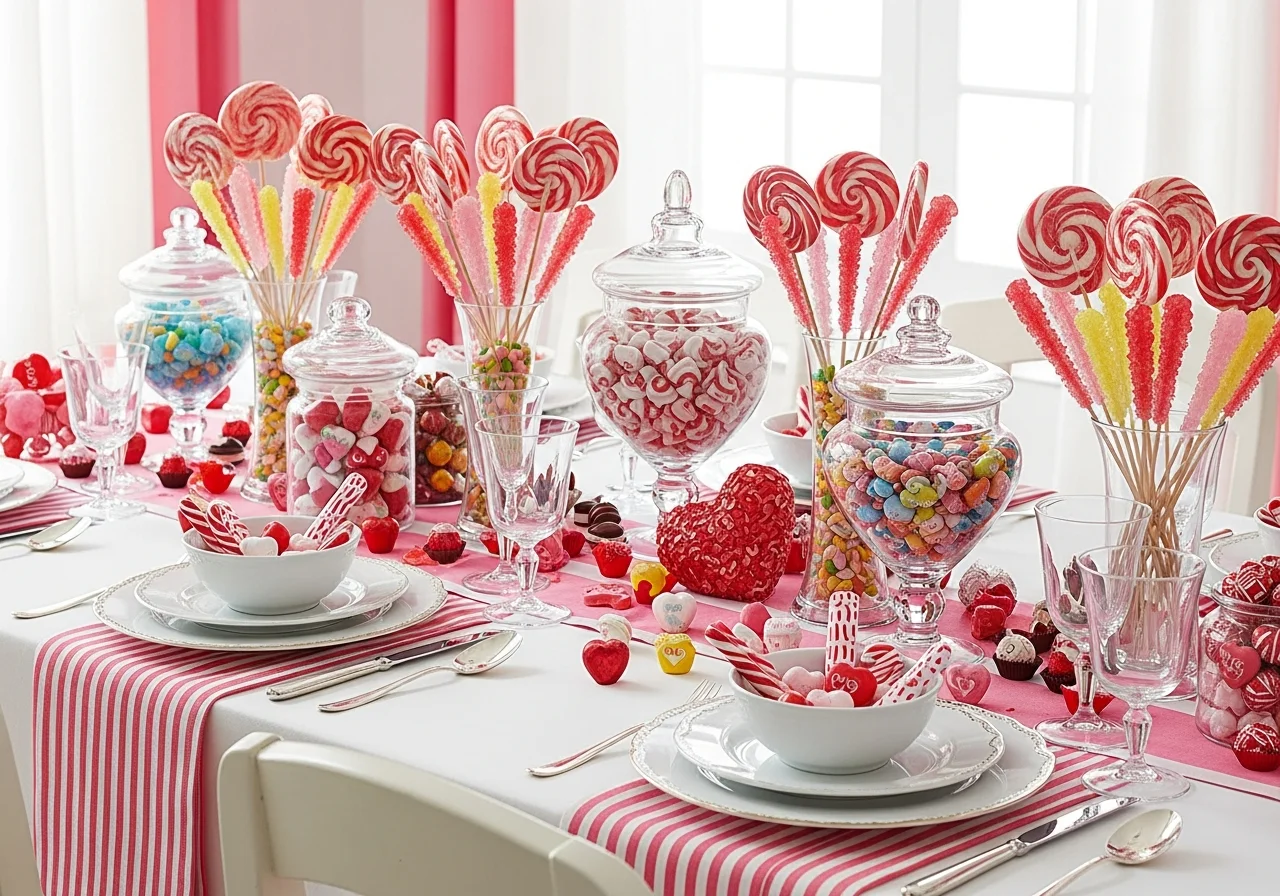
Sweet Candy Shop Theme
Creating a Valentine’s table inspired by candy shops and sweet treats brings playful romance through color, texture, and literal sweetness. This approach works wonderfully for those with a sweet tooth and those who want their Valentine’s celebration to feel fun and lighthearted. The challenge is incorporating candy elements while maintaining sophistication appropriate for adult dining.
Use pink and white as your primary colors, possibly adding touches of red or pastels for variety. Consider using striped linens that evoke peppermint sticks or candy canes. Choose white or clear dinnerware that allows candy elements to be the stars. Incorporate glass jars, apothecary containers, or vintage candy dishes filled with colorful candies as both decoration and dessert.
Create centerpieces featuring arrangements of candy on sticks like lollipops or rock candy displayed in vases or foam bases. Include conversation hearts, chocolate truffles, or candy hearts as table scatter or place setting decorations. Use clear glass containers to show off colorful candies while maintaining visual lightness. Balance the sweetness with elegant elements like fine china, crystal glassware, or sophisticated candle holders to prevent the table from feeling too childish. Consider creating a candy buffet as part of your table design, allowing guests to create their own sweet combinations. This theme celebrates the sweeter side of Valentine’s Day while creating a visually engaging tablescape that’s guaranteed to spark smiles and conversation.
Monochromatic White Winter Romance
An all-white or predominantly white Valentine’s table creates unexpected romance through simplicity, elegance, and the subtle interplay of textures and shades. This sophisticated approach works beautifully for winter Valentine’s celebrations and appeals to those who prefer understated elegance to colorful exuberance. The result is serene, ethereal, and quietly romantic.
Layer various shades and textures of white to create visual interest without introducing color. Use a white tablecloth with white or cream napkins in different fabrics like linen, cotton, or silk. Choose white dinnerware in different finishes like matte, glossy, or textured to add subtle variety. Incorporate white or clear glassware that maintains the monochromatic palette while adding sparkle.
Create centerpieces using entirely white flowers like roses, tulips, hydrangeas, or orchids in white or clear vases. Add white candles in various heights and styles, using holders in white, clear glass, or even frosted finishes. Include textural elements like white feathers, white-painted branches, or even faux snow to enhance the winter romance feeling. The beauty of this approach lies in its subtlety and the sophisticated restraint it requires. The monochromatic palette forces attention to texture, shape, and form rather than color, creating a meditative, peaceful atmosphere that encourages deep connection and conversation.
Conclusion
Styling a memorable Valentine’s Day table requires thoughtful consideration of colors, textures, lighting, and personal style rather than expensive materials or professional design skills. The fourteen approaches presented here demonstrate the remarkable range of aesthetics available for creating romantic table settings, from traditional red and white elegance to unexpected coastal blues, dramatic black and gold sophistication, or serene all-white minimalism.
The most successful Valentine’s Day tables reflect the personalities and preferences of the people celebrating rather than simply following holiday conventions. Consider what makes you and your partner feel romantic, whether that’s candlelight and roses, natural materials and greenery, vintage treasures, or bold contemporary design. The table setting should enhance your celebration by creating atmosphere and showing thoughtfulness without becoming so precious that you’re afraid to actually use it for dining.
Remember that effective table styling balances beauty with functionality. Your carefully arranged table needs to accommodate actual meals, conversation, and comfort. Keep centerpieces low enough to see across, leave adequate space for serving dishes, and ensure decorative elements don’t interfere with eating or conversation. The goal is creating an environment that encourages connection and celebrates your relationship rather than simply producing an impressive photograph.
Start planning your Valentine’s Day table early enough to gather necessary materials without stress. Shop your own home first, discovering items you already own that can be repurposed for your romantic tablescape. Borrow from friends, explore thrift stores for vintage treasures, or invest in quality basics that can be used for multiple occasions. The effort you put into creating a beautiful table communicates care and intentionality, transforming an ordinary dinner into an extraordinary celebration of love that both of you will remember long after the candles have been extinguished.
Frequently Asked Questions
How far in advance should I start planning my Valentine’s Day table setting?
Begin planning your Valentine’s Day table at least two weeks before the holiday to avoid stress and ensure you can gather all necessary materials. Start by deciding on your overall style and color scheme, then make lists of items you already own and what you need to purchase or borrow. Order fresh flowers a few days before Valentine’s Day to ensure they’re at peak freshness for your celebration. You can set your table the day before, allowing time for adjustments without rushing on the actual holiday.
What are the most important elements for creating a romantic table atmosphere?
Lighting is arguably the most critical element for romantic atmosphere, with candles providing warm, flattering illumination that instantly creates intimacy. Beyond lighting, focus on creating a cohesive color scheme, incorporating fresh flowers or greenery for living beauty, and using quality linens that make the table feel special. The key is thoughtful curation rather than abundance, ensuring each element contributes purposefully to the overall aesthetic and romantic mood you’re creating.
How can I create an impressive Valentine’s Day table on a tight budget?
Focus your budget on one or two statement pieces like fresh flowers or quality candles while using items you already own for everything else. Shop your home for vases, linens, and serving pieces that can work for your chosen style. Create DIY elements like handmade place cards or napkin rings using craft supplies. Consider non-traditional centerpieces using fruit, vegetables, or branches from your yard. Remember that candles and thoughtful arrangement cost little but create enormous impact, proving that romance doesn’t require expensive materials.
Should I use a tablecloth or leave my table bare for Valentine’s Day?
This decision depends on your table’s condition and your desired aesthetic. Beautiful wood tables can be left bare or enhanced with runners and placemats, allowing the natural material to contribute to your design. If your table has imperfections or you want to establish a specific color foundation, use a tablecloth. Consider compromise options like table runners that cover part of the surface while leaving wood visible, or layering multiple textiles for added interest and texture without completely covering the table.
How do I keep my table looking elegant rather than cluttered when adding Valentine’s decorations?
Embrace the principle of editing, removing items until your table feels balanced rather than overcrowded. Maintain adequate negative space around each element, allowing visual breathing room that prevents cluttered feelings. Choose a focal point like your centerpiece and support it with complementary elements rather than competing decorations. Keep functional items like salt and pepper shakers simple and coordinate them with your design. Remember that elegance often comes from restraint, with fewer well-chosen elements creating more impact than numerous decorations fighting for attention.