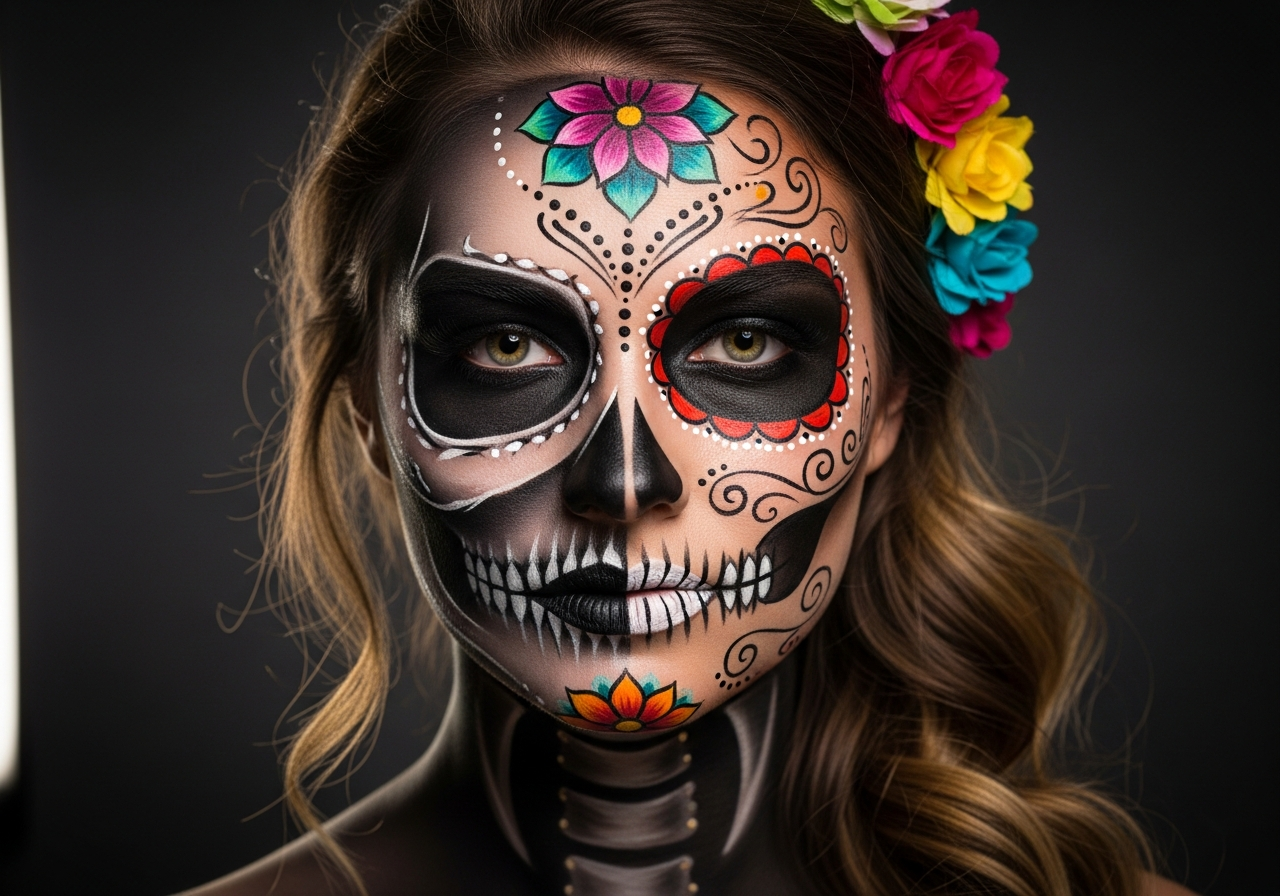
Skull Makeup Looks Perfect For Any Spooky Season
When the air turns crisp and October rolls around, few makeup styles capture the essence of spooky season quite like skull makeup. This timeless trend has evolved from simple skeleton faces into an art form that combines creativity, culture, and craftsmanship. Whether you’re preparing for Halloween festivities, celebrating Día de los Muertos, or simply exploring the darker side of beauty, skull makeup offers endless possibilities for self-expression and transformation.
The beauty of skull makeup lies in its versatility. From intricate sugar skull designs adorned with flowers and jewels to minimalist half-skull concepts that blend beauty with macabre, there’s a style for every skill level and aesthetic preference. These looks transcend simple costume makeup and have become legitimate artistic expressions that challenge traditional beauty standards while honoring cultural traditions and celebrating the artistry of face painting.
This comprehensive guide will walk you through the most stunning skull makeup looks, providing inspiration and practical knowledge to help you create your own masterpiece. Whether you’re a makeup novice looking for an easy yet impressive design or an experienced artist seeking fresh ideas, you’ll find valuable insights and creative directions to explore.
Understanding the Foundation of Skull Makeup
Before diving into specific looks, it’s essential to understand what makes skull makeup effective. The key lies in understanding facial anatomy and how shadows and highlights create dimension. The human skull has distinct features including eye sockets, nasal cavities, cheekbones, and a jaw structure that must be emphasized to achieve a convincing skeletal appearance.
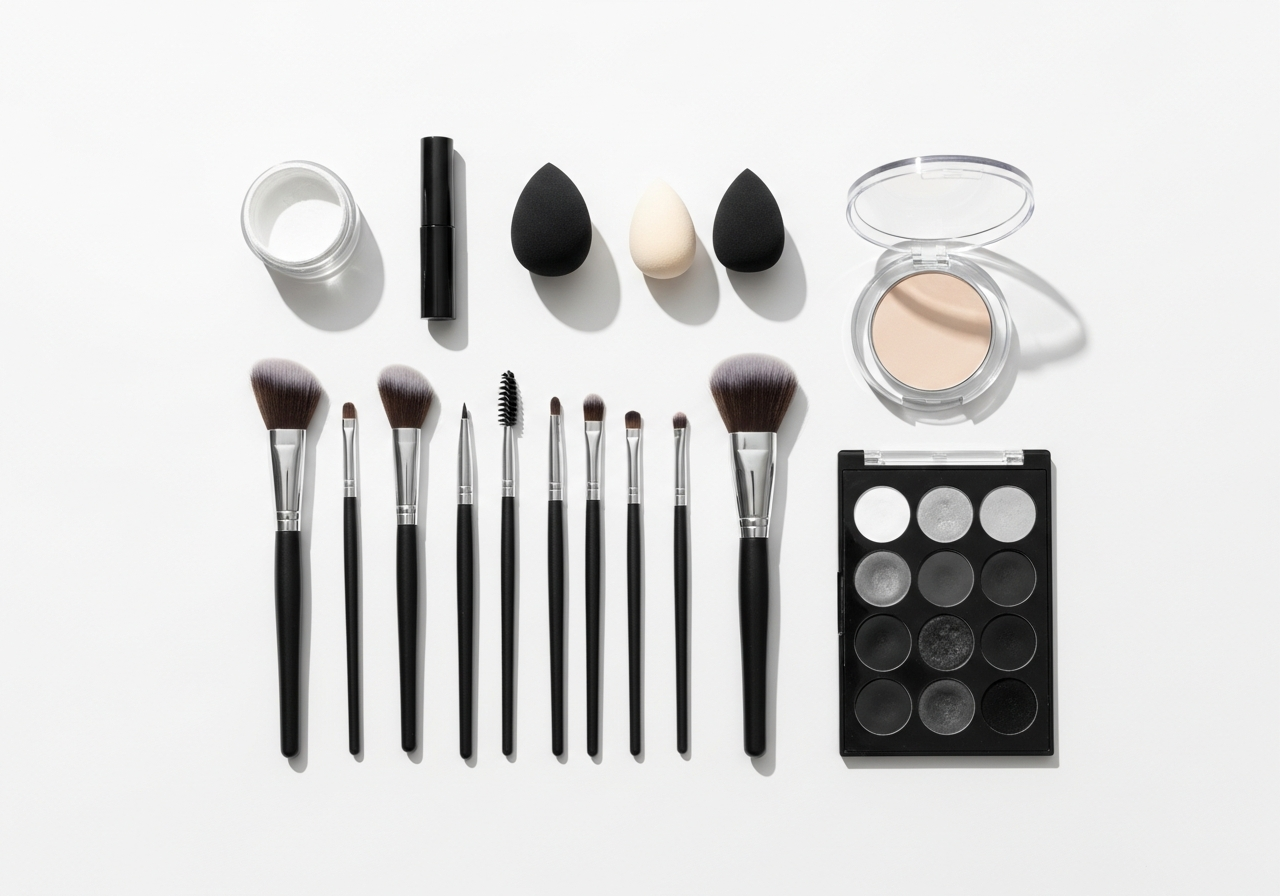
Quality products make a significant difference in both application and longevity. White face paint or foundation serves as your base, while black paint or gel liner creates the defining features. Setting powder becomes crucial for preventing smudging throughout your event. For more elaborate designs, consider investing in face paint palettes that offer various colors, along with brushes in multiple sizes for detailed work and broad coverage.
Preparation matters tremendously. Start with clean, moisturized skin to ensure smooth application. Prime your face to create a barrier between your skin and the heavy products you’ll be using. This not only helps the makeup apply more evenly but also makes removal easier at the end of the night. Taking these preliminary steps can mean the difference between makeup that lasts all night and a look that starts deteriorating within the first hour.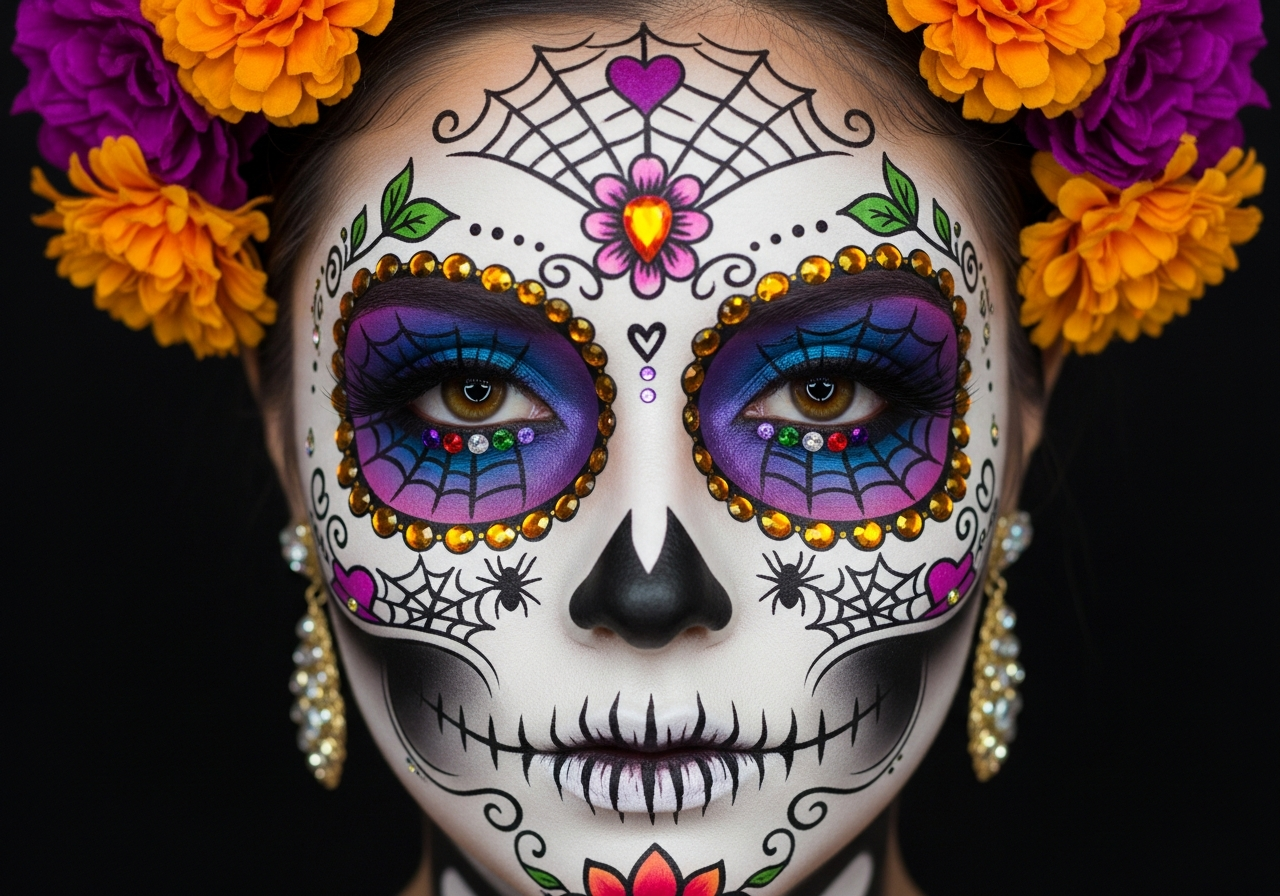
Classic Sugar Skull Designs
Sugar skull makeup remains one of the most beloved and recognizable skull styles, drawing inspiration from the Mexican tradition of Día de los Muertos. These designs honor deceased loved ones through vibrant colors, intricate patterns, and symbolic imagery. Unlike scary Halloween skulls, sugar skulls celebrate life and death as a natural cycle, making them both beautiful and meaningful.
Traditional sugar skull makeup features a white base with black circles around the eyes, often connected by ornate designs on the forehead. The nasal cavity is typically represented by a simple heart or inverted heart shape. What distinguishes sugar skulls from other skull makeup is the elaborate decoration that follows the base structure. Colorful flowers, particularly marigolds, are common motifs, along with spider webs, hearts, and geometric patterns.
Modern interpretations have expanded on traditional designs while maintaining respect for the cultural origins. You might incorporate gradient eyeshadows in purples, blues, and pinks around the eyes, or use metallic accents to add contemporary flair. Rhinestones and gems have become popular additions, creating dimension and catching light beautifully in photographs. Some artists create asymmetrical designs or focus heavily on one side of the face for a unique twist.
The forehead area offers particular creative freedom. Traditional designs often feature a central flower or jewel with symmetrical patterns extending outward. You can experiment with mandala-inspired designs, leafy vines, or even subtle nods to lace patterns. The key is maintaining balance and ensuring your design complements rather than overwhelms your facial features.
Half Skull Makeup Concepts
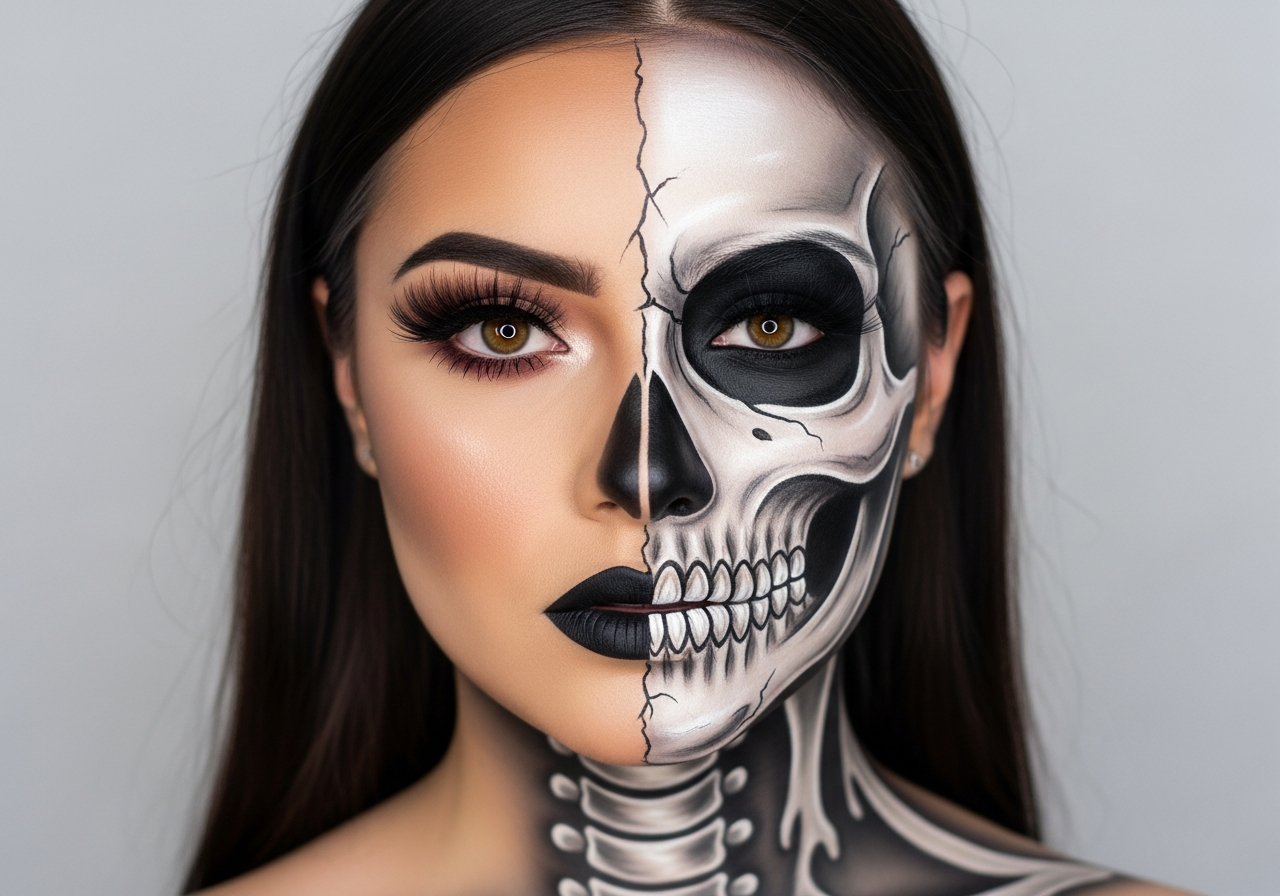
Half skull makeup has surged in popularity for its striking visual impact and the fascinating contrast it creates. This style divides your face vertically or diagonally, with one side showcasing your natural beauty and the other transformed into skeletal imagery. The result is a powerful representation of duality that makes for stunning photographs and turns heads at any event.
The vertical half skull is the most common approach. One side of your face maintains regular makeup, often glamorous with false lashes, contoured cheeks, and bold lips. The other side becomes a detailed skull with blackened eye socket, exposed teeth, and shaded contours that mimic bone structure. The challenge lies in creating a clean division line and ensuring both sides are equally polished and detailed.
Diagonal splits offer an alternative that can be even more dramatic. The division might run from your forehead down across your nose to the opposite side of your chin. This approach allows for interesting interplay between the two halves and can create the illusion of a mask being removed or a transformation in progress.
For those seeking something truly unique, consider the melting or deteriorating effect where the skull side appears to be dripping or crumbling into the beauty side. This requires blending skills and an understanding of how to make the transition appear organic rather than simply divided. Using gray tones to bridge the gap between the stark skull side and your natural skin tone can create a hauntingly beautiful effect.
Gothic and Dark Romantic Skull Looks
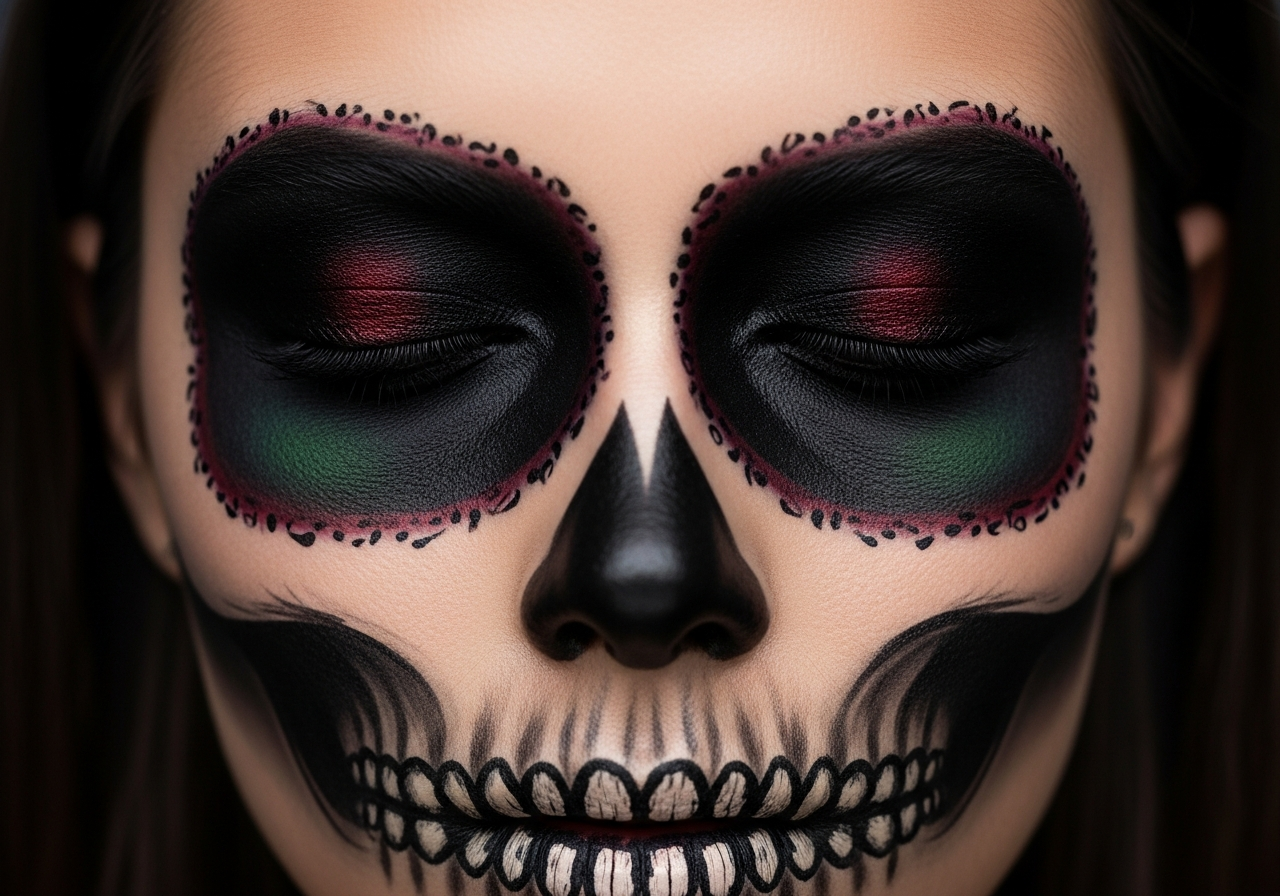
Gothic skull makeup embraces the darker, more mysterious aspects of skull artistry. These looks often incorporate deep jewel tones, dramatic black elements, and a moody aesthetic that feels more haute couture than Halloween costume. Think Victorian mourning traditions mixed with modern editorial makeup techniques.
Black smoky eyes form the foundation of many gothic skull designs, but instead of traditional smoky eye placement, the darkness extends beyond normal boundaries to create the illusion of hollowed eye sockets. Deep burgundies, forest greens, and midnight blues can be layered into the black to add depth and visual interest. The effect should be dramatic yet wearable, scary yet sophisticated.
Incorporating lace patterns into your skull design instantly elevates it into gothic territory. You can achieve this effect with lace stencils and black paint, or for the skilled artist, freehand delicate lace designs around the eyes, across the forehead, or along the cheekbones. This technique softens the harshness of traditional skull makeup while maintaining the spooky aesthetic.
Dark lips are essential for completing the gothic skull look. Deep plums, black cherries, or true black lipstick can work beautifully depending on your overall color scheme. Consider adding a glossy finish for a more romantic feel or keeping it matte for maximum drama. Some artists even extend lip designs beyond the natural lip line to create exaggerated or skeletal mouth effects.
Glitter and Crystal Skull Variations
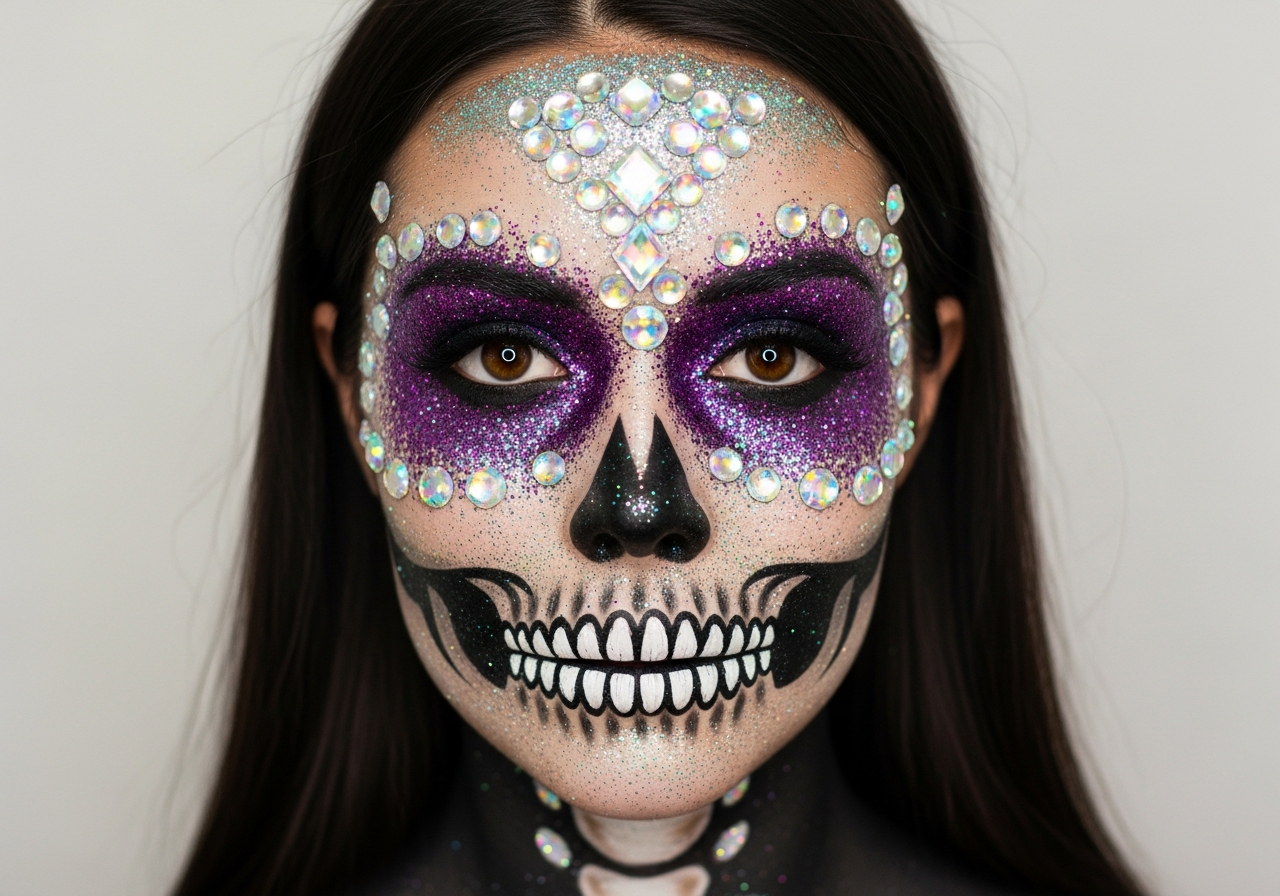
For those who prefer their spooky with a side of sparkle, glitter and crystal skull looks offer the perfect solution. These designs maintain the skeletal structure of traditional skull makeup while adding glamorous, eye-catching elements that photograph beautifully and feel festive rather than frightening.
Glitter can be incorporated in numerous ways. Apply it heavily around the eye sockets for a disco skull effect, or use it sparingly as accents on the cheekbones and forehead for subtle shimmer. Chunky glitter creates bold statements, while fine glitter offers a more refined sparkle. Consider using cosmetic-grade glitter in colors that complement your overall design, from classic silver and gold to bold purples, blues, and even holographic options.
Rhinestones and crystals take skull makeup into truly glamorous territory. These can outline the eye sockets, create flower patterns on the forehead, or form intricate designs along the cheekbones. The key is strategic placement. Too many crystals can look cluttered, while thoughtful application creates elegant emphasis. Use skin-safe adhesive specifically designed for face gems to ensure they stay in place throughout your event.
Combining glitter and crystals with traditional skull elements creates stunning contrast. The juxtaposition of dark, hollow eye sockets with sparkling embellishments captures attention and demonstrates advanced makeup artistry. This style works particularly well for parties or events where you want to stand out while maintaining the spooky theme.
Anatomically Accurate Skull Makeup
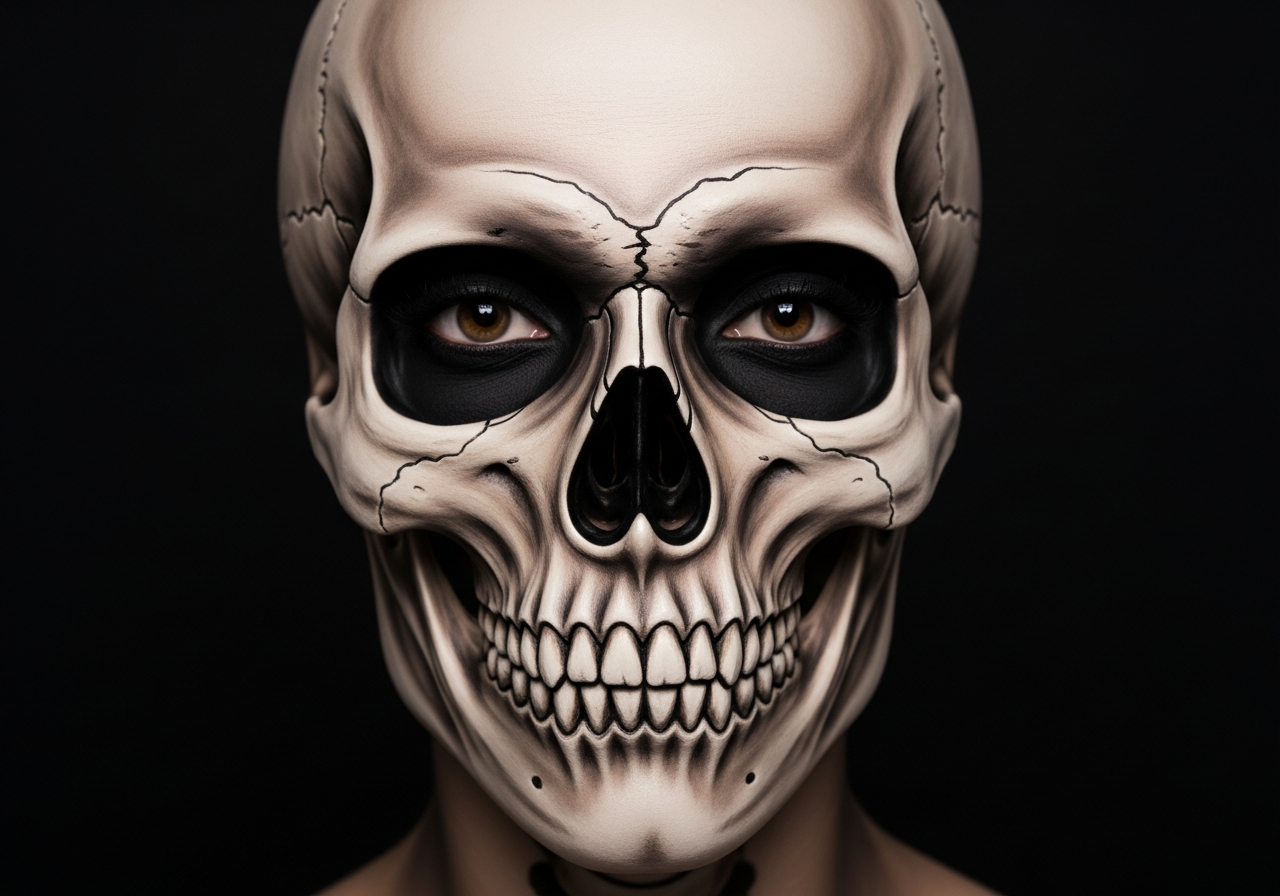
For makeup artists and enthusiasts who appreciate realism, anatomically accurate skull makeup presents an exciting challenge. This style requires understanding actual skull structure and using shading techniques to create the illusion of depth and bone beneath the skin.
Study references of real skulls to understand the planes and contours you need to replicate. The eye sockets aren’t simply black circles but have depth and dimension with lighter areas where bone would catch light and darker recesses. The nasal cavity has a specific shape with shadowing that creates the appearance of an actual opening. The zygomatic arch, temporal bone, and mandible all have distinct characteristics that contribute to a realistic effect.
Shading becomes your most important tool. Use various shades of gray and black to create gradients that suggest three-dimensional form. Highlighting with white or very light gray emphasizes the high points where bone would be most prominent. This technique requires patience and blending skills, but the results can be incredibly impressive and almost unsettling in their realism.
Teeth deserve special attention in anatomical skull makeup. Rather than painting simple white rectangles, create individual teeth with slight variations in size and spacing. Add shadows between teeth and along the gum line. Some artists even create the illusion of the teeth extending beyond the natural lip line, requiring careful blending to make the effect believable.
Colorful and Creative Skull Interpretations
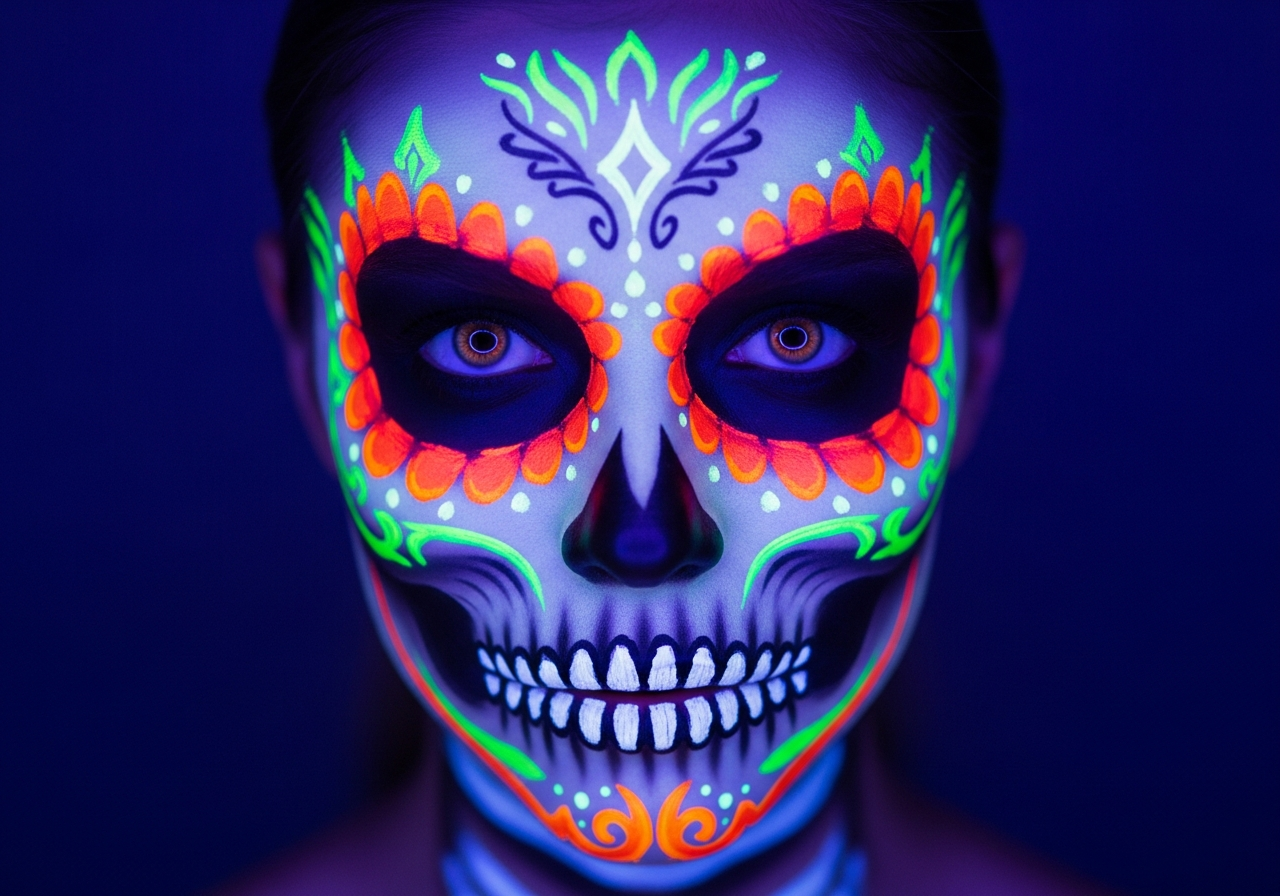
Skull makeup doesn’t have to be limited to traditional black and white or culturally specific color schemes. Creative artists have pushed boundaries by incorporating unexpected color combinations and abstract designs that maintain the skull structure while expressing individual artistic vision.
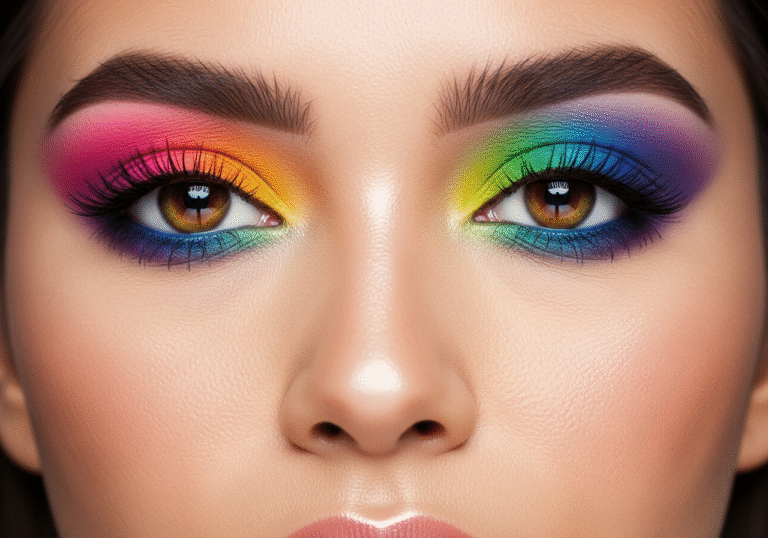
Neon skulls bring rave culture into the spooky season. Using bright pinks, electric blues, lime greens, and vivid oranges creates a skull look that glows under black light and radiates energy. This style works wonderfully for parties and festivals where you want maximum visual impact. The key is using highly pigmented products that maintain their vibrancy against the white or pale base.
Watercolor effects offer a softer, more artistic approach to skull makeup. This technique involves blending multiple colors together with a wet brush to create flowing, organic color transitions. Purples might blend into blues and greens around the eye sockets, while warm oranges and reds could accent the cheekbones. The effect resembles a painted canvas and demonstrates advanced blending skills.
Galaxy skulls combine cosmic themes with skeletal imagery for a truly unique look. Create the base skull structure, then fill areas like the eye sockets and cheekbones with deep purples, blues, and blacks blended to resemble space. Add tiny white or silver dots for stars and perhaps some shimmer to suggest nebulae. This style merges multiple popular makeup trends into one cohesive, attention-grabbing design.
Beginner-Friendly Skull Makeup Options
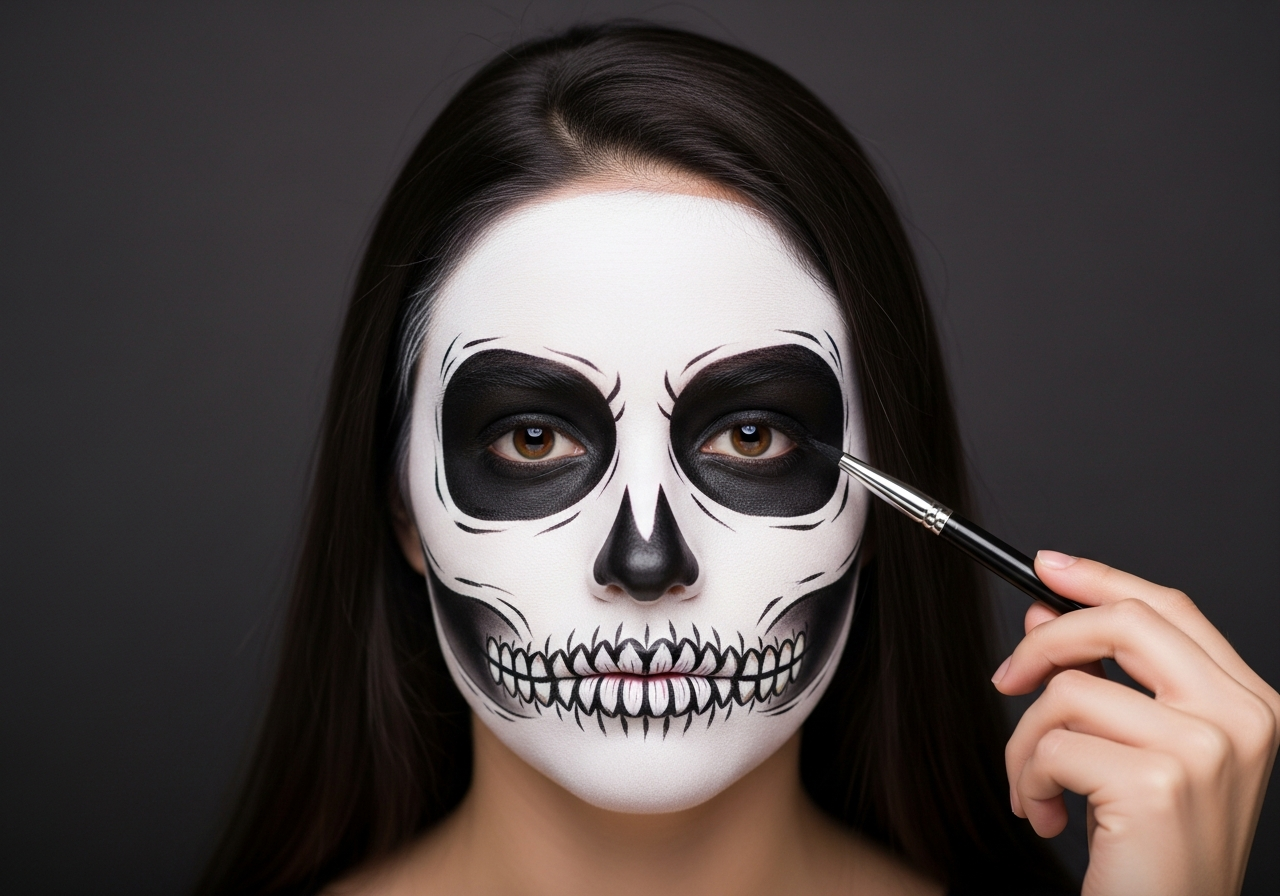
Not everyone has years of makeup experience or hours to dedicate to application. Fortunately, several skull makeup styles deliver impressive results without requiring professional-level skills or extensive time investment.
The simple skeleton face provides maximum impact with minimal complexity. Paint your entire face white, then use black to create circles around your eyes, a triangle or inverted heart for the nose, and lines extending from your mouth corners to create the illusion of exposed teeth. This basic structure reads clearly as skull makeup even without elaborate details or perfect blending.
Using stencils can significantly simplify the process while still producing beautiful results. Purchase or create stencils for elements like lace patterns, flowers, or geometric designs. Hold them against your face and dab paint over them to transfer the pattern. This technique allows beginners to achieve intricate-looking designs without needing steady hands or artistic drawing skills.
Focusing on just the essential features is another smart beginner approach. Rather than attempting a full-face transformation, concentrate on making the eyes and nose distinctly skeletal. Blend the rest of the face minimally, perhaps just adding some subtle contouring on the cheeks and jawline. This partial approach looks intentional and artistic rather than incomplete.
Tips for Long-Lasting Skull Makeup
Creating beautiful skull makeup is only half the challenge. Ensuring it lasts through hours of celebration requires proper technique and the right products. Nothing is more frustrating than spending an hour on detailed application only to have it smudge or fade before your event truly begins.
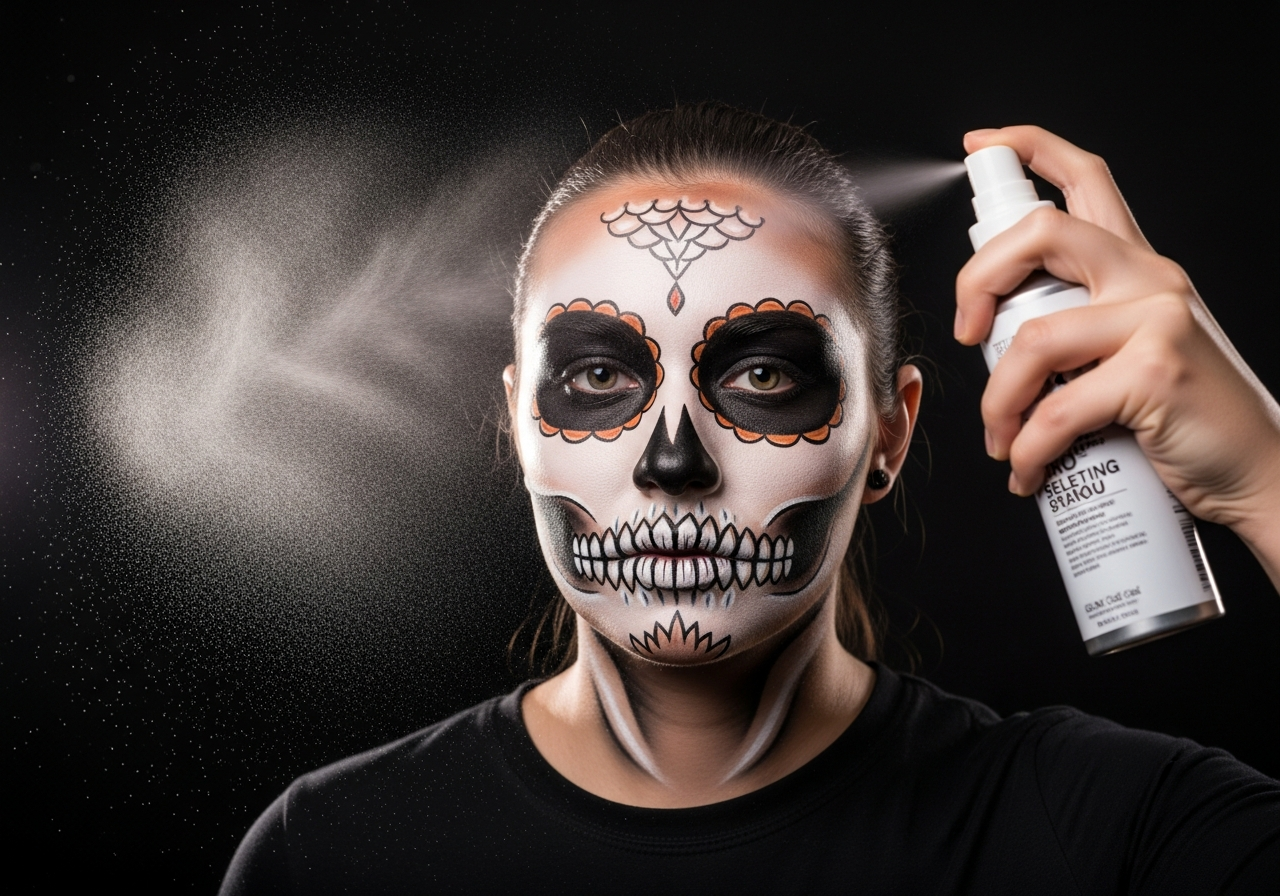
Setting spray is non-negotiable for skull makeup longevity. After completing your design, hold a setting spray bottle at arm’s length and mist your entire face evenly. Allow it to dry completely, then apply a second layer. Quality setting sprays create a protective barrier that helps makeup resist sweat, oil, and transfer. Some artists even apply setting spray between layers during the creation process for extra insurance.
Powder application throughout the creation process helps prevent smudging and allows you to build intensity gradually. After applying your white base, set it with translucent powder before moving on to black details. This prevents the black from bleeding into the white and creates a cleaner final look. Similarly, set black areas before adding colors or embellishments on top.
Avoid touching your face as much as possible once makeup is complete. This sounds obvious but becomes challenging at events where you might want to adjust your hair, wipe your eyes, or eat and drink. Consider using a straw for beverages to protect lip and mouth area makeup. If you must touch your face, use a clean tissue and dab rather than rub.
Cultural Respect and Skull Makeup
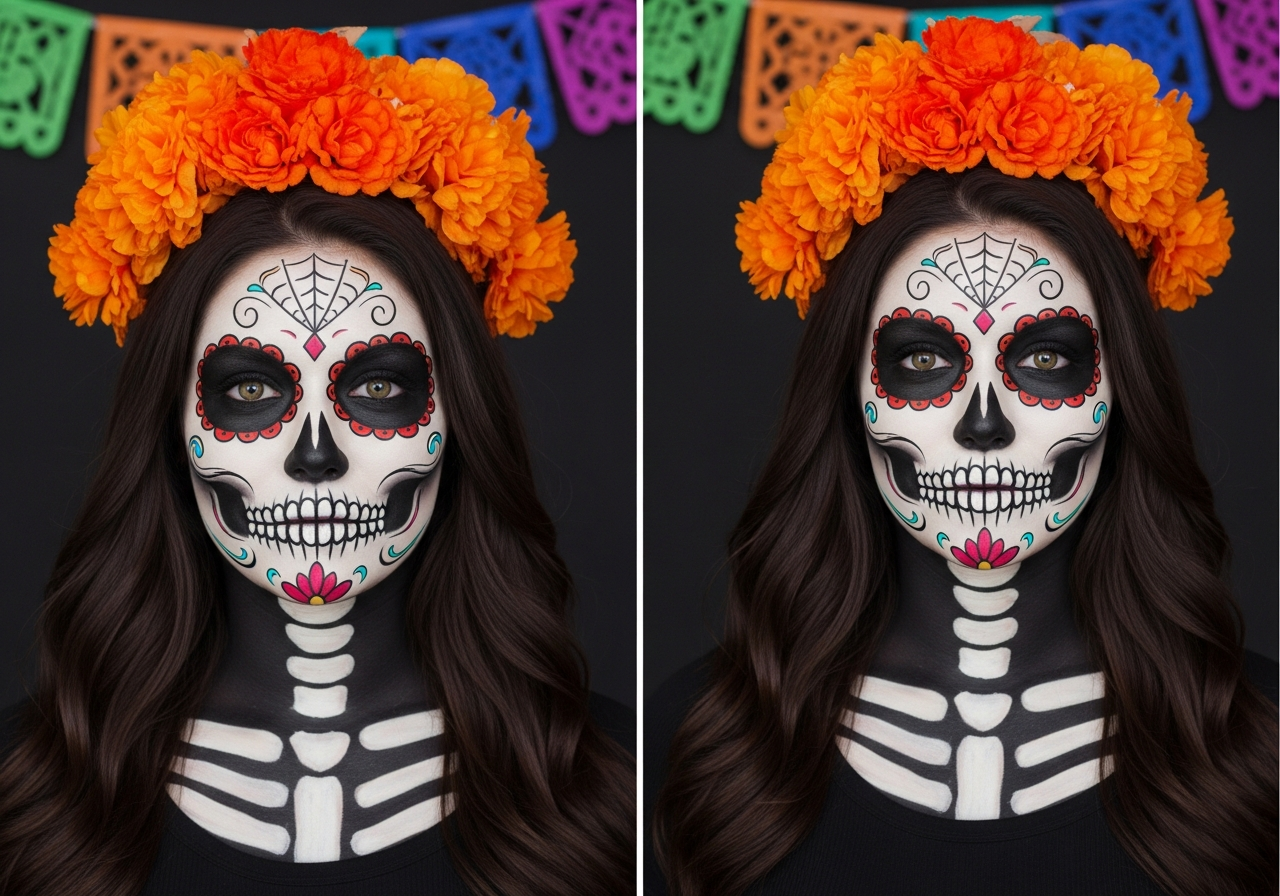
When exploring skull makeup, particularly sugar skull designs inspired by Día de los Muertos, cultural awareness and respect are essential. This Mexican tradition has deep spiritual and cultural significance that extends far beyond aesthetic appeal.
Día de los Muertos is a time when families honor deceased loved ones through offerings, celebrations, and remembrance. The skull imagery represents death not as something frightening but as a natural part of the life cycle worthy of celebration. When creating sugar skull makeup, approach it with understanding and appreciation rather than treating it as merely a costume.
Educate yourself about the symbolism within sugar skull designs. Marigolds guide spirits back to the living world. The cross represents faith. Each color has meaning, with purple symbolizing pain, pink representing celebration, and white signifying purity. Understanding these elements allows you to create designs that honor the tradition rather than appropriating it superficially.
If you choose to wear sugar skull makeup, be prepared to respectfully explain its origins if asked. Avoid reducing it to “Day of the Dead makeup” worn without any connection to or understanding of the holiday’s significance. Some people prefer to reserve authentic sugar skull designs for actual Día de los Muertos celebrations and opt for other skull styles for Halloween parties and events.
Photographing Your Skull Makeup
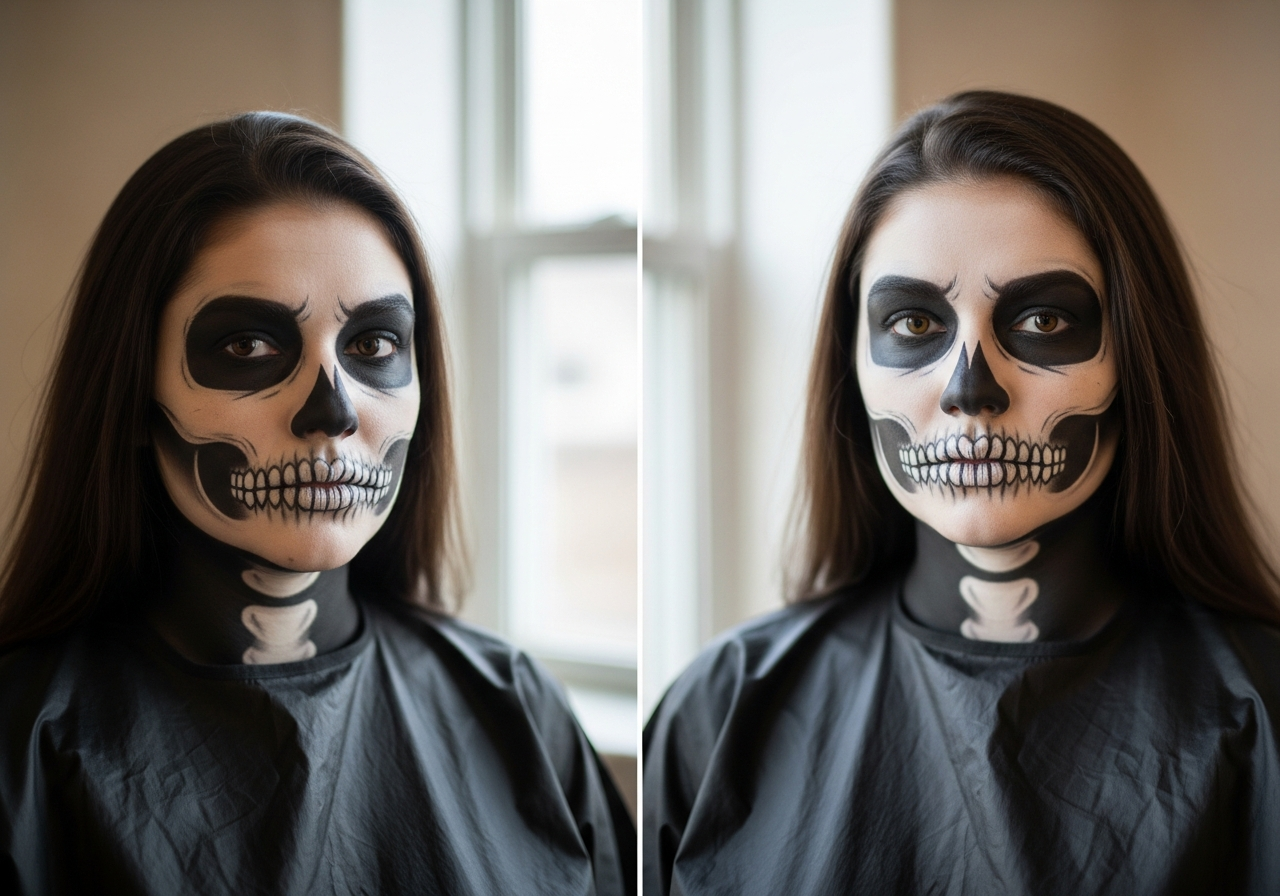
After investing time and creativity into your skull makeup, capturing it properly in photographs ensures you can remember and share your artistry. Skull makeup presents unique photographic challenges due to the high contrast between light and dark elements.
Lighting makes or breaks skull makeup photography. Natural daylight provides the most accurate color representation and shows details clearly. If shooting indoors, position yourself facing a window for soft, flattering light. Avoid harsh overhead lighting that can create unflattering shadows and wash out the dimensional qualities of your design.
Angles matter significantly when photographing skull makeup. Straight-on shots display symmetry and overall design, while three-quarter angles show dimension and allow light to play across the contours you’ve created. Tilt your head slightly downward for a more dramatic, mysterious feel, or upward for an ethereal quality. Experiment with multiple angles to find what best showcases your specific design.
Background choice affects how your makeup reads in photographs. Simple, uncluttered backgrounds keep focus on your face and makeup artistry. Dark backgrounds create drama and make lighter elements pop, while lighter backgrounds work well for darker or gothic skull designs. Consider the story you want your photograph to tell and choose your setting accordingly.
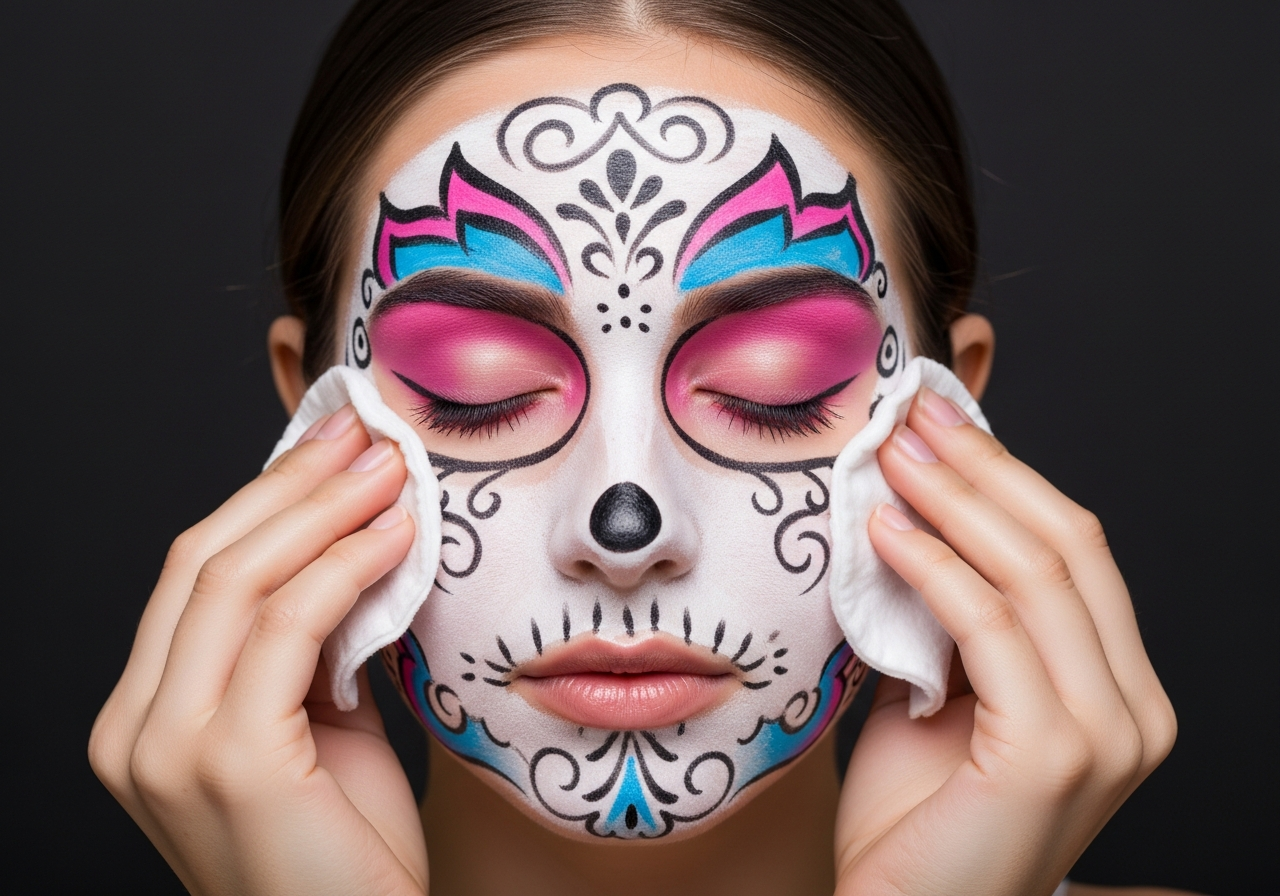
Removing Skull Makeup Safely
After the festivities conclude, proper makeup removal protects your skin and prevents irritation. Face paint and heavy makeup products require more thorough removal than everyday cosmetics.
Begin with an oil-based makeup remover or cleansing balm. These products break down even the most stubborn face paint and waterproof products effectively. Massage the remover gently across your entire face, paying special attention to areas with heavy product buildup. Allow it to sit for a minute to fully dissolve the makeup before wiping away with a soft cloth or cotton pad.
Follow up with a gentle cleanser to remove any remaining residue and the oil from your makeup remover. Use lukewarm water rather than hot, which can irritate skin that’s been under heavy makeup for hours. Cleanse twice if necessary to ensure all traces of product are gone. Any remaining makeup, especially around the hairline or jaw, can cause breakouts or irritation.
Apply a nourishing moisturizer or overnight mask after cleansing. Your skin has been covered in heavy products and needs hydration and recovery. If you notice any irritation or breakouts in the following days, use gentle, soothing products and allow your skin time to recover before applying heavy makeup again.
Conclusion
Skull makeup represents a fascinating intersection of art, culture, tradition, and self-expression. From vibrant sugar skulls that honor Mexican heritage to gothic interpretations that embrace dark beauty, from glittering festival looks to anatomically accurate creations, the possibilities are truly endless. What makes skull makeup particularly special is its ability to transform the wearer while remaining accessible to both beginners and experienced makeup artists.
As spooky season approaches each year, skull makeup continues to evolve with new techniques, products, and creative interpretations. The looks that once seemed intimidating have become achievable through tutorials, practice, and quality products now widely available. Whether you choose a simple skeleton face or embark on an intricate multi-hour creation, the process of transforming yourself into a beautiful, spooky, or artistic skull is an experience worth having.
Remember that the best skull makeup is the one that makes you feel confident and excited. Don’t be afraid to experiment, combine different styles, or create something entirely unique. Use the ideas and techniques shared here as starting points for your own creative journey. With practice, patience, and a willingness to play with different approaches, you’ll develop skills that allow you to create stunning skull makeup looks that capture attention and showcase your artistic vision throughout spooky season and beyond.
Frequently Asked Questions
What products do I need for basic skull makeup?
For basic skull makeup, you need white face paint or foundation as your base, black face paint or gel eyeliner for details, a few makeup brushes in different sizes, setting powder to prevent smudging, and setting spray for longevity. Cotton swabs and makeup remover help with corrections during application. As you advance, you can add colored paints, glitter, rhinestones, and specialty tools.
How long does it take to complete skull makeup?
The time required varies significantly based on design complexity and your skill level. A simple skeleton face might take 30 minutes for a beginner, while intricate sugar skull or anatomical designs can require two to three hours. Half-skull looks typically fall somewhere in the middle at one to two hours. Plan extra time if you’re trying a design for the first time or adding embellishments like rhinestones.
Can I wear skull makeup if I have sensitive skin?
Yes, but choose your products carefully. Look for hypoallergenic face paints specifically formulated for sensitive skin and always do a patch test 24 hours before full application. Avoid products containing common irritants and ensure you properly prep your skin with moisturizer and primer to create a protective barrier. Remove makeup thoroughly and moisturize afterward to minimize potential reactions.
Is it okay to wear sugar skull makeup for Halloween?
Sugar skull makeup can be worn for Halloween with cultural awareness and respect. Educate yourself about Día de los Muertos traditions and the symbolism behind the designs. Approach it as honoring a meaningful tradition rather than just wearing a costume. Some people prefer to reserve authentic sugar skull designs for actual Día de los Muertos celebrations and choose other skull styles for Halloween events.
How do I prevent my skull makeup from smudging?
Prevent smudging by setting each layer with powder before adding the next, using quality setting spray after completion, choosing long-wearing and waterproof products when possible, and avoiding touching your face throughout your event. Apply setting spray in multiple thin layers rather than one heavy application. Blotting papers can help manage oil without disturbing your makeup if you have oily skin.