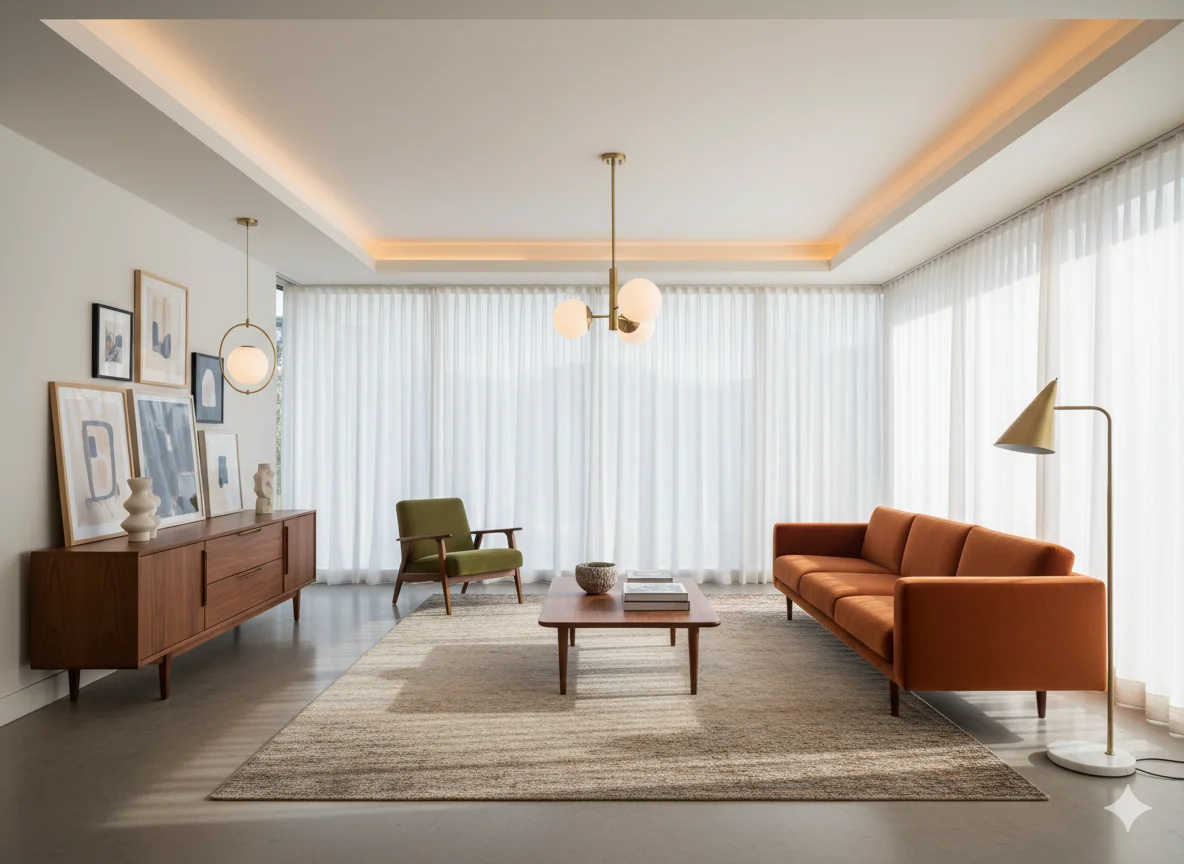
21 Mid-Century Modern Lighting Ideas Guide
There is something almost magnetic about mid-century modern design. It arrived in the decades following World War II, born from a cultural optimism that believed the future was bright, and it has never really left. Today, mid-century modern lighting sits at the intersection of art and utility, offering homeowners and designers a vocabulary of clean lines, warm materials, and sculptural confidence that translates beautifully into any contemporary interior.
Whether you are renovating a 1960s ranch house or introducing a single statement pendant into a minimalist apartment, mid-century modern lighting has a way of grounding a space with character while simultaneously opening it up with elegance. This guide walks through 21 of the most compelling ideas, organized by fixture type, room application, and design philosophy, so you can approach your own space with clarity and confidence.
What Defines Mid-Century Modern Lighting
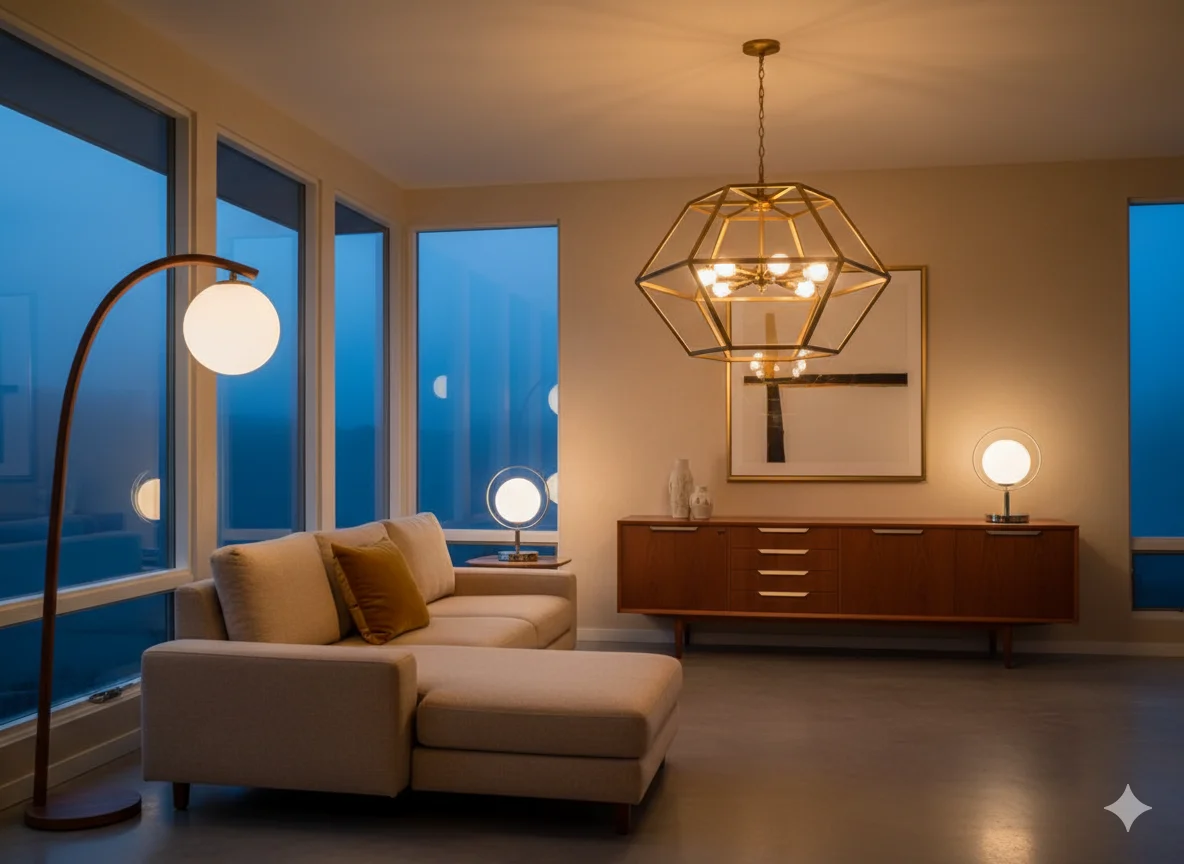
Before diving into specific ideas, it helps to understand what separates this style from others. Mid-century modern lighting draws from a period roughly spanning the 1940s through the late 1960s. Pioneering designers like Poul Henningsen, George Nelson, Achille Castiglioni, and Arne Jacobsen believed that a light fixture should function as sculpture first and illumination second. The result was a movement that rejected ornate decoration in favor of purposeful form.
The hallmarks are recognizable: geometric shapes, organic curves, materials that mix wood and metal and glass, and a color palette grounded in warm neutrals punctuated by bold retro accents. Brass, satin nickel, walnut, teak, frosted opal glass, and chrome appear again and again. Understanding these principles helps you shop smarter and decorate with intention.
Pendant Lights and Chandeliers
The Sputnik Chandelier
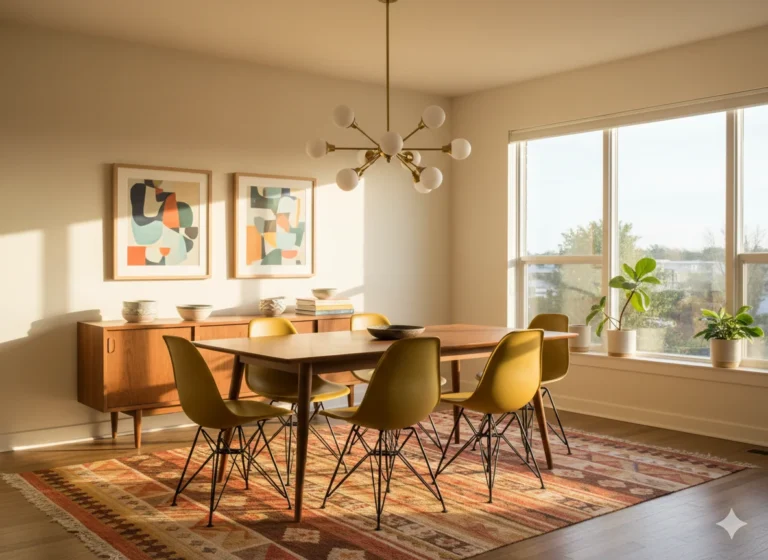
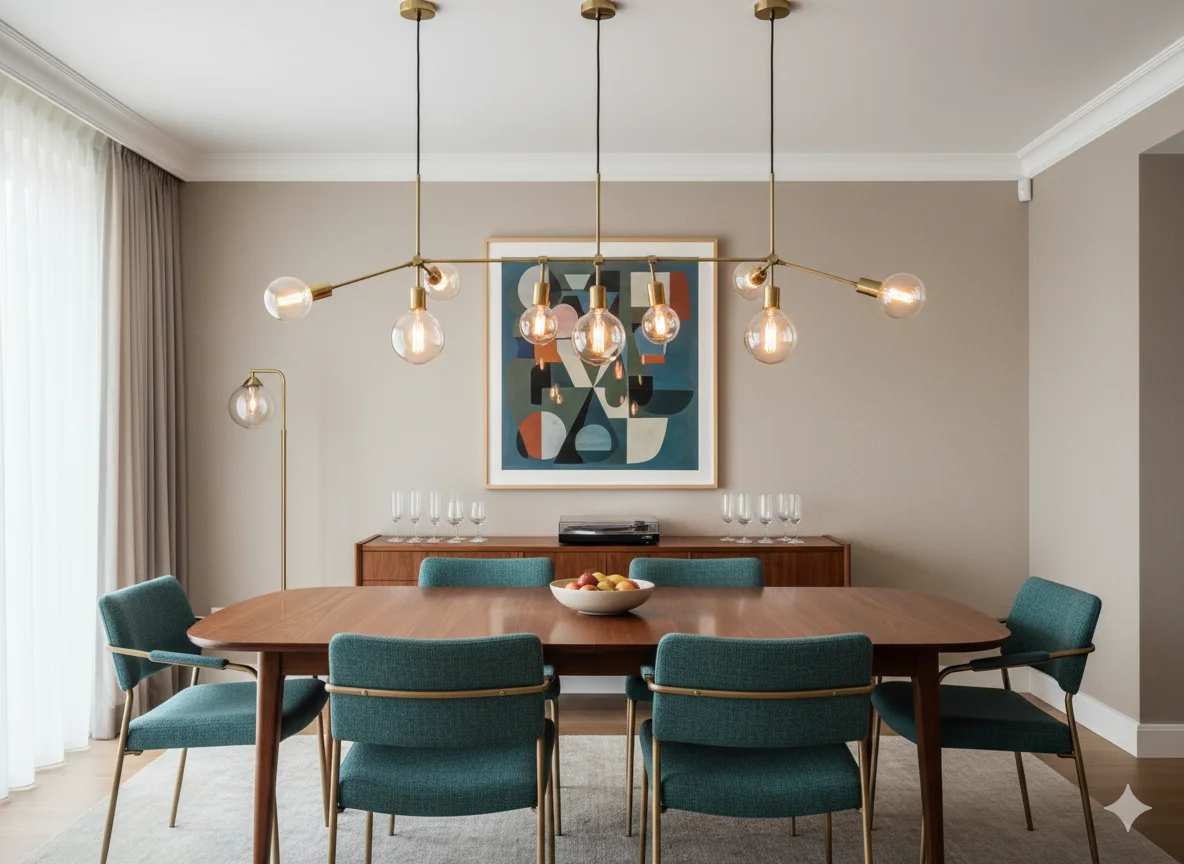
Perhaps no fixture says mid-century modern more immediately than the Sputnik chandelier. Inspired by the Soviet satellite launched in 1957, these starburst designs radiate arms in every direction, each tipped with a bulb. They work best as a statement piece in an entryway, dining room, or living room with sufficient ceiling height. Pair one with a round dining table and warm Edison-style bulbs to anchor the entire aesthetic of a room.
Globe Pendant Clusters
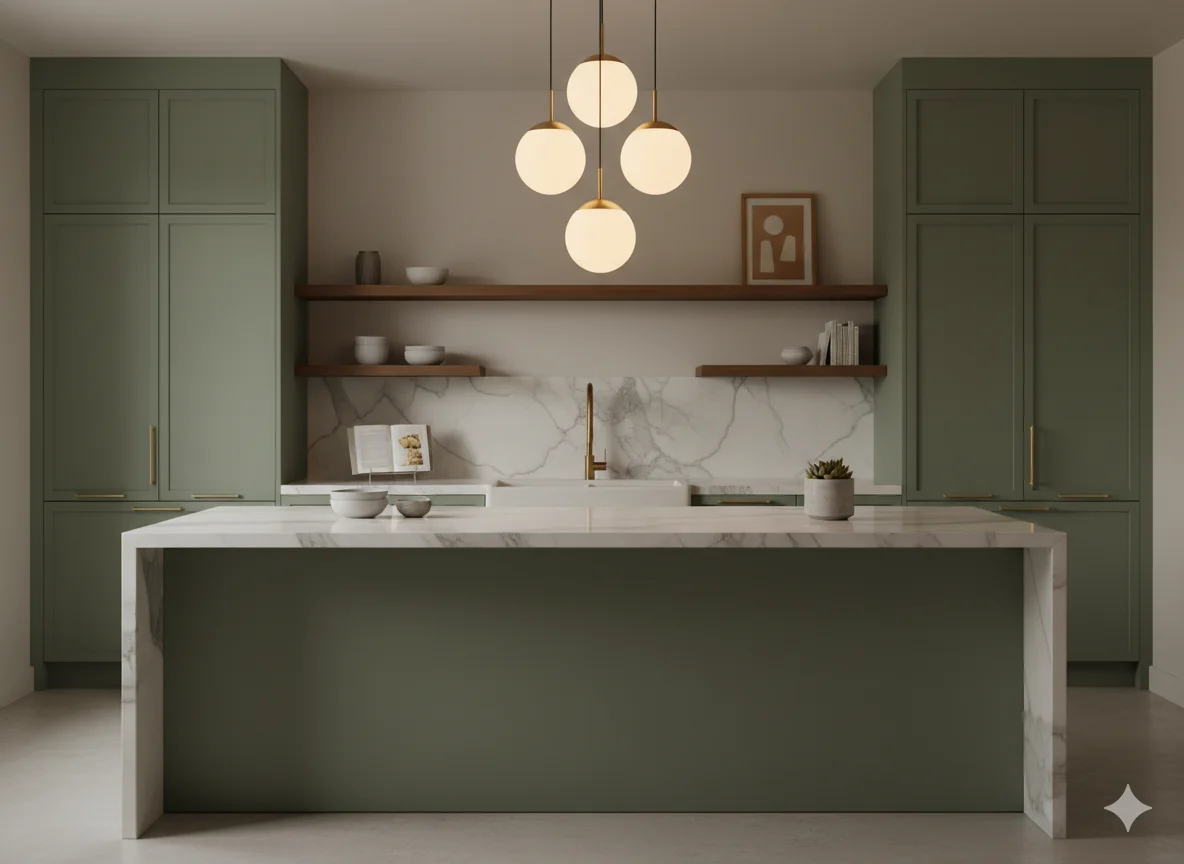
A single large glass globe pendant has a quiet authority, but when you cluster three globes at varying heights over a kitchen island or dining table, the effect becomes genuinely striking. Opal glass diffuses light softly and evenly, eliminating harsh shadows and creating the warm, ambient glow that mid-century interiors are known for. Opt for brass or aged bronze hardware to complete the look.
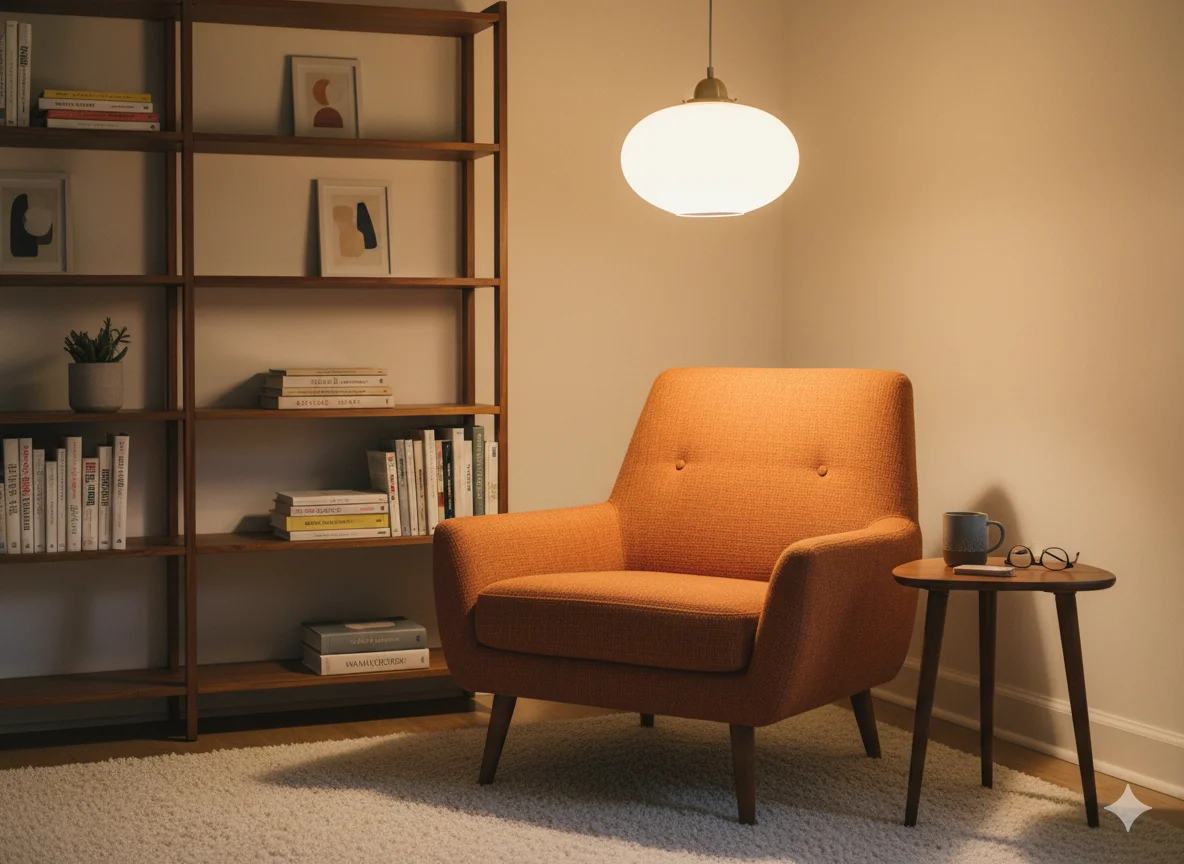
The George Nelson Bubble Lamp
Originally designed in 1947, George Nelson’s bubble lamps remain among the most reproduced designs in lighting history. Their translucent plastic shells glow like paper lanterns, available in teardrop, saucer, and cigar forms. Hanging one over a reading chair or in a bedroom corner adds a softness that few other fixtures can replicate.
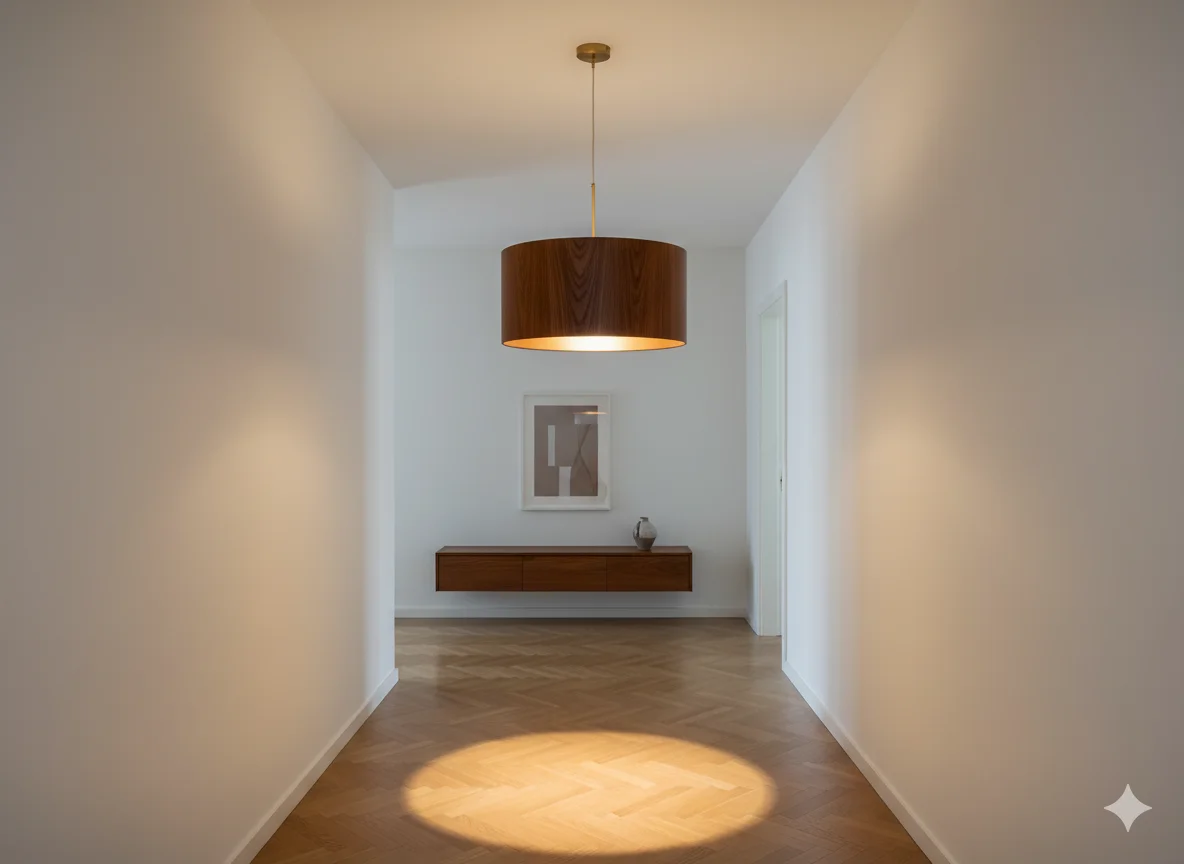
Drum Shade Pendants
The drum shade pendant is understated but refined. In a rich walnut veneer or a matte black fabric with brass hardware, it brings mid-century restraint to spaces that do not need a bold statement. These work particularly well in hallways, over nightstands, or above a bathroom vanity where a more dramatic fixture would overwhelm.
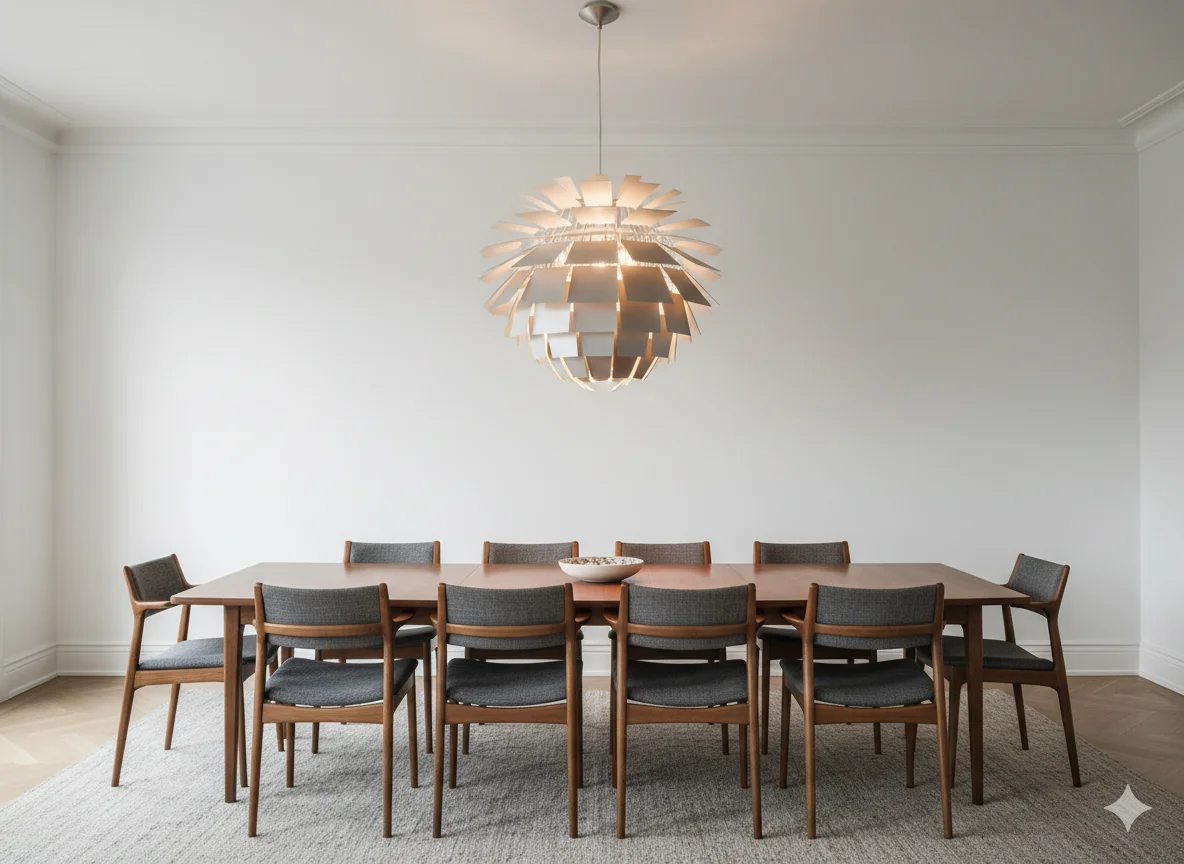
The Artichoke Pendant
The Louis Poulsen PH Artichoke pendant, designed in 1958, is one of the most technically sophisticated fixtures of the era. Its layered steel leaves diffuse light in every direction while concealing the light source entirely. A single artichoke pendant in a dining room becomes an instant conversation piece and a genuine work of art.
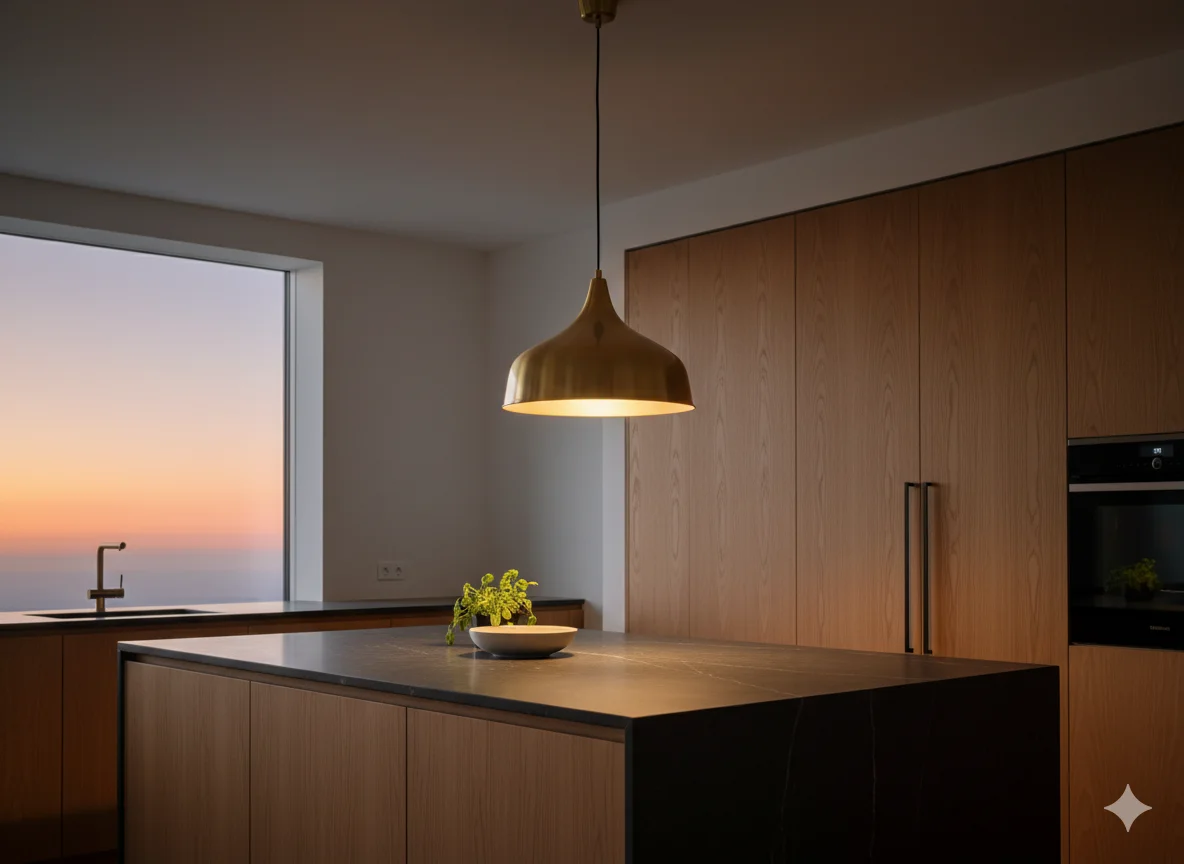
Cone Pendant Lights
The inverted cone is a shape that appears repeatedly in mid-century lighting because it solves a functional problem beautifully. It directs focused light downward while maintaining a clean, minimal silhouette. In a brushed brass or copper finish, a cone pendant over a kitchen island or study desk is both purposeful and visually satisfying.
Floor Lamps
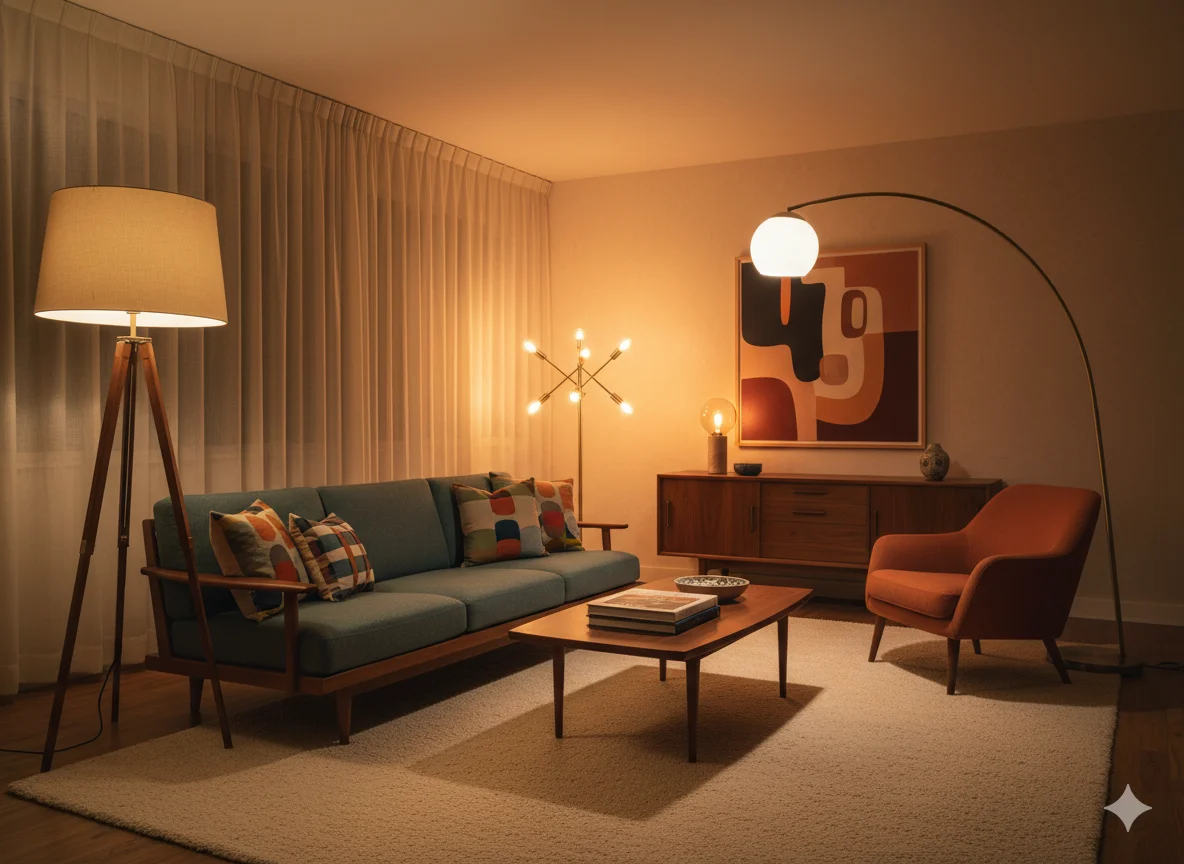
The Ar co Floor Lamp
Achilles Castigation Ar co lamp, introduced in 1962, is arguably the most iconic floor lamp in the history of design. Its arching stainless steel stem sweeps from a heavy marble base to position a shade directly over a seating area or coffee table. It provides overhead-style illumination without the need for ceiling wiring, making it ideal for apartments or living rooms where ceiling fixtures are limited.
Tripod Floor Lamps
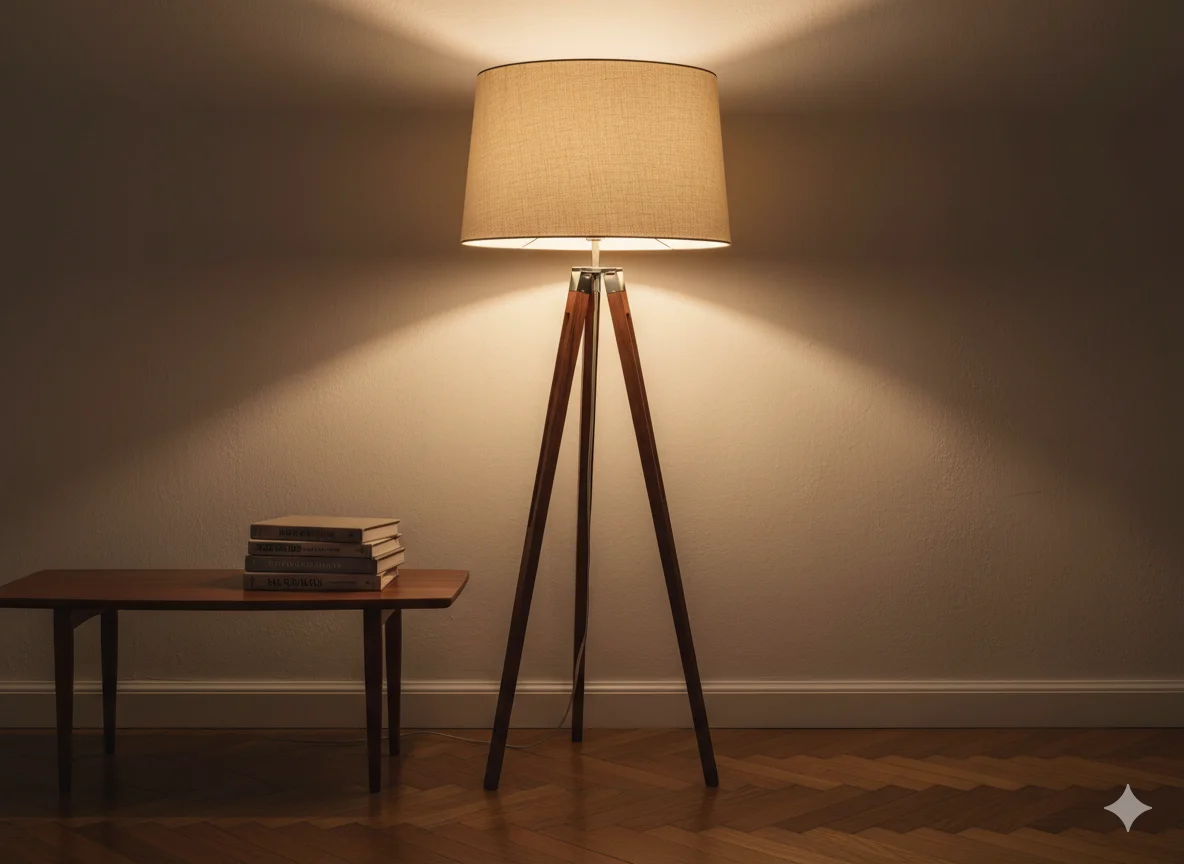
The tripod lamp is a mid-century staple. Three angled legs in walnut or teak support a simple shade at eye level, bringing the warmth of natural wood into a room while delivering reading or ambient light. Position one beside a low-profile sofa or in a quiet corner alongside a stack of books for a classic, effortless look.
Tree Lamps
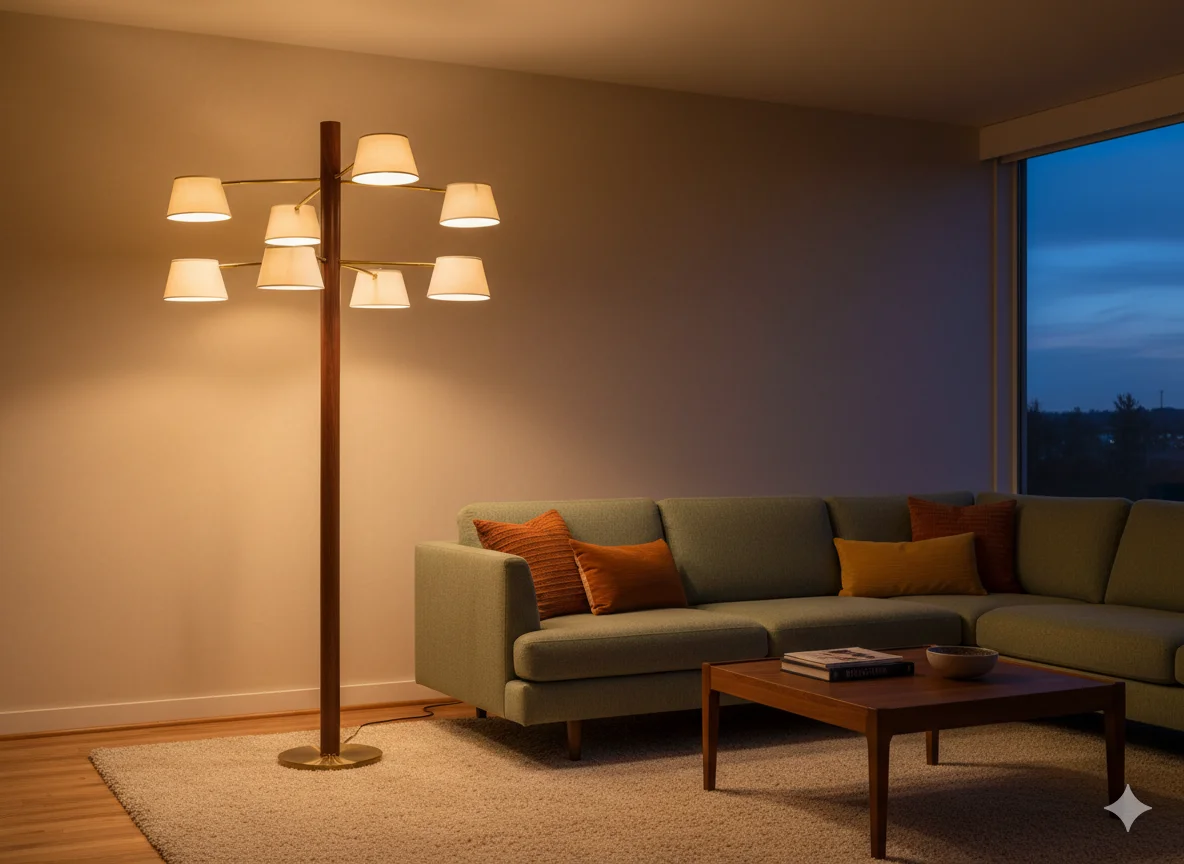
Multi-arm tree lamps extend their branches in different directions, each holding a small shade or exposed bulb. These fixtures mix materials aggressively, often combining wood, metal, and fabric in a single piece, which aligns perfectly with the mid-century philosophy of merging the organic with the industrial.
Swing Arm Floor Lamps
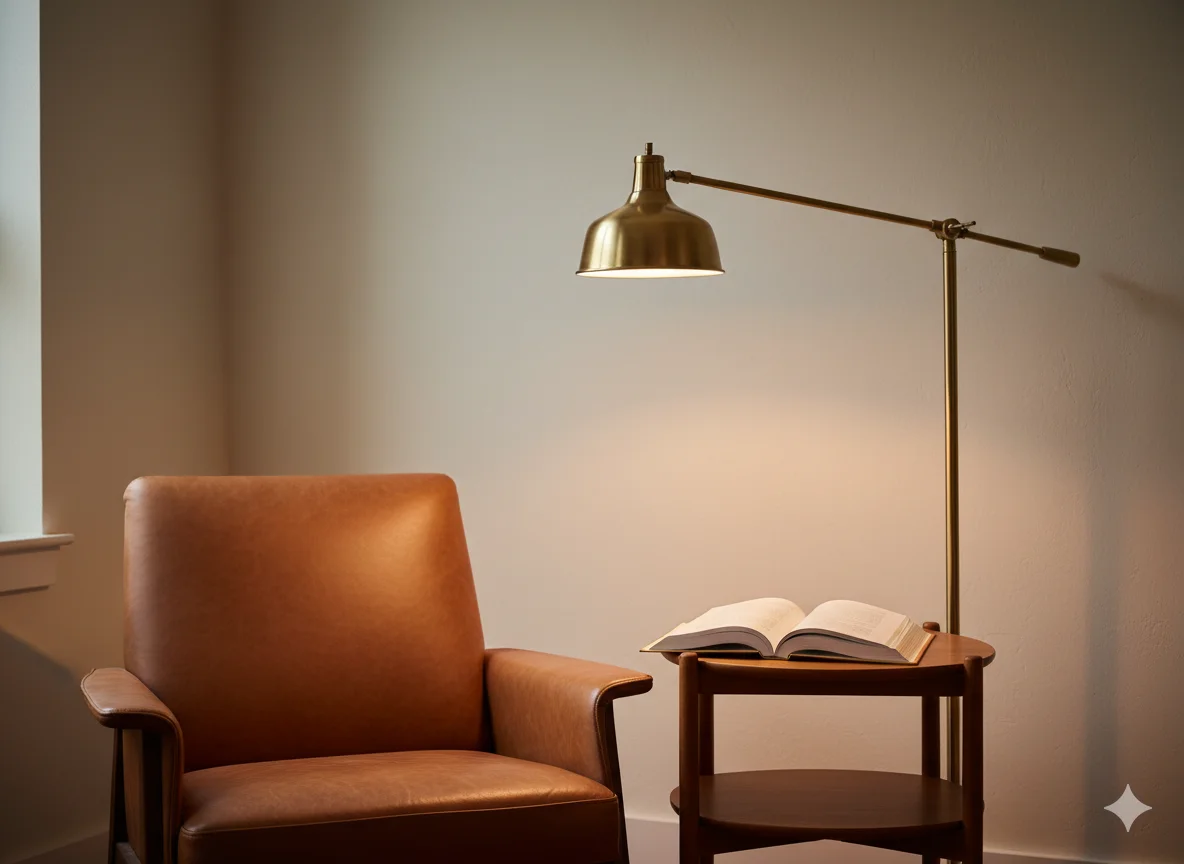
The adjustable swing arm floor lamp brings a functional precision that mid-century designers admired. The ability to angle and reposition the light source was seen as a triumph of thoughtful engineering. In a polished brass or matte black finish, these lamps serve as ideal reading companions beside an armchair or at the end of a bed.
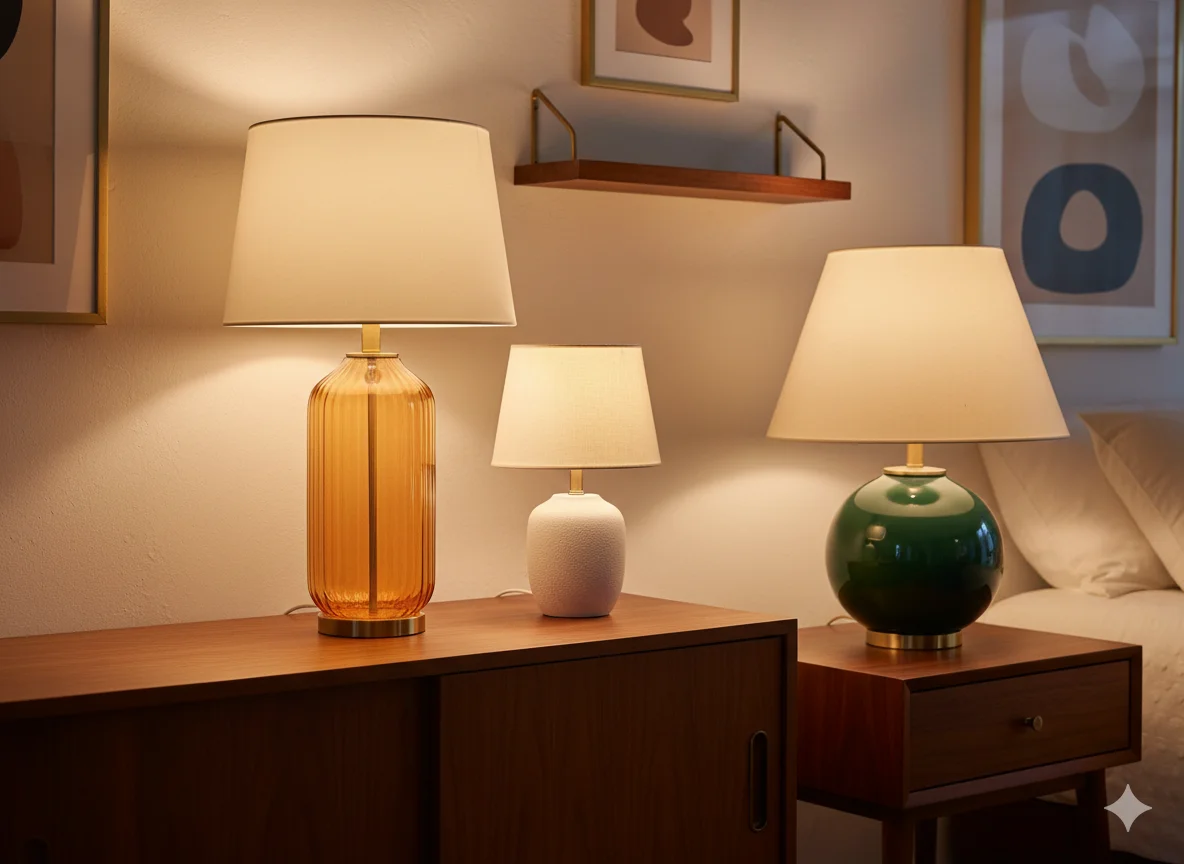
Table Lamps
Ceramic Base Table Lamps
A ceramic base in mustard yellow, avocado green, or terracotta with a simple linen shade captures the color sensibility of the era without being heavy-handed. Set a pair on matching bedside tables to ground a bedroom with symmetry and a retro warmth that feels collected rather than coordinated.
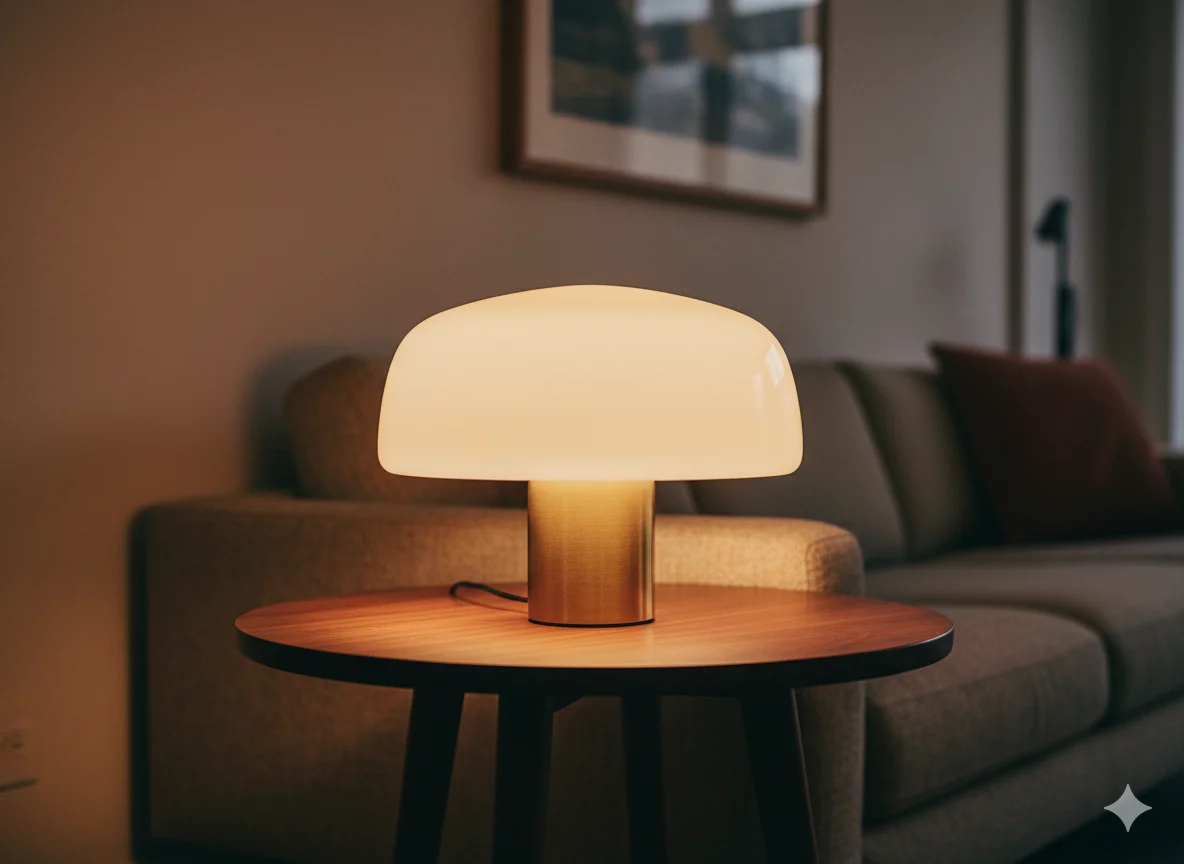
Mushroom Table Lamps
The mushroom lamp, with its wide, rounded shade positioned low over a compact base, is one of the most recognizable silhouettes of the era. In an opal glass body, it emits a diffuse, ambient glow that makes it perfect for a living room side table or home office desk.
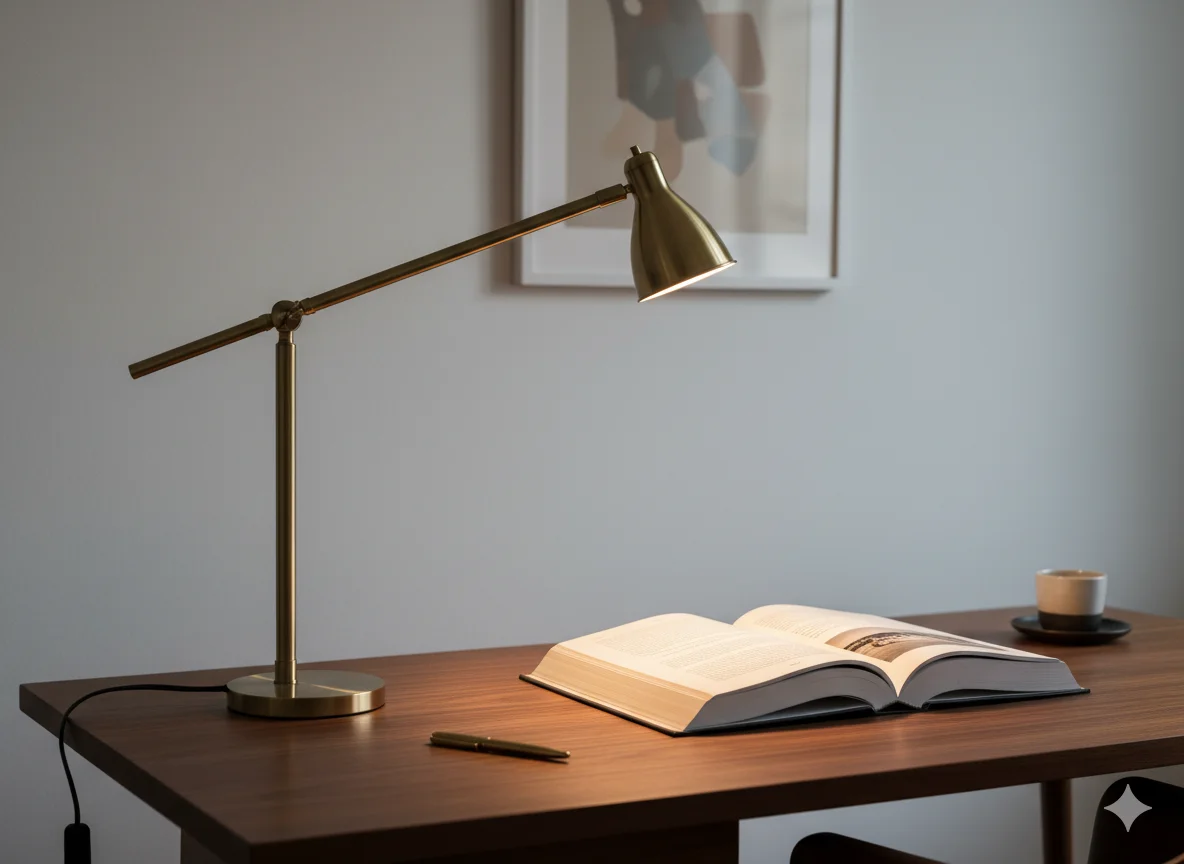
Architectural Table Lamps with Brass Accents
Slender, sculptural table lamps with exposed brass armatures and adjustable heads bring a workshop precision to bedrooms and studies. These are particularly effective in spaces where clean lines and warm metal tones are already present in the furniture and hardware.
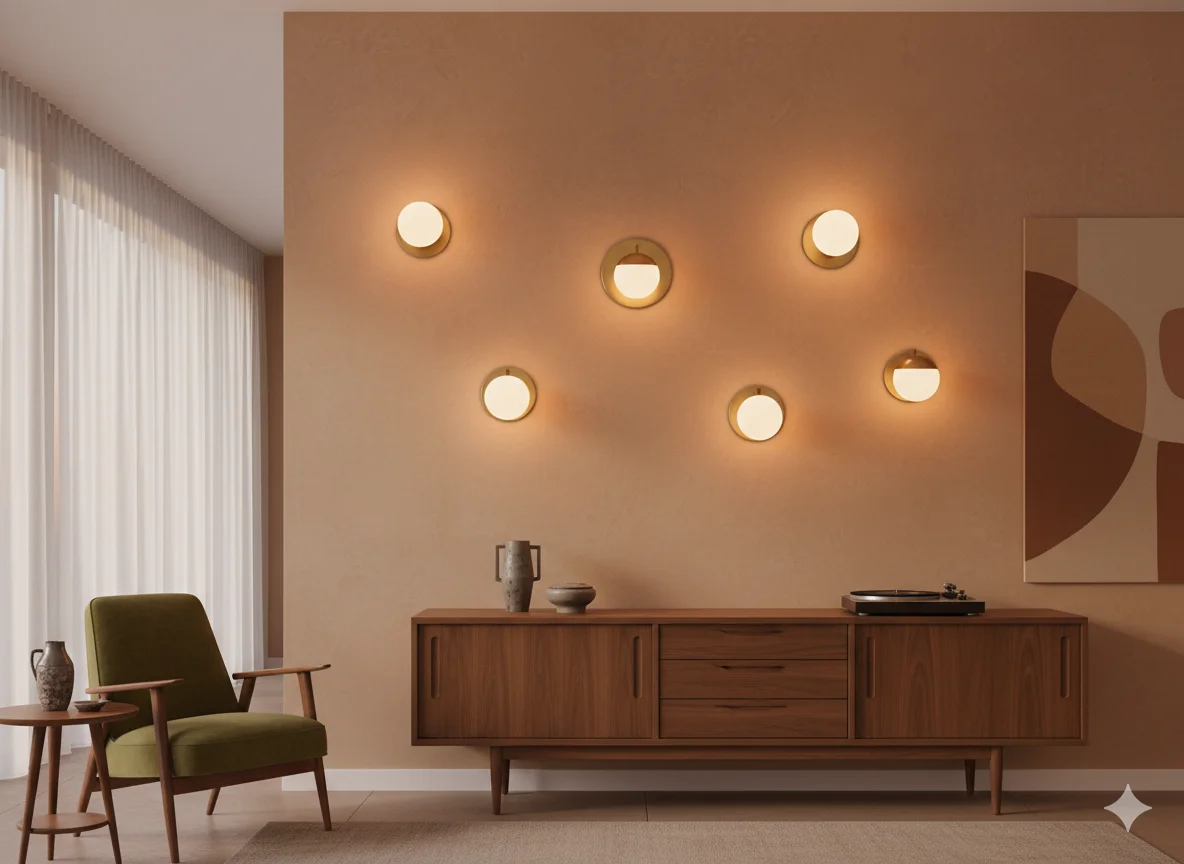
Wall Sconces
Brass Swing Arm Wall Sconces
Wall-mounted swing arm sconces are a space-efficient and elegant solution for bedrooms, reading nooks, and narrow hallways. In a warm brass finish with a small, directional shade, they deliver targeted task lighting while adding visual texture to an otherwise flat wall.
Globe Wall Sconces
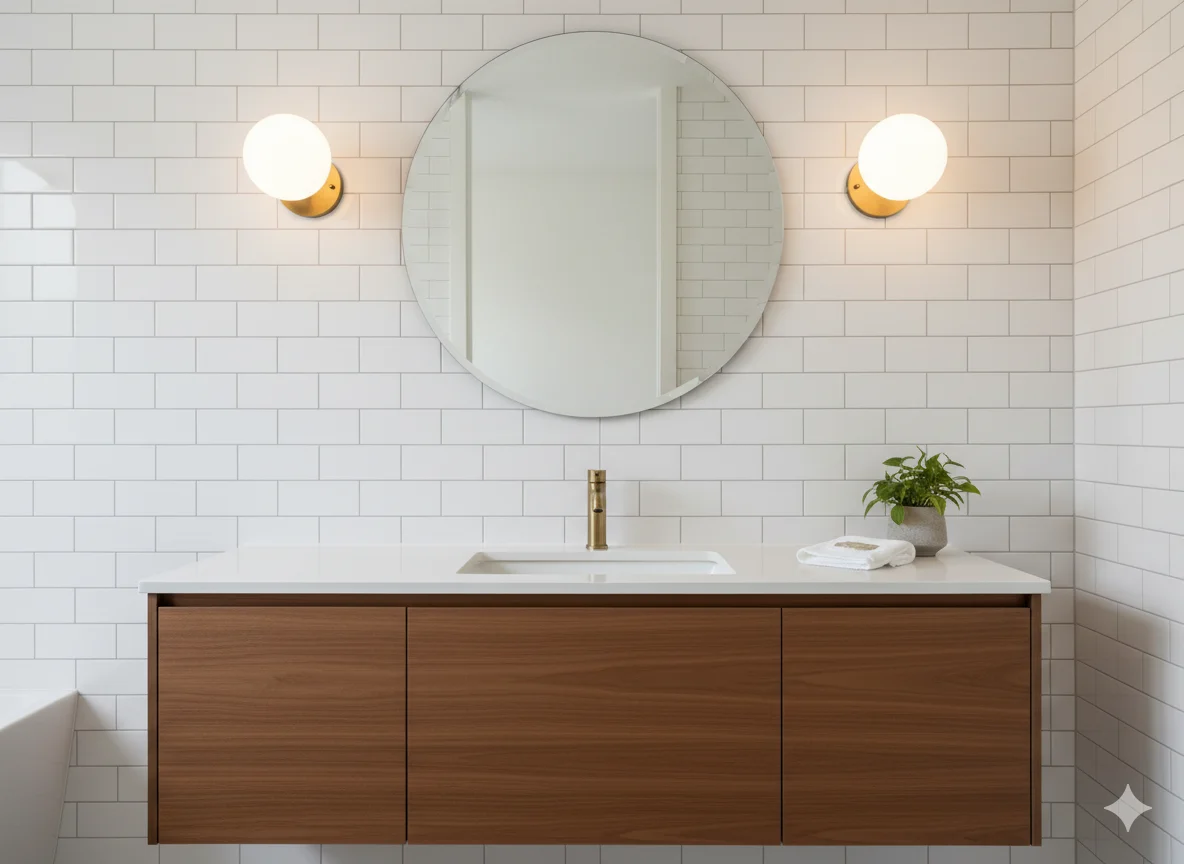
A wall sconce topped with a simple glass globe creates a rhythm of light along a corridor, a bathroom vanity, or a staircase. When used in pairs flanking a mirror or a piece of art, globe sconces frame the subject beautifully and reinforce the mid-century preference for symmetry balanced with warmth.
Geometric Sculptural Sconces
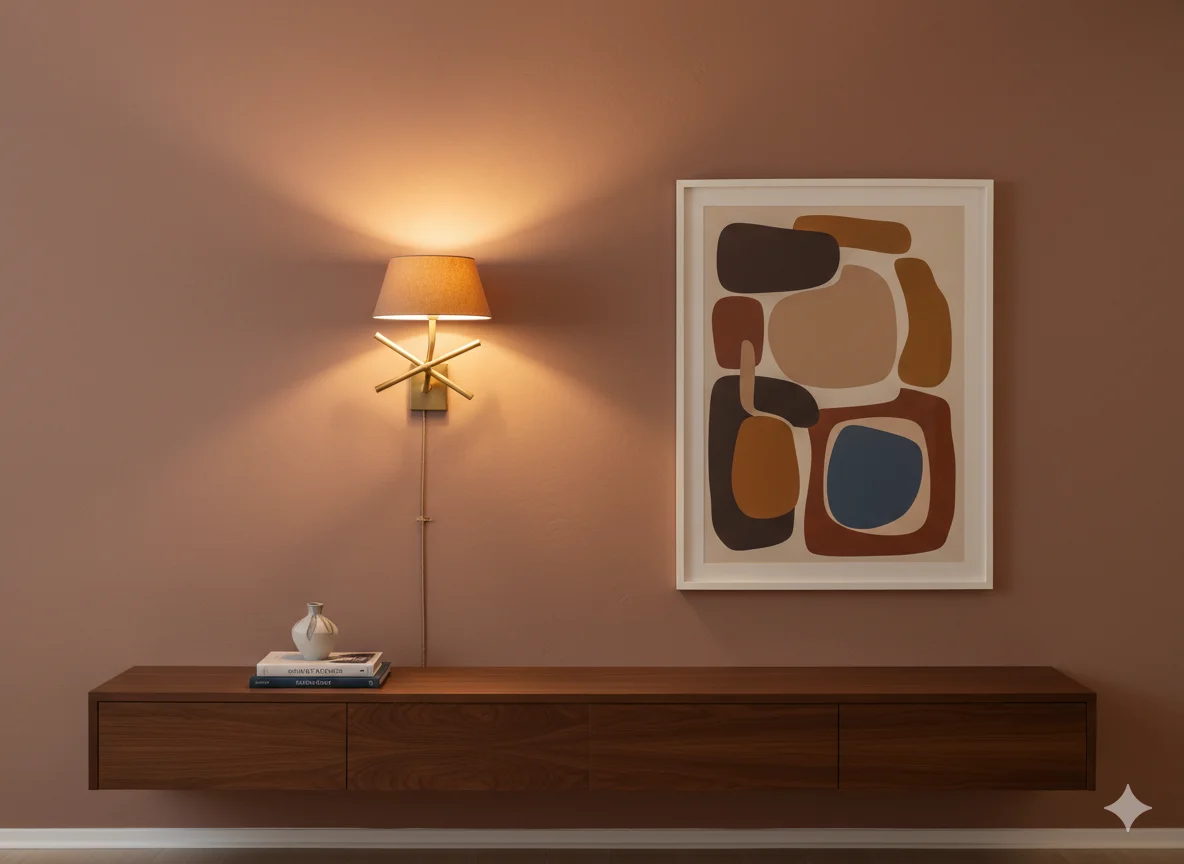
Some of the most compelling wall sconces in the mid-century tradition are essentially small sculptures. Angular brass arms, asymmetric shades, and exposed hardware celebrate the fixture as a decorative object in its own right. These work well in living rooms and dining spaces where the wall itself functions as a canvas.
Ceiling Fixtures
Atomic Age Semi-Flush Mounts
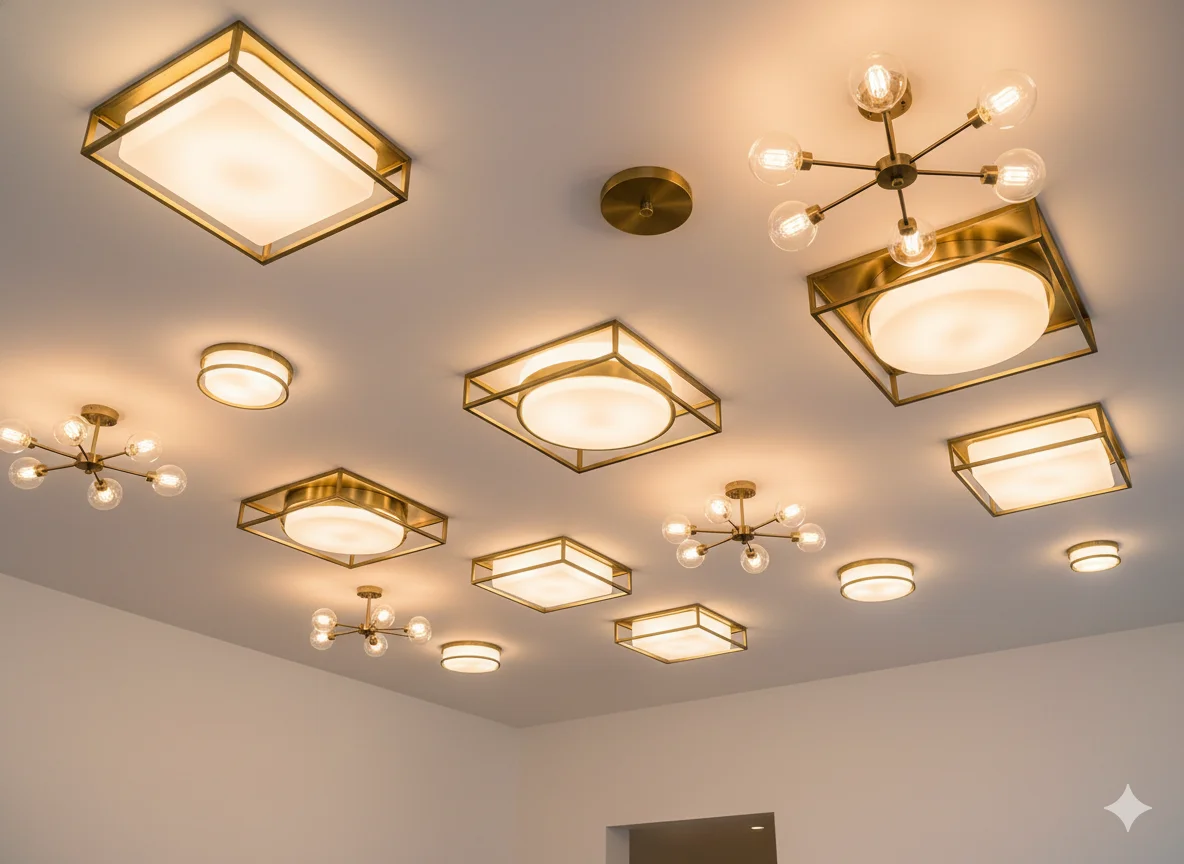
For rooms without the ceiling height for a pendant or chandelier, a semi-flush mount in an atomic-era starburst or geometric pattern brings the drama of mid-century design within reach. These fixtures work well in bedrooms, studies, and smaller dining areas where a commanding presence is still desired.
Flush Mount Globe Lights
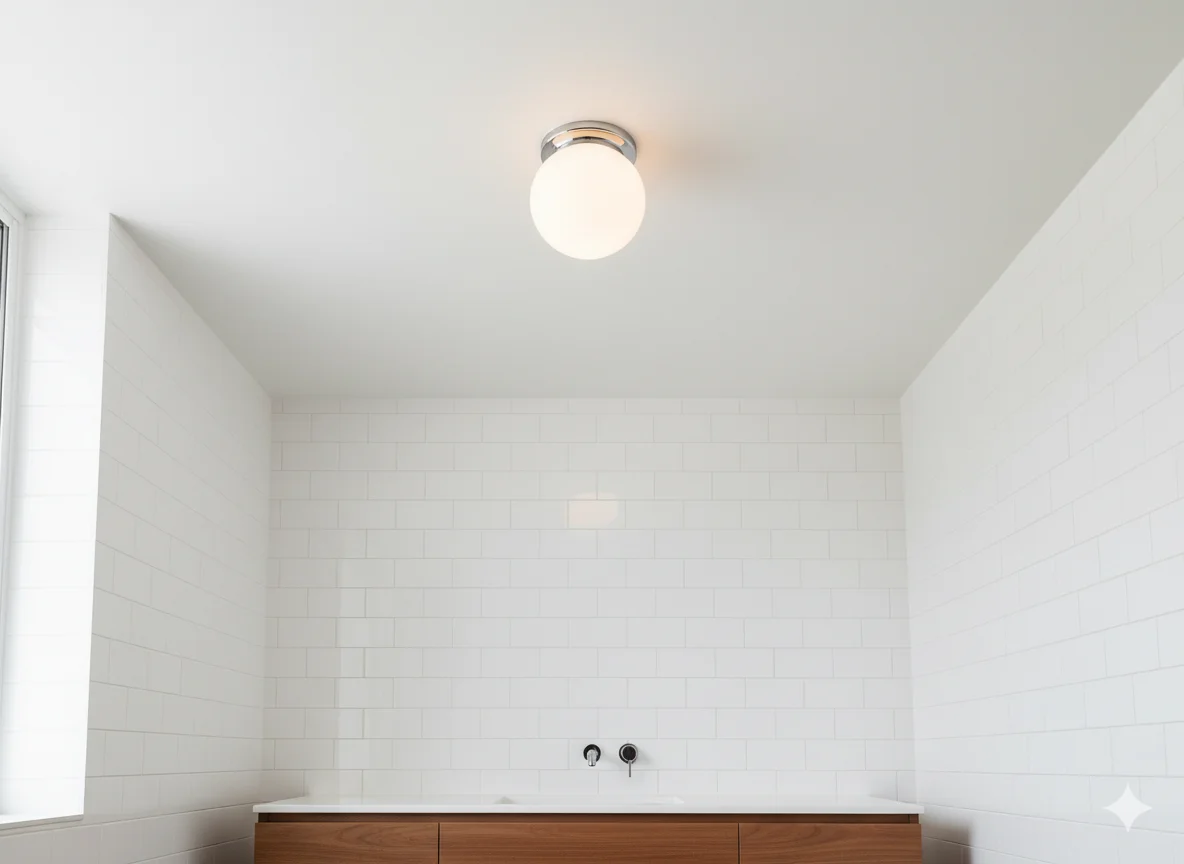
A simple flush-mounted glass globe is one of the cleanest solutions for a mid-century bathroom or hallway. In a milky opal finish with a chrome or brass ceiling plate, it delivers soft, even light without visual clutter.
Outdoor and Specialty Lighting
Lantern-Style Outdoor Wall Lights
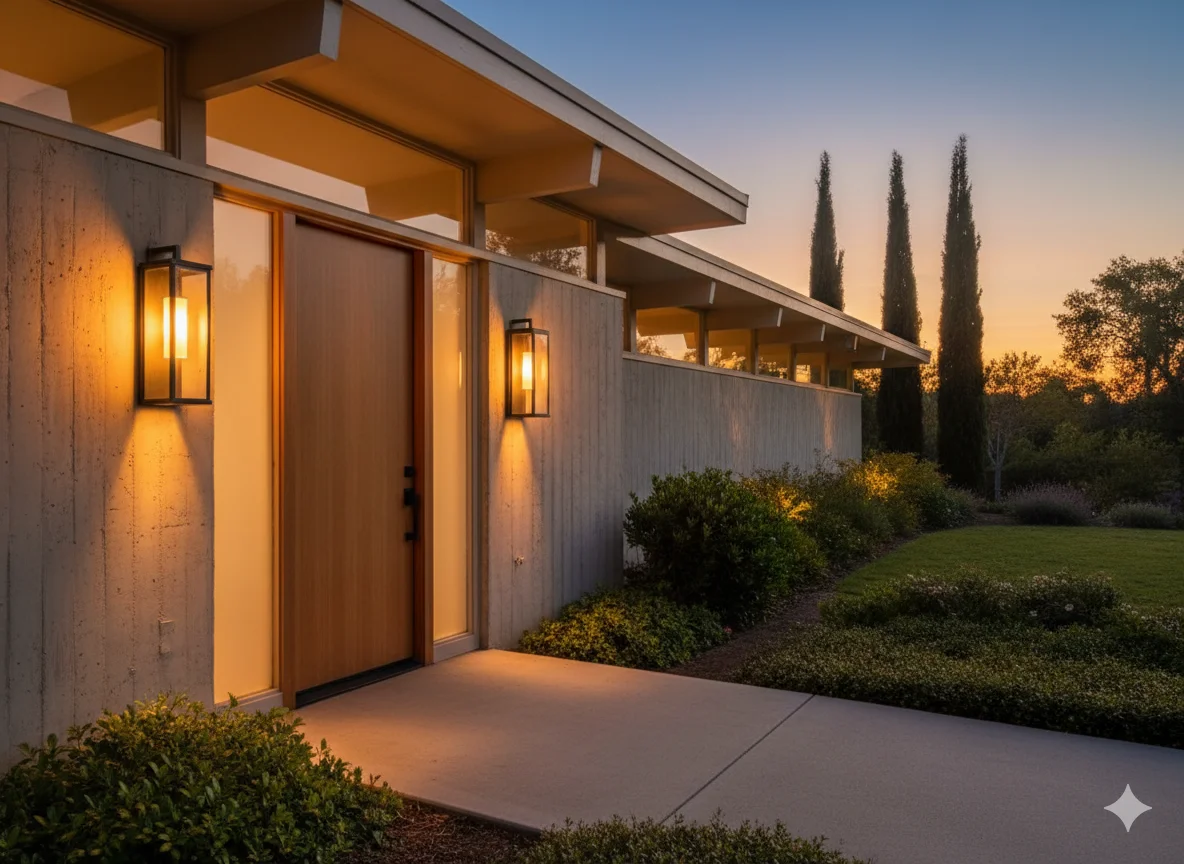
Mid-century outdoor lighting took its cues from the interior aesthetic: clean forms, metal frames, and diffused glass. A geometric lantern in matte black or aged brass beside a front door sets the tone for an entire home’s design identity before anyone steps inside.
Mid-Century Inspired Ceiling Fans with Lighting
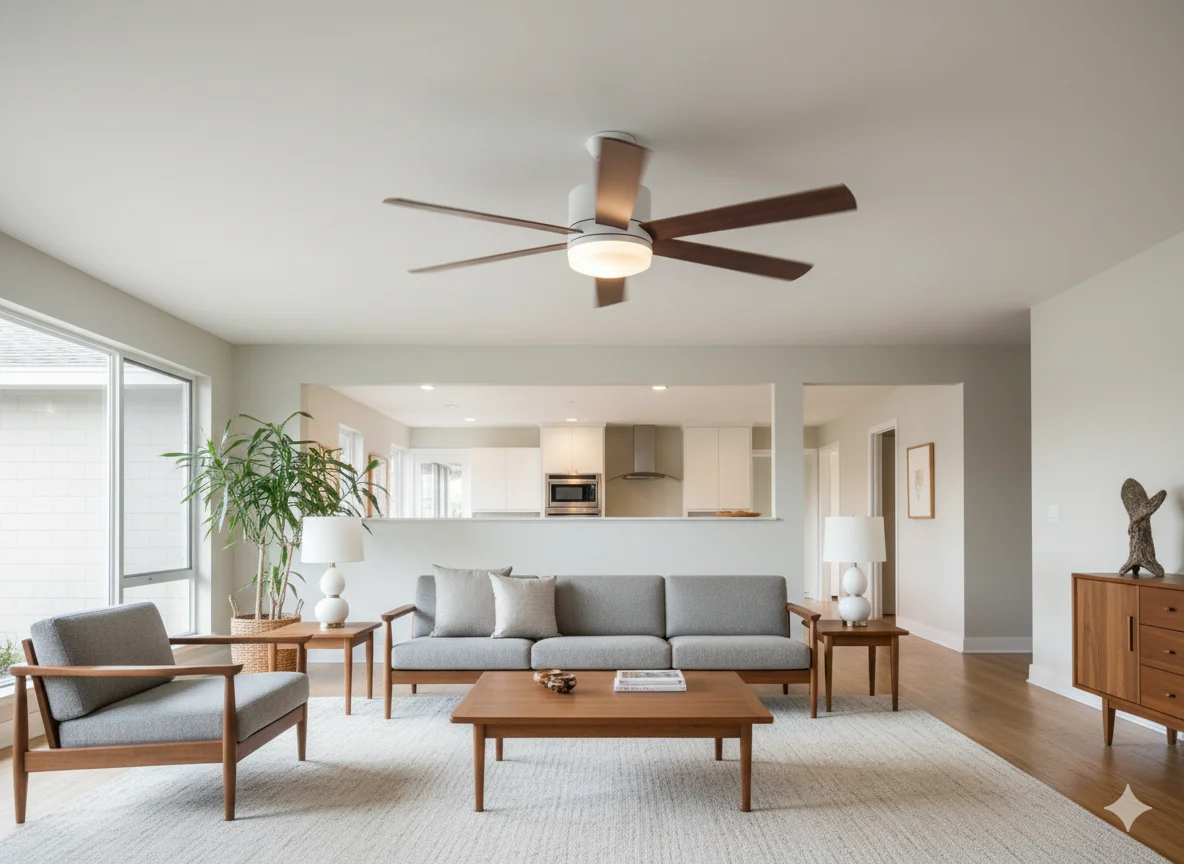
The ceiling fan received a genuine upgrade when mid-century sensibility was applied to it. Sleek wooden blades paired with a compact, globe-style light kit produce a fixture that is functional year-round and visually coherent with the broader aesthetic of a mid-century interior.
Layering Light Sources Across a Room
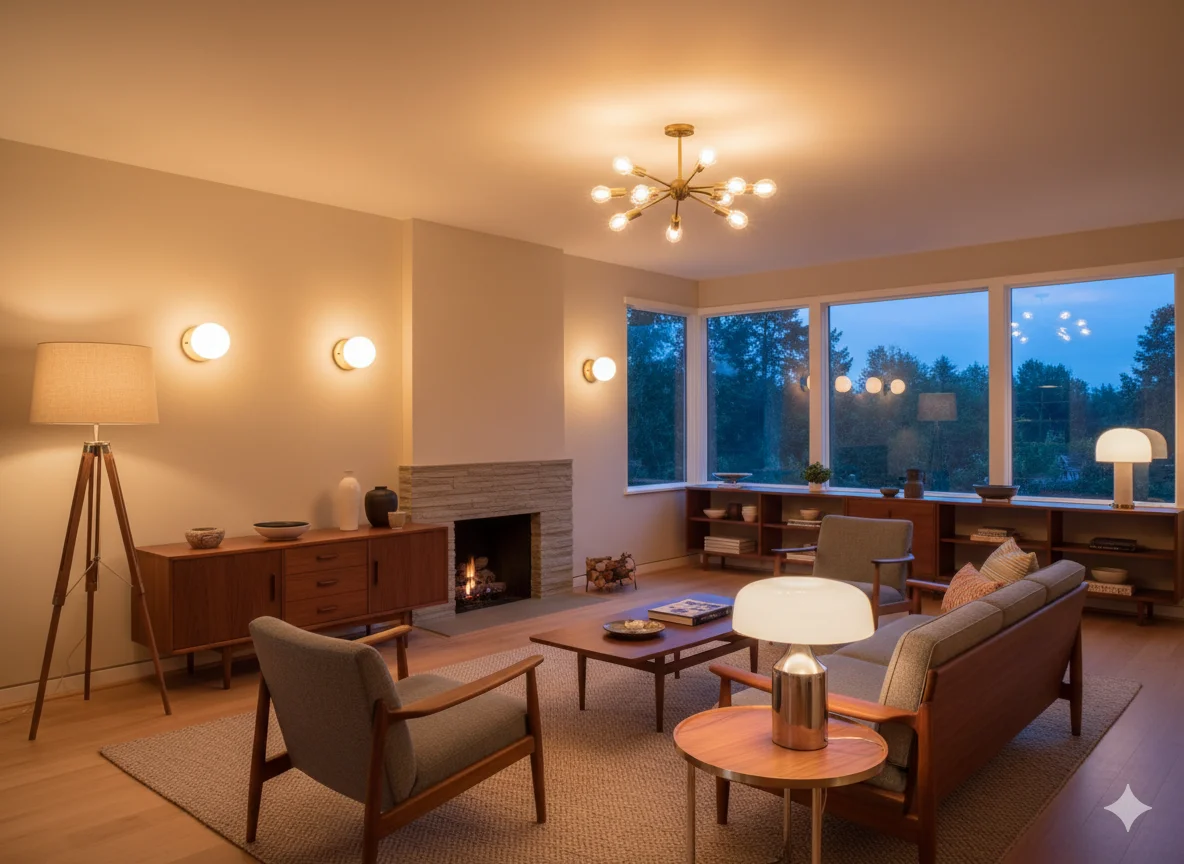
The twenty-first and perhaps most important idea in this guide is not about a single fixture at all. It is about layering. Mid-century modern interiors at their best combine ambient ceiling light, targeted task lighting from floor and table lamps, and accent lighting from sconces to create a room that feels alive at any time of day. A Sputnik chandelier may anchor a dining room, but it is the warm glow of a tripod floor lamp in the corner and the soft light from a globe sconce that transform the space from a room to an experience.
Choosing the Right Materials and Finishes
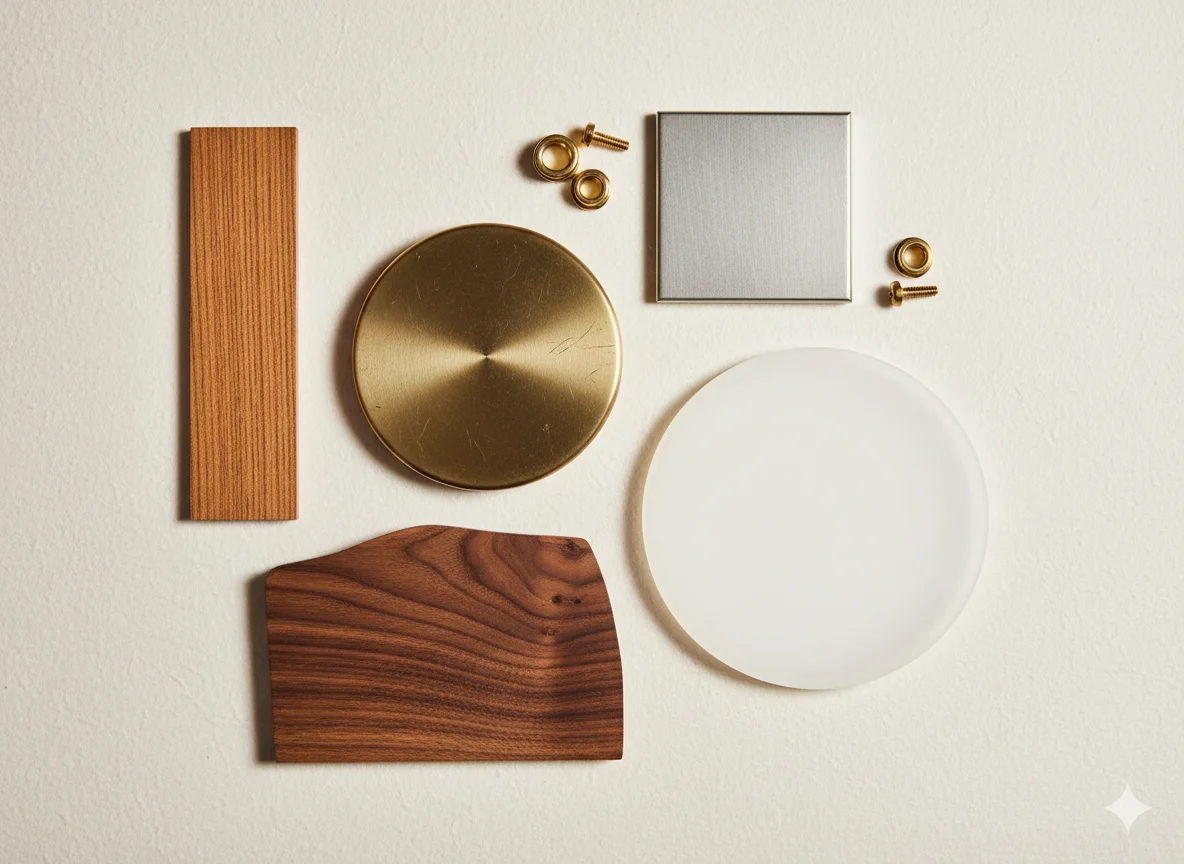
The material palette of mid-century modern lighting is one of its defining strengths. Aged brass is perhaps the most versatile finish, bringing warmth without ostentation. Polished chrome adds a cool, slightly futuristic quality that reflects the era’s fascination with science and progress. Walnut and teak wood accents ground metal fixtures with organic warmth, while frosted and opal glass diffuse light in the smooth, even way that designers of the period favored over bare bulbs.
When selecting fixtures, consider the existing finishes in your space. Door hardware, cabinet pulls, and plumbing fixtures should ideally share at least one metal tone with your lighting choices. This kind of repetition builds cohesion without making a room feel overly designed.
Mixing Mid-Century Modern with Contemporary Interiors
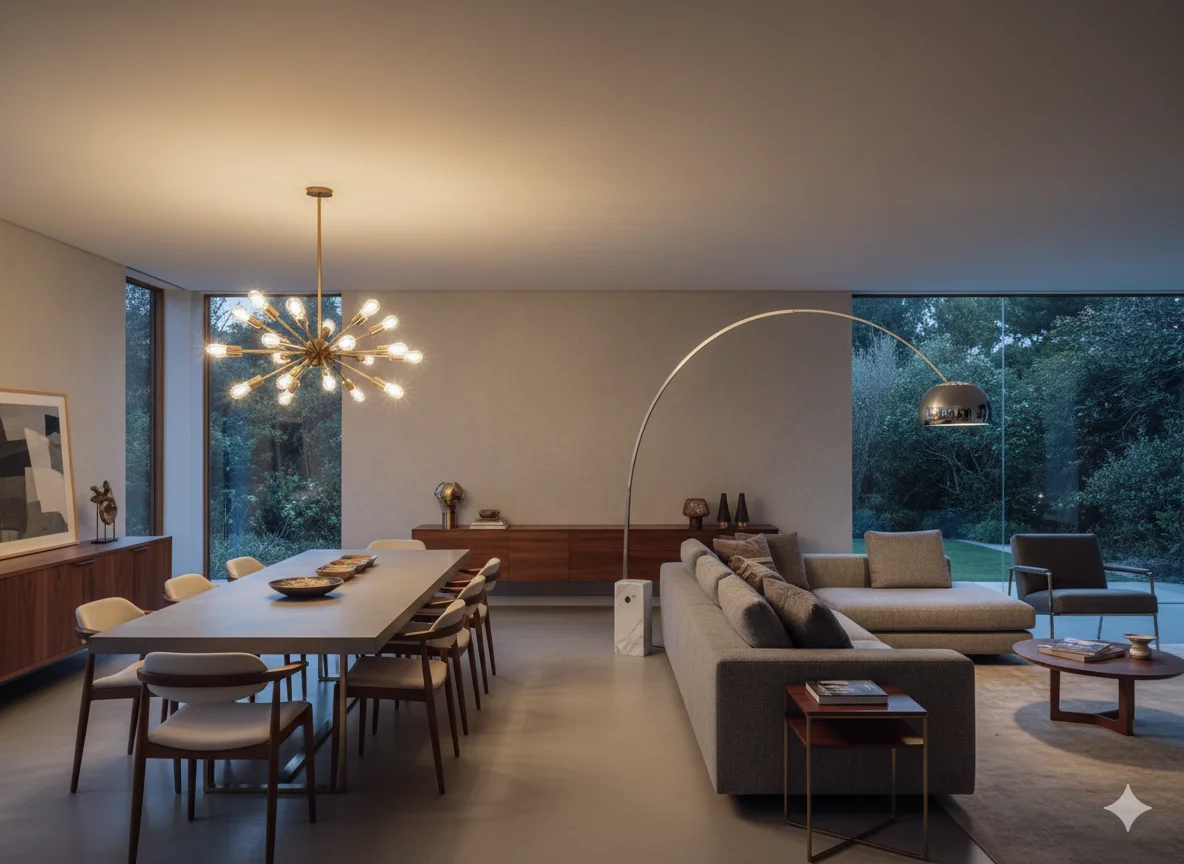
One of the great strengths of mid-century modern lighting is its willingness to coexist with other styles. A Sputnik chandelier above a contemporary concrete dining table creates an immediate tension that reads as sophisticated rather than confused. An Arco floor lamp beside a modular sofa in a minimalist living room brings warmth and history to an otherwise cool palette. The key is confidence. Choose one or two statement pieces that reflect the mid-century vocabulary and let the rest of the room respond to them.
Conclusion
Mid-century modern lighting endures because it was never really about nostalgia. It was about the belief that beautifully designed objects could improve daily life. The designers who created the Sputnik, the Arco, the bubble lamp, and the artichoke pendant were not decorating rooms. They were solving problems with materials they found honest and forms they found true. That spirit is as relevant today as it was in 1958.
Whether you commit to a complete mid-century interior or simply add a single well-chosen floor lamp to a neutral room, this style rewards thoughtful engagement. Start with one fixture that genuinely excites you, give it the space it deserves, and build from there.
Frequently Asked Questions
What makes a lighting fixture mid-century modern?
A mid-century modern lighting fixture is characterized by clean lines, geometric or organic shapes, and a mix of materials such as brass, wood, and frosted glass. It prioritizes function as much as form and typically avoids ornate decoration, drawing from design traditions established between the 1940s and late 1960s.
Which rooms benefit most from mid-century modern lighting?
Every room can benefit, but dining rooms, living rooms, and bedrooms see the most dramatic transformations. A Sputnik chandelier over a dining table or a tripod floor lamp in a living room corner instantly establishes the aesthetic. Bathrooms and hallways respond well to globe sconces and flush mount ceiling fixtures.
Can mid-century modern lighting work in a contemporary home?
Absolutely. Mid-century modern lighting is one of the most flexible styles precisely because it was built on principles of restraint and function. A single statement fixture like an Arco lamp or a cluster of globe pendants can add warmth, history, and personality to an otherwise contemporary interior without conflict.
What are the best finishes for mid-century modern lighting?
Aged brass and satin brass are the most versatile choices, offering warmth that suits the organic materials of the era. Polished chrome works well in kitchens and bathrooms where a crisper, cooler tone is appropriate. Matte black is a more contemporary interpretation that pairs well with walnut furniture and warm white walls.
How do I avoid overdoing the mid-century modern look?
The simplest approach is to choose one or two signature fixtures and let them lead the room. Pair them with neutral furnishings and avoid filling every surface with retro accessories. The restraint that defined the original movement is exactly what makes modern interpretations of it feel sophisticated rather than themed.