24 Mid-Century Modern Dining Room Ideas
There is a reason mid-century modern design has never truly gone out of style. Born in the postwar optimism of the 1950s and 1960s, this aesthetic captured something rare in the history of interior design: it made beauty feel effortless and function feel artistic. Nowhere in the home does this balance shine more clearly than in the dining room, a space defined equally by purpose and pleasure.
Whether you are starting from scratch, reworking an existing space, or simply looking for fresh ways to breathe life into your dining area, mid-century modern offers a deep well of inspiration. The style rewards those who appreciate quality materials, considered proportions, and a restrained yet confident color palette. It is neither sterile nor cluttered. It is simply well-designed.
This guide walks you through 24 mid-century modern dining room ideas that span furniture choices, lighting, color, texture, and finishing details. Think of it as a curated toolkit for creating a dining room that feels timeless rather than trendy.
The Foundation: Furniture That Defines the Space
Choose a Walnut Dining Table as Your Anchor
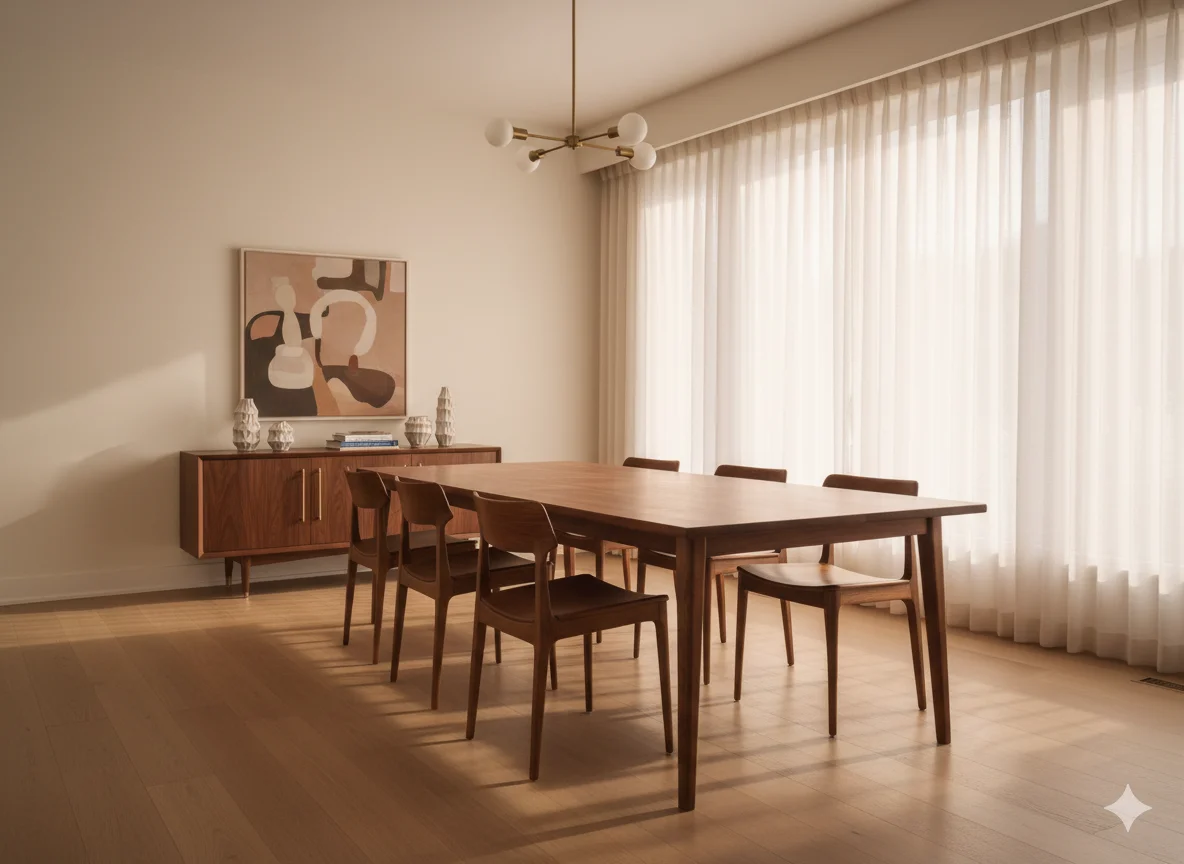
The dining table is the centerpiece of any dining room, and in mid-century modern design, walnut reigns supreme. Its warm, chocolate tones and rich grain patterns bring immediate authenticity to the space. Look for a table with straight, tapered legs that lift the piece off the floor, creating a sense of lightness even in a substantial piece of furniture. A rectangular walnut table seats a crowd with ease while maintaining the clean geometry central to the style.
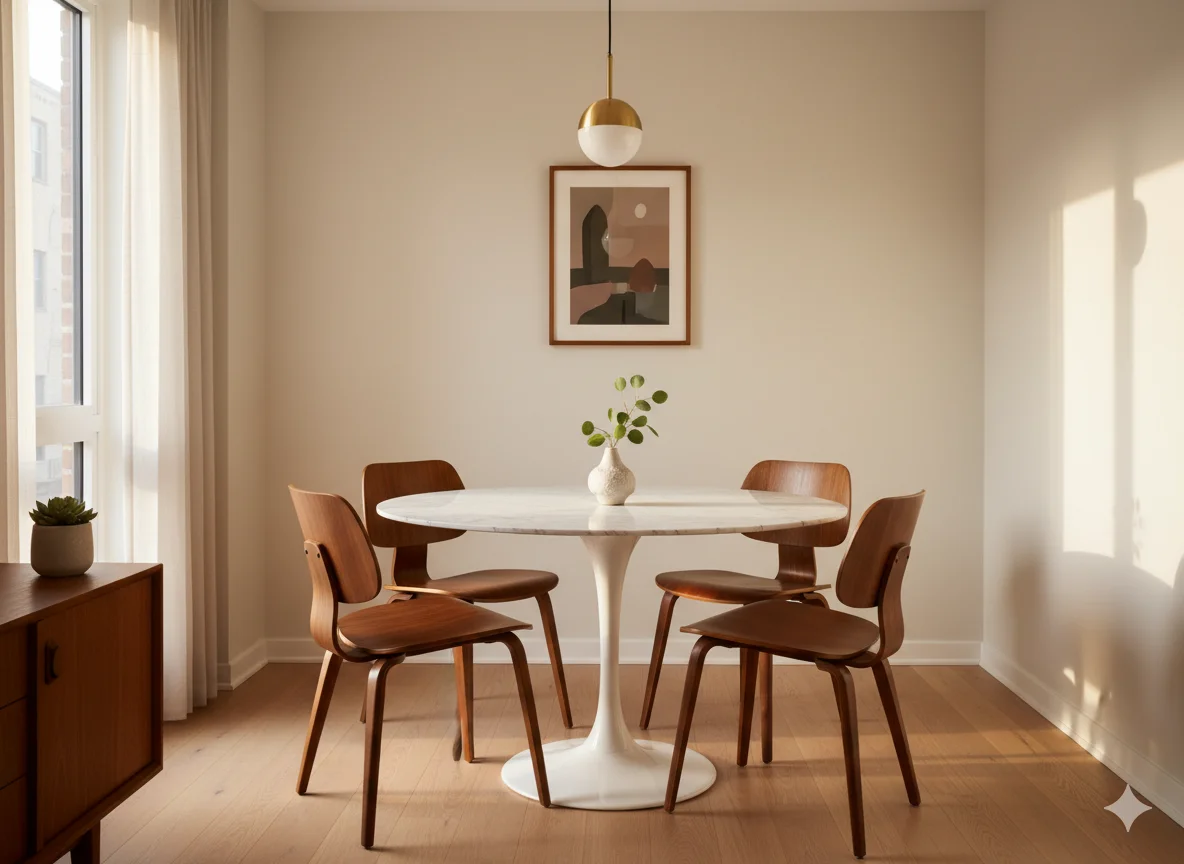
Explore the Tulip Table for Round Dining Rooms
Inspired by Eero Saarinen’s iconic pedestal design, the tulip table removes the clutter of four legs and replaces it with a single sculptural base. The result is a table that looks almost architectural. Round versions work beautifully in smaller dining areas because they eliminate corners and allow conversation to flow naturally around the table. A white or marble-topped tulip table pairs particularly well with walnut or teak chairs for tonal contrast.
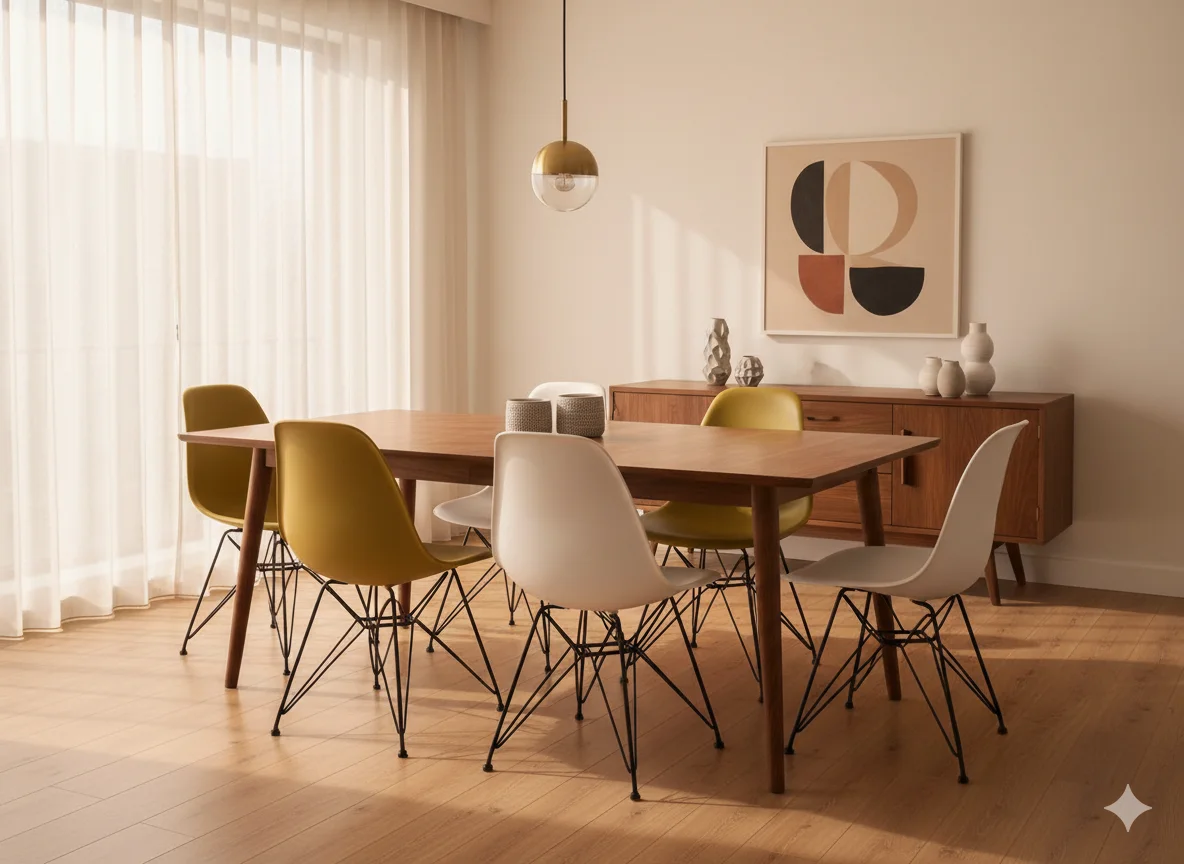
Invest in Iconic Eames-Style Chairs
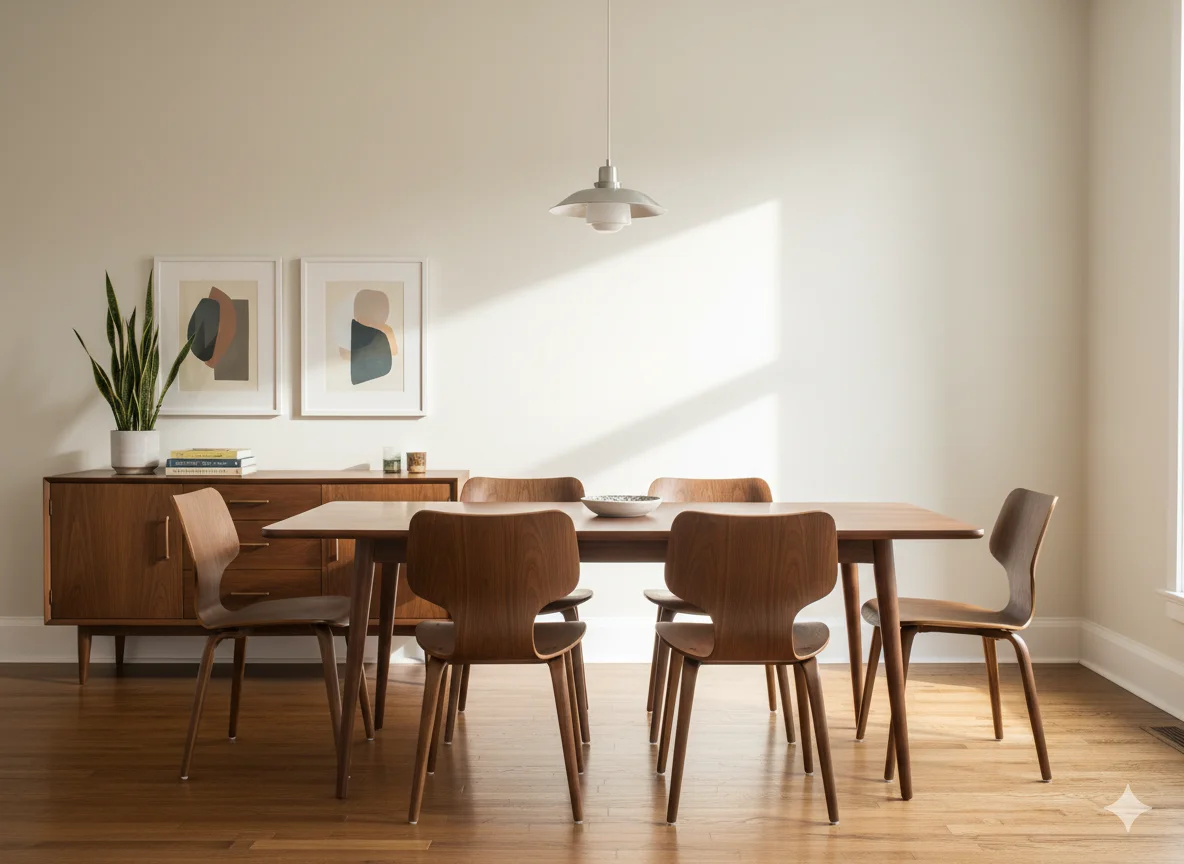
Few design objects are more closely associated with mid-century modern than the molded shell chair. Charles and Ray Eames designed their original versions in the late 1940s, and the silhouette has endured for decades. Look for chairs with gently curved seats and thin metal or wooden legs. Upholstered versions in leather or boucle add warmth and comfort without sacrificing the lean, graphic profile the style demands. Mixing a few different seat colors around the same table gives the space personality without disorder.
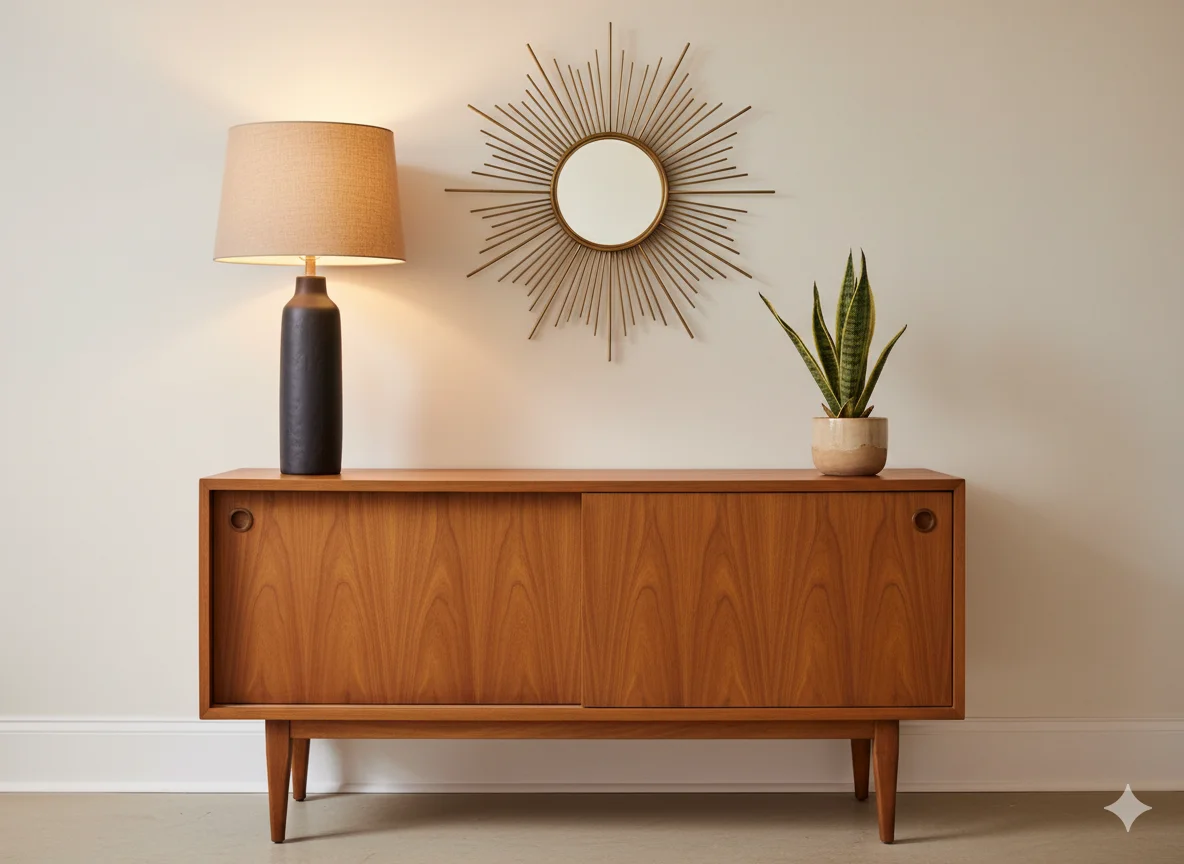
Bring in a Teak Credenza for Storage and Style
A low-slung credenza against the wall is one of the most practical and stylish additions to a mid-century modern dining room. Teak credenzas with sliding doors, brass hardware, and tapered legs provide ample storage for linens, glassware, and serving dishes while adding a horizontal element that grounds the room. The credenza also serves as a natural surface for display, a place for a lamp, a small plant, or a piece of sculpture.
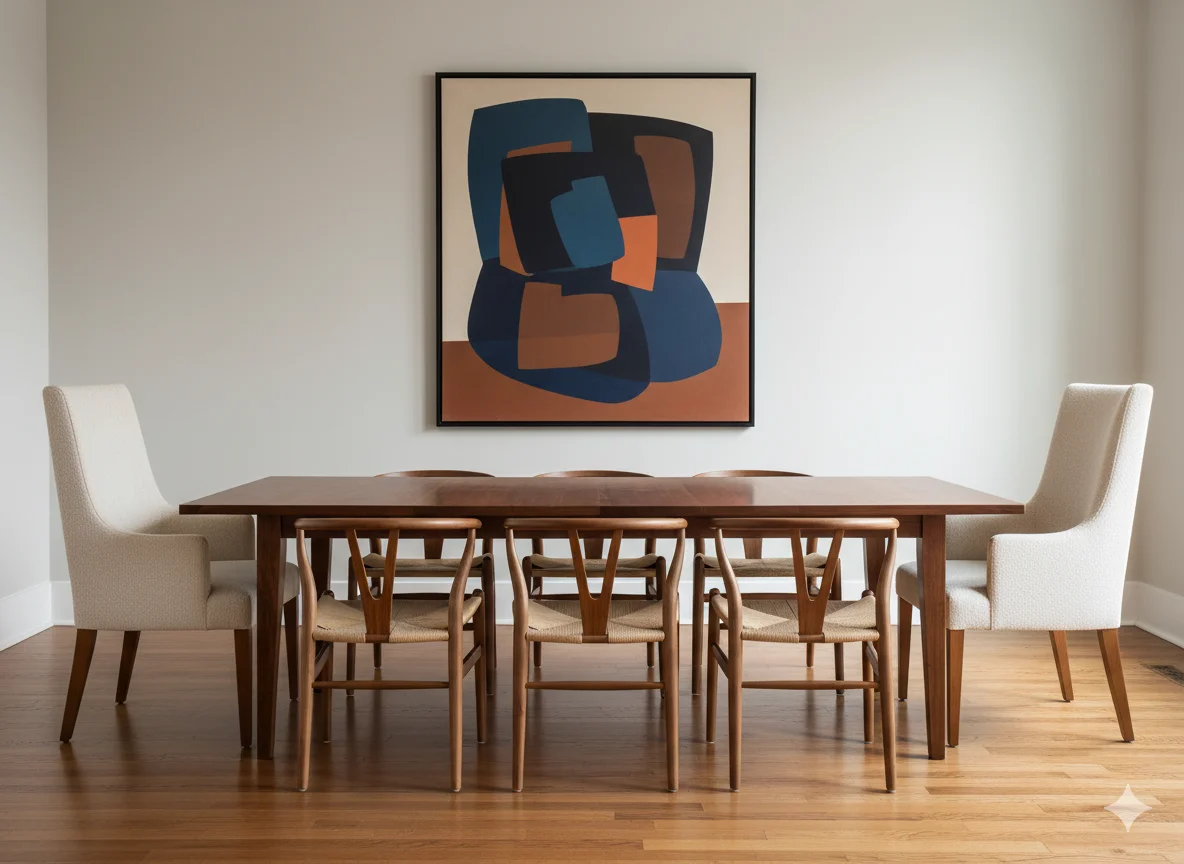
Mix Upholstered and Wood Dining Chairs
One of the most effective ways to create visual depth in a mid-century modern dining room is to mix chair types. Pair wood-framed chairs with upholstered versions in a complementary fabric. A table flanked by wishbone-style wooden chairs on the long sides and two high-backed upholstered chairs at the heads creates a casual formality that feels collected rather than matched.
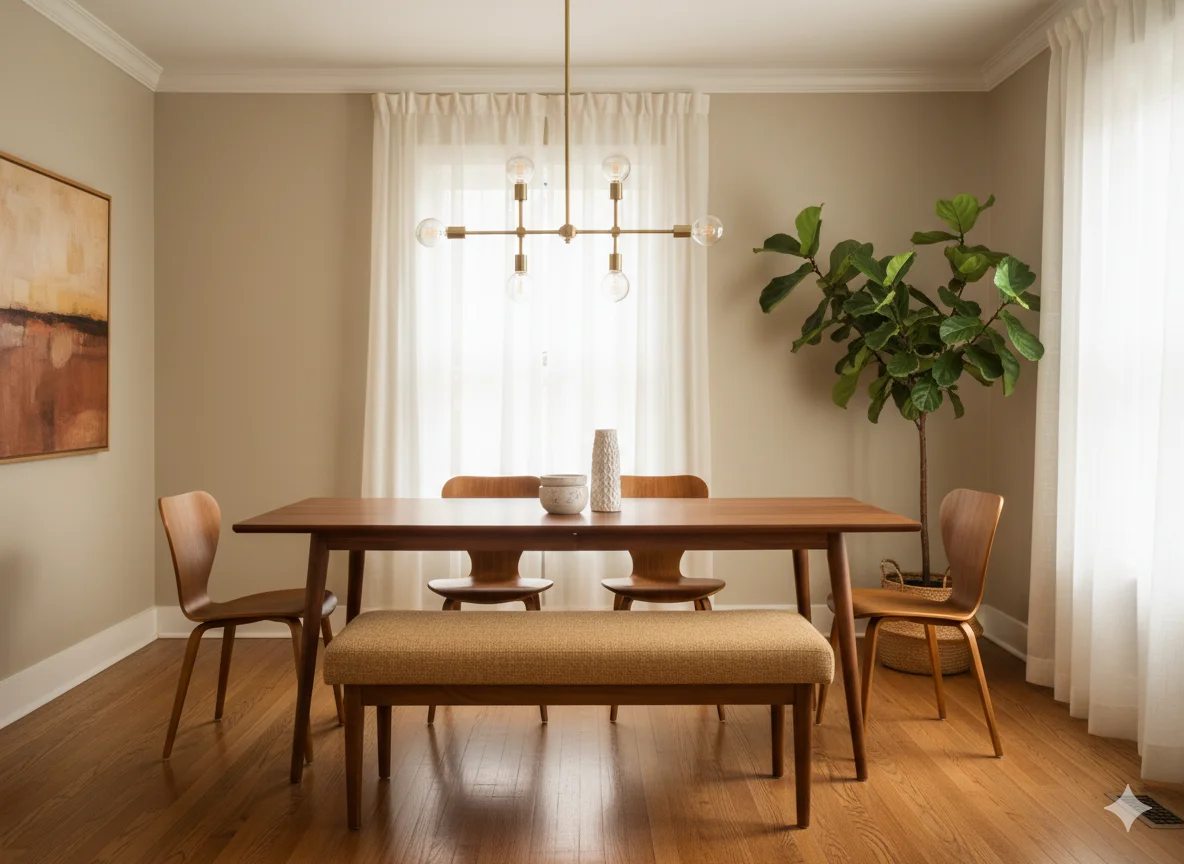
Consider a Bench on One Side of the Table
Integrating a long bench on one side of the dining table is a space-conscious and visually interesting choice. A bench with tapered legs and a cushioned top reads as both casual and intentional. It works especially well in smaller dining rooms because it can be tucked under the table when not in use, and it accommodates more guests than individual chairs would in the same footprint.
Lighting: Setting the Right Atmosphere
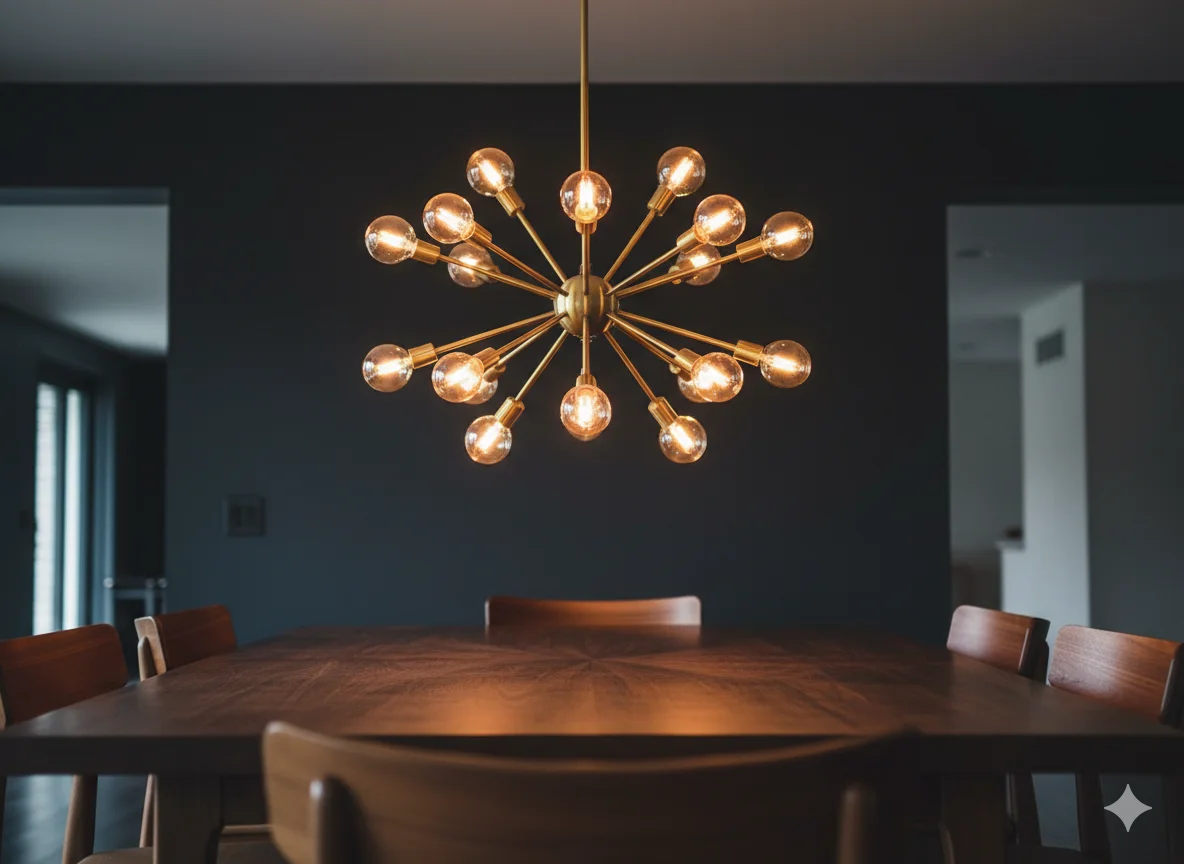
Hang a Sputnik Chandelier as a Statement Piece
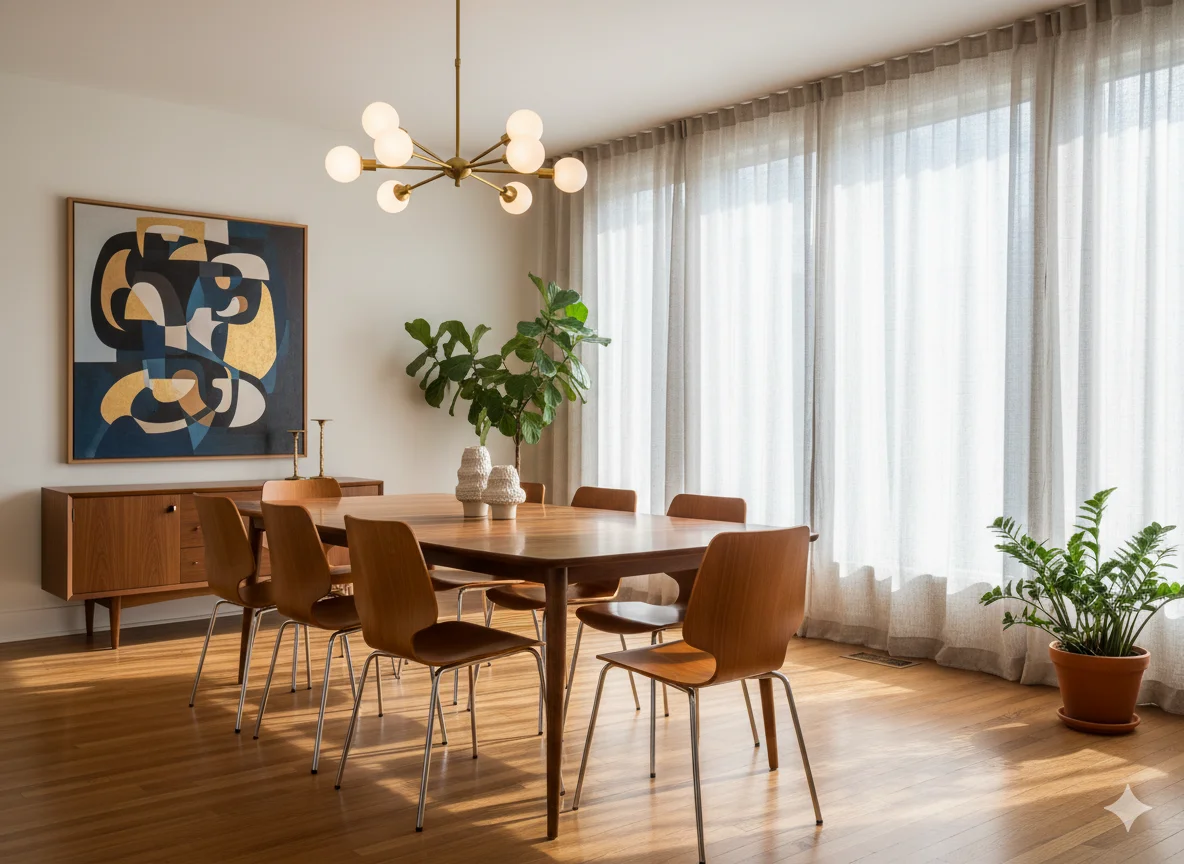
Nothing announces a mid-century modern dining room quite like a sputnik chandelier. Inspired by the satellite craze of the late 1950s, these fixtures radiate metal rods outward from a central sphere, each tipped with a small exposed bulb or globe shade. Hung at the right height over the dining table, a sputnik chandelier becomes a piece of sculpture that transforms the ceiling into a design element. Brass and black finishes are particularly popular choices.
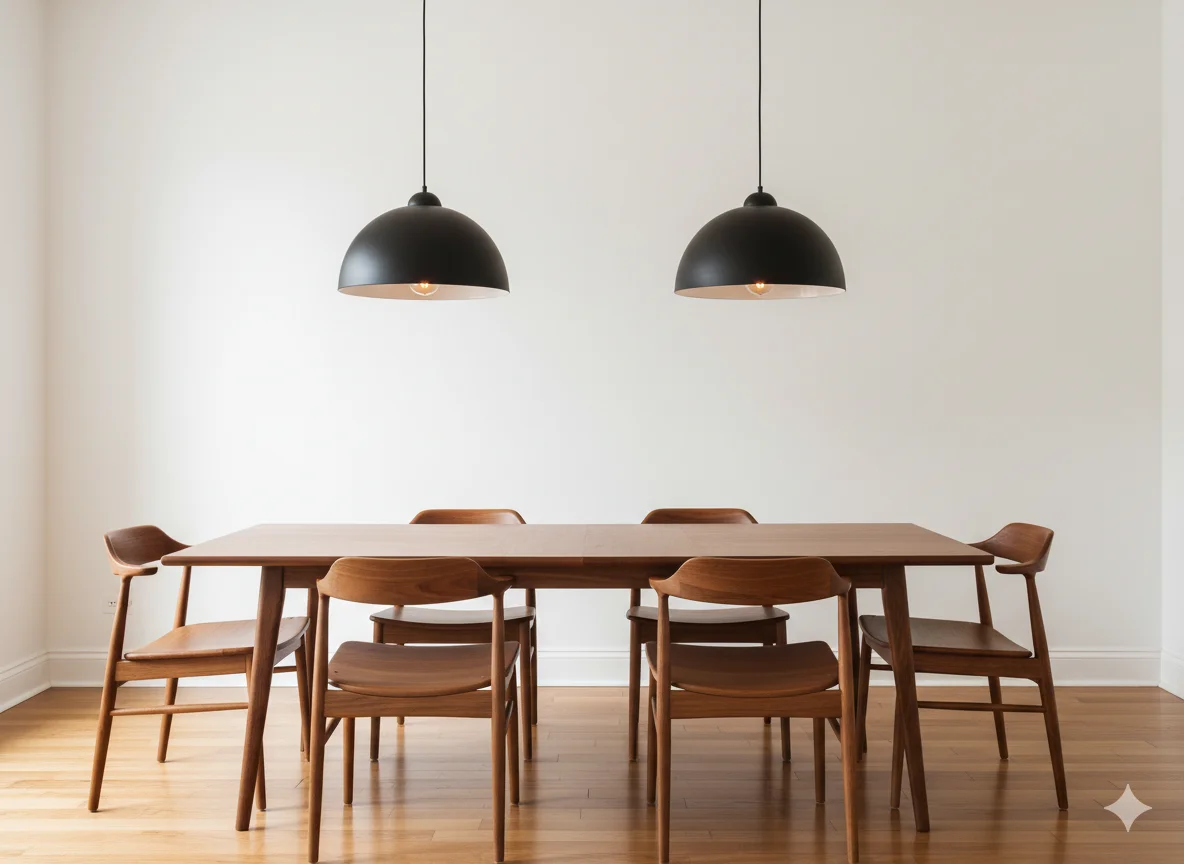
Layer Pendant Lights for Warmth and Scale
Where a sputnik chandelier reads as bold and graphic, a pair of simple pendant lights reads as warm and intimate. Look for pendants with dome-shaped metal shades in matte finishes. Hanging two pendants side by side over a rectangular table creates a symmetrical, grounded look that echoes the balanced geometry of mid-century modern design. Warm bulbs with visible filaments enhance the amber quality of wood tones throughout the room.
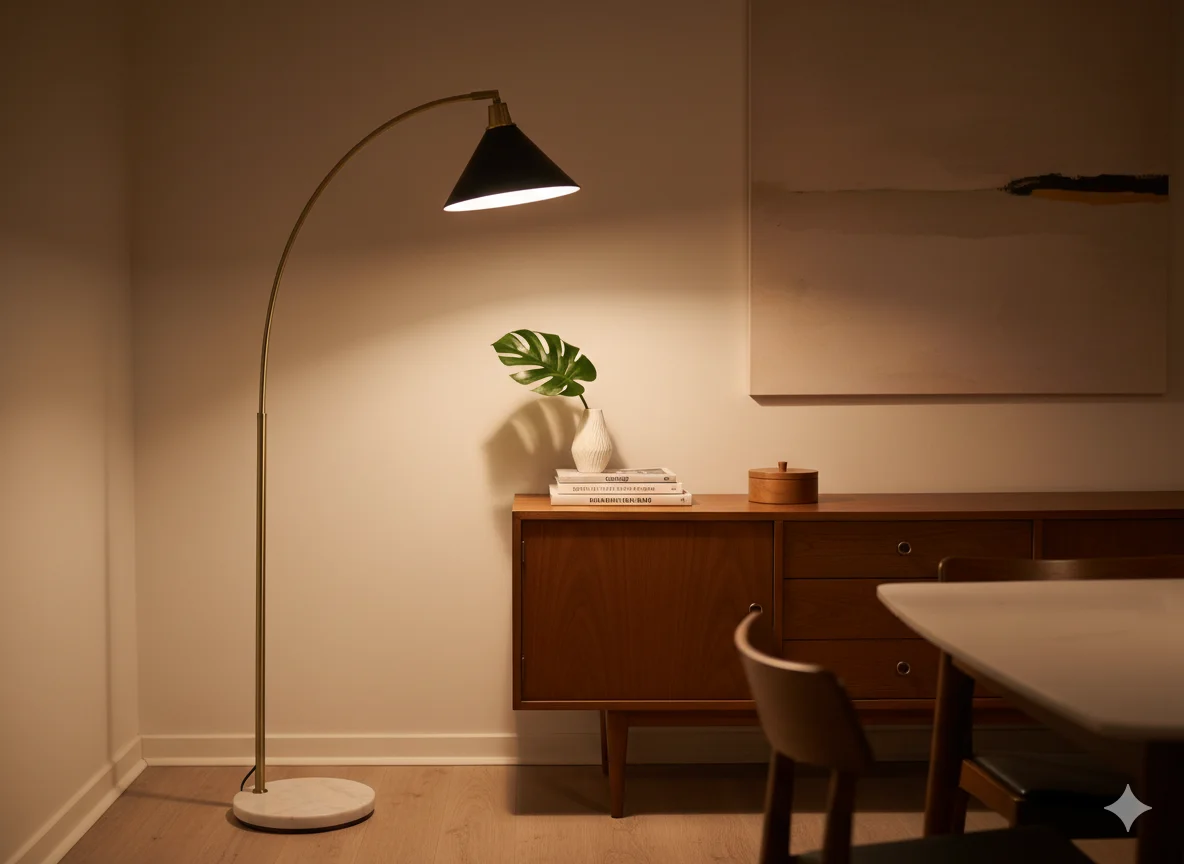
Use Floor Lamps for Ambient Corners
A well-placed arc floor lamp in the corner of a dining room serves both functional and aesthetic purposes. Arc lamps with a weighted base, a slender stem, and a cone or drum shade are thoroughly mid-century in profile. Use one to fill a dark corner, to frame a credenza, or to create a reading nook adjacent to the dining space in an open-plan room.
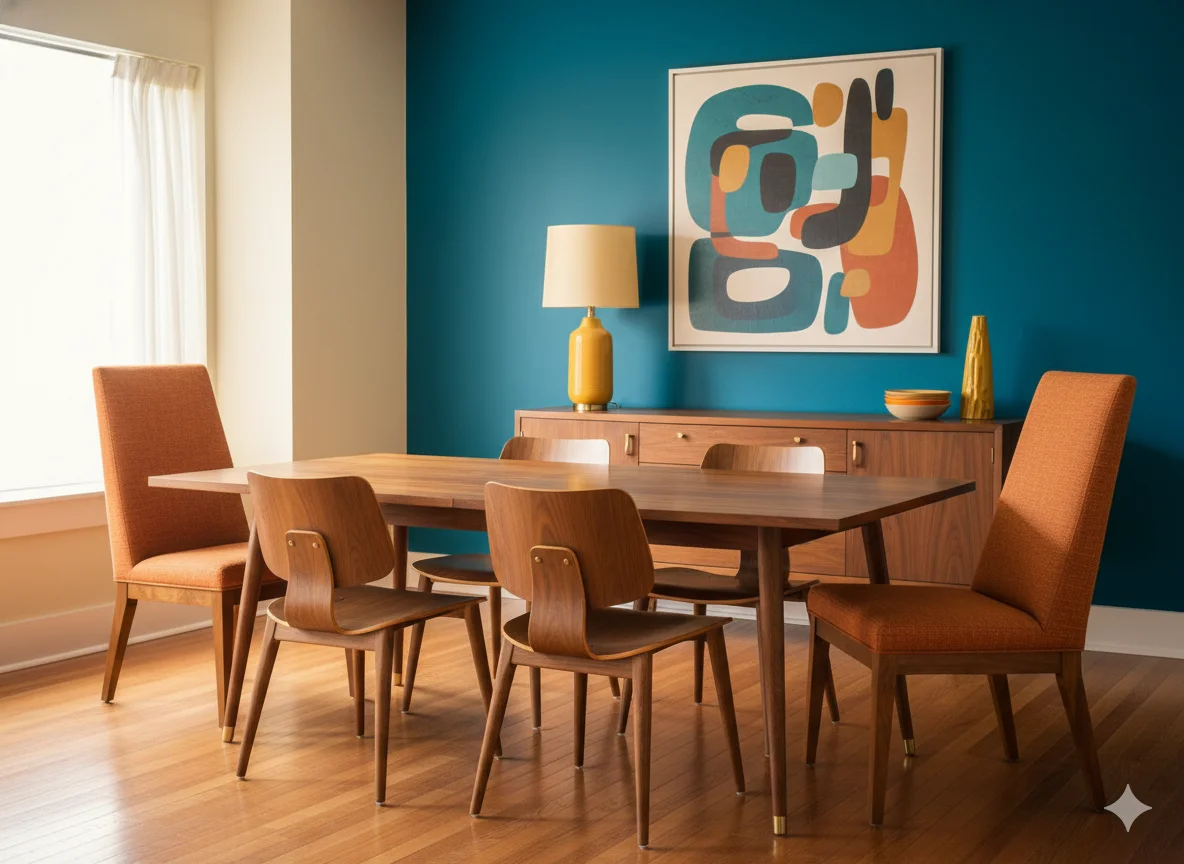
Color Palette and Wall Treatments
Work with Earthy Neutrals as a Base
The mid-century modern color palette begins with the earth. Warm whites, soft cream tones, tan, and camel provide a restful background against which wood furniture and bold accents can read clearly. Painting the walls in a warm off-white such as linen or parchment immediately gives a room a period-appropriate quality without feeling dated.
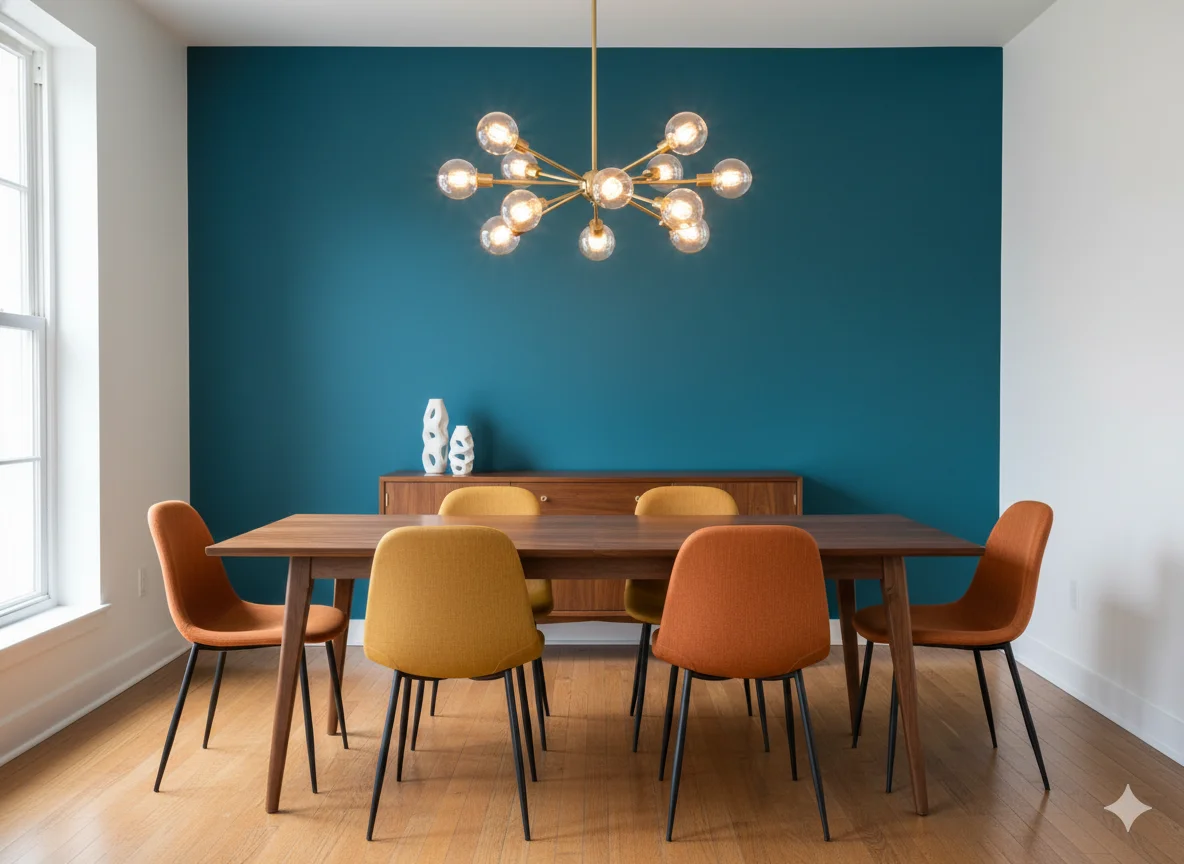
Introduce a Bold Accent Wall
One of the most effective ways to anchor a mid-century modern dining room is with a single accent wall in a rich, saturated color. Deep teal, forest green, burnt sienna, or charcoal work particularly well. The accent wall creates depth behind the dining table or credenza and gives the room a sense of drama that the earthy neutrals alone would not achieve. Paint a single wall rather than all four to preserve the lightness and openness typical of the style.
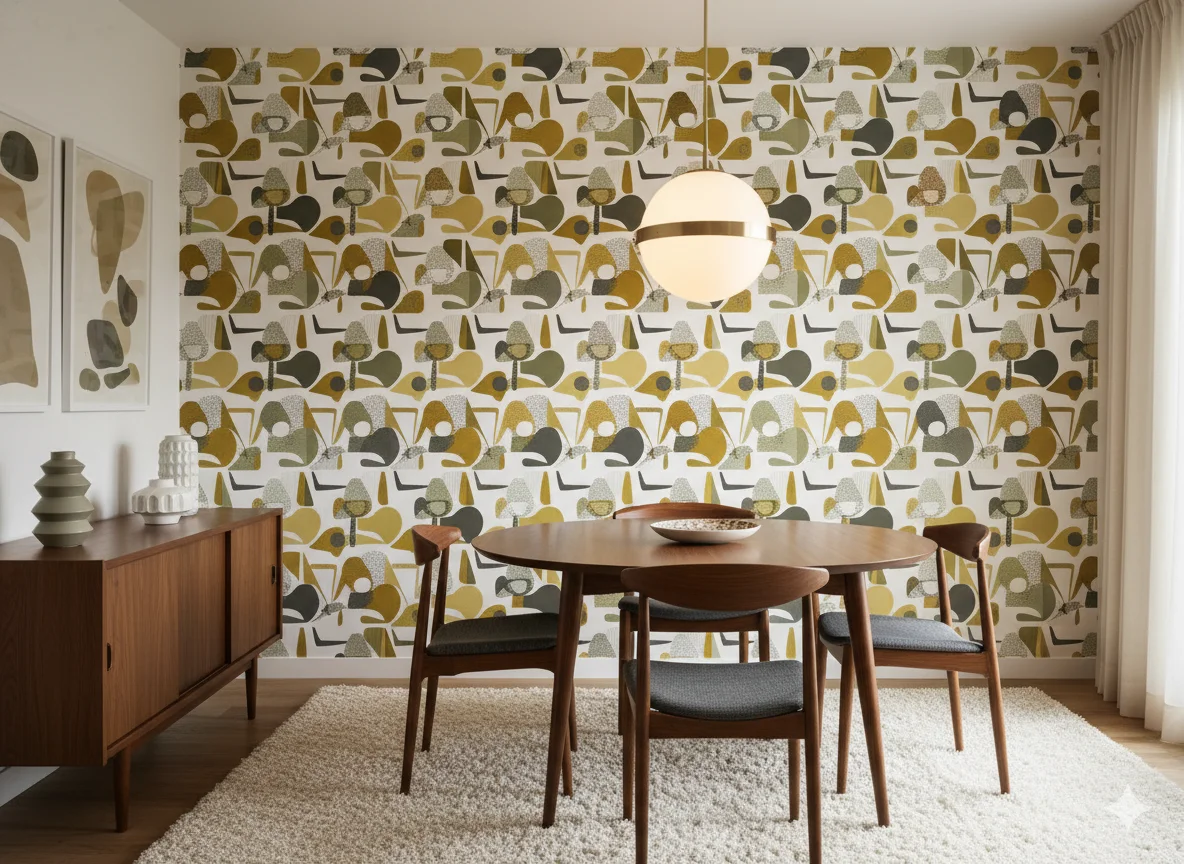
Try Geometric Wallpaper
Wallpaper experienced a revival in the mid-century era, particularly patterns featuring atomic motifs, starburst shapes, and abstract geometric forms. A section of wallpaper on one wall or in a framed alcove behind the dining table adds pattern and texture without overwhelming the space. Look for designs in muted ochres, greens, and grays for the most authentic result.
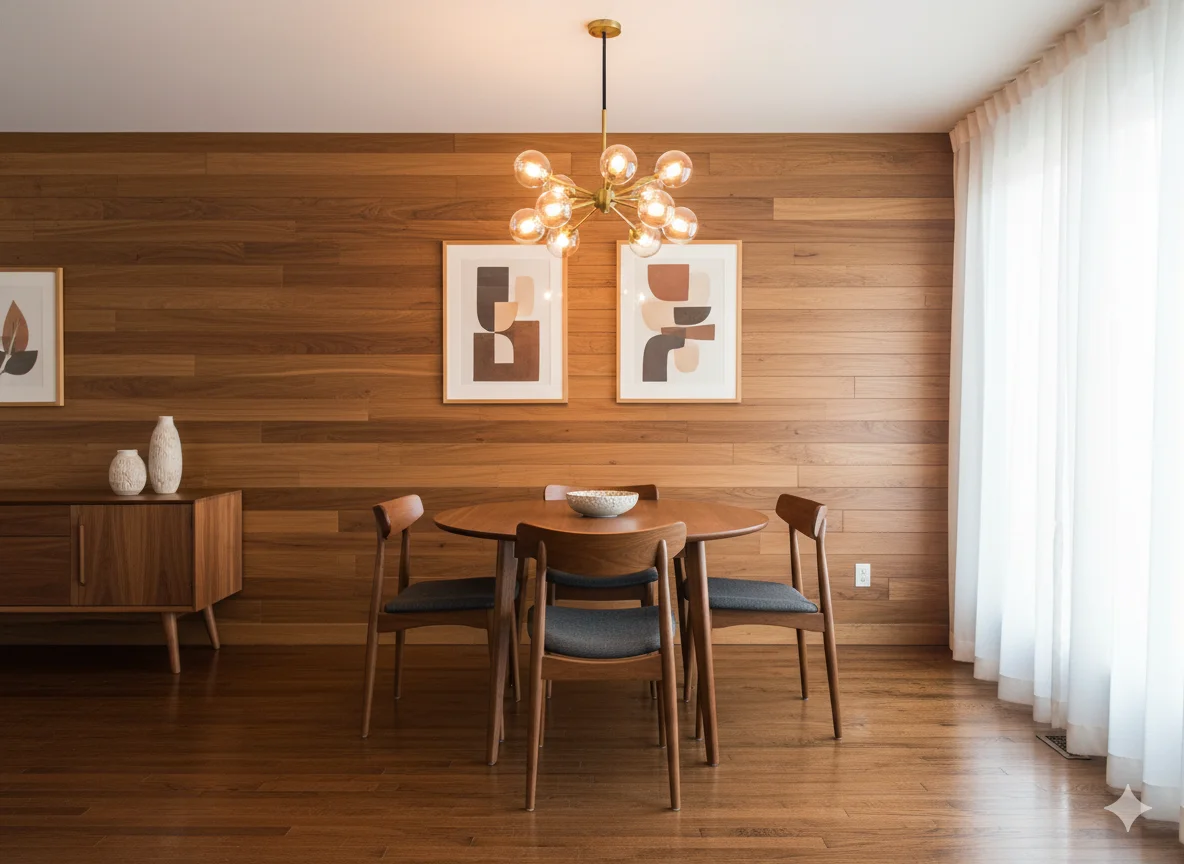
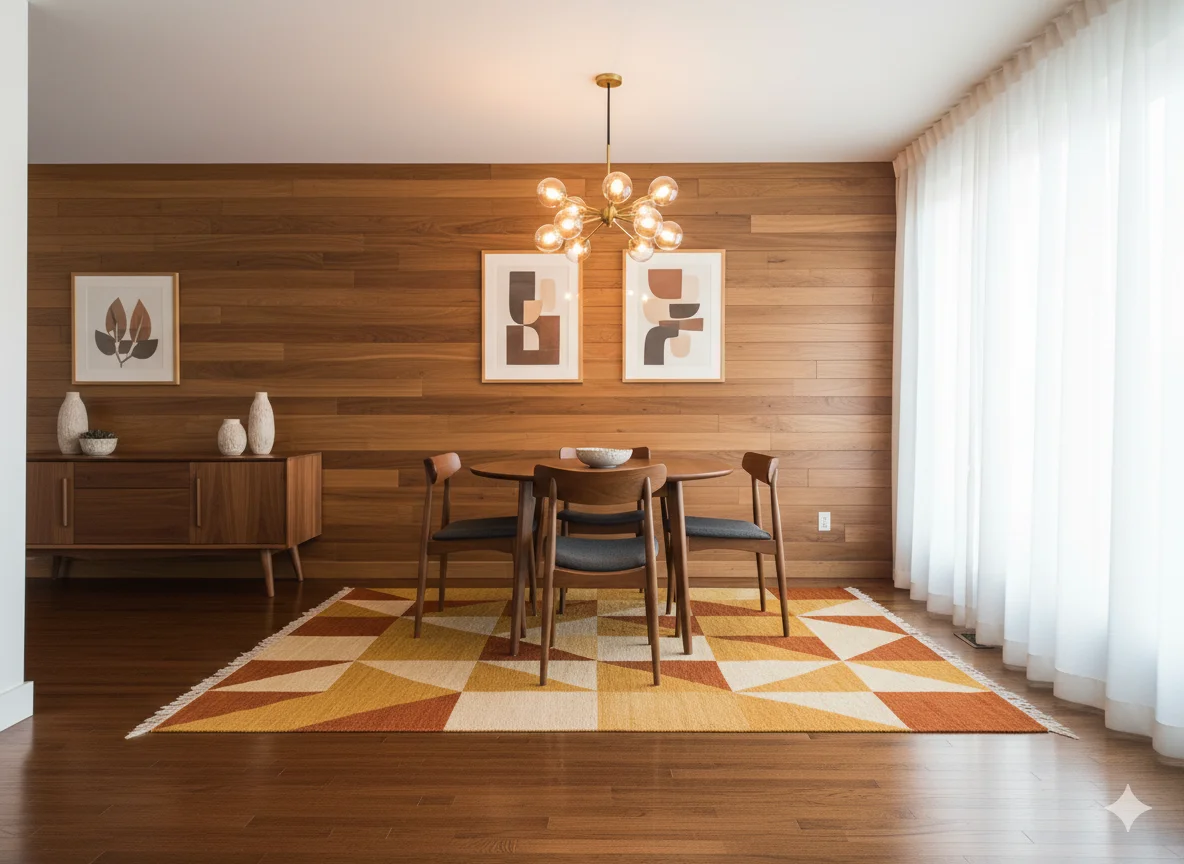
Add Warmth with a Wood-Paneled Feature Wall
Vertical or horizontal wood paneling was a hallmark of midcentury interiors, particularly in postwar ranch homes. Installing a wood-paneled section behind the dining table or along one full wall creates a textural backdrop that complements the furniture and reinforces the organic material story central to the style. Stained or oiled walnut paneling against white walls creates an especially striking contrast.
Flooring and Rugs
Refinish or Install Hardwood Floors in a Warm Stain
The floors of a mid-century modern dining room should feel warm and natural. Original hardwood floors refinished in a warm medium-tone stain are ideal. If installing new flooring, choose wide-plank oak or ash in a honey or amber finish. The wood floor serves as a unifying plane that ties the furniture and walls together.
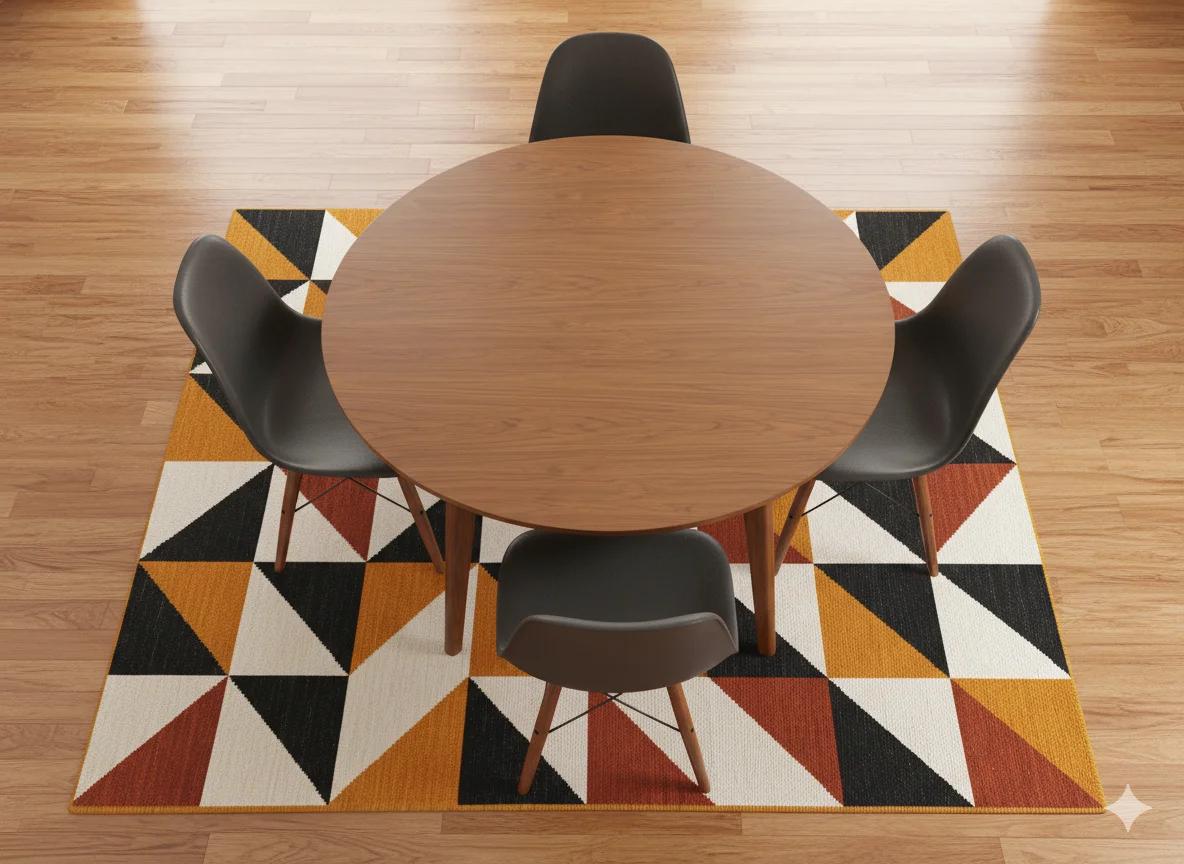
Define the Dining Zone with a Geometric Area Rug
A well-chosen area rug under the dining table anchors the furniture grouping and adds color and pattern to the floor plane. In a mid-century modern dining room, look for rugs with bold geometric patterns in earthy colors: ochre, rust, cream, and black work well. Ensure the rug is large enough so that all chair legs remain on it even when pulled out from the table.
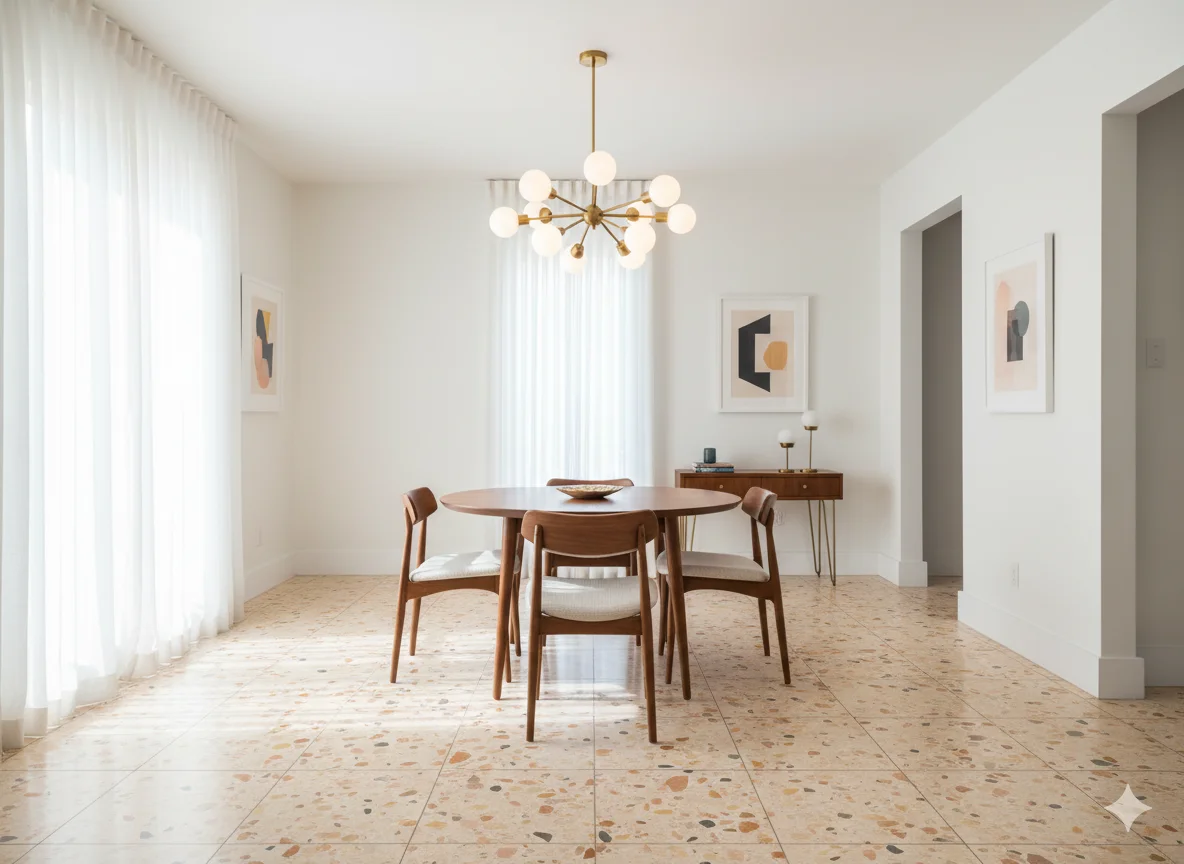
Consider Terrazzo for a More Dramatic Floor
Terrazzo flooring, made from chips of marble, quartz, or glass set in concrete or resin, was enormously popular in mid-century institutional and residential buildings. In a dining room, terrazzo brings texture, pattern, and a quiet luxury to the floor without competing with the furniture. A warm terrazzo in shades of cream, pink, and gray makes a sophisticated and durable choice.
Wall Art and Decorative Accents
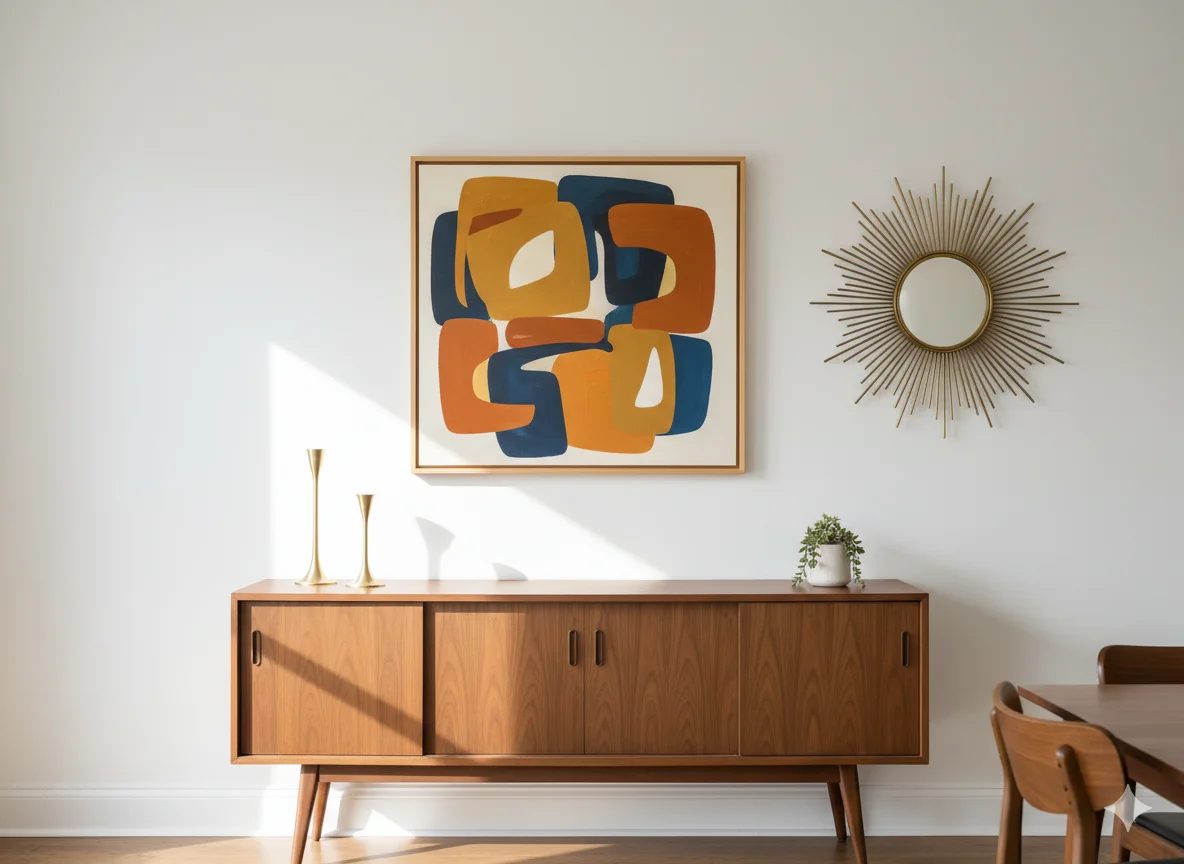
Display Large-Format Abstract Art
Mid-century modern interiors embraced abstract expressionism with enthusiasm. A large-format abstract painting or print on the wall of your dining room immediately communicates the aesthetic while serving as a focal point. Look for works with confident brushwork in a palette that echoes your furniture: ochres, deep blues, burnt oranges, and forest greens all resonate well. The art need not be expensive; many high-quality prints are available in gallery-ready frames.
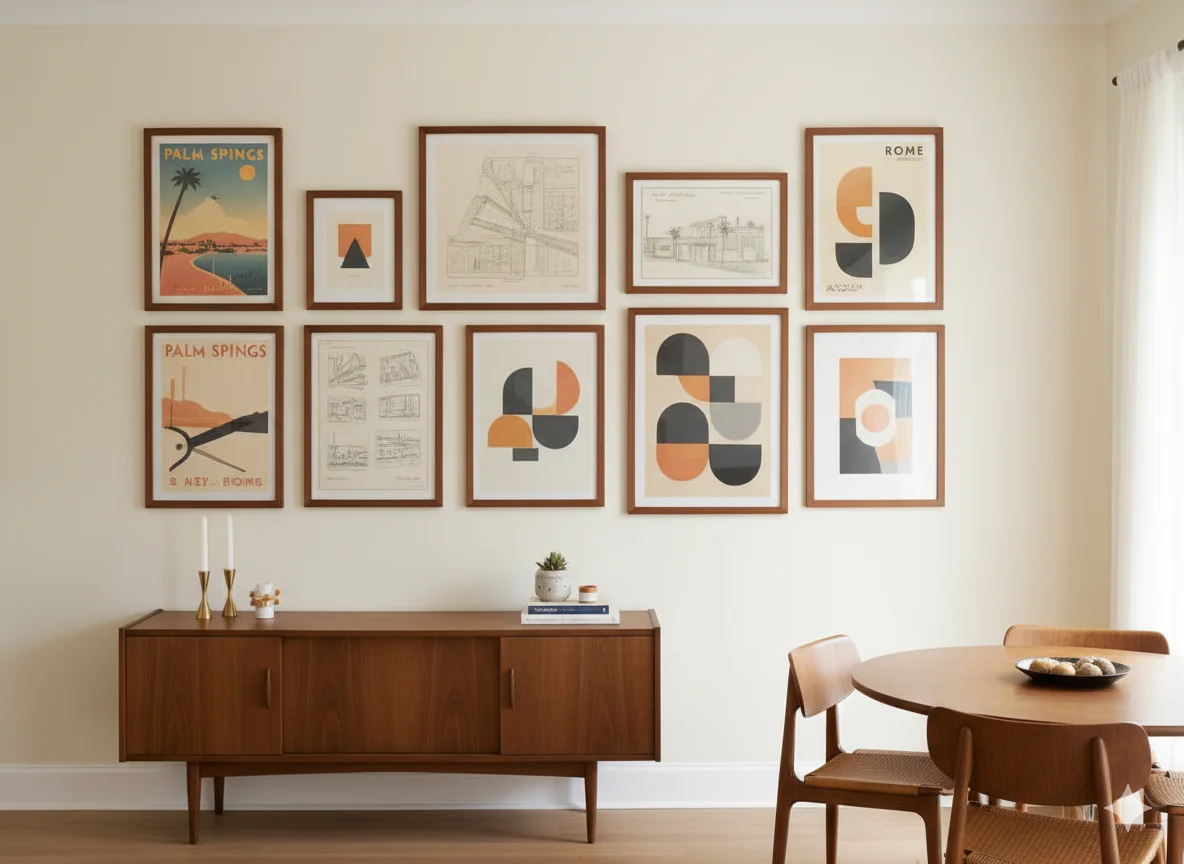
Create a Gallery Wall with Period-Appropriate Prints
If a single large work feels too formal, a gallery wall of smaller prints creates an eclectic, collected feel. Choose mid-century travel posters, architectural drawings, botanical prints, or abstract compositions in matching frames. A gallery wall works particularly well in a dining room with high ceilings, where it fills vertical space and creates visual interest at multiple eye levels.
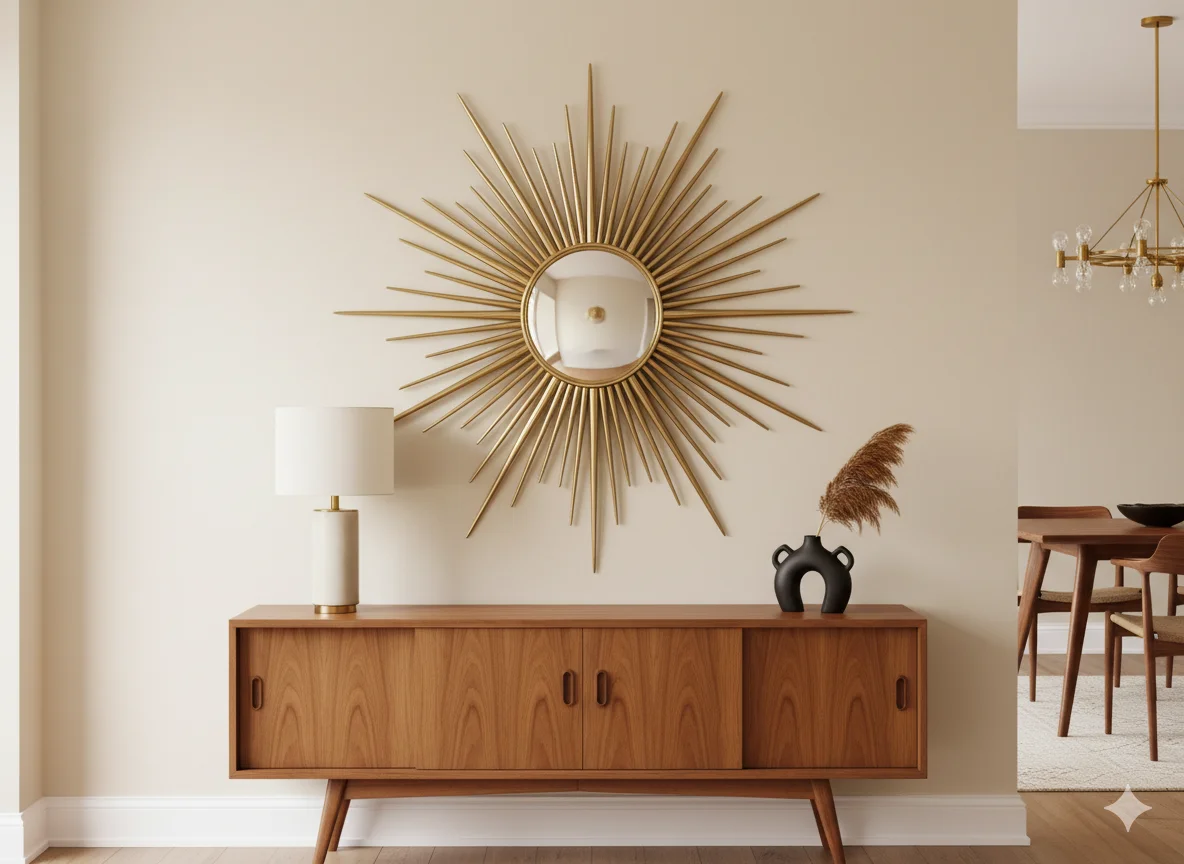
Incorporate a Starburst or Sunburst Mirror
A sunburst mirror is to wall decor what the sputnik chandelier is to lighting: an immediately recognizable symbol of the mid-century aesthetic. Hung above a credenza or on an accent wall, a sunburst mirror in brass or gold reflects light around the room and adds a decorative flourish that feels glamorous without being excessive.
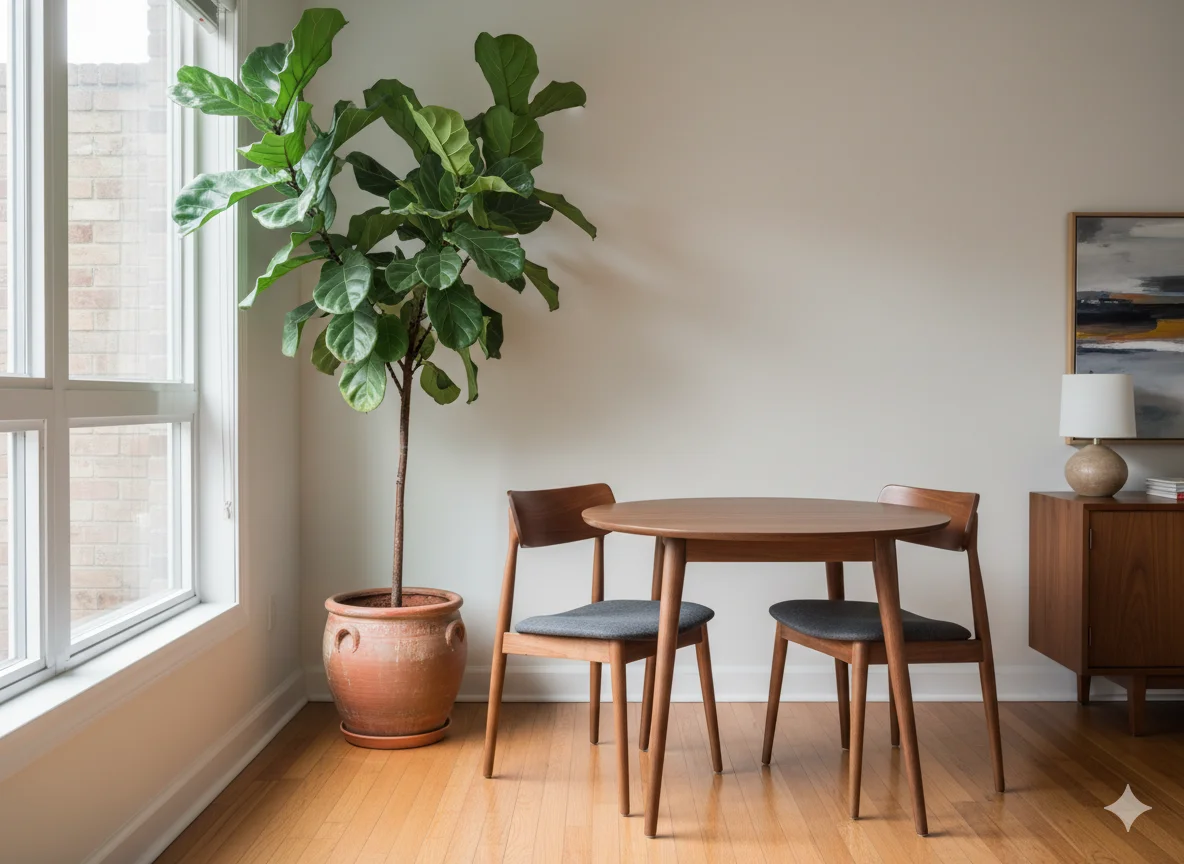
Natural Elements and Plants
Bring in a Statement Indoor Plant
Mid-century modern interiors often used plants as sculptural elements rather than afterthoughts. A large fiddle-leaf fig, rubber plant, or bird of paradise in a ceramic or terracotta pot adds scale, color, and life to the dining room. Position the plant in a corner where it can be seen from the table without blocking sightlines or circulation.
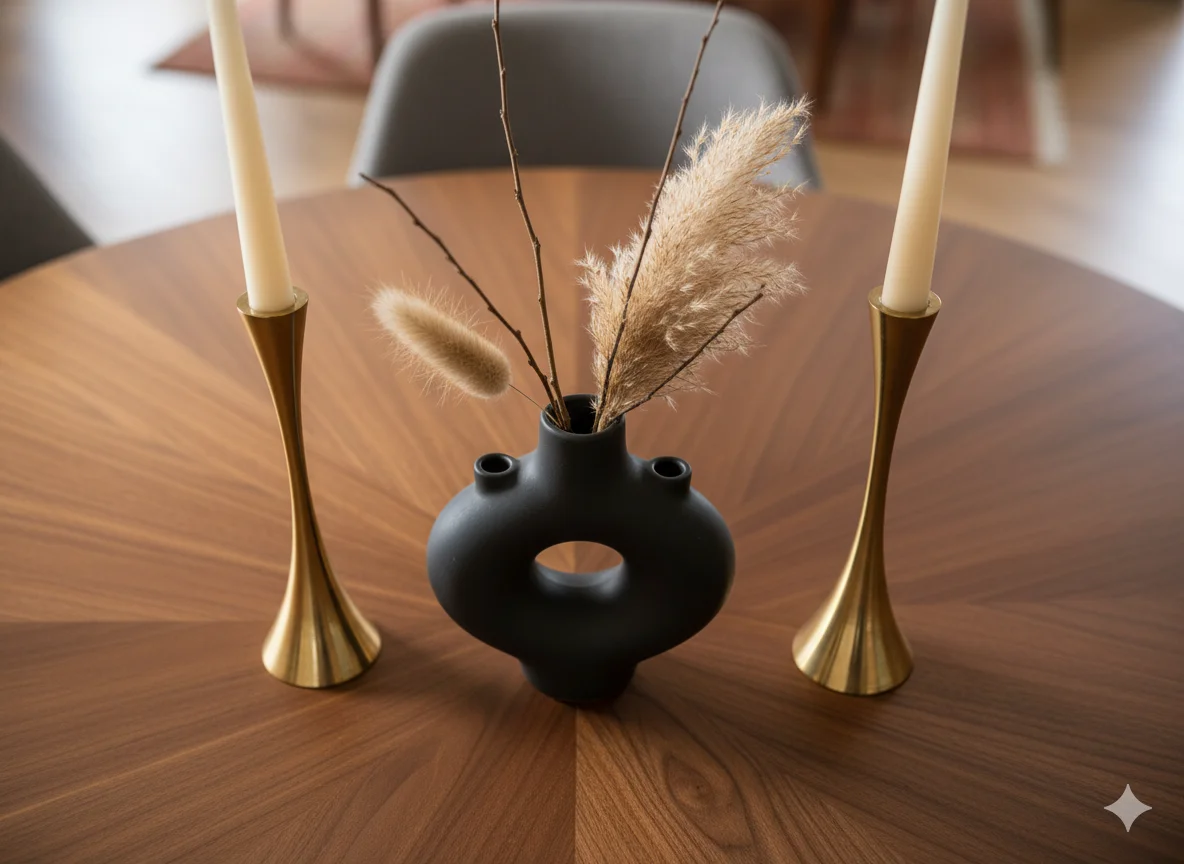
Style the Table with Organic Centerpieces
The dining table in a mid-century modern room should be beautiful when not set for a meal. A low ceramic bowl filled with dried botanicals, a single sculptural vase with seasonal branches, or a cluster of candles in brass holders all serve as understated centerpieces that fit the aesthetic. Avoid overly floral or fussy arrangements in favor of single-material, graphic compositions.
Finishing Details That Elevate the Space
Choose Brass Hardware and Accents Throughout
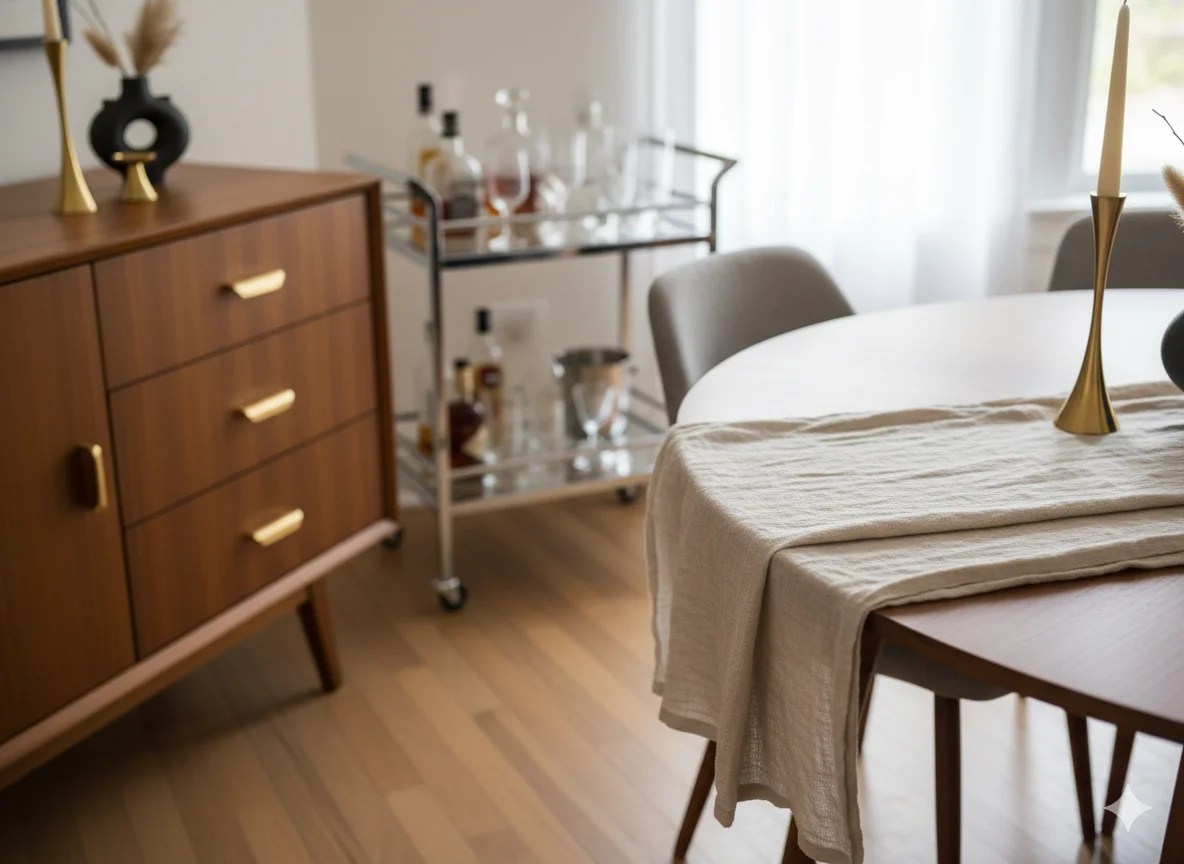
Brass is the metal that anchors a mid-century modern dining room. From the drawer pulls on the credenza to the candlestick holders on the table, consistent use of brass ties together disparate elements and gives the room a warm, cohesive glow. Unlacquered brass that develops a patina over time feels more authentic than bright polished varieties.
Layer Textiles for Comfort Without Clutter
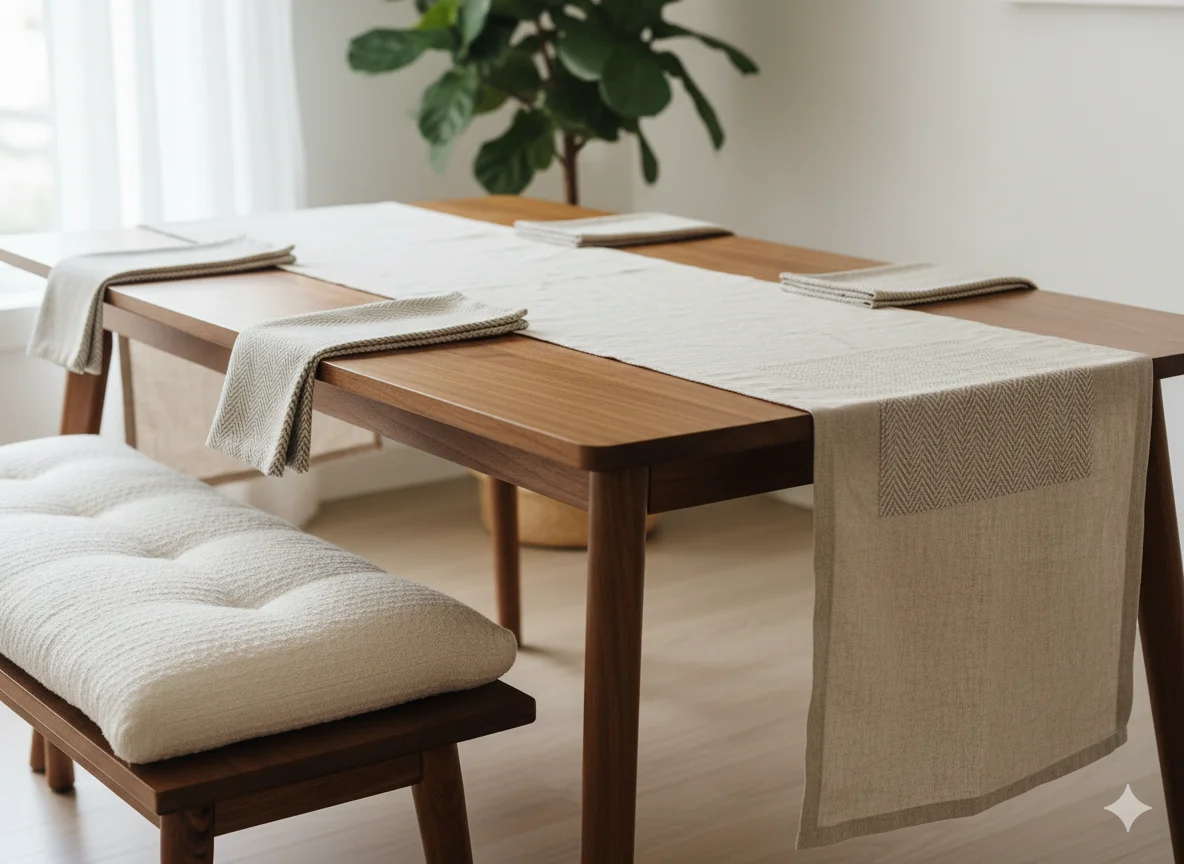
The mid-century modern dining room is not a cold or ascetic space. Textiles in the right quantities soften the harder edges of wood and metal. Consider linen napkins, a wool table runner, or cushions on the dining bench in a textured fabric such as bouclé or herringbone. These additions do not disrupt the clean lines of the room but make it feel inhabited and welcoming.
Keep the Sideboard or Bar Cart as a Functional Feature
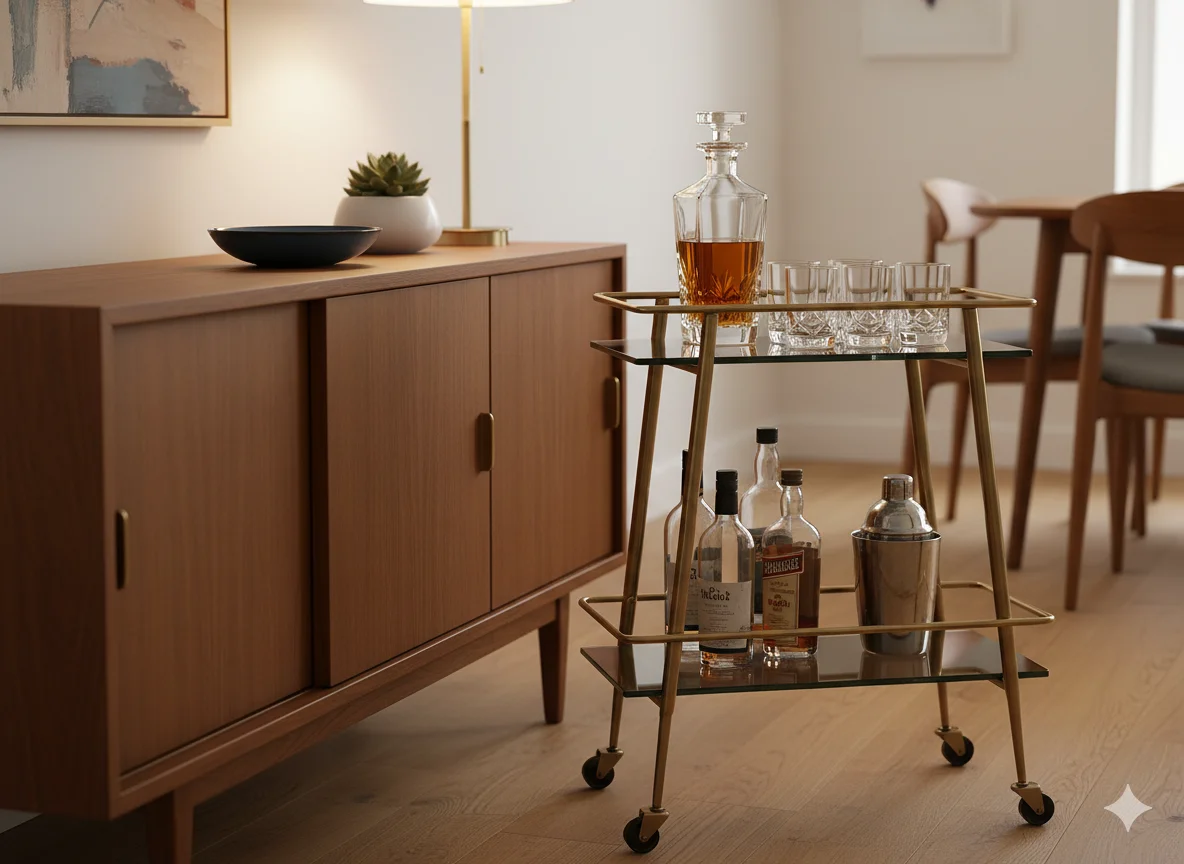
A bar cart with a chrome or brass frame, a glass top, and slender legs is a thoroughly mid-century accessory that adds both function and personality to the dining room. Style it with a selection of glassware, a decanter, and a small plant or sculpture. When guests arrive for dinner, the bar cart becomes a social object, an invitation to gather and mix drinks before the meal begins.
Conclusion
Designing a mid-century modern dining room is ultimately an exercise in restraint informed by confidence. The style rewards those who choose fewer, better pieces: a table with real presence, chairs that earn their place, lighting that becomes a conversation piece, and art that reflects a genuine point of view.
What makes the mid-century modern dining room so enduringly compelling is that it was always designed around the pleasure of people gathering together. The furniture was made to be sat in and used. The materials were chosen to age gracefully. The proportions were calibrated to put human beings at ease. That ethos, pursued as carefully today as it was in the postwar decade that inspired it, is what separates a truly beautiful mid-century modern dining room from a merely stylish one.
Begin with the dining table. Build outward from there. Take your time, trust the proportions, and the room will reward you.
Frequently Asked Questions
What are the key characteristics of a mid-century modern dining room?
A mid-century modern dining room is defined by clean lines, organic shapes, tapered furniture legs, warm wood tones such as walnut and teak, a restrained color palette accented with bold hues, and a balance between function and visual appeal. The style draws from postwar American and Scandinavian design traditions of the 1950s and 1960s.
What colors work best in a mid-century modern dining room?
The best color palette starts with warm neutrals such as cream, white, and tan for walls, then layers in accent colors drawn from the era: mustard yellow, burnt orange, olive green, teal, and deep charcoal. A single bold accent wall in one of these tones is a popular and effective approach.
What type of lighting suits a mid-century modern dining room?
Sputnik chandeliers, pendant lights with dome-shaped metal shades, and arc floor lamps are all authentic choices. Warm-toned bulbs enhance wood surfaces and contribute to the welcoming, amber-lit quality of the mid-century palette.
How do I make a small dining room feel mid-century modern without overcrowding it?
Focus on scale and leg detail. Furniture raised on tapered legs creates a sense of visual space. A round tulip table seats four to six people without dominating a small room. A wall-mounted floating shelf replaces a bulky credenza. Keep decoration minimal and prioritize a single strong lighting fixture and one piece of wall art.
Can I mix mid-century modern furniture with other styles?
Yes. Mid-century modern furniture integrates well with Scandinavian, Japandi, and even transitional design approaches. The key is to maintain consistent material tones and proportions. Mixing a walnut mid-century table with contemporary upholstered chairs, for instance, produces a space that feels curated and current rather than rigidly period-specific.