15 Grey Bedroom Ideas 2026 for Modern Homes with Cozy Styles, Color Accents and Aesthetic Designs
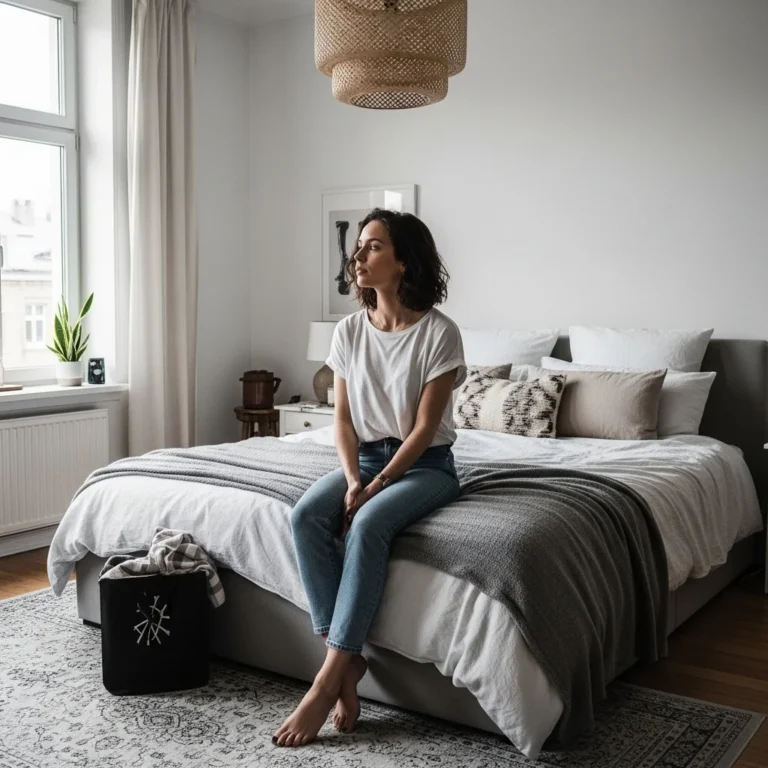
Grey bedrooms have established themselves as the cornerstone of contemporary interior design, offering a sophisticated canvas that adapts to virtually any aesthetic preference. As we move through 2026, the appeal of grey continues to evolve beyond its minimalist origins, embracing warmer undertones, rich textures, and thoughtful color pairings that transform sleeping spaces into personal sanctuaries. Whether you are redesigning a compact guest room or reimagining an expansive master suite, grey provides the versatility and timeless elegance that modern homeowners seek.
The beauty of grey lies in its remarkable adaptability. Unlike stark white, which can feel clinical, or bold colors that may overwhelm, grey strikes the perfect balance between serenity and visual interest. This neutral tone creates a calming atmosphere conducive to rest while offering endless opportunities for personalization through furniture, textiles, and accent colors. From pale silver hues that amplify natural light to deep charcoal shades that add dramatic depth, grey bedrooms can reflect your unique style while maintaining a cohesive, polished appearance.
Understanding the Spectrum of Grey for Bedroom Design
The world of grey extends far beyond a single shade, encompassing an extensive palette that ranges from almost-white tints to near-black depths. Understanding these variations is essential for creating a bedroom that aligns with your vision and spatial requirements.
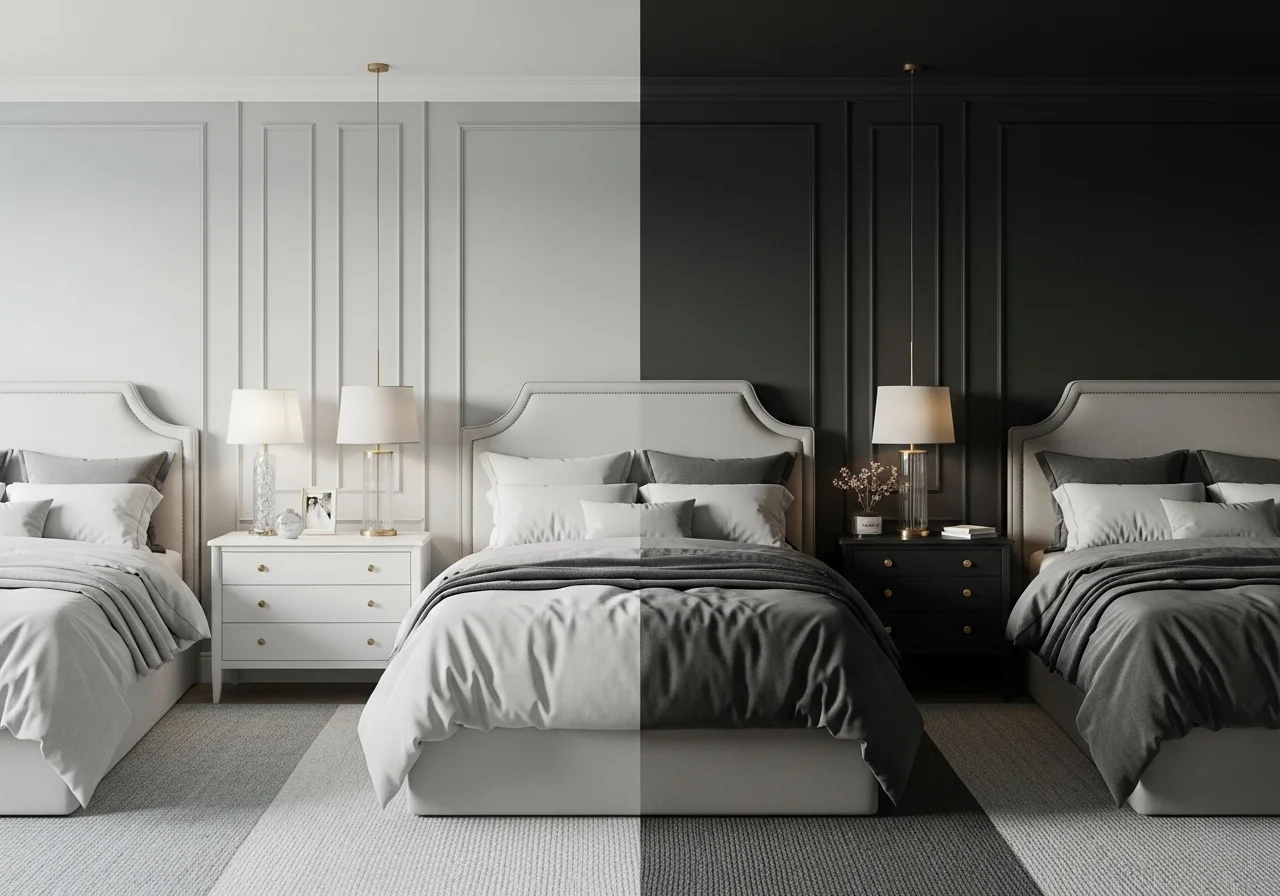
Light grey shades, such as dove grey or pale silver, work exceptionally well in smaller bedrooms or rooms with limited natural light. These lighter tones reflect illumination effectively, making spaces feel more open and airy. They provide a gentle backdrop that allows furniture and decorative elements to take center stage without creating visual competition. Light grey walls pair beautifully with white trim and ceilings, establishing a fresh, clean aesthetic that never feels overwhelming.
Medium grey tones offer more depth and character while maintaining versatility. These shades include colors with subtle undertones that can lean toward blue, green, or taupe depending on the lighting conditions throughout the day. Medium greys work particularly well in bedrooms with moderate natural light, as they provide enough contrast to create interest without making the space feel closed-in or dark.
Dark grey and charcoal shades represent the bold end of the spectrum, perfect for creating dramatic, enveloping bedroom environments. While some may hesitate to use such deep colors in sleeping spaces, when executed thoughtfully, dark grey walls can transform a bedroom into a luxurious retreat. These deeper tones work best in larger rooms with ample natural light or in spaces where you intentionally seek a moody, intimate atmosphere. Pairing dark grey walls with crisp white ceilings prevents the room from feeling too enclosed while maintaining the sophisticated aesthetic.
The key to selecting the right grey shade involves considering your room’s natural light exposure, size, and the overall mood you wish to create. North-facing rooms may benefit from warmer greys with beige or green undertones to counteract cooler natural light, while south-facing bedrooms can handle cooler grey tones without feeling stark or uninviting.
Monochromatic Grey Bedroom Schemes with Layered Textures
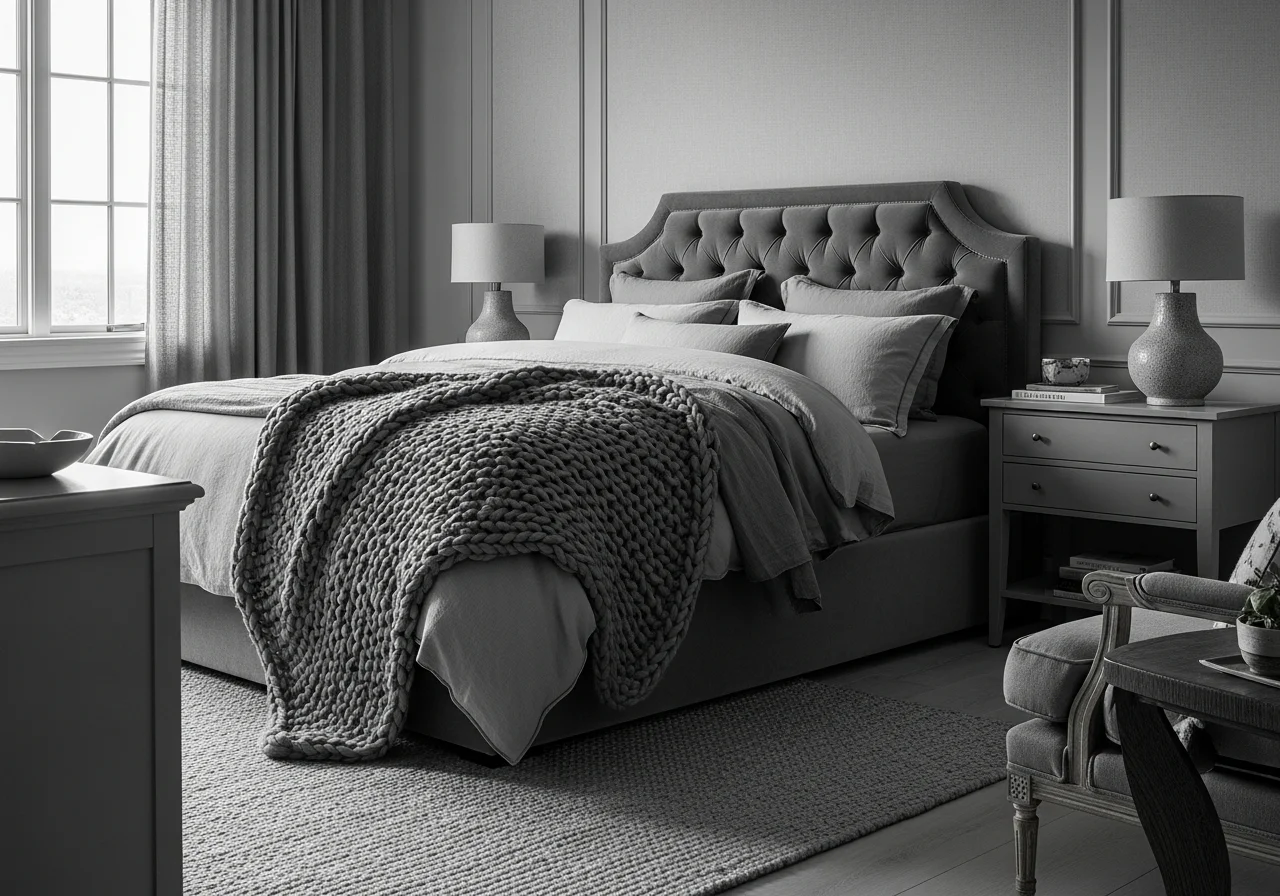
A monochromatic grey bedroom scheme demonstrates the power of simplicity when executed with attention to detail and texture variation. Rather than creating a flat, one-dimensional space, layering multiple shades of grey throughout the room adds visual depth and sophisticated interest.
Begin with your walls as the foundation, selecting a primary grey tone that sets the overall mood. From there, introduce complementary grey shades through furniture, bedding, window treatments, and accessories. For instance, pair light grey walls with a medium grey upholstered headboard, darker grey bedding, and pale grey curtains. This tonal variation creates subtle contrast that guides the eye around the room without introducing jarring color shifts.
Texture becomes crucial in monochromatic schemes, as it prevents the space from appearing flat or boring. Incorporate various materials and finishes throughout the bedroom to create tactile interest. A velvet headboard provides plush softness, while linen bedding offers casual elegance. Wool throws add cozy warmth, and silk or satin accent pillows introduce subtle sheen. Consider adding a textured grey rug, perhaps in a chunky knit or deep pile, to ground the space and provide comfort underfoot.
Wall treatments also contribute to textural layering in monochromatic grey bedrooms. Wallpaper with subtle metallic patterns, grasscloth coverings, or board and batten paneling all add dimension to grey walls without introducing additional colors. These treatments catch and reflect light differently throughout the day, creating an ever-changing visual experience within a consistent color palette.
The furniture you select for a monochromatic grey bedroom should also contribute to the layered aesthetic. Mix wood finishes, painted pieces, and upholstered items in varying grey tones. A weathered wood dresser in grey-washed finish paired with a sleek painted nightstand and an upholstered bench creates visual rhythm while maintaining color cohesion.
Grey and White Bedroom Combinations for Clean Contemporary Spaces
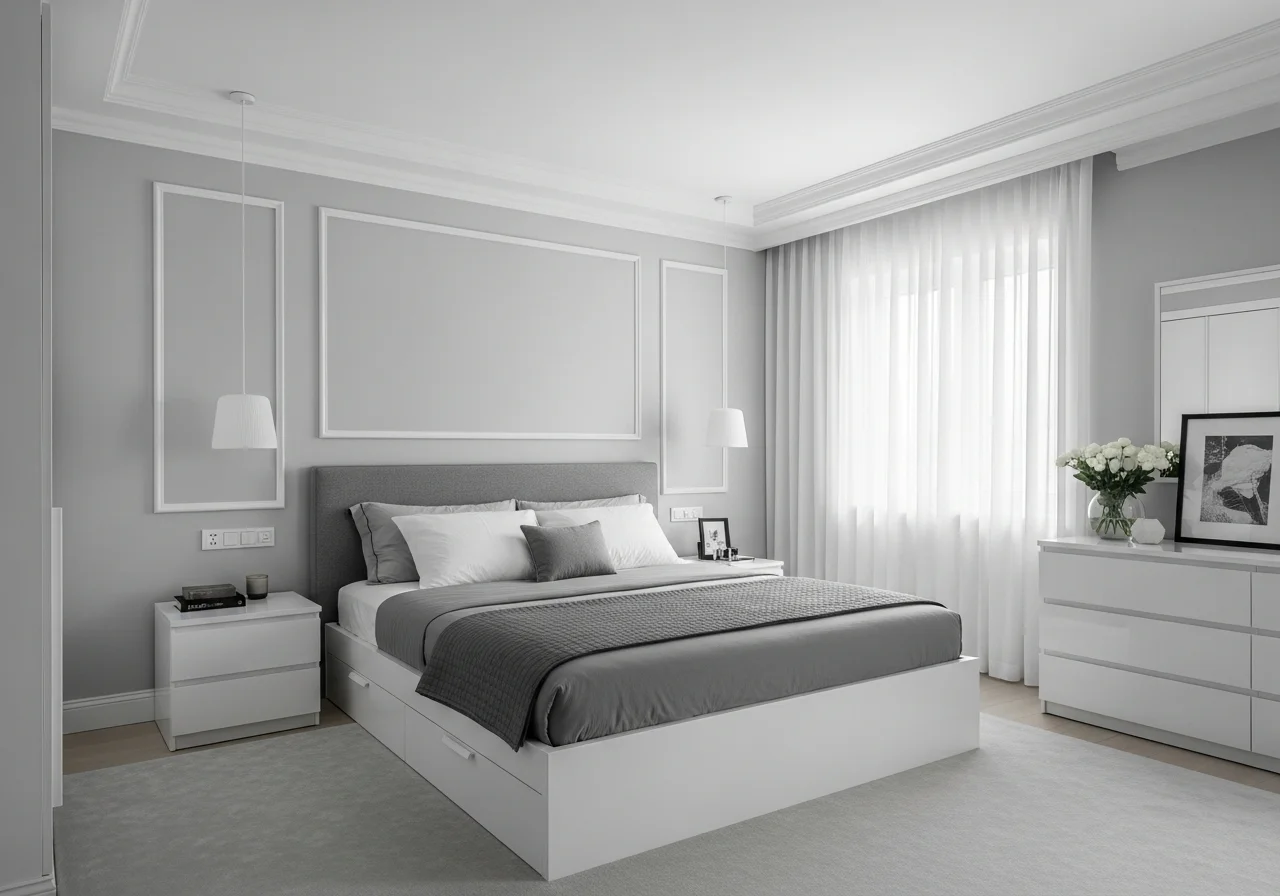
The pairing of grey and white represents one of the most enduringly popular color combinations in bedroom design, offering a clean, contemporary aesthetic that feels both timeless and current. This classic duo creates a crisp, uncluttered environment perfect for those who prefer minimalist sensibilities or Scandinavian-inspired design.
When working with grey and white, balance becomes essential. Too much white can feel stark and clinical, while too much grey may appear heavy or dull. The ideal approach involves establishing one color as dominant while using the other for contrast and definition. In most cases, using grey as the primary wall color with white trim, ceilings, and select furniture pieces creates a well-proportioned scheme.
Consider painting bedroom walls in a soft, warm grey while keeping all architectural details white. This includes baseboards, crown molding, window frames, and door casings. The contrast between these elements defines the room’s structure and adds architectural interest. White bedding against grey walls creates a hotel-inspired look that feels fresh and inviting, while grey bedding on a white bed frame offers a more grounded, cozy appearance.
Furniture choices in grey and white bedrooms should maintain the clean aesthetic while introducing subtle variation. A white dresser and nightstands paired with an upholstered grey headboard establish clear focal points. Alternatively, grey-painted furniture against white walls with white bedding creates a cohesive, gallery-like environment where artwork and decorative objects become the primary sources of visual interest.
Lighting plays a crucial role in grey and white bedrooms. Natural light should be maximized through sheer white curtains or light-filtering blinds. Artificial lighting should be warm rather than cool to prevent the space from feeling too clinical. Consider incorporating table lamps with white bases and grey shades, or vice versa, to reinforce the color scheme while providing functional illumination.
Introducing Blush Pink and Grey for Romantic Elegance
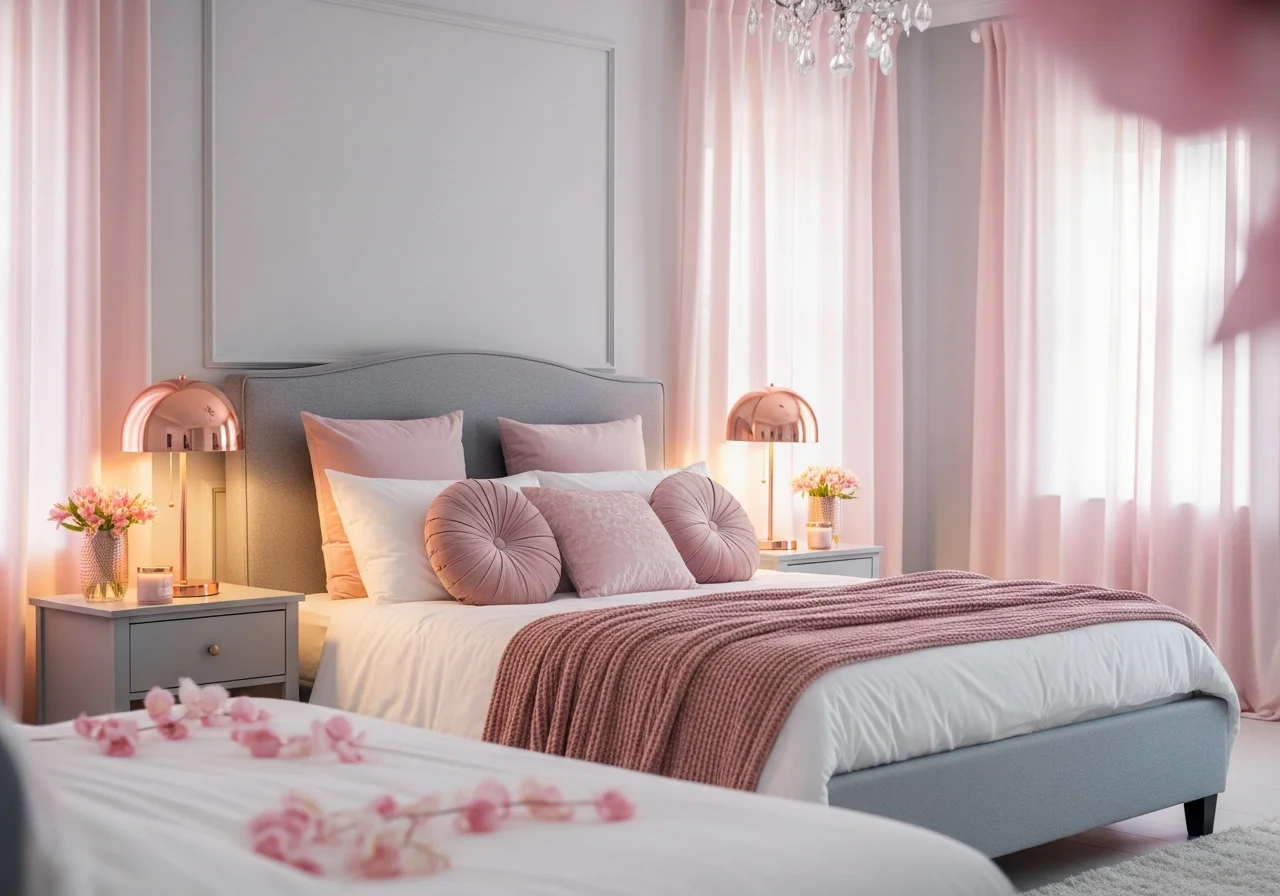
The combination of blush pink and grey has emerged as a favorite for those seeking a bedroom that feels both sophisticated and romantically inclined. This pairing works because both colors share a muted, dusty quality that creates harmony rather than stark contrast.
The secret to successfully integrating pink into a grey bedroom lies in selecting the right shade and proportion. Opt for soft, desaturated pinks rather than bright or hot pink tones. Dusty rose, pale blush, and mauve all work beautifully alongside grey, creating a gentle, soothing effect. These muted pink tones add warmth to grey without overwhelming the space or making it feel overly feminine.
When introducing pink accents to a grey bedroom, consider starting with textiles and soft furnishings. Blush pink throw pillows on a grey upholstered bed, a dusty rose throw blanket draped over the foot of the bed, or pale pink curtains filtering natural light all add subtle color without requiring major commitment. These elements can be easily changed if your preferences evolve, making this approach both stylish and practical.
For those ready to make a bolder statement, consider painting one accent wall in a soft blush tone while keeping the remaining walls grey. This creates a beautiful focal point behind the bed while maintaining grey as the dominant color. Alternatively, wallpaper featuring grey and pink patterns provides visual interest while incorporating both colors in a cohesive design.
Furniture in a grey and pink bedroom should primarily remain neutral, allowing the color interplay to shine. Grey upholstered pieces, natural wood finishes, and white-painted furniture all work well within this scheme. Consider adding metallic accents in rose gold or brass to complement the pink tones and add a touch of glamour to the overall design.
Blue and Grey Bedroom Palettes for Serene Tranquility
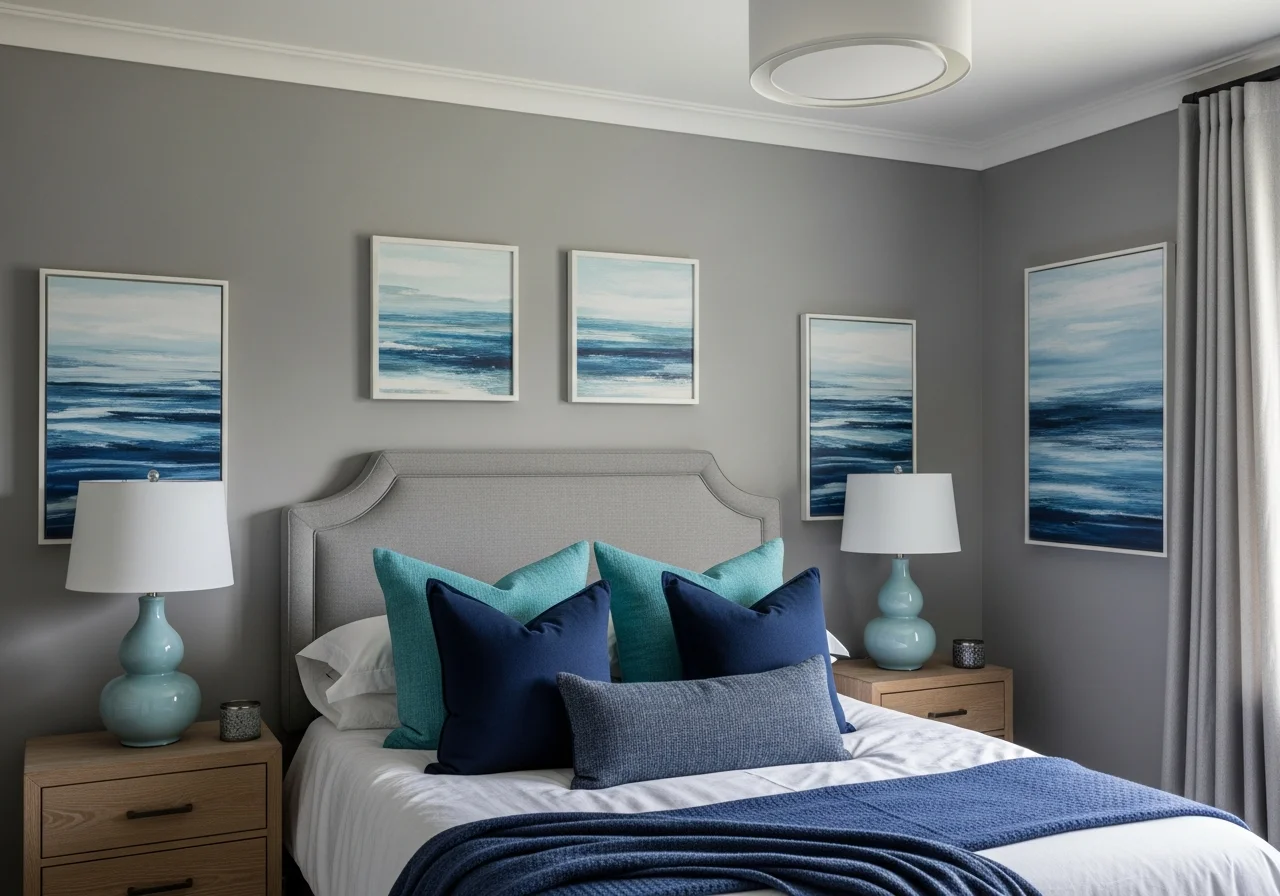
Blue and grey create a naturally calming color combination reminiscent of sky and clouds or ocean and shoreline. This pairing works exceptionally well in bedrooms because both colors have inherent relaxing properties that promote restful sleep and peaceful mornings.
The relationship between blue and grey depends largely on the specific shades you select. Cool greys with blue undertones create seamless transitions with navy, teal, or powder blue accents. Warmer greys provide beautiful contrast against similar blue tones, making both colors appear more vibrant and intentional. Consider the undertones in your grey when selecting blue accents to ensure harmonious coordination.
Navy blue and charcoal grey form a sophisticated, mature color scheme perfect for contemporary bedrooms. Use deep grey on walls with navy bedding, curtains, or an accent chair to create depth and richness. This combination works particularly well in larger bedrooms where darker colors enhance rather than overwhelm the space. White accents through bedding, artwork frames, or furniture keep the scheme from feeling too heavy.
For a lighter, airier approach, combine pale grey walls with soft blue accents throughout the room. Sky blue throw pillows, light blue ceramic lamps, or watercolor artwork featuring blue tones add gentle color without dominating the peaceful grey backdrop. This approach suits smaller bedrooms or spaces with limited natural light, as the lighter colors maintain an open, expansive feeling.
Teal and medium grey create a more dramatic pairing that adds personality and visual interest to bedroom spaces. Teal accent walls against grey furniture, or grey walls with teal upholstered pieces, establish strong focal points while maintaining an overall calm atmosphere. This combination works well for those who want color impact without straying too far from neutral territory.
Incorporating Yellow Accents for Cheerful Grey Bedrooms
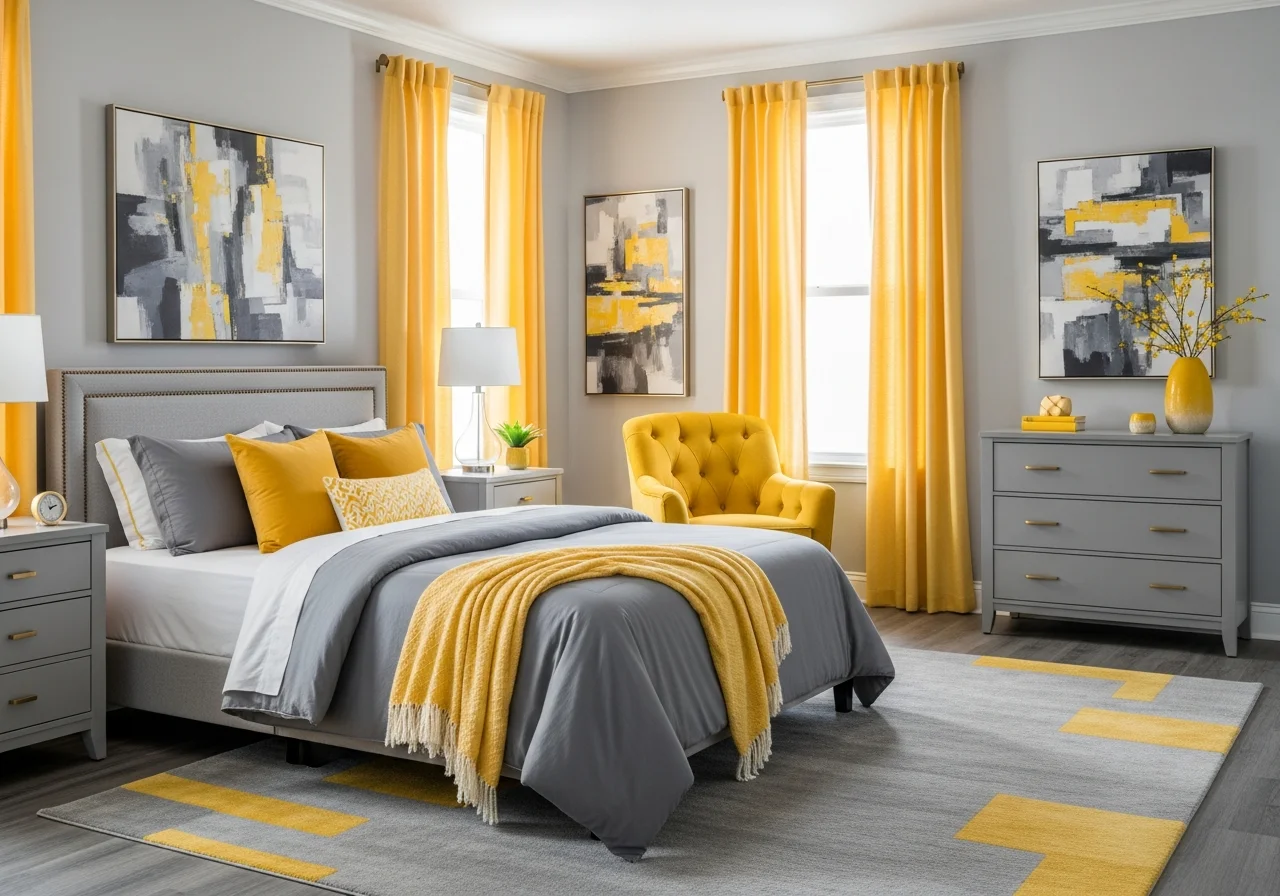
Yellow accents provide an unexpected yet delightful complement to grey bedrooms, bringing warmth, energy, and optimism to otherwise neutral spaces. This combination works because grey acts as a perfect neutralizer, allowing yellow to shine without overwhelming the senses.
The key to successfully incorporating yellow into grey bedrooms lies in shade selection and proportion. Soft, muted yellows such as butter, pale gold, or dusty mustard work more harmoniously with grey than bright, primary yellows. These softer tones add warmth and cheer while maintaining the bedroom’s peaceful atmosphere. Reserve brighter yellows for small accent pieces rather than large furniture or wall treatments.
Consider introducing yellow through textiles and accessories first. A yellow throw blanket folded at the foot of the bed, mustard accent pillows mixed with grey ones, or yellow curtains filtering natural light all add cheerful pops of color without requiring significant investment or commitment. These elements can be easily swapped if you wish to refresh the look seasonally or as trends evolve.
Artwork provides another excellent opportunity to incorporate yellow into grey bedrooms. Abstract pieces featuring yellow and grey tones, botanical prints with yellow flowers against grey backgrounds, or geometric designs incorporating both colors add visual interest to walls while reinforcing the color scheme. Gallery walls mixing yellow-matted prints with grey frames create cohesive displays that feel intentional and curated.
For those comfortable with more yellow presence, consider furniture pieces in golden or mustard tones. A yellow upholstered chair in the corner creates a cozy reading nook, while yellow nightstands flanking a grey upholstered bed make bold, symmetrical statements. Balance these larger yellow elements with substantial grey pieces to maintain equilibrium throughout the space.
Green and Grey Combinations for Natural Organic Spaces
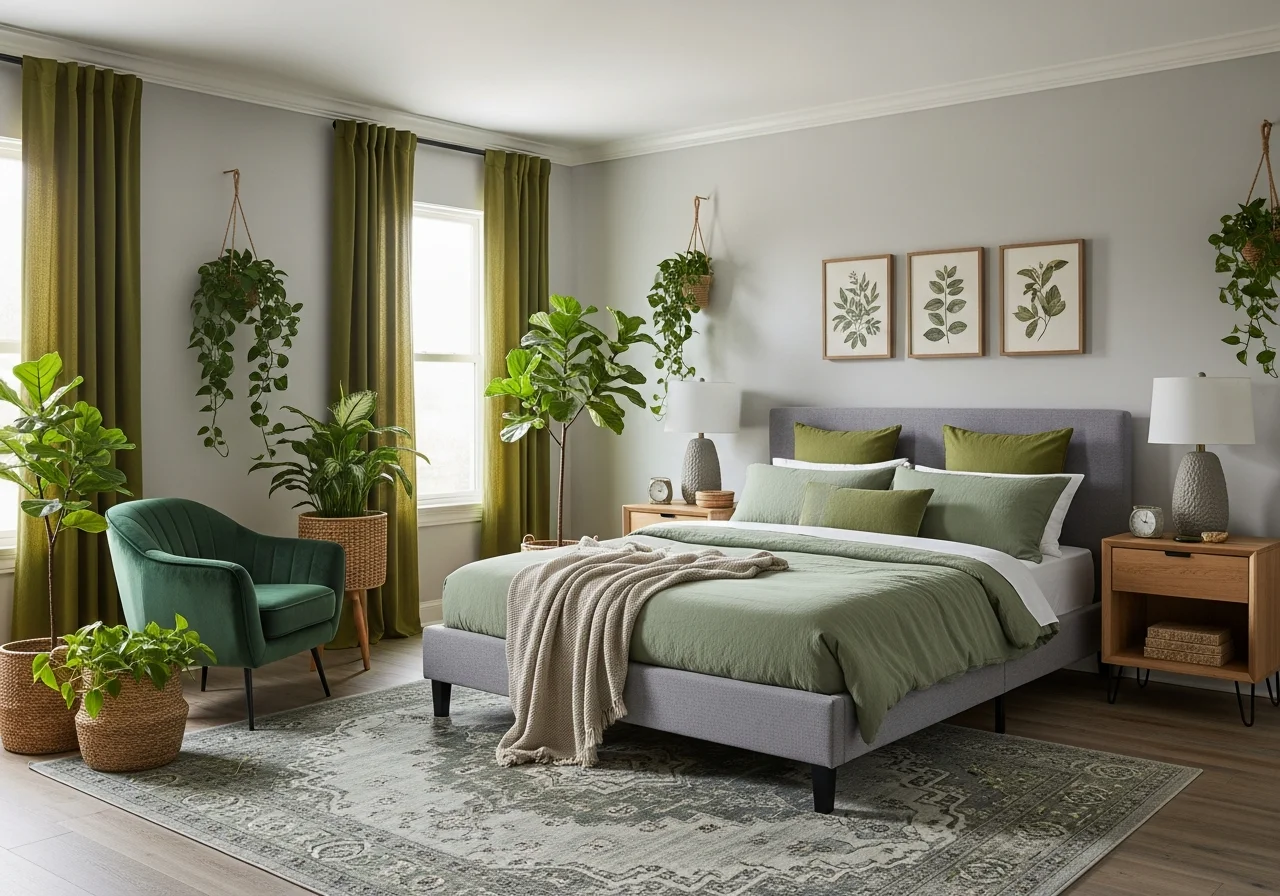
The pairing of green and grey brings natural, organic elements into bedroom design, creating spaces that feel grounded and connected to the outdoors. This combination works beautifully because both colors exist together throughout nature, from stormy skies above verdant landscapes to weathered stones amid forest floors.
Sage green and light grey form one of the most popular pairings within this color family, offering a soft, sophisticated aesthetic perfect for bedrooms. Pale grey walls provide a neutral foundation for sage green bedding, curtains, or an upholstered headboard. This combination feels fresh and current while maintaining timeless appeal that won’t quickly feel dated.
For more dramatic impact, consider pairing deep forest green or emerald tones with charcoal grey. This rich, jewel-toned approach creates luxurious, enveloping bedroom environments perfect for those who appreciate bold color choices. Use deep grey on walls with forest green velvet curtains, emerald accent chairs, or olive green bedding to establish a sophisticated, masculine aesthetic that feels both modern and classic.
Olive green represents a middle ground between these approaches, offering earthy warmth without excessive drama. Olive green pairs beautifully with medium grey tones, creating balanced, harmonious spaces that feel calm and inviting. Consider olive green painted furniture against grey walls, or grey bedding with olive green accent pillows and throws for subtle color integration.
Incorporating living plants into grey and green bedrooms reinforces the natural aesthetic while providing actual organic elements. Large potted plants in corners, trailing vines on shelves, or a collection of succulents on nightstands add life and texture while supporting the color scheme. The various shades of green found in living plants create beautiful, subtle variation against grey backgrounds.
Creating Cozy Texture Through Grey Bedding Layers
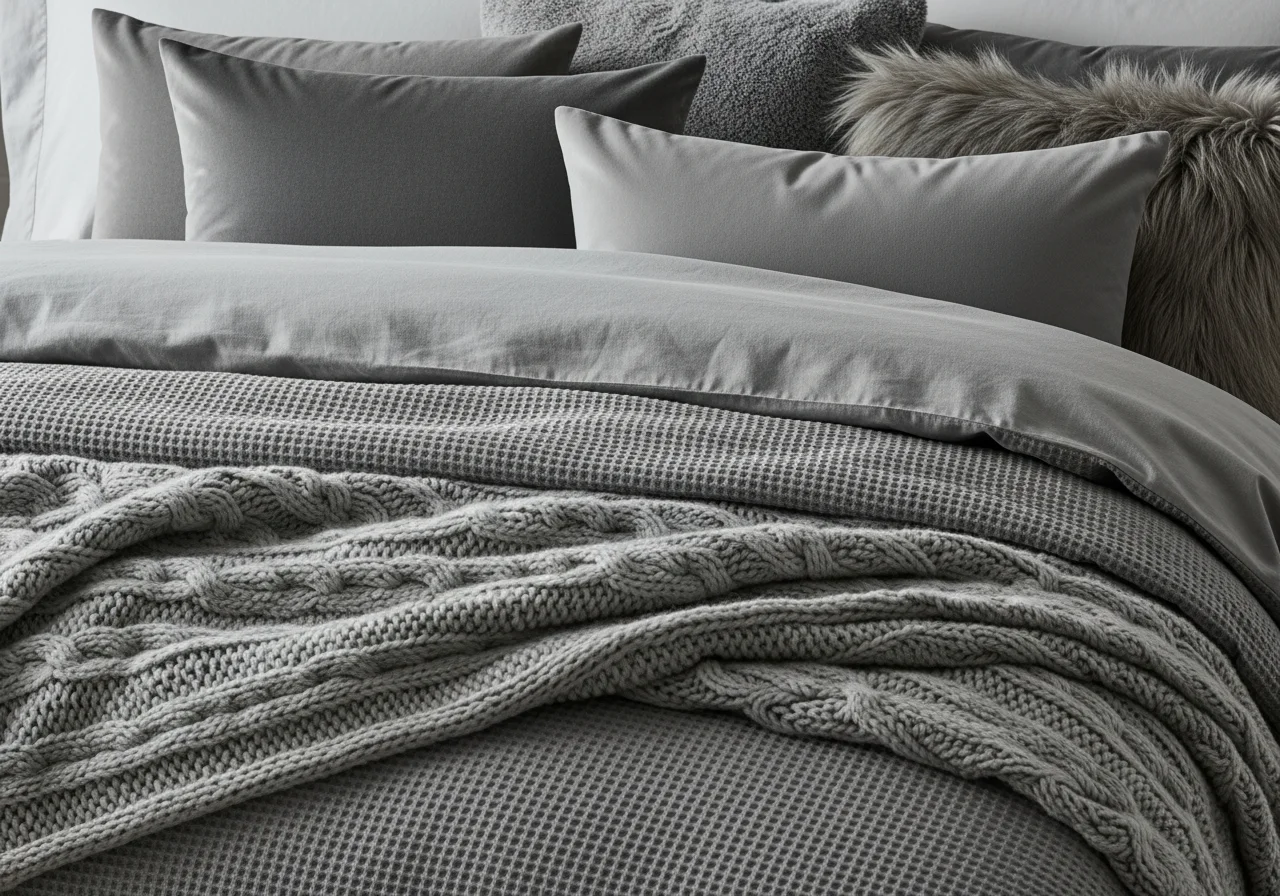
Grey bedding offers remarkable versatility in creating cozy, inviting bedroom environments through thoughtful layering and texture selection. Rather than viewing grey sheets and blankets as boring or basic, consider them as foundational elements that showcase fabric quality and layering technique.
Begin with high-quality grey sheets in a fabric that feels luxurious against your skin. Egyptian cotton, linen, or bamboo fabrics all offer distinct textures and temperature-regulating properties. Select a shade of grey that complements your wall color without matching it exactly. If you have light grey walls, consider darker grey sheets for contrast, or vice versa.
Duvet covers or comforters provide the next layer in your bedding ensemble. A white or cream duvet cover over grey sheets creates a hotel-inspired look that feels crisp and clean. Alternatively, a darker grey comforter over lighter grey sheets adds depth and warmth. Consider textured duvet covers such as waffle weave, pintuck, or subtle jacquard patterns to add visual interest without introducing additional colors.
Throws and blankets draped across the foot of the bed or folded over a corner add both practical warmth and aesthetic appeal. Choose throws in contrasting grey tones or complementary accent colors. A chunky knit grey throw adds cozy texture, while a velvet or faux fur throw introduces luxurious softness. These layers invite touch and create a lived-in, welcoming appearance.
Pillow arrangements complete your grey bedding scheme. Mix various grey tones, sizes, and textures to create a plush, inviting headboard display. Standard pillows in lighter grey, euro shams in medium grey, and accent pillows in darker grey or complementary colors create depth and dimension. Consider incorporating textured pillows such as cable knit, velvet, or linen to maximize tactile interest.
Grey Bedroom Furniture for Cohesive Design
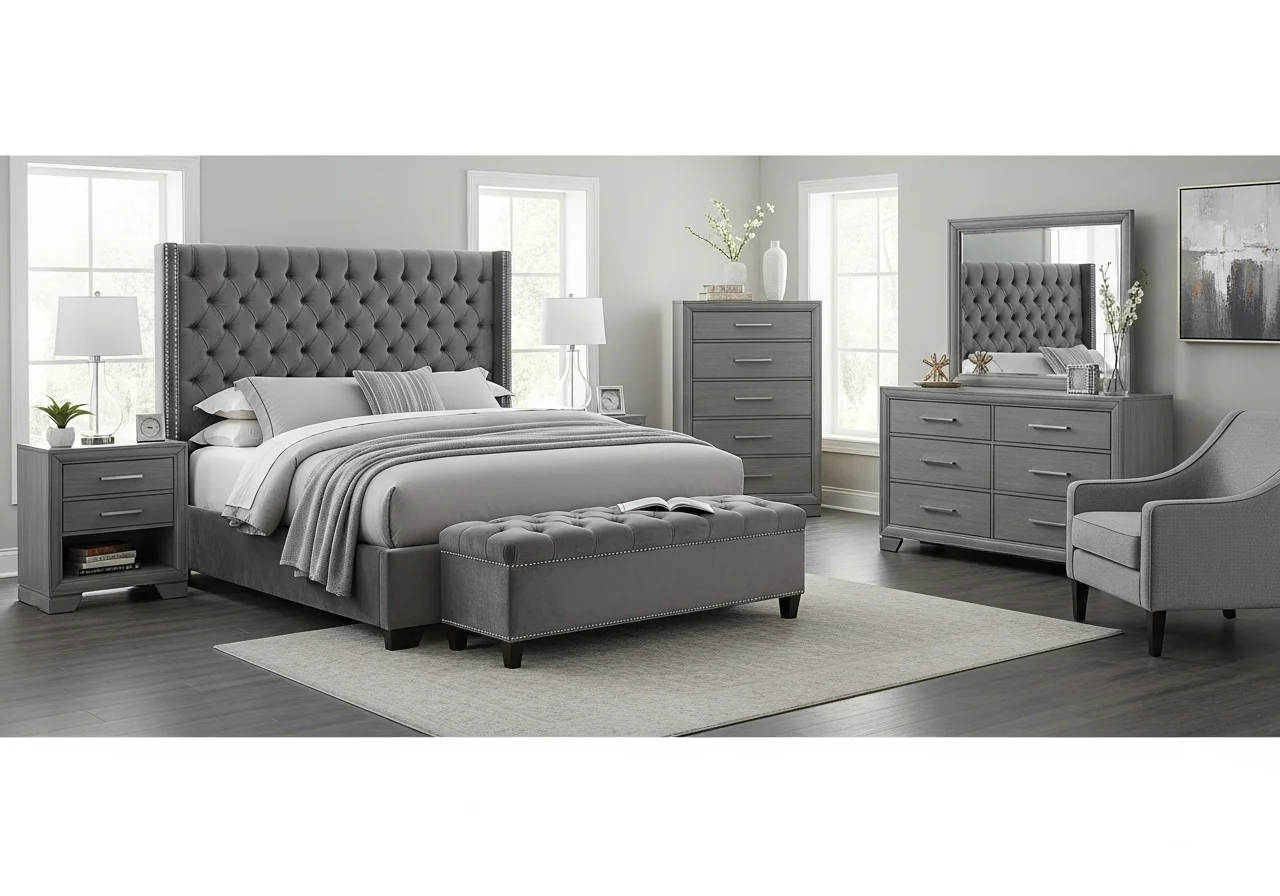
Grey bedroom furniture has become increasingly popular as designers and homeowners recognize its ability to create cohesive, sophisticated spaces that feel intentional rather than haphazard. Unlike wood furniture that must coordinate with specific undertones, or white furniture that can feel stark, grey furniture offers flexibility and contemporary appeal.
Upholstered grey headboards serve as stunning focal points in bedroom design. Whether you prefer a simple, streamlined silhouette or an elaborate tufted design, grey fabric provides a neutral canvas that works with virtually any bedding or wall color. Velvet upholstery adds luxury and depth, while linen offers casual elegance and texture. Consider the scale of your headboard relative to your bed and room size, ensuring it creates impact without overwhelming the space.
Grey-painted wood furniture brings modern sophistication to bedrooms while offering the warmth and grain variation of natural wood. Dressers, nightstands, and armoires painted in various grey tones create coordinated sets without feeling too matchy or formal. This approach works particularly well in transitional or farmhouse-style bedrooms where the combination of modern color and traditional furniture shapes creates interesting design tension.
For those who prefer the look of natural wood, grey-washed or weathered finishes offer a compromise that introduces grey tones while celebrating wood grain and texture. These finishes work beautifully in coastal, rustic, or Scandinavian-inspired bedrooms, adding organic warmth to grey color schemes.
When mixing grey furniture with other bedroom elements, consider balance and proportion. A large grey upholstered bed anchors the space, while smaller grey accent pieces such as benches, chairs, or ottomans distribute the color throughout the room without creating heavy concentrations. Mixing grey furniture with natural wood pieces adds welcome warmth and prevents the space from feeling too monochromatic or cold.
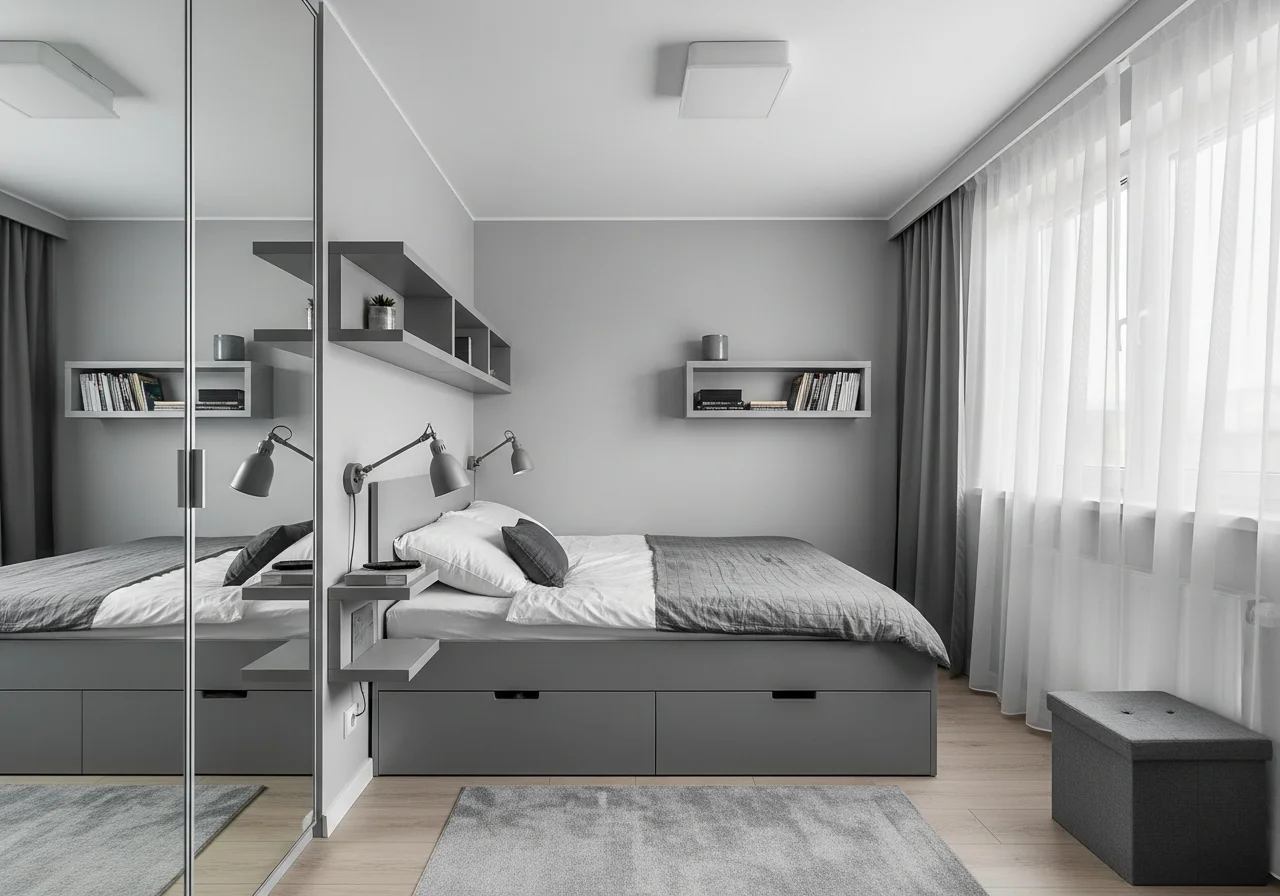
Small Grey Bedroom Ideas for Maximizing Space
Grey proves particularly effective in small bedroom design because its neutral nature creates a calm, uncluttered aesthetic that makes limited square footage feel more spacious and organized. When working with compact spaces, strategic use of grey can transform cramped quarters into cozy retreats.
Light grey walls remain the best choice for small bedrooms, as they reflect available light and create the illusion of expanded space. Avoid dark grey in tiny rooms unless you specifically desire a cocooning effect and have adequate lighting to prevent the space from feeling cave-like. Consider extending the same light grey onto the ceiling to eliminate visual boundaries and make the room feel taller.
Furniture selection becomes crucial in small grey bedrooms. Choose pieces with clean lines and minimal visual weight to prevent the space from feeling cluttered. A grey upholstered platform bed without a footboard or bulky frame maintains the grey color scheme while preserving precious floor space. Wall-mounted nightstands or floating shelves in grey tones provide necessary function without crowding the room.
Storage solutions in small grey bedrooms should blend seamlessly with the overall design. Grey storage ottomans at the foot of the bed, grey baskets on shelves, or a grey wardrobe with mirrored doors all provide essential organization while supporting the color scheme. Mirrors, in particular, become valuable tools in small grey bedrooms, reflecting light and creating the perception of additional space.
Bedding in small grey bedrooms should maintain a light, airy feeling. White or light grey bedding prevents the bed from dominating the room visually, while subtle patterns or textures add interest without overwhelming limited space. Avoid excessive pillow arrangements or heavy comforters that make the bed appear bulky relative to the room size.
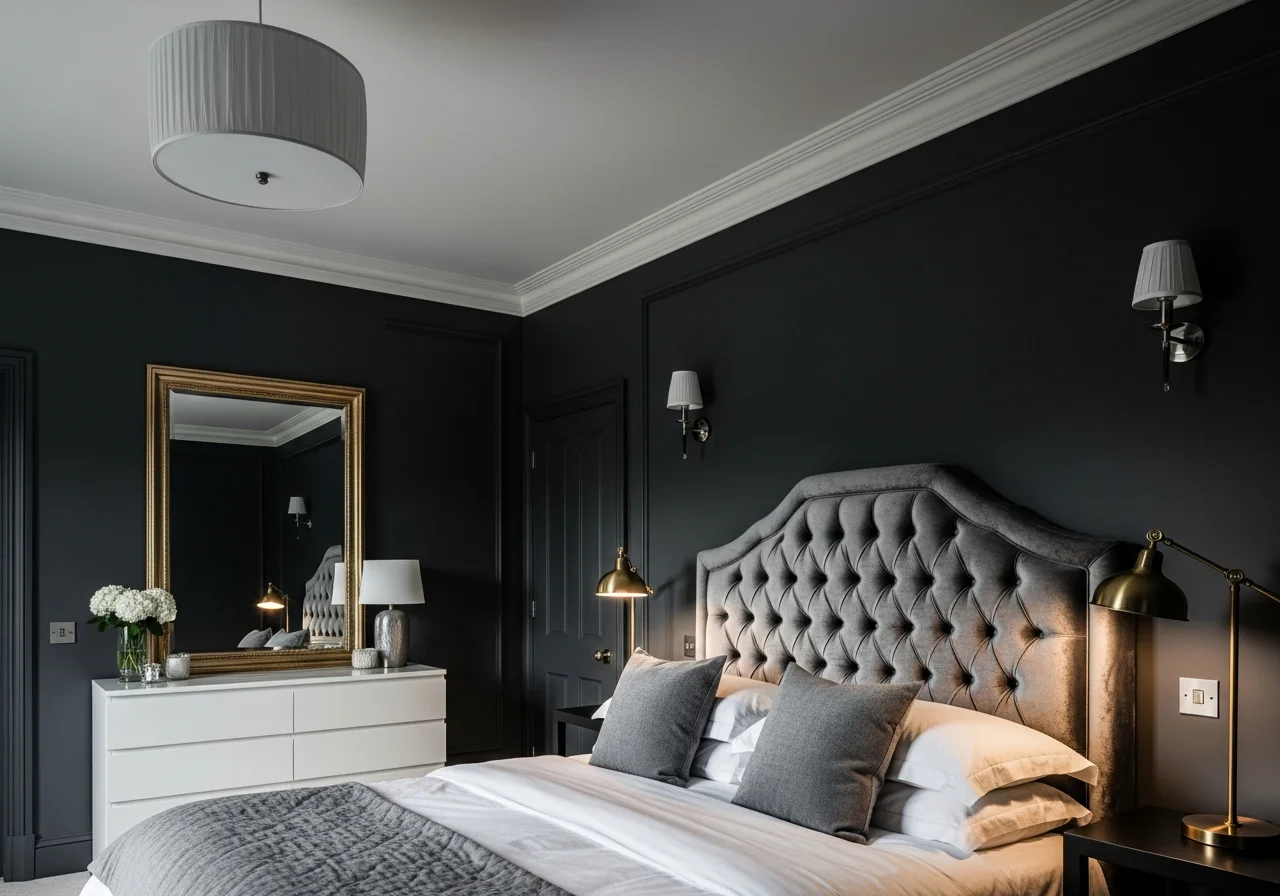
Dark Grey Bedroom Walls for Dramatic Sophistication
While many shy away from dark grey bedroom walls, this bold choice creates stunning, sophisticated spaces when executed with proper lighting and thoughtful design choices. Dark grey walls transform bedrooms into intimate retreats perfect for relaxation and rejuvenation.
Charcoal grey walls work best in bedrooms with ample natural light or in spaces where you intentionally seek a moody, enveloping atmosphere. The key to success lies in balancing the dark walls with lighter elements throughout the room. Crisp white ceilings prevent the space from feeling too enclosed, while white trim and molding add architectural definition and visual relief from the deep wall color.
Bedding choices in dark grey bedrooms should lean toward lighter tones to create necessary contrast. White bedding against charcoal walls delivers a striking, hotel-inspired aesthetic, while light grey or cream bedding offers a softer, more subtle approach. Layer textures through your bedding to add dimension and prevent the combination of dark walls and light linens from feeling too stark.
Lighting becomes absolutely essential in dark grey bedrooms. Natural light should be maximized through sheer curtains or window treatments that filter rather than block illumination. Artificial lighting must be layered, including overhead fixtures, bedside lamps, and accent lighting such as wall sconces or picture lights. Warm-toned bulbs create a more inviting atmosphere than cool white options.
Furniture and decor in dark grey bedrooms can vary in color depending on your desired aesthetic. Light wood furniture adds warmth and natural contrast, while white furniture creates crisp, modern juxtaposition. Dark wood or additional grey furniture pieces create a rich, layered monochromatic scheme. Metallic accents in brass, gold, or copper add warmth and glamour against dark grey walls.
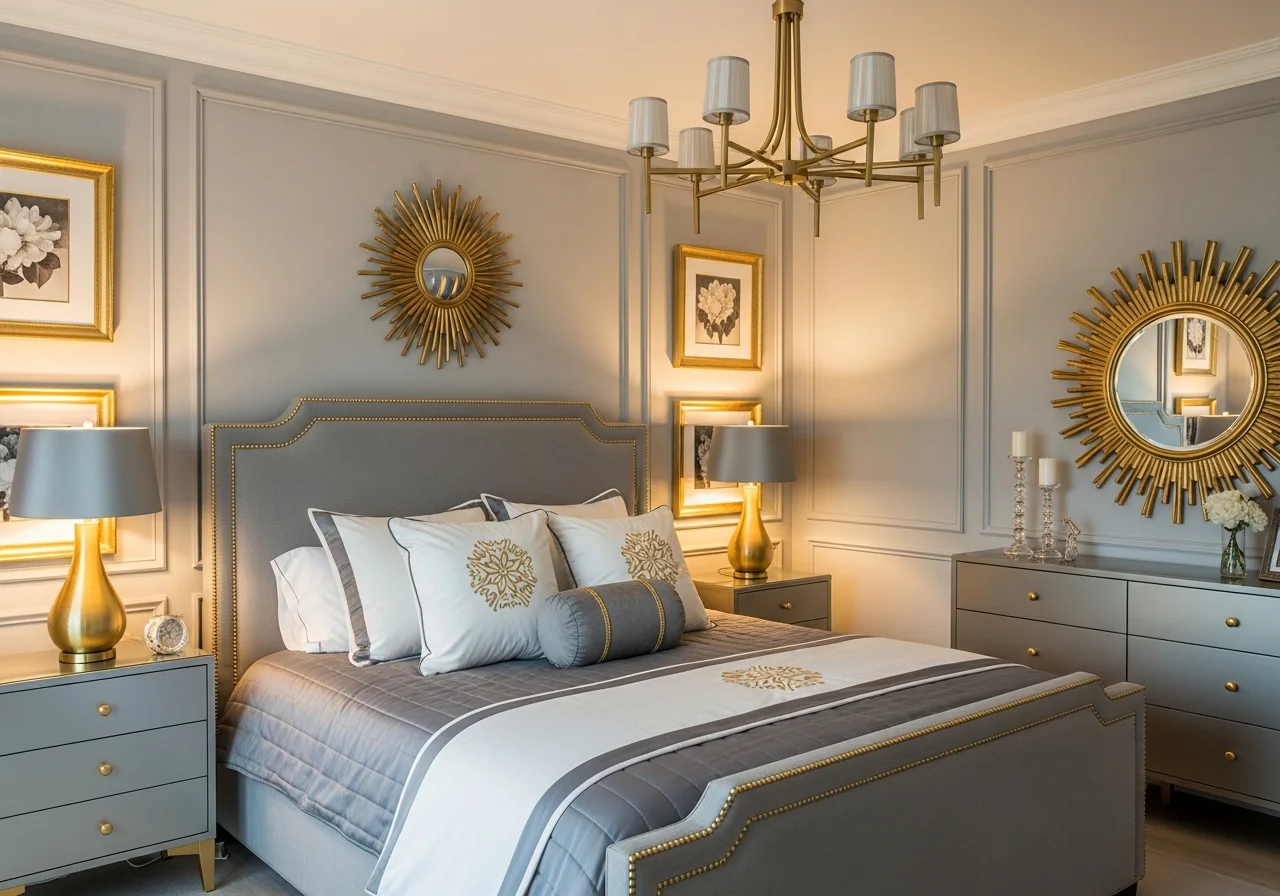
Grey and Gold Accents for Luxurious Elegance
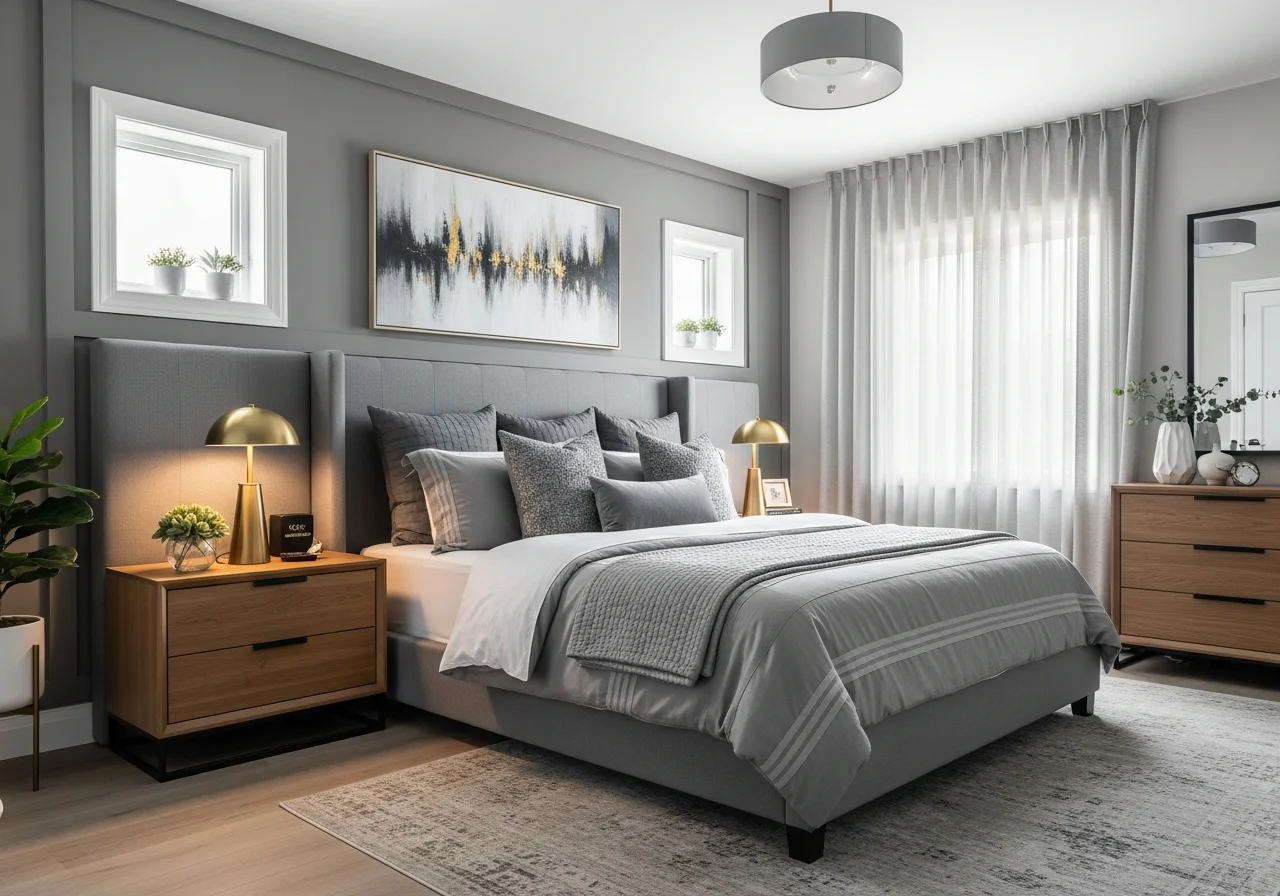
The pairing of grey and gold represents one of the most sophisticated color combinations available for bedroom design, offering timeless elegance and luxurious appeal. This duo works because gold’s warm, reflective qualities perfectly complement grey’s cool, neutral foundation.
When incorporating gold into grey bedrooms, consider the finish and tone of your metallic accents. Brushed gold offers a subtle, modern approach that feels current and understated. Polished brass brings vintage charm and works beautifully in traditional or transitional spaces. Rose gold provides a contemporary twist that pairs especially well with warmer grey tones. Select one primary metallic finish and use it consistently throughout the room for a cohesive appearance.
Gold lighting fixtures serve as both functional elements and decorative statements in grey bedrooms. Gold table lamps on grey nightstands, a gold chandelier overhead, or gold wall sconces flanking the bed all add warm illumination while reinforcing the color scheme. The reflective quality of gold fixtures helps bounce light around the room, creating a luminous, welcoming atmosphere.
Hardware and accessories provide additional opportunities for gold integration. Gold drawer pulls on grey furniture, gold picture frames displaying artwork, gold mirrors above dressers, or gold decorative objects on shelves all contribute to the luxurious aesthetic without overwhelming the space. Keep these gold accents distributed throughout the room rather than concentrated in one area to maintain visual balance.
Textiles offer another avenue for introducing gold into grey bedrooms. Gold embroidered throw pillows on grey bedding, curtains with gold threading, or a grey and gold patterned area rug all incorporate metallic elements in softer, more subtle ways. These textile approaches work well for those who want gold presence without the permanence of painted or metallic finishes.
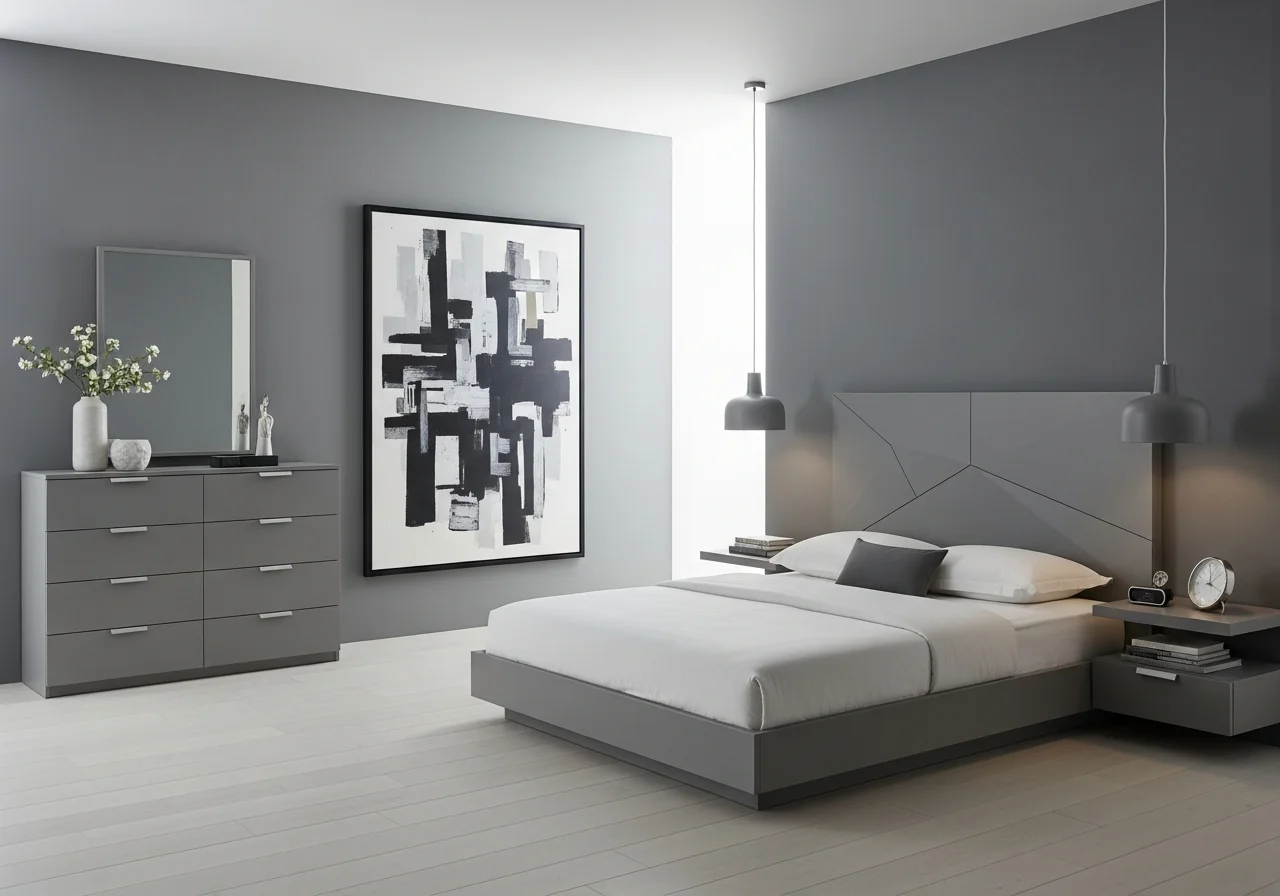
Contemporary Grey Bedroom Styles with Clean Lines
Contemporary grey bedrooms embrace minimalism, clean lines, and uncluttered aesthetics that create calm, sophisticated sleeping environments. This design approach suits those who appreciate modern simplicity and functional beauty over ornate decoration or excessive pattern.
Furniture in contemporary grey bedrooms features streamlined silhouettes without unnecessary embellishment. Platform beds with low profiles and simple geometric headboards anchor the space without overwhelming it. Nightstands with clean-lined drawers and minimal hardware provide necessary function while maintaining visual simplicity. Dressers with flush drawer fronts and integrated pulls continue the streamlined aesthetic.
Wall treatments in contemporary grey bedrooms typically remain simple, allowing architecture and furniture to take center stage. Smooth paint finishes in uniform grey tones create calm, uninterrupted surfaces. If adding wall interest, consider subtle texture through materials like concrete-effect paint, microcement, or simple geometric paneling rather than busy wallpaper patterns.
Bedding in contemporary grey bedrooms maintains the minimalist approach through simple designs and quality fabrics. Solid grey duvet covers, crisp white sheets, and a minimal pillow arrangement create the clean, hotel-inspired look characteristic of contemporary design. Avoid excessive pattern, frills, or decorative elements that detract from the streamlined aesthetic.
Artwork and decor in contemporary grey bedrooms should be carefully curated rather than abundant. Large-scale abstract artwork in grey and white tones, black and white photography, or simple sculptural objects provide visual interest without cluttering surfaces or creating visual noise. Each piece should feel intentional and purposeful rather than merely decorative.
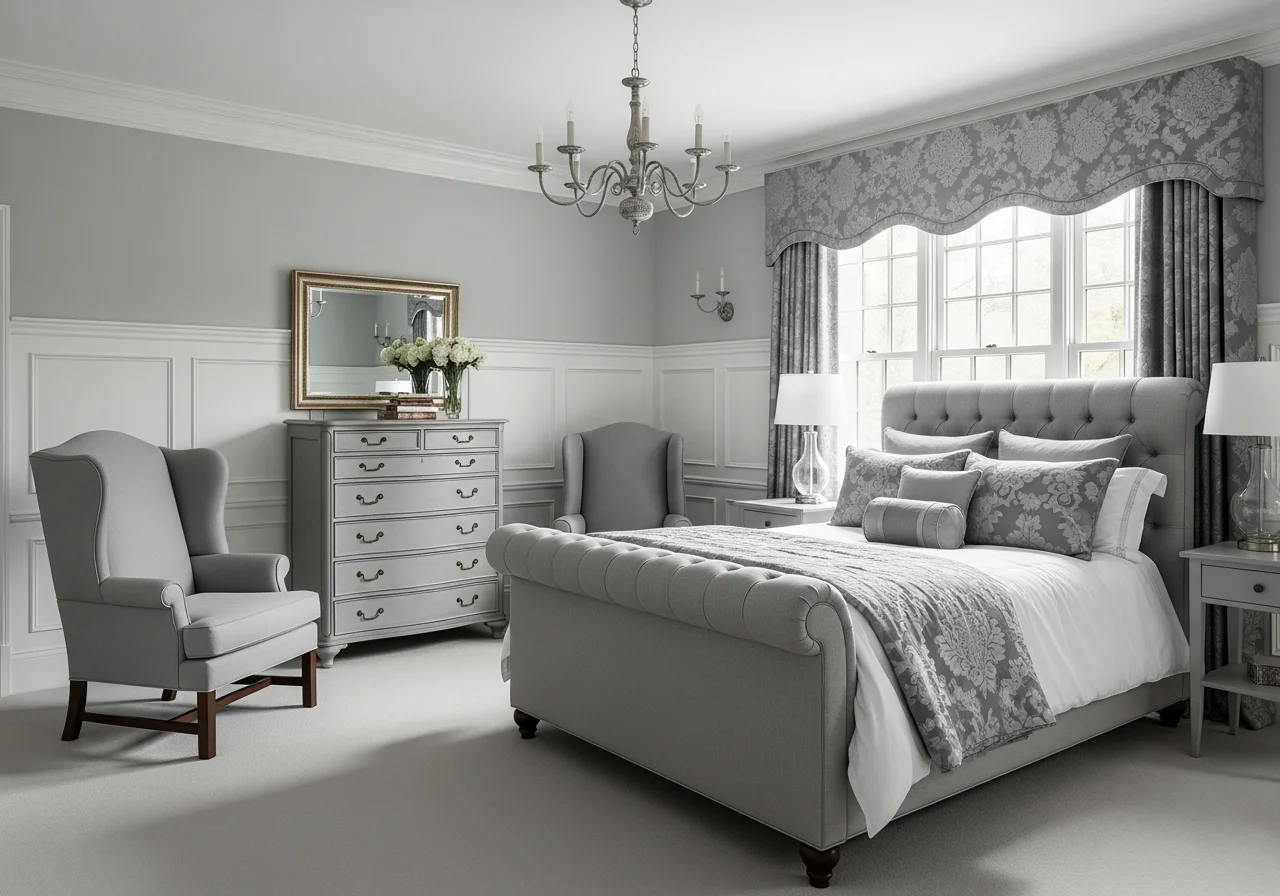
Traditional Grey Bedroom Designs with Classic Appeal
Grey adapts beautifully to traditional bedroom styles, proving that this neutral tone need not be confined to modern or contemporary aesthetics. Traditional grey bedrooms combine classic furniture silhouettes, elegant fabrics, and timeless design principles with the versatility and sophistication of grey color palettes.
Furniture in traditional grey bedrooms features classic proportions and decorative details such as turned legs, carved embellishments, or paneled surfaces. A grey upholstered sleigh bed with rolled arms, tufted grey wing chairs, or a grey painted dresser with brass hardware all bring traditional elegance while incorporating modern grey tones. These pieces feel substantial and well-crafted, qualities highly valued in traditional design.
Window treatments in traditional grey bedrooms tend toward more elaborate styles than their contemporary counterparts. Floor-length grey drapery panels with decorative trim, valances, or tiebacks add formal elegance. Layering treatments such as combining grey curtains with white sheers or roman shades creates depth and luxury characteristic of traditional spaces.
Bedding in traditional grey bedrooms often incorporates pattern and layering. Damask patterns, toile prints, or subtle florals in grey and white create visual interest while maintaining a cohesive color scheme. Multiple layers including bed skirts, decorative shams, and numerous throw pillows create the plush, luxurious appearance associated with traditional bedroom design.
Architectural details enhance traditional grey bedrooms significantly. Crown molding, wainscoting, or coffered ceilings painted in coordinating grey or white tones add depth and character. These classical elements provide the architectural framework that supports traditional design while the grey color palette keeps the overall aesthetic feeling fresh rather than dated.
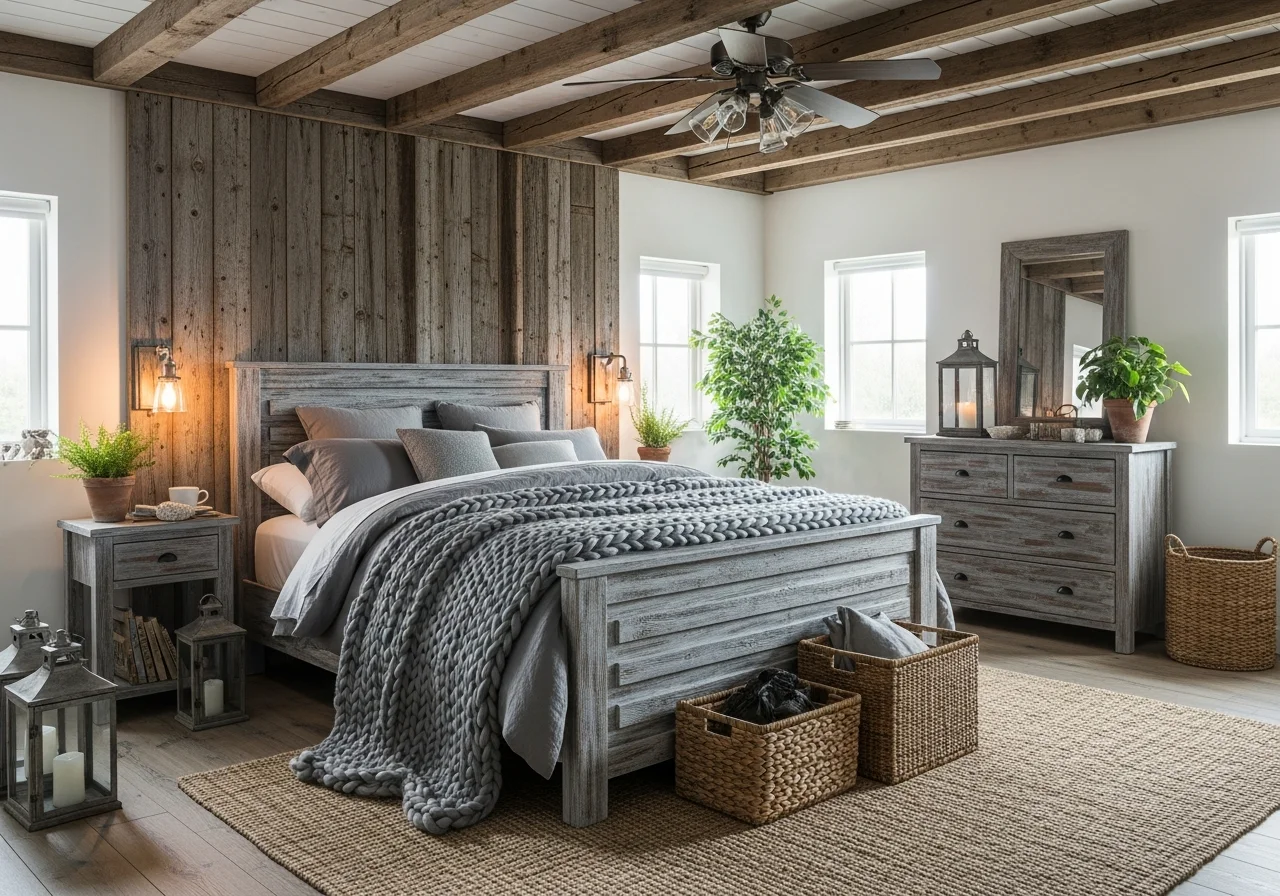
Rustic Grey Bedroom Concepts with Natural Materials
Rustic grey bedrooms combine the warmth and organic appeal of natural materials with the contemporary sophistication of grey color palettes. This design approach creates spaces that feel both grounded and current, perfect for those who appreciate casual, comfortable aesthetics with modern sensibilities.
Wood elements play a starring role in rustic grey bedrooms, providing essential warmth and texture. Reclaimed wood accent walls behind the bed, exposed beam ceilings, or wide-plank wood floors all introduce natural, organic elements that complement rather than compete with grey tones. The weathered, aged appearance of reclaimed wood pairs particularly well with grey, as both possess similar muted, understated qualities.
Furniture in rustic grey bedrooms should emphasize natural materials and substantial construction. A grey-washed wood bed frame with visible grain, a distressed grey dresser with original hardware, or rough-hewn grey benches all embody rustic character while maintaining the grey color scheme. Mixed materials such as wood combined with metal or stone add authentic rustic appeal.
Textiles in rustic grey bedrooms lean toward natural fibers and chunky textures. Linen bedding in grey tones, wool throws with visible weave, cable knit pillows, or jute area rugs all contribute to the rustic aesthetic while supporting the color palette. These materials feel authentic and substantial rather than slick or synthetic.
Decor elements in rustic grey bedrooms should appear collected and organic rather than perfectly matched or overly designed. Vintage metal lanterns, woven baskets for storage, ceramic vases with dried branches, or weathered wood frames all add rustic character. The grey color scheme provides cohesion that prevents these varied elements from appearing cluttered or disorganized.
Creating a grey bedroom that reflects your personal style while promoting rest and relaxation requires thoughtful consideration of shade selection, color pairings, texture, and overall design approach. Whether you prefer the clean simplicity of contemporary design, the warmth of rustic aesthetics, or the elegance of traditional spaces, grey provides a versatile foundation that adapts to your vision. The key lies in understanding how different grey tones interact with other colors, how texture creates visual interest within monochromatic schemes, and how furniture and accessories can enhance rather than detract from your chosen aesthetic. As you design or refresh your bedroom, remember that grey is not merely a neutral backdrop but an active participant in creating spaces that feel both beautiful and deeply personal.
Frequently Asked Questions
What shade of grey works best for small bedrooms?
Light grey shades work best for small bedrooms because they reflect natural light and create the illusion of expanded space. Pale grey, dove grey, or greys with subtle white undertones help small rooms feel more open and airy. Pair light grey walls with white trim and light-colored furnishings to maximize the spacious feeling. Avoid dark grey in compact spaces unless you have excellent lighting and specifically desire a cozy, intimate atmosphere.
How do I keep a grey bedroom from feeling cold or uninviting?
Add warmth to grey bedrooms through layered textures, natural materials, and warm accent colors. Choose grey tones with warm undertones such as greige or grey with subtle beige hints. Incorporate wood furniture, wool or velvet textiles, and warm metallics like brass or gold. Use warm-toned lighting with soft white bulbs rather than cool daylight bulbs. Adding blush pink, mustard yellow, or terracotta accents brings immediate warmth to grey spaces.
Can I mix different shades of grey in one bedroom?
Absolutely. Mixing multiple grey shades creates depth and visual interest in bedroom design. Use varying grey tones across walls, furniture, bedding, and accessories to create a sophisticated, layered look. The key is ensuring sufficient tonal variation so shades are distinguishable rather than appearing as mismatched versions of the same color. Combining light, medium, and dark greys throughout the space creates dimension while maintaining color cohesion.
What colors complement grey best in bedroom design?
Grey pairs beautifully with numerous colors including white, blush pink, navy blue, sage green, mustard yellow, and warm metallics like gold or brass. White and grey create clean, contemporary spaces while pink and grey offer romantic elegance. Blue and grey provide tranquil serenity, green and grey bring natural warmth, and yellow and grey add cheerful energy. Select accent colors based on your desired mood and personal preferences.
Should I paint my ceiling grey to match my bedroom walls?
Painting ceilings grey works well in certain situations but requires careful consideration. In rooms with very high ceilings, a grey ceiling can make the space feel more intimate and proportionate. However, in standard-height or small rooms, white ceilings typically work better as they prevent the space from feeling enclosed. If you do paint ceilings grey, choose a shade several tones lighter than your wall color to maintain adequate visual separation and light reflection.