
10 Attic Bedroom Inspiration Ideas for Cozy Living
Transforming an attic into a bedroom offers one of the most rewarding home renovation opportunities available. What often begins as underutilized storage space can evolve into a charming sanctuary that combines privacy, character, and unexpected comfort. The unique architectural features that define attic spaces, from sloped ceilings to exposed beams, provide the perfect canvas for creating a bedroom unlike any other in your home.
The appeal of attic bedrooms extends beyond mere functionality. These elevated spaces naturally separate themselves from the daily activities of household life, offering a retreat where you can truly unwind. Whether you envision a luxurious master suite, a welcoming guest room, or a peaceful reading haven, your attic holds remarkable potential waiting to be unlocked.
This guide explores ten inspiring ideas that will help you reimagine your attic space. Each approach addresses the specific challenges of working with sloped ceilings, limited floor space, and unconventional room shapes while celebrating the architectural quirks that make attic bedrooms so distinctive. The strategies shared here balance practical considerations with design aesthetics, ensuring your finished space functions beautifully for years to come.
Embrace the Architectural Character
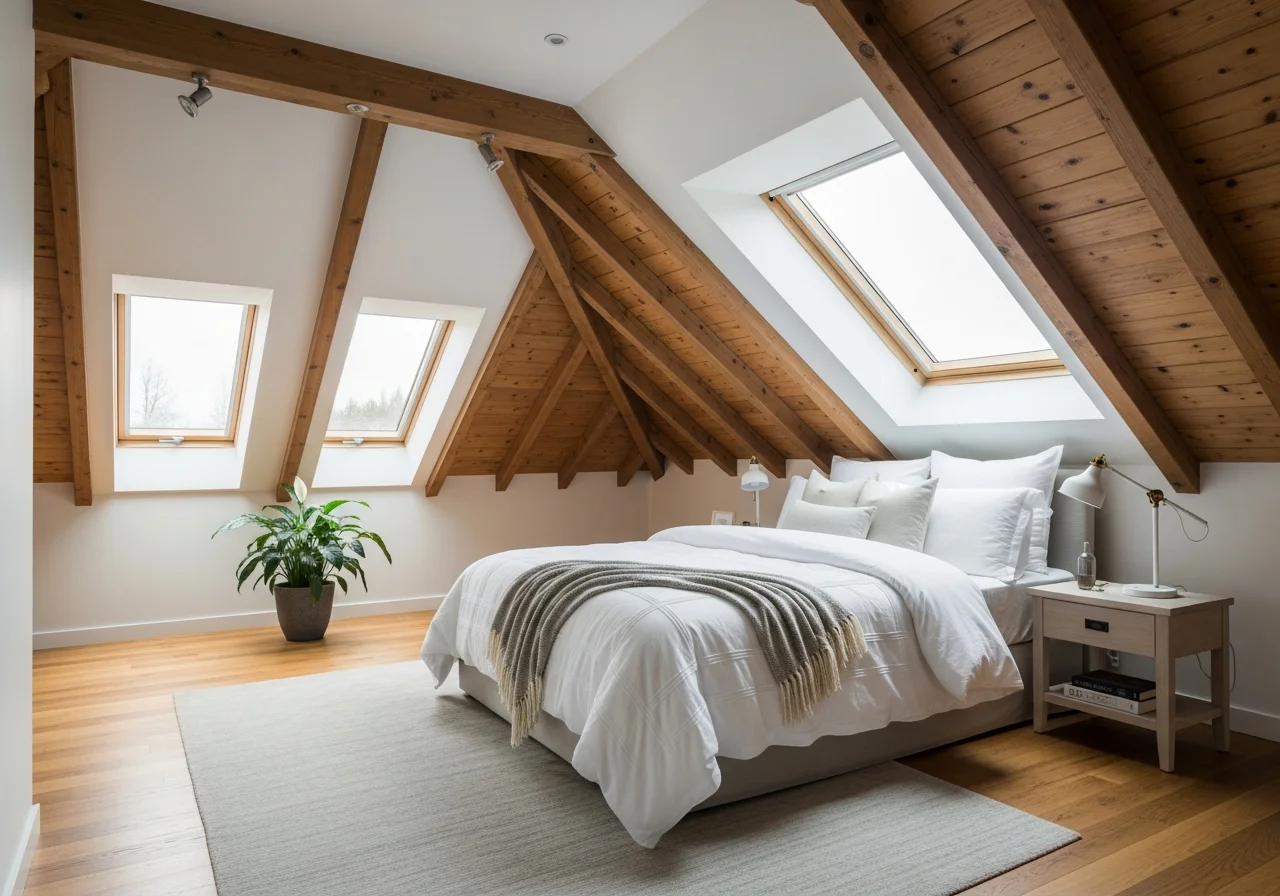
The most successful attic bedroom designs work in harmony with existing structural elements rather than attempting to conceal them. Sloped ceilings, exposed rafters, and angled walls represent opportunities rather than obstacles. These features give attic spaces their distinctive personality and should anchor your design decisions from the start.
Consider leaving wooden beams in their natural state or applying a light whitewash to maintain brightness while showcasing the wood grain. The texture and warmth of exposed timber instantly elevates the room’s visual interest without requiring additional decoration. For spaces with brick chimneys or stone walls, resist the urge to cover these elements. Instead, use their colors as inspiration for your overall palette, selecting bedding, rugs, and accent pieces that complement rather than compete with these architectural highlights.
The angular nature of attic ceilings creates natural focal points. A steeply pitched roof draws the eye upward, making the space feel larger than its square footage suggests. Rather than fighting against low points where the ceiling meets the floor, turn these areas into functional features. The key lies in viewing every architectural quirk as a design opportunity that adds character impossible to replicate in standard rectangular rooms.
Maximize Natural Light Sources
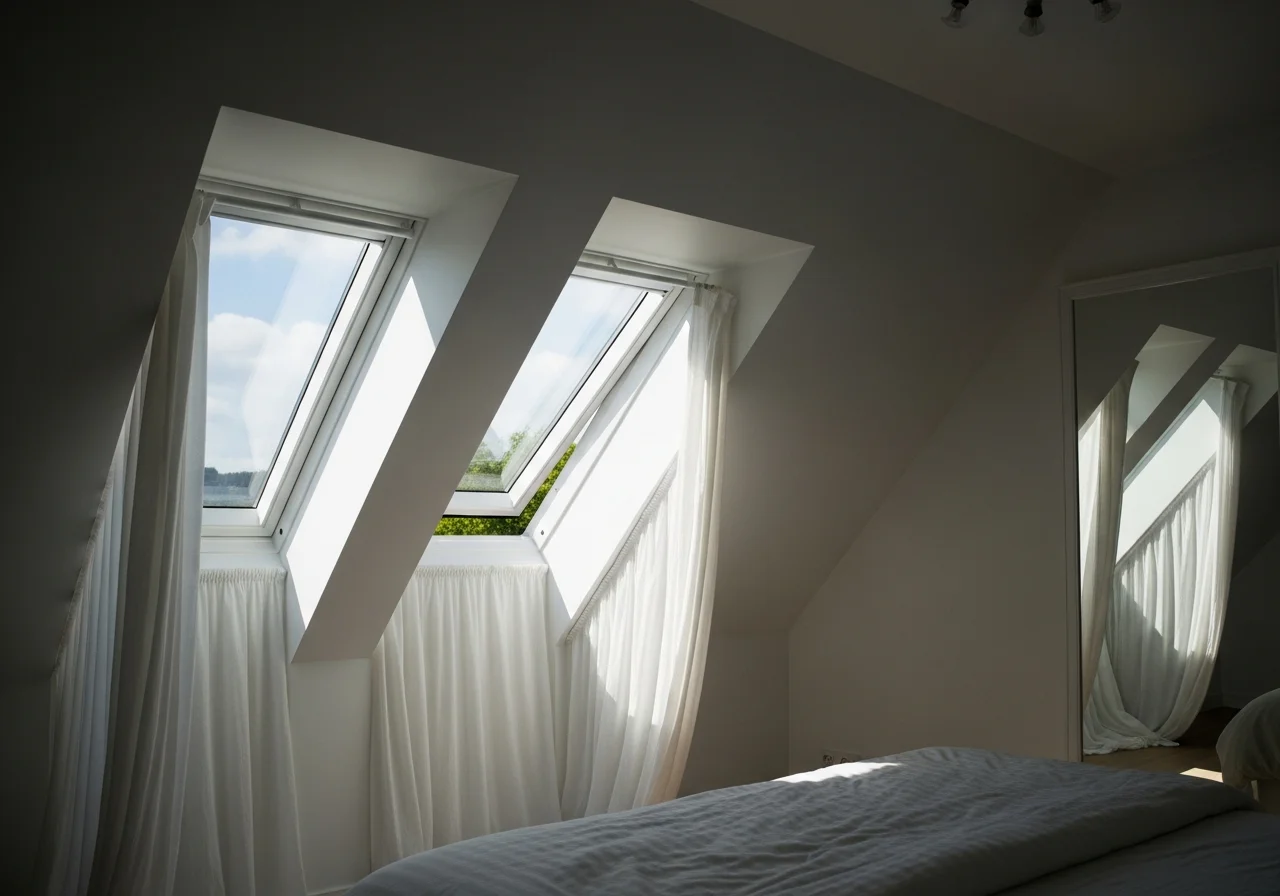
Light transforms attic bedrooms from cramped afterthoughts into airy retreats. Many attics begin as dark spaces with minimal windows, but strategic interventions can flood the room with natural illumination. Skylights represent one of the most effective solutions, bringing sunlight directly through the roof and creating dramatic lighting effects that change throughout the day.
When installing skylights, placement matters significantly. Position them to capture morning light if you prefer waking with the sun, or angle them toward the west for evening glow. Multiple smaller skylights often work better than a single large one, distributing light more evenly and reducing the greenhouse effect during summer months. Dormer windows offer another excellent option, simultaneously increasing headroom and providing traditional window views.
For attics with existing windows, maximize their impact through thoughtful treatments. Sheer curtains filter harsh afternoon sun while maintaining brightness. Light-colored window frames and trim help bounce illumination deeper into the space. If structural changes are not feasible, supplement natural light with carefully positioned mirrors that reflect available sunlight. A large mirror placed opposite a window effectively doubles the natural light, making even modestly sized openings feel more substantial.

Optimize Storage with Built-In Solutions
Storage challenges top the list of concerns when designing attic bedrooms. The irregular geometry that gives these spaces charm simultaneously creates furniture placement puzzles. Built-in storage solutions address both issues, transforming awkward corners and low ceiling areas into highly functional organization systems.
The space beneath sloped ceilings, often too low for standing but perfectly sized for storage, becomes ideal for custom cabinetry. Drawers and cabinets fitted precisely to match ceiling angles eliminate wasted space while keeping belongings organized and accessible. These built-ins can house everything from clothing and shoes to books and linens, freeing up valuable floor space for other furniture.
Consider installing a closet system designed specifically for sloped ceilings. Wall-mounted clothing rails that follow the ceiling angle maximize vertical storage without requiring floor space. Low-profile dressers slide easily under eaves, and open shelving takes advantage of varying heights to display items while keeping the room feeling spacious. The investment in custom solutions pays dividends in functionality, turning previously unusable areas into your most efficient storage zones.
For a more economical approach, modular storage systems from furniture retailers often include pieces in various heights. These can be arranged to step down with your ceiling slope, creating a cohesive look without custom carpentry costs. The key principle remains constant: every inch of an attic bedroom must earn its keep through smart storage integration.
Select Appropriate Furniture Scale
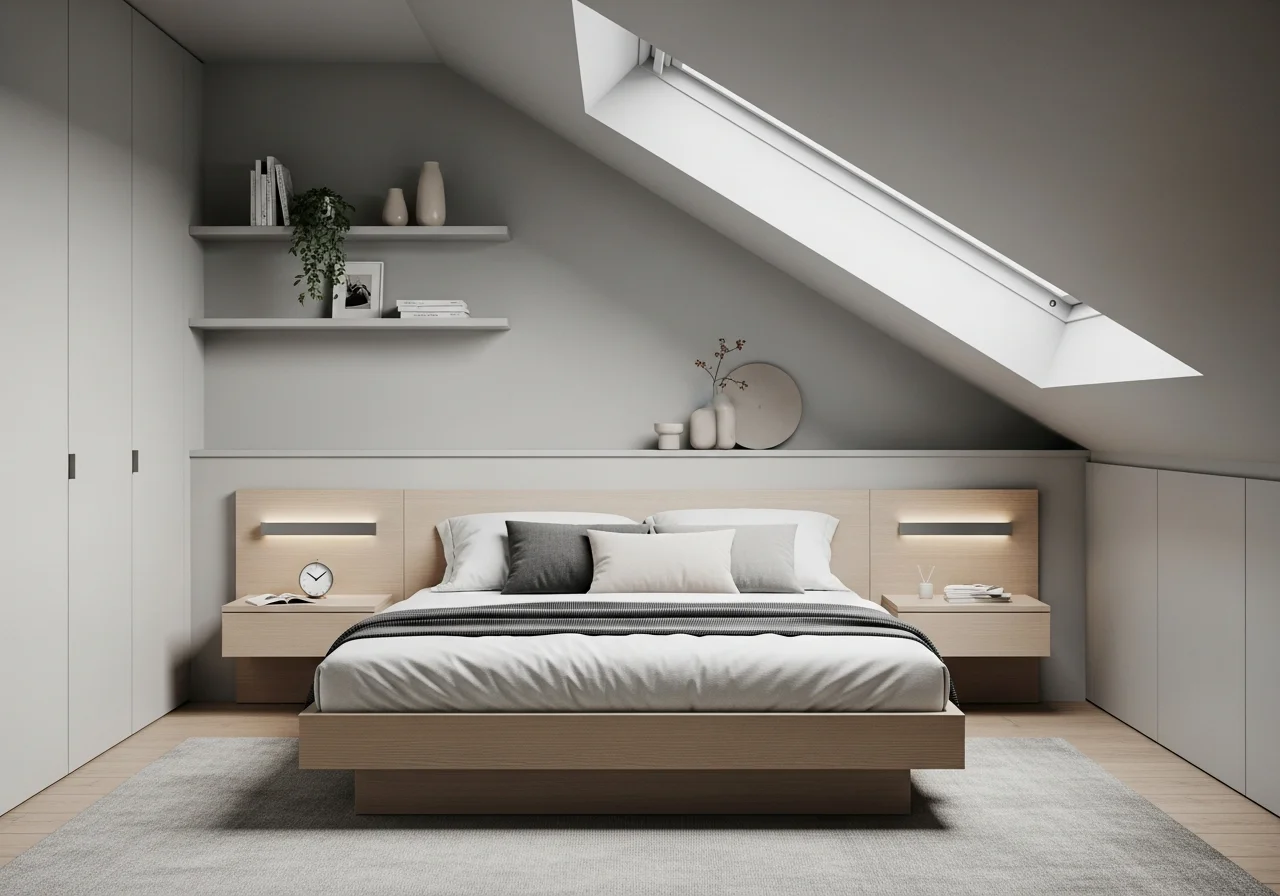
Furniture selection makes or breaks attic bedroom functionality. Standard bedroom pieces often prove too tall or bulky for spaces with limited headroom and floor area. Low-profile furniture maintains proper proportions while ensuring comfortable movement throughout the room.
Platform beds work exceptionally well in attic settings, sitting closer to the floor and creating the illusion of higher ceilings. Their streamlined design prevents the room from feeling cramped. Murphy beds offer even greater flexibility, folding into the wall when not in use and transforming the bedroom into a multipurpose space during the day. For guest rooms used infrequently, this versatility proves particularly valuable.
When selecting additional furniture, measure carefully and prioritize pieces that serve multiple functions. A storage ottoman provides seating while concealing blankets or off-season clothing. A bedside table with shelves underneath offers display space without requiring a separate bookcase. Compact sectional sofas create comfortable seating areas in larger attics without the footprint of traditional furniture arrangements.
The placement of furniture matters as much as its size. Position the bed beneath the highest point of the ceiling to maintain a sense of openness where you spend most of your time. Locate dressers and chairs in lower areas where standing height is not required. This strategic arrangement makes even modest attic spaces feel comfortable and well-proportioned.
Create a Color Scheme that Enhances Space
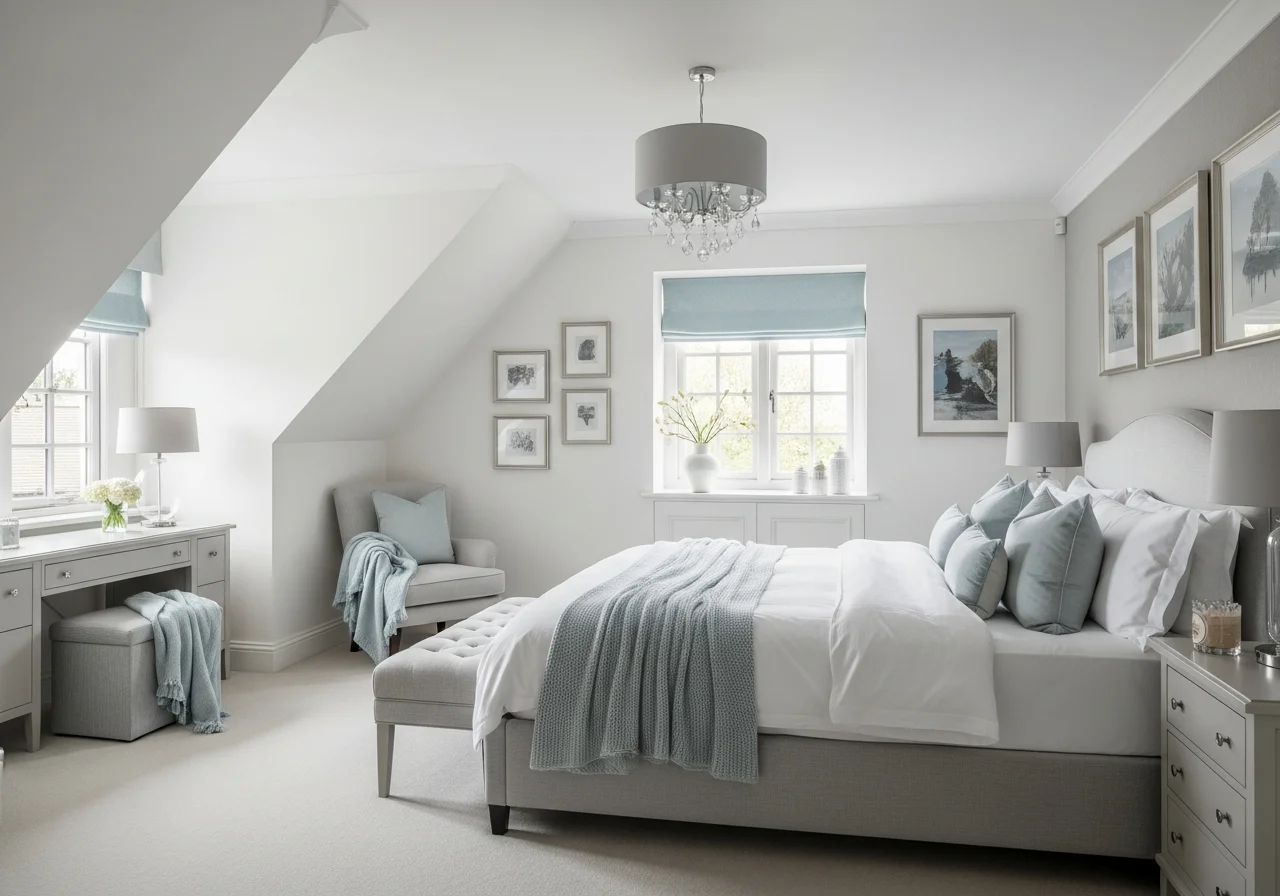
Color choices dramatically influence how an attic bedroom feels. Light, neutral palettes remain popular for good reason, making rooms appear larger and brighter. White, cream, soft gray, and pale blue reflect available light effectively, counteracting the potentially dark nature of attic spaces.
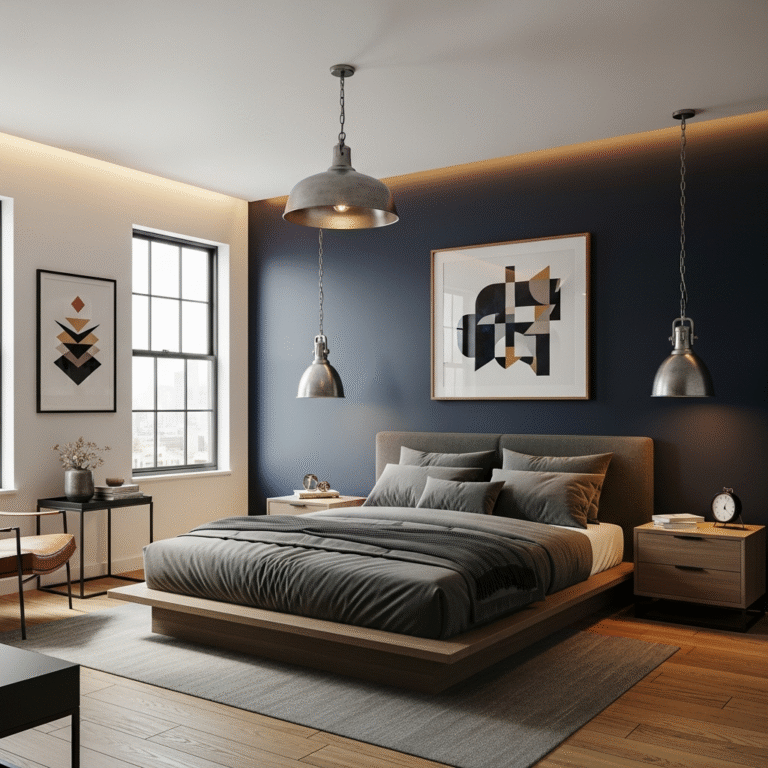
However, darker colors deserve consideration too, particularly in attics with abundant natural light. Deep blues, rich greens, and warm charcoal create cocoon-like environments perfect for rest and relaxation. The enclosed nature of attic spaces actually suits this approach, wrapping you in color rather than making the room feel confined. When using darker hues, balance becomes essential. Keep the ceiling light to maintain vertical space perception, or paint both walls and ceiling the same dark shade for a dramatic, enveloping effect.
Accent walls provide another effective strategy, particularly on sloped surfaces. A bold color or patterned wallpaper on an angled wall draws attention to the room’s unique architecture while keeping the overall space bright. This approach works especially well when the accent color appears in bedding or accessories, tying the design together cohesively.
Remember that paint color appears different in various lighting conditions. Test samples in your attic throughout the day, observing how morning, afternoon, and evening light affects the hue. This simple step prevents disappointment and ensures your chosen palette achieves the desired atmosphere.
Design Cozy Reading Nooks and Corners
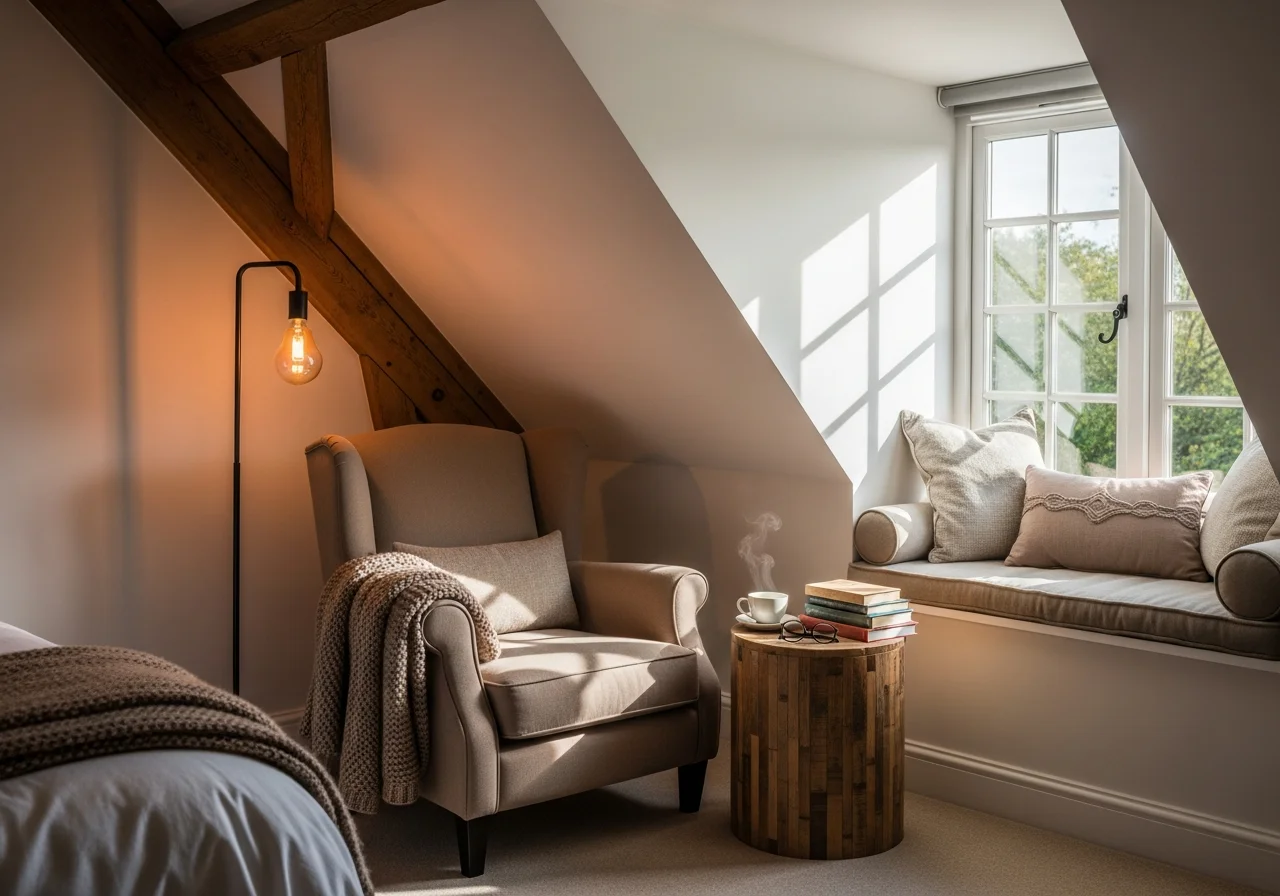
The unusual angles inherent to attic architecture create perfect opportunities for intimate spaces within the larger bedroom. Low ceiling areas unsuitable for standing become ideal reading nooks when furnished with a comfortable chair, good lighting, and perhaps a small side table for tea or books.
Position a plush armchair in a corner where the ceiling slopes low, add a floor lamp or wall-mounted reading light, and include a soft throw for chilly evenings. This simple arrangement transforms a challenging architectural feature into your favorite spot in the house. The enclosure created by the sloped ceiling provides a sense of security and focus, making it easier to relax with a good book.
Window seats represent another excellent use of attic space. If your attic includes dormer windows, the alcove they create naturally accommodates built-in seating. Adding cushions and pillows transforms this area into a comfortable perch with natural light and views. Storage drawers beneath the seat provide additional functionality without consuming extra floor space.
For larger attics, consider sectioning off a portion of the room with a bookcase or decorative screen. This creates a defined sitting area separate from the sleeping zone, adding functionality without requiring walls that might make the space feel smaller. The goal is establishing distinct areas that serve different purposes while maintaining the open, airy feel that makes attic bedrooms special.
Install Creative Lighting Solutions
Lighting in attic bedrooms requires careful planning beyond relying solely on natural light. The varied ceiling heights and angles demand multiple light sources at different levels to ensure adequate illumination throughout the space.
Start with ambient lighting that provides overall brightness. Flush-mount or semi-flush ceiling fixtures work well in areas with low clearance, while pendant lights can hang from higher points without risk of head bumps. Consider installing lights on dimmer switches, allowing you to adjust brightness according to time of day and activity.
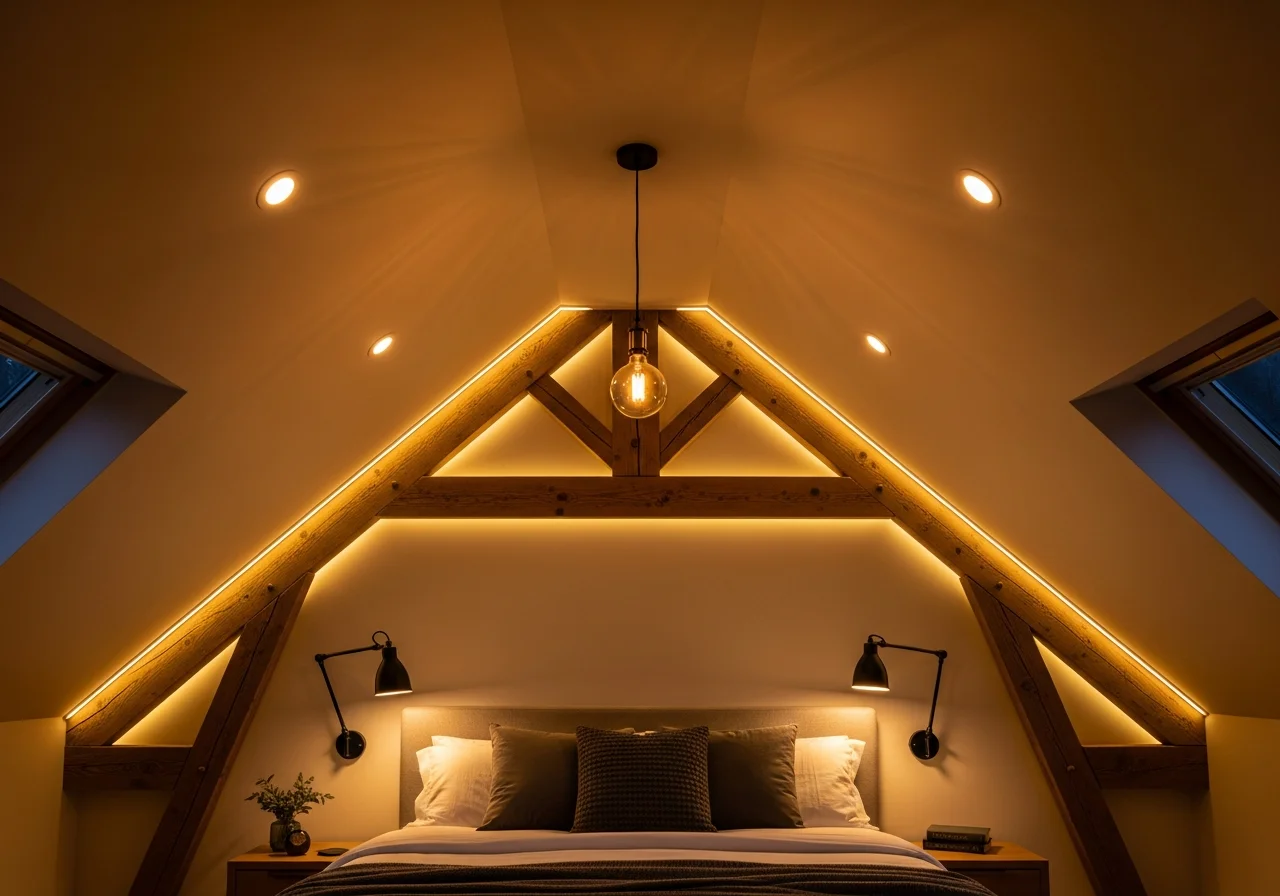
Task lighting addresses specific needs like reading or getting dressed. Bedside lamps remain essential, but wall-mounted swing-arm lights save valuable nightstand space. Place these at appropriate heights for reading in bed without creating glare. If your attic includes a vanity or desk area, ensure focused lighting illuminates the work surface adequately.
Accent lighting adds drama and visual interest while highlighting architectural features. LED strips installed along the base of exposed beams create a soft glow that emphasizes the room’s structure. Small spotlights can showcase artwork or architectural details, drawing attention to elements you want visitors to notice.
The combination of these three lighting types, natural light during the day and layered artificial light in the evening, ensures your attic bedroom remains functional and inviting regardless of the hour. Smart bulbs offer additional flexibility, allowing you to adjust color temperature from energizing cool white in the morning to relaxing warm tones at bedtime.
Incorporate Textiles and Soft Furnishings
Texture plays an outsized role in attic bedroom comfort and visual appeal. The hard surfaces of wood beams, plaster walls, and wooden floors benefit enormously from soft textiles that absorb sound, add warmth, and create visual interest.
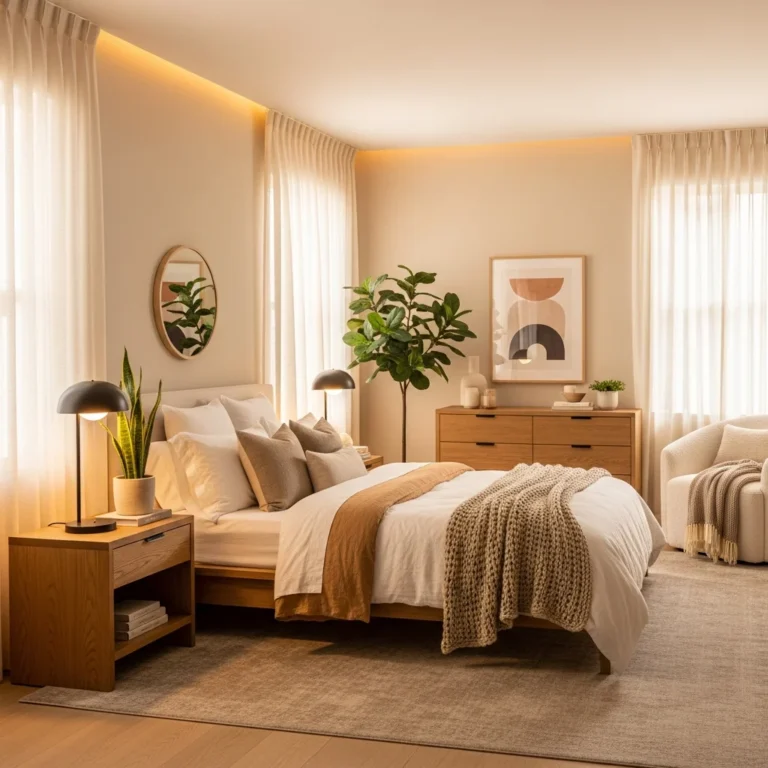
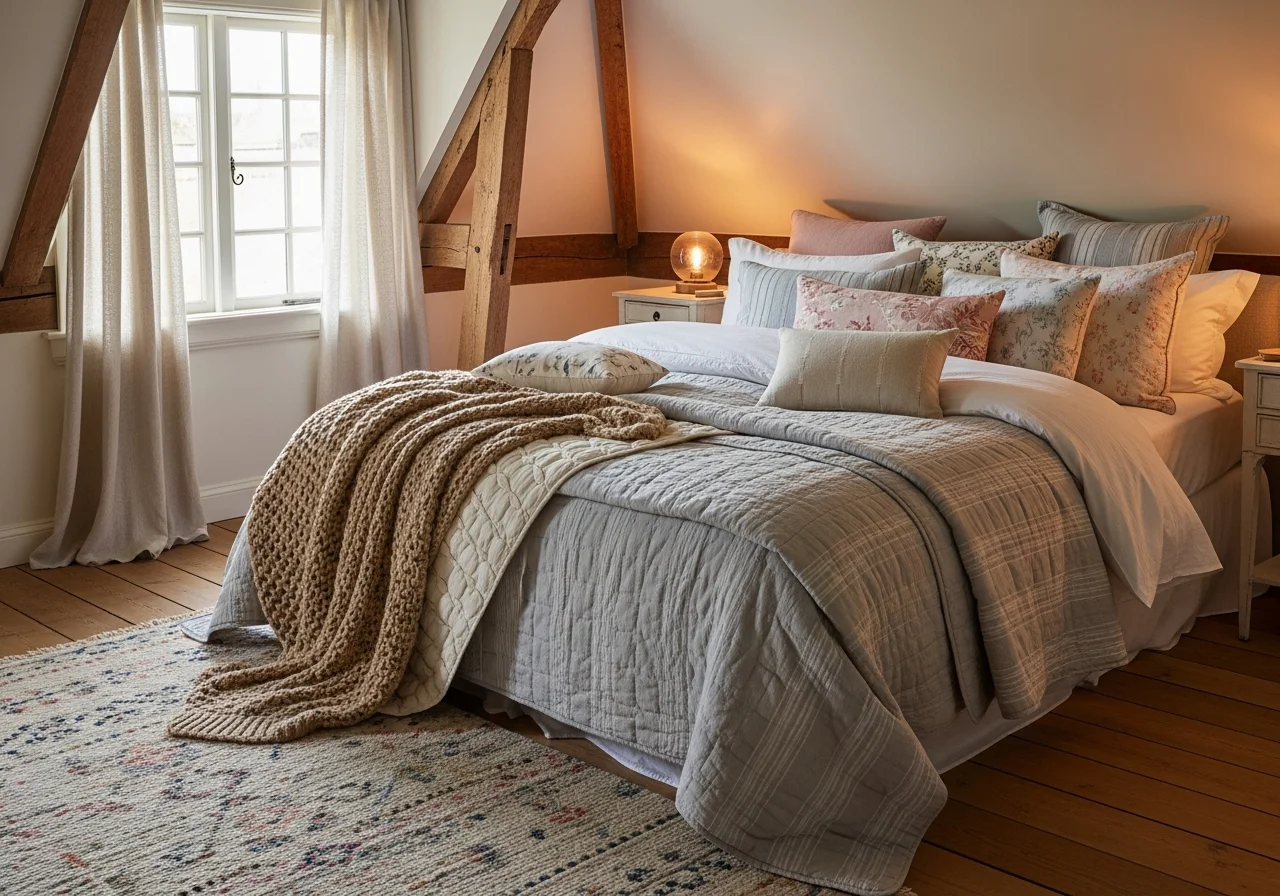
Begin with bedding that invites you to sink in and stay awhile. Layered quilts, plush duvets, and an abundance of pillows transform the bed into the room’s focal point. Mix patterns and textures within a cohesive color scheme for visual interest without chaos. A chunky knit throw draped across the foot of the bed adds both functionality and style, perfect for cool evenings common in attic spaces.
Area rugs define spaces and add comfort underfoot, particularly important if your attic has wooden floors. A large rug anchors the bed area, while smaller rugs can define a seating nook or reading corner. The softness underfoot makes a significant difference in how the room feels, especially during winter months when attics can grow chilly.
Window treatments deserve special attention in attic bedrooms. Roman shades work well with oddly shaped windows, providing light control while adding softness to angular architecture. Linen curtains create a relaxed, casual atmosphere and filter harsh afternoon sun beautifully. For dormer windows, consider inside-mount treatments that do not interfere with the unique window frames.
Do not overlook smaller textile touches. Decorative pillows on chairs, throws on reading nook seating, and even wall hangings contribute to the layered, comfortable aesthetic that makes attic bedrooms feel like true retreats rather than utilitarian sleeping spaces.
Address Practical Considerations
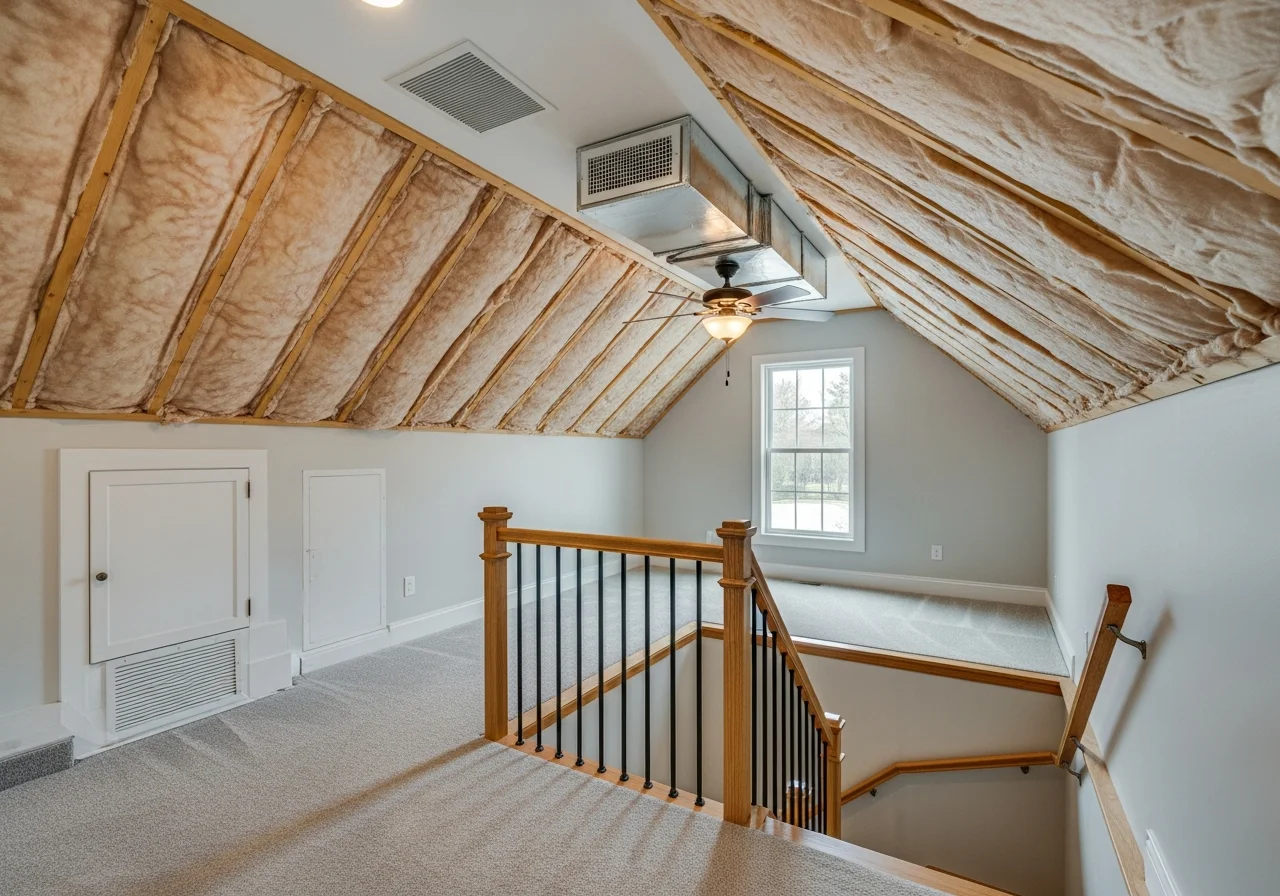
Beautiful design must meet practical needs to create a truly successful attic bedroom. Temperature regulation tops this list, as attics can become uncomfortably hot in summer and cold in winter. Proper insulation proves essential, both for comfort and energy efficiency.
Ensure your attic has adequate insulation in the walls and ceiling. This investment pays ongoing dividends through reduced heating and cooling costs while making the space comfortable year-round. If installing HVAC ductwork to the attic is not feasible, portable heating and cooling solutions can work well. A ceiling fan improves air circulation during warm months, while a space heater takes the edge off winter chill.
Building codes mandate certain requirements for bedrooms, including minimum ceiling heights and emergency egress windows. Verify that your attic meets these standards before investing heavily in renovations. An egress window provides a secondary exit in case of emergency and often brings valuable natural light as a bonus.
Accessibility represents another consideration. If your attic is only reachable via a narrow staircase or pull-down ladder, moving furniture and bringing guests upstairs becomes challenging. Standard staircases with proper handrails make the space more functional and valuable. For homes where installing new stairs proves impossible, carefully consider what role the attic bedroom will play and plan accordingly.
Sound transmission between floors matters too. Adding insulation between ceiling joists reduces noise from the attic bedroom traveling to rooms below and vice versa. This proves especially important if you plan to use the attic as a primary bedroom or if it sits above living spaces where household members gather.
Personalize with Unique Design Elements
After addressing functional requirements, personalization transforms your attic bedroom from well-designed space into true sanctuary. This is where your individual style shines through, making the room distinctly yours.
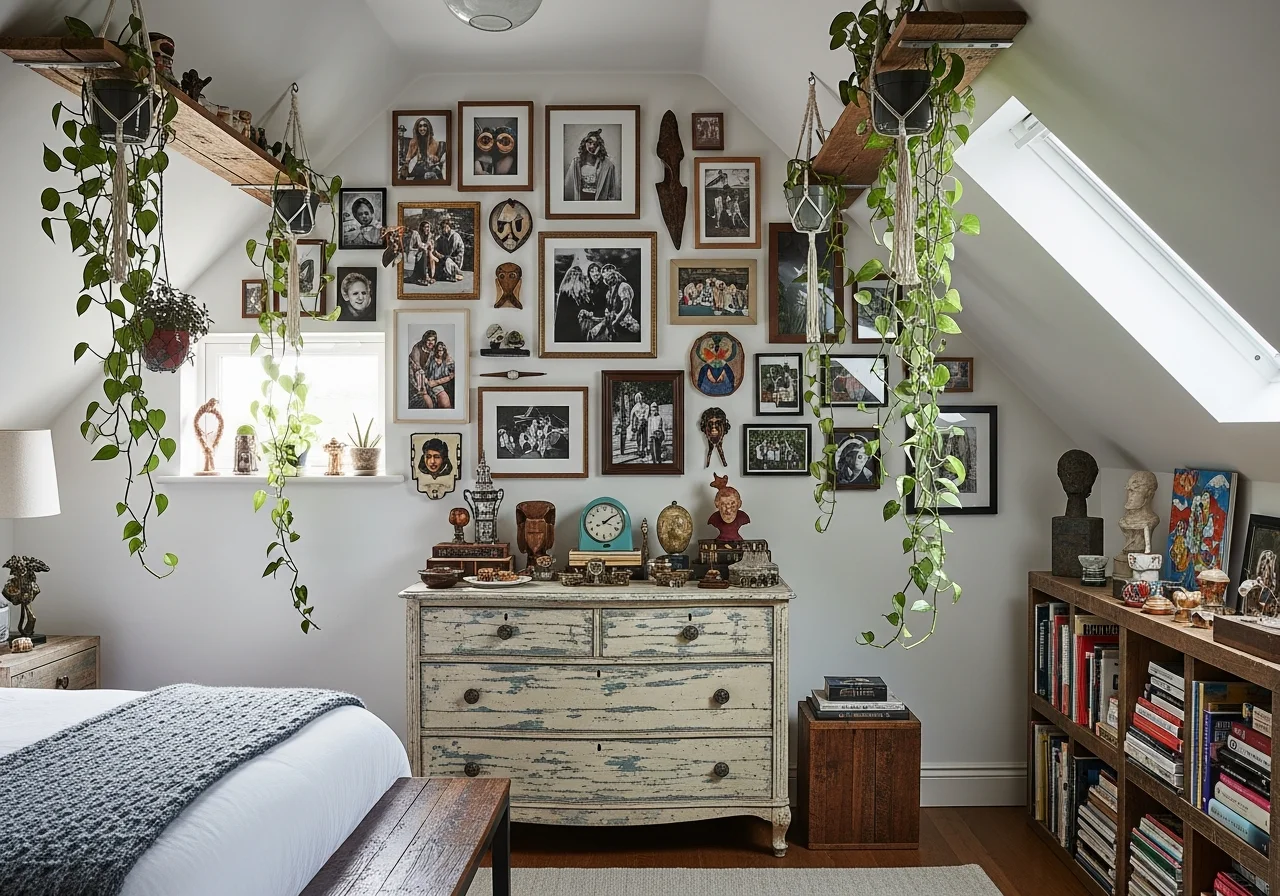
Gallery walls work beautifully in attic bedrooms, particularly on sloped walls where hanging art requires creativity anyway. Mix family photos, prints, and small decorative objects in frames of varying sizes. The angled wall becomes a curated display that tells your story while adding visual interest to an otherwise challenging surface.
Vintage and reclaimed elements pair naturally with attic architecture. An antique dresser, salvaged door converted into a headboard, or vintage light fixtures complement exposed beams and aged wood floors. These pieces add character while feeling historically appropriate to the space. Flea markets and salvage yards offer treasures that bring personality impossible to achieve with new furnishings alone.
Plants thrive in attic bedrooms with good natural light. Hanging plants work especially well, drawing the eye upward and taking advantage of vertical space without consuming floor area. Trailing varieties like pothos or string of pearls add organic shapes that soften hard edges and geometric lines.
Consider incorporating elements that reflect your interests and hobbies. A small writing desk creates a retreat for creative work. A yoga mat storage area encourages morning practice. A curated bookshelf displays your favorite volumes within arm’s reach. These personal touches ensure the attic bedroom serves your specific lifestyle rather than conforming to generic design templates.
Conclusion
Attic bedrooms offer unparalleled opportunities to create spaces filled with character, charm, and personal style. The architectural features that initially seem challenging become the very elements that make these rooms memorable and beloved. By embracing sloped ceilings, maximizing natural light, implementing smart storage solutions, and making thoughtful design choices, you can transform your attic into a cozy retreat that stands as one of the most special rooms in your home.
Success lies in balancing practical considerations with aesthetic vision. Address fundamental needs like insulation, lighting, and storage first, then layer in design elements that reflect your personality and desired atmosphere. Remember that every attic presents unique characteristics requiring customized solutions rather than one-size-fits-all approaches.
Whether you are converting your attic into a primary bedroom, creating a guest suite, or simply maximizing your home’s potential, these ten inspiration ideas provide a foundation for your project. Take time to plan carefully, invest in quality where it matters most, and do not be afraid to embrace the quirks that make attic spaces so distinctive. The result will be a bedroom that offers not just a place to sleep, but a true sanctuary where you can retreat, recharge, and find peace away from the world below.
Frequently Asked Questions
What is the minimum ceiling height required for an attic bedroom?
Building codes typically require habitable rooms to have a minimum ceiling height of seven feet over at least 50 percent of the floor area. However, requirements vary by location, so check with your local building department. Many attics can still function as bedrooms even with lower ceilings in certain areas, provided the overall space meets code requirements and the low sections are used for storage or sitting areas rather than standing space.
How can I keep my attic bedroom cool in summer?
Install proper insulation in the roof and walls to prevent heat buildup. Add ridge vents or gable vents for air circulation. Skylights with shading options help control solar heat gain. A ceiling fan improves air movement significantly. For extremely hot climates, extending your HVAC system to include the attic or adding a ductless mini-split system provides effective cooling. Reflective window treatments also reduce heat from windows.
What type of flooring works best in attic bedrooms?
Carpet provides excellent insulation and sound dampening while feeling warm underfoot, making it popular for attic bedrooms. Engineered hardwood or laminate flooring offers a more contemporary look and easier maintenance. Avoid solid hardwood in attics prone to temperature fluctuations, as it may expand and contract excessively. Whatever flooring you choose, ensure proper underlayment for sound control and comfort.
Can I use my attic bedroom as a home office during the day?
Absolutely. Many attic bedrooms serve dual purposes successfully. Murphy beds that fold into the wall create instant transformation from bedroom to office. Good lighting, both natural and artificial, proves essential for work tasks. Ensure adequate electrical outlets for computers and equipment. The privacy and separation from main living areas that make attics great bedrooms also create ideal work environments free from household distractions.
How do I add storage without making the room feel cramped?
Focus on built-in solutions that utilize otherwise wasted space under sloped ceilings and eaves. Custom cabinetry fitted precisely to your ceiling angles maximizes storage while maintaining a clean look. Use furniture with built-in storage, such as beds with drawers underneath or ottomans that open for storage. Keep color schemes light to maintain a sense of spaciousness. Declutter regularly, storing only what you actually use in the bedroom and relocating seasonal items elsewhere.