25 Mid-Century Dining Room Decorating Ideas
There is something deeply satisfying about a dining room that feels both rooted in history and completely alive in the present. Mid-century modern design achieves exactly that. Born from the creative optimism of the post-World War II era, spanning roughly the mid-1940s through the late 1960s, this design movement introduced a radical idea: that beautiful, well-crafted spaces should be accessible to everyone. Decades later, its influence has not faded in the slightest.
The mid-century modern dining room is defined by clean lines, organic forms, warm wood tones, and a thoughtful balance between function and beauty. Whether you are furnishing a new home or refreshing an existing space, these 25 decorating ideas will help you build a dining room that feels timeless, inviting, and deeply considered.
Start with the Right Dining Table
Choose Warm Wood with Tapered Legs
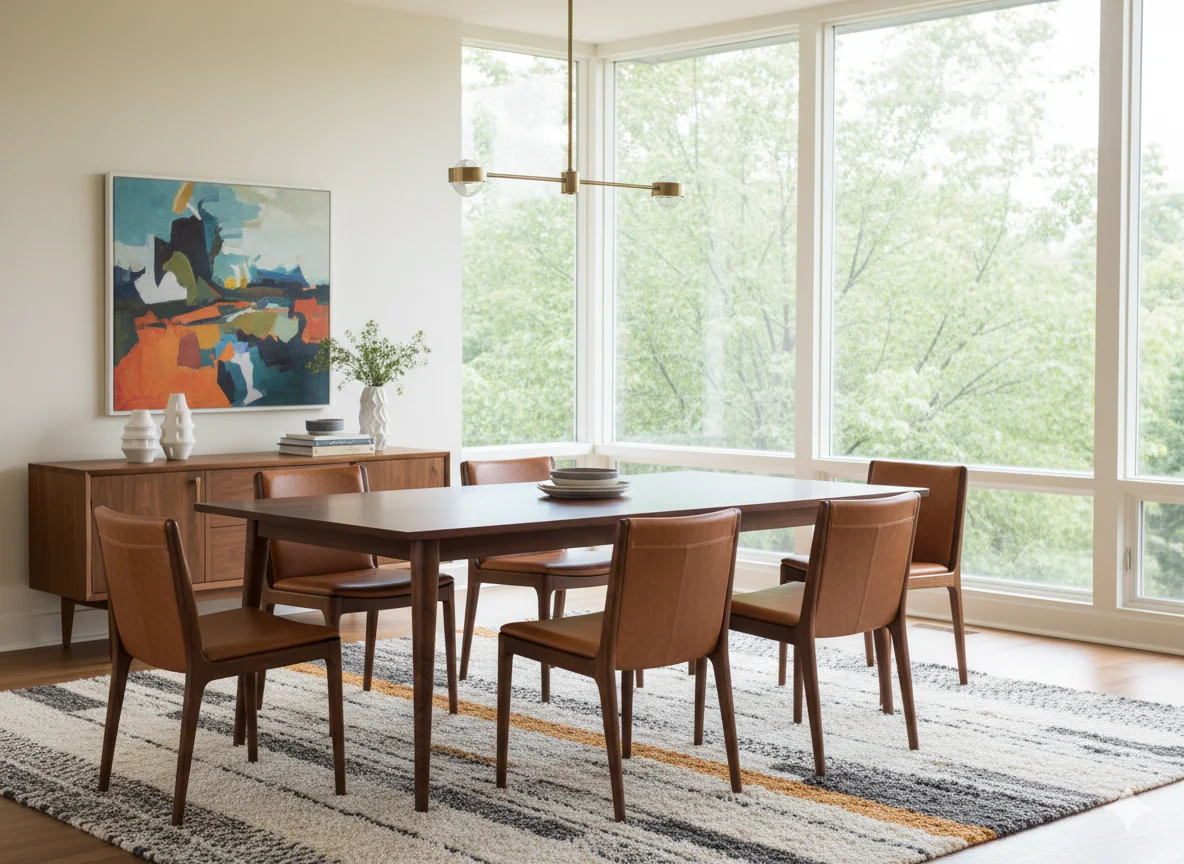
The dining table is the soul of any mid-century modern room. Look for tables in walnut, teak, or rosewood with gently tapered or splayed legs. These leg profiles are one of the most recognizable features of the era and give even a simple table a strong sense of character. A medium-toned walnut finish works especially well because it reads as warm without feeling heavy.
Consider a Round or Oval Shape
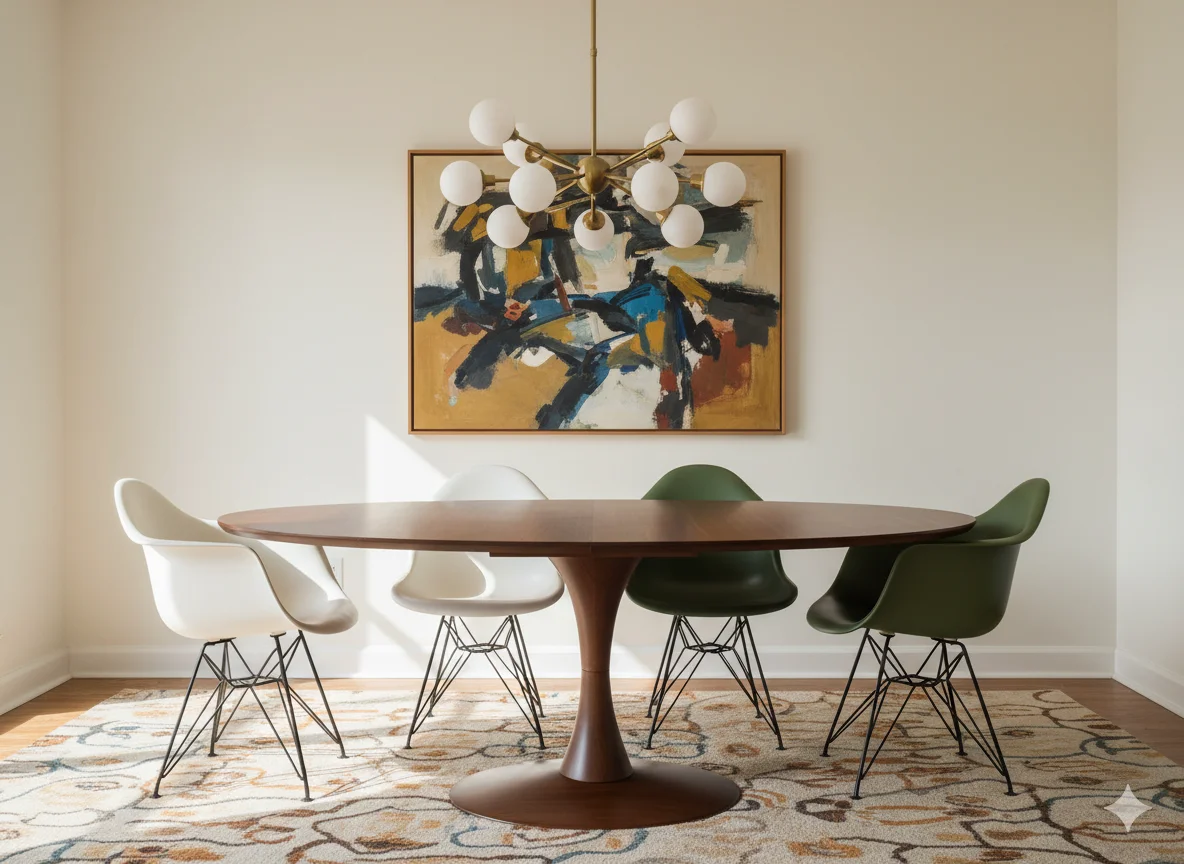
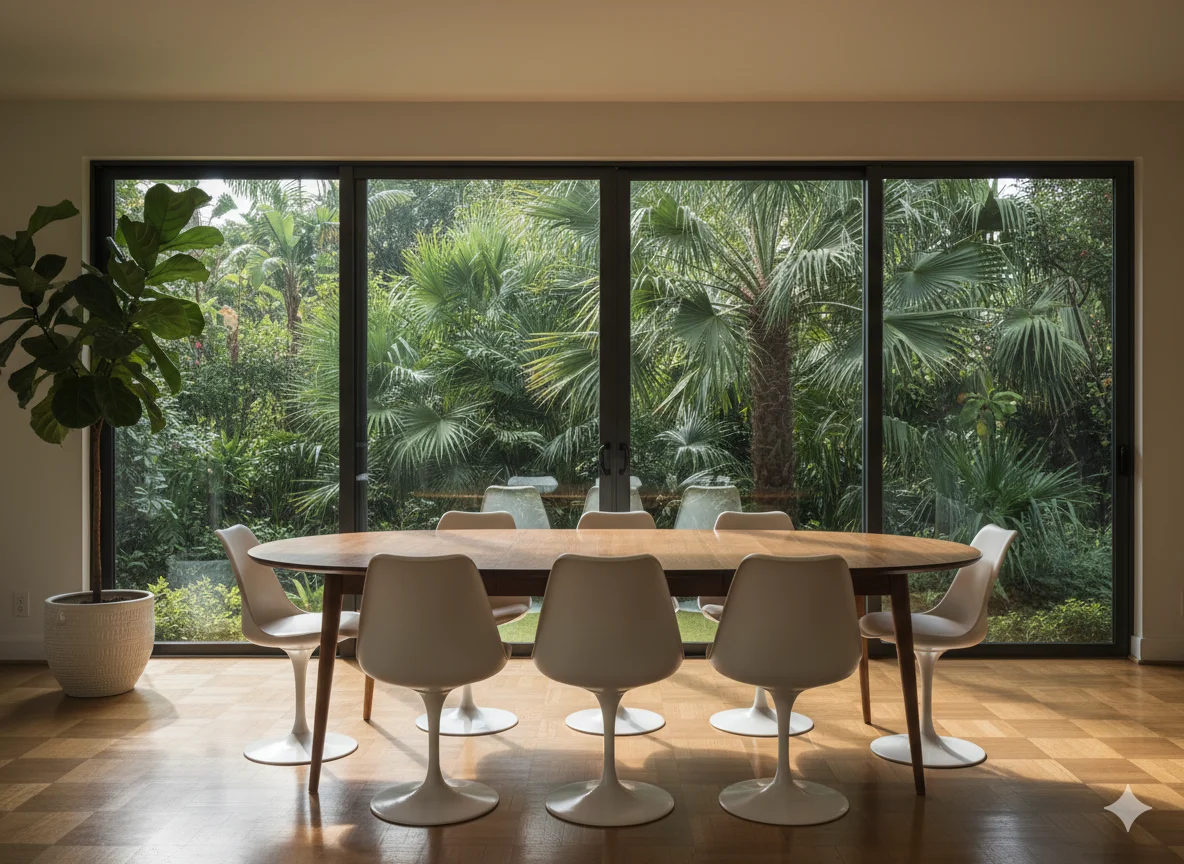
Round and oval tables promote conversation and improve traffic flow in both large and small dining spaces. Historically, many mid-century designers favored these shapes because they reflect the organic, nature-inspired philosophy central to the movement. An oval pedestal table, in particular, can anchor a room without visual clutter underneath.
Try a Marble or Stone Top
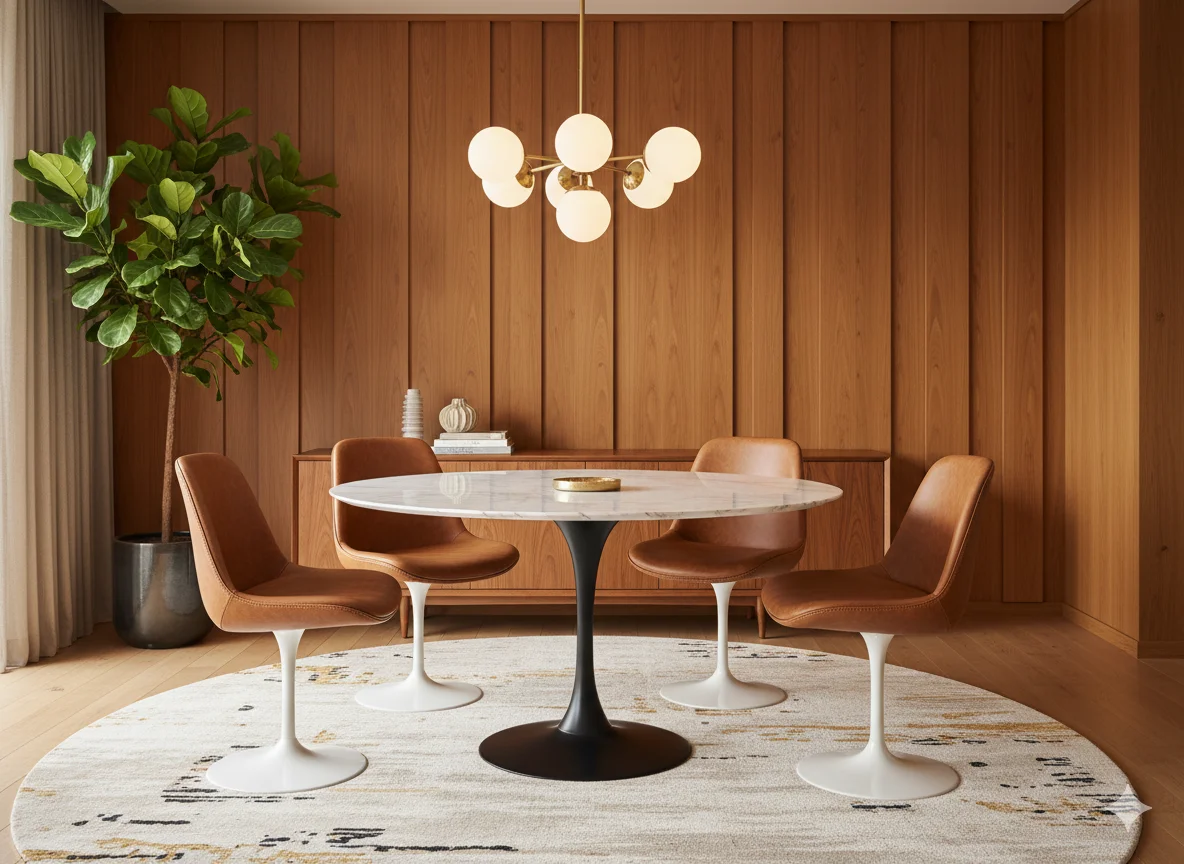
A marble-topped dining table with walnut or black lacquered legs offers an elegant tension between organic material and precise form. This combination was popular in European mid-century interiors and translates beautifully into contemporary homes. Keep the base simple and let the stone surface carry the decorative weight.
Select Iconic Dining Chairs
Invest in Eames Shell Chairs
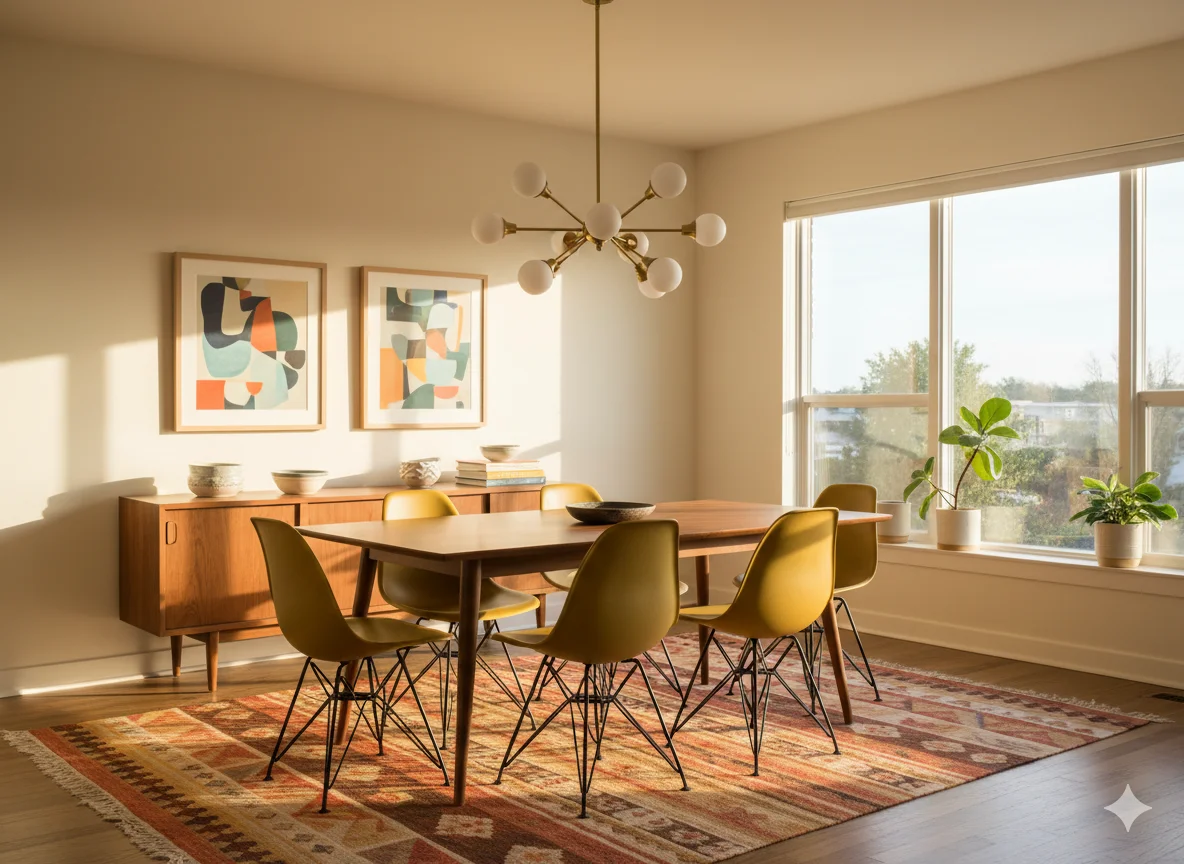
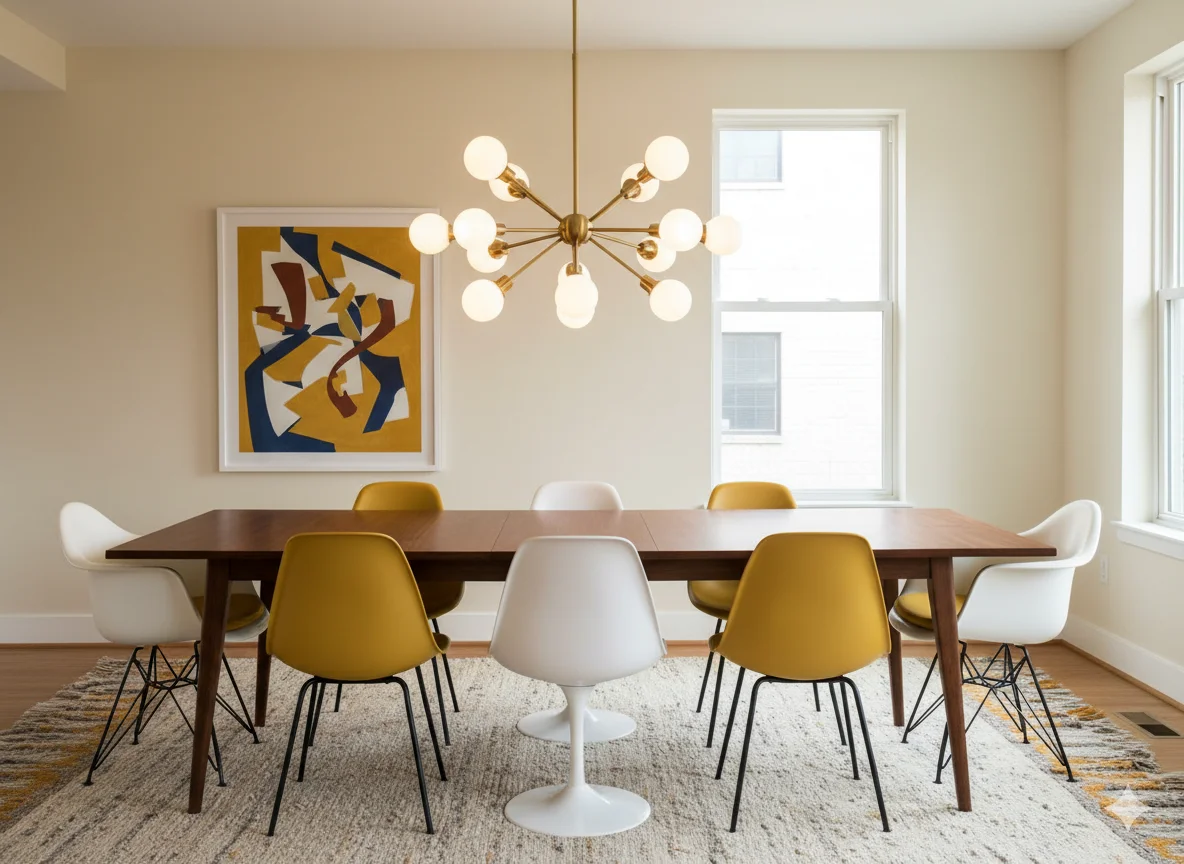
Few pieces of furniture are as closely associated with mid-century modern design as the molded shell chair developed by Charles and Ray Eames. Originally crafted in fiberglass in 1950 and now reproduced in polypropylene by Herman Miller and others, these chairs come in a wide range of colors and pair naturally with wooden dining tables. Their sculptural profile and practical durability make them a worthwhile investment.
Try Tulip Chairs for a Futuristic Touch
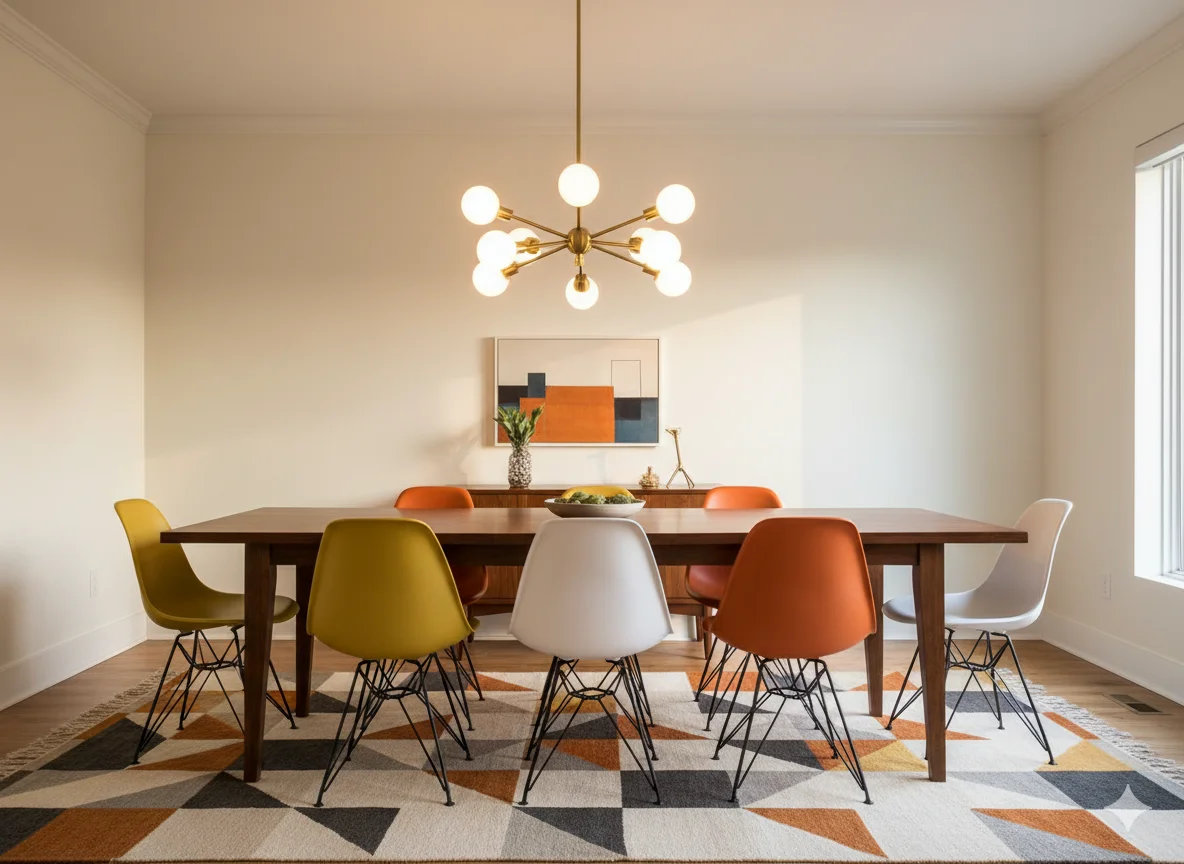
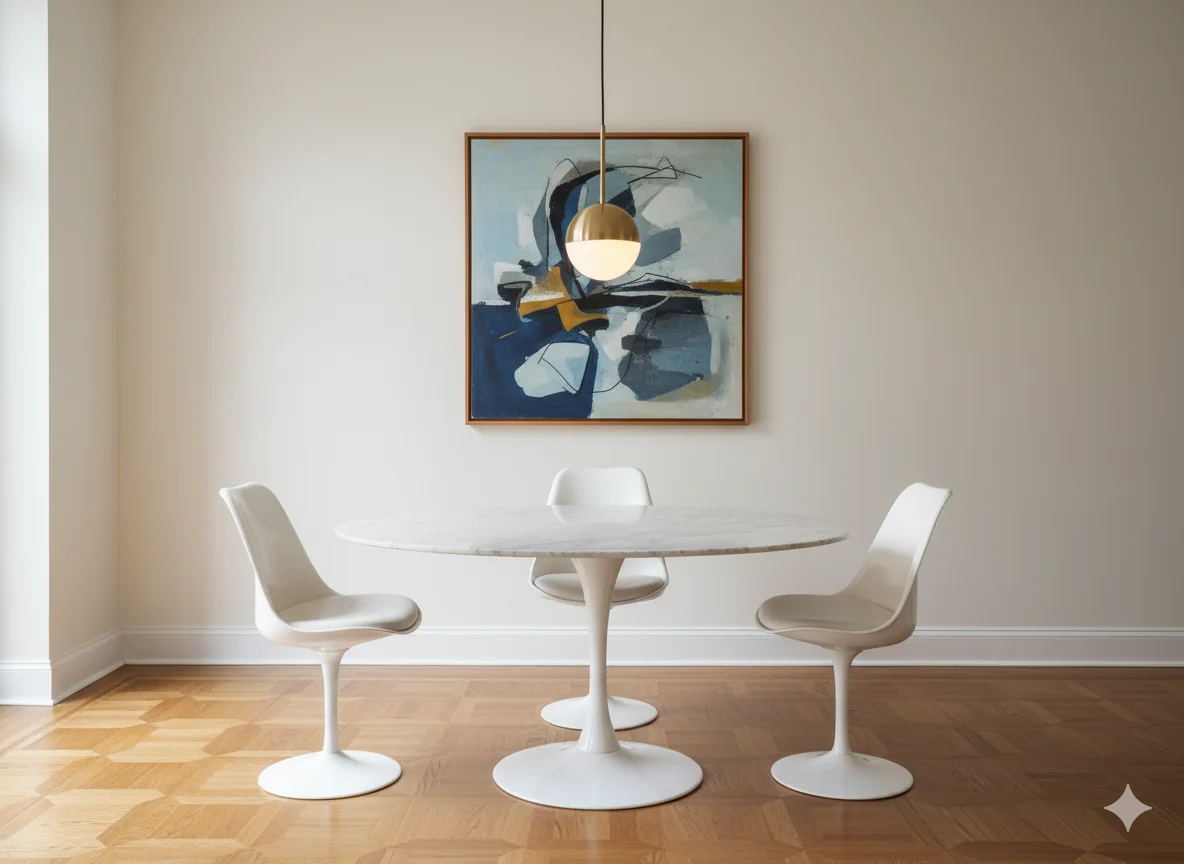
Eero Saarinen’s Tulip chair, designed in 1956, remains one of the most forward-thinking designs in furniture history. Its single pedestal base eliminates visual clutter and gives a dining space an almost sculptural, gallery-like quality. A set of white tulip chairs around a round walnut table is one of the most effortlessly elegant mid-century arrangements you can create.
Mix Chair Styles for an Eclectic Look
Mid-century design rewards creativity. Do not feel obligated to match all your chairs identically. A combination of upholstered armchairs at the ends of the table with lighter side chairs along the length creates visual rhythm and reflects the eclectic, curated sensibility that defines the style at its best.
Build a Strong Color Palette
Work with Earthy Neutrals as a Base
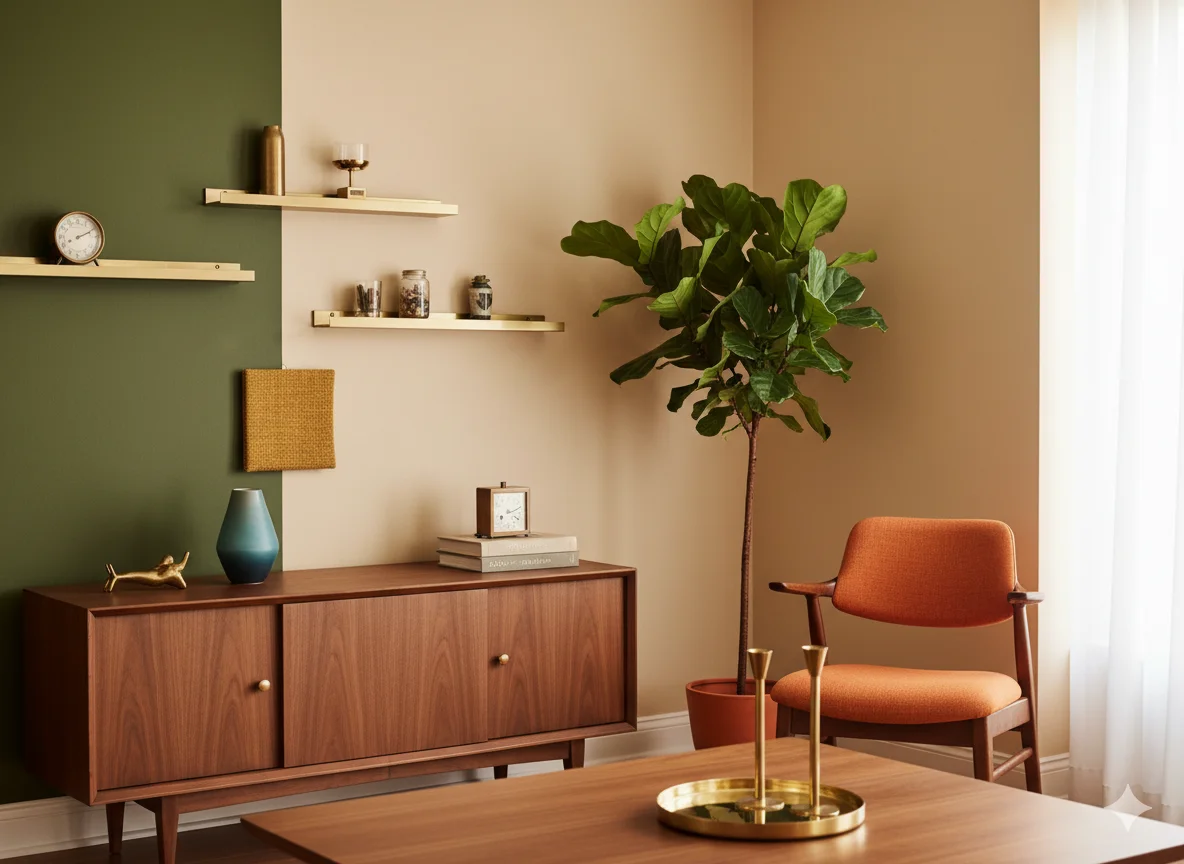
The foundation of a mid-century modern dining room is typically a warm neutral palette. Think creamy whites, warm grays, and soft beiges on walls and larger furniture pieces. These tones let the natural wood grain and sculptural furniture silhouettes do their work without competition.
Add Bold Retro Accent Colors
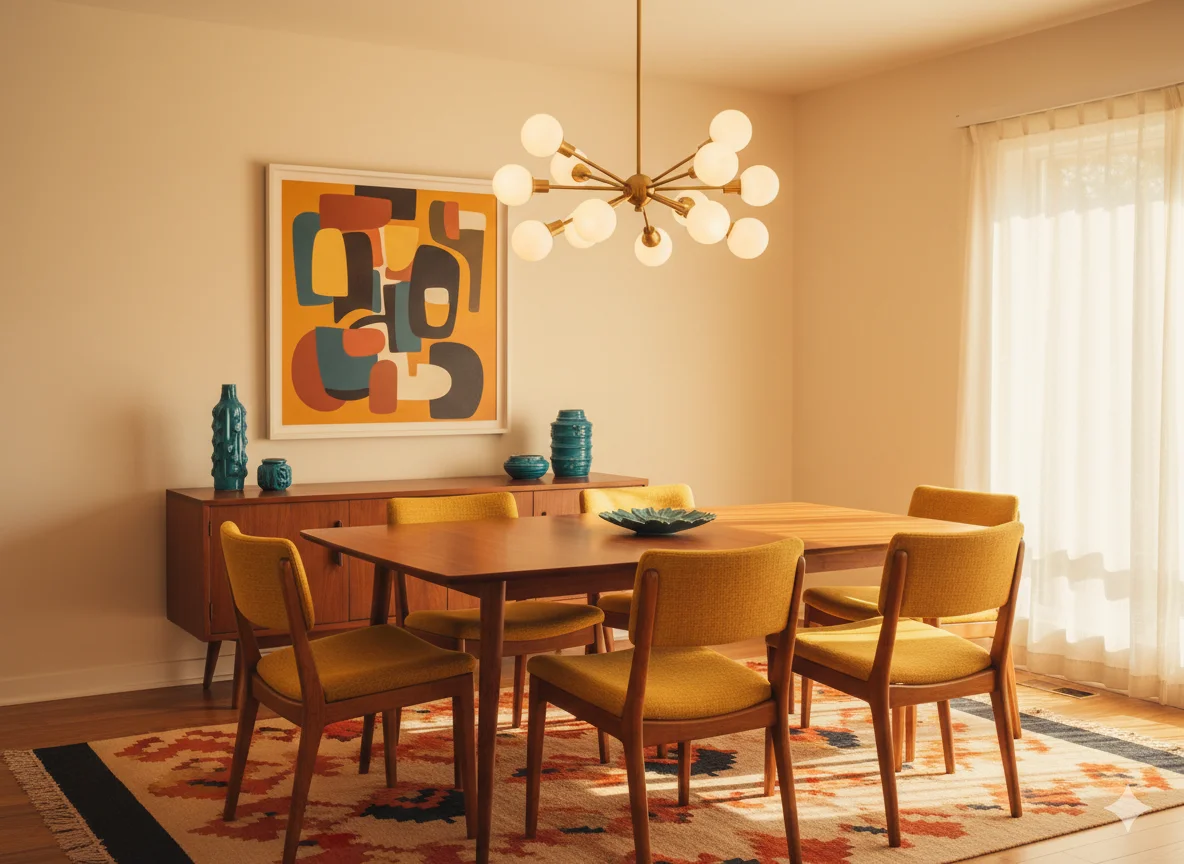
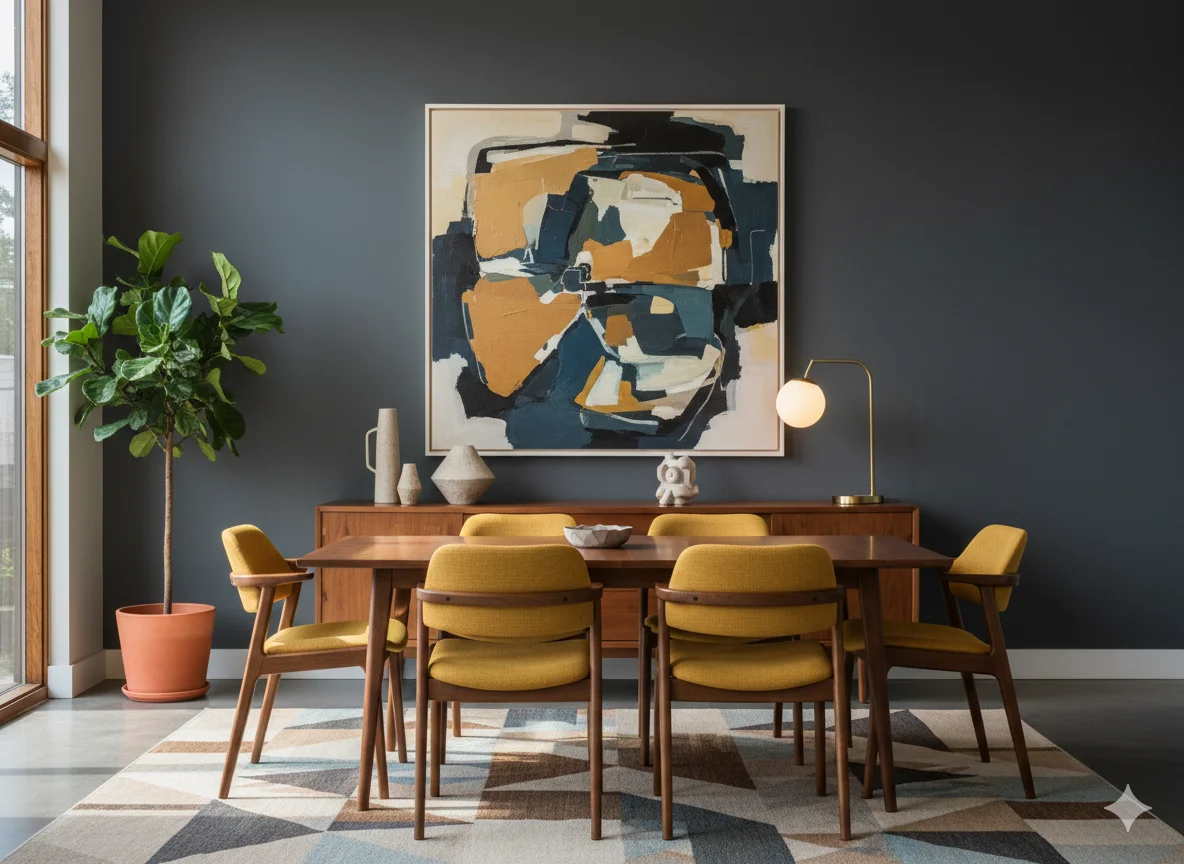
This is where mid-century decorating becomes genuinely exciting. The era embraced colors that felt bold and optimistic: mustard yellow, burnt orange, teal blue, olive green, and deep terracotta. These shades can be introduced through upholstered dining chairs, a statement rug, pendant light shades, or even a single painted accent wall. Mustard yellow paired with walnut wood and white walls is a particularly enduring combination.
Use Deep, Rich Tones for Drama
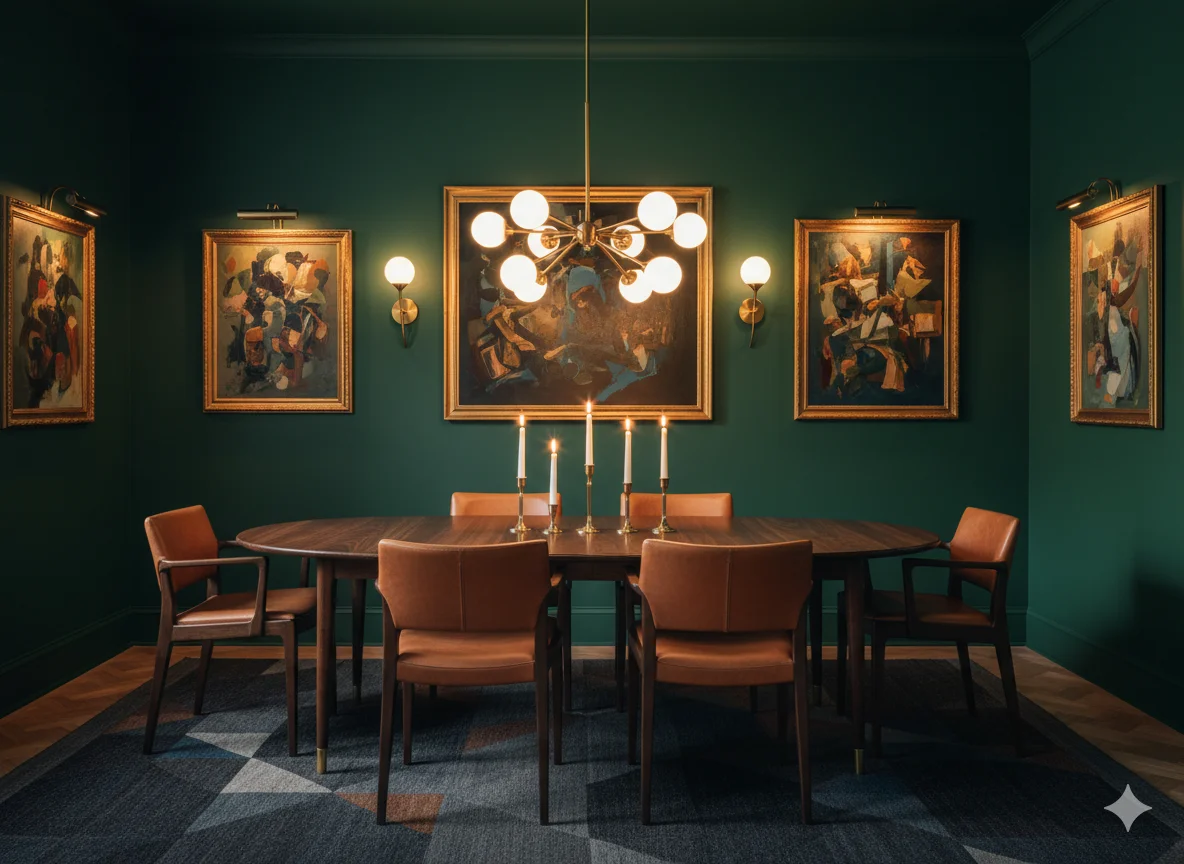
If you prefer a more sophisticated and moody atmosphere, deeper hues such as forest green, navy blue, or bordeaux burgundy work beautifully in dining rooms. These shades contrast well against warm wood furniture and brass hardware, creating a space that feels both retro and genuinely luxurious.
Choose Statement Lighting
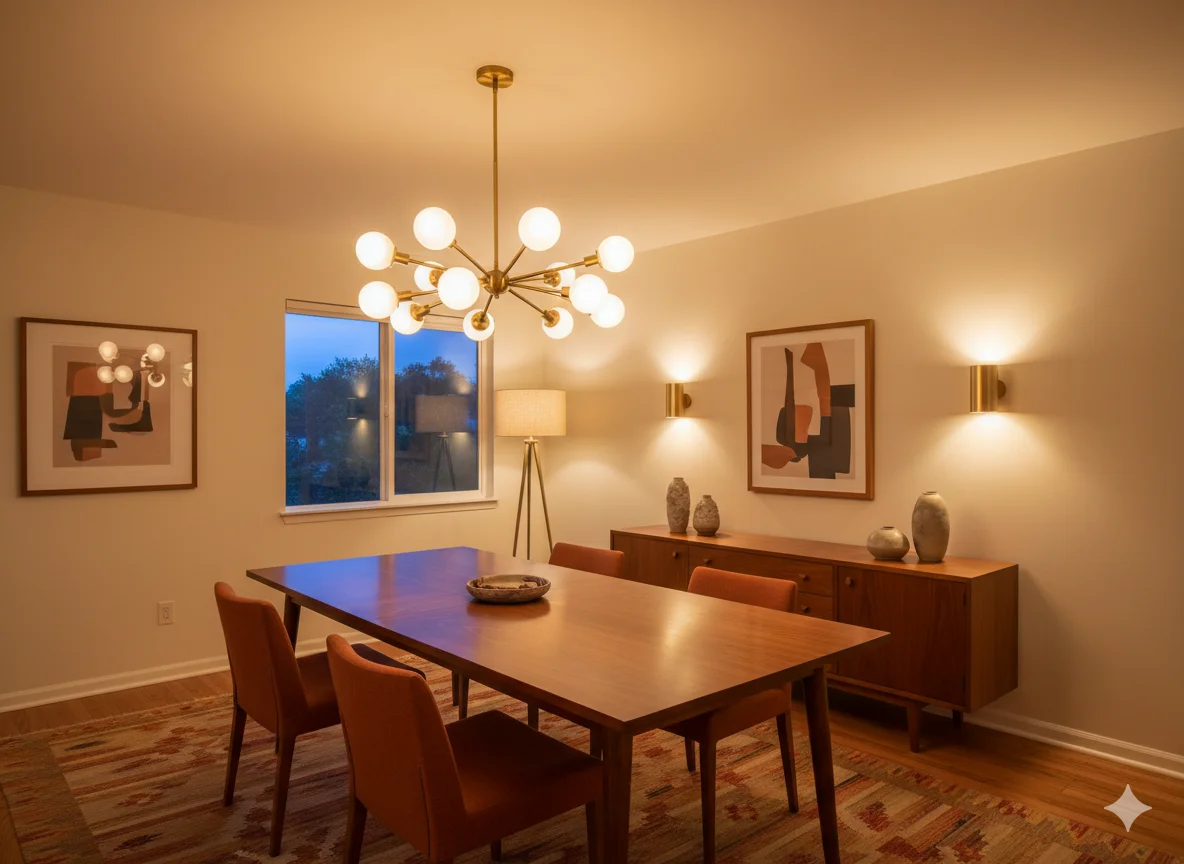
Hang a Sputnik Chandelier
Named after the Soviet satellite and inspired by the space age excitement of the late 1950s, the Sputnik chandelier remains one of the most recognizable mid-century lighting fixtures. Its starburst form of radiating arms tipped with bare bulbs creates a dramatic focal point above a dining table. Choose a brass or matte black version depending on your overall palette.
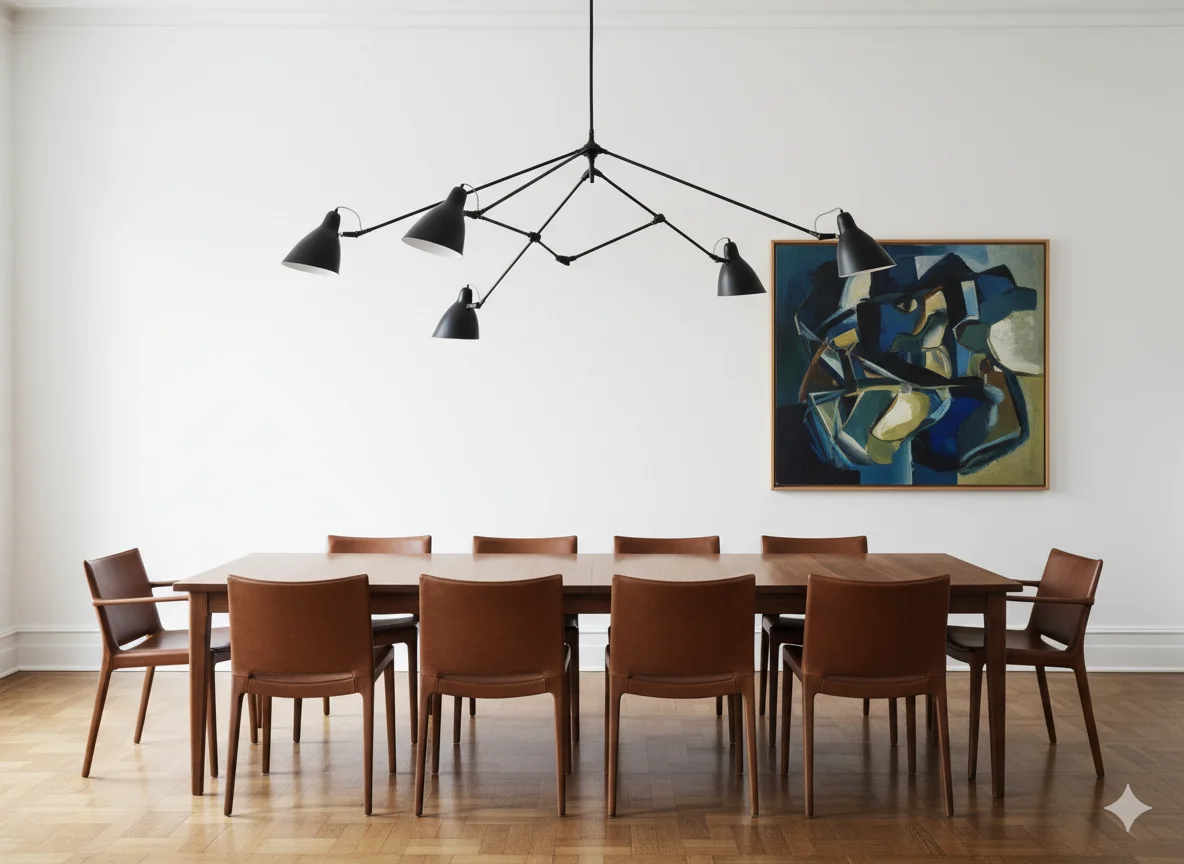
Try a Branching or Multi-Arm Pendant
Serge Mouille’s iconic multi-arm ceiling lights, designed in 1958, introduced a new kind of sculptural elegance to interior lighting. The organic branching form distributes light across the room while functioning as a piece of wall-mounted or ceiling art. Contemporary reproductions capture the spirit well.
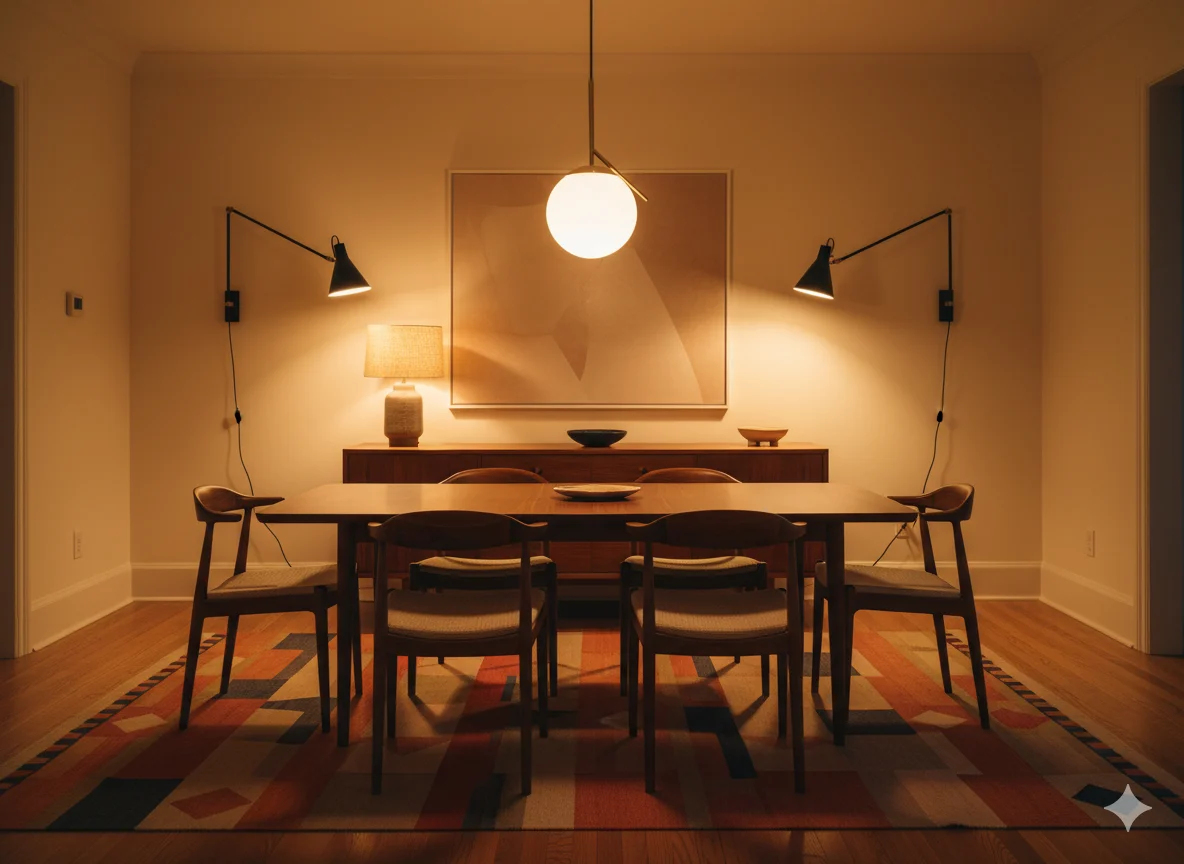
Layer Your Lighting
Great dining room lighting is rarely one-dimensional. Combine an overhead pendant or chandelier with wall sconces or a floor lamp positioned near a sideboard or buffet. This layered approach creates warmth and flexibility, allowing the room to shift from a well-lit family dinner to an intimate dinner party setting with ease.
Add Texture with Rugs and Textiles
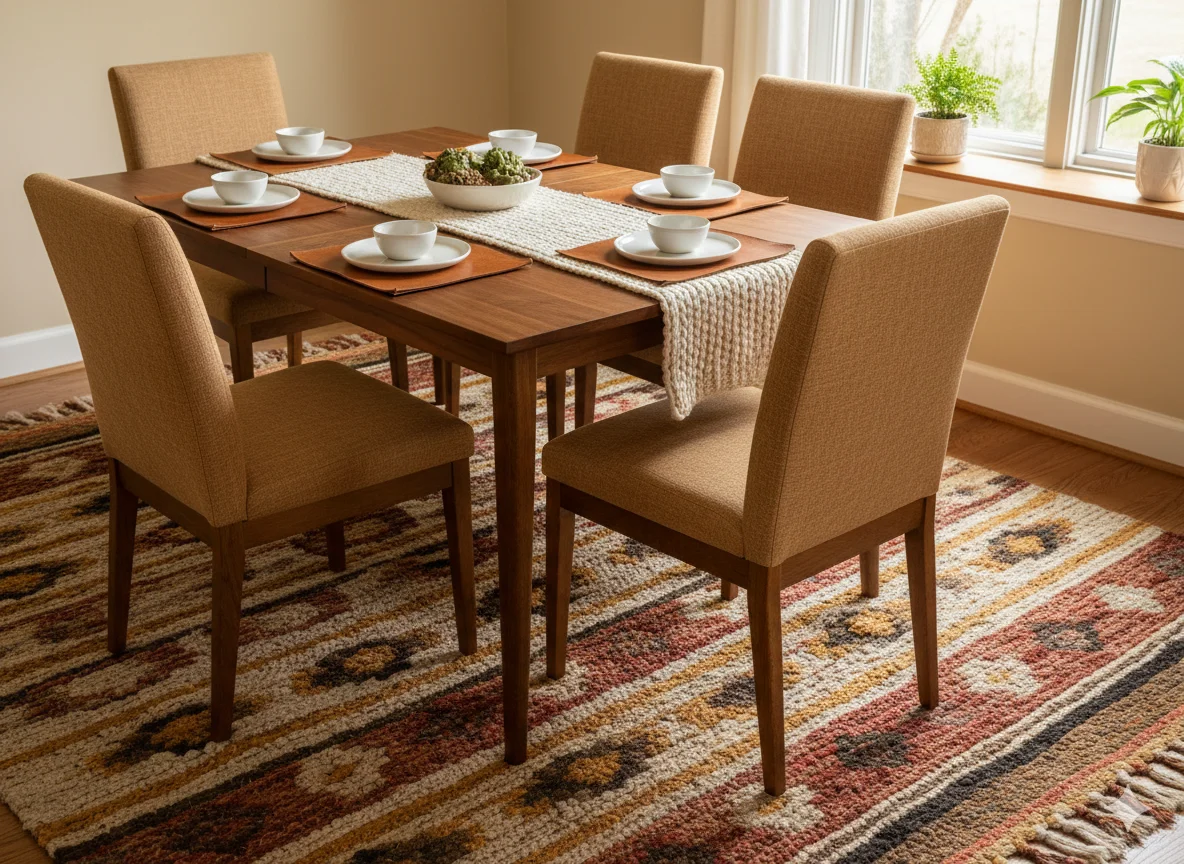
Anchor the Space with a Geometric Rug
A patterned area rug is one of the fastest ways to introduce mid-century character into a dining room. Look for geometric or abstract patterns in warm tones such as rust, gold, ivory, and brown. The rug should be large enough to extend comfortably beyond the dining chairs even when they are pulled out from the table.
Incorporate Natural Fiber Textures
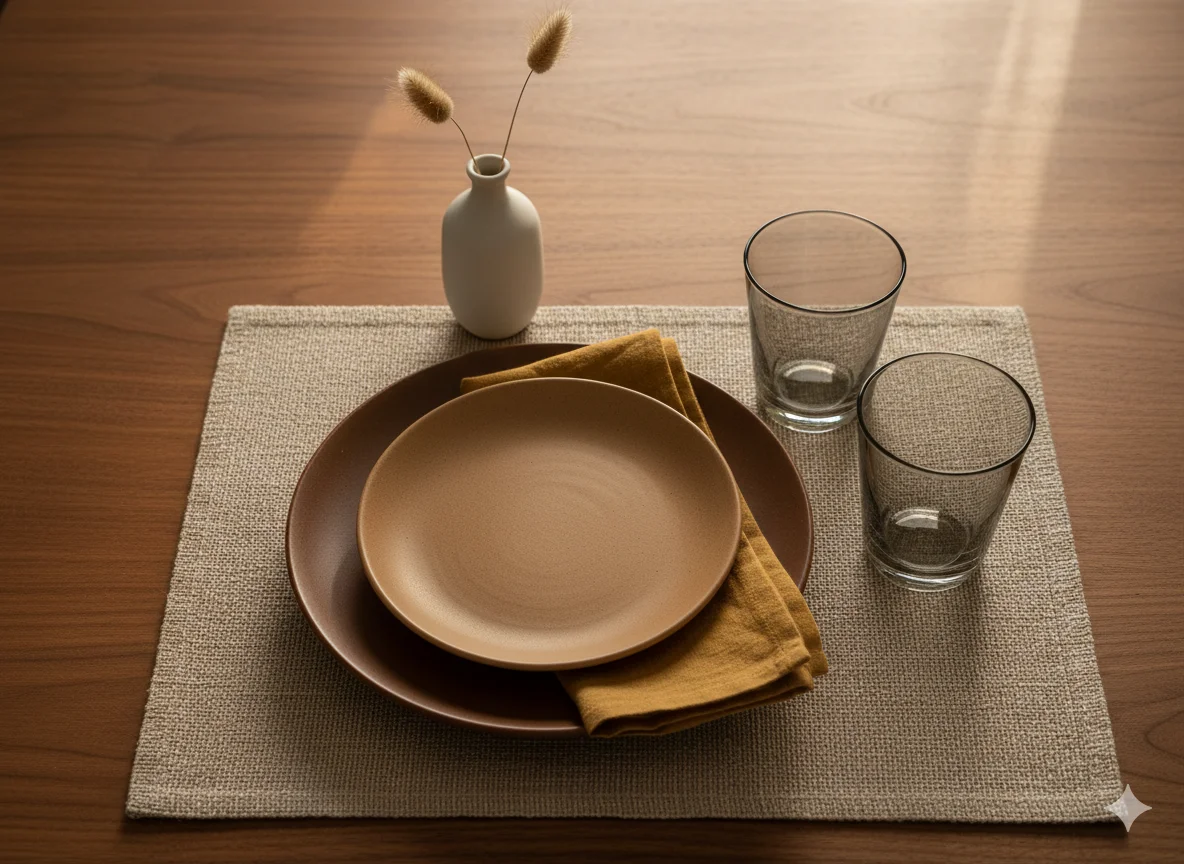
Wool, linen, cotton, and leather were the favored materials of mid-century interior design because they combined tactile warmth with honest, unpretentious quality. Leather upholstered dining chairs in cognac or caramel tones add richness to the space. Woven linen placemats or a chunky wool table runner soften the hard surfaces of wood and stone without disrupting the clean lines that define the style.
Decorate the Walls Thoughtfully
Hang Abstract or Modernist Art
Wall art in a mid-century modern dining room should reflect the artistic movements that shaped the era. Abstract expressionist prints, minimalist line drawings, and geometric compositions all work well. Pieces with muted palettes of ochre, dusty rose, and slate blue harmonize with the room’s color story, while bolder graphic works can serve as dramatic focal points.
Install a Credenza or Sideboard with Display Space
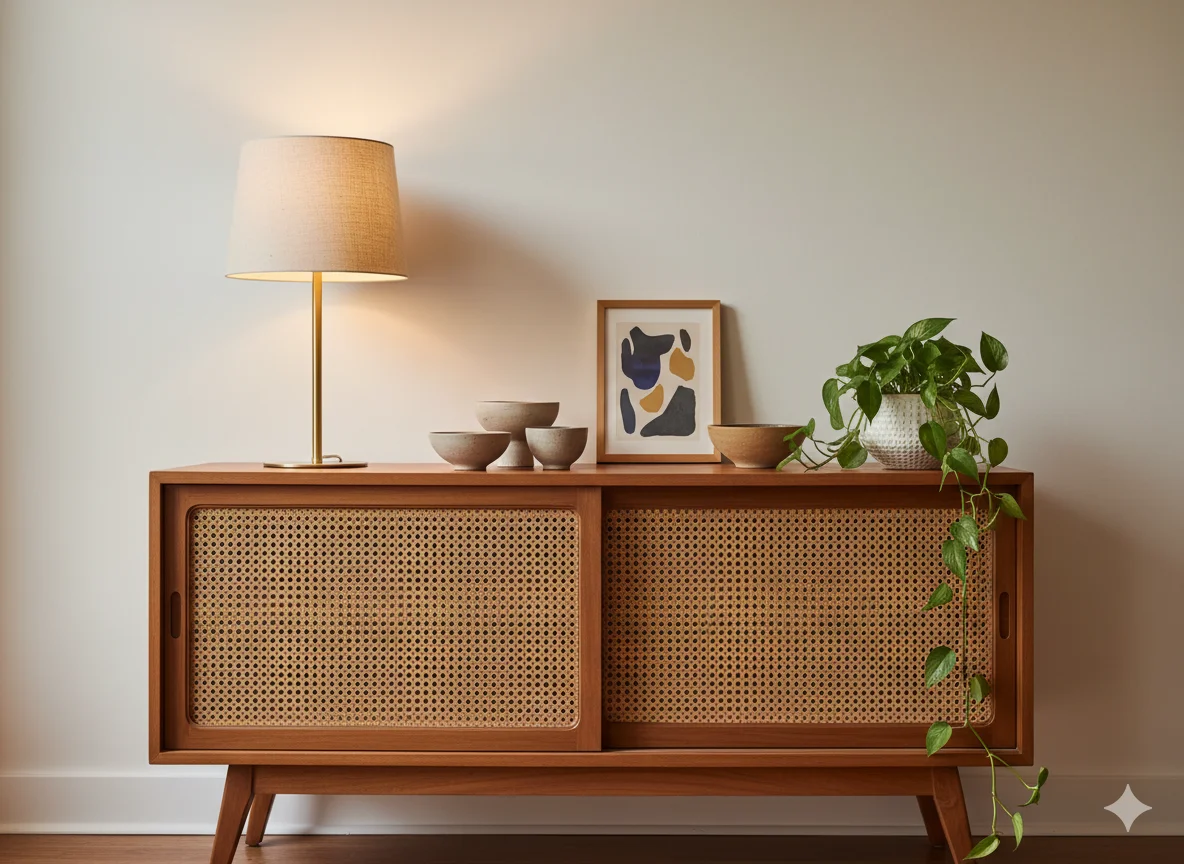
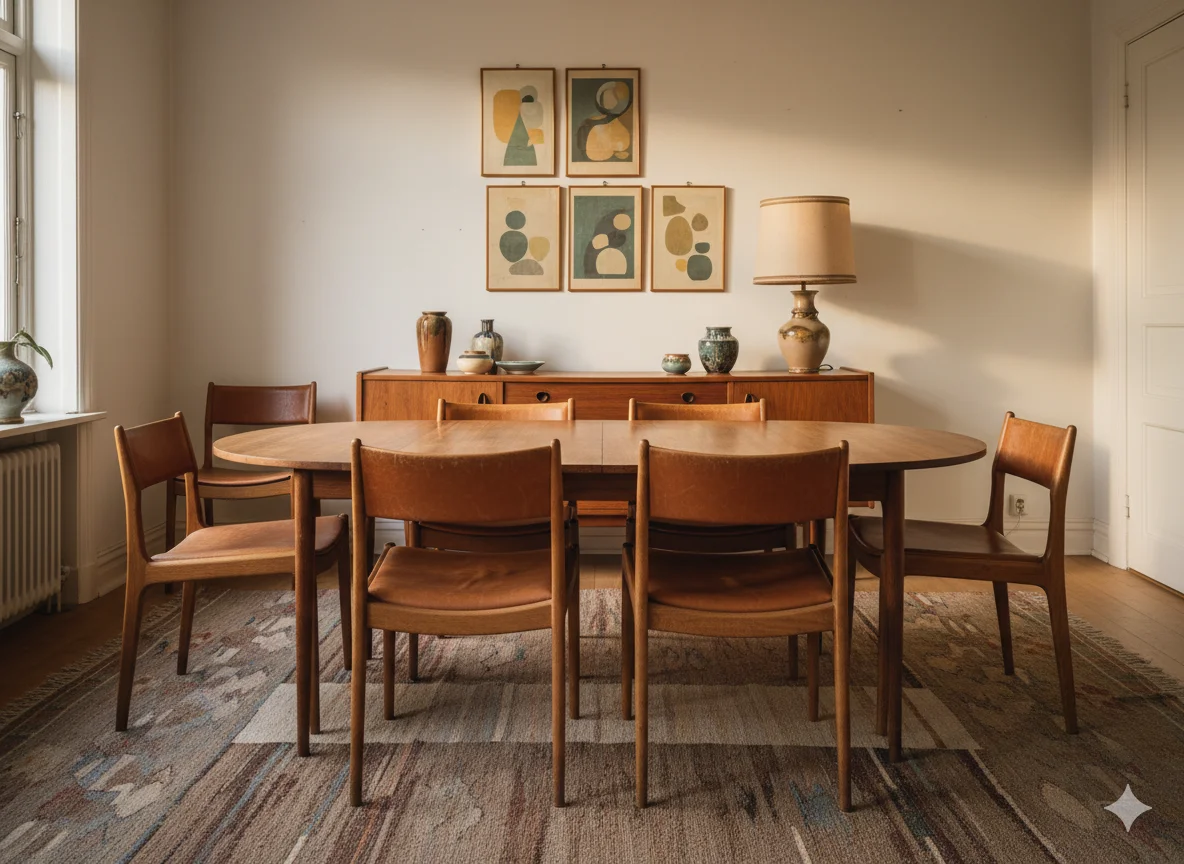
A low-profile credenza or sideboard is one of the most functional and beautiful storage pieces you can add to a mid-century dining room. Position it along a wall opposite or adjacent to the dining table and use the top surface to display a curated arrangement of ceramics, sculptural objects, a table lamp, and perhaps a piece of art propped against the wall above. This treatment creates a gallery wall effect without requiring anything to be permanently hung.
Try Wood Wall Paneling
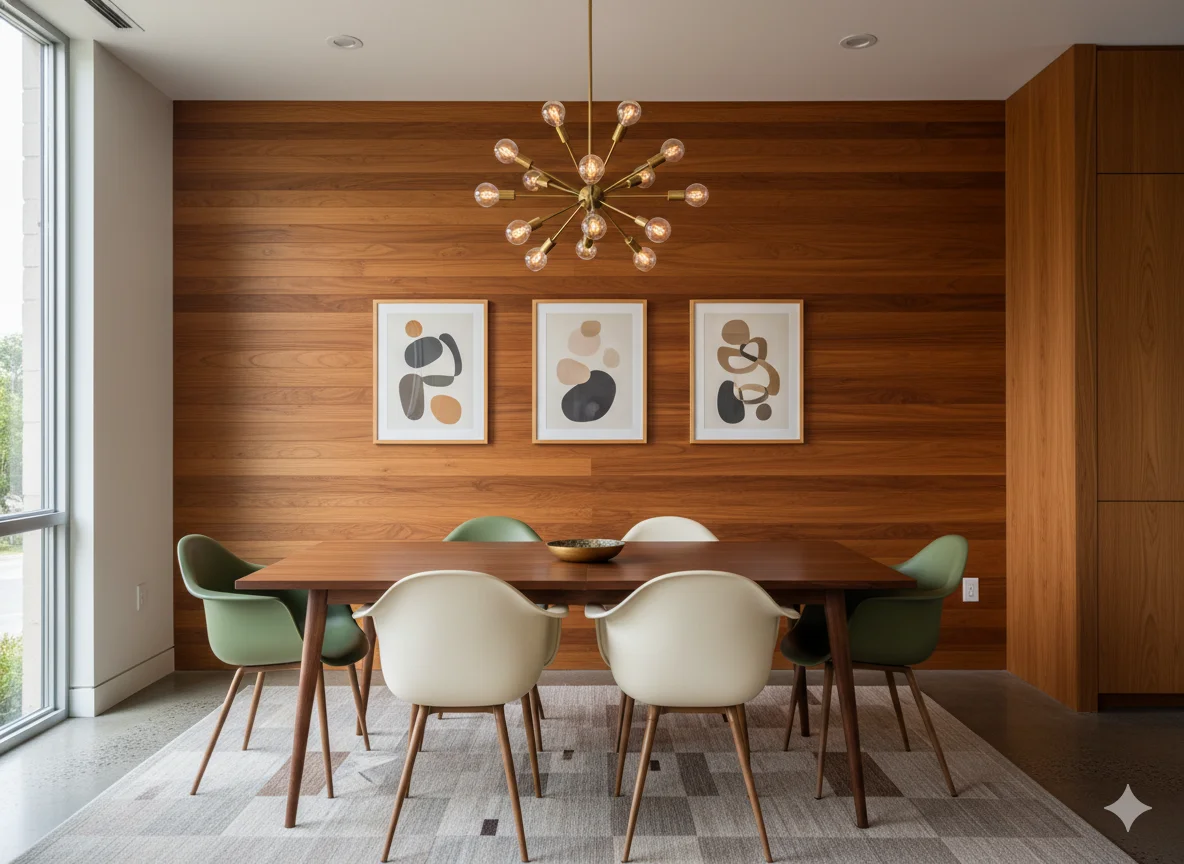
Vertical or horizontal wood wall paneling, sometimes called shiplap in its wider boards, was a hallmark of mid-century residential architecture. Installing a panel of warm-toned wood on one wall of your dining room adds depth, warmth, and authenticity to the space. Pair it with simple, unframed abstract prints for contrast.
Bring in the Outdoors
Position the Room Near Natural Light
Mid-century modern homes were designed with a strong relationship to the natural landscape. Large windows, glass doors, and unobstructed sight lines to the garden or outdoor space were central to the philosophy. If possible, position your dining table to take advantage of natural light and views. This connection between interior and exterior is a defining quality of the style.
Add Statement Houseplants
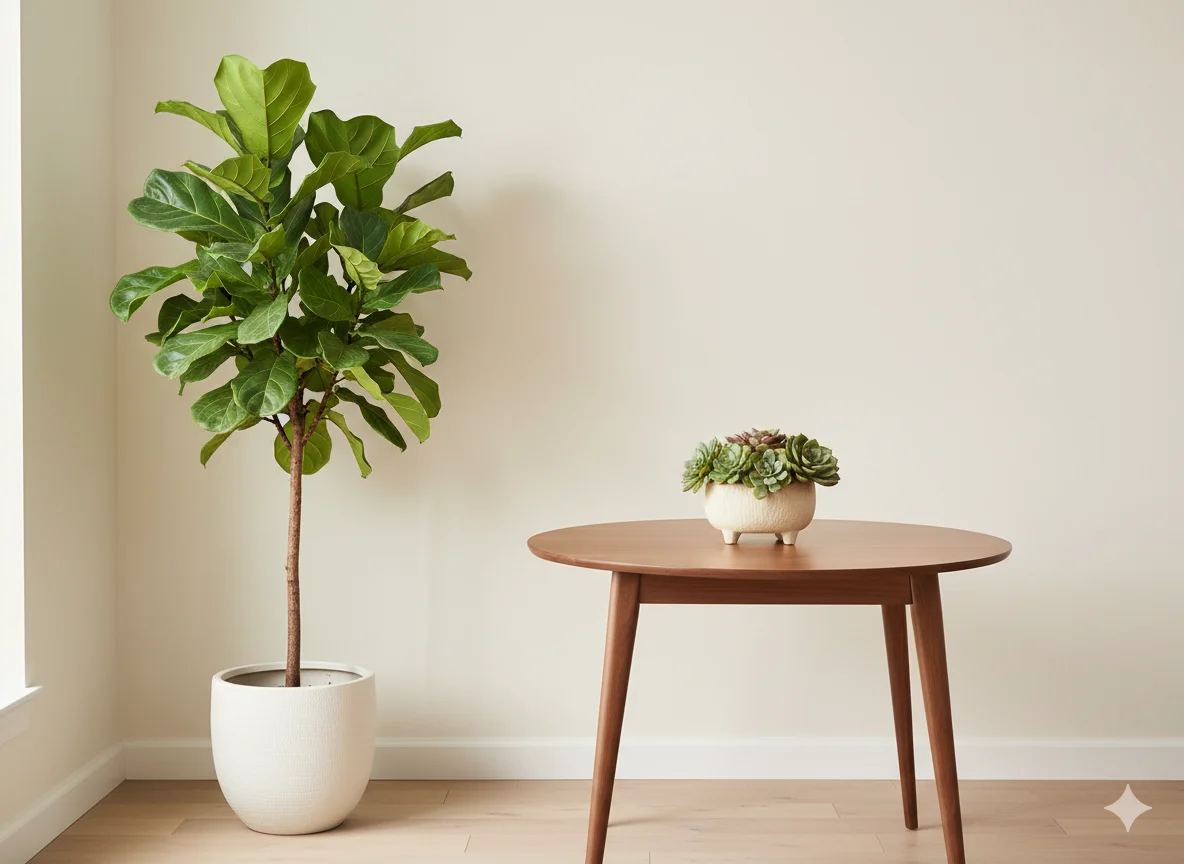
Indoor plants were essential to mid-century interiors, and for good reason. A tall fiddle-leaf fig tree positioned in a corner adds vertical interest and natural life to a dining space. Smaller succulents or a trailing pothos in a ceramic planter at the center of the table reinforces the organic, nature-connected aesthetic without overwhelming the room.
Style Your Dining Table
Create a Curated Centerpiece
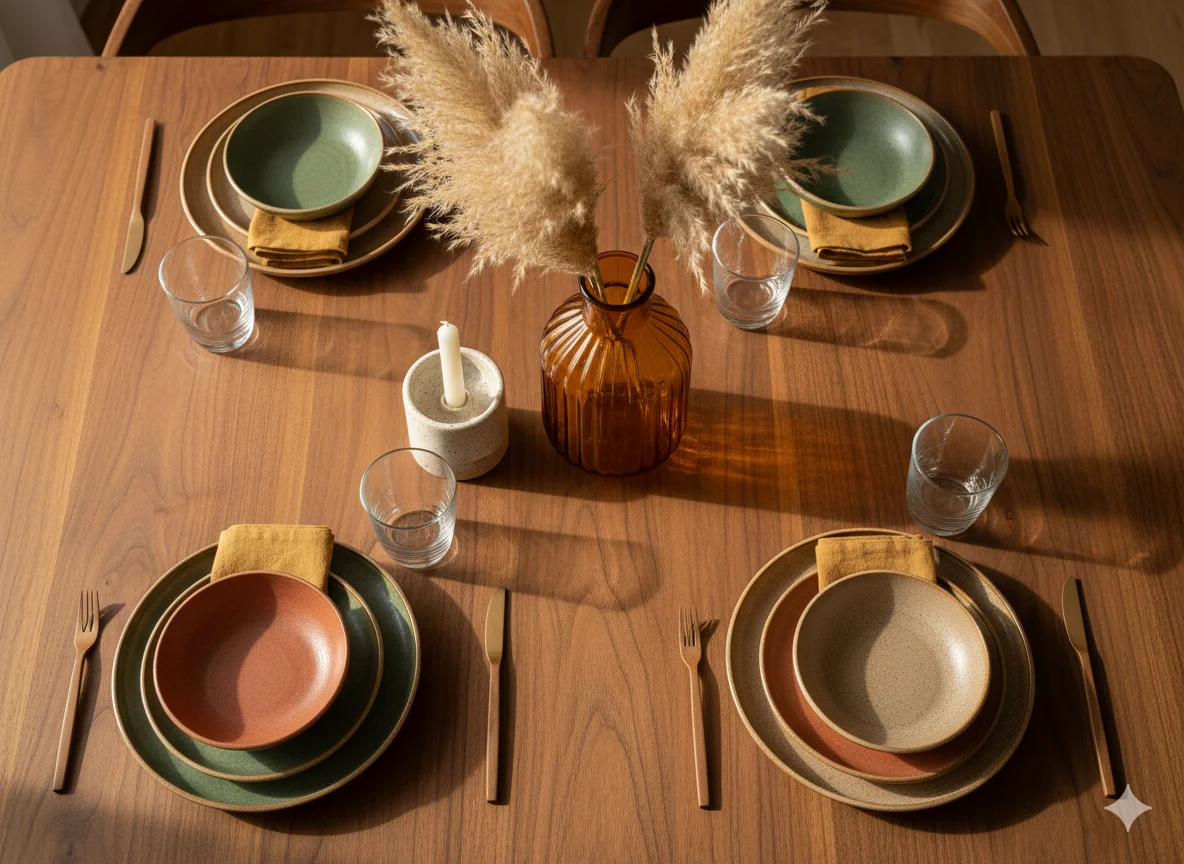
A mid-century dining table centerpiece does not need to be elaborate. A ribbed glass vase in amber or smoke holding a few stems of dried pampas grass or seasonal foliage, set beside a simple ceramic candle holder, delivers understated sophistication. The key is restraint: choose two or three objects with interesting forms rather than crowding the table.
Use Quality Tableware and Ceramics
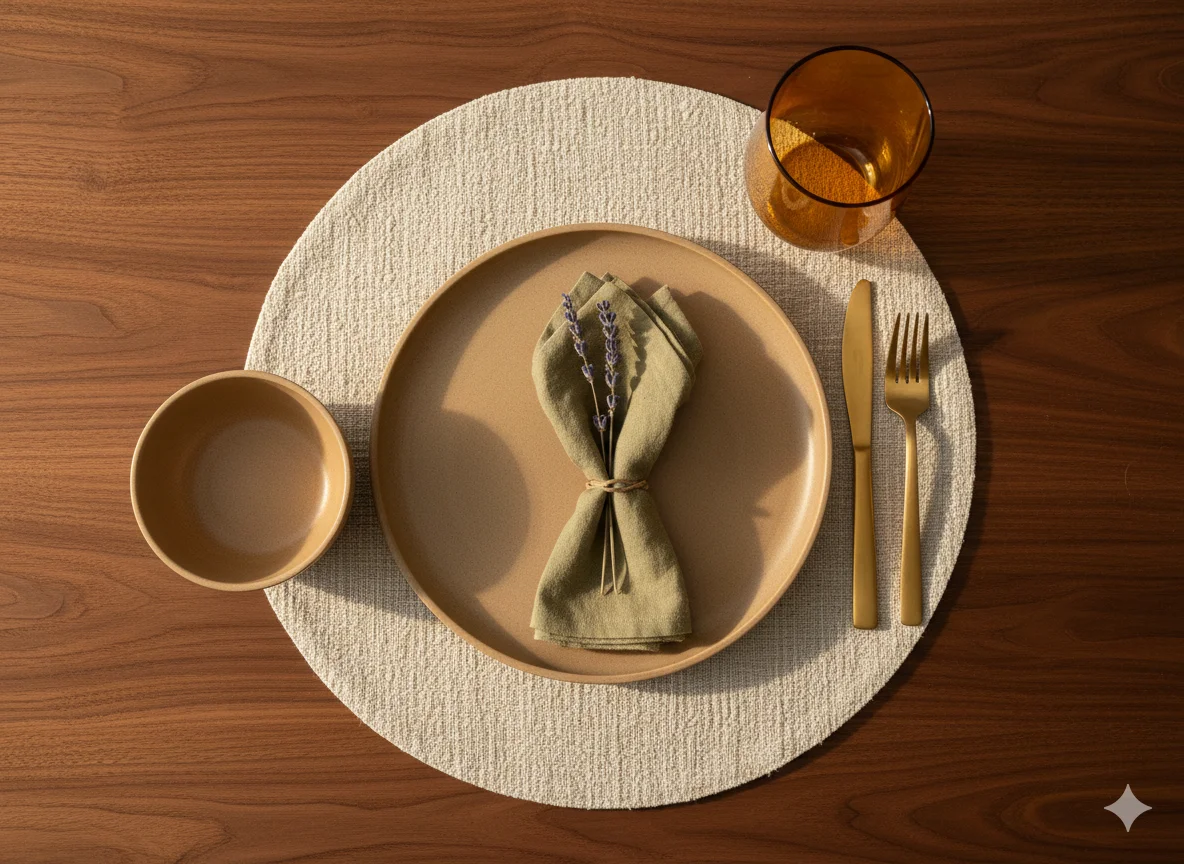
The tableware you choose contributes to the overall aesthetic more than many people realize. Stoneware with matte glazes in earthy tones, simple linen napkins, and handblown glass tumblers all reinforce the mid-century preference for honest materials and beautiful craft. These are everyday objects elevated to the level of decor.
Incorporate Brass and Metal Accents
Choose Brass Hardware and Fixtures
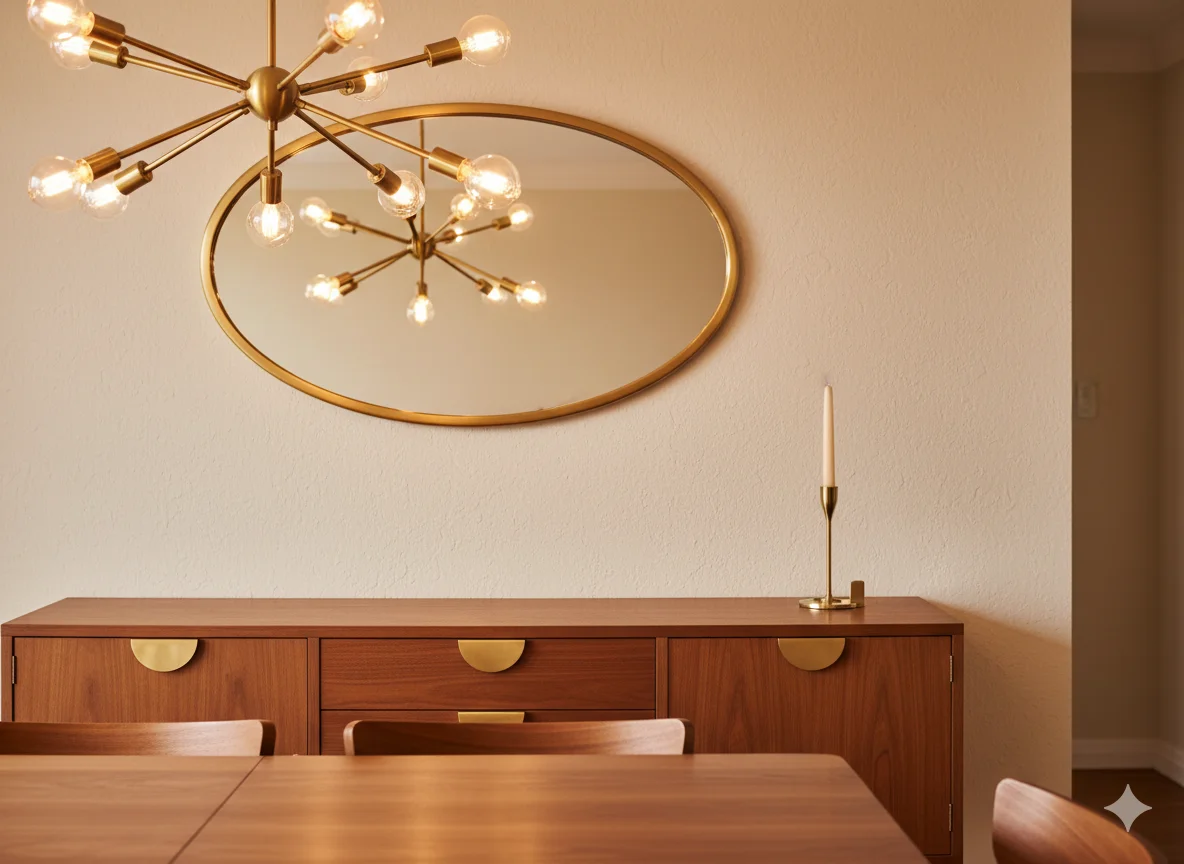
Brass was the metal of choice in mid-century modern interiors, and its warm golden tone coordinates naturally with walnut wood and cream walls. Look for brass drawer pulls on your credenza, brass candle holders, a brass-framed mirror above the sideboard, or brass pendant light fixtures. Avoid over-polishing or over-matching brass elements; a slightly antique or brushed finish feels more authentic and layered.
Try Black Metal for a Graphic Edge
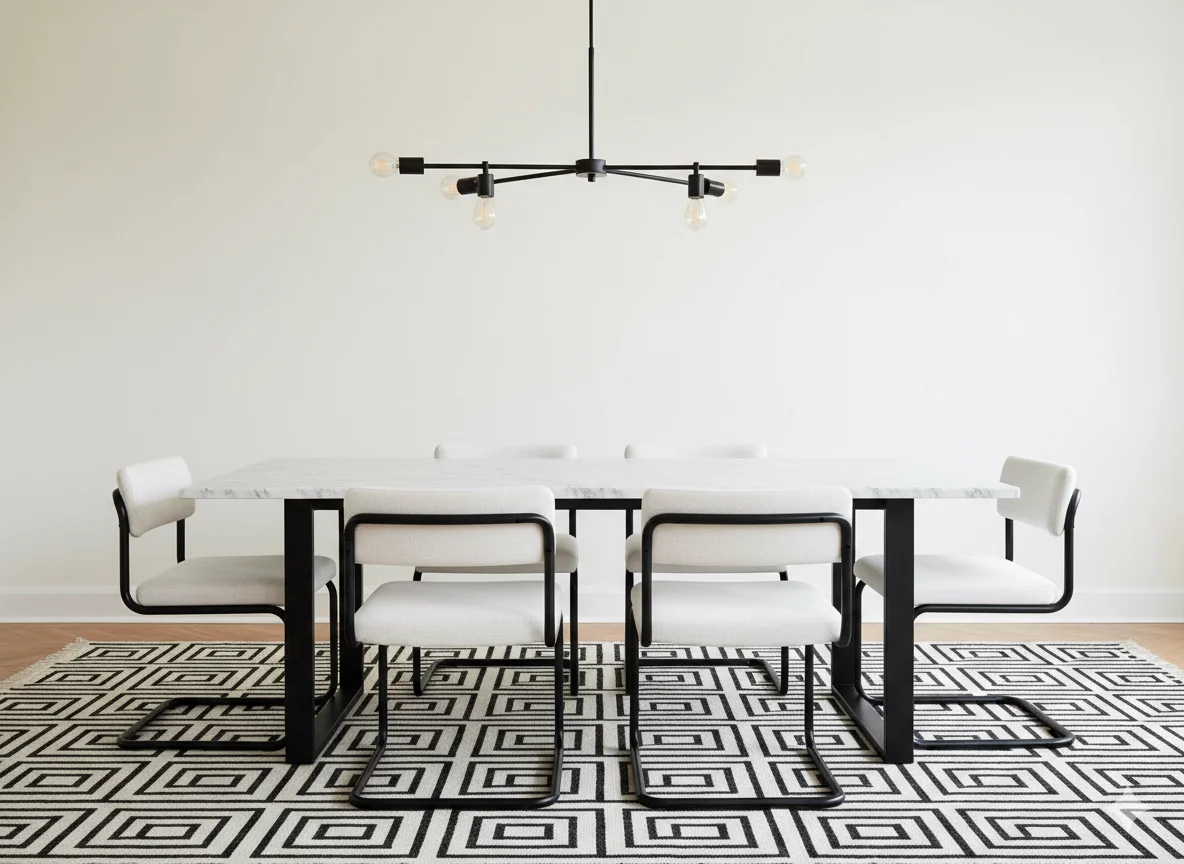
Matte black metal frames and chair legs introduce a graphic, high-contrast quality to mid-century dining rooms. Marcel Breuer’s cantilever chairs in black steel paired with a white marble tabletop are a particularly striking combination. Black metal also works well in pendant lights and wall sconces, especially when the rest of the room is warm and wood-heavy.
Source Vintage and Secondhand Pieces
Explore Thrift Stores and Flea Markets
Some of the most character-rich mid-century dining rooms are built around pieces sourced from vintage shops, estate sales, and flea markets. A set of original 1960s Danish dining chairs, a vintage teak sideboard, or a period ceramic lamp found at a secondhand store will give your room a depth and individuality that no amount of new furniture can replicate. The hunt itself is part of the pleasure.
Shop Reproduction Pieces with Discernment
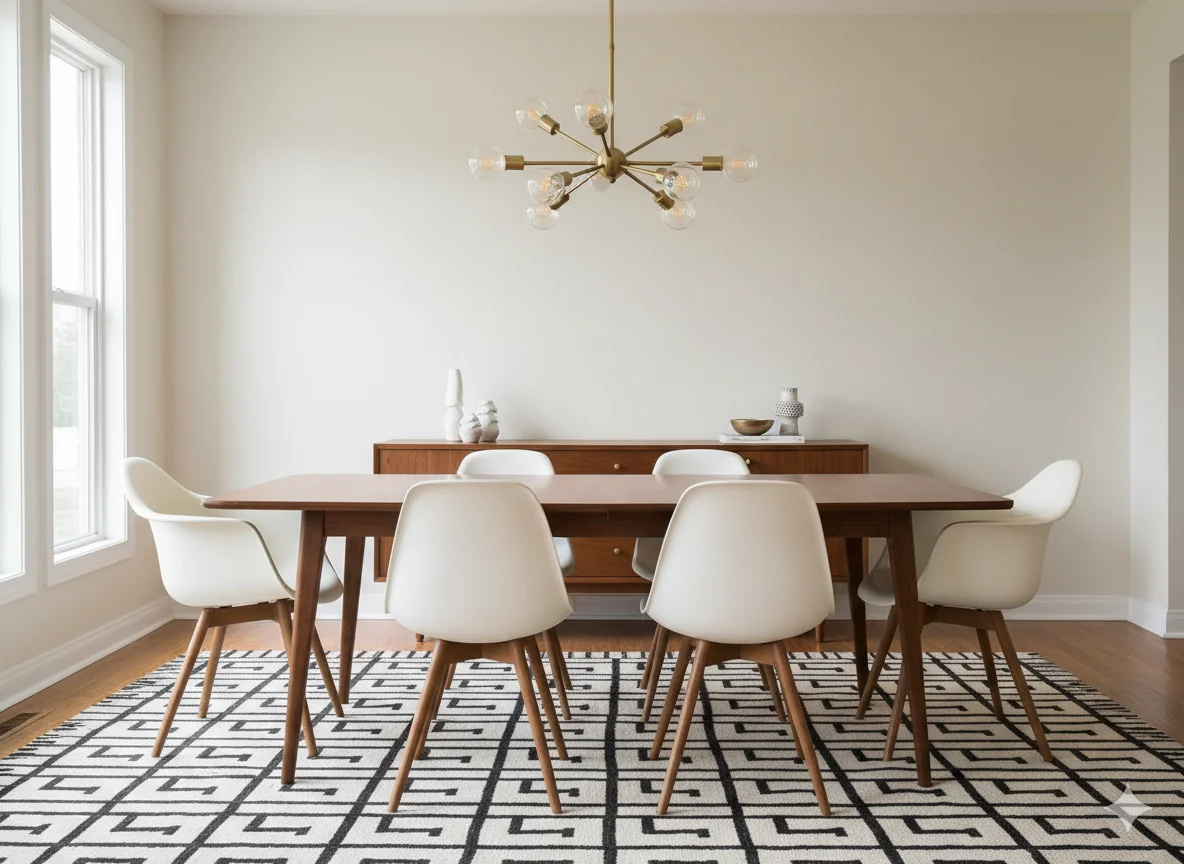
If originals are outside your budget or simply unavailable, quality reproductions of iconic mid-century pieces are widely available today. The key is choosing manufacturers that honor the proportions and material qualities of the original designs rather than simply copying their outline. Well-made reproductions of Eames chairs, tulip tables, and Serge Mouille lights are available at multiple price points and look exceptional in a well-designed room.
Conclusion
The enduring appeal of the mid-century modern dining room comes down to a simple truth: it was designed for real life. The furniture is beautiful but functional, the materials are warm and honest, and the overall aesthetic rewards thoughtful choices without demanding perfection. Whether you build your room around a single iconic piece or transform an entire space from ceiling to floor, these 25 ideas offer a starting point that is both historically grounded and personally adaptable. The dining room, after all, is where meals are shared, conversations unfold, and memories are made. Mid-century modern design simply ensures it all happens with style.
Frequently Asked Questions
What colors work best in a mid-century modern dining room?
Warm neutrals like cream, beige, and soft white work well as a base, complemented by bold accent colors such as mustard yellow, burnt orange, teal, olive green, and deep terracotta. These retro-inspired hues are essential to achieving an authentic mid-century palette.
What type of dining table is most appropriate for a mid-century modern style?
A walnut or teak table with tapered or splayed legs is the most characteristic choice. Round and oval shapes in particular reflect the organic design philosophy of the era, though rectangular tables with clean lines also work well, especially in larger spaces.
Can I achieve a mid-century modern look on a limited budget?
Yes. Start with a few key pieces such as a secondhand wood dining table, a set of molded plastic shell chairs, and a statement pendant light. Add a geometric area rug and a few brass or ceramic accent pieces. Thrift stores and estate sales are excellent sources for affordable authentic pieces.
What lighting fixtures define the mid-century modern dining room?
Sputnik chandeliers, Serge Mouille-style multi-arm ceiling lights, globe pendant lights, and saucer-shaped pendants are all characteristic of the era. Brass and matte black finishes are the most historically appropriate metal choices for these fixtures.
How do I mix mid-century modern furniture with a more contemporary home?
Focus on consistency in color palette and material quality. Mid-century pieces blend naturally with Scandinavian minimalism and Japandi interiors because they share an emphasis on natural materials and clean forms. Avoid overly ornate or heavily decorative accents, and let the furniture silhouettes do the visual work.