22 Modern Kitchen Light Fixtures
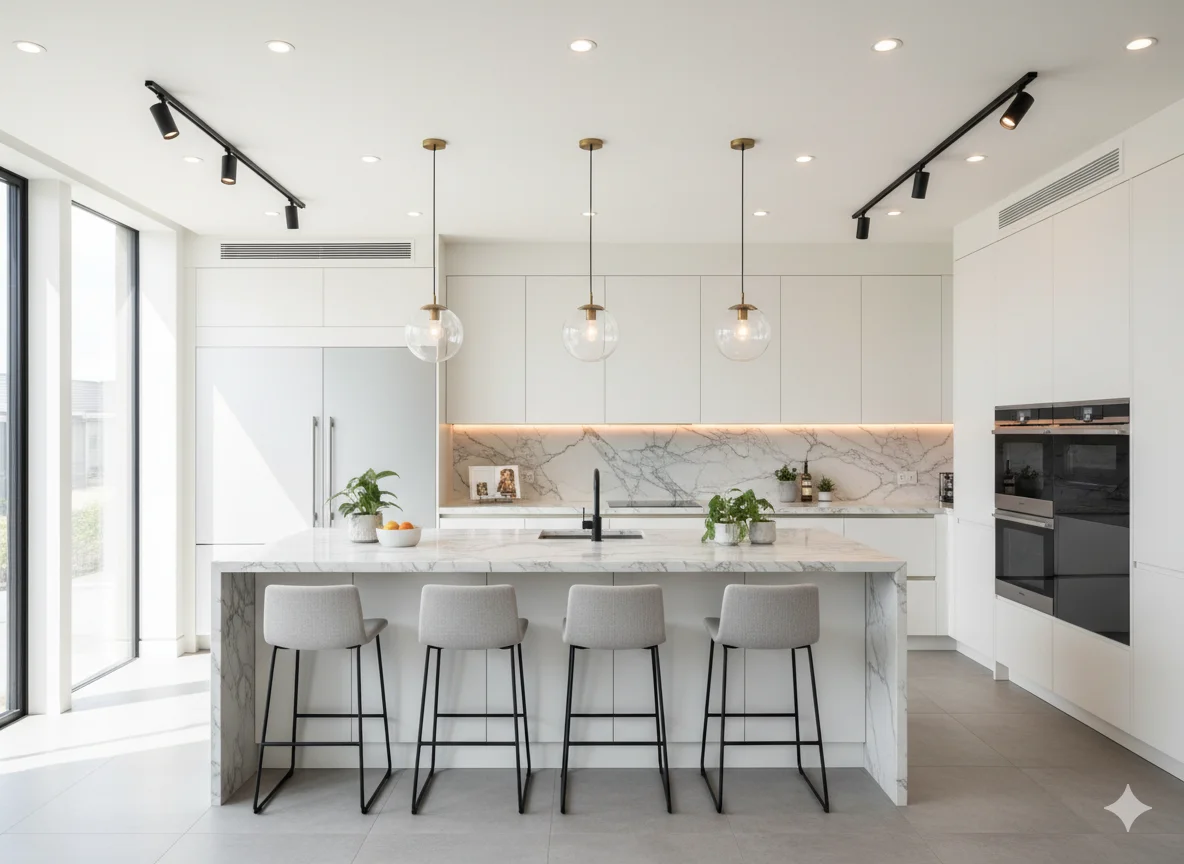
The kitchen has transformed from a purely functional space into the heart of the modern home. It serves as a gathering place for family meals, a workspace for culinary creativity, and an entertainment hub for guests. With this evolution comes the need for sophisticated lighting solutions that balance functionality with aesthetic appeal. Modern kitchen light fixtures have risen to meet this challenge, offering homeowners an impressive array of options that illuminate workspaces while creating inviting atmospheres.
Selecting the right lighting for your kitchen involves more than simply choosing attractive fixtures. The best kitchen lighting plans incorporate multiple layers of illumination, combine various fixture types, and consider both practical needs and design preferences. This comprehensive guide explores 22 modern kitchen light fixtures that can transform your cooking space into a well-lit, stylish environment that enhances your daily routines and elevates your home’s overall design.
Understanding Kitchen Lighting Layers
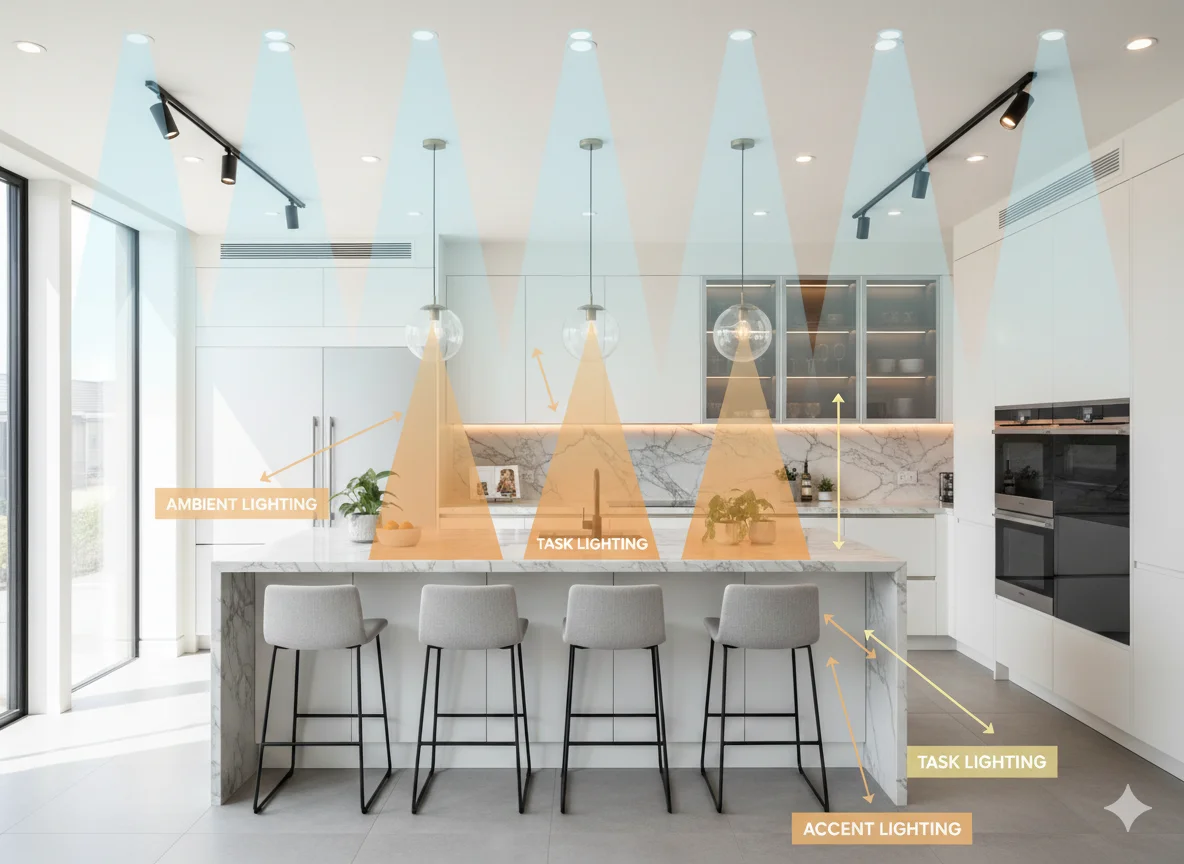
Before diving into specific fixture types, understanding the three fundamental layers of kitchen lighting proves essential. Professional designers approach kitchen illumination as a comprehensive system rather than a single solution. Ambient lighting provides the foundational layer, establishing overall brightness levels and eliminating shadows throughout the space. Task lighting delivers focused illumination to specific work zones where food preparation occurs. Accent lighting adds visual interest and depth, highlighting architectural features and creating sophisticated design elements.
The most successful kitchen lighting designs incorporate all three layers, using different fixture types to achieve each purpose. This layered approach ensures your kitchen functions efficiently for cooking tasks while maintaining the flexibility to create various moods for different occasions. Whether you need bright illumination for meal preparation or softer lighting for casual dining, a well-planned lighting scheme adapts to your changing needs throughout the day.
Pendant Light Fixtures
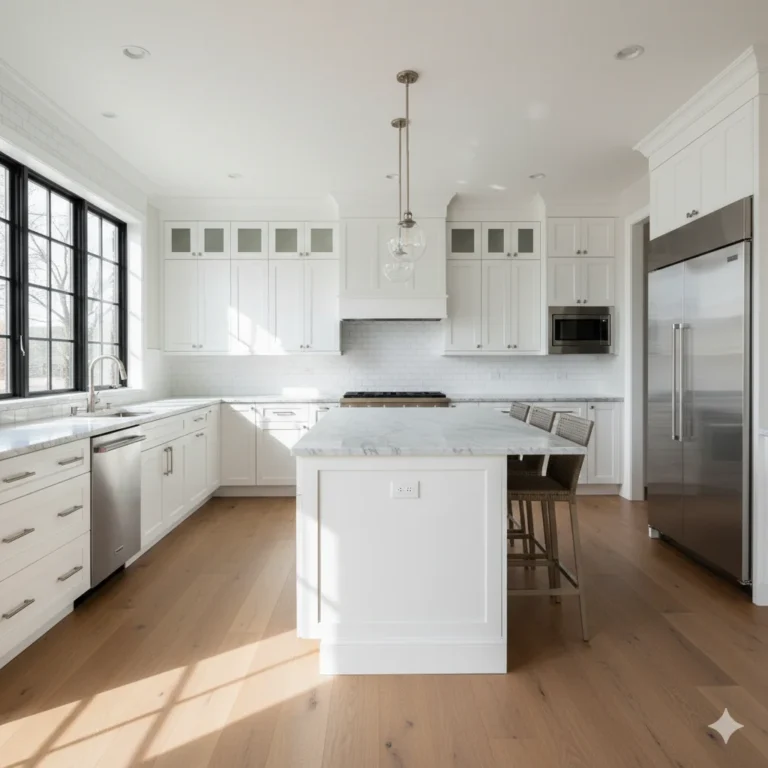
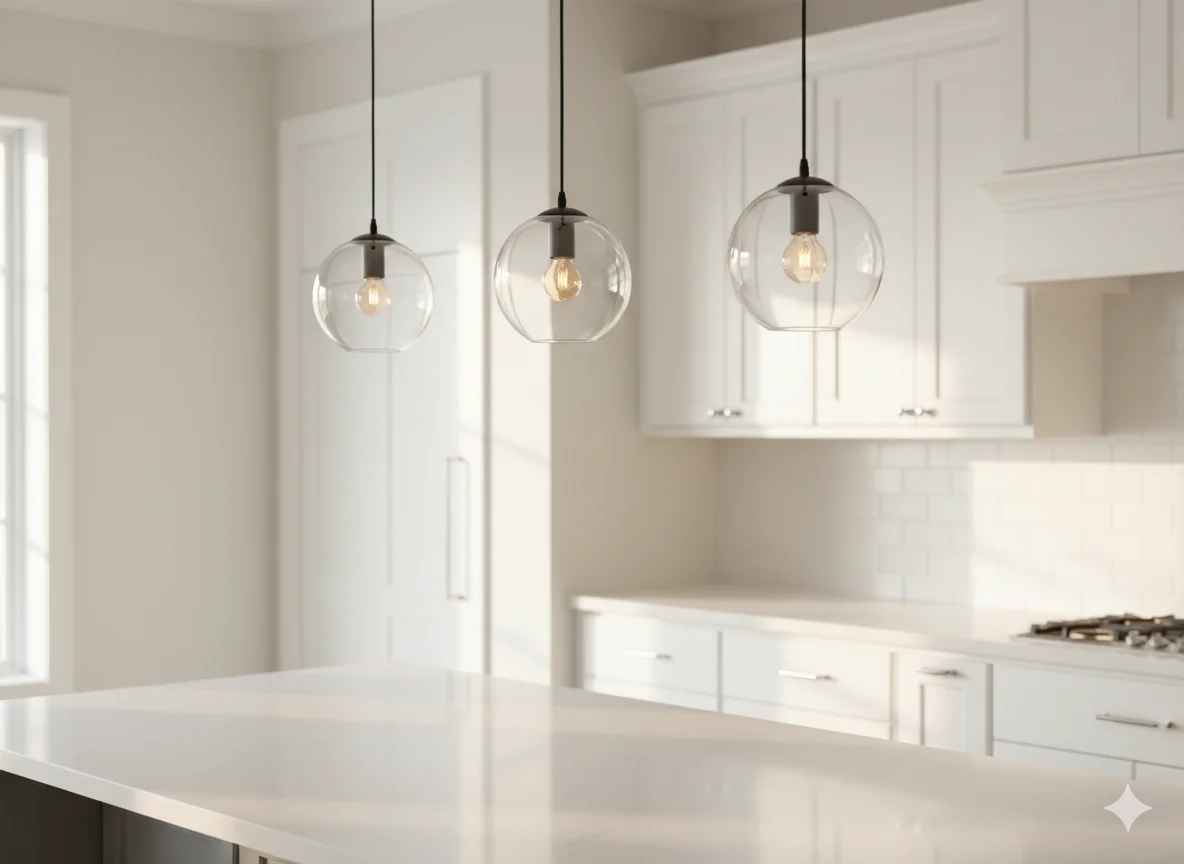
Pendant lights have revolutionized kitchen design by serving as both functional light sources and striking decorative elements. These suspended fixtures hang from the ceiling via rods, chains, or cords, creating visual anchors above islands and peninsulas. Modern pendant designs range from minimalist glass globes to sculptural metal creations, offering endless possibilities for personal expression.
The versatility of pendant lighting makes it suitable for various kitchen applications. Clear glass pendants create an open, airy feeling while allowing light to flow freely throughout the space. These fixtures work exceptionally well in smaller kitchens where maintaining sight lines remains important. Opaque or frosted glass pendants provide softer, more diffused light that reduces glare while adding warmth to the environment.
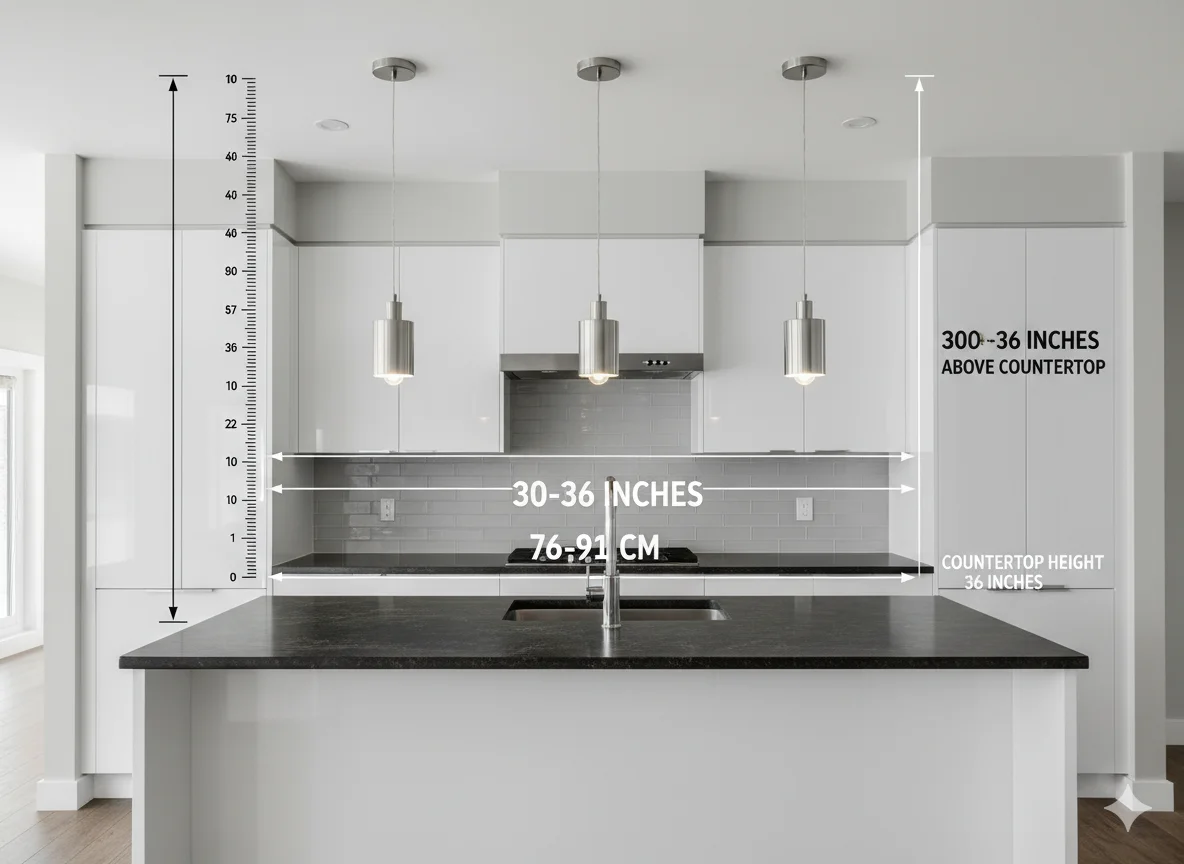
When installing pendant lights above a kitchen island, proper spacing and height prove critical. Design professionals recommend hanging pendants 30 to 36 inches above the counter surface, with 24 to 30 inches between individual fixtures. This positioning provides adequate task lighting without interfering with sight lines or creating obstacles in the workspace. For optimal visual balance, choose pendant diameters that correspond proportionally to your island size, with larger islands supporting more substantial fixtures.
Flush Mount Ceiling Fixtures
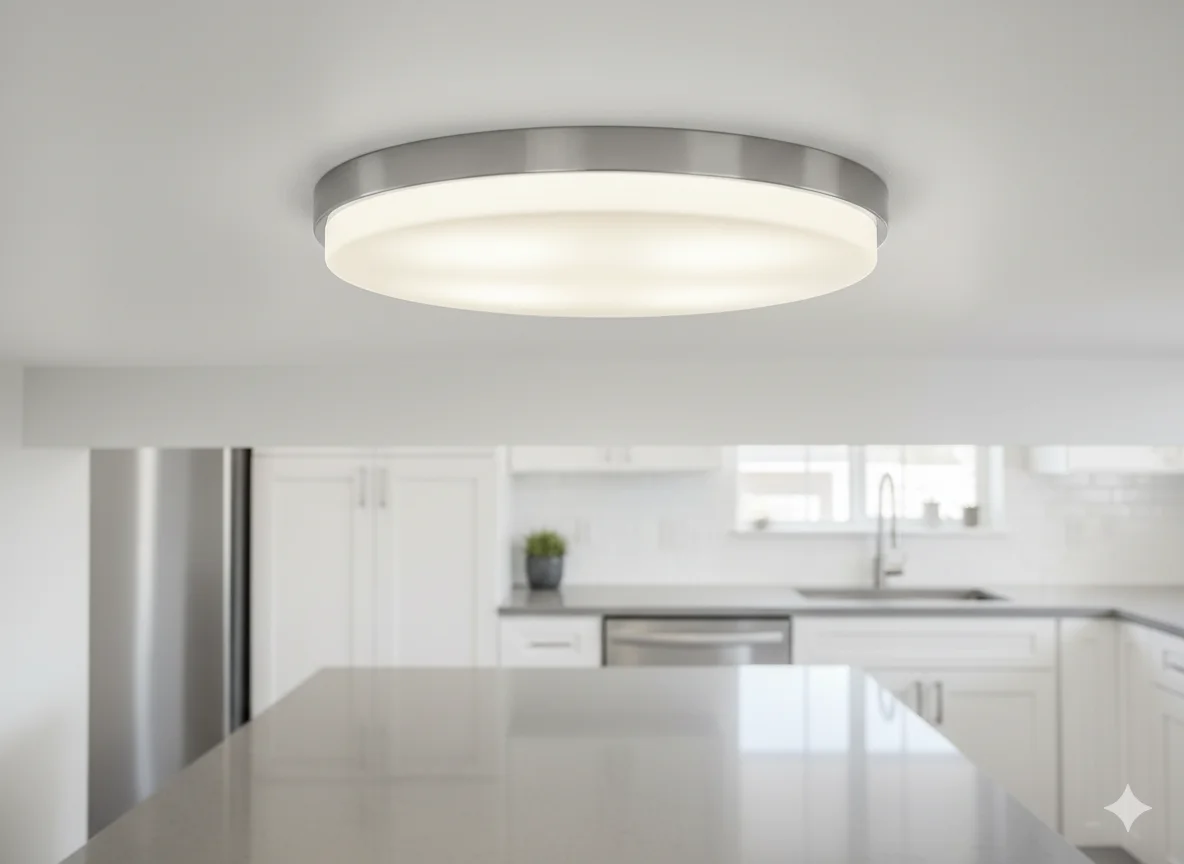
Flush mount fixtures offer practical solutions for kitchens with standard or lower ceiling heights. These lights attach directly to the ceiling surface with minimal or no gap, providing generous illumination without consuming valuable vertical space. Modern flush mount designs have evolved far beyond basic utility fixtures, incorporating sophisticated materials and contemporary styling that complement any kitchen aesthetic.
The primary advantage of flush mount lighting lies in its ability to deliver widespread, even illumination while maintaining a clean, uncluttered ceiling line. These fixtures work particularly well in smaller kitchens or spaces where pendant lights might hang too low. They also pair beautifully with other fixture types, adding variety to prevent a kitchen from becoming overwhelmed by a single lighting style.
Contemporary flush mount fixtures feature various design elements that enhance their visual appeal. Schoolhouse-style opaque glass models bring timeless sophistication to transitional kitchens. Metal and glass cage designs inspired by industrial aesthetics add character without overwhelming the space. LED flush mount options provide energy-efficient illumination with extended lifespans, reducing maintenance requirements while lowering energy costs.
Semi-Flush Mount Fixtures
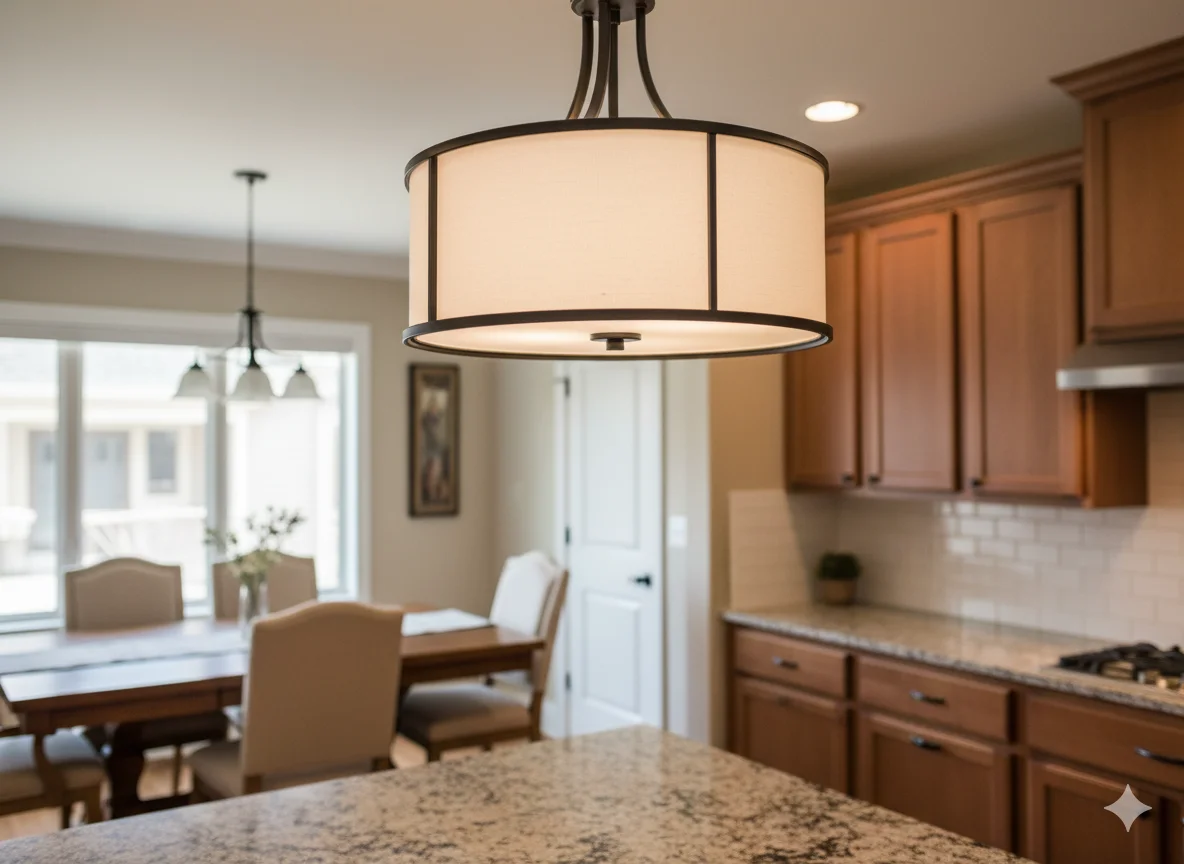
Semi-flush mount fixtures bridge the gap between flush mounts and pendant lights, offering a middle ground that works exceptionally well in kitchens with nine to ten-foot ceilings. These fixtures feature distinct bases with bodies that hang several inches below the ceiling plane, typically extending 12 to 18 inches downward. This additional drop creates more visual interest than standard flush mounts while avoiding the space constraints associated with full pendant installations.
The design flexibility of semi-flush mounts makes them valuable additions to kitchen lighting schemes. They provide focused illumination without sacrificing headroom, making them ideal for transitional areas between kitchen and dining spaces. Many homeowners appreciate their ability to serve as statement pieces that enhance room aesthetics while delivering practical lighting benefits.
Modern semi-flush mount fixtures come in diverse styles that accommodate various design preferences. Drum-shaped models with linen shades add soft, sophisticated ambiance to traditional and transitional kitchens. Geometric metal designs bring contemporary edge to modern spaces. Vintage-inspired fixtures with exposed bulbs create focal points that blend industrial charm with current design trends.
Recessed Lighting
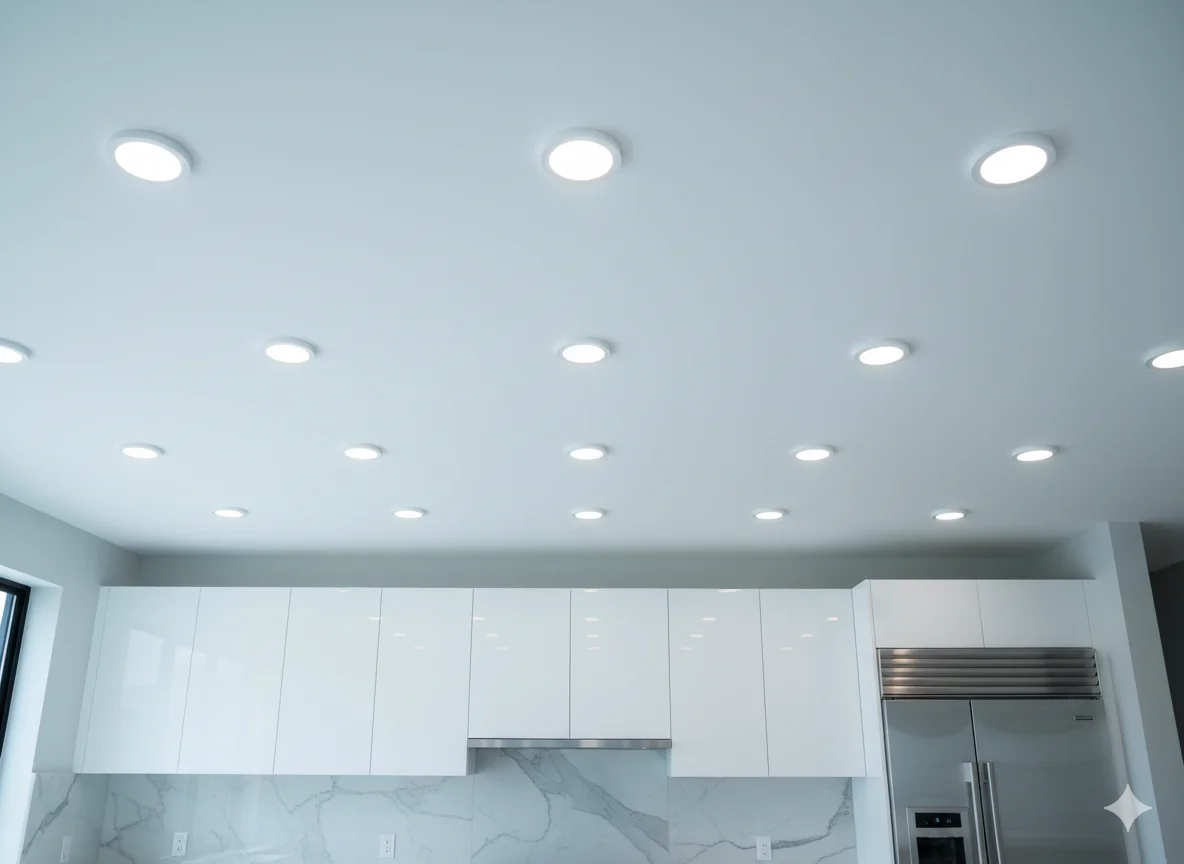
Recessed lighting, commonly known as can lights or downlights, remains a cornerstone of modern kitchen illumination. These fixtures install flush within the ceiling, with only the trim and bulb visible from below. This streamlined appearance makes recessed lighting ideal for contemporary and minimalist kitchen designs that prioritize clean lines and uncluttered surfaces.
The strategic placement of recessed fixtures creates comprehensive ambient lighting that eliminates shadows and dark corners. When distributed evenly throughout the kitchen, these lights provide consistent brightness levels that support various activities from food preparation to casual conversation. Modern LED recessed fixtures offer exceptional energy efficiency and longevity, with many models featuring adjustable color temperatures that allow customization of the lighting atmosphere.
Several trim styles expand the functionality of recessed lighting beyond basic ambient illumination. Baffle trim reduces glare through ridged interior surfaces, making it comfortable for extended periods in the kitchen. Reflector trim maximizes light output, ideal for task-oriented areas. Eyeball or gimbal trim provides directional control, allowing you to highlight specific features or work zones. For kitchens with moisture concerns, wet-rated trim options ensure safe operation in areas near sinks or dishwashers.
Linear Pendant Fixtures
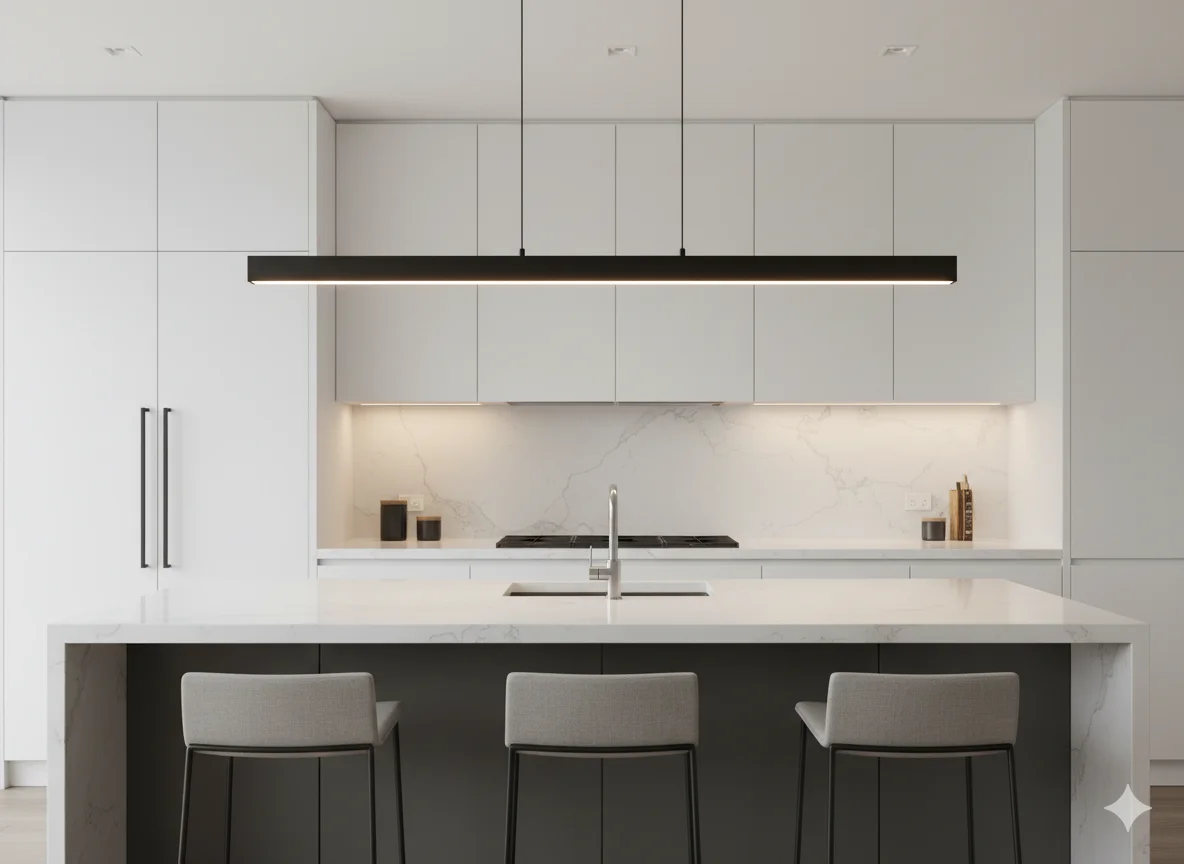
Linear pendant lights bring contemporary sophistication to modern kitchens through their elongated forms and clean geometric lines. These fixtures suspend horizontally above islands or dining areas, providing even light distribution across extended workspaces. The streamlined profile of linear pendants complements the horizontal emphasis of countertops and islands, creating visual harmony within the kitchen design.
One significant advantage of linear pendants involves their efficient coverage of long surfaces with a single fixture. Rather than installing multiple individual pendants, a well-proportioned linear light can illuminate an entire island while maintaining a sleek, uncluttered appearance. This makes them particularly valuable in contemporary kitchens where minimalism and clean design principles take priority.
Modern linear pendants incorporate various materials and finishes that suit different aesthetic preferences. Matte black metal housings with integrated LED strips deliver bold, industrial-inspired looks. Brushed nickel or brass accents add warmth and sophistication. Some designs feature adjustable elements that allow customization of light direction, providing both ambient and task lighting capabilities within a single fixture.
Chandelier Fixtures
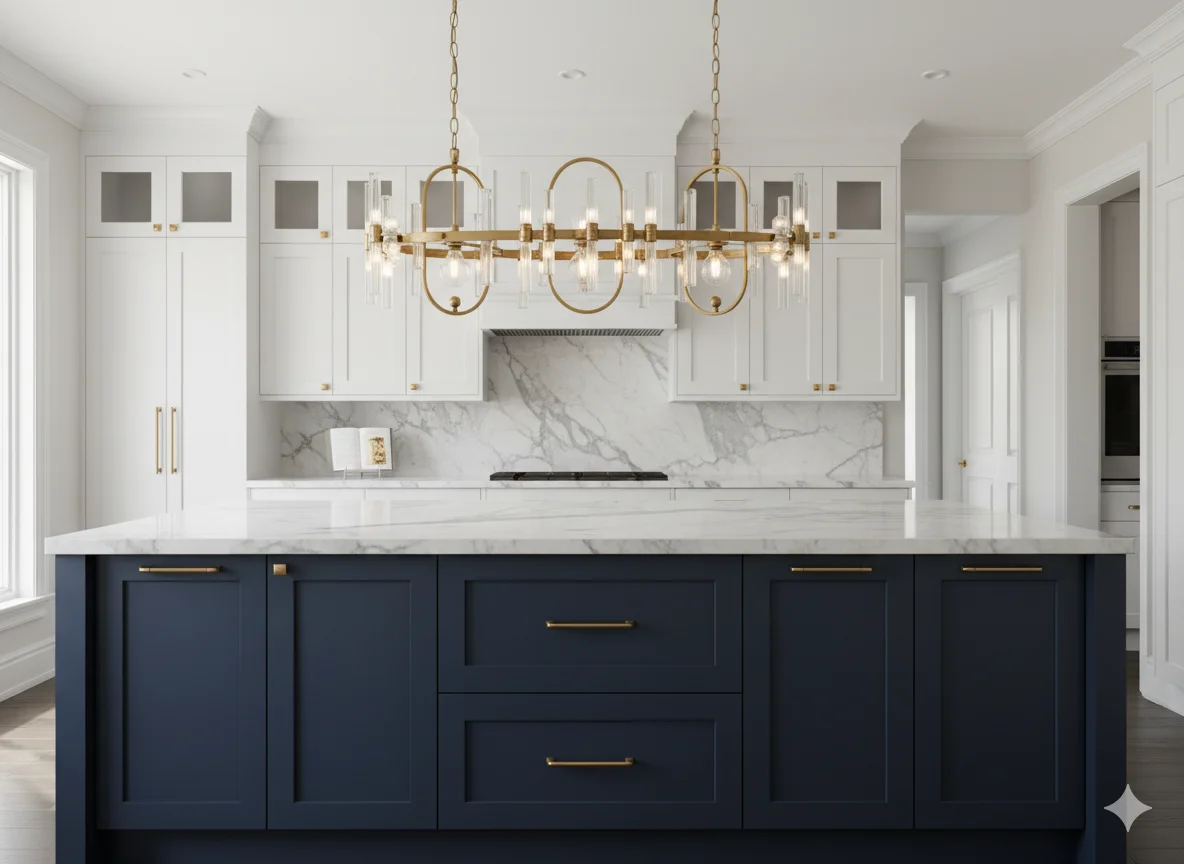
Kitchen chandeliers have emerged as popular alternatives to traditional pendant arrangements, bringing dramatic flair and artistic expression to the space. Once reserved primarily for dining rooms, chandeliers now serve as statement pieces above kitchen islands and in breakfast nooks. Modern kitchen chandeliers range from scaled-down traditional designs to abstract contemporary sculptures that serve as functional art installations.
The key to successfully incorporating chandeliers into kitchen design lies in selecting appropriately sized fixtures that complement rather than overwhelm the space. Smaller, simpler chandelier designs work well in transitional kitchens, adding a touch of elegance without excessive ornamentation. More substantial chandeliers can anchor larger kitchens, creating focal points that draw the eye and establish distinct zones within open-concept floor plans.
Contemporary kitchen chandeliers embrace diverse materials and forms. Sputnik-style fixtures with radiating arms bring midcentury modern appeal. Geometric cage designs offer industrial edge with architectural interest. Crystal and glass elements introduce sparkle and light reflection that enhance the overall luminosity of the space. When selecting a chandelier for your kitchen, consider how its style coordinates with cabinet hardware, appliance finishes, and other design elements to create a cohesive look.
Under Cabinet Lighting
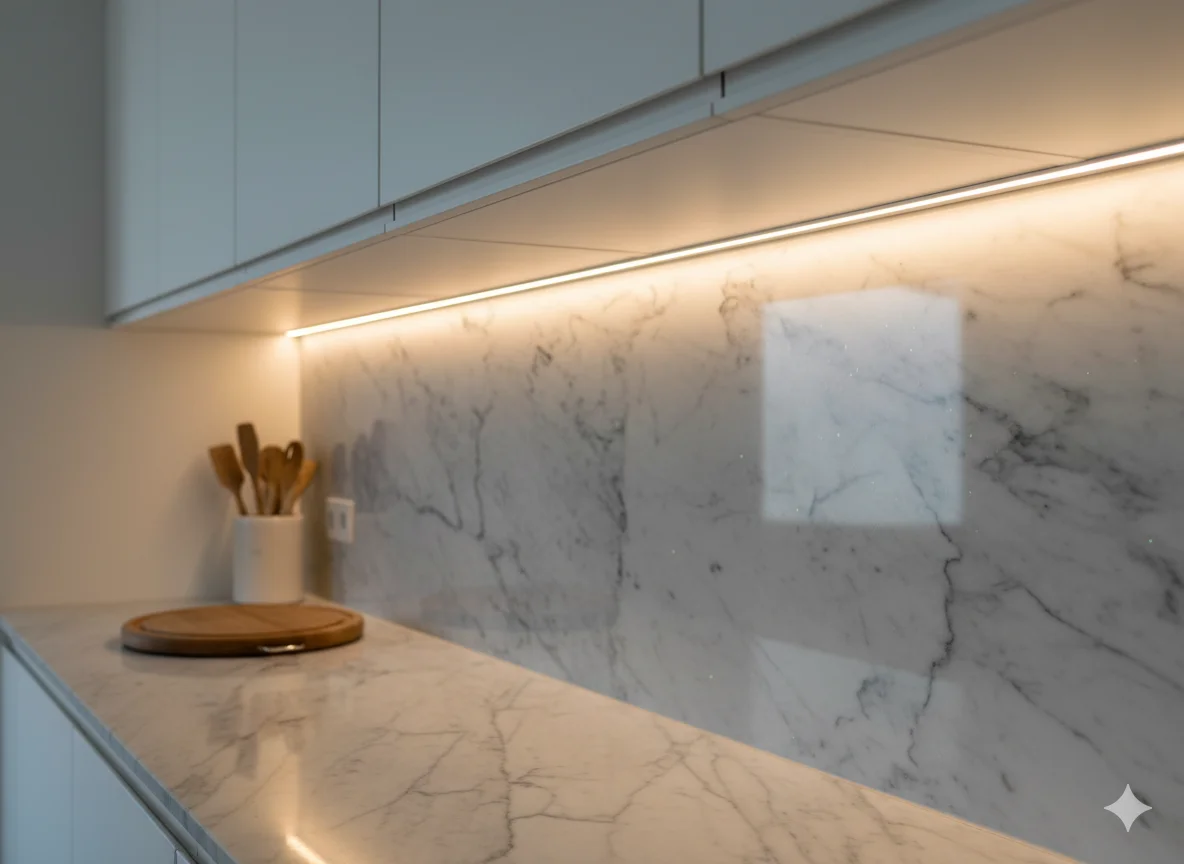
Under cabinet lighting represents one of the most practical additions to any modern kitchen, delivering targeted task illumination directly onto countertop work surfaces. By installing lights beneath upper cabinets, you eliminate shadows cast by overhead fixtures while providing bright, focused light exactly where food preparation occurs. This targeted approach reduces eye strain and improves safety during cooking activities.
Modern under cabinet lighting typically utilizes LED technology, offering energy efficiency and minimal heat output. Linear LED strips provide continuous illumination across the entire length of cabinets, creating even light distribution without visible gaps. Individual puck lights offer flexibility in placement and direction, allowing customization based on specific task areas. Both options install relatively easily, with many systems offering plug-in or direct-wire configurations to suit different installation preferences.
The impact of under cabinet lighting extends beyond purely functional benefits. These fixtures enhance the visual appeal of backsplashes, highlighting tile patterns and materials while adding depth to the kitchen design. They also create a warm, inviting glow that softens the overall lighting scheme, particularly valuable during evening hours when bright overhead lights might feel too harsh.
Track Lighting Systems
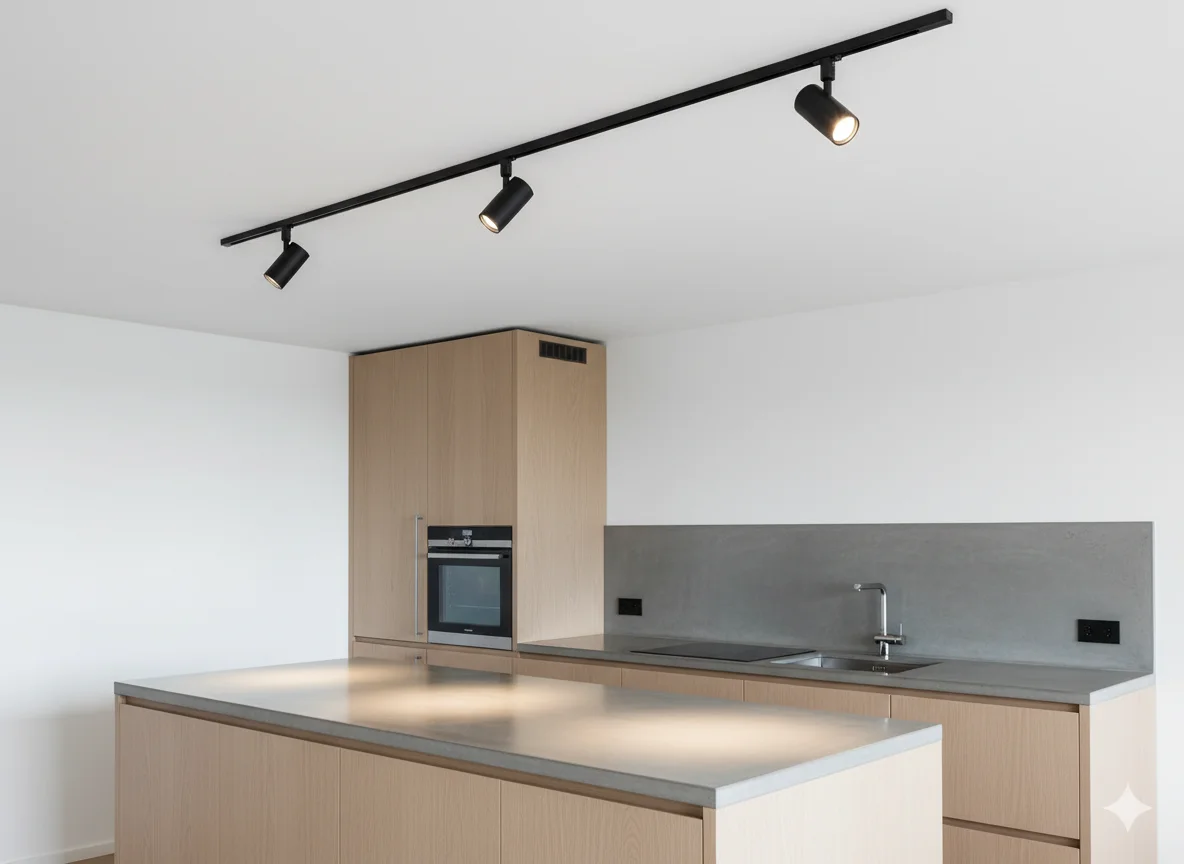
Track lighting provides exceptional flexibility for kitchens requiring adjustable illumination. These systems feature multiple light heads mounted on a ceiling-mounted track, with each fixture capable of rotating and angling to direct light precisely where needed. While track lighting experienced a decline in popularity during recent decades, modern interpretations have revitalized this practical lighting solution with sleeker profiles and more sophisticated designs.
The primary advantage of track lighting lies in its adaptability. As your kitchen needs evolve or your design preferences change, you can easily reposition individual light heads without rewiring or major installation work. This makes track lighting particularly valuable in kitchens with multiple work zones that require different lighting intensities or in spaces where highlighting specific features proves important.
Contemporary track lighting systems move beyond the utilitarian designs of the past. Slim-profile tracks in matte black or brushed metal finishes integrate seamlessly with modern kitchen aesthetics. LED track heads offer energy efficiency with excellent color rendering, ensuring food and finishes appear true to their actual colors. Some systems incorporate smart technology, allowing wireless control and dimming capabilities that enhance convenience and functionality.
Globe Pendant Fixtures
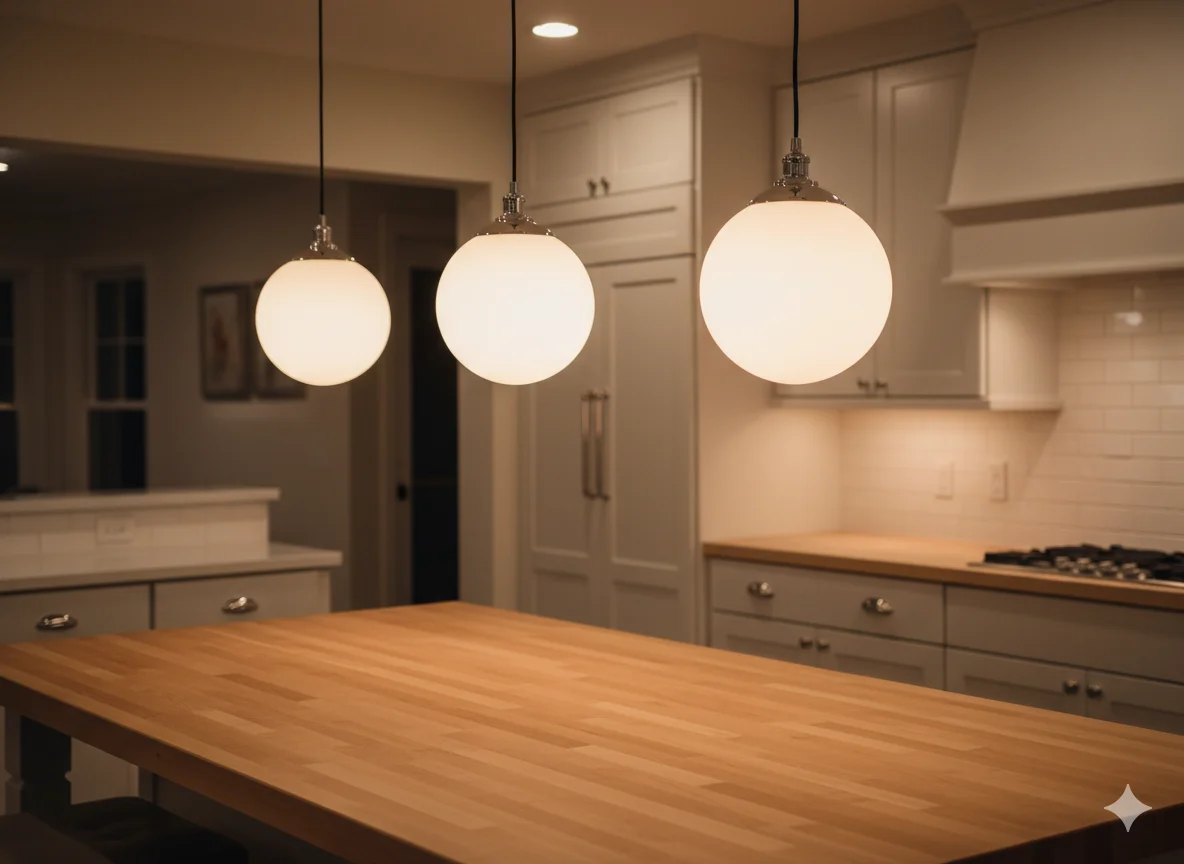
Globe pendants have maintained their popularity in kitchen design due to their timeless appeal and versatile styling. These spherical fixtures range from small, delicate orbs to substantial statement pieces, accommodating various kitchen sizes and design preferences. The universal shape of globe pendants allows them to complement diverse aesthetics from traditional to ultra-modern, making them reliable choices for homeowners seeking classic yet contemporary lighting solutions.
Clear glass globe pendants create visual lightness while providing excellent light transmission. The transparency allows sight lines to flow unobstructed across the kitchen, particularly valuable in open-concept designs where maintaining visual connections between spaces proves important. Frosted or milk glass globes soften the light quality, reducing glare while creating a warm, inviting atmosphere suitable for both cooking and dining activities.
Modern globe pendant designs incorporate various materials and finishes that expand their design flexibility. Seeded or textured glass adds visual interest while diffusing light beautifully. Metal-framed globes with vintage Edison bulbs bring industrial charm. Colored glass options introduce playful personality or sophisticated elegance depending on the chosen hue. When installing globe pendants, consider clustering them in odd numbers for optimal visual balance and impact.
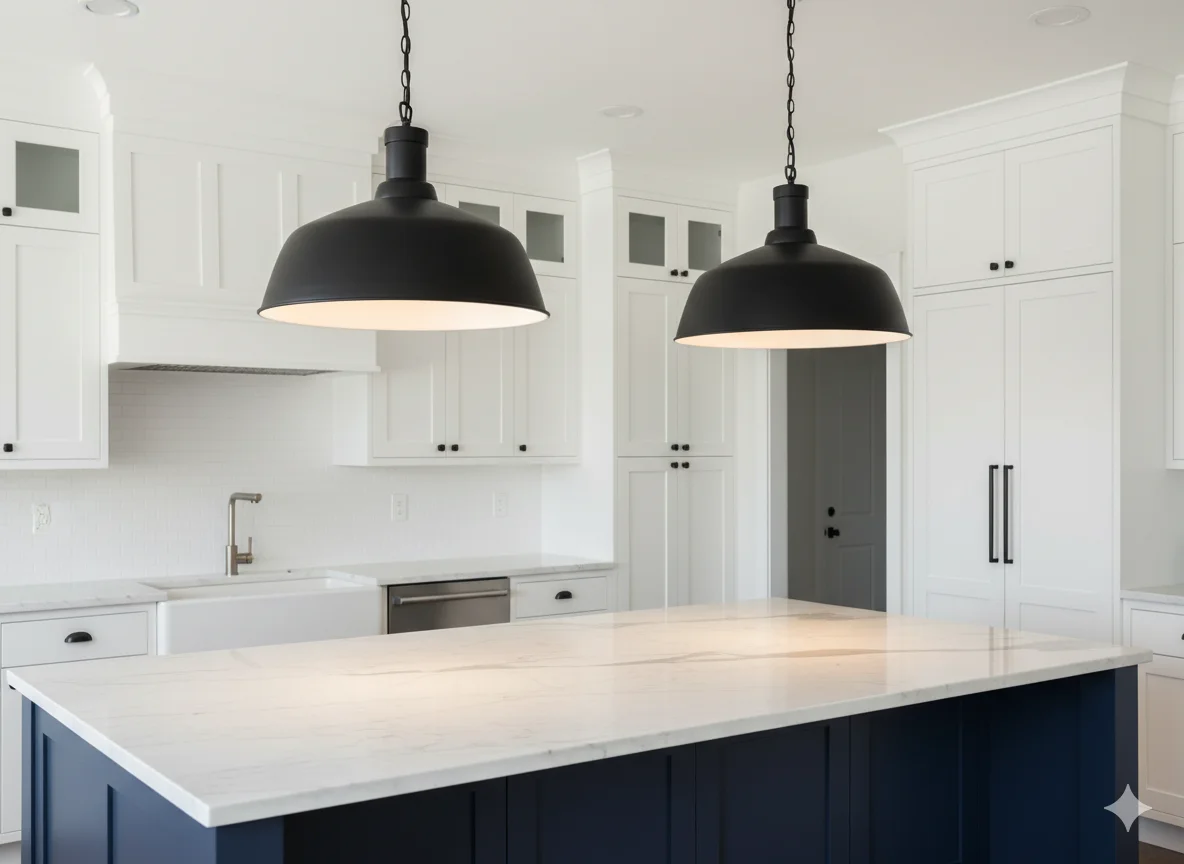
Dome Pendant Fixtures
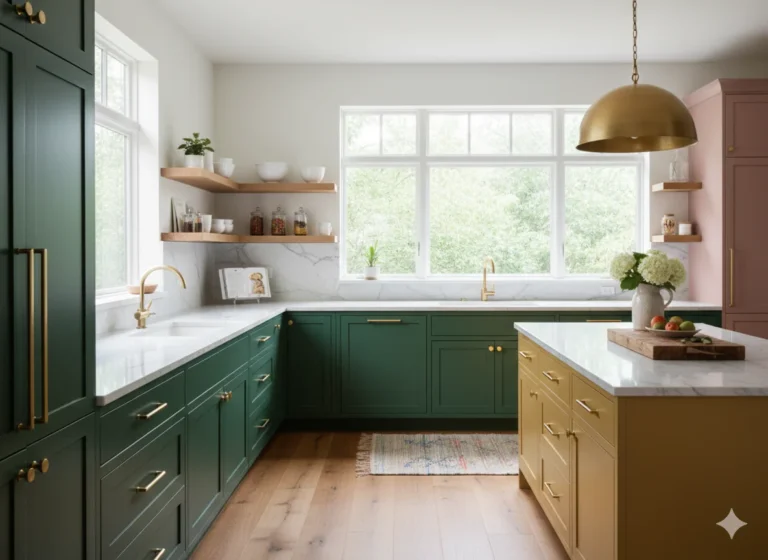
Dome-shaped pendant lights bring focused downward illumination with distinctive visual character. These fixtures feature curved, bowl-like shades that direct light primarily toward work surfaces below, making them excellent choices for task lighting above islands and peninsulas. The enclosed top of dome pendants prevents light from scattering upward, concentrating the illumination where it provides the most functional benefit.
The classic profile of dome pendants suits a wide range of kitchen styles. Metal dome shades in matte black or brushed finishes contribute industrial or contemporary edge. Enamel finishes in bold colors add vintage flair reminiscent of classic factory or warehouse lighting. Glass or ceramic dome pendants introduce softer, more refined aesthetics appropriate for traditional or transitional kitchens.
When selecting dome pendants for your kitchen, consider the interior finish of the shade. White or light-colored interiors maximize light reflection, increasing overall brightness levels. Metallic interiors create focused pools of intense illumination ideal for detailed food preparation tasks. The size and scale of dome pendants should correspond to your island dimensions, with larger domes paired with more substantial work surfaces.
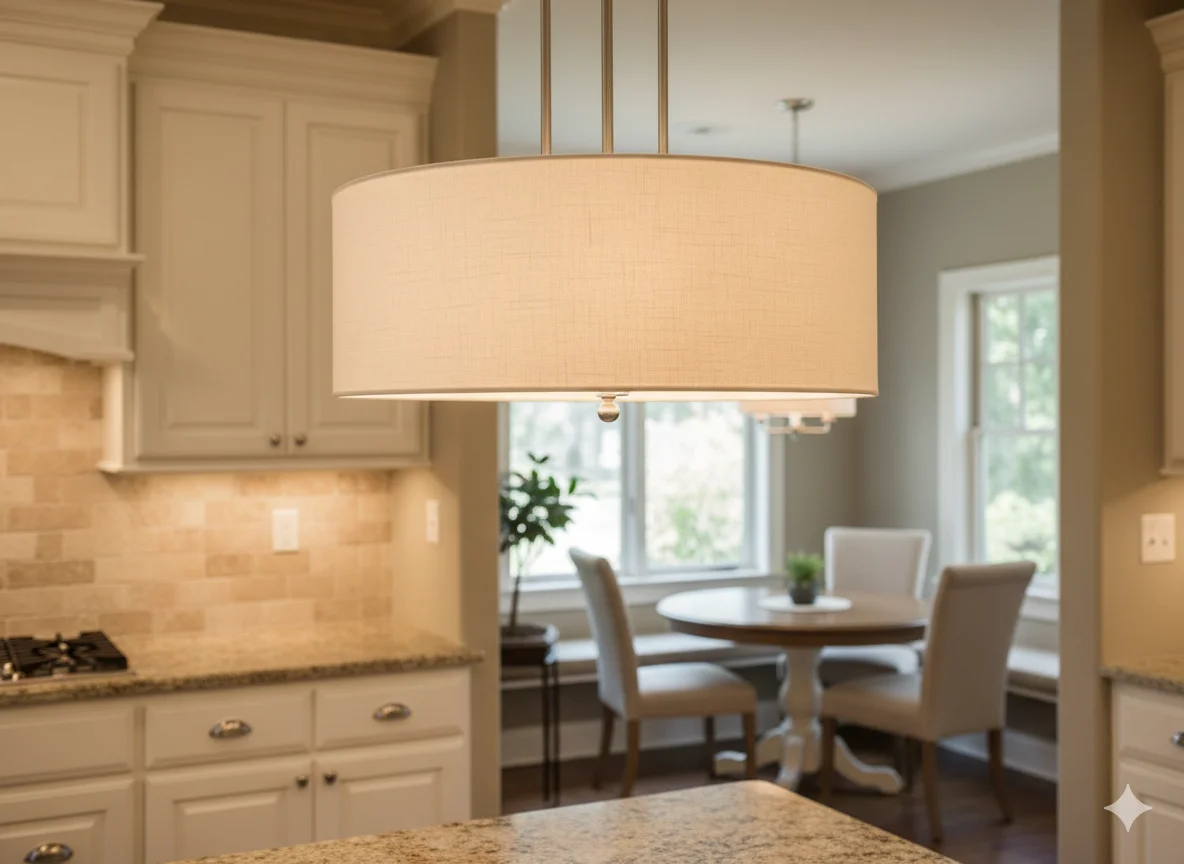
Drum Pendant Fixtures
Drum pendant lights feature cylindrical shades that provide ambient illumination in all directions. Unlike dome pendants that focus light downward, drum fixtures allow light to escape through both the bottom opening and translucent shade material, creating softer, more diffused illumination throughout the space. This quality makes drum pendants excellent choices for creating ambient lighting layers while contributing stylish design elements.
The versatility of drum pendants makes them suitable for various kitchen applications. Larger drum fixtures can serve as primary light sources above dining areas within the kitchen, providing adequate illumination for meals while creating an intimate atmosphere. Smaller drum pendants work well in groupings above islands, offering a softer alternative to more industrial fixture styles.
Modern drum pendant designs incorporate diverse materials that influence both light quality and aesthetic impact. Linen fabric shades create warm, textured light that adds coziness to the kitchen environment. Metal mesh or perforated shades generate interesting shadow patterns while maintaining contemporary edge. Wooden drum pendants introduce natural warmth and organic character, particularly valued in kitchens with transitional or rustic design elements.
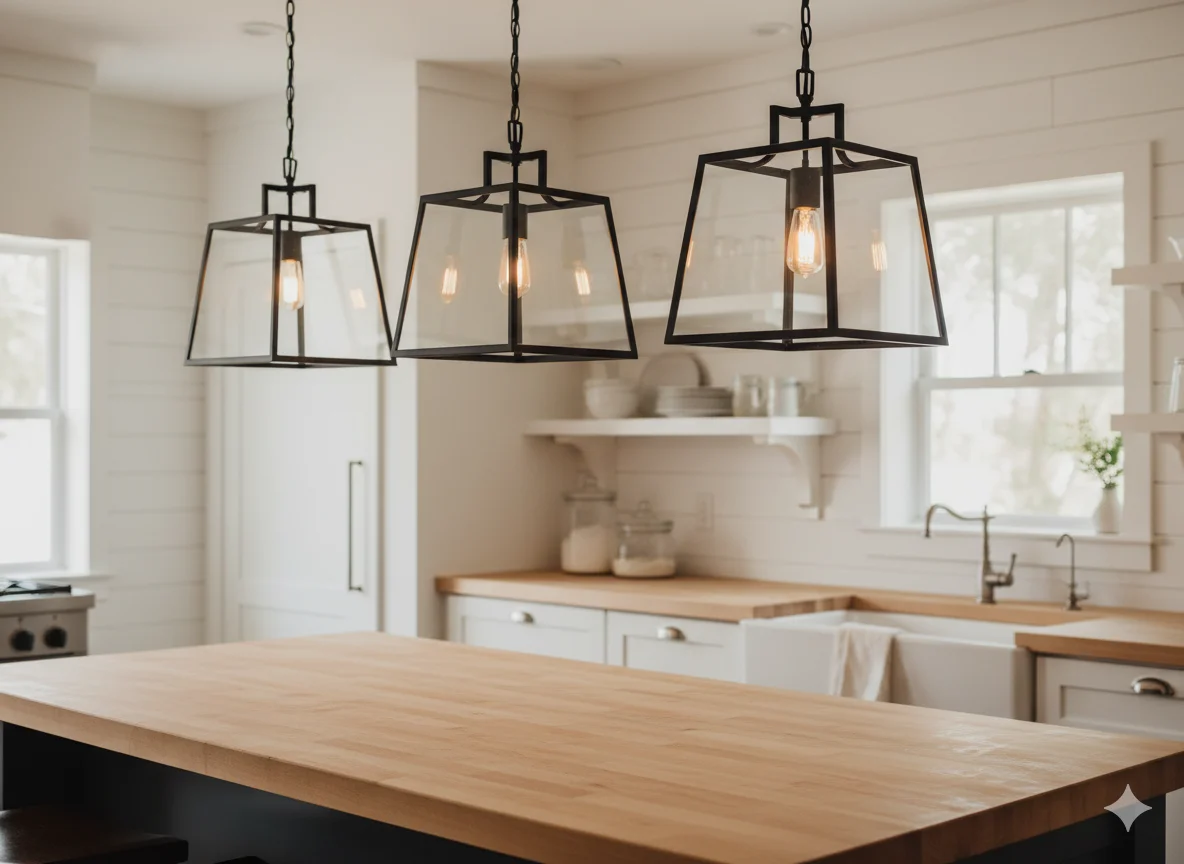
Lantern Pendant Fixtures
Lantern-style pendant lights bring architectural interest and traditional elegance to kitchen spaces. These fixtures feature geometric frames typically constructed from metal, with glass panels allowing light to transmit through the sides. Lantern pendants bridge traditional and contemporary styles effectively, making them adaptable to various kitchen designs from farmhouse to modern transitional.
The structured geometry of lantern pendants creates visual rhythm when installed in multiples above an island. Their frame-based construction provides dimensional interest without the visual weight of solid-shade fixtures, helping maintain an open, airy feeling in the kitchen. The glass panels can be clear for maximum light transmission or seeded and textured for more diffused illumination and enhanced visual character.
Contemporary lantern pendant designs range from simple rectangular forms to more ornate traditional silhouettes. Matte black metal frames deliver modern farmhouse appeal, particularly popular in current kitchen design trends. Brass or bronze finishes add warmth and sophistication suitable for traditional and transitional spaces. The size and proportions of lantern pendants should relate appropriately to your island dimensions, with taller, more substantial fixtures paired with higher ceilings and larger work surfaces.
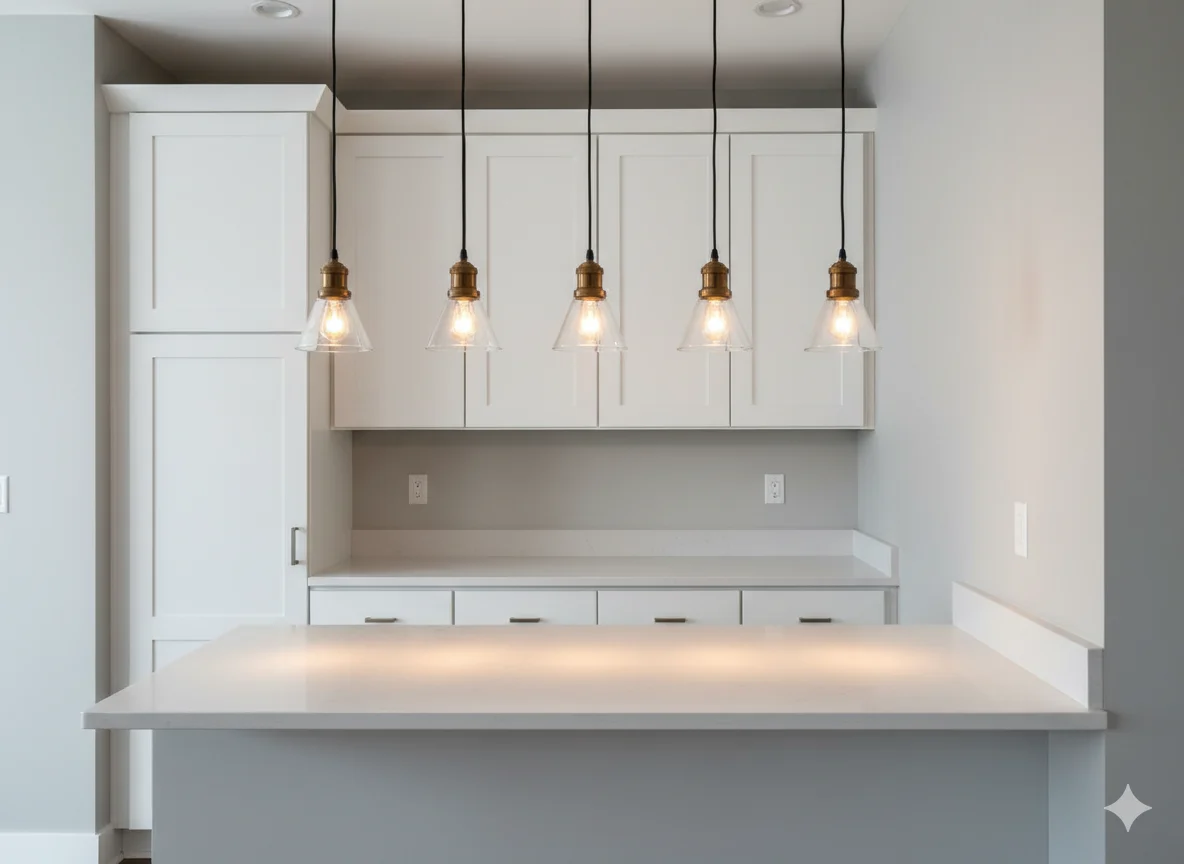
Mini Pendant Fixtures
Mini pendant lights offer scaled-down alternatives to standard pendants, providing focused task lighting without overwhelming smaller kitchen spaces. These compact fixtures typically measure eight inches or less in diameter, making them ideal for narrower islands or in situations where multiple pendants need to fit within limited spans. Despite their smaller size, mini pendants deliver substantial illumination when properly selected and positioned.
The petite proportions of mini pendants allow for creative clustering and arrangement possibilities. Installing five or seven mini pendants across a long island creates visual rhythm and comprehensive lighting coverage. Grouping multiple mini pendants at varying heights above a corner breakfast nook generates sculptural interest while providing functional illumination for casual dining.
Modern mini pendant designs embrace the same style diversity as their full-sized counterparts. Glass globe minis maintain sight lines while providing clean, contemporary appeal. Industrial-inspired cone or bell shapes deliver focused downward lighting. Decorative mini pendants with unique materials or finishes serve as jewelry-like accents that enhance overall kitchen aesthetics without demanding excessive visual attention.
Farmhouse Style Fixtures
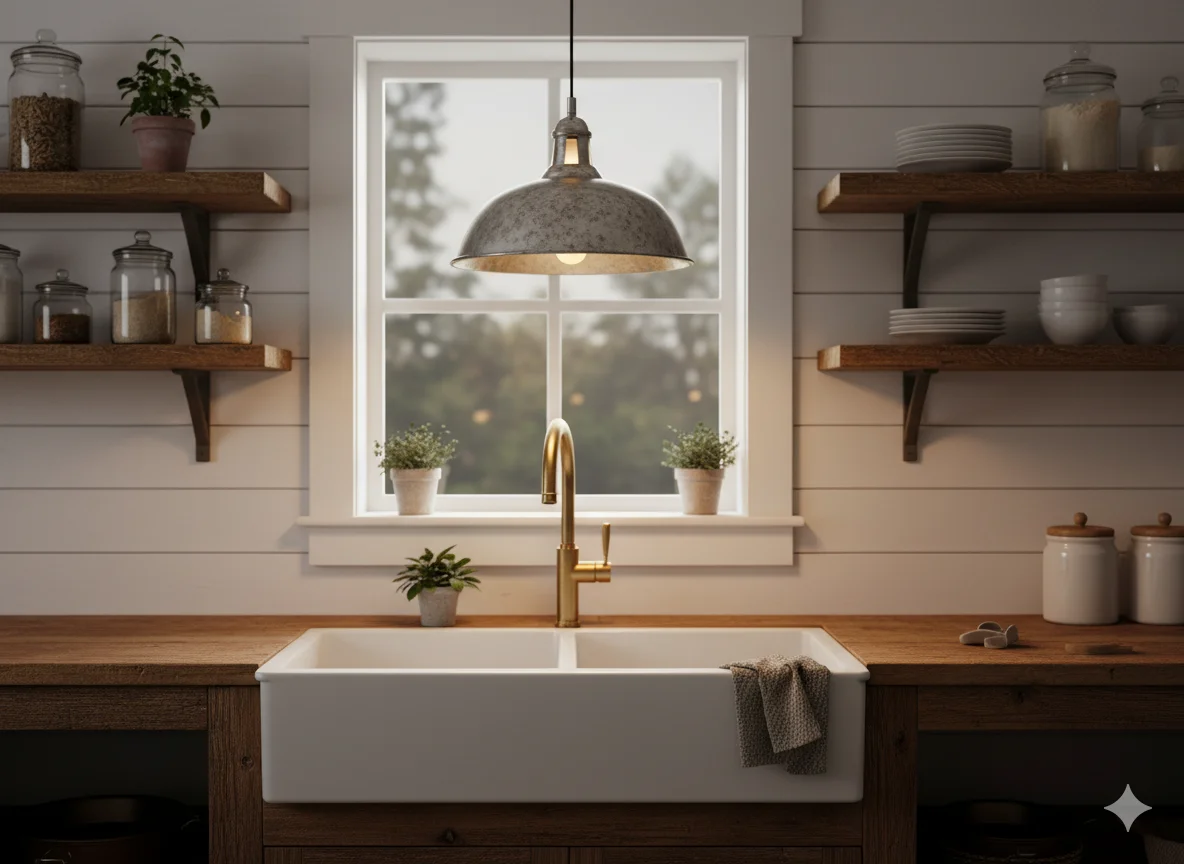
Farmhouse lighting has experienced tremendous popularity in recent years, bringing rustic charm and casual elegance to kitchen designs. These fixtures typically feature materials and finishes that evoke agricultural and pastoral origins, including weathered metals, barn-inspired silhouettes, and vintage-style detailing. Modern farmhouse fixtures balance authentic rustic character with contemporary functionality and refined execution.
Classic farmhouse pendant styles include gooseneck barn lights with curved metal shades and exposed mounting hardware. These fixtures deliver strong downward illumination while contributing distinctive visual character. Metal cage pendants with Edison bulbs bring industrial farmhouse fusion that remains tremendously popular. Wooden elements incorporated into fixtures add organic warmth and textural interest particularly valued in farmhouse kitchens.
When selecting farmhouse fixtures for your kitchen, consider how the rustic elements balance with other design choices. Farmhouse lighting works beautifully in traditional farmhouse kitchens but also provides effective contrast in more contemporary spaces, introducing warmth and character that prevents the design from feeling too austere or minimal.
Industrial Style Fixtures
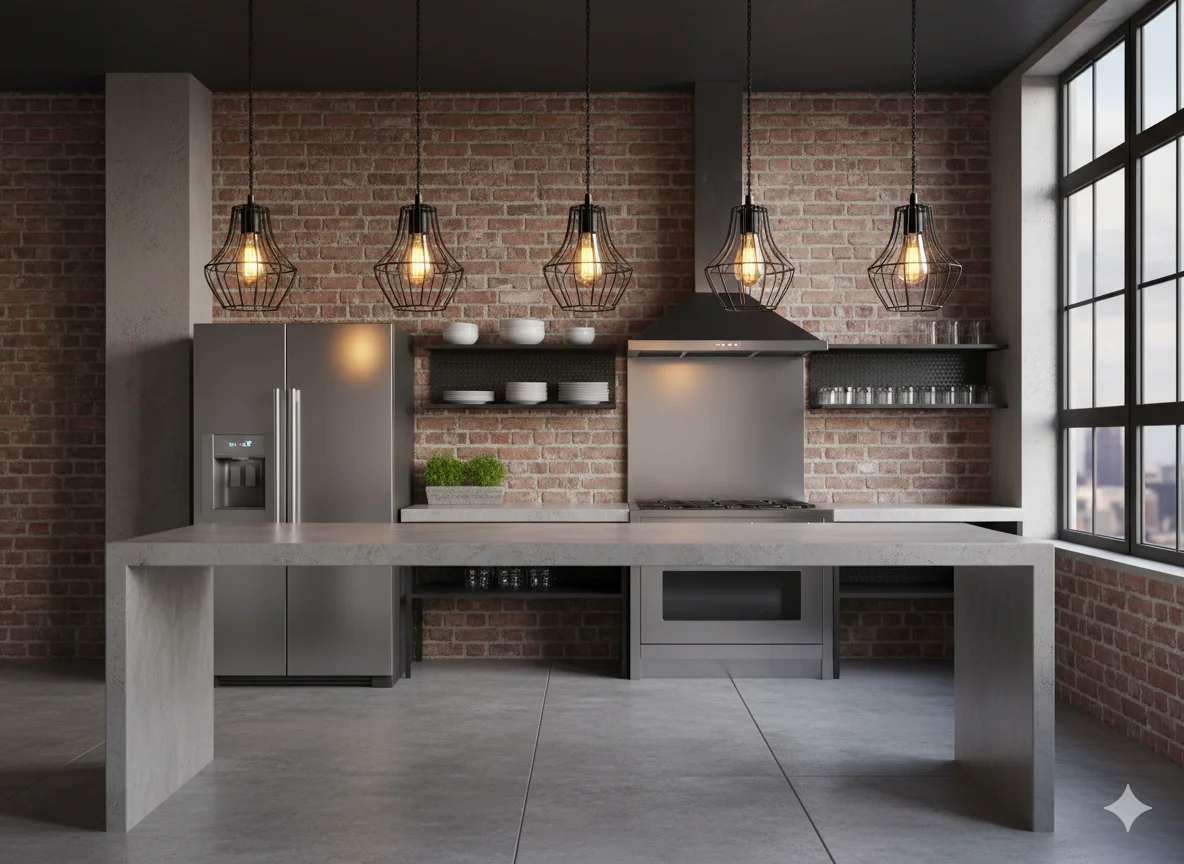
Industrial kitchen lighting draws inspiration from factories, warehouses, and commercial spaces, bringing raw materials and utilitarian forms into residential settings. These fixtures celebrate honest construction with exposed hardware, metal shades, and vintage-inspired details. Industrial lighting adds edge and character to modern kitchens while delivering practical illumination that supports kitchen activities.
Common industrial fixture characteristics include metal construction with dark finishes, visible fasteners and mounting components, cage or guard elements, and historical references to early electric lighting. Pendant fixtures dominate industrial kitchen lighting, with cone-shaped metal shades, warehouse-style bell fixtures, and cage-enclosed bulb designs representing popular choices.
Industrial fixtures work exceptionally well in loft-style spaces and urban environments where exposed architectural elements like brick walls or ductwork appear. However, they also provide effective contrast in more refined settings, preventing kitchens from feeling too precious or overly polished. The key to successfully incorporating industrial lighting involves balancing the raw, utilitarian elements with softer materials and finishes elsewhere in the kitchen design.
Contemporary Glass Fixtures
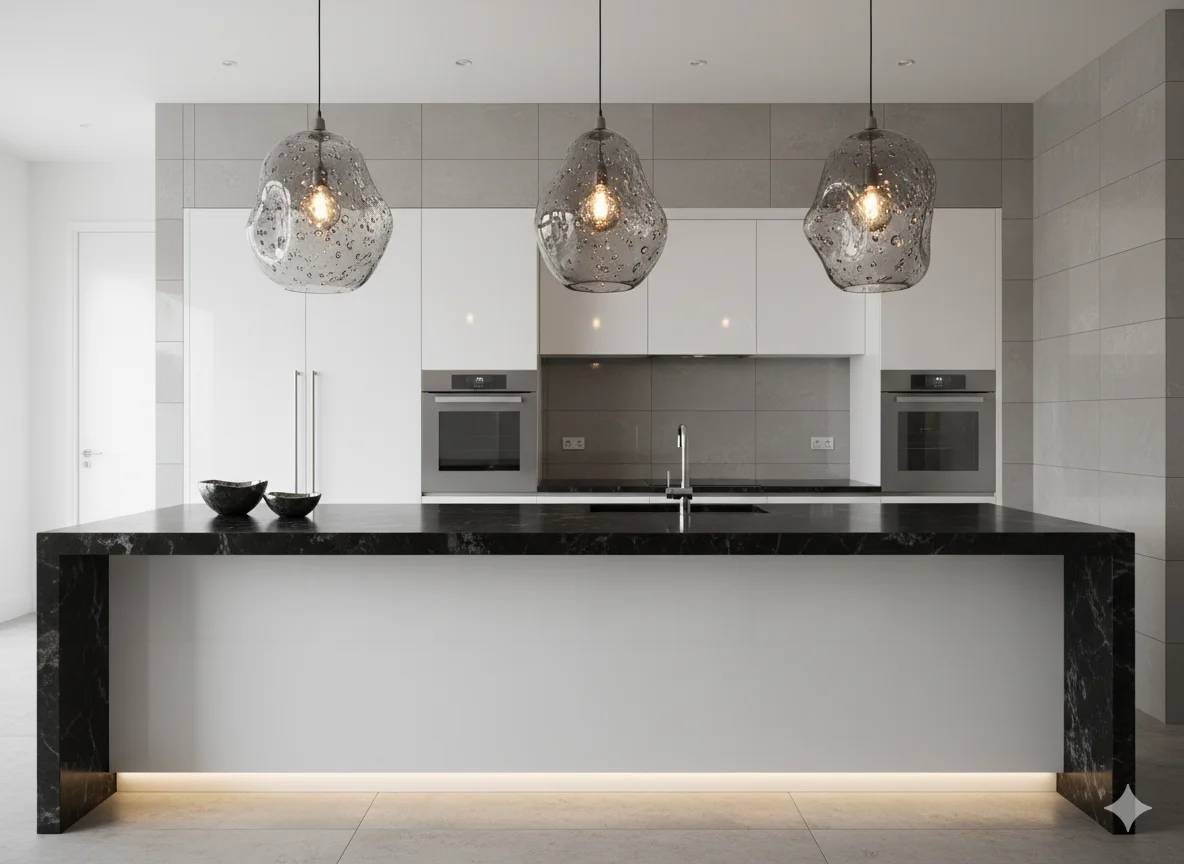
Glass remains one of the most versatile materials in modern kitchen lighting, offering transparency, light transmission, and diverse aesthetic possibilities. Contemporary glass fixtures move beyond simple clear globes to incorporate various treatments, colors, and forms that create distinctive visual effects while providing excellent illumination. The reflective and refractive properties of glass enhance light distribution, maximizing the brightness delivered by each bulb.
Modern glass pendant designs explore numerous techniques that influence both appearance and light quality. Hand-blown glass fixtures feature organic forms and subtle variations that create artisanal character. Bubble glass introduces playful texture through controlled air inclusions within the material. Colored glass options range from subtle tinting to bold saturated hues that introduce personality and coordinate with other kitchen design elements.
Layered or geometric glass fixtures bring sculptural interest to kitchen spaces, functioning as three-dimensional art pieces that happen to provide illumination. These statement fixtures work particularly well above islands where they can be appreciated from multiple angles. When selecting glass fixtures, consider how the transparency or translucency affects light distribution and whether the fixture complements or contrasts with other materials present in your kitchen design.
Metal Finish Coordination
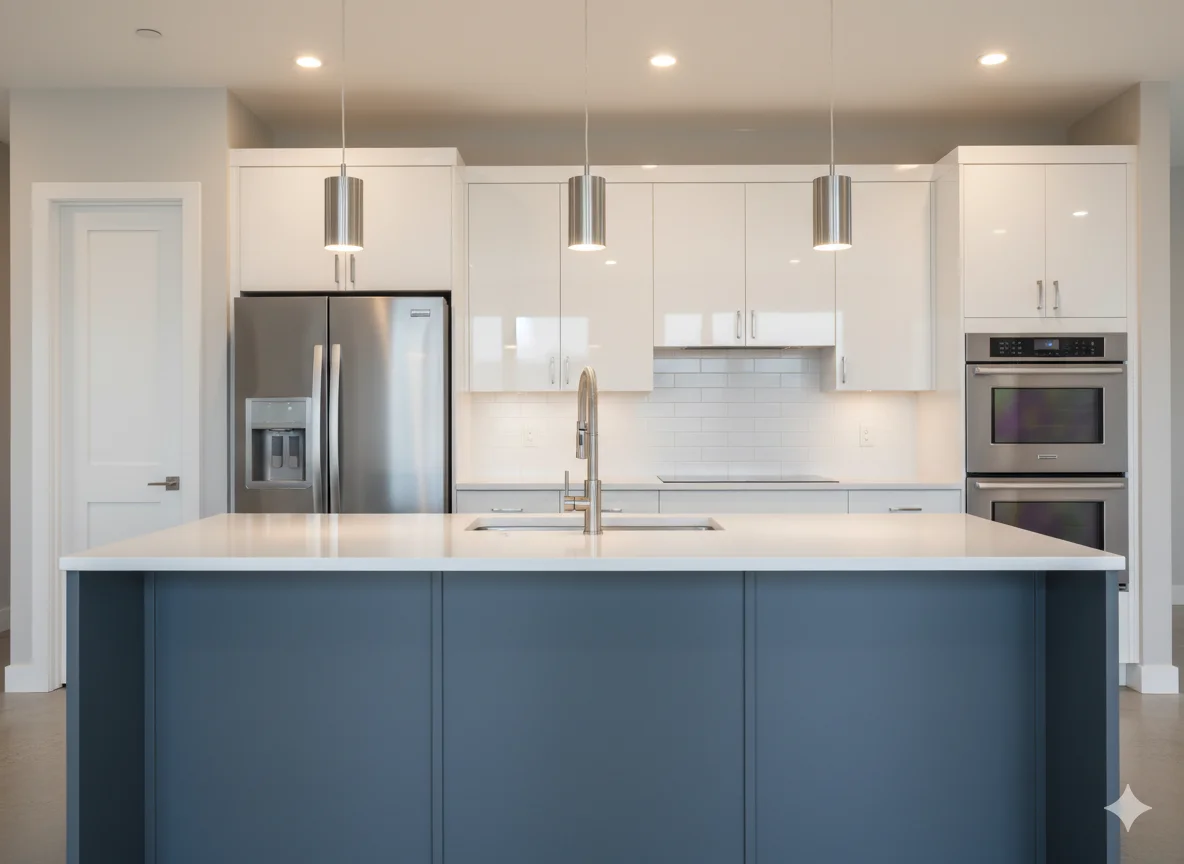
The finish of your light fixtures plays a crucial role in creating visual cohesion throughout the kitchen. Modern kitchens typically feature multiple metal finishes across various elements including cabinet hardware, faucets, appliances, and lighting. Coordinating these finishes thoughtfully prevents the space from feeling chaotic or visually disjointed while allowing for interest through intentional contrast.
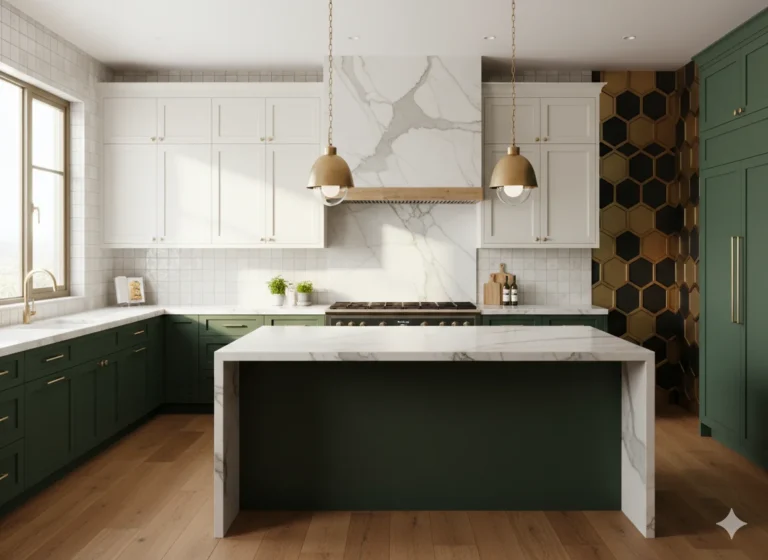
Popular metal finishes for modern kitchen fixtures include matte black for bold contemporary statements, brushed nickel for versatile neutrality, brass and gold tones for warmth and sophistication, and bronze and copper for rich, traditional appeal. Many designers recommend selecting one dominant metal finish that appears in multiple applications, then introducing one or two accent finishes in smaller doses for visual interest.
When coordinating fixture finishes with kitchen hardware, exact matching proves less important than maintaining similar tonal qualities and levels of sheen. Mixing matte and polished finishes within the same color family creates depth without appearing mismatched. The key involves establishing a deliberate pattern rather than random variation that might appear unintentional or poorly planned.
Smart Lighting Integration
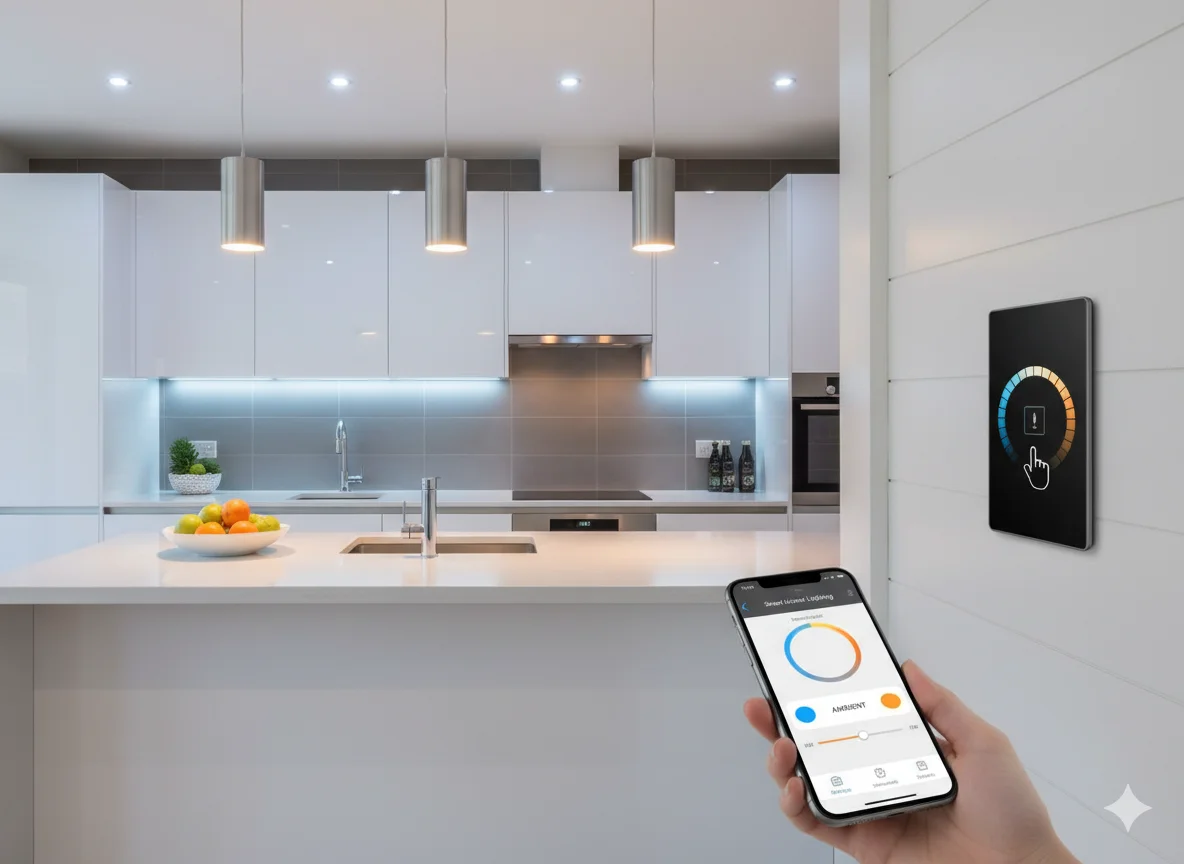
Smart technology has transformed kitchen lighting from static systems into dynamic, adaptable solutions that respond to changing needs throughout the day. Modern smart fixtures and controls offer dimming capabilities, color temperature adjustment, scheduling functions, and voice or app control that enhance both convenience and functionality. Integrating smart lighting into your kitchen creates a space that adapts to various activities and moods.
Smart dimmer switches represent the simplest entry point into intelligent kitchen lighting. These devices replace standard switches and allow wireless control of brightness levels through smartphone apps or voice assistants. More advanced systems incorporate scene programming, where preset lighting configurations activate with single commands. You might establish a bright cooking scene for food preparation, a softer dining scene for meals, and a dim evening scene for casual conversation.
Color-tunable LED fixtures offer even greater flexibility by allowing adjustment of the light’s warmth or coolness. Cooler color temperatures around 4000K to 5000K enhance focus and alertness for cooking tasks. Warmer temperatures around 2700K to 3000K create relaxing ambiance for dining and entertaining. Smart systems can automate these adjustments based on time of day, gradually shifting from energizing cool tones in the morning to cozy warm tones in the evening.
LED Technology Advantages
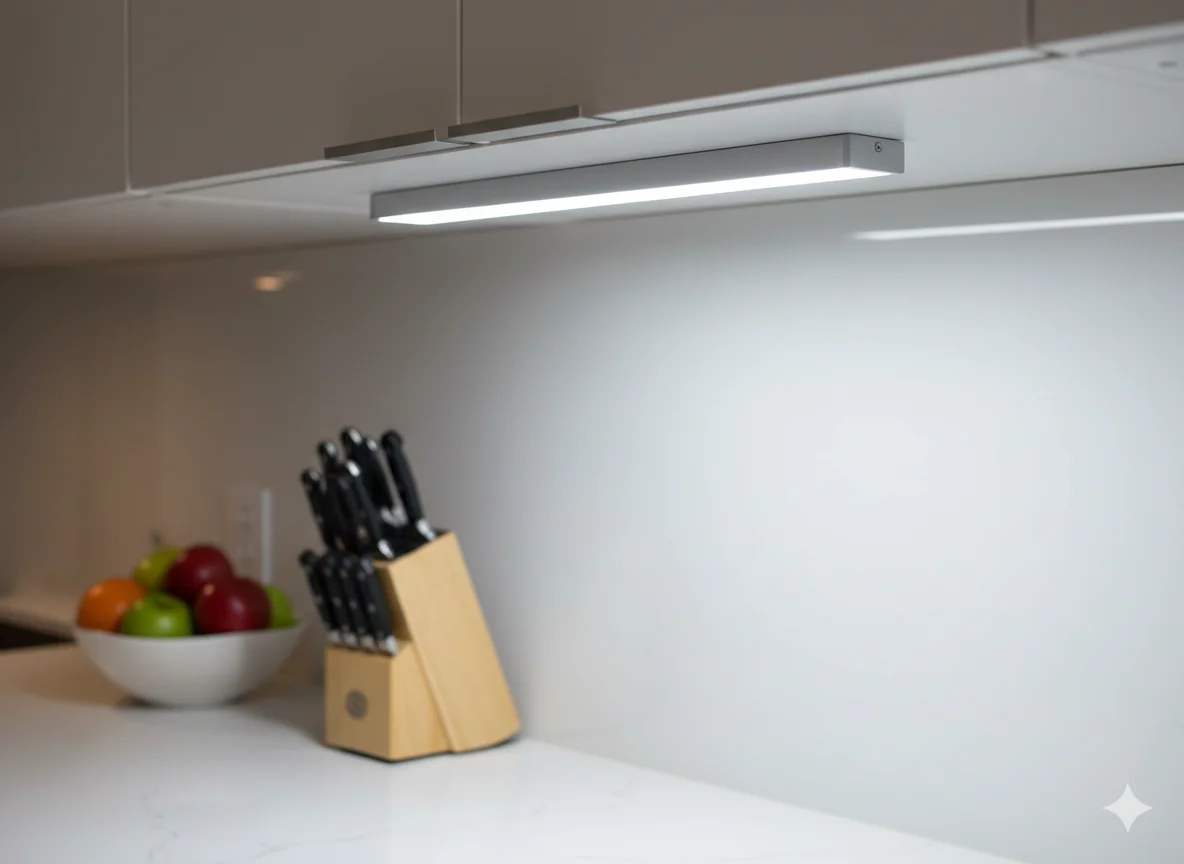
LED technology has revolutionized kitchen lighting by offering superior energy efficiency, exceptional longevity, and design flexibility that traditional bulb types cannot match. Modern LED fixtures consume up to 75 percent less energy than incandescent alternatives while lasting 25 times longer. These advantages translate into reduced electricity costs and dramatically decreased maintenance requirements, particularly valuable in kitchens where lights operate for extended periods daily.
Beyond efficiency and durability, LED technology enables design innovations that expand creative possibilities for kitchen lighting. Integrated LED fixtures feature light sources built permanently into the fixture housing, allowing ultra-slim profiles and seamless designs impossible with traditional bulb sockets. LED strip lighting creates continuous runs of illumination ideal for under-cabinet applications and architectural accent lighting.
The quality of LED light has improved substantially in recent years, with modern fixtures offering excellent color rendering that presents food, finishes, and materials accurately. When selecting LED fixtures, look for Color Rendering Index ratings above 90 for optimal color accuracy. Dimmable LED fixtures provide additional versatility, though they require compatible dimmer switches specifically designed for LED technology.
Installation Height Guidelines
Proper fixture installation height proves critical for both functionality and aesthetics in kitchen lighting. Incorrect positioning can result in inadequate illumination, uncomfortable glare, or obstructed sight lines that diminish the kitchen’s usability and appeal. While specific recommendations vary based on fixture type and application, several general guidelines ensure optimal results.
For pendant lights above kitchen islands, the standard recommendation calls for mounting the bottom of the fixture 30 to 36 inches above the counter surface. This positioning provides adequate task lighting while maintaining comfortable sight lines across the island. In kitchens with particularly tall or short ceilings, these measurements may require adjustment to maintain proper proportions and functionality.
Flush and semi-flush mount fixtures require consideration of ceiling height rather than distance from work surfaces. Standard eight-foot ceilings accommodate flush mounts effectively, while nine to ten-foot ceilings work better with semi-flush fixtures that drop several inches below the ceiling plane. Recessed lighting placement depends on the overall layout and intended lighting effect, though spacing recessed fixtures approximately four to six feet apart typically provides even ambient illumination throughout the kitchen.
Choosing Fixture Scale
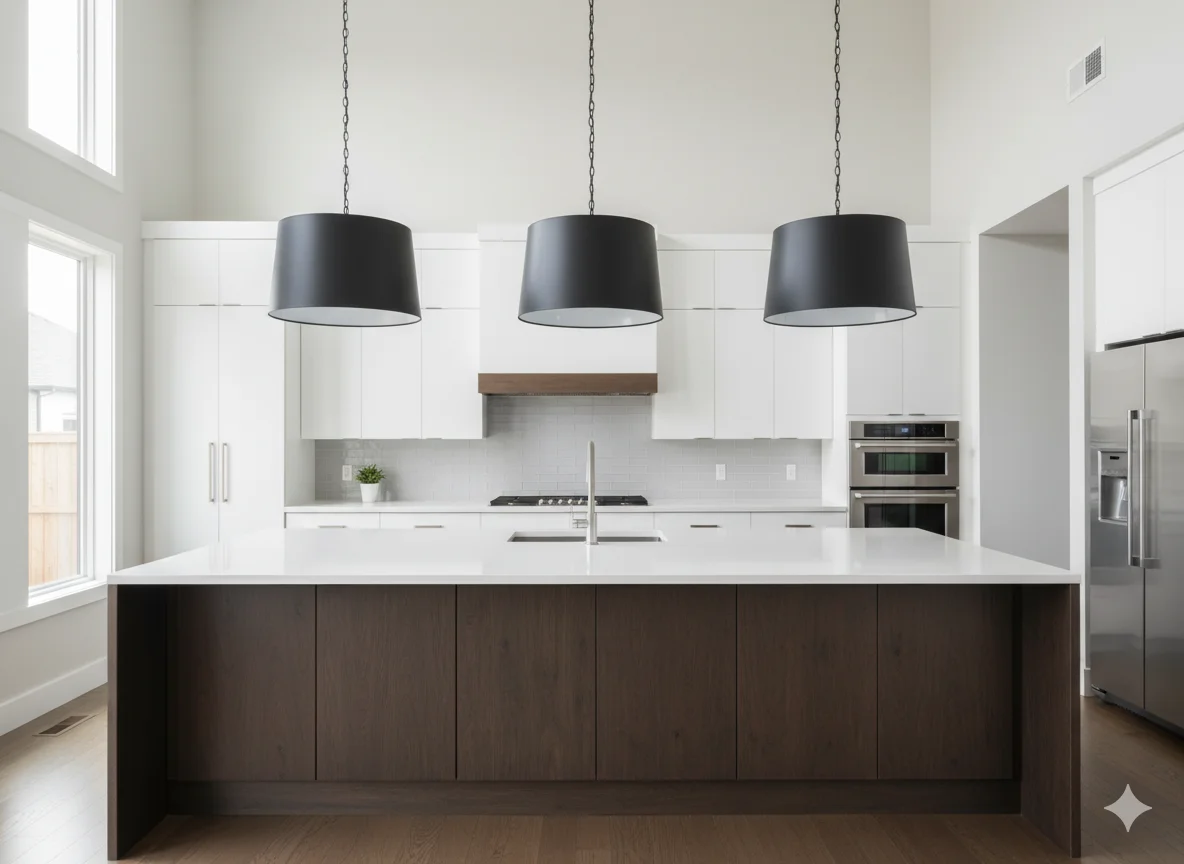
The physical size and visual weight of light fixtures must relate appropriately to the spaces they illuminate and the surrounding design elements. Oversized fixtures overwhelm small kitchens while diminutive fixtures disappear ineffectively in large spaces. Developing an eye for proper scale ensures your lighting choices enhance rather than detract from your kitchen’s overall design.
For pendant lights above islands, fixture diameter should relate to both the island width and the spacing between multiple pendants. A common guideline suggests the combined width of all pendants should equal approximately two-thirds to three-quarters of the island length. Individual pendant diameters typically range from 10 to 20 inches depending on island size and ceiling height.
When selecting chandeliers or substantial statement fixtures, ensure adequate clearance remains around the fixture perimeter. A chandelier above a dining table or island should be at least six inches narrower than the table width on each side, allowing comfortable movement around the space. Consider the fixture’s visual weight in addition to its physical dimensions, as open, transparent designs appear lighter than solid, opaque fixtures of the same size.
Creating Lighting Layers
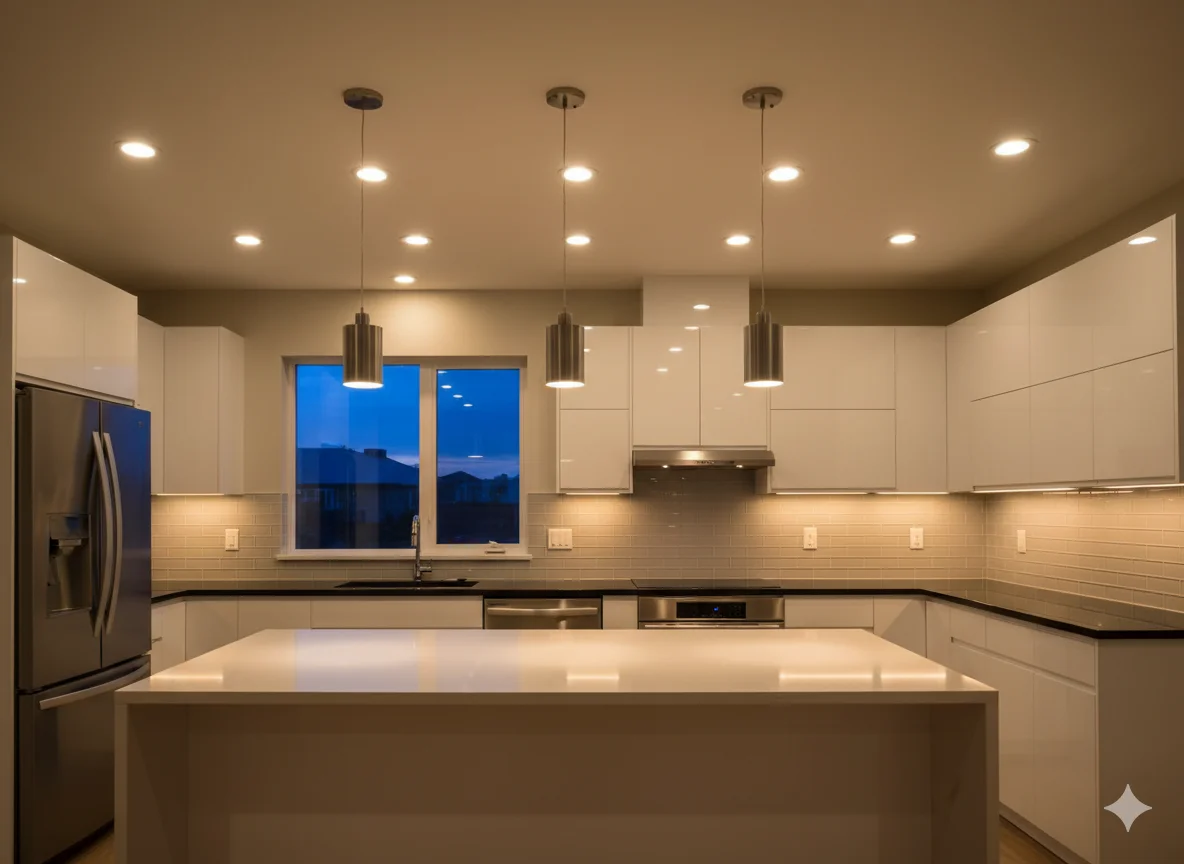
The most successful kitchen lighting designs incorporate multiple fixture types working together to create comprehensive illumination that supports various activities and moods. This layered approach combines ambient, task, and accent lighting through careful fixture selection and placement. Understanding how different fixtures contribute to each lighting layer allows you to develop a cohesive plan that delivers both functionality and aesthetic appeal.
Ambient lighting establishes the foundational brightness level throughout the kitchen. Recessed fixtures, flush mounts, or semi-flush mounts typically provide this layer, delivering widespread illumination that eliminates dark corners and provides general navigability. This layer should be bright enough for safe movement but not so intense that it creates harsh glare or prevents comfortable extended occupation of the space.
Task lighting supplements ambient illumination with focused brightness in specific work zones. Under-cabinet fixtures, pendant lights above islands, and directional track lights serve this purpose, ensuring adequate visibility for detailed activities like food preparation, cooking, and cleanup. Accent lighting introduces visual interest and depth through highlighting architectural features, illuminating display items, or creating focal points that add sophistication to the overall design.
Conclusion
Modern kitchen light fixtures offer homeowners unprecedented opportunities to create spaces that balance functional excellence with aesthetic sophistication. The 22 fixture types explored in this guide represent the diverse options available for illuminating contemporary kitchens, from practical recessed lighting to dramatic chandelier statements. Success in kitchen lighting design comes from understanding how different fixtures serve specific purposes within a comprehensive lighting plan that addresses ambient, task, and accent illumination needs.
The most effective kitchen lighting combines multiple fixture types in thoughtful arrangements that provide flexibility for various activities and moods. Consider how pendant lights above an island can work in harmony with under-cabinet task lighting and recessed ambient fixtures to create a complete system. Pay attention to finish coordination, proper installation heights, and appropriate fixture scales to ensure your lighting choices integrate seamlessly with the overall kitchen design.
As you plan your kitchen lighting, remember that these fixtures represent long-term investments in your home’s functionality and appeal. Take time to evaluate your specific needs, consider how you use your kitchen throughout the day, and select fixtures that will serve you well for years to come. With careful planning and thoughtful selection, modern kitchen light fixtures transform cooking spaces into beautifully illuminated environments that enhance daily life while showcasing your personal style.
Frequently Asked Questions
What is the best type of lighting for a kitchen?
The best kitchen lighting combines multiple types working together. Use recessed or flush mount fixtures for ambient lighting, pendant lights above islands for task lighting, and under-cabinet fixtures to eliminate shadows on countertops. This layered approach provides comprehensive illumination for all kitchen activities while creating visual interest and flexibility.
How many pendant lights do I need over my kitchen island?
The number depends on your island length and pendant size. Standard guidelines suggest two pendants for islands up to five feet long, three pendants for islands six to eight feet long, and four or more for longer islands. Space pendants 24 to 30 inches apart and ensure the combined width of all fixtures equals approximately two-thirds of the island length.
What color temperature is best for kitchen lighting?
Kitchen lighting works best between 2700K and 4000K. Warmer temperatures around 2700K to 3000K create inviting ambiance for dining and entertaining. Cooler temperatures around 3500K to 4000K provide energizing light for food preparation and cooking tasks. Many homeowners choose 3000K as a balanced middle ground that works well for all kitchen activities.
How high should pendant lights hang above a kitchen island?
Install pendant lights so the bottom of the fixture hangs 30 to 36 inches above the island counter surface. This height provides adequate task lighting without obstructing sight lines across the island. For kitchens with particularly high ceilings above nine feet, you may extend this distance slightly to maintain proper visual proportions.
Should kitchen light fixtures match cabinet hardware?
Kitchen light fixtures should coordinate with cabinet hardware rather than match exactly. Select finishes within the same color family and similar sheen levels for visual cohesion. Many designers recommend choosing one dominant metal finish for lighting and hardware, then introducing one accent finish in smaller doses to create interest without appearing chaotic or unplanned.