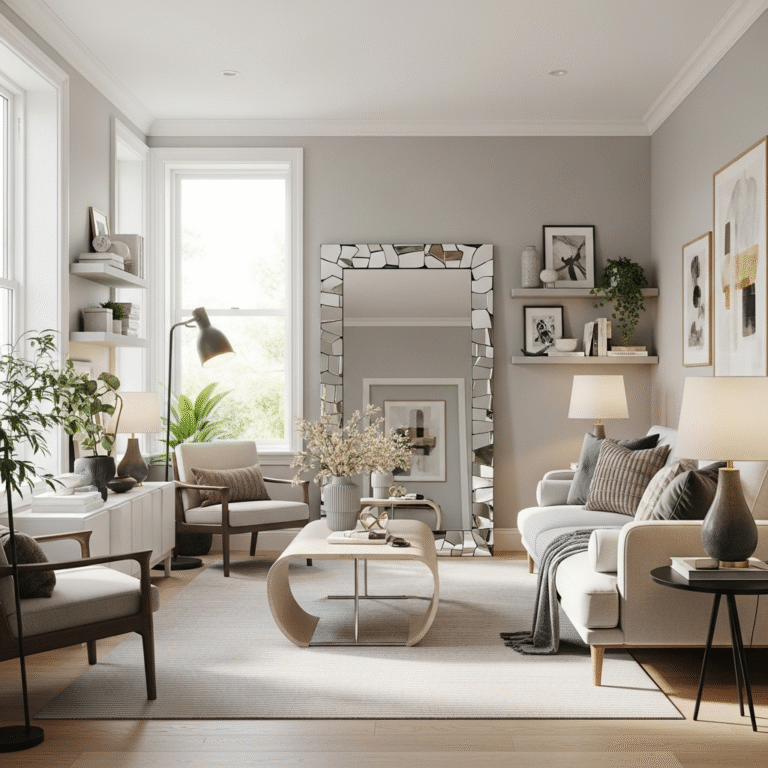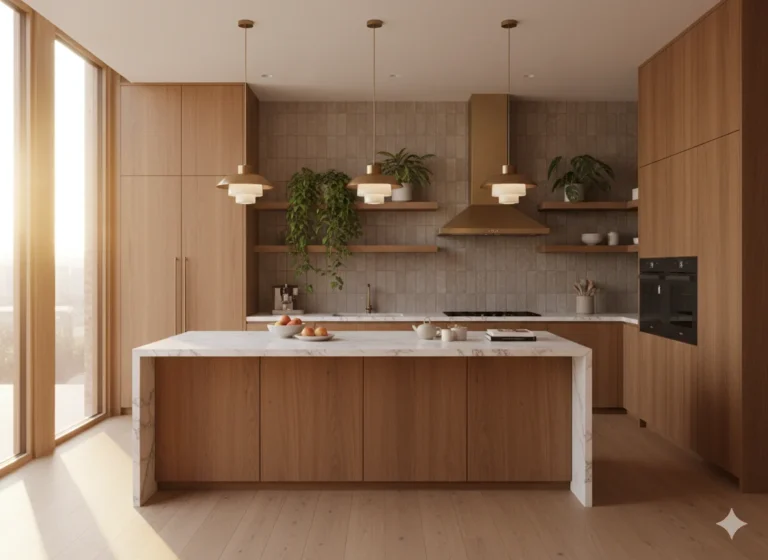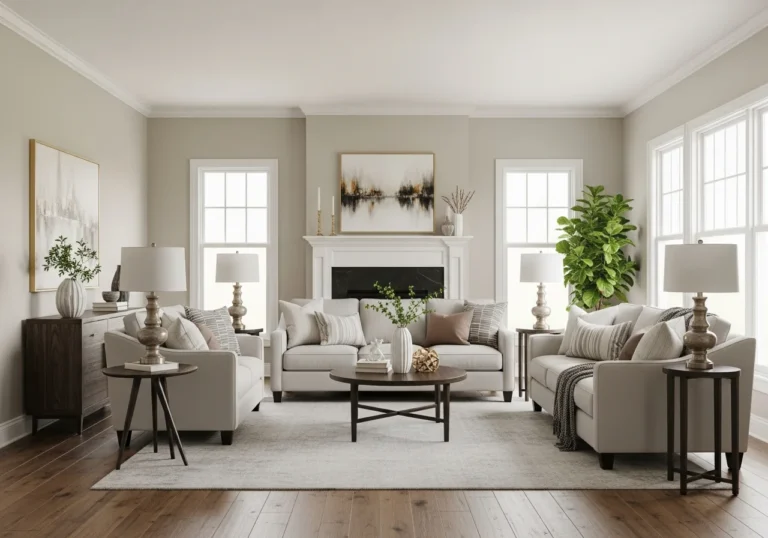
22 Kitchen Inspo Ideas For Cozy Modern Dream Homes
The kitchen has transformed from a purely functional workspace into the emotional center of the modern home. Today’s most inspiring kitchens blend warmth with sophistication, creating spaces that feel both lived-in and beautifully designed. Whether you’re planning a complete renovation or seeking fresh ideas to refresh your current space, these 22 kitchen inspiration concepts will help you craft a room that balances contemporary style with inviting comfort.
Natural Wood Cabinets Make a Powerful Comeback
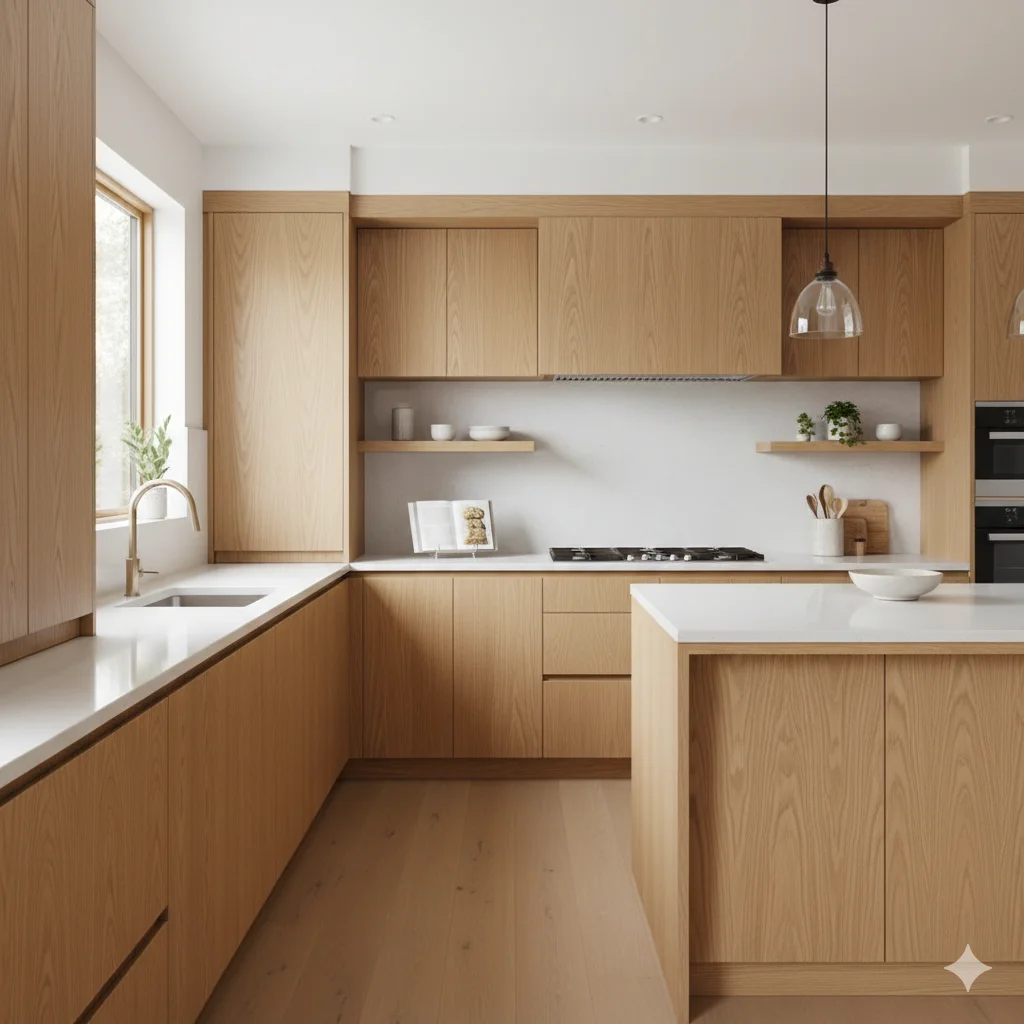
The movement away from all-white kitchens continues to gain momentum as homeowners rediscover the soul-warming qualities of natural wood. Unlike the heavy, dark wood cabinets of previous decades, contemporary wood cabinetry embraces lighter tones and cleaner profiles that feel both modern and timeless.
Oak, walnut, and maple cabinets with visible grain patterns bring organic texture into your kitchen without overwhelming the space. The key lies in pairing these natural finishes with simpler door styles that let the wood’s inherent beauty take center stage. Flat-panel or minimal shaker profiles work particularly well, creating visual interest through material rather than ornamentation.
Consider a two-toned approach where perimeter cabinets feature natural wood while the island showcases a complementary painted finish. This strategy grounds the room while maintaining enough contrast to define different functional zones within your kitchen layout.
Embrace Warm Neutral Color Palettes
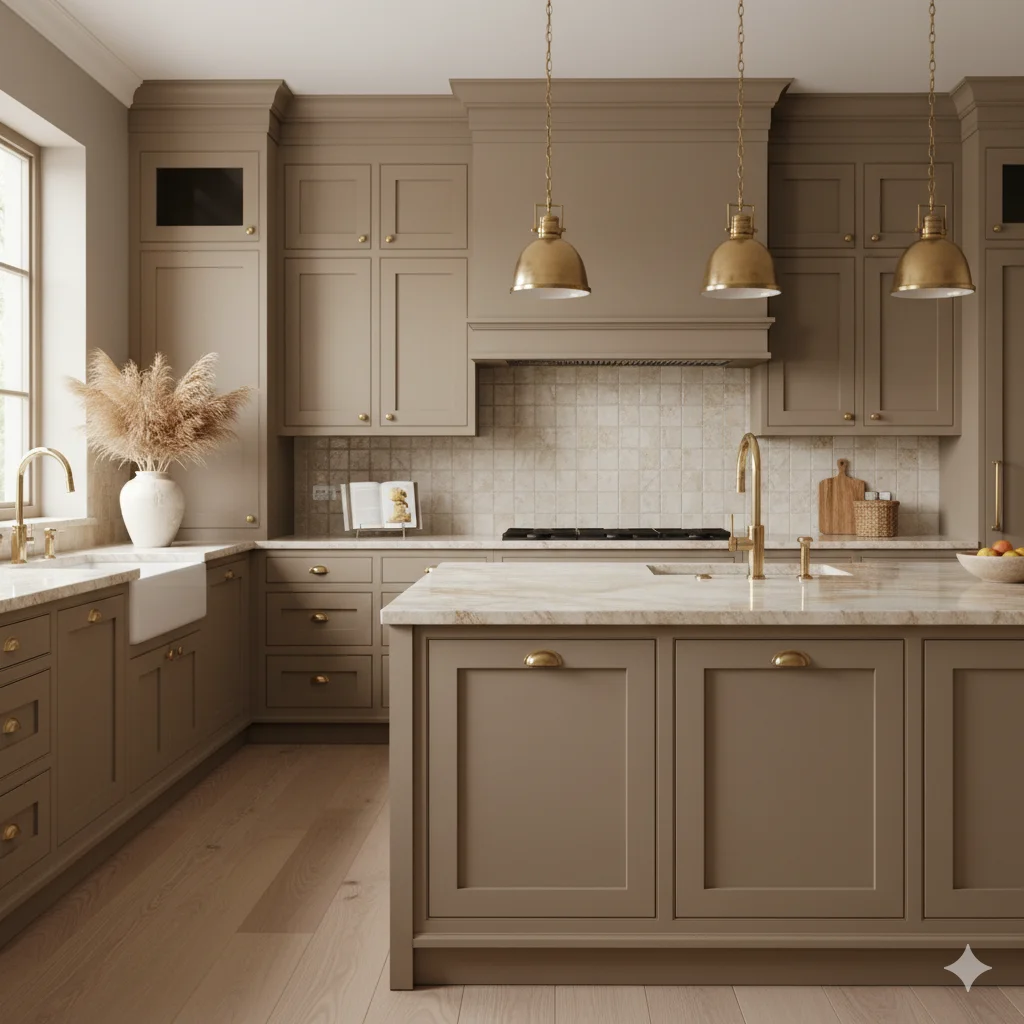
Stark white kitchens are giving way to softer, earthier tones that create calmer, more inviting environments. Think mushroom gray, warm taupe, creamy alabaster, and gentle putty shades that wrap your kitchen in subtle sophistication.
These refined neutrals offer the same light-reflecting properties as bright white but with added depth and warmth. They hide everyday wear better than pure white while creating a backdrop that feels both current and enduring. The beauty of warm neutrals lies in their versatility. They pair effortlessly with natural wood accents, brass fixtures, and stone countertops, creating layered spaces that feel collected rather than designed all at once.
For those hesitant to commit fully, start with warm neutral walls while keeping cabinetry in traditional tones. You can always introduce bolder warm hues through your kitchen island, which serves as a natural focal point and allows for more adventurous color choices.
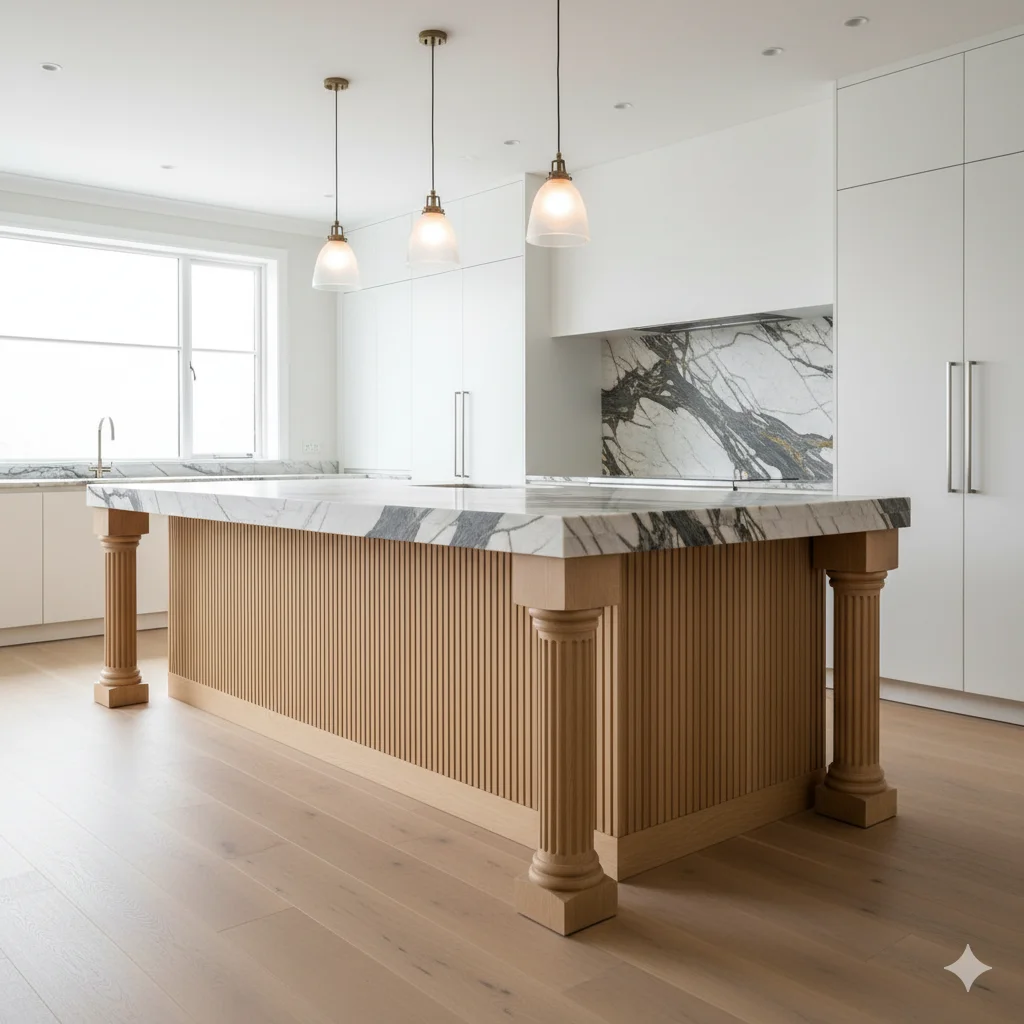
The Sculptural Kitchen Island Takes Center Stage
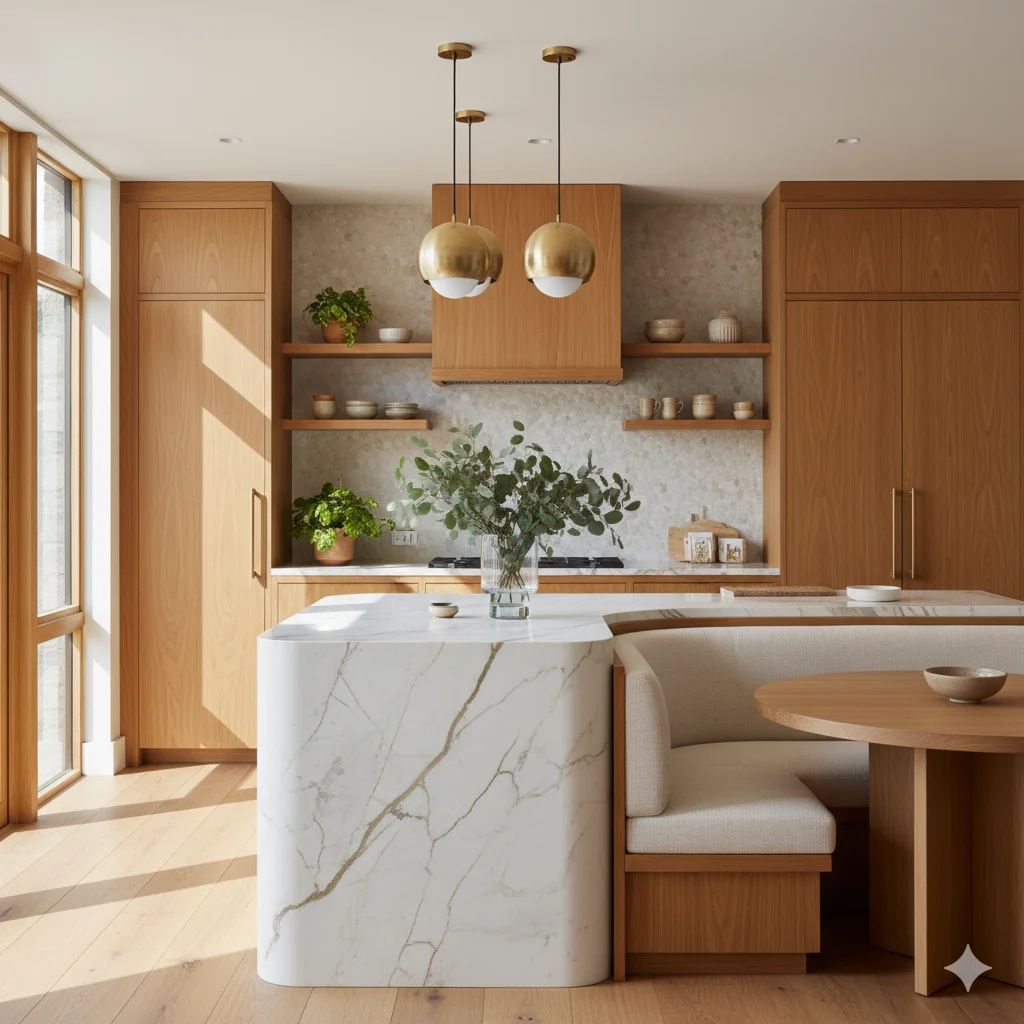
Kitchen islands have evolved from simple countertop extensions into statement pieces that define a room’s personality. Modern islands incorporate curved edges, fluted details, waterfall countertops, and furniture-inspired legs that transform them from utilitarian features into works of functional art.
A sculptural island draws the eye immediately upon entering the kitchen, setting the tone for the entire space. Consider materials that emphasize this architectural quality like thick stone slabs with dramatic veining, richly textured wood, or even custom millwork with intricate detailing.
The most successful sculptural islands balance visual weight with practical function. Built-in seating, hidden storage, and integrated appliances ensure your showpiece remains as useful as it is beautiful. Scale matters here as well. In larger kitchens, a substantial island anchors the space, while in more compact layouts, a well-proportioned piece with elegant detailing creates impact without overwhelming the room.
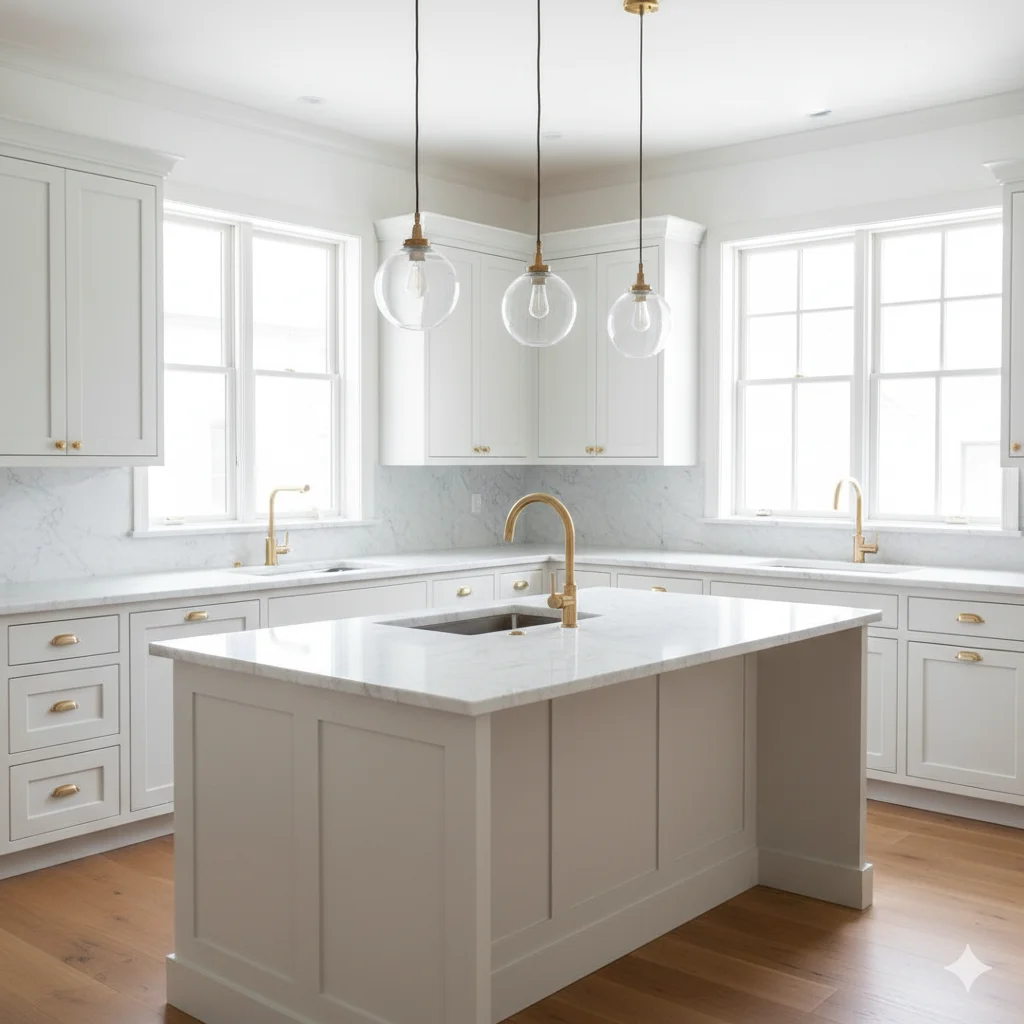
Shaker Cabinets Remain Timelessly Versatile
The enduring appeal of shaker-style cabinetry lies in its ability to adapt to virtually any design aesthetic. These five-piece doors with their recessed center panels and clean lines provide just enough visual interest without competing with other design elements in your kitchen.
What makes shaker cabinets particularly relevant for current kitchen inspiration is their chameleon-like quality. Paint them crisp white for a traditional feel, choose deep navy for drama, or leave them in natural wood for warmth. The simple profile accommodates all these treatments equally well.
Modern interpretations of shaker design feature slimmer profiles and more refined proportions than traditional versions. These updated takes maintain the style’s classic appeal while feeling lighter and more contemporary. Consider mixing shaker uppers with flat-panel lowers, or using shaker doors with minimal hardware for a sleeker presentation.
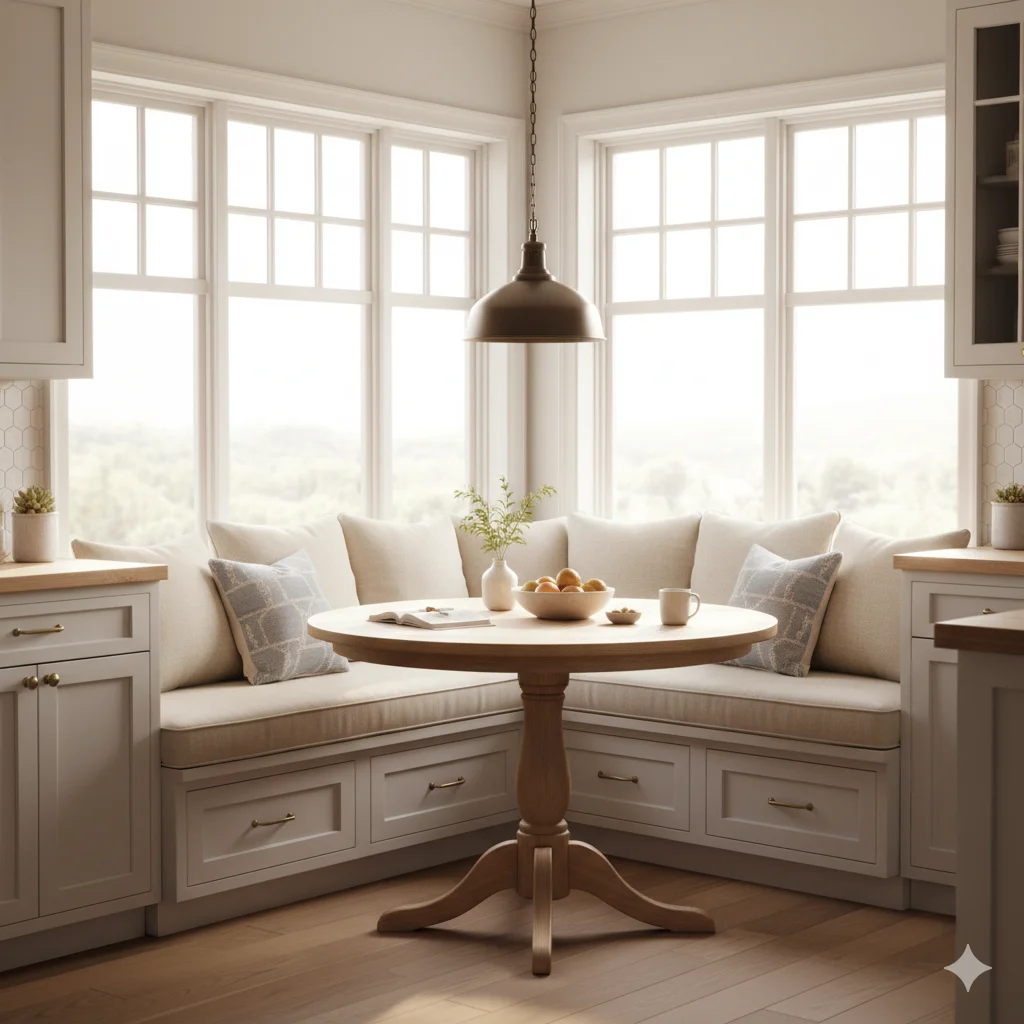
Create Cozy Gathering Spots with Banquette Seating
Built-in banquettes transform unused corners into intimate dining nooks that encourage lingering over morning coffee or evening meals. These upholstered seating areas bring living room comfort into the kitchen, blurring the lines between cooking and lounging spaces.
The practical benefits extend beyond aesthetics. Banquettes maximize seating capacity in compact footprints and often incorporate storage beneath cushions. They also define eating areas in open-concept layouts without requiring walls or screens.
For the coziest effect, position your banquette near windows to capture natural light, add plush cushions in durable fabrics, and include a mix of throw pillows that can be easily updated with changing seasons or moods. Pair the built-in seating with a substantial table that can accommodate both casual meals and larger gatherings.
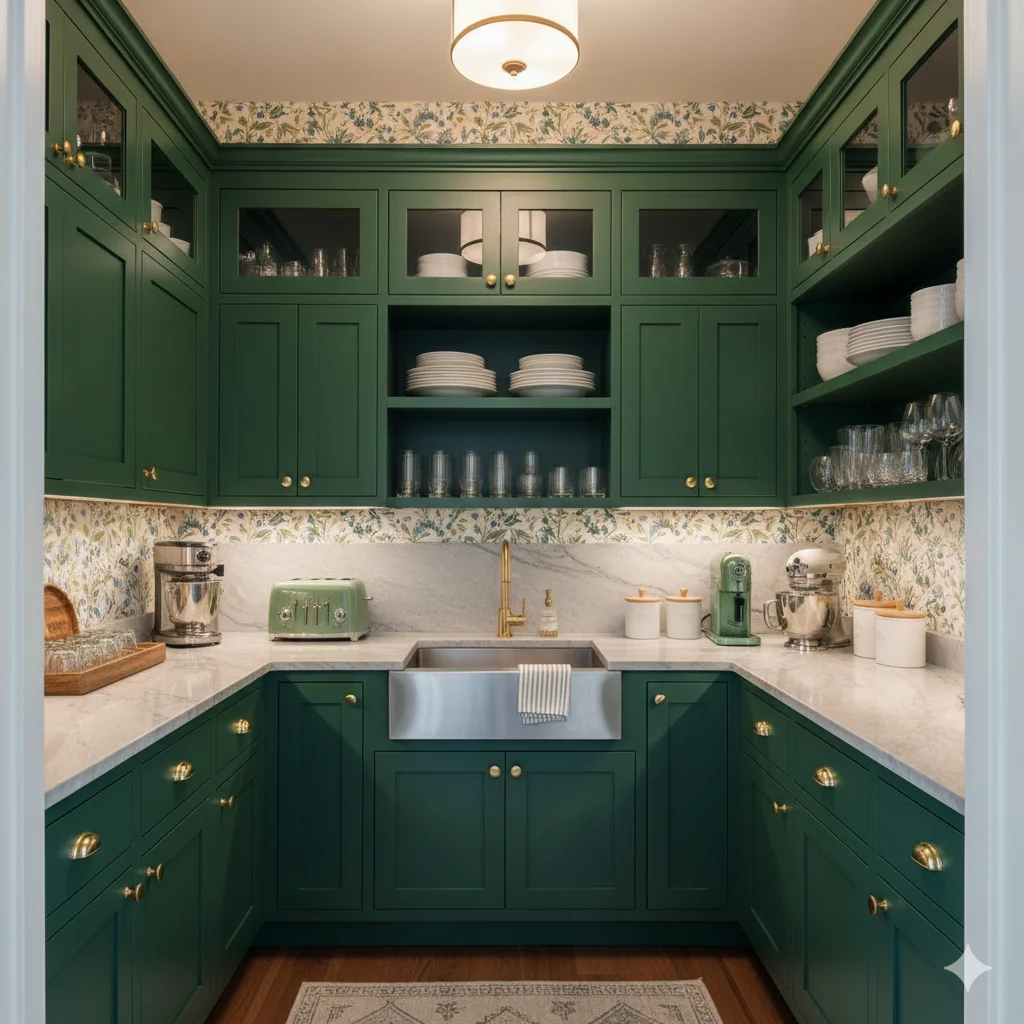
Butler’s Pantries and Sculleries Answer Storage Needs
The hidden workhorse kitchen has become a highly coveted feature in modern home design. Butler’s pantries, sculleries, and appliance garages keep small appliances accessible yet invisible, allowing main kitchens to remain calm and uncluttered.
These secondary spaces handle the messy reality of cooking while your primary kitchen maintains its composed appearance. Store mixers, blenders, toasters, and other countertop clutter behind closed doors, along with backup dishware, serving pieces, and bulk pantry items.
Design these support spaces with the same attention as your main kitchen. Good lighting, durable surfaces, and thoughtful organization systems turn them into efficient prep zones. Many homeowners feel emboldened to take design risks in these more private areas, experimenting with bold tile patterns, moody paint colors, or fun wallpapers they might hesitate to use in the main space.
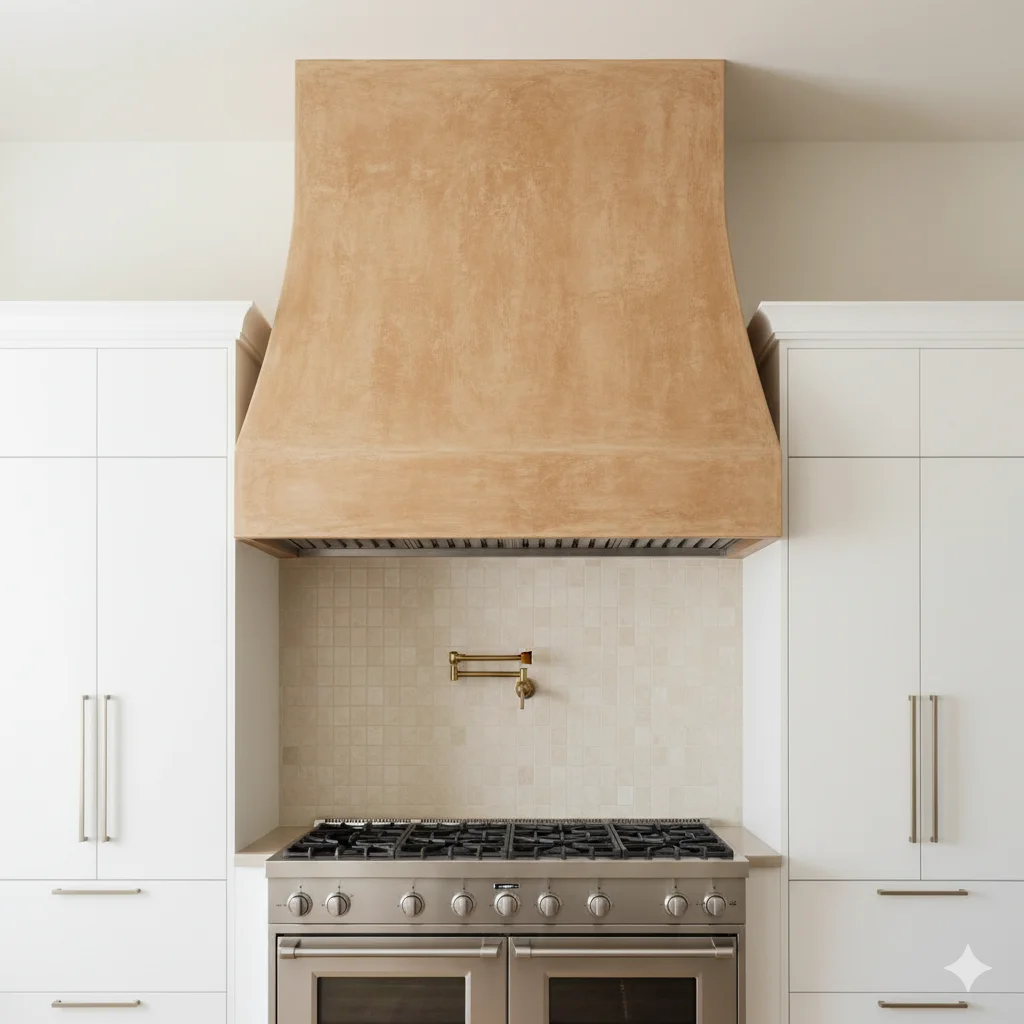
Statement Range Hoods as Architectural Features
The range hood offers an often-overlooked opportunity to introduce architectural drama into your kitchen. Rather than treating it as a purely functional necessity, consider custom designs that transform this element into a striking focal point.
Venetian plaster treatments, wood panel cladding, hammered metal finishes, or substantial stone surrounds all elevate the humble hood into something special. The key lies in proportion and materials that complement your overall design scheme while adding textural interest.
For kitchens with high ceilings, a substantial hood that extends upward draws the eye and balances vertical space. In more modest ceiling heights, a streamlined integrated hood maintains clean lines while still commanding attention through material choice and finish.
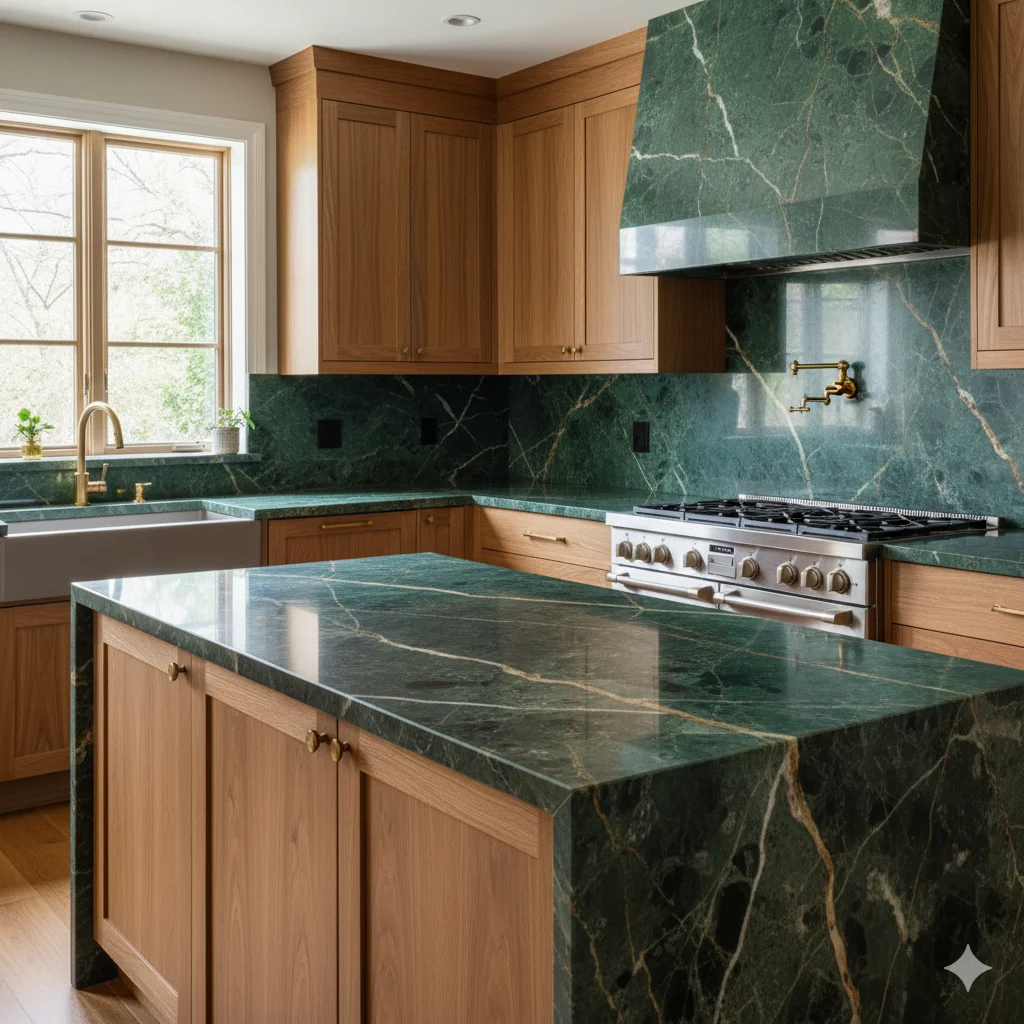
Green Stone Countertops Bring Natural Drama
Colorful stone countertops, particularly in green tones, inject personality and natural beauty into kitchen designs. From deep forest hues to lighter sage tones, green stone offers a sophisticated alternative to traditional granite and marble selections.
These countertops work especially well in kitchens with natural wood cabinetry, creating harmonious connections to nature. They also pair beautifully with brass fixtures and warm metallic accents, which complement rather than compete with the stone’s organic coloring.
When selecting green stone, consider how the veining and patterning will scale in your space. Large slabs with bold veining make dramatic statements in spacious kitchens, while more subtle patterns work better in compact layouts where busy surfaces might feel overwhelming.
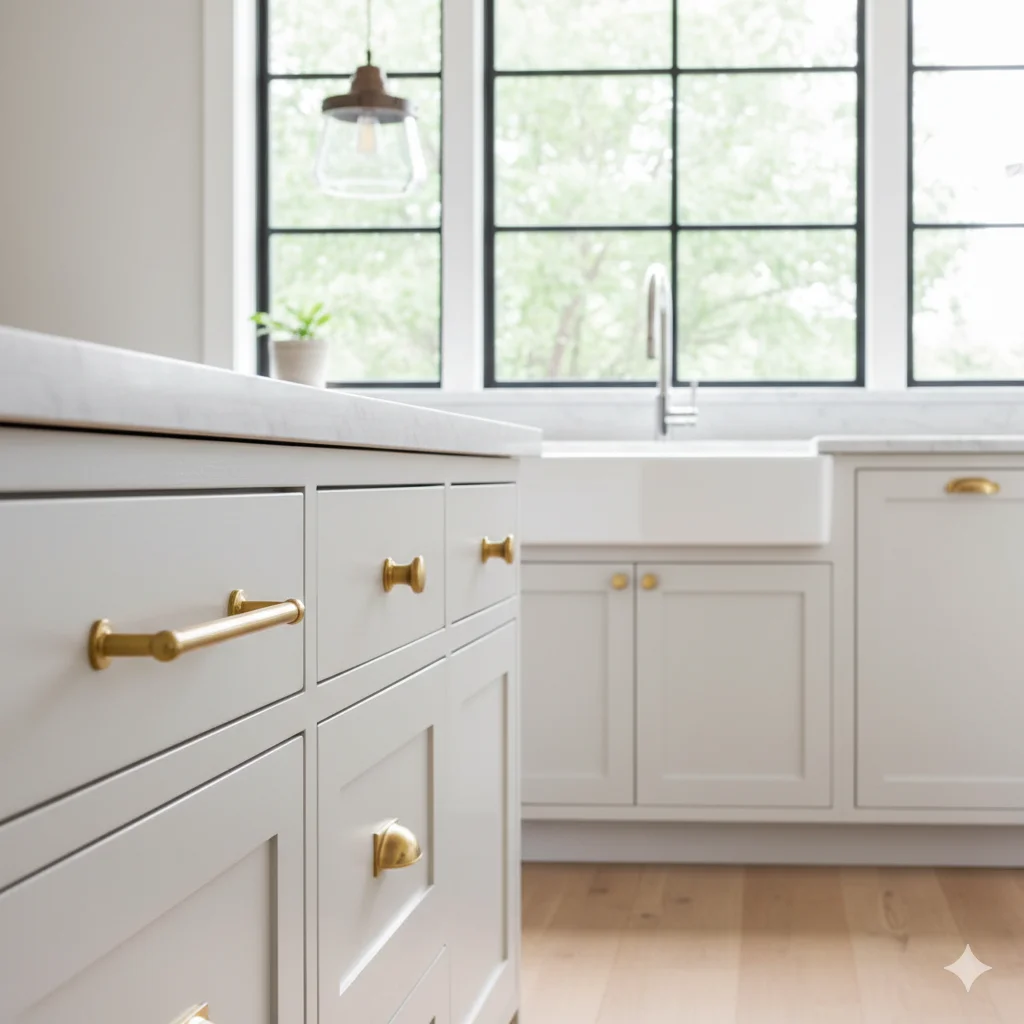
Mixed Metals Add Layered Sophistication
The rule about matching all metals in a single space no longer applies. Contemporary kitchens successfully blend brass, bronze, chrome, and black finishes to create depth and visual interest that single-metal schemes lack.
The secret to pulling off mixed metals lies in establishing a dominant finish and using others as accents. For instance, brass cabinet hardware and faucets might serve as primary metals, with bronze light fixtures and black window frames providing contrast.
This approach allows you to incorporate heirloom pieces, vintage finds, or simply choose the best fixture for each application without worrying about perfect matching. The result feels more collected and personal than strictly coordinated designs.
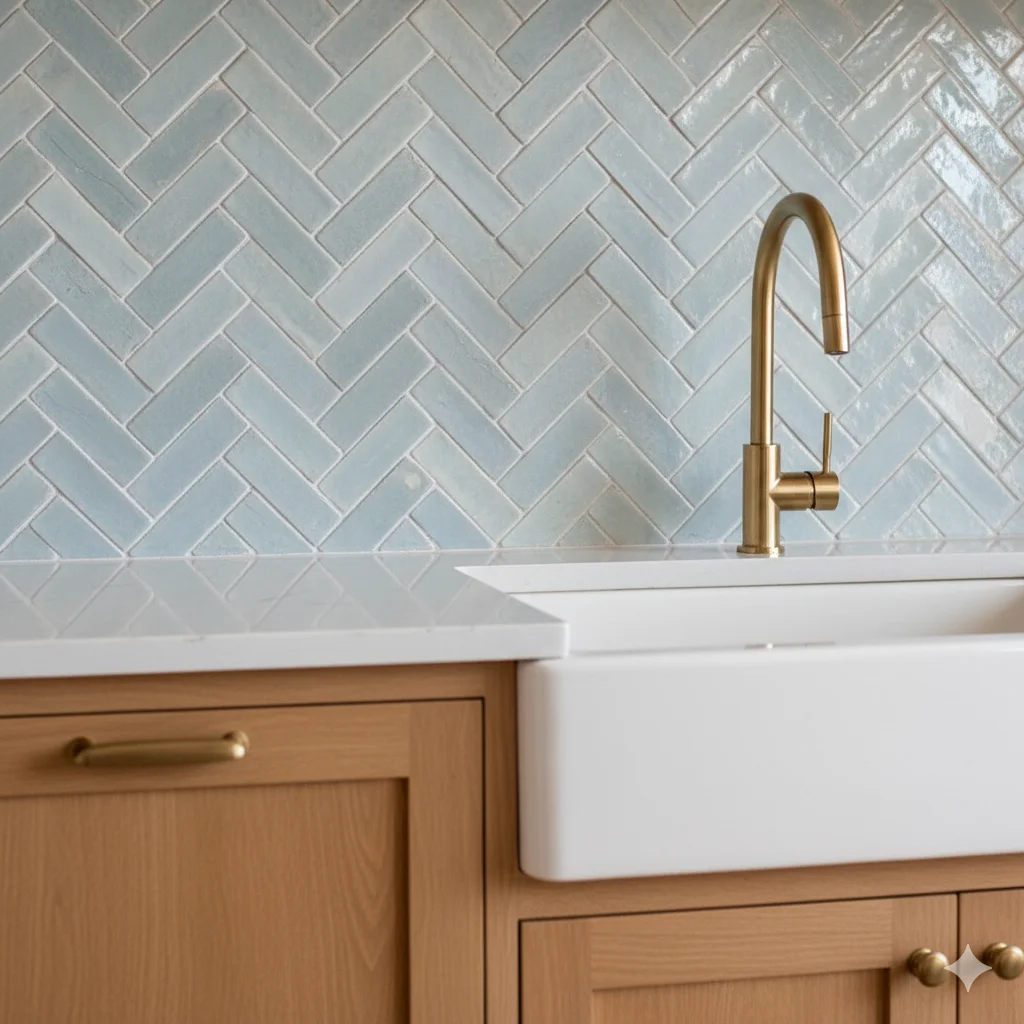
Zellige and Handmade Tile Bring Texture and Soul
Machine-made tiles have given way to handcrafted options that celebrate imperfection and artisan technique. Zellige tiles, with their irregular surfaces and subtle color variations, add depth and character impossible to achieve with uniform manufactured products.
These tiles catch and reflect light differently throughout the day, creating living surfaces that change with natural illumination. Their slightly uneven glazes and hand-cut edges bring warmth and humanity into modern kitchens that might otherwise feel too polished.
Consider zellige or similar handmade tiles for backsplashes, where their textural qualities shine without overwhelming countertop workspace. Traditional subway tile layouts work beautifully, as do more complex patterns like herringbone or stacked installations that emphasize the tiles’ handcrafted nature.
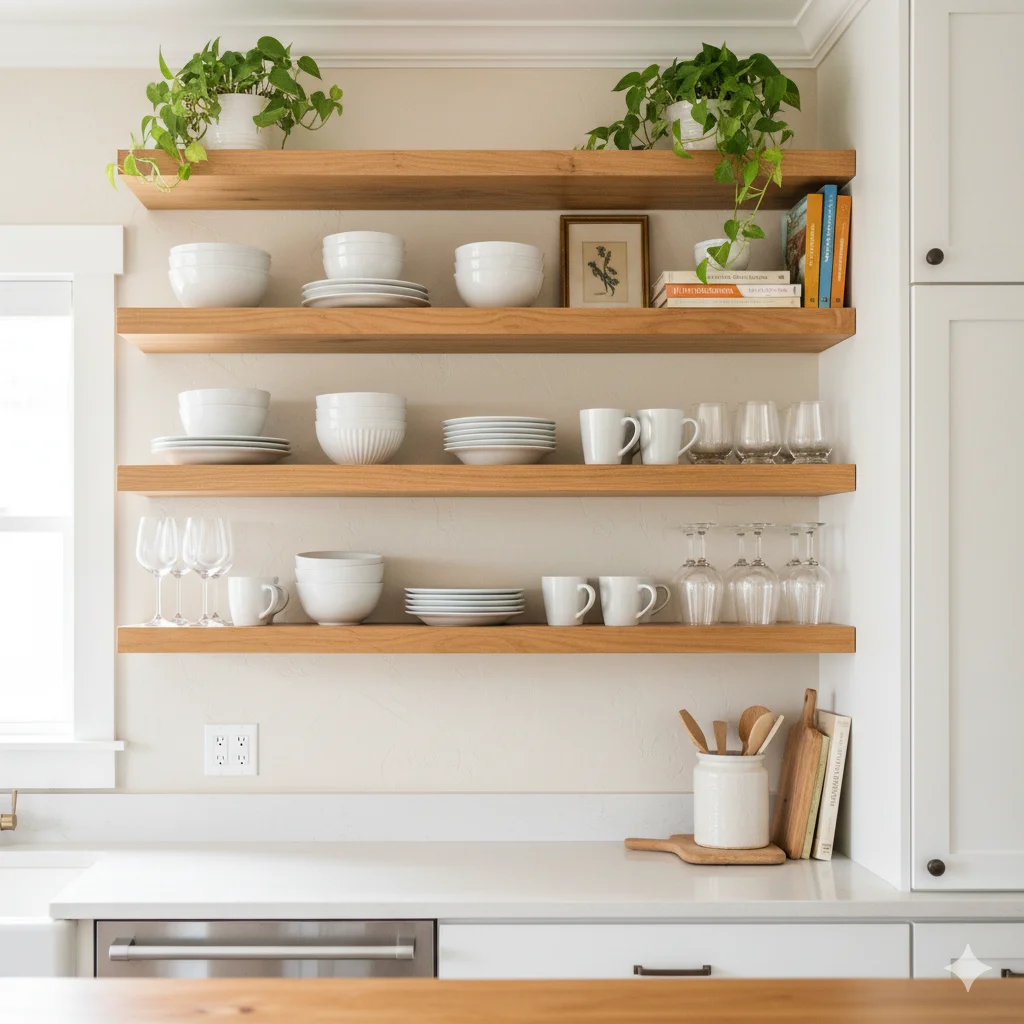
Open Shelving Balances Display and Function
Strategic open shelving introduces airiness and personality while providing practical storage for frequently used items. The key word here is strategic. Successful open shelving incorporates just enough to add visual interest without creating maintenance headaches or cluttered appearances.
Use open shelves to display your most beautiful dishware, glassware, and serving pieces. Group similar items together and maintain some empty space so displays feel curated rather than crowded. Mixing in a few decorative objects like small plants, cookbooks, or ceramic pieces adds layers of interest.
For those concerned about dust or visual clutter, consider limiting open shelving to one wall or section rather than removing upper cabinets entirely. This balanced approach gives you display opportunities while maintaining adequate enclosed storage for less photogenic necessities.
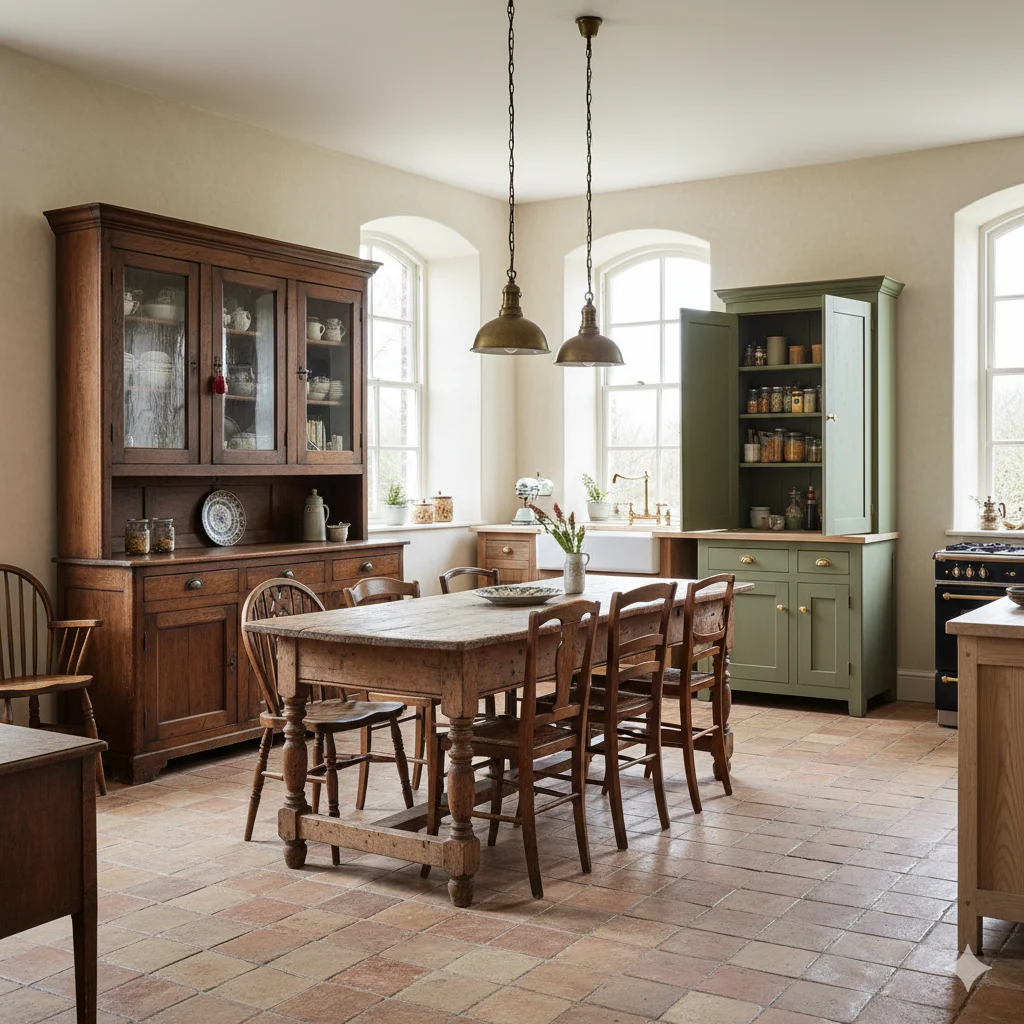
Unfitted Kitchens Create Collected Character
The unfitted kitchen concept treats cabinetry as individual furniture pieces rather than continuous built-ins. This European-inspired approach creates kitchens that feel collected over time, with personality and character replacing the uniform perfection of traditional fitted designs.
Mix freestanding hutches, vintage tables repurposed as islands, standalone pantry cupboards, and base cabinets that vary slightly in height or depth. This collected aesthetic works especially well in older homes where architectural quirks make uniform installations challenging.
The beauty of unfitted kitchens lies in their flexibility and personality. Pieces can be moved or replaced as needs change, and the overall effect feels more human-scaled and approachable than sleek modern installations.
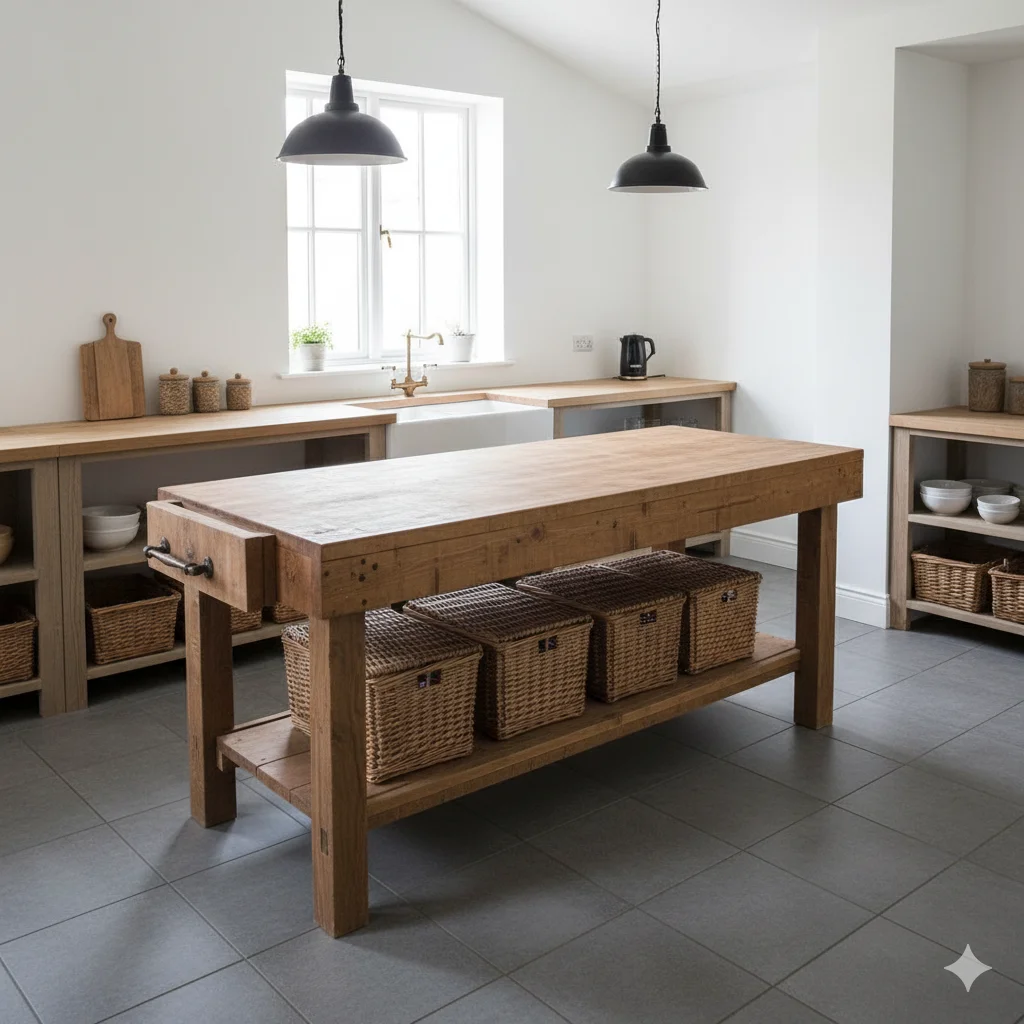
Workbench-Style Islands Ground Rustic Modern Spaces
Traditional kitchen islands with extensive cabinetry are giving way to simpler workbench-style pieces that emphasize function over flash. These farm table-inspired islands feature sturdy wooden tops, often without upper cabinetry, creating open, approachable gathering spots.
Workbench islands typically offer a more casual, utilitarian aesthetic that pairs beautifully with rustic modern or industrial design schemes. Their open bases provide convenient storage for baskets, cookbooks, and frequently used items while maintaining visual lightness.
These islands work particularly well in kitchens where the cooking zone already provides ample cabinet storage. They serve as prep surfaces, informal dining spots, and natural gathering points without the visual weight of fully enclosed pieces.
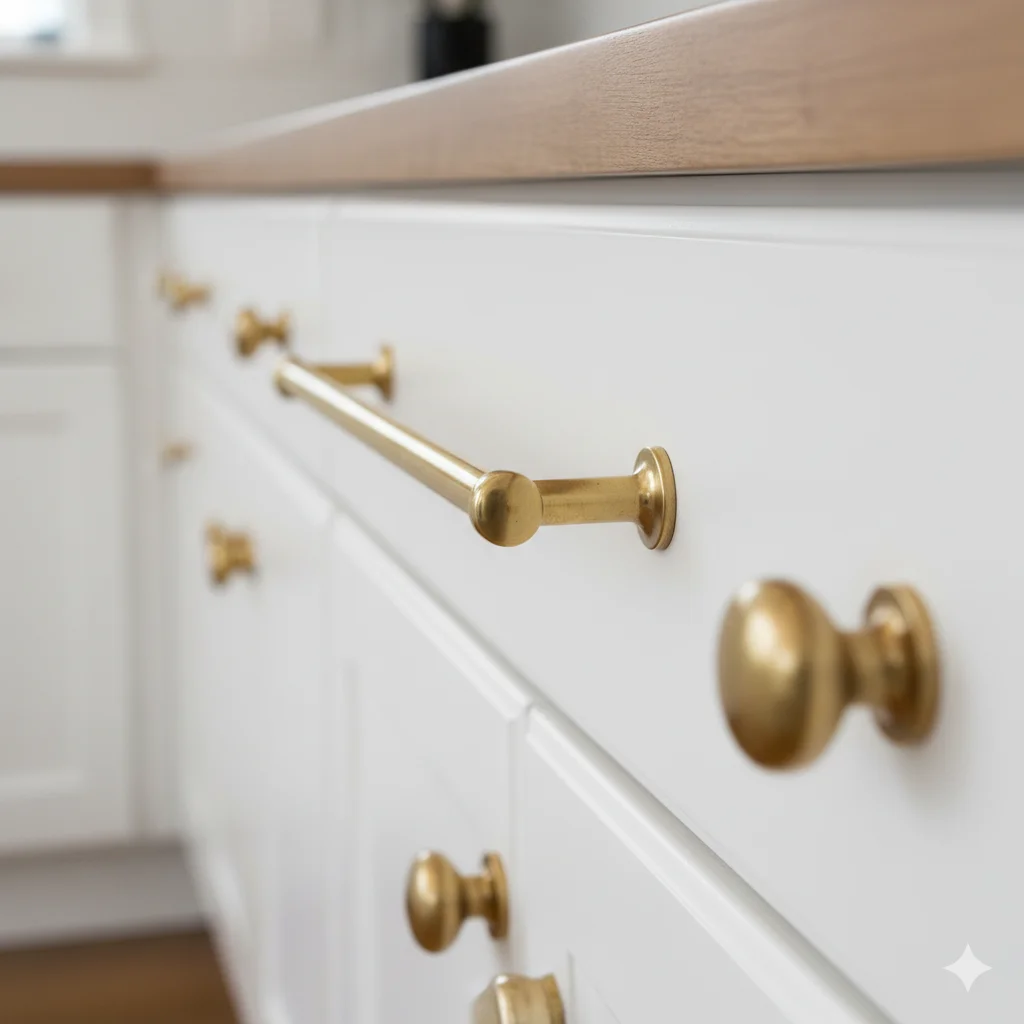
Brass and Bronze Hardware Warm Modern Spaces
Cabinet hardware in warm metals like brass and bronze has replaced the chrome and nickel fixtures that dominated previous decades. These warmer tones bring richness and depth to kitchen cabinetry while coordinating beautifully with the earth-tone palettes currently trending.
Unlacquered brass that develops patina over time offers particular appeal, creating a living finish that grows more beautiful with age. For those preferring consistent appearance, sealed brass maintains its original warmth without requiring special care.
Consider oversized pulls and knobs that make a statement rather than disappearing into the cabinetry. Substantial hardware feels more intentional and easier to use while adding decorative interest to simple cabinet doors.
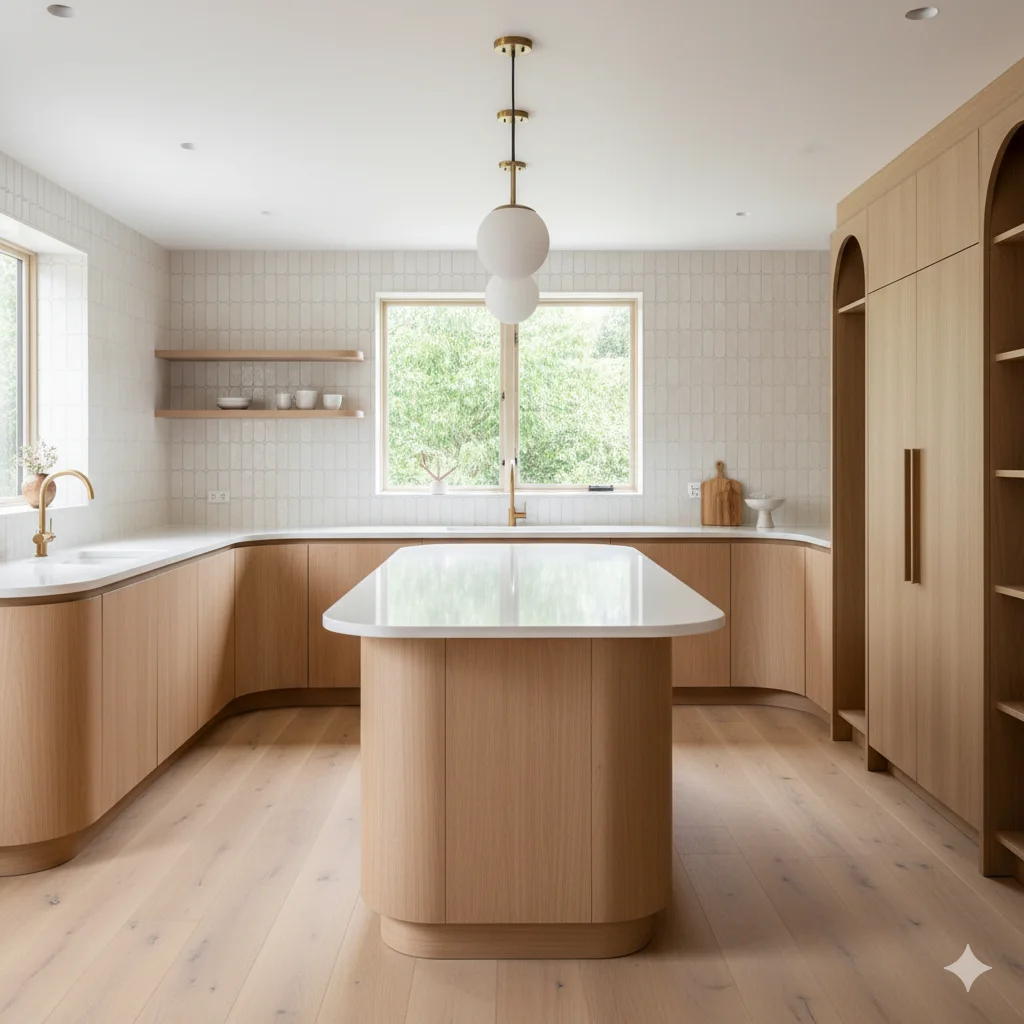
Curved Elements Soften Modern Geometries
Curved edges, rounded islands, and arched details bring organic softness into kitchens dominated by right angles and hard surfaces. These flowing forms improve traffic flow around work zones while creating more inviting, less institutional-feeling spaces.
Curved kitchen islands establish natural gathering points without the sharp corners that impede movement in busy kitchens. Rounded countertop edges, arched cabinet openings, and curved backsplash transitions all contribute to this softer aesthetic without requiring dramatic structural changes.
This trend extends to lighting fixtures, furniture, and even appliances with rounded profiles. The cumulative effect creates kitchens that feel warmer and more welcoming than their angular counterparts.
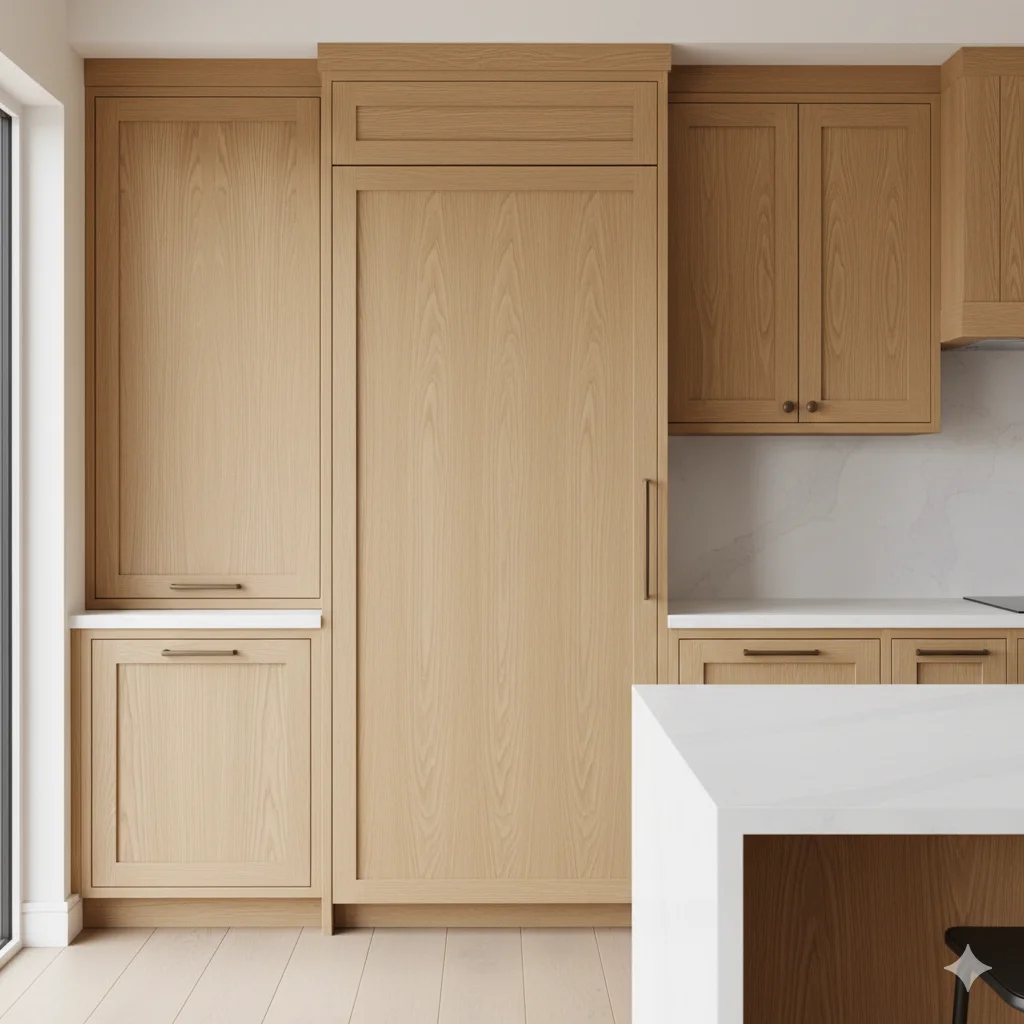
Integrated Appliances Maintain Clean Lines
The movement toward integrated appliances continues as homeowners seek more seamless, furniture-like kitchen designs. Refrigerators, dishwashers, and even ranges concealed behind cabinet panels create unified surfaces that emphasize craftsmanship over technology.
Panel-ready appliances allow your cabinetry design to flow uninterrupted around the room, particularly effective in smaller kitchens where visible appliances might fragment the space visually. This approach works especially well with traditional or transitional designs where modern stainless steel might feel jarring.
While integrated appliances typically carry higher price tags than standard versions, they provide flexibility in cabinet layout and design freedom that justifies the investment for many homeowners. The effect feels custom and considered rather than appliance-showroom generic.
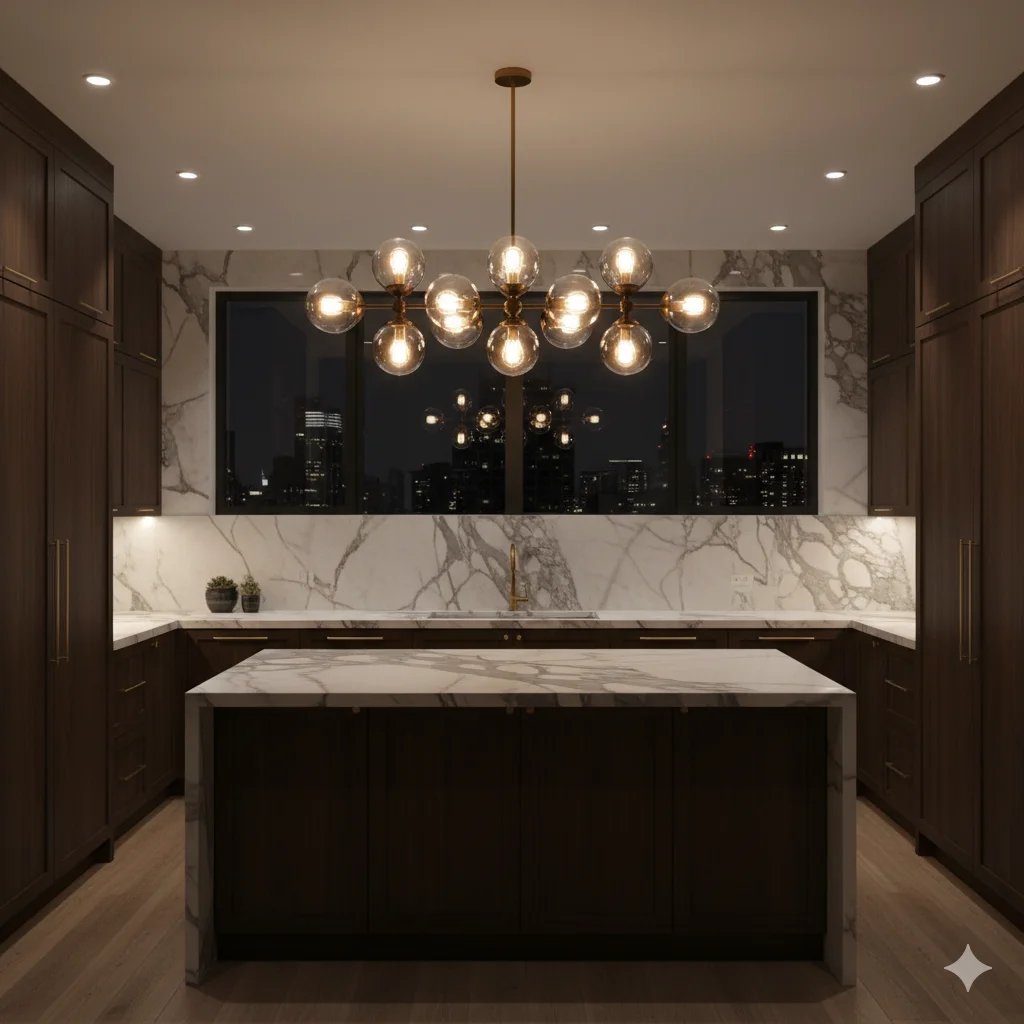
Statement Lighting Defines Kitchen Character
Pendant lights, chandeliers, and architectural fixtures have evolved from purely functional elements into key design statements. The right lighting not only illuminates work surfaces but also establishes mood and reinforces your kitchen’s overall aesthetic.
Oversized pendants above islands anchor the space and provide necessary task lighting while serving as jewelry for your kitchen. Consider scale carefully. Fixtures should feel substantial enough to hold their own without overwhelming the space or blocking sightlines across open layouts.
Mix lighting types for best effect. Combine decorative pendants with recessed fixtures for ambient light, under-cabinet strips for task illumination, and perhaps a statement chandelier over dining areas. This layered approach creates flexibility for different times of day and activities.
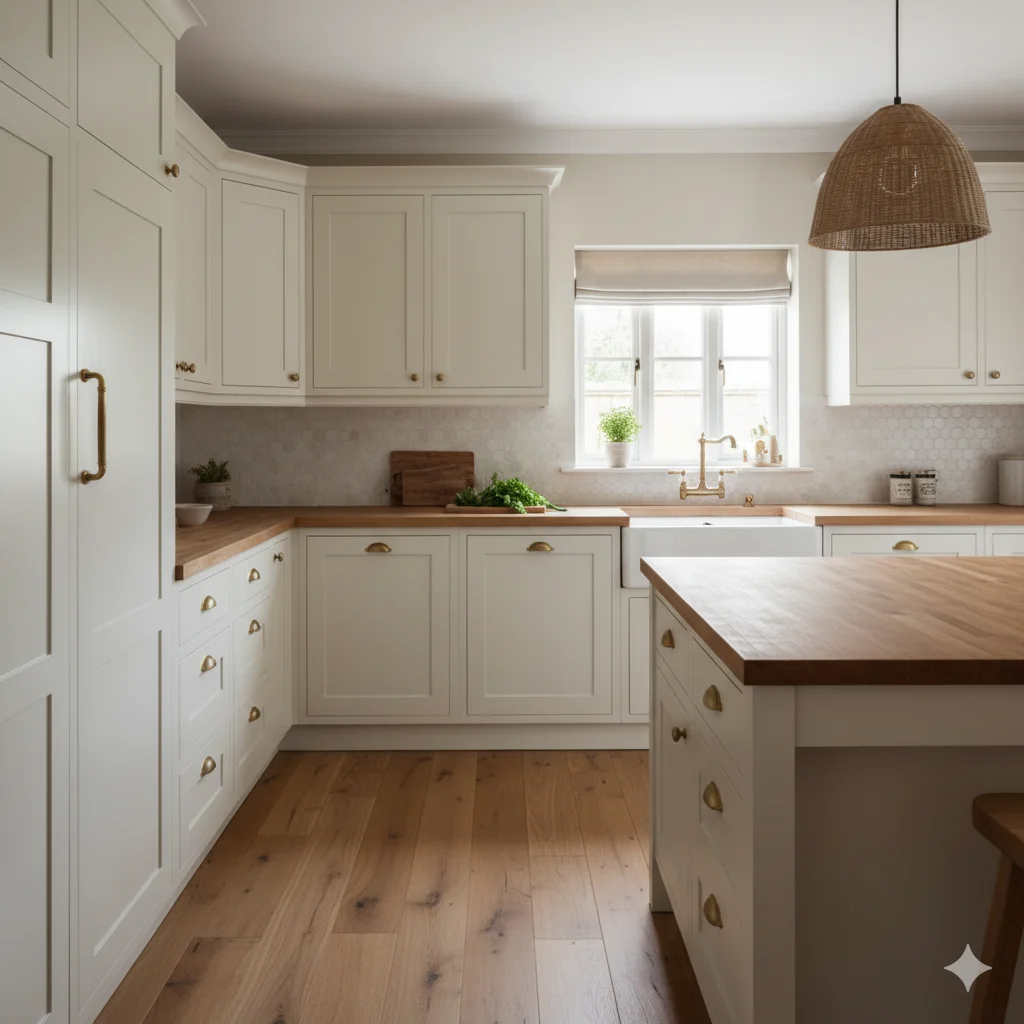
Classic White Kitchens Get Warmer Updates
All-white kitchens remain popular, but contemporary versions incorporate warmth and texture that earlier iterations lacked. The key lies in mixing whites with varied finishes, natural materials, and subtle color through hardware and fixtures.
Pair white cabinets with warm wood flooring, butcher block countertop sections, or natural stone backsplashes. Introduce brass fixtures, woven pendant shades, or upholstered seating to layer in warmth and prevent the sterile feeling that plagued earlier white kitchen designs.
Even the whites themselves have shifted warmer, with creamy, soft whites replacing stark cool tones. These gentler shades create backgrounds that feel inviting rather than clinical while maintaining the bright, spacious qualities that make white kitchens perennially appealing.
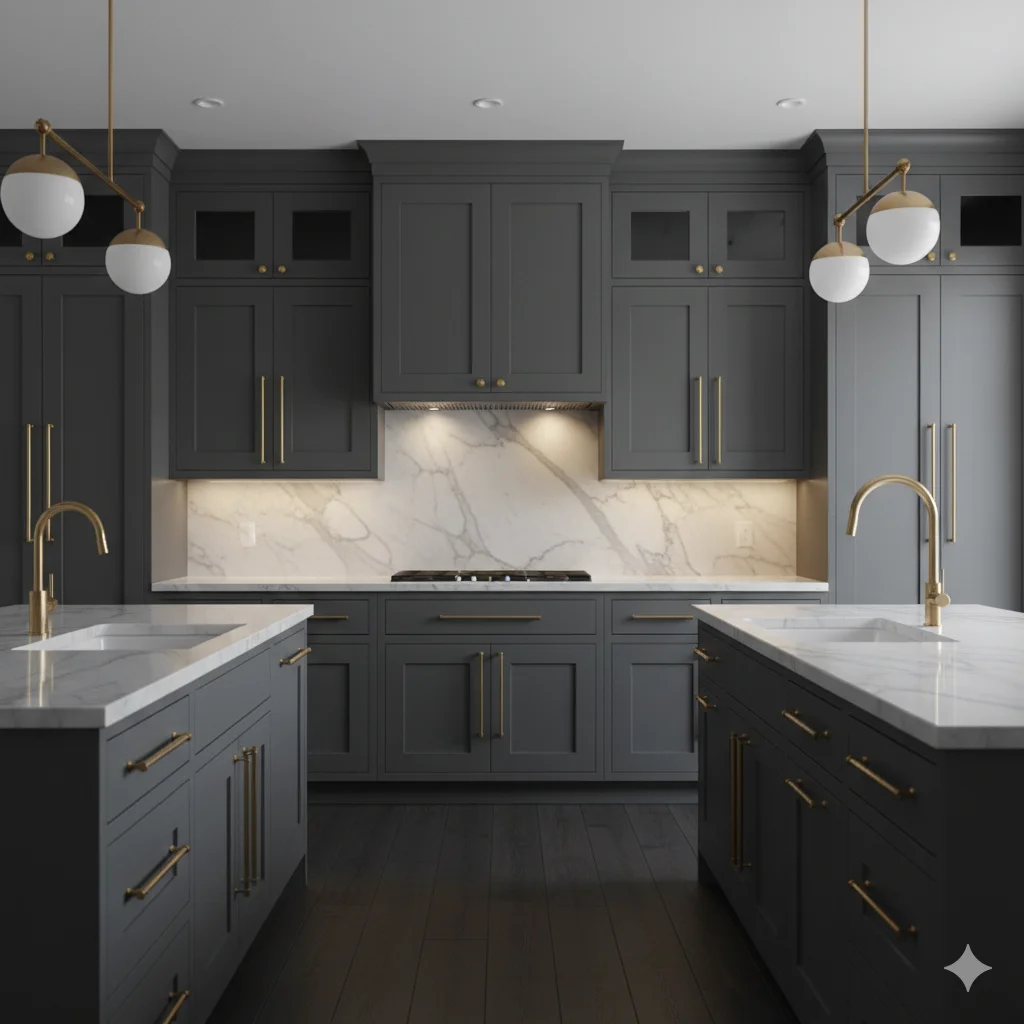
Dark Cabinetry Creates Cozy Drama
Deep, moody cabinet colors bring intimacy and sophistication to kitchen design. Navy blues, charcoal grays, forest greens, and even black cabinetry create enveloping spaces that feel special and intentional rather than purely functional.
Dark cabinets work surprisingly well in both large and small kitchens. In spacious rooms, they add definition and prevent the space from feeling too vast. In compact kitchens, dark tones create jewel-box charm that makes the room feel intentionally intimate rather than merely small.
Balance dark cabinetry with lighter elements to prevent rooms from feeling cave-like. Light countertops, bright backsplashes, and ample lighting ensure dark cabinets feel rich rather than oppressive. Natural light from large windows provides the best complement to dark finishes.
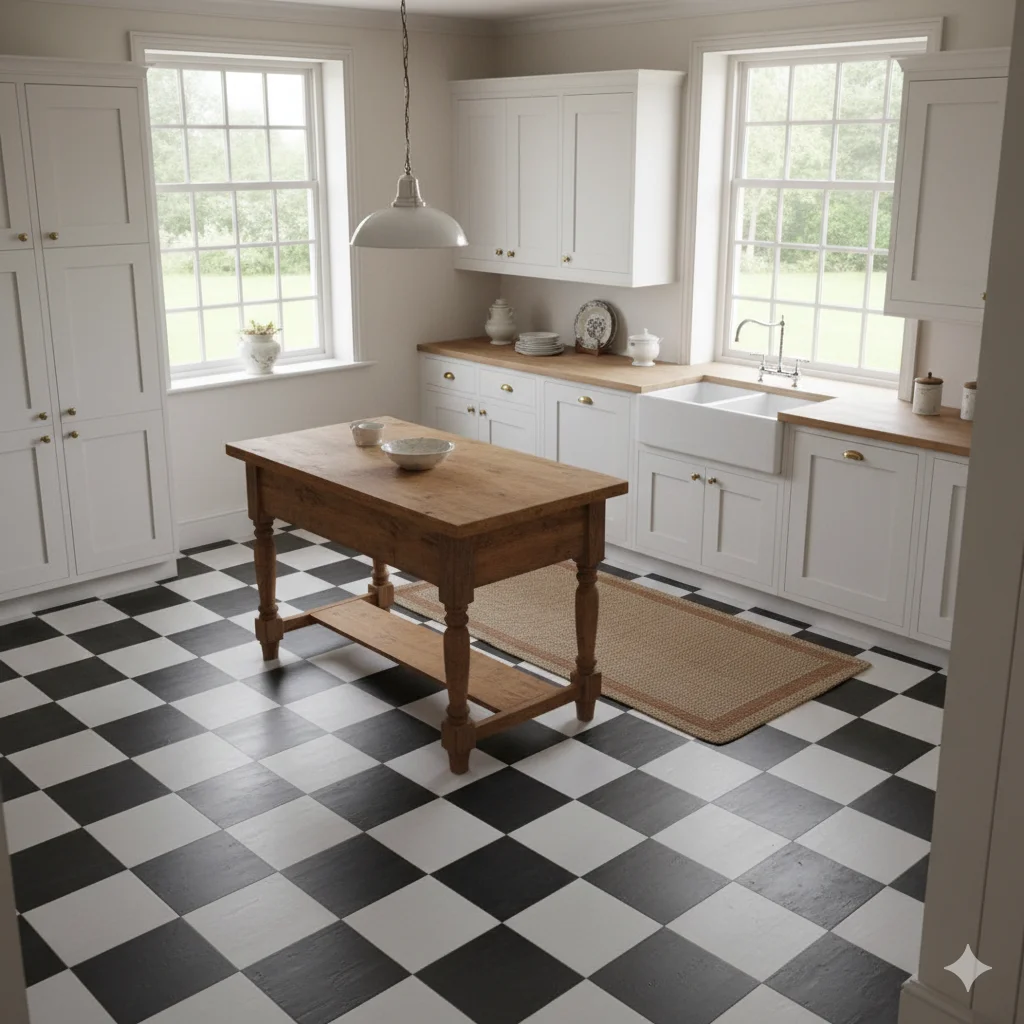
Painted Floor Patterns Add Vintage Charm
Painted patterns on wood floors bring vintage character without the expense and installation challenges of intricate tile work. Checkerboard designs remain particularly popular, offering bold graphic impact that grounds kitchen designs in tradition.
This approach works especially well in kitchens with simpler cabinetry and minimal architectural detail, where the floor becomes a canvas for personality and pattern. The painted surface adds warmth compared to ceramic tile while providing easier underfoot comfort during long cooking sessions.
For longevity, properly prepare and seal painted floors with durable topcoats designed for high-traffic areas. The technique allows for complete color customization to coordinate with your overall palette while creating a truly unique feature.
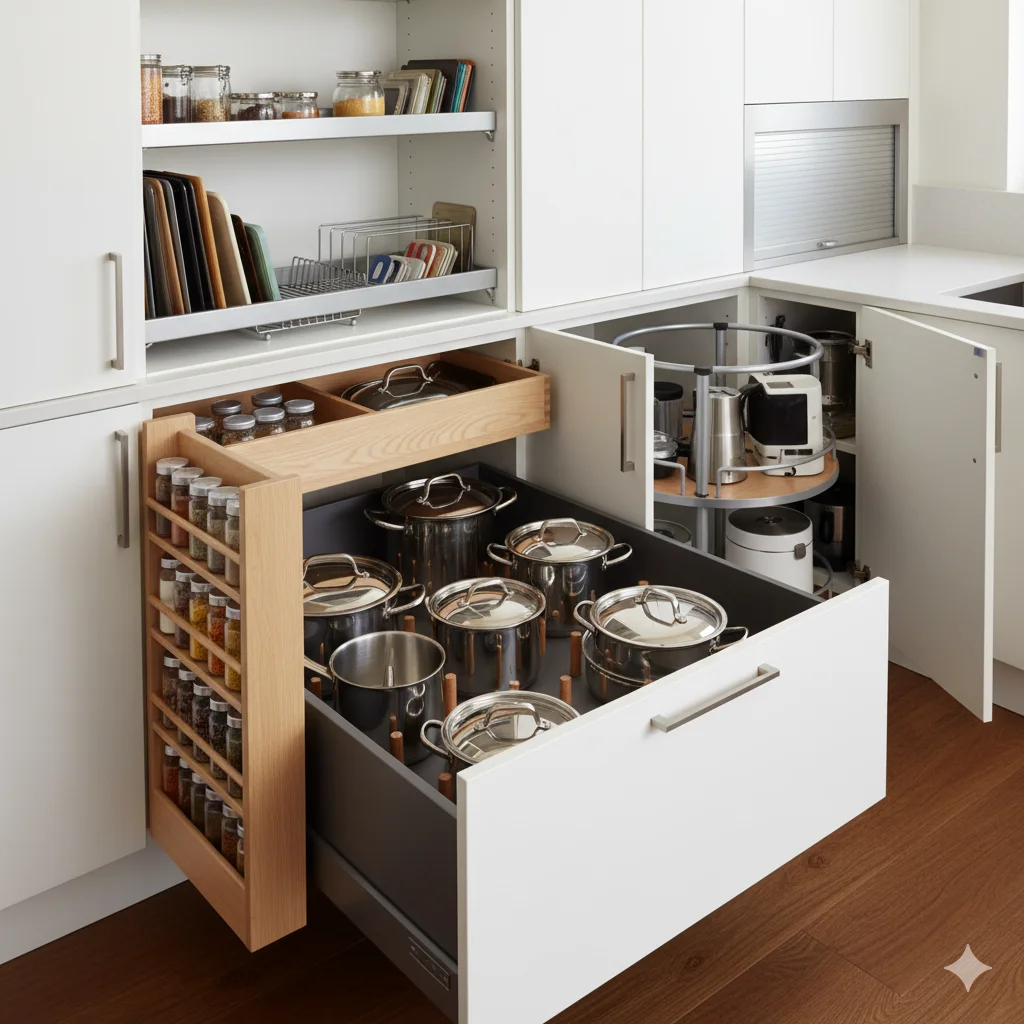
Smart Storage Solutions Maximize Efficiency
Thoughtful storage design separates merely attractive kitchens from truly functional ones. Deep drawers for cookware, pull-out spice racks, vertical dividers for baking sheets, and dedicated zones for different tasks transform cabinets from simple boxes into hardworking systems.
Corner solutions like lazy Susans or pull-out shelving systems maximize awkward spaces often wasted in traditional layouts. Vertical storage for trays and cutting boards keeps these slim items organized rather than stacked precariously in cabinets.
Appliance garages, charging stations, and recycling centers all deserve dedicated homes in well-planned kitchens. When everything has its place, maintaining order becomes effortless rather than a constant battle against clutter.
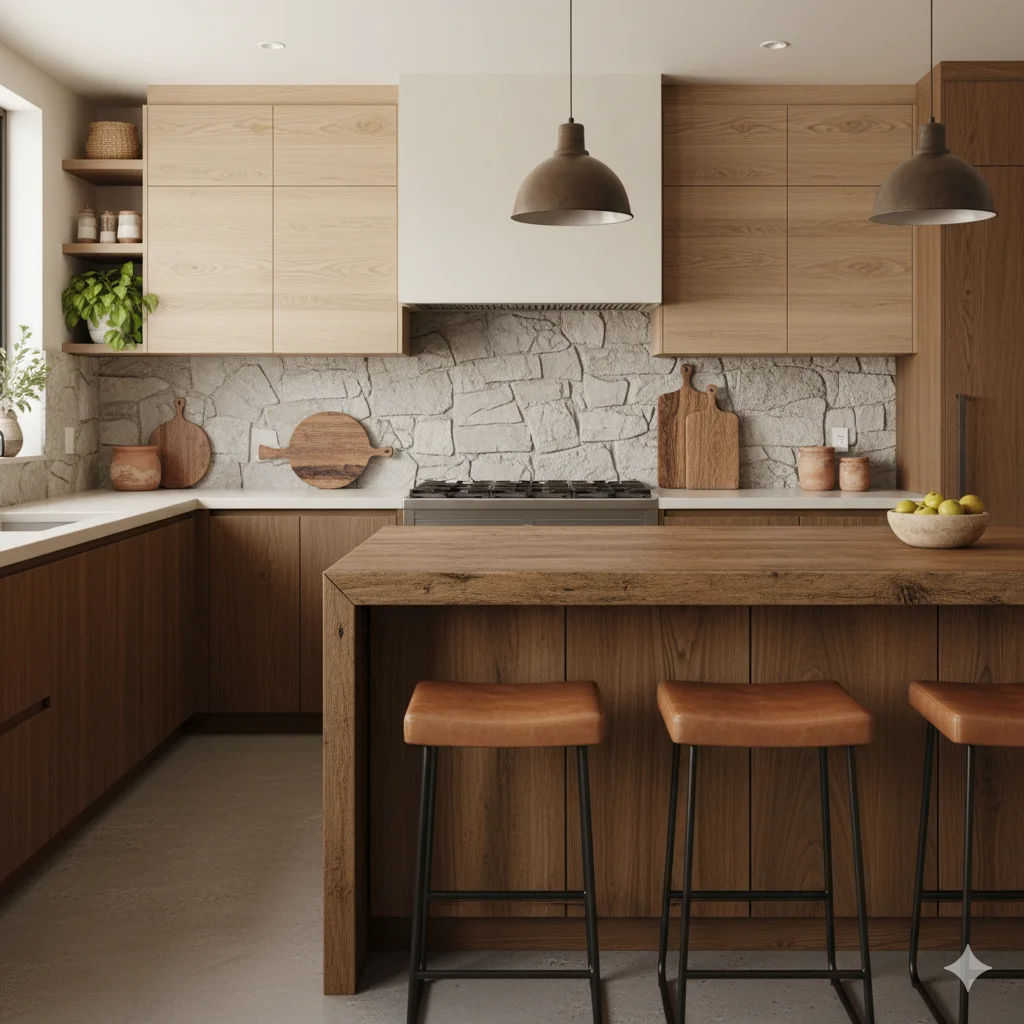
Natural Materials Ground Contemporary Designs
Stone, wood, leather, and other natural materials prevent modern kitchens from feeling cold or sterile. These organic elements bring texture, warmth, and visual interest while connecting indoor spaces to the natural world beyond your walls.
Incorporate natural materials through countertops, flooring, furniture, and accessories. A reclaimed wood island top, stone backsplash, leather bar stool cushions, and wooden cutting boards displayed on open shelves all contribute to a grounded, organic aesthetic.
The beauty of natural materials lies partly in their imperfections. Variations in grain, color, and texture create uniqueness impossible to replicate with manufactured products, ensuring your kitchen feels personal rather than showroom generic.
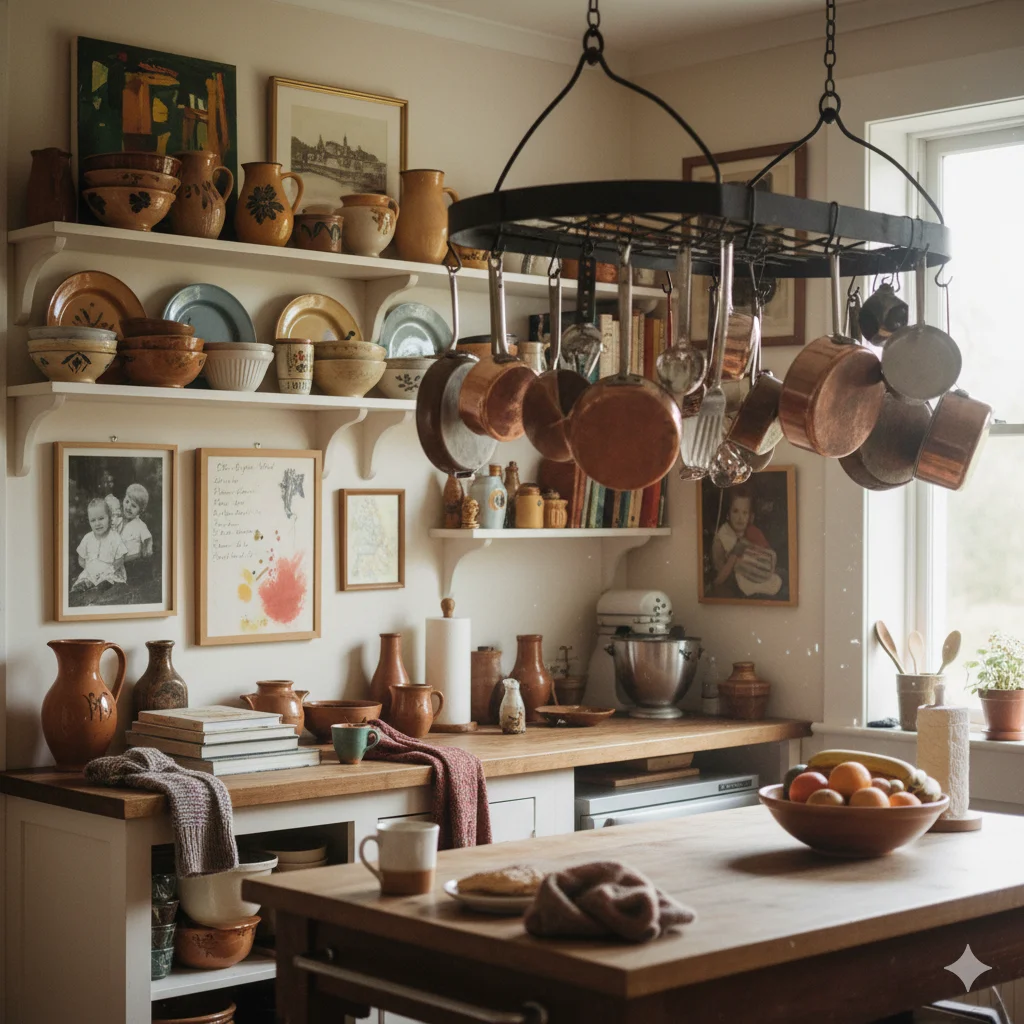
Personalized Details Make Kitchens Memorable
The most inspiring kitchens reflect their owners’ personalities through thoughtful details and personal touches. Collections displayed on open shelving, meaningful art, vintage finds integrated as functional pieces, and custom elements designed specifically for your lifestyle transform generic spaces into true homes.
Consider what makes your kitchen uniquely yours. Perhaps a collection of vintage pottery, a gallery wall of family recipes handwritten on cards, or a custom pot rack showcasing your copper cookware. These personal elements create character and conversation while making your kitchen feel authentically lived-in.
Avoid the temptation to design purely for resale or according to what seems universally appealing. Kitchens that reflect genuine personal style feel more welcoming and interesting than those designed to please everyone, which ultimately please no one.
Bringing Your Kitchen Inspiration to Life
Creating your dream kitchen requires balancing practical needs with aesthetic desires. Start by identifying which elements from these inspiration ideas resonate most strongly with your lifestyle and personal taste. Consider how your family uses the kitchen daily and what improvements would make the biggest impact on your experience.
Professional guidance helps navigate the technical aspects of kitchen design while ensuring your vision translates effectively into reality. Good designers balance your wishes with practical constraints like budget, structural limitations, and resale considerations.
Remember that kitchens evolve over time. You need not implement every idea at once. Start with major elements like cabinetry and layout, then layer in details like hardware, lighting, and personal touches as budget and inspiration allow. The most successful kitchens develop over time, gaining character and personality through thoughtful additions and adjustments.
Modern kitchen design celebrates both function and beauty, creating spaces that work hard while looking effortless. These 22 kitchen inspiration ideas provide starting points for crafting rooms that balance contemporary style with cozy warmth. Whether you gravitate toward natural wood, sculptural islands, warm neutrals, or bold dark tones, the underlying principle remains the same. The best kitchens feel like natural extensions of how you live, spaces that support daily routines while bringing genuine joy each time you enter them.
Frequently Asked Questions
What makes a kitchen feel cozy yet modern?
A cozy modern kitchen balances clean lines with warm materials and personal touches. Incorporate natural wood tones, warm neutral colors, textured elements like handmade tile, and comfortable seating. Layer in brass fixtures, open shelving with curated displays, and adequate lighting that creates ambiance beyond task illumination. The key lies in avoiding sterile perfection in favor of spaces that feel lived-in and welcoming.
Are white kitchens still popular in 2026?
White kitchens remain appealing but have evolved toward warmer, softer whites rather than stark cool tones. Contemporary white kitchens incorporate natural wood elements, textured backsplashes, mixed metals, and varied finishes to add depth and prevent clinical feelings. Many homeowners now choose warm neutral palettes in mushroom, taupe, and alabaster shades as alternatives to pure white.
How do I choose between natural wood and painted cabinets?
Consider your overall aesthetic, maintenance preferences, and budget. Natural wood cabinets bring warmth and character with visible grain patterns but may require more maintenance. Painted cabinets offer unlimited color options and easier touch-ups but lack wood’s organic texture. Many successful kitchens use both, combining natural wood perimeter cabinets with painted islands or vice versa for visual interest and balance.
What countertop materials work best with modern kitchen designs?
Quartz remains popular for its durability and low maintenance, available in endless colors and patterns. Natural stone like marble or quartzite provides unique character with distinctive veining. Butcher block adds warmth for islands or prep zones. Consider green-toned stones for trendy yet natural options that coordinate beautifully with wood cabinetry and brass fixtures while providing lasting appeal.
How can I add personality to a small kitchen?
Focus on high-impact details like colorful cabinets, patterned backsplashes, statement lighting, and open shelving displaying meaningful objects. Use warm colors to create cozy intimacy rather than fighting the space limitations. A painted floor pattern, vintage-inspired hardware, or a small but sculptural island adds character without requiring major structural changes or consuming precious square footage.