
15 Best Retro Outfits That Are Like, Totally Bitchin
Fashion has always been cyclical, and what was once old inevitably becomes new again. The resurgence of retro fashion isn’t just about nostalgia; it’s about celebrating the bold creativity, distinctive silhouettes, and unapologetic self-expression that defined past decades. Whether you’re drawn to the elegant sophistication of the 1950s or the rebellious grunge of the 1990s, retro outfits offer a refreshing alternative to cookie-cutter contemporary trends.
This comprehensive guide explores fifteen standout retro outfits that capture the essence of bygone eras while remaining completely wearable today. From the dance floors of Studio 54 to the coffee shops of Seattle, these looks prove that vintage style never truly goes out of fashion. Understanding how to adapt these iconic ensembles for modern life means you can inject personality and timeless appeal into your everyday wardrobe without looking like you’re heading to a costume party.
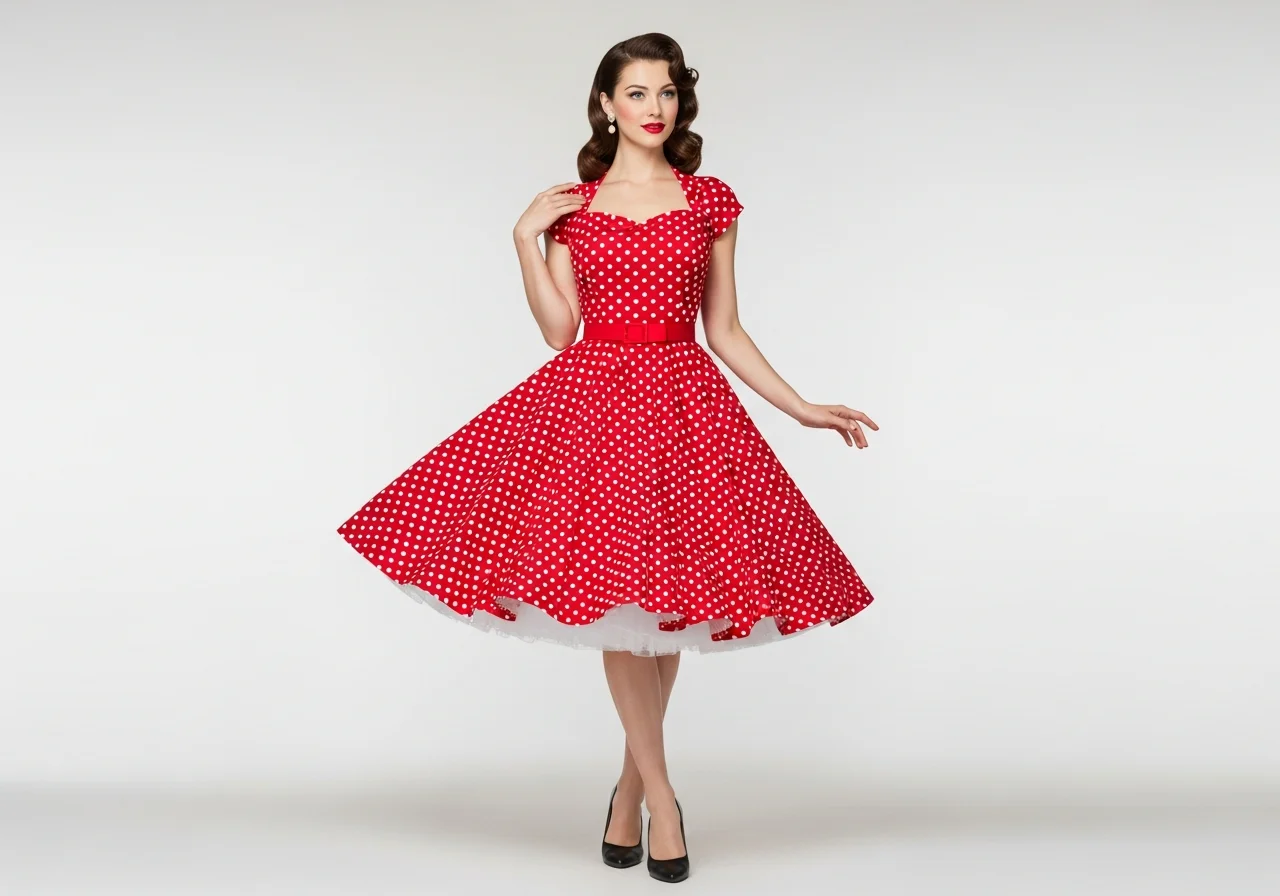
The Timeless 1950s Swing Dress Ensemble
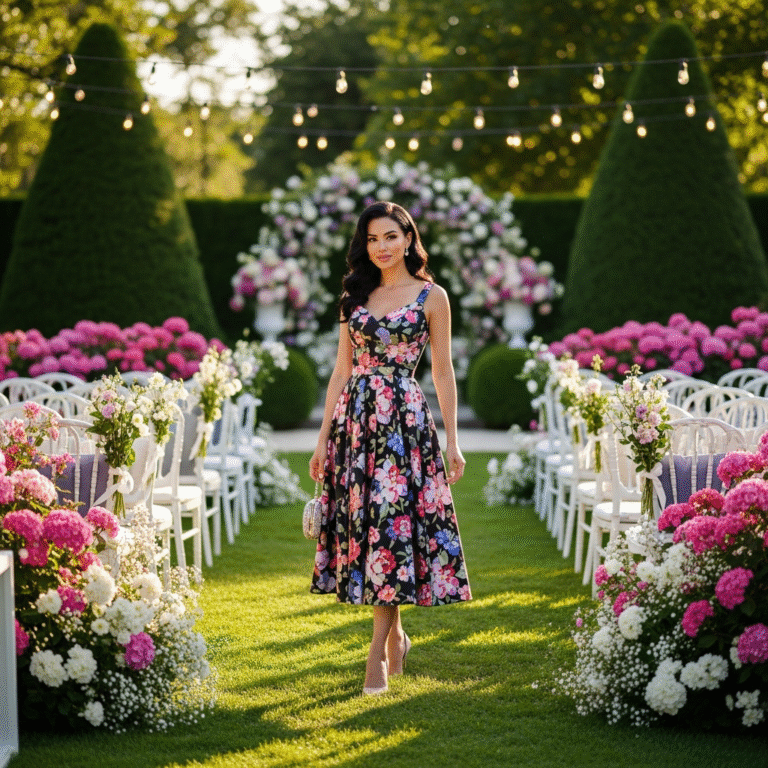
The 1950s gave us one of the most universally flattering silhouettes in fashion history: the fit-and-flare dress. This iconic look features a fitted bodice that cinches at the waist before flowing into a full, knee-length skirt. The swing dress epitomizes feminine elegance and works beautifully for various occasions.
To recreate this classic outfit, choose a dress in a solid color like navy, red, or black, or opt for vintage-inspired prints such as polka dots or cherries. The key is the structure; look for dresses with built-in petticoats or add a crinoline underneath for authentic volume. Pair with pointed-toe kitten heels or Mary Jane flats, and accessorize with a thin belt to emphasize the waist, pearl earrings, and a small handbag. For cooler weather, drape a cropped cardigan over your shoulders.
The beauty of this outfit lies in its versatility. Modern interpretations might use contemporary fabrics with stretch for comfort while maintaining the vintage silhouette. This look works equally well for garden parties, date nights, or professional settings when styled appropriately.
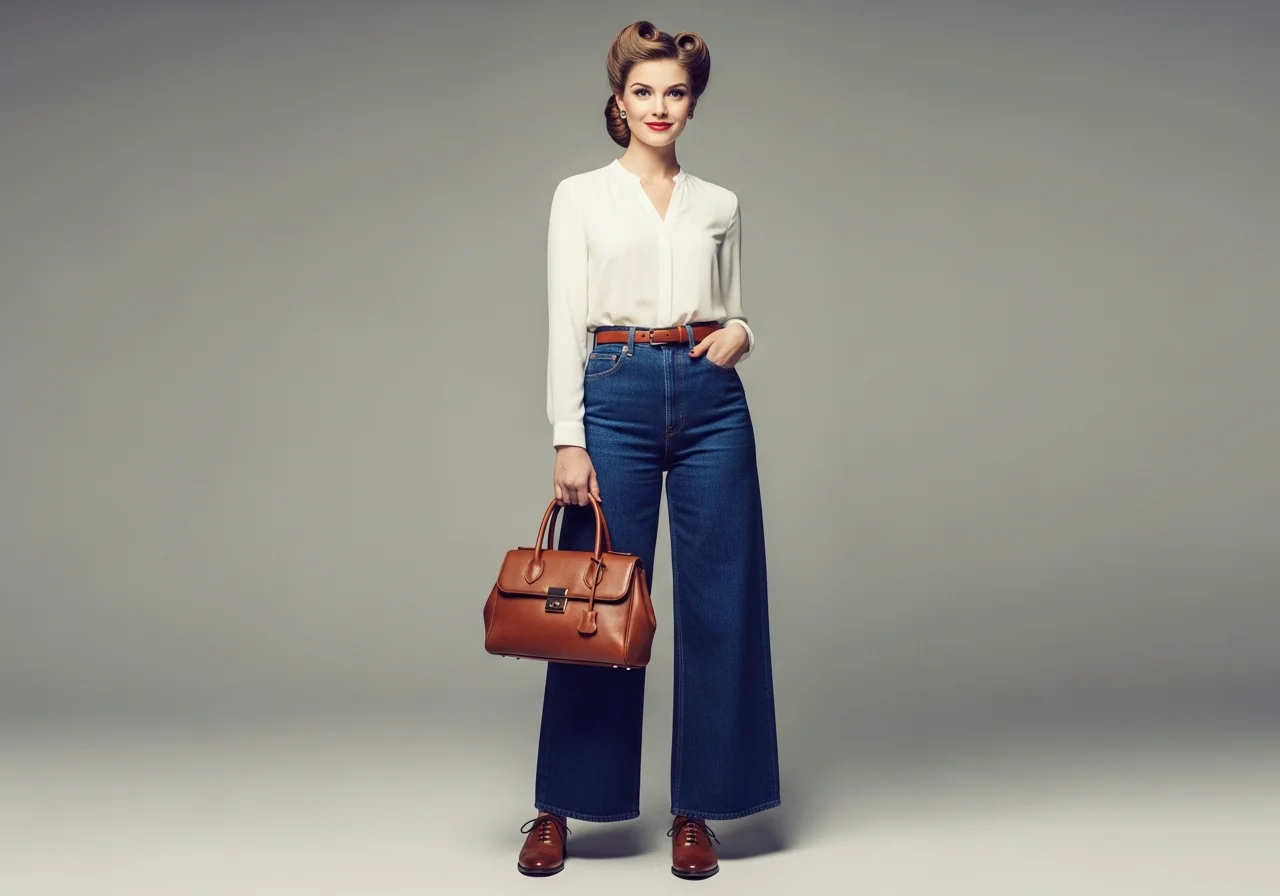
High-Waisted Jeans and Tucked Blouse from the 1940s
Before denim became the casual staple we know today, high-waisted trousers represented practical elegance during the 1940s. This era’s fashion emphasized clean lines and a put-together appearance even in everyday wear.
The 1940s-inspired outfit centers on high-waisted, wide-leg jeans or trousers in dark denim or classic navy. Tuck in a crisp white blouse or a silk button-down shirt, ensuring the waistline sits at your natural waist or slightly above. Add a thin or medium-width leather belt to define your shape further.
Complete the ensemble with oxford shoes, loafers, or ankle boots. For accessories, consider a structured handbag, simple gold jewelry, and perhaps a silk scarf tied around your neck or threaded through your belt loops. This outfit strikes the perfect balance between vintage charm and modern practicality, making it ideal for both professional environments and weekend outings.
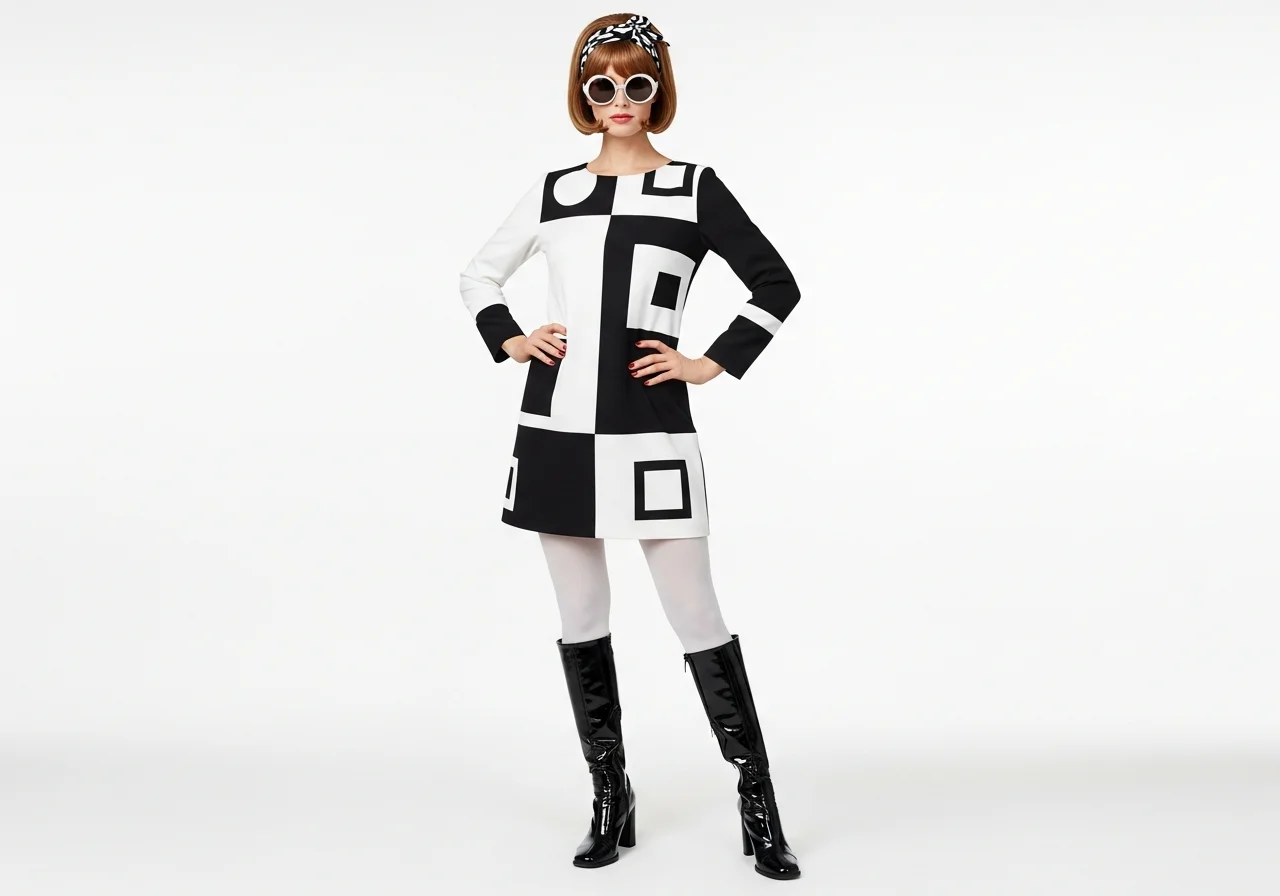
The Mod Mini Dress Revolution of the 1960s
The 1960s mod movement brought us the mini dress, a revolutionary garment that challenged conventions and celebrated youth culture. This style, popularized by fashion icons like Twiggy and Mary Quant, remains one of the most recognizable retro looks.
A true mod outfit features a shift dress or A-line mini dress in bold, geometric patterns or solid colors like white, black, or primary hues. The silhouette should be simple and structured, falling several inches above the knee. The mod aesthetic emphasizes graphic elements, so look for color-blocking, checkerboard patterns, or optical prints.
Pair your mod dress with white or colored tights and knee-high or ankle boots, preferably in patent leather. Accessorize minimally with oversized sunglasses, particularly cat-eye or round frames, and keep jewelry geometric and bold. A short, straight haircut or a headband completes the look. This outfit captures the optimistic, forward-thinking spirit of the swinging sixties.

Bohemian Maxi Dress from the 1970s
The 1970s embraced freedom of expression, and nothing captures this better than the flowing bohemian maxi dress. This era’s fashion drew inspiration from various cultures, creating an eclectic mix of patterns, textures, and silhouettes.
Choose a maxi dress in lightweight, flowing fabric with characteristic 70s elements like paisley prints, floral patterns, or earthy solid colors such as rust, mustard, or olive green. Look for details like bell sleeves, empire waists, or tiered skirts. The dress should skim your body rather than cling, creating an effortless, relaxed silhouette.
Layer with a suede or denim vest, and add a wide-brimmed felt hat for authentic 70s flair. Footwear options include platform sandals, wooden clogs, or ankle boots. Accessorize with long, layered necklaces, stacked bangles, and a fringe crossbody bag. This outfit perfectly captures the free-spirited, peace-and-love ethos of the decade.
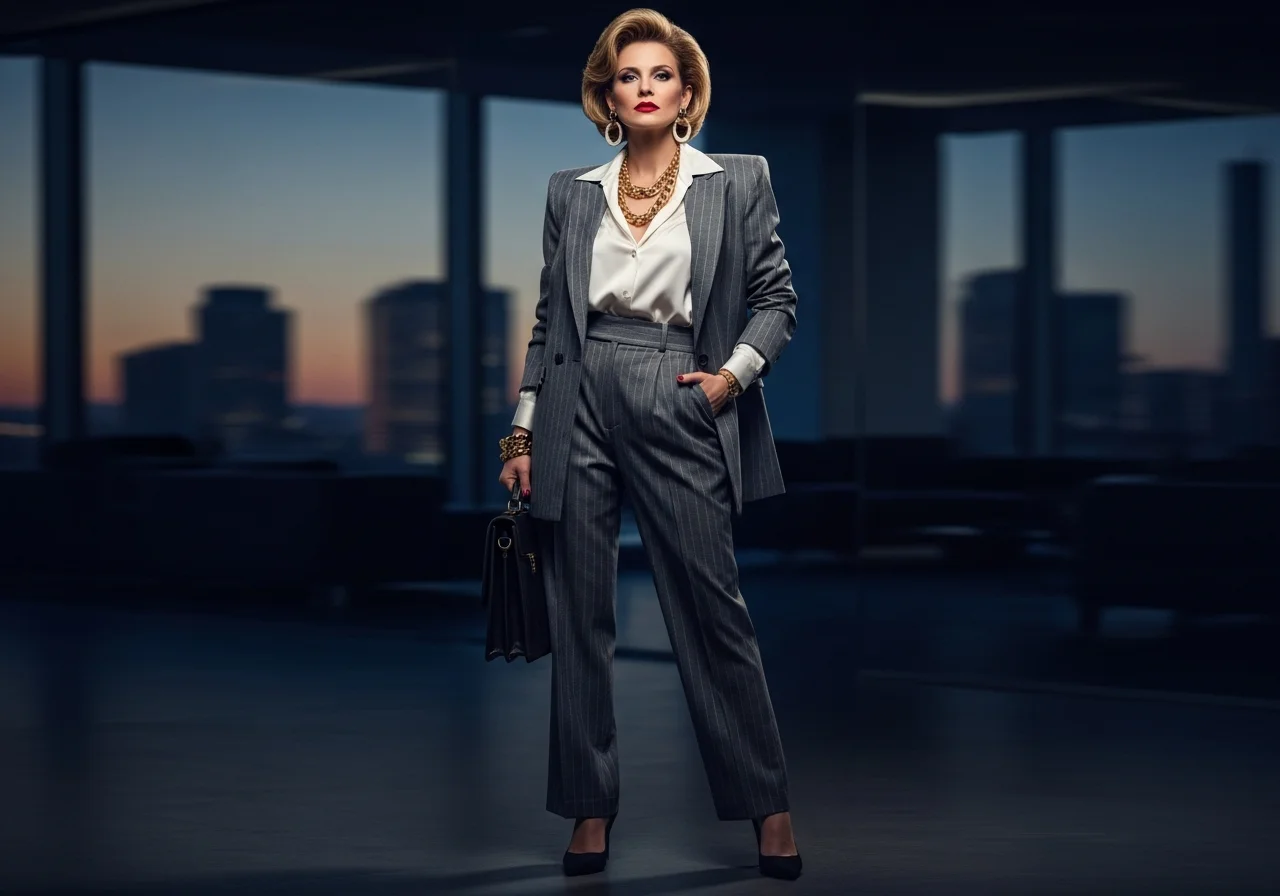
Power Suit with Shoulder Pads from the 1980s
The 1980s redefined professional dressing with the power suit, a bold statement of confidence and ambition. This look dominated boardrooms and became synonymous with the decade’s assertive energy.
The foundation is a tailored blazer with pronounced shoulder pads in a solid color or pinstripe pattern. Pair with matching high-waisted trousers or a pencil skirt that hits just below the knee. The silhouette should be structured and commanding, with clean lines and a strong shoulder line.
Underneath, wear a silk blouse or a simple shell top. Choose pumps with a moderate to high heel in a coordinating color. Accessories should be substantial: think chunky gold jewelry, a leather briefcase or structured handbag, and perhaps a silk scarf tied loosely around your neck. For a more casual take, swap the trousers for high-waisted jeans while keeping the blazer as the statement piece.
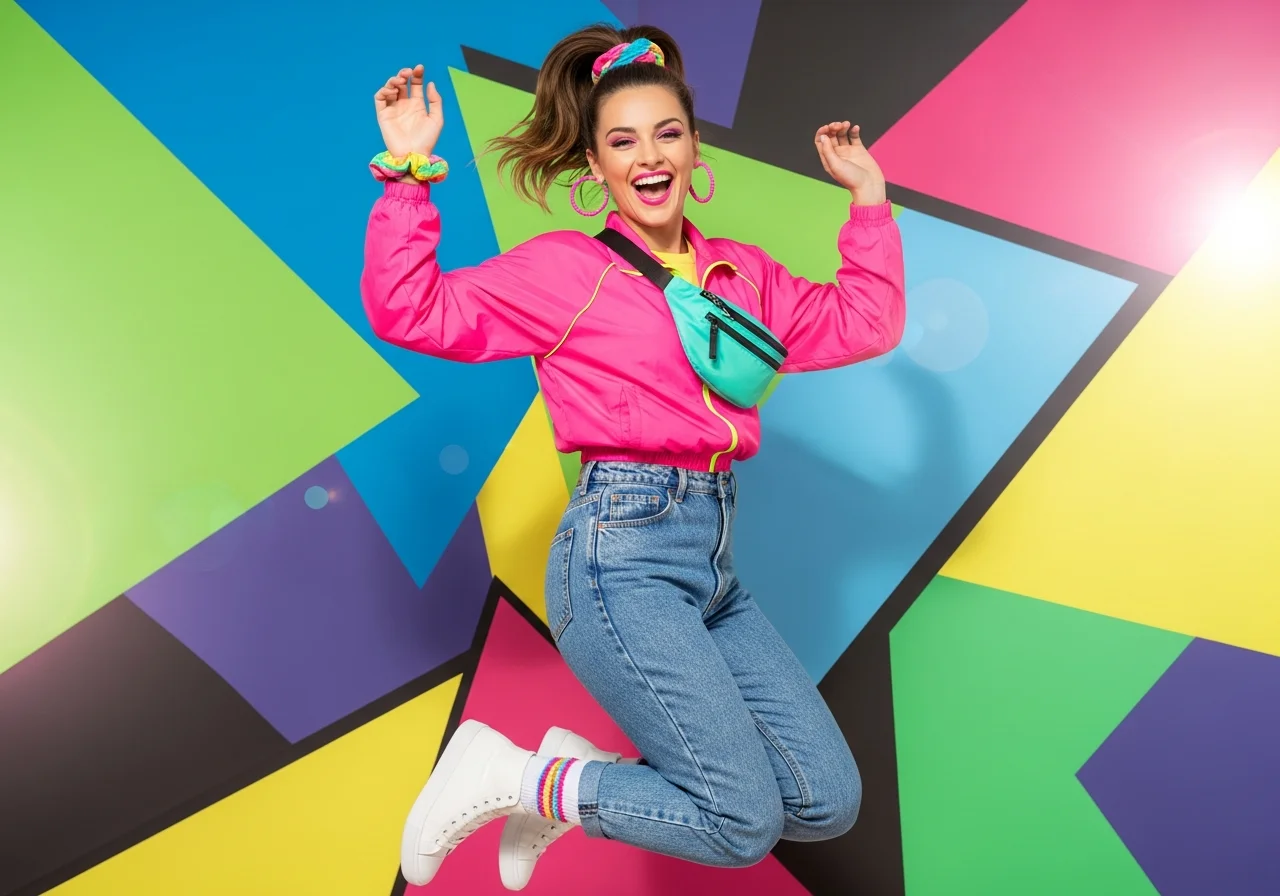
Acid Wash Denim and Neon from the Late 1980s
While the power suit represented 80s sophistication, acid wash denim and neon colors captured the decade’s playful, experimental side. This casual look embodied the era’s love of bold choices and wasn’t-afraid-to-stand-out attitude.
Start with acid wash or stone-washed denim jeans, preferably in a high-waisted or mom jean style. Pair with a neon-colored top, whether it’s a windbreaker, sweatshirt, or t-shirt in electric pink, lime green, or bright orange. Alternatively, layer a denim jacket over a graphic tee and jeans for the classic Canadian tuxedo look.
Footwear includes high-top sneakers, preferably in white or matching your neon accent color. Accessories are crucial: add a fanny pack worn across your chest, oversized hoop earrings, multiple rubber bracelets, and perhaps a scrunchie in your hair. Leg warmers pushed down around your ankles add an extra touch of authenticity. This outfit is perfect for casual outings and captures the fun-loving spirit of late 80s youth culture.
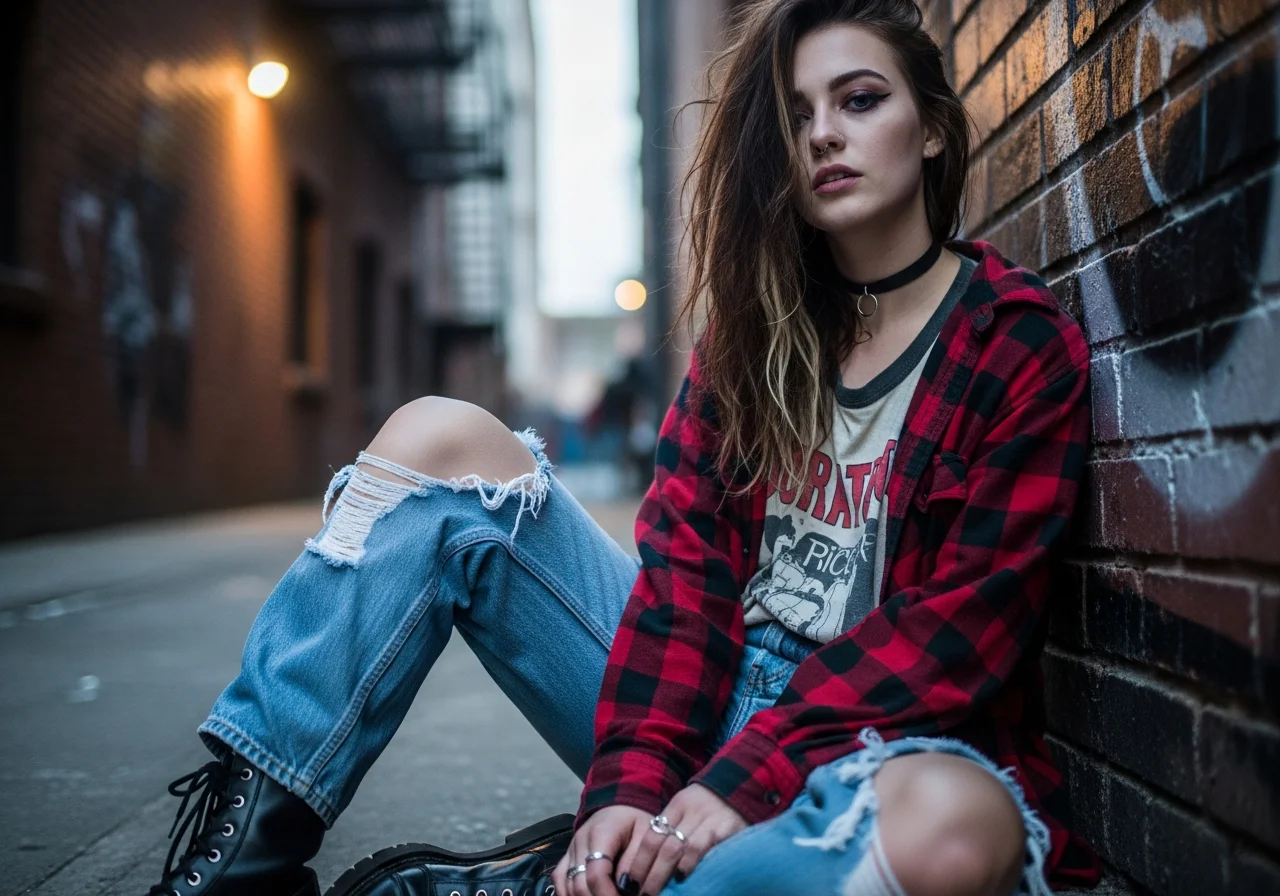
Grunge Flannel and Combat Boots from the 1990s
The early to mid-1990s brought grunge fashion from the streets of Seattle to the mainstream, offering a stark contrast to the excess of the previous decade. This deliberately disheveled, anti-fashion aesthetic remains influential today.
The quintessential grunge outfit centers on a flannel shirt, worn open over a band t-shirt or plain white tee. Choose oversized flannel in classic plaid patterns, preferably in darker colors or earth tones. Pair with ripped or distressed jeans, either straight-leg or loose-fitting, sitting low or at your natural waist.
Combat boots or Doc Martens are essential footwear, preferably well-worn or scuffed. Layer with a vintage cardigan or leave your flannel unbuttoned for that effortlessly undone look. Accessories should be minimal and functional: a beanie, simple choker necklace, or a crossbody bag. The key to grunge is looking like you didn’t try too hard, even though achieving that perfect state of casual disarray often requires careful consideration.
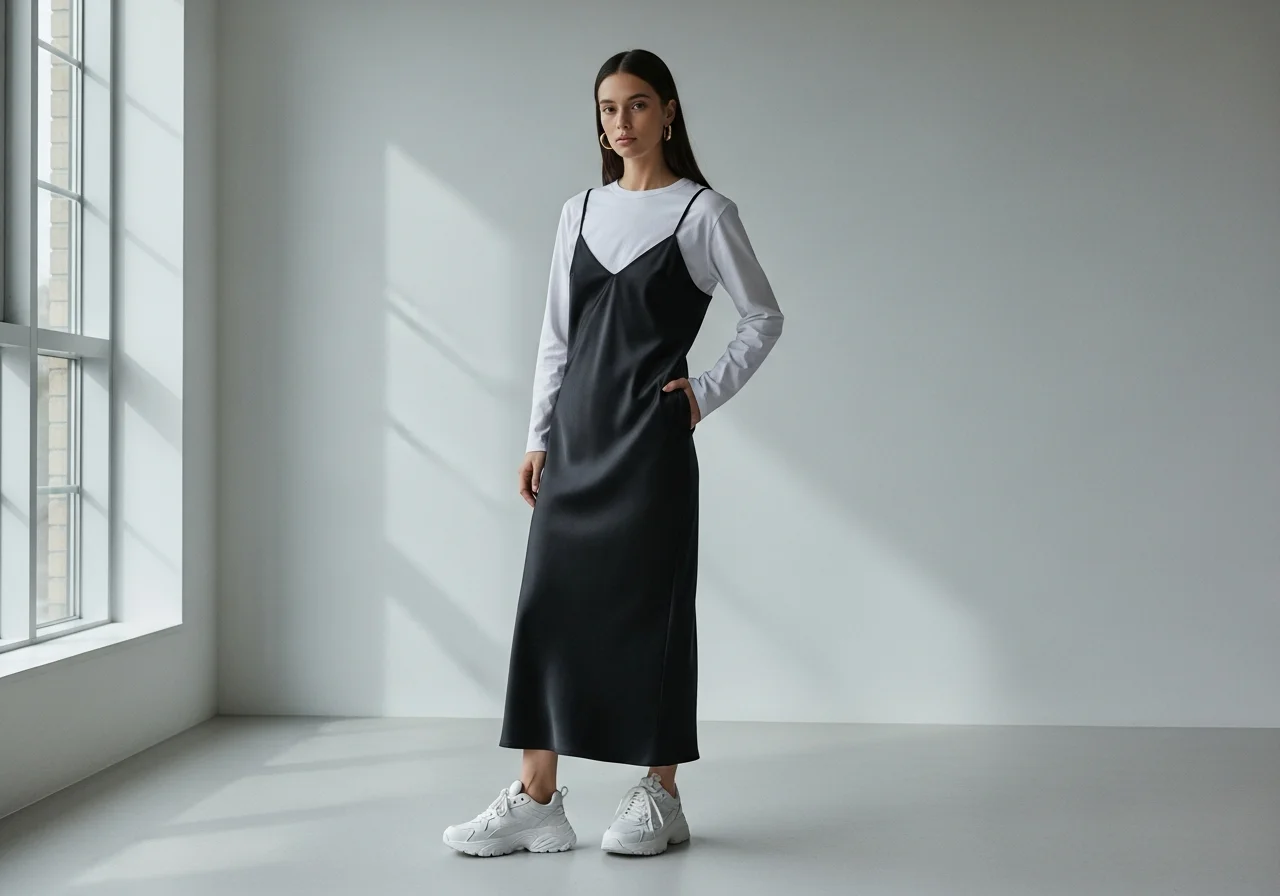
Slip Dress with T-Shirt from the Mid-1990s
As the 1990s progressed, fashion embraced minimalism and the controversial practice of wearing lingerie as outerwear. The slip dress over a t-shirt became an iconic look that balanced feminine and casual elements.
Choose a satin or silk slip dress in a neutral color like black, champagne, or dusty rose, falling anywhere from mid-thigh to midi length. Layer a white, black, or striped long-sleeve t-shirt underneath, allowing the neckline and sleeves to peek out. This creates an interesting contrast between the delicate slip and the casual tee.
Footwear options range from chunky sneakers for a more sporty vibe to strappy sandals or ankle boots for evening wear. Keep accessories simple: perhaps a small shoulder bag, hoop earrings, and a couple of delicate necklaces. This outfit captures the understated cool of 90s minimalism while remaining incredibly wearable for contemporary settings.
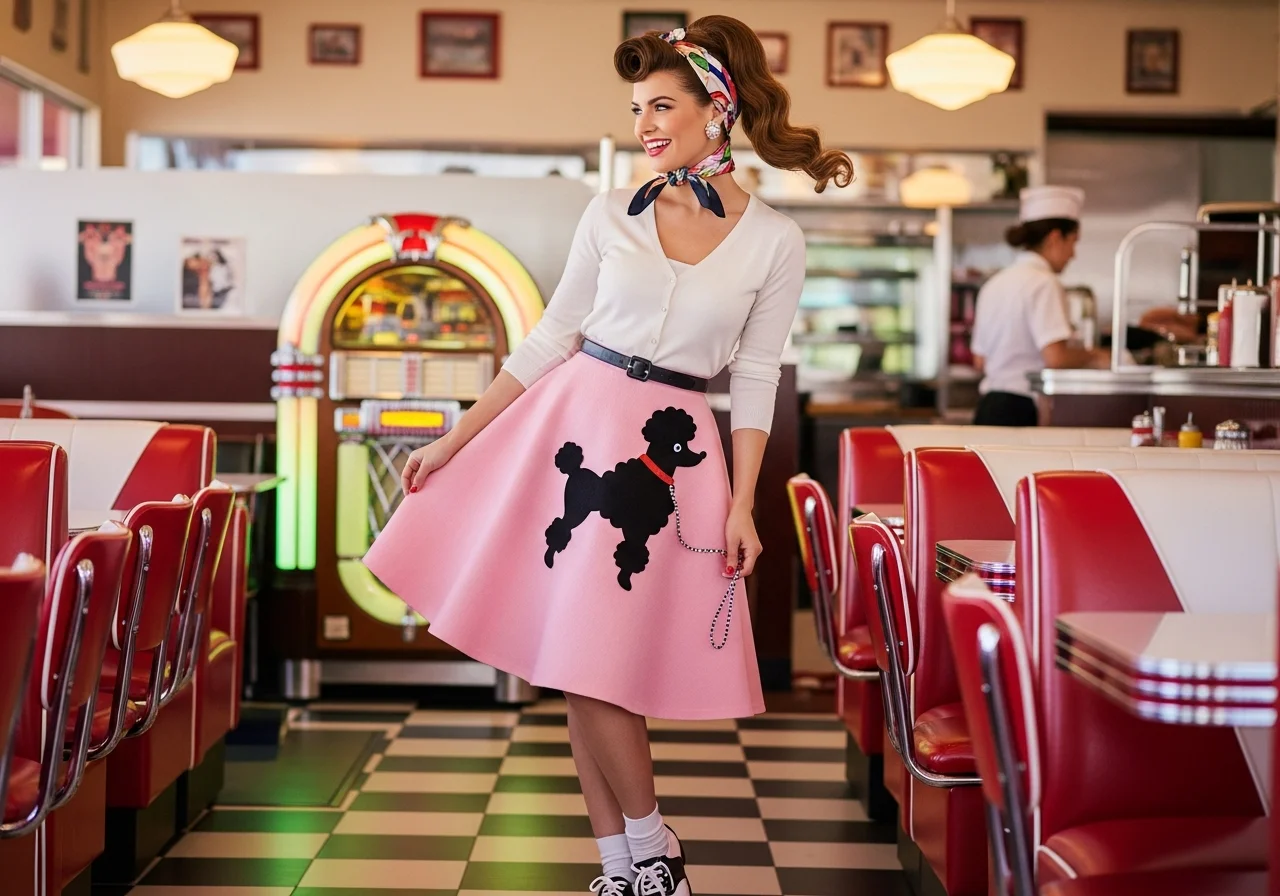
Poodle Skirt and Cardigan from the 1950s
Beyond the swing dress, the 1950s gave us another iconic garment: the poodle skirt. This playful piece represents the innocent, wholesome image of American youth culture during the post-war era.
A traditional poodle skirt is a full, felt circle skirt, usually in a solid color with an appliqué design, most famously a poodle but also records, musical notes, or other whimsical motifs. The skirt should sit at your natural waist and fall below the knee. Pair with a fitted cardigan or a tucked-in blouse, and add a thin belt or scarf tied around your waist.
Saddle shoes or ballet flats are the authentic footwear choice. Accessories include a silk scarf worn around your neck or as a headband, pearl jewelry, and perhaps white gloves for formal occasions. Style your hair in soft curls or a ponytail with plenty of volume. This outfit works wonderfully for themed events but can also be adapted for everyday wear by swapping the appliqué skirt for a solid circle skirt.
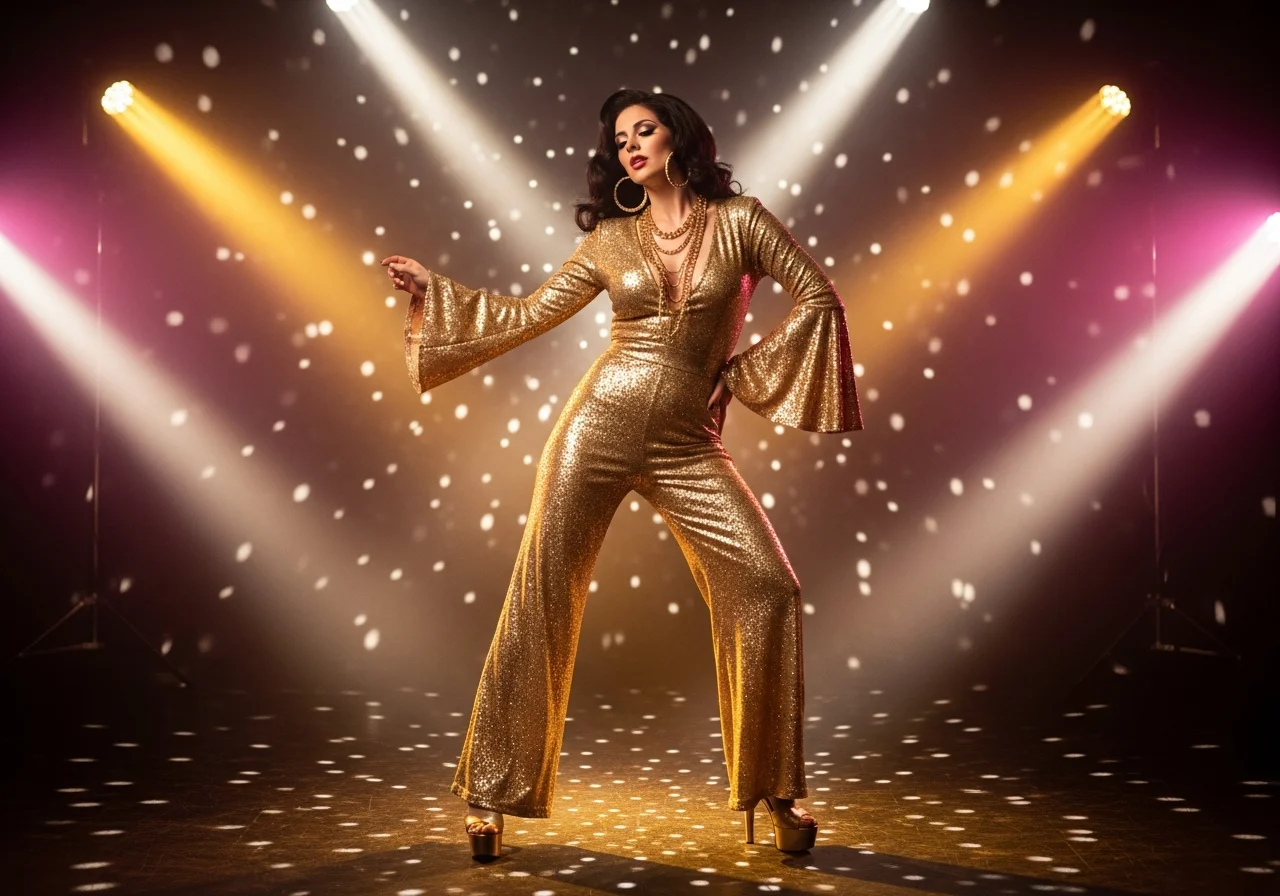
Disco Jumpsuit from the 1970s
Nothing says 1970s nightlife like a disco-ready jumpsuit. This one-piece wonder combined comfort with glamour, perfect for dancing the night away at clubs like Studio 54.
Look for a wide-leg jumpsuit in shimmering fabrics like satin, velvet, or metallic materials. Popular colors include gold, silver, burgundy, or jewel tones. The silhouette should feature a fitted bodice or wrap top with flowing, wide-leg pants. Details like bell sleeves, plunging necklines, or halter tops add authentic disco flair.
Platform heels or wedges are essential to complete the look, adding height and elongating your silhouette. Accessorize with large hoop earrings, layered chains, and a small clutch or shoulder bag. Don’t shy away from sparkle; this is the time to embrace shimmer and shine. Modern interpretations might use more subtle fabrics while maintaining the flattering wide-leg silhouette.
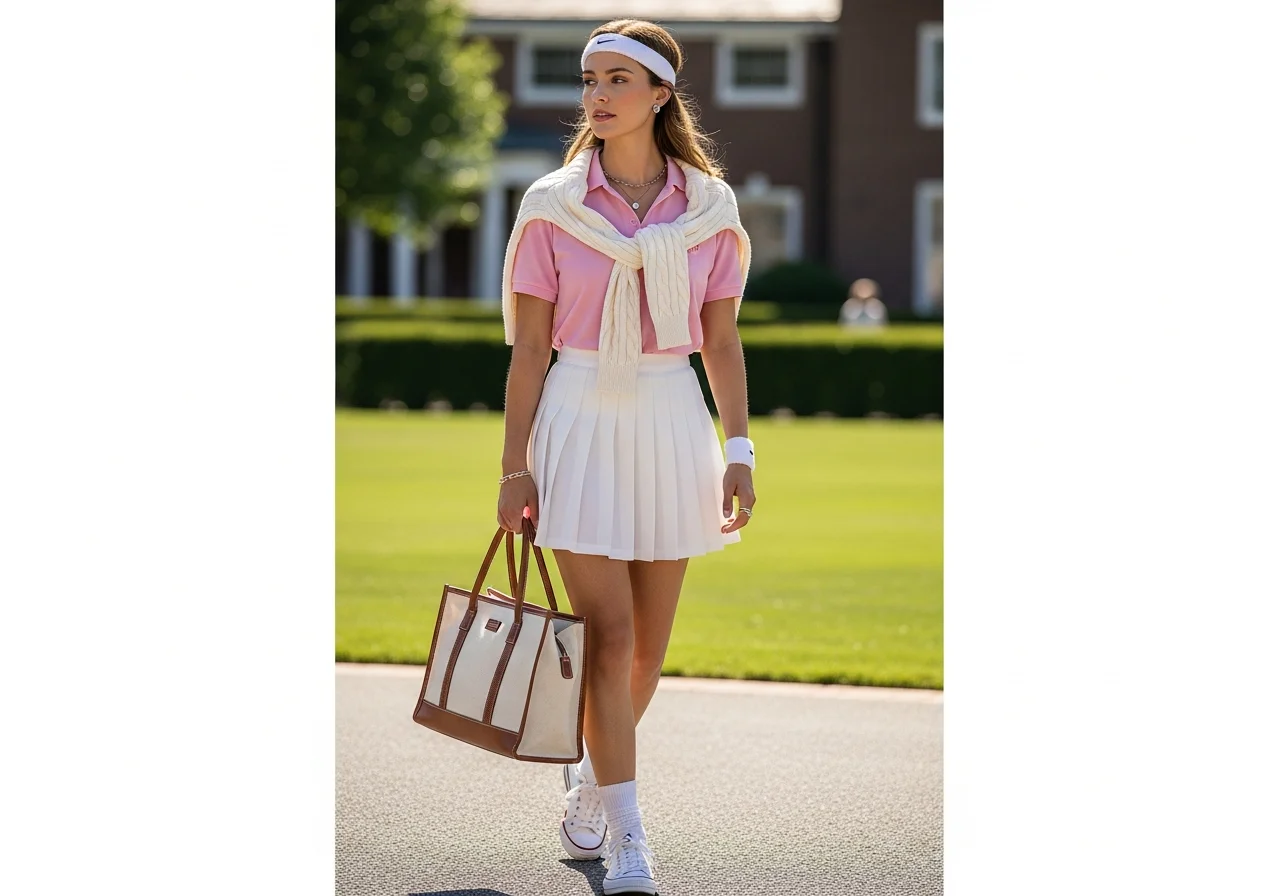
Preppy Tennis Skirt and Polo from the 1980s
The preppy aesthetic dominated 1980s casual fashion, drawing inspiration from Ivy League campuses and country clubs. This clean, sporty look remains popular and easily adaptable.
Start with a pleated tennis skirt in white, navy, or a pastel color, hitting mid-thigh. Pair with a classic polo shirt, either tucked in or left out depending on your preference. Choose complementary or contrasting colors; traditional combinations include navy and white, pink and green, or red and khaki.
Footwear should be clean white sneakers, canvas shoes, or loafers. Add a cable-knit sweater tied around your shoulders for extra preppy points. Accessories include a headband, simple stud earrings, a watch, and a canvas tote bag. This outfit captures the privileged ease of preppy fashion while remaining comfortable and practical for everyday activities.
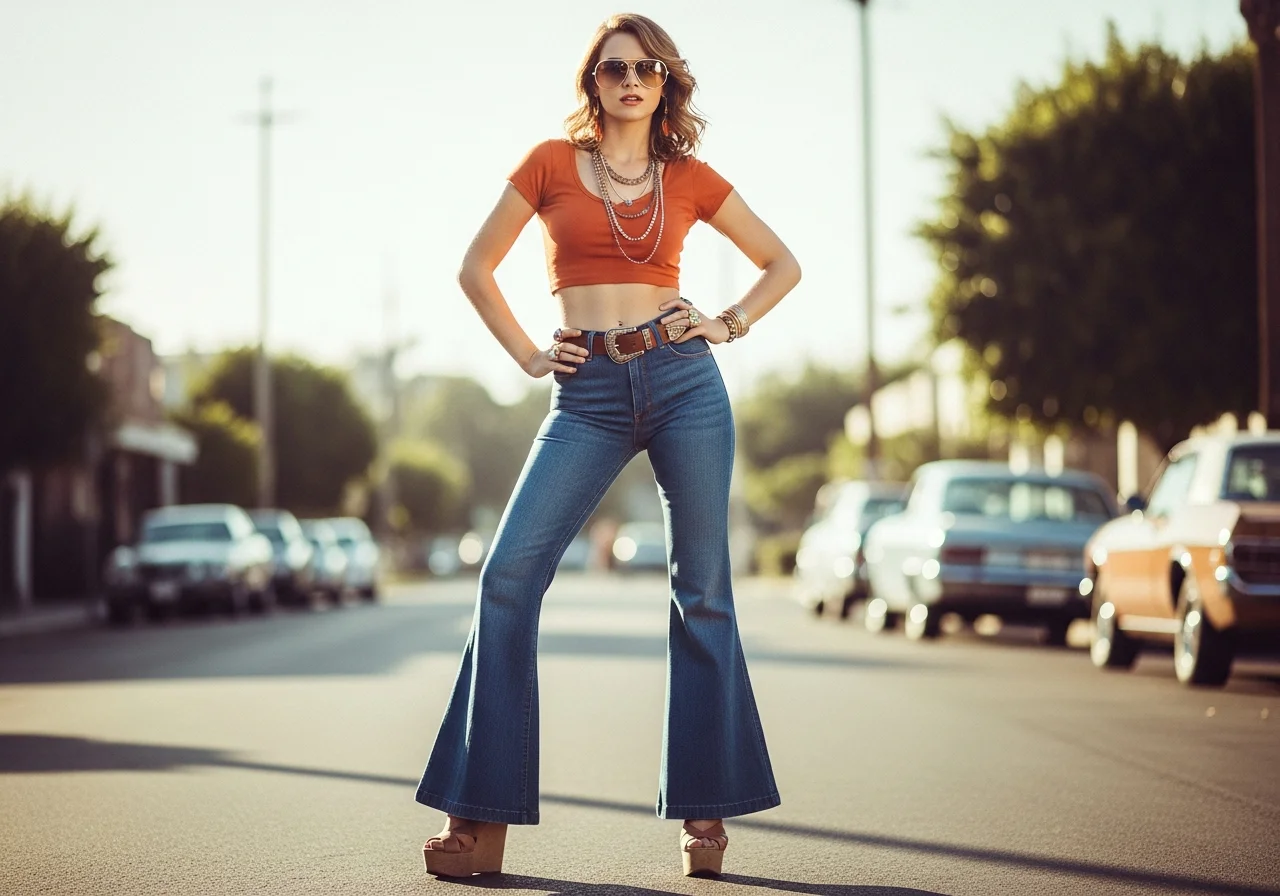
Bell Bottoms and Crop Top from the 1970s
The 1970s silhouette often emphasized elongated legs and a carefree attitude, perfectly embodied by bell bottoms paired with a crop top. This combination captured both the decade’s bohemian spirit and emerging disco glamour.
Choose high-waisted bell bottom jeans or pants in denim, corduroy, or patterned fabrics. The flare should begin at or below the knee, creating a dramatic bell shape that skims the floor. Pair with a fitted crop top or halter top, showing just a sliver of midriff. The high waist of the bottoms meets the cropped length of the top at a flattering point.
Platform shoes or wedges work best to balance the volume of the bell bottoms. Add a wide belt at your natural waist, large sunglasses, and layered necklaces. A denim or suede jacket completes the look for cooler weather. This outfit captures the confident, body-positive attitude of 70s fashion.
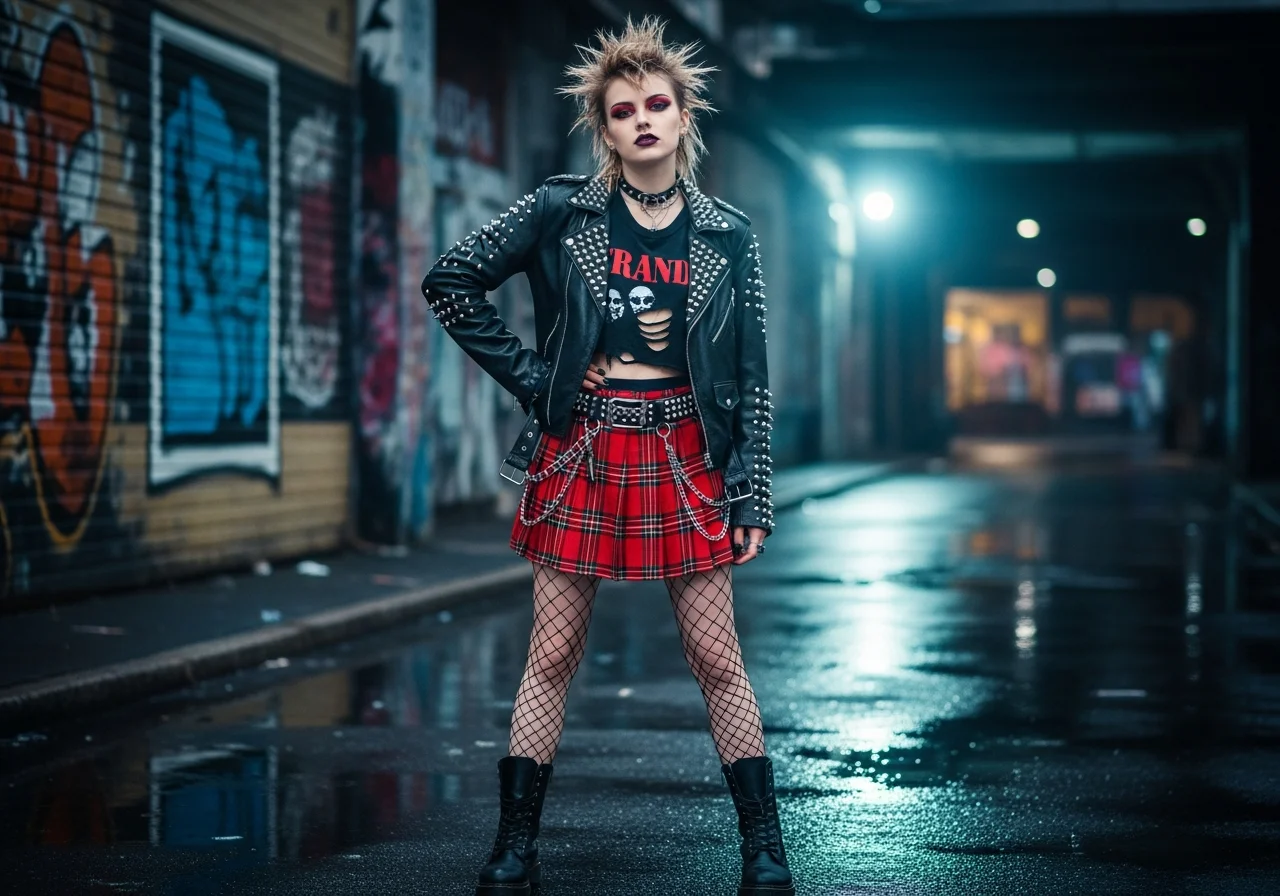
Punk Leather Jacket and Tartan from the Late 1970s and Early 1980s
Punk fashion emerged as a rebellious counterculture movement, combining aggressive styling with DIY aesthetics. This edgy look challenged mainstream fashion conventions and remains influential in alternative style.
The foundation is a black leather motorcycle jacket, preferably slightly oversized and adorned with studs, pins, or patches. Pair with a tartan skirt or pants; the classic punk choice is a pleated mini skirt in red or blue tartan. Alternatively, wear tartan bondage pants for a more extreme look. Layer a ripped band t-shirt or fishnet top underneath.
Footwear includes combat boots or creepers, and thick-soled shoes in black. Accessories are crucial: safety pins used as jewelry, studded belts worn at an angle, leather cuffs, and chains. Fishnet tights with intentional rips add texture. This outfit requires confidence and captures the anti-establishment spirit of punk culture.
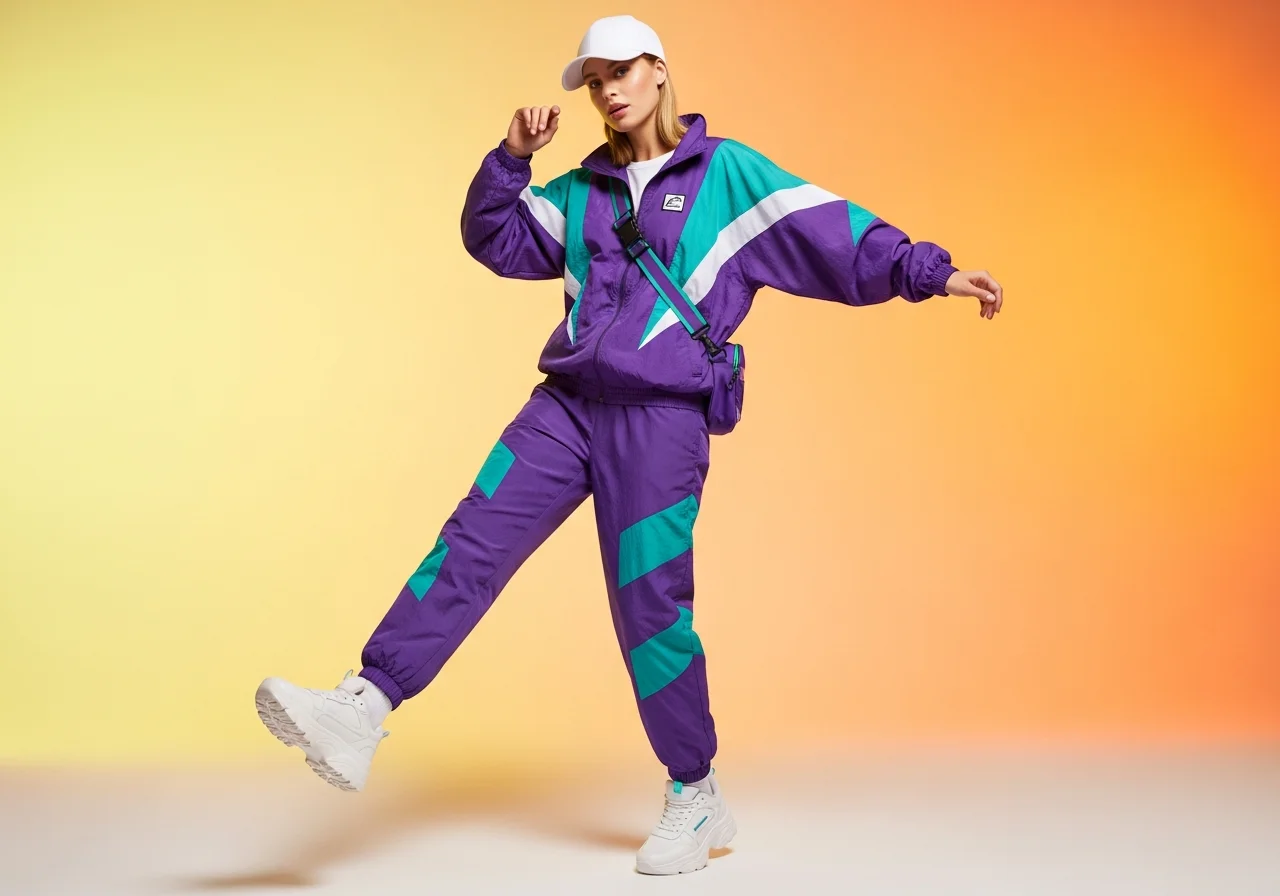
Color-Blocked Athletic Wear from the Early 1990s
The early 1990s saw athletic wear transition from purely functional to fashion-forward, with bold color-blocking and oversized silhouettes dominating the style.
Choose a windbreaker or track jacket featuring color-blocking in contrasting bright colors like purple and teal, red and blue, or pink and yellow. Pair with matching track pants or high-waisted bike shorts. The pieces should be slightly oversized, embodying the relaxed fit popular during this era.
White chunky sneakers are essential; think classic models from major athletic brands. Add a sporty crossbody bag or backpack, a baseball cap, and perhaps a sweatband. This athleisure look before athleisure became mainstream captures the energetic, sports-influenced fashion of the early 90s.
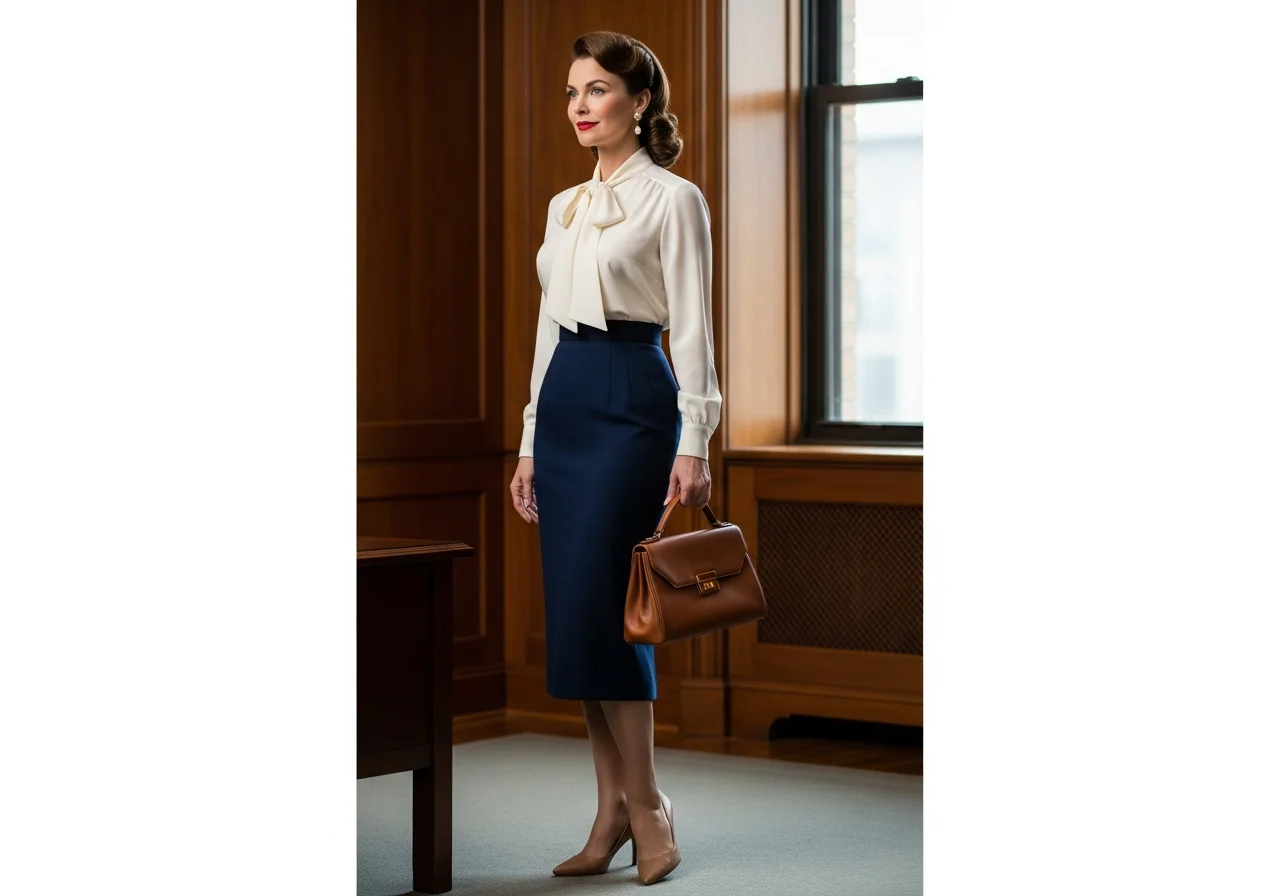
Pencil Skirt and Pussy Bow Blouse from the 1950s and 1960s
This sophisticated outfit represents the polished elegance expected of professional women during the mid-century period. The combination remains timelessly chic and appropriate for modern workplaces.
Choose a high-waisted pencil skirt in a solid color or subtle pattern, hitting just below the knee. The fit should be tailored but not tight, creating a sleek silhouette. Pair with a blouse featuring a pussy bow, a soft, feminine tie at the neckline. Choose silk or a silk-like fabric in a coordinating or contrasting color.
Pointed-toe pumps in a neutral color complete the foundation of the outfit. Add a structured handbag, simple pearl or gold jewelry, and perhaps a pillbox hat for special occasions. A tailored coat or blazer works for layering. This outfit captures the refined professionalism of the era while remaining completely contemporary.
Bringing Retro Style into Your Modern Wardrobe
Incorporating retro outfits into contemporary life doesn’t mean dressing in full period costume. The key is understanding what made these looks iconic and adapting those elements to suit your personal style and modern context. Mix vintage pieces with contemporary items, choose quality over quantity, and focus on fit above all else. A well-tailored vintage-inspired piece will always look better than an ill-fitting authentic garment.
Thrift stores, vintage boutiques, and online marketplaces offer treasure troves of authentic pieces, while many contemporary brands create vintage-inspired collections that combine retro aesthetics with modern fabrics and construction. Don’t be afraid to experiment with different eras, mixing elements from various decades to create a unique personal style that honors the past while remaining firmly rooted in the present.
The enduring appeal of retro fashion lies in its celebration of individuality, craftsmanship, and the courage to make bold style choices. Each era had its distinctive aesthetic, and by understanding these different styles, you gain access to a rich vocabulary of fashion possibilities that transcend temporary trends. Whether you’re drawn to the romantic femininity of the 1950s, the experimental freedom of the 1970s, or the rebellious edge of the 1990s, these retro outfits offer endless inspiration for creating a wardrobe that truly reflects your personality.
Frequently Asked Questions
How do I wear retro outfits without looking like I’m in costume?
The secret is mixing vintage pieces with contemporary items and focusing on fit. Choose one or two retro statement pieces and pair them with modern basics. For example, wear a vintage band t-shirt with current jeans and sneakers, or pair high-waisted vintage trousers with a contemporary blouse. Ensure everything fits well and is appropriately styled for current silhouettes. Avoid wearing head-to-toe vintage from a single era, and skip obvious costume elements like extreme wigs or theatrical makeup.
Where can I find affordable retro clothing pieces?
Thrift stores and consignment shops remain the best sources for affordable authentic vintage pieces. Online marketplaces and vintage-specific platforms offer wider selections, though shipping costs may apply. Many contemporary fast fashion and mid-range brands create vintage-inspired collections at accessible price points. Estate sales and flea markets occasionally yield hidden gems. For specific items, reproduction specialists create high-quality vintage-inspired pieces that capture authentic details while using modern sizing and fabrics.
Which retro styles are most flattering for different body types?
The beauty of retro fashion is that different eras emphasized different silhouettes, meaning there’s something flattering for everyone. The 1950s fit-and-flare dresses suit most body types by defining the waist and skimming the hips. High-waisted styles from the 1940s and 1970s elongate legs and define the waist. The relaxed fits of 1990s grunge work well for those preferring looser silhouettes. The key is understanding your proportions and choosing vintage styles that complement your natural shape rather than fighting against it.
Can I wear retro outfits to work or formal events?
Absolutely. Many retro styles translate beautifully to professional and formal settings. The 1950s pencil skirt and blouse combination remains a workplace staple. Modified 1980s power suits work perfectly for business environments. For formal events, 1920s-inspired drop-waist dresses, 1950s cocktail dresses, or 1970s jumpsuits make elegant choices. The key is choosing sophisticated pieces, ensuring proper fit, and styling them appropriately for the specific dress code and occasion.
How do I care for authentic vintage clothing?
Vintage garments require gentle care to preserve their condition. Always check fabric content and existing care labels first. Hand washing in cold water with mild detergent works for most vintage pieces. Avoid harsh chemicals, bleach, and high heat. Store items in breathable garment bags away from direct sunlight to prevent fading and fabric degradation. For valuable or delicate pieces, consider professional cleaning from specialists experienced with vintage textiles. Proper storage and careful handling ensure vintage pieces remain wearable for years to come.