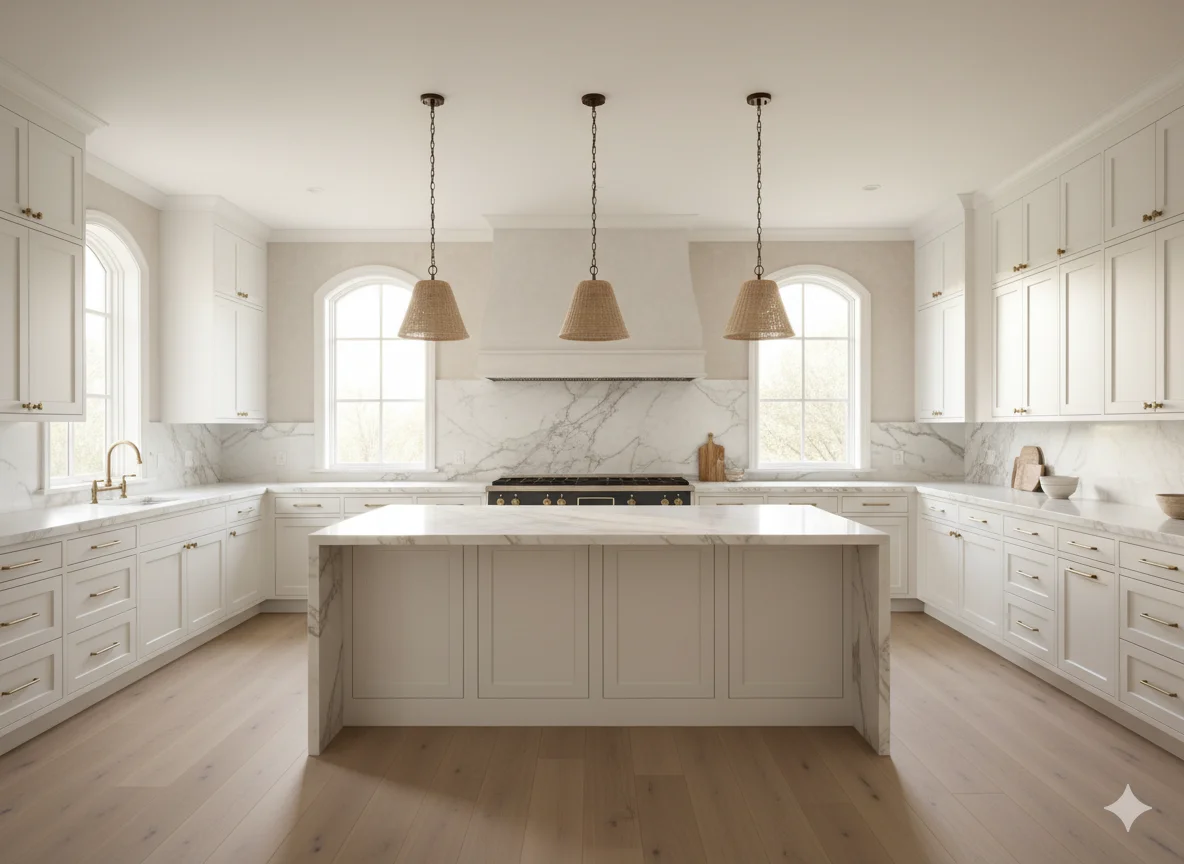
25 Studio McGee Kitchen Inspiration Ideas That Will Transform Your Home
There is a reason why millions of homeowners and design lovers scroll through Studio McGee projects with a sense of longing. The brand founded by Shea McGee and her husband Chad has, over the past decade, built a visual language that feels simultaneously polished and livable, aspirational yet deeply personal. At the center of that language is the kitchen. It is, as Shea herself has said, the heart of the home, the space that sets the tone for every room beyond it. Whether you are planning a full remodel, updating a few key elements, or simply dreaming, the Studio McGee kitchen portfolio offers a masterclass in how to balance beauty with function, timeless design with modern practicality.
This article breaks down 25 of the most compelling ideas drawn from Studio McGee’s body of work, organized into themes that will help you apply these lessons to your own space, whatever the size or budget.
The Philosophy Behind Every Studio McGee Kitchen
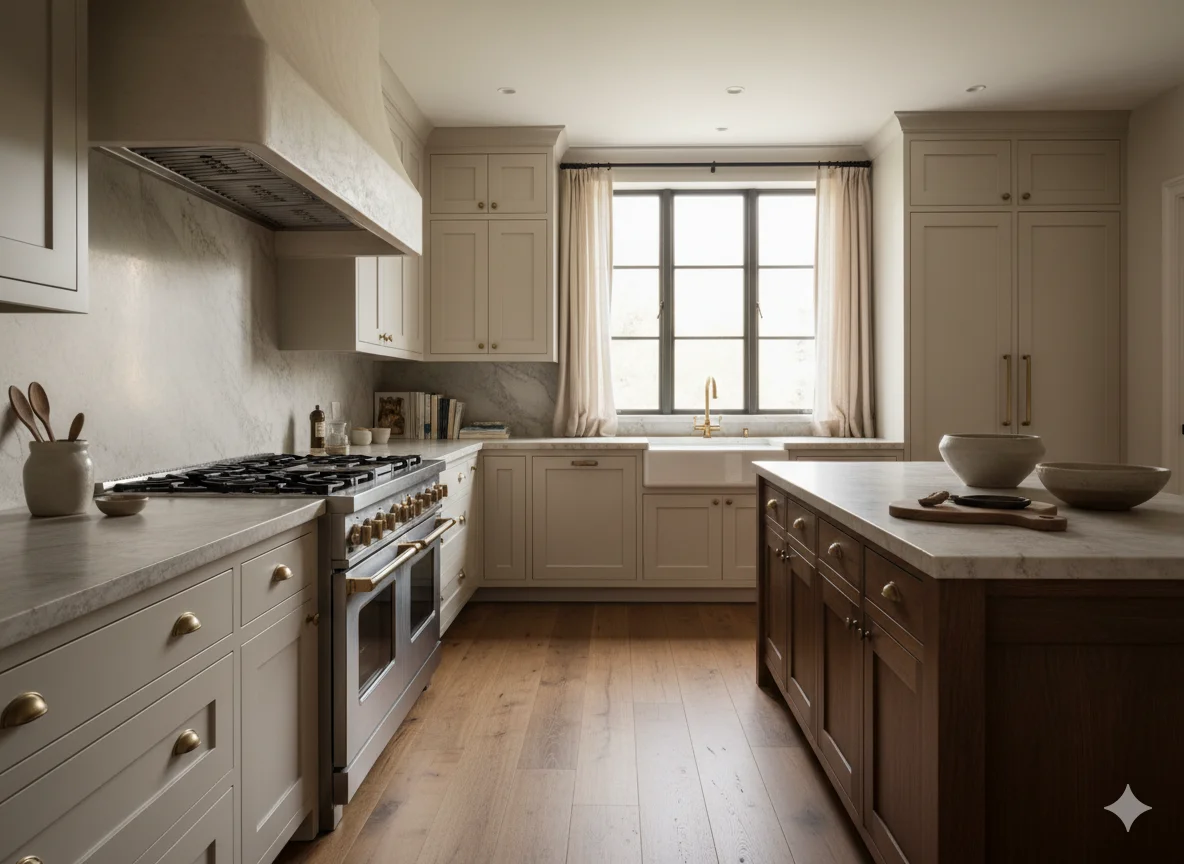
Before diving into specific ideas, it helps to understand the underlying design philosophy. Studio McGee operates from a principle called New Heritage, a design ethos that draws from traditional and historic forms while integrating them into the way contemporary families actually live. In a kitchen, this means celebrating craftsmanship, layering materials with history and texture, and never sacrificing functionality for aesthetics. Every Studio McGee kitchen begins with a clear list of priorities. The range and hood wall typically serve as the anchor, and the rest of the design builds outward from there.
25 Studio McGee Kitchen Inspiration Ideas
H2: Cabinetry That Sets the Tone
1. Go All In With Natural Wood Cabinetry
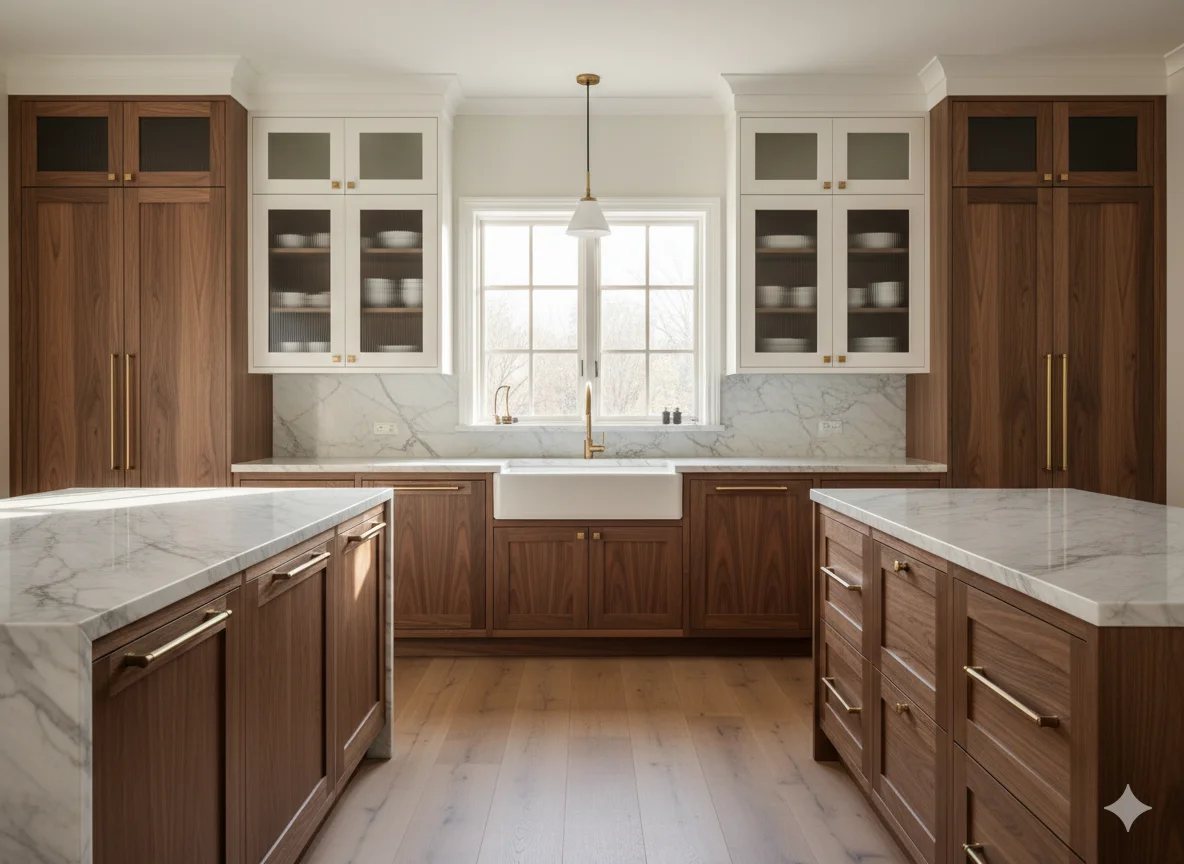
One of the most enduring ideas from the Studio McGee portfolio is the commitment to natural wood cabinetry. Rather than reaching for the default painted finish, the Houston Estate project demonstrated how rich, paneled wood cabinetry creates a kitchen that feels warm, traditional, and genuinely timeless. The key is avoiding orange-tinged stains that date a space and instead choosing finishes that celebrate the natural grain in a cool, nuanced tone.
2. Painted Cabinets in Soft, Grounded Hues
When Studio McGee does reach for paint, the color choices are never arbitrary. From sage greens to deep navies to soft putty tones, the firm gravitates toward hues that anchor the space without competing with the materials layered throughout. The kitchen at the McGee home itself features cabinetry paired with walls painted in Benjamin Moore Swiss Coffee at reduced strength, a detail that shows just how much precision goes into the seemingly simple choice of white.
3. Two-Tone Cabinetry for Depth and Interest
A reliable idea from Studio McGee’s archive is pairing upper and lower cabinet colors. A crisp white upper cabinet paired with a deeper, more saturated lower cabinet or island provides visual grounding without making the space feel heavy. This technique works particularly well in kitchens with high ceilings, where the contrast draws the eye upward and creates a sense of architectural proportion.
4. Reeded Glass Fronts on Upper Cabinets
Rather than leaving upper cabinets entirely solid or fully open, Studio McGee frequently incorporates reeded glass panels. This choice provides a display opportunity while also softening the visual weight of cabinetry. The slight texture of reeded glass adds dimension without revealing every imperfection inside, making it both practical and beautiful.
5. Custom Cabinetry Built Around the Range
In Shea McGee’s own kitchen, custom cabinetry was designed to accommodate 100-year-old antique pocket doors found on eBay. This is one of the brand’s signature moves: building the kitchen’s structure around a found or salvaged object that carries history. The result is a space that cannot be replicated elsewhere, which is the very definition of a designer kitchen.
H2: The Range Wall as a Focal Point
6. Invest in a Statement Range
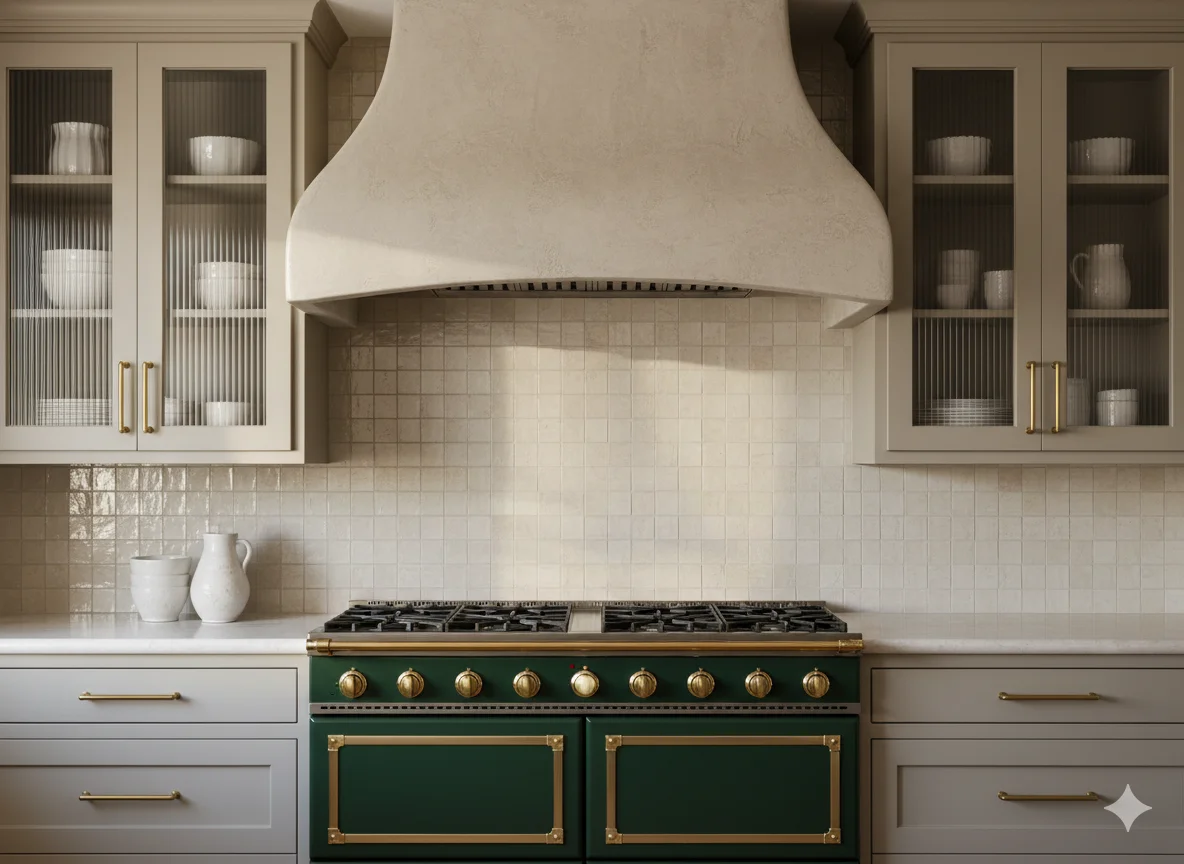
The Lacanche range at the McGee home is the kind of splurge that pays dividends for decades. A statement range in a considered color, with mixed metal hardware and premium construction, becomes the room’s undeniable focal point. When Shea McGee designs a kitchen, the range is always the first decision, and everything else responds to it.
7. A Plaster Hood With Texture and Weight
Nothing signals a well-designed kitchen quite like a custom plaster hood. Studio McGee has executed this element across dozens of projects, always with subtle variations. A plaster hood with a delicate slope and a tactile, hand-finished texture bridges the gap between old-world craftsmanship and modern restraint. It also provides an opportunity to introduce a material that patinas beautifully over time.
8. Extend the Backsplash From Counter to Ceiling
On the range wall especially, Studio McGee often extends the tile or stone material from the countertop all the way to the ceiling. This creates a cohesive, uninterrupted focal wall that grounds the stove and elevates the entire kitchen. In the Water’s Edge project, this idea was taken further by wrapping the material entirely around a custom range nook.
9. Symmetry on Either Side of the Range
A hallmark of the Studio McGee aesthetic is studied symmetry around the range. Whether it is matching pantry doors, flanking open shelves, or glass-front cabinets on either side, maintaining visual balance around the stove gives the focal wall an architectural quality. In the Houston Estate project, glass-fronted cabinets on each side of the range area allow for beautiful dishware display while balancing the composition.
10. Build a Full Nook Around the Range
In several notable projects, Studio McGee has gone beyond a simple hood and created an entire architectural nook around the range. Wrapped in plaster or stone, with built-in niches, wood beams, and decorative hooks for cookware, these nooks transform the cooking area into something that feels like it has always been part of the home’s original structure.
H2: Islands, Countertops, and Surfaces
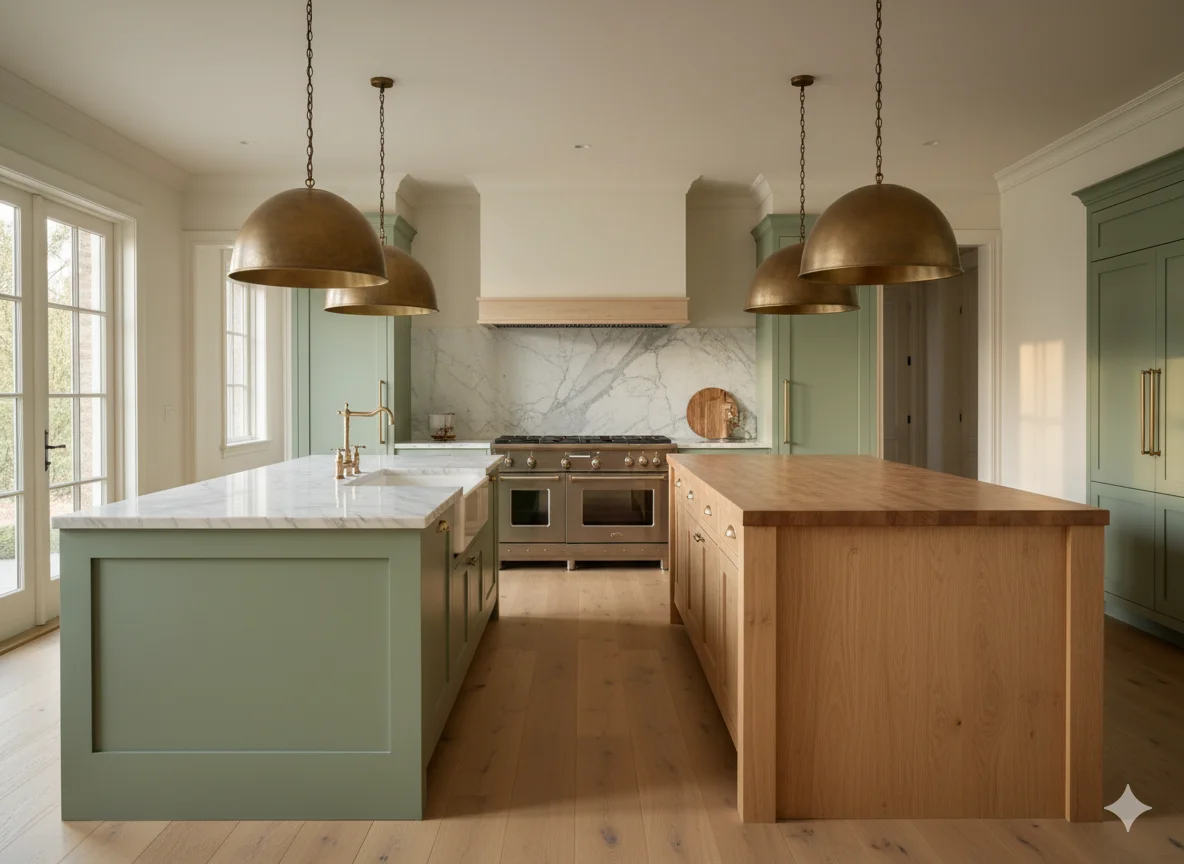
11. The Double Island for Larger Spaces
The Water’s Edge project introduced one of Studio McGee’s most discussed ideas: the double island. Rather than a single sprawling surface that can feel overwhelming in a large kitchen, two islands divide the space with purpose, create more storage and prep area, and give the kitchen a natural flow between cooking, gathering, and serving.
12. A Wooden Island as a Counterpoint to Painted Cabinetry
In the Tahoe Pines project, a wooden island at the heart of the kitchen served as a warm, natural counterpoint to surrounding cabinetry. This is a classic Studio McGee move, introducing a contrasting material to add depth. A butcher block or natural wood island also signals that the kitchen is a place of real cooking, not just display.
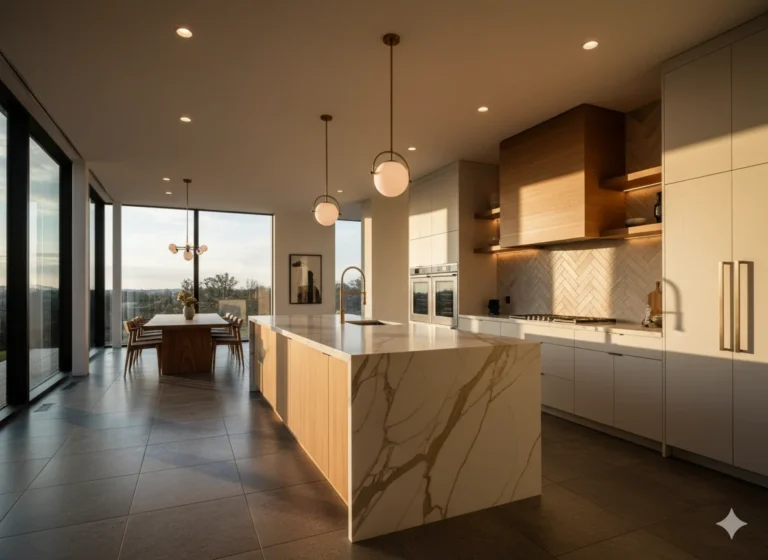
13. Marble Countertops That Continue up the Backsplash
Marble is a recurring material in the Studio McGee kitchen, and the most impactful use of it involves letting the slab continue vertically up the backsplash behind the range or across an entire wall. This approach reduces visual clutter by eliminating a seam and creates a sleek, luxurious surface that ties the space together.
14. Pay Attention to the Countertop Profile
A detail easily overlooked but heavily invested in by the Studio McGee team is the countertop edge profile. The Houston Estate kitchen features a bullnose edge that elevates the stone and makes it feel genuinely custom. Choosing a thoughtful edge profile rather than a default square edge is one of the simplest ways to add a designer quality to any kitchen.
15. Honed Finishes Over High Polish
Throughout the Studio McGee portfolio, honed granite and matte stone surfaces appear far more frequently than their polished counterparts. Honed finishes are more forgiving of everyday use, they develop a beautiful patina, and they align with the organic, layered aesthetic the brand consistently pursues.
H2: Open Shelving, Storage, and Styling
16. Open Shelving as a Styling Opportunity
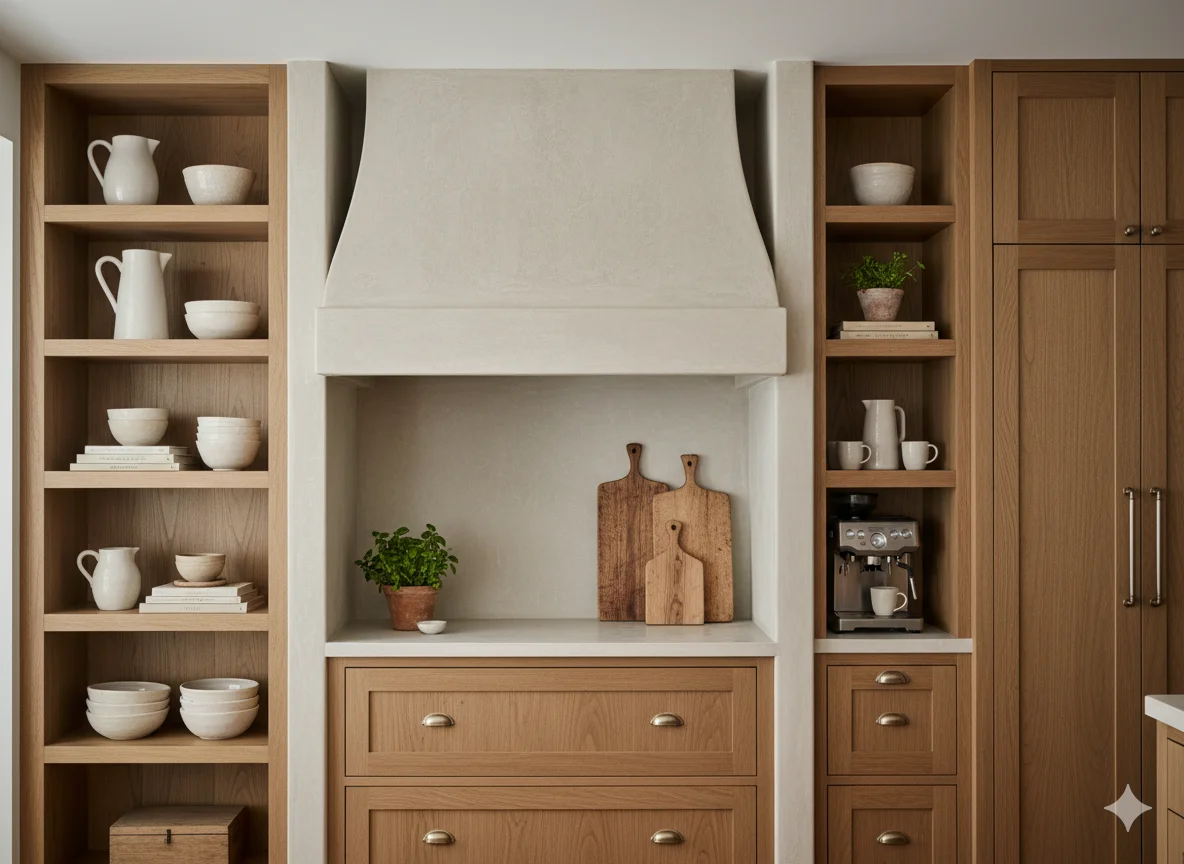
Studio McGee treats open shelving as a curatorial space, not simply a practical one. The Cabo Dos Vistas project featured two countertop-to-ceiling niches fitted with open shelves displaying the client’s most beautiful serveware. The result added texture, color, and personality to what might otherwise have been a flat expanse of cabinetry.
17. Hidden Functional Elements Behind Beautiful Facades
In Shea McGee’s own kitchen, the trash can is concealed behind what appears to be two drawers, and two dishwashers are integrated seamlessly into the cabinetry. This approach reflects a commitment to maintaining the visual clarity of the space while ensuring it functions exactly as a hardworking kitchen should.
18. A Coffee Nook Carved Into the Cabinetry
One of the more intimate and personal ideas from the Studio McGee archive is the carve-out coffee nook within a larger cabinetry run. Set with open shelves, a dedicated outlet, and space for a small machine, this detail makes a kitchen feel considered and specific to the family that uses it.
19. Built-In Niches for Styling and Display
Alongside open shelving, Studio McGee frequently incorporates built-in niches into plaster walls or range nook surrounds. These recessed spaces allow for the display of ceramics, plants, cookbooks, or seasonal objects without taking up counter space or adding visual noise to the room.
20. Antique or Vintage Pantry Doors as a Statement
Rather than standard cabinetry doors on pantry openings, Studio McGee has introduced antique pocket doors and salvaged wooden doors as closures. These aged pieces immediately distinguish a kitchen from anything that could be replicated in a showroom and give the space a sense of layered history.
H2: Details, Finishes, and the Designer Touch
21. Mix Metals Thoughtfully
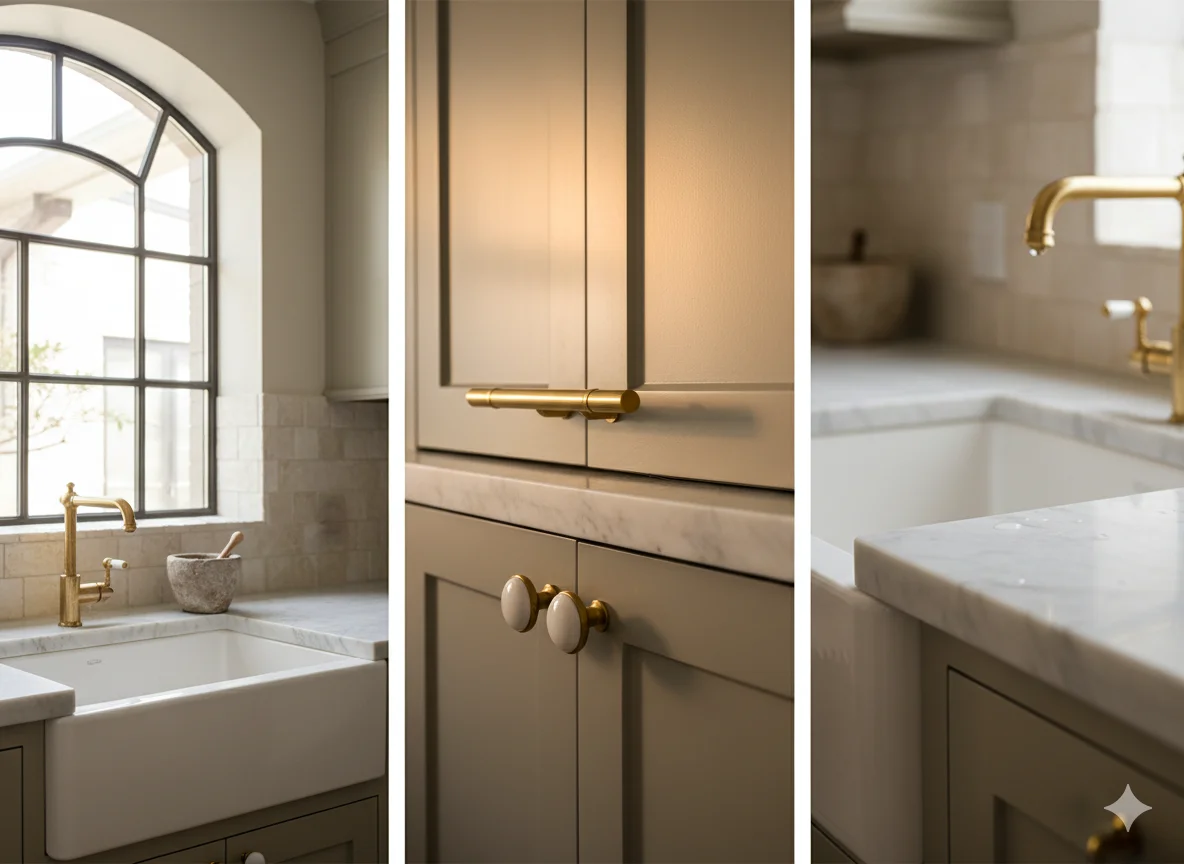
Across the Studio McGee portfolio, mixed metals appear consistently. Brass hardware combined with silver fixtures, or unlacquered brass alongside polished nickel, creates a curated, collected feeling rather than the sterility of perfectly matched finishes. The Lacanche range in the McGee home uses both silver and brass hardware to tie together the metals working throughout the house.
22. Cabinet Hardware as Jewelry
The Studio McGee team treats cabinet hardware the way a stylist treats accessories. Armac Martin pulls, unlacquered brass knobs, and elongated bar handles all make repeat appearances throughout the brand’s projects. Swapping dated hardware is consistently cited as one of the simplest ways to transform an existing kitchen into something that feels designer.
23. A Backsplash Tile Pattern That Does the Work
While the brand is not averse to plain subway tile, the most compelling Studio McGee kitchens feature a tile pattern that adds texture and dimension. Handmade clay tiles, unlacquered terracotta, and tonal zellige appear throughout the archive. The Clé tile used on the McGee home kitchen backsplash is a case study in how artisan tile can elevate an otherwise restrained space.
24. An Unexpected Architectural Detail
Shea McGee has noted that in most Studio McGee kitchens, there is one element that is a step beyond typical design. In the Maryland Heritage Remodel, that element was an oval window placed asymmetrically to balance a tricky layout. In other projects, it has been a ceiling beam, a paneled ceiling, or a steel-framed window above the sink. The lesson is simple: identify one opportunity to do something unexpected.
25. Natural Light as a Design Material
Studio McGee kitchens consistently make the most of natural light. From steel-framed windows that bring the outdoors in, to skylights placed directly above a range wall, the brand treats daylight as a primary material. Positioning prep areas and islands to capture morning light, and choosing stone and wood surfaces that glow under it, is one of the most enduring ideas in the entire portfolio.
Bringing It All Together
The most consistent lesson from a decade of Studio McGee kitchen design is that a beautiful kitchen is the result of many small, deliberate decisions made in service of a unified vision. It begins with the range and builds outward. It balances materials with history against those that are new and clean. It hides what should be hidden and displays what deserves to be seen. And somewhere within it, it carries a single unexpected element that announces the individuality of the family who lives there.
Whether you take one idea from this list or attempt to incorporate several, the Studio McGee approach offers a genuinely transferable framework. Start with what matters most functionally. Layer in the materials that speak to you. And then find one place, just one, to do something that could not belong to any other kitchen but yours.
Frequently Asked Questions
What defines the Studio McGee kitchen aesthetic?
The Studio McGee aesthetic is rooted in the New Heritage design philosophy, which blends traditional craftsmanship, organic materials, and layered textures with modern functionality. Kitchens typically feature natural stone countertops, custom cabinetry, plaster hoods, and mixed metal hardware, all united by a neutral, warm color palette.
What cabinet colors does Studio McGee commonly use?
Studio McGee gravitates toward soft whites, warm off-whites, putty tones, sage greens, and deep navy or forest greens. Benjamin Moore Swiss Coffee and similar warm whites appear frequently as wall and cabinet colors, often applied at reduced paint strength for a softer, more nuanced finish.
How can I get a Studio McGee look on a limited budget?
Focus on high-impact swaps first. Replacing cabinet hardware with unlacquered brass or black iron pulls, adding open shelving with curated styling, and choosing a statement backsplash tile can dramatically shift a kitchen’s aesthetic. A new light fixture above the island and a thoughtful countertop edge profile also make a significant difference without requiring a full renovation.
What countertop material does Studio McGee prefer?
Studio McGee favors natural stone, particularly marble and honed granite. The honed finish appears most frequently because it is more forgiving of daily use, develops a patina over time, and aligns with the brand’s preference for materials that feel organic and layered rather than sterile.
What is the first thing to design when planning a kitchen in the Studio McGee style?
The range and hood wall should always be the first decision. Studio McGee begins every kitchen design with this focal point and builds outward from it. Choosing the range determines the scale of the hood, the framing of the cabinetry on either side, and the overall proportions of the room, making it the most foundational element in the entire design process.