24 Kitchen Hardware Trends and Ideas
There is a quiet revolution happening in kitchens across the country, and it has nothing to do with appliances or cabinetry. It is happening at the scale of a knob, a pull, a handle. Kitchen hardware, long treated as a forgettable finishing detail, has finally taken its rightful place at the center of interior design conversation. In 2025, more homeowners and designers than ever before are approaching hardware as an intentional, expressive element of the kitchen, not simply a functional necessity.
This shift makes practical sense. Hardware is the most affordable and accessible upgrade available to any kitchen. You can transform the entire visual personality of a space by swapping out a set of pulls on a Saturday afternoon without touching a single cabinet or countertop. And with the design landscape now offering an extraordinary range of finishes, materials, textures, and forms, the decisions available to you are richer than at any point in recent memory.
Whether you are planning a full kitchen renovation or simply looking to breathe new life into a dated space, this guide explores 24 kitchen hardware trends and ideas that are defining kitchens right now, giving you the knowledge and confidence to choose hardware that is both personal and enduring.
Finish Trends Setting the Tone
Matte Black Hardware
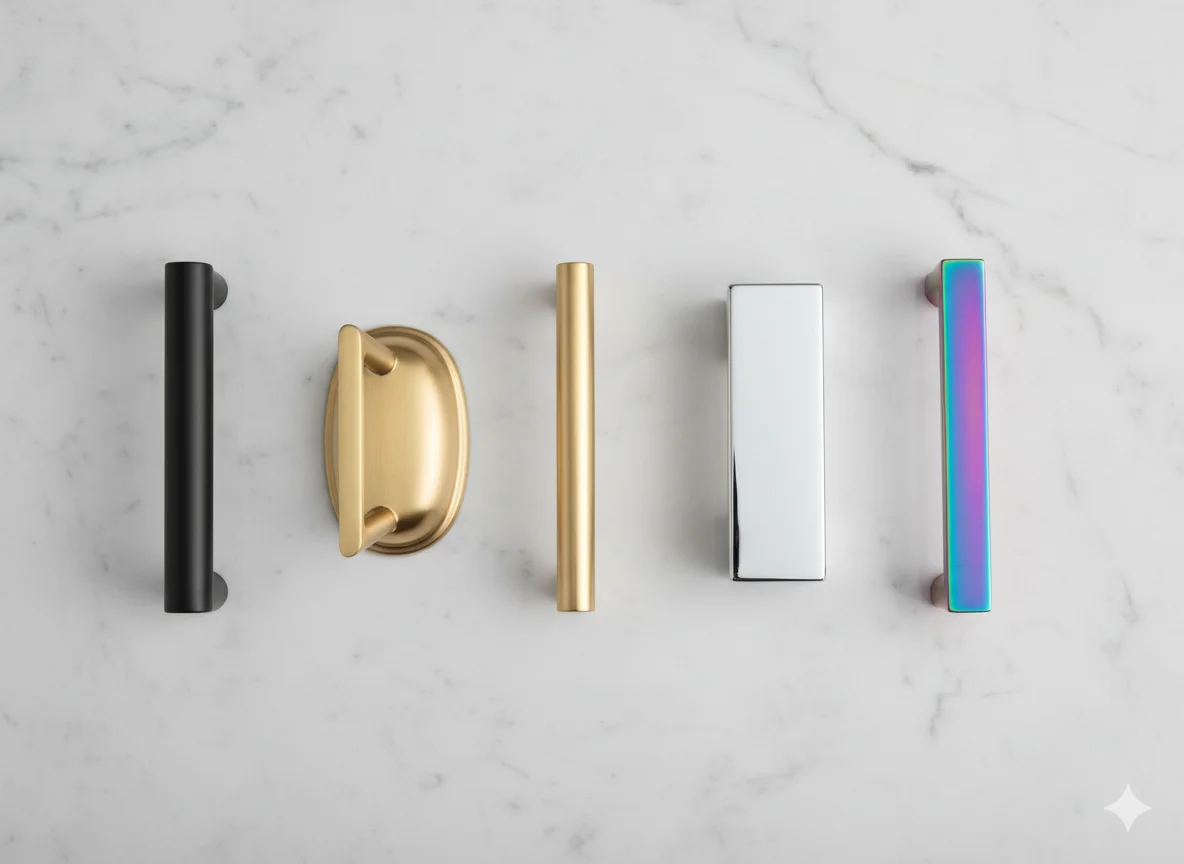
Matte black has held its place as one of the most dominant hardware finishes for several years running, and it continues to prove its staying power. Its appeal is straightforward. Against light cabinetry, matte black hardware delivers a striking, architectural contrast. Against darker cabinetry, it adds a subtle, layered dimension that feels sophisticated rather than heavy. Beyond aesthetics, matte black is remarkably practical. The non-reflective surface resists fingerprints and water marks, making it a genuinely functional choice for a kitchen that sees daily use. It pairs effectively with nearly every cabinet style, from shaker to flat-front, and bridges the gap between modern and industrial design with ease.
Satin Brass
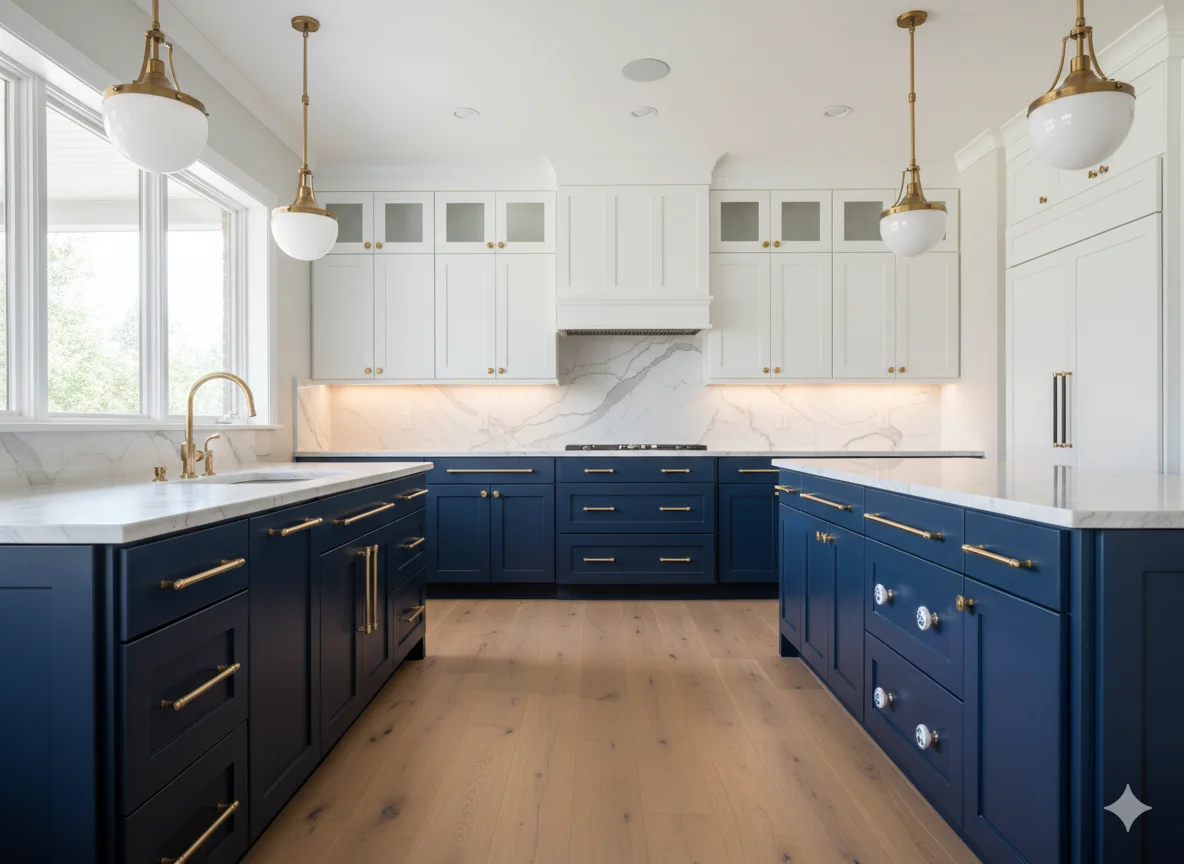
Satin brass has emerged as the refined answer to the polished brass of decades past. Where polished brass often reads as loud and dated, satin brass carries a warmth and elegance that feels genuinely current. Designers favor it because its brushed texture keeps shine to a minimum while still introducing the richness that only a warm metal can provide. Unlike unlacquered brass, which oxidizes and develops an inconsistent patina over time, satin brass maintains a consistent, predictable appearance that requires minimal maintenance. It pairs beautifully with navy blue, deep green, charcoal, and natural wood cabinet colors.
Brushed Gold
Closely related to satin brass but with a cooler, more contemporary tone, brushed gold hardware has experienced a significant resurgence. It brings a touch of luxury to the kitchen without crossing into ostentation. The brushed texture softens the metallic quality, making the hardware feel elevated rather than showy. Brushed gold works particularly well in kitchens that incorporate natural stone countertops, marble backsplashes, or light wood accents.
Polished Chrome
For kitchens designed around a clean, contemporary, or mid-century modern aesthetic, polished chrome remains an authoritative choice. Its mirror-like finish introduces brightness and visual clarity, making it especially valuable in smaller kitchens where light is at a premium. Polished chrome coordinates naturally with stainless steel appliances, creating a cohesive metallic story throughout the space without the need for deliberate color matching.
Gunmetal and Pewter
Gunmetal and pewter finishes occupy an interesting space between matte black and traditional silver tones. They carry a deeper, more complex quality than either extreme, which makes them a compelling option for kitchens that want visual weight without the starkness of true matte black. These finishes are particularly at home in industrial-inspired and masculine kitchen designs that incorporate concrete countertops, open shelving, and raw wood elements.
PVD Finishes
Physical Vapor Deposition technology has become the gold standard for high-end kitchen hardware finishes. PVD bonds a thin metallic layer to the hardware at a molecular level, producing a surface that is significantly harder and more resistant to scratching, tarnishing, and corrosion than conventional electroplated finishes. For homeowners making a serious long-term investment in their kitchen, PVD hardware offers both aesthetic beauty and the reassurance of lasting durability.
The Mixed Metals Approach
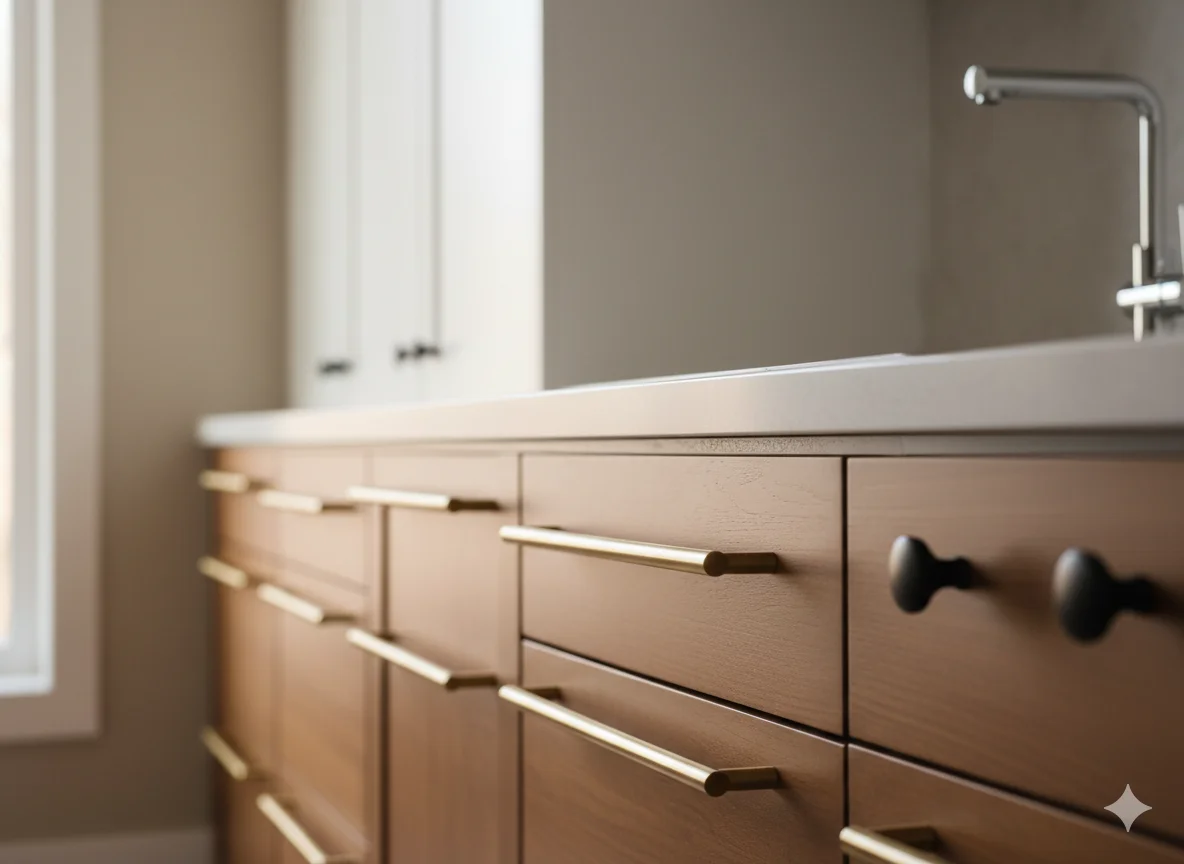
One of the most consequential shifts in kitchen design thinking over the last few years is the wide acceptance of mixing metal finishes. The old convention that demanded all hardware in a kitchen share a single finish has been replaced by a more nuanced, layered approach. Today, the most compelling kitchens often feature two or three distinct metal finishes working together in deliberate conversation.
The most reliable method is to establish one dominant finish across the majority of your cabinet hardware, then introduce a secondary finish through accent elements such as the faucet, light fixtures, or a handful of knobs on lower cabinets. For example, brushed brass cabinet pulls combined with a matte black faucet and polished chrome pendant lights creates a warm, layered palette that reads as curated rather than chaotic. The key is to ensure that the metals you choose share a compatible undertone, whether warm or cool, so the combination feels cohesive rather than accidental.
Two-Tone Hardware
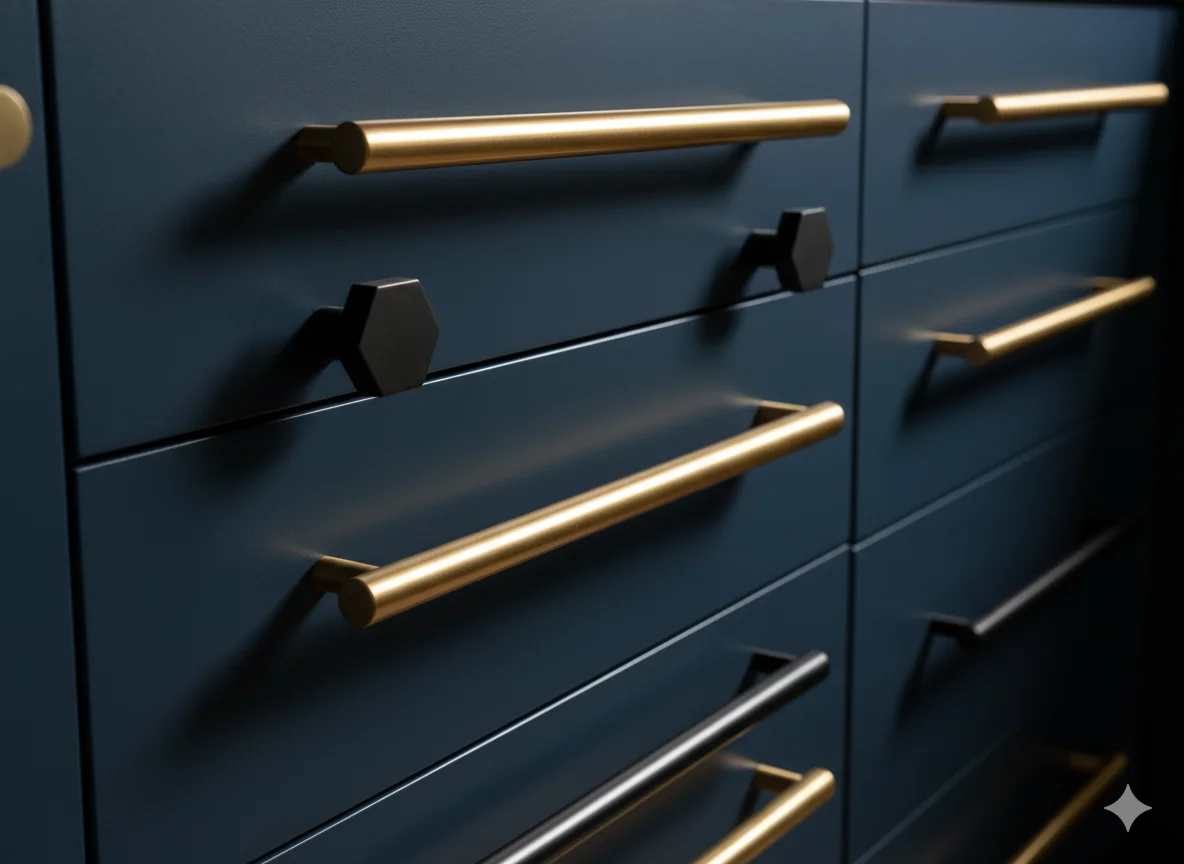
Two-tone hardware takes the mixed metals concept and applies it within a single piece of hardware itself. Pulls that combine matte black with brushed gold, or knobs set on backplates with contrasting finishes, bring a level of detail and intentionality that elevates otherwise standard cabinetry. This approach allows homeowners to introduce multiple finish tones without the commitment of selecting entirely different hardware styles throughout the kitchen.
Statement and Sculptural Hardware
Oversized Pulls
The trend toward oversized pulls continues to gain momentum. Where standard cabinet pulls once measured three to four inches, today’s statement pulls often span eight, ten, or even twelve inches across cabinet faces. These elongated pieces, commonly executed in brushed brass or matte black, transform cabinet doors into deliberate design moments rather than simple functional surfaces. Oversized pulls also carry a practical benefit. They are significantly easier to grip than smaller hardware, which makes them an excellent choice for households that include elderly family members or young children.
Geometric Hardware
Geometric hardware brings a precise, architectural quality to cabinet doors and drawer fronts. Hexagonal knobs, square and rectangular bar pulls, and angular handles with sharp, defined edges all introduce a sense of modern intentionality to the kitchen. These designs pair most naturally with flat-front cabinetry and streamlined countertop materials, reinforcing the logic and order of a contemporary kitchen aesthetic.
Sculptural and Artistic Pulls
Beyond geometry, there is a growing appetite for hardware that behaves more like decorative art than utilitarian fixture. Sculptural pulls in abstract forms, nature-inspired shapes, and organically flowing profiles are increasingly available from specialty hardware makers. These pieces serve as genuine focal points, giving kitchens with otherwise restrained design a layer of personality and originality that manufactured uniformity cannot replicate.
Jewelry-Inspired Knobs
The comparison between cabinet hardware and personal jewelry has become a standard reference in interior design, and it is a useful one. Knobs with faceted surfaces that refract light, pulls with fine decorative details, and handles that incorporate small-scale ornamentation all reflect this sensibility. A single set of carefully chosen knobs can do for a kitchen what a well-chosen piece of jewelry does for an outfit: it completes and elevates the entire composition.
Natural and Handcrafted Materials
Leather-Wrapped Pulls
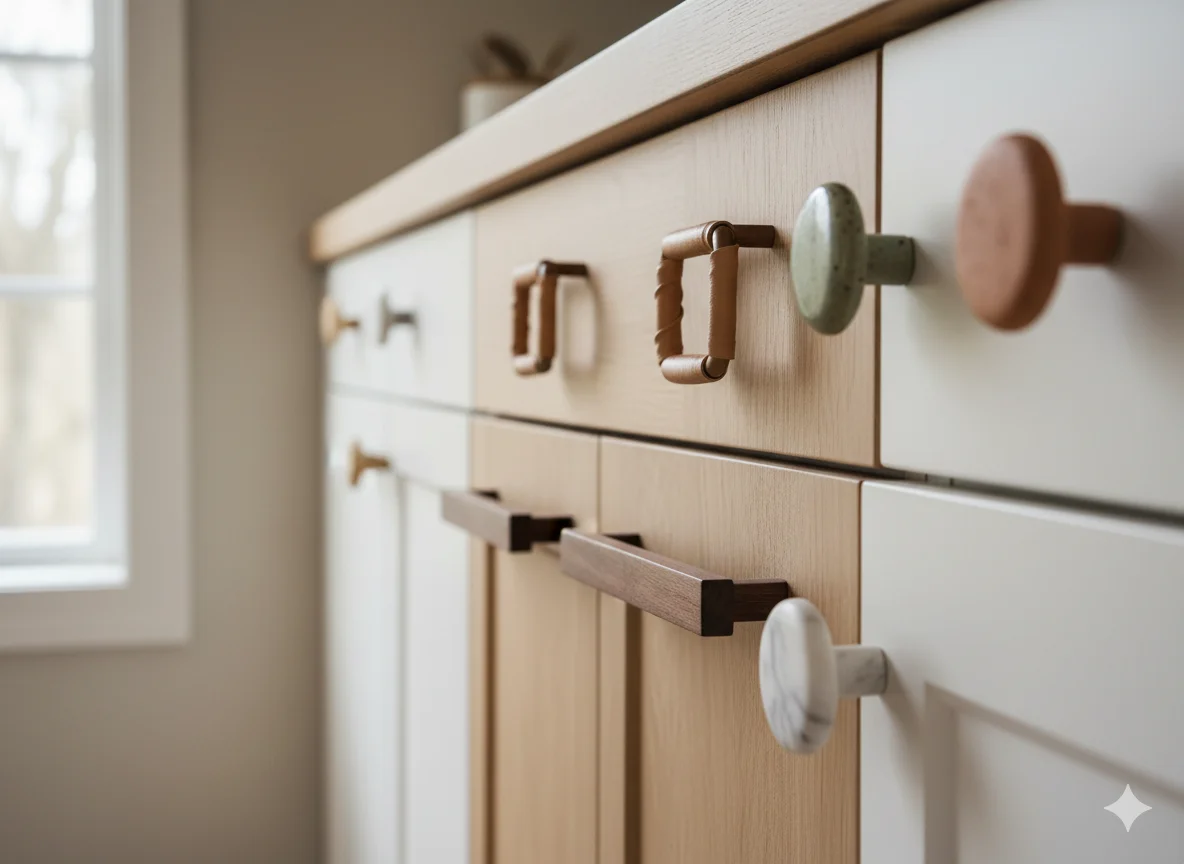
Leather has made a convincing case for itself as a kitchen hardware material. Leather-wrapped pulls are soft and warm to the touch, absorb light rather than reflecting it, and develop a unique patina over years of use that adds character to the kitchen. They integrate especially well into kitchens with natural wood cabinetry, stone countertops, rattan elements, or earthy, organic color palettes.
Wooden Handles and Knobs
Solid or engineered wood hardware introduces a texture and warmth to cabinet surfaces that metal simply cannot match. Wooden pulls and knobs contrast beautifully with smooth, painted cabinets, adding a tactile dimension that encourages closer inspection. They are a natural fit for Scandinavian, rustic, farmhouse, and biophilic kitchen designs, and they also provide an eco-conscious alternative to metal hardware for homeowners who prioritize sustainability in their material choices.
Ceramic Knobs
Ceramic knobs have returned to contemporary kitchen design with considerable enthusiasm. White ceramic knobs carry a quiet, understated elegance that suits farmhouse and cottage-style kitchens with particular grace. Colored ceramic knobs, available in tones ranging from dusty sage green and soft terracotta to deep cobalt blue and warm cream, allow homeowners to introduce a specific accent color without committing to a full repaint. Their handmade quality also gives them a character and slight variation from piece to piece that machine-made knobs cannot replicate.
Stone and Mineral Knobs
Stone knobs, crafted from marble, travertine, agate, and other natural minerals, represent one of the more genuinely distinctive hardware trends of the moment. Each piece is unique by virtue of the stone’s natural patterning, making no two knobs exactly alike. A set of marble knobs on a painted cabinet creates a quiet luxury that coordinates beautifully with stone countertops and backsplash materials throughout the kitchen.
Textured Finishes
: Knurled Hardware
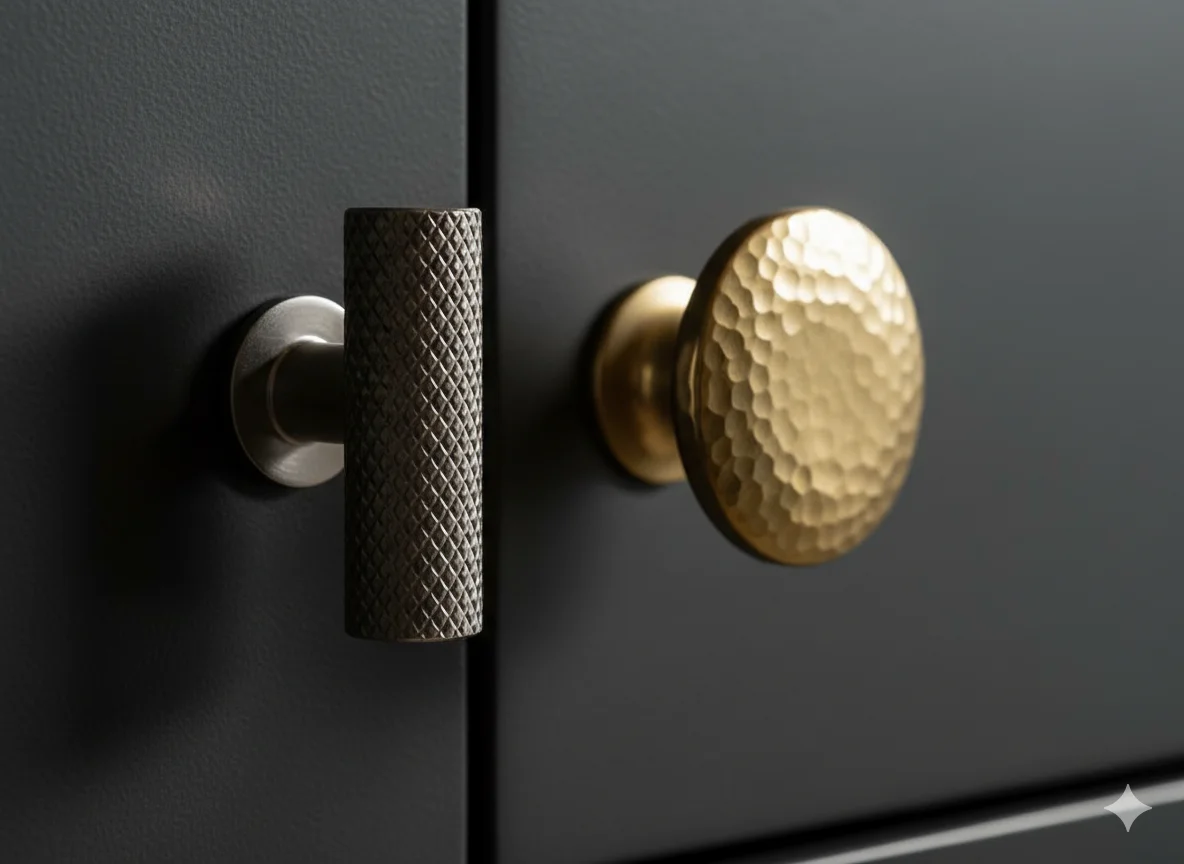
Knurled handles feature small, repeating geometric patterns pressed into the surface of the metal, creating a grip-enhancing texture that is both practical and visually compelling. This finish has moved firmly from industrial and commercial contexts into residential kitchen design, where it adds a handcrafted, precise quality to pulls and knobs that smooth surfaces cannot achieve.
Hammered Finishes
Hammered metal hardware carries an organic, artisan quality rooted in centuries of traditional metalworking. The irregular surface of a hammered pull or knob plays beautifully with light throughout the day, shifting in appearance as the light source changes. Hammered finishes work well in both rustic and transitional kitchen contexts, adding depth and texture to cabinetry that might otherwise feel flat or uniform.
Minimalist and Integrated Solutions
Integrated and Recessed Handles
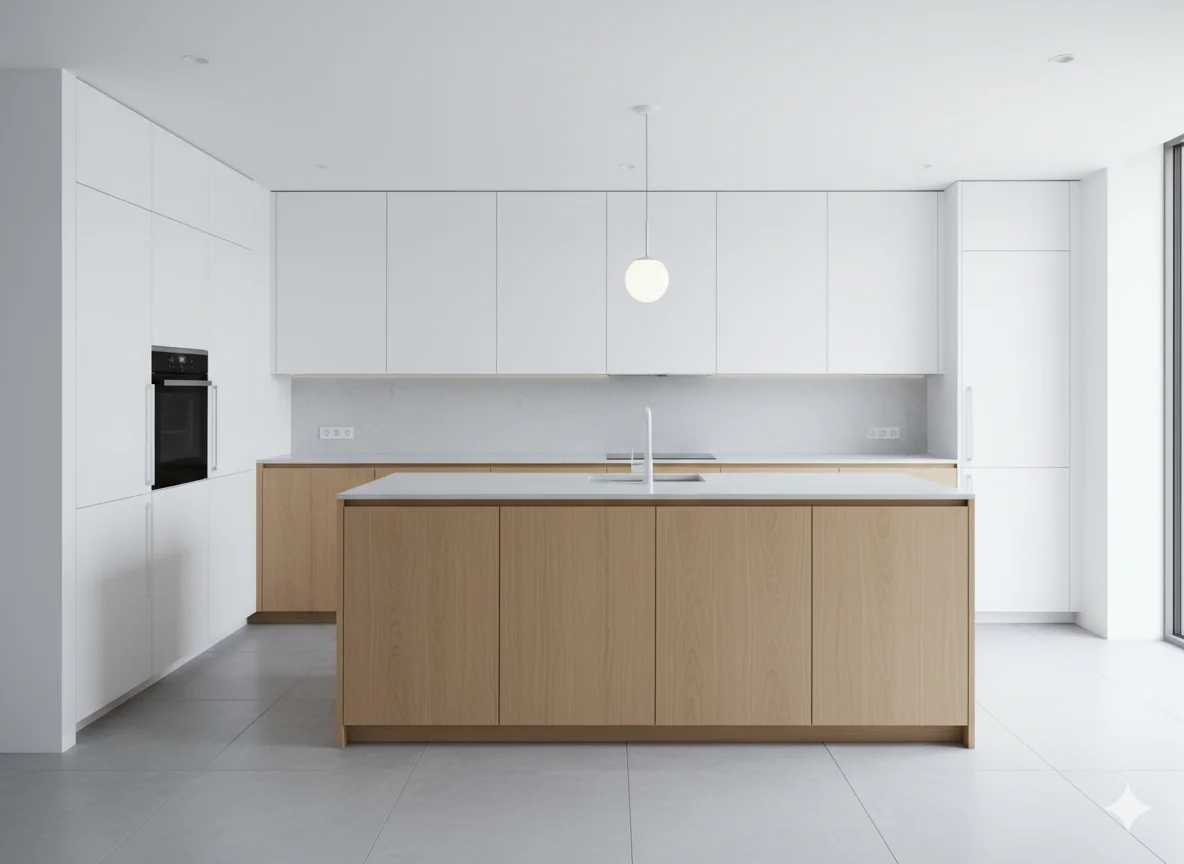
For kitchens where clean, uninterrupted surfaces are the priority, integrated handles are the defining hardware choice. Machined directly into the cabinet door or drawer front, integrated handles eliminate protruding hardware entirely. The result is a seamless expanse of cabinetry that reads as calm, unified, and effortlessly modern. This approach is the signature look of high-end minimalist kitchens and Scandinavian-influenced design, and it also makes cleaning significantly easier since there are no hardware surfaces to wipe around.
Push-to-Open Systems
The no-hardware trend takes minimalism one step further. Push-to-open mechanisms, embedded within the cabinet hinge system, allow doors and drawers to open with a gentle press. Cabinet faces are left completely uninterrupted, creating a continuous visual surface across the kitchen that is particularly effective in open-plan living spaces where the kitchen needs to read as a quiet, cohesive backdrop.
Vintage and Retro Inspirations
Backplates
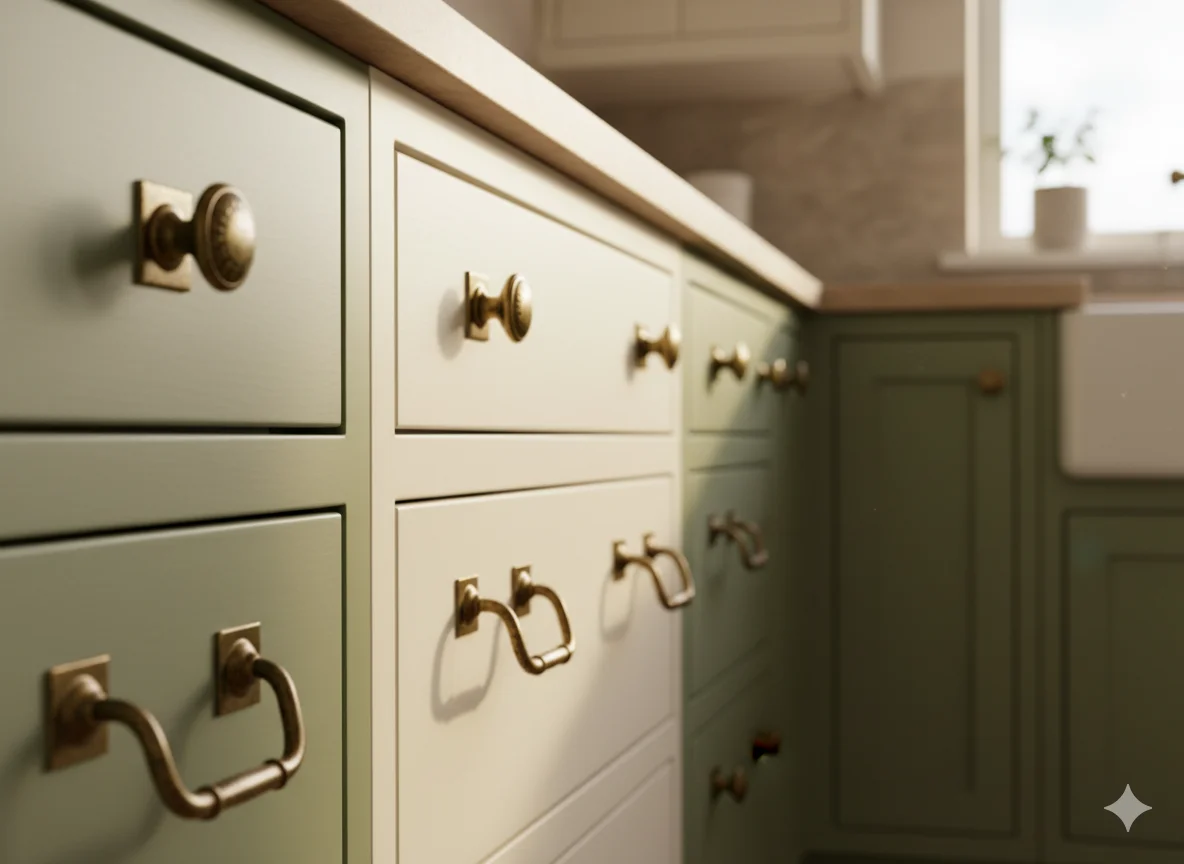
Decorative backplates, which mount behind a knob or pull to frame it against the cabinet face, have returned as one of the most enthusiastically embraced design details in kitchen hardware. A backplate adds visual mass and a sense of craftsmanship to even the simplest hardware choice, making cabinetry read as more considered and custom. Backplates also serve a practical function, covering old screw holes when replacing hardware that was mounted with a different configuration.
Cup Pulls
Cup pulls, also known as bin pulls, originated in furniture and cabinetry from the nineteenth century and have maintained a remarkable relevance across virtually every subsequent design era. Their half-moon form is ergonomically excellent and visually distinctive. In contemporary kitchens, cup pulls in brushed brass or matte black bring a warmth and historical reference that newer hardware forms cannot replicate.
Unlacquered Brass
Unlacquered brass occupies a unique position in the hardware world. Unlike treated or coated brass, unlacquered brass oxidizes over time, developing a patina that deepens and enriches with every year of use. For homeowners who value the sense of a kitchen that has been collected and lived in over time rather than assembled in one moment, unlacquered brass is deeply satisfying. It pairs most naturally with marble, natural stone, warm wood tones, and aged or antique decorative elements.
Color and Hardware Placement Innovation
Colored Hardware
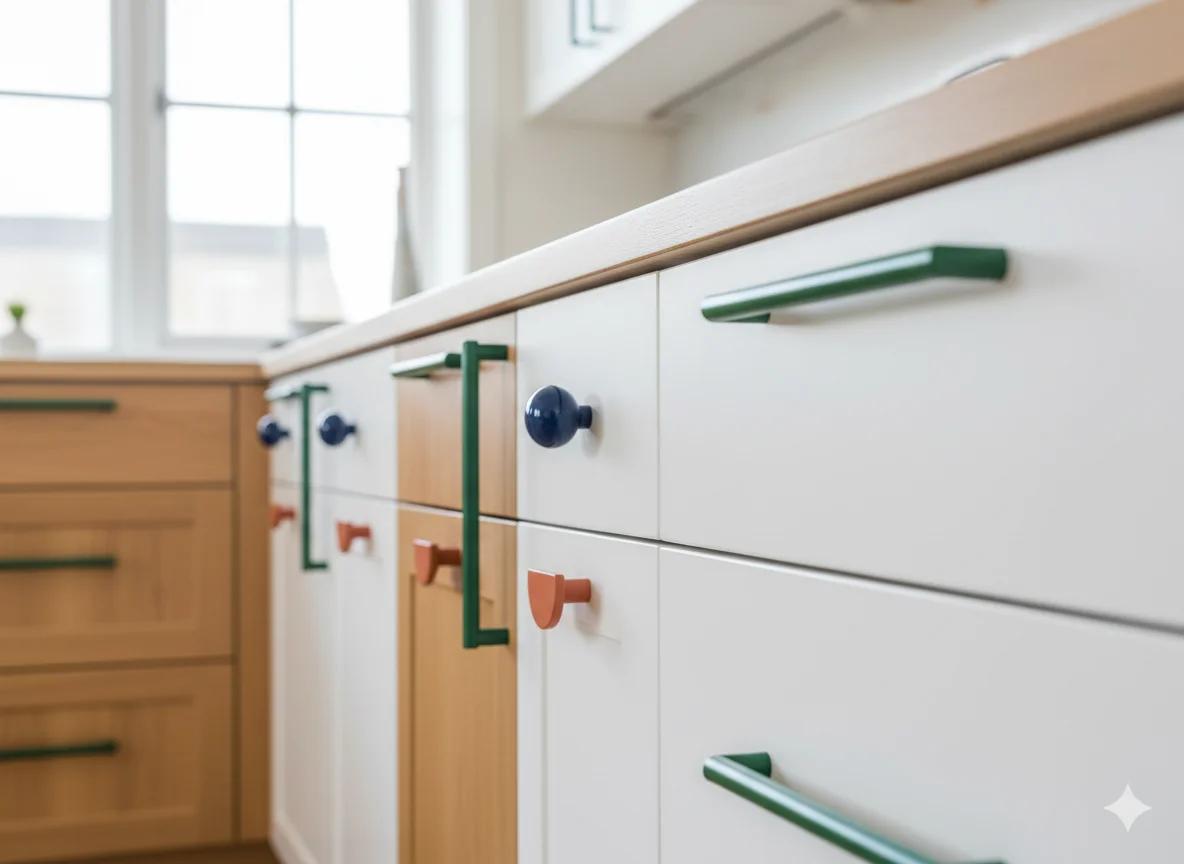
Color in hardware is one of the most playful and expressive choices available in the current landscape. Deep navy, forest green, terracotta, dusty rose, and rich burgundy are all appearing in kitchen hardware, offering a specific accent color statement that a metallic finish cannot achieve. Colored knobs in particular allow homeowners to experiment with this approach without long-term commitment, since they can be replaced easily and inexpensively if preferences change.
Vertical Hardware Placement
One of the subtler but genuinely fresh ideas emerging in kitchen hardware concerns placement rather than the hardware itself. Mounting bar pulls vertically on cabinet doors rather than horizontally introduces an unexpected visual rhythm to the cabinetry that feels distinctly current. This small shift in orientation changes the proportional language of cabinet doors in a way that rewards close observation without announcing itself loudly.
Conclusion
Kitchen hardware represents one of the most rewarding investments any homeowner can make in their space. The range of options available today, from sculptural oversized pulls in brushed brass to minimalist integrated handles to handcrafted ceramic knobs and leather-wrapped grips, reflects a design culture that has fully embraced hardware as an expressive, thoughtful element of the kitchen rather than a mere utilitarian detail. The 24 trends and ideas explored in this guide are not prescriptions but possibilities, a vocabulary you can draw from selectively to create a kitchen that reflects your personality, suits your lifestyle, and rewards you every time you walk through the door. Choose hardware that speaks to the space you are creating, and you will rarely find a renovation decision that delivers more visible, lasting satisfaction for its cost.
FAQs
What kitchen hardware finish is most popular right now?
Matte black and satin brass are the two most popular kitchen hardware finishes currently. Matte black suits modern, industrial, and contemporary kitchens, while satin brass brings warmth to both traditional and transitional spaces. Both finishes resist fingerprints and maintain their appearance well over time.
Is it acceptable to mix different hardware finishes in one kitchen?
Yes, mixing finishes has become one of the most widely endorsed approaches in current kitchen design. The most reliable method is to choose one dominant finish for the majority of your cabinet hardware and introduce a secondary finish through accent elements like the faucet or light fixtures. Keeping the metals within a similar warm or cool undertone range helps maintain cohesion.
What is the most durable finish for kitchen hardware?
PVD finishes are currently the most durable option available for residential kitchen hardware. The physical vapor deposition process creates a molecular bond between the finish and the base material that is significantly more resistant to scratching, tarnishing, and everyday wear than traditional electroplating or powder-coated finishes.
How do I choose between knobs and pulls for my cabinets?
Pulls offer better ergonomics and grip, making them the preferred choice for drawers and heavier cabinet doors. Knobs work well on lighter cabinet doors where a simple press and turn is sufficient. Many designers recommend using pulls on drawers and knobs on doors, though mixing both intentionally throughout a kitchen in a single cohesive finish is also a widely accepted and attractive approach.
Can changing hardware alone meaningfully update a kitchen?
Without question. Replacing outdated hardware with a current finish or style is consistently regarded as one of the highest-return improvements a homeowner can make. The process requires no structural changes, can typically be completed in a few hours, and delivers an immediately visible transformation that affects how the entire kitchen reads to the eye.