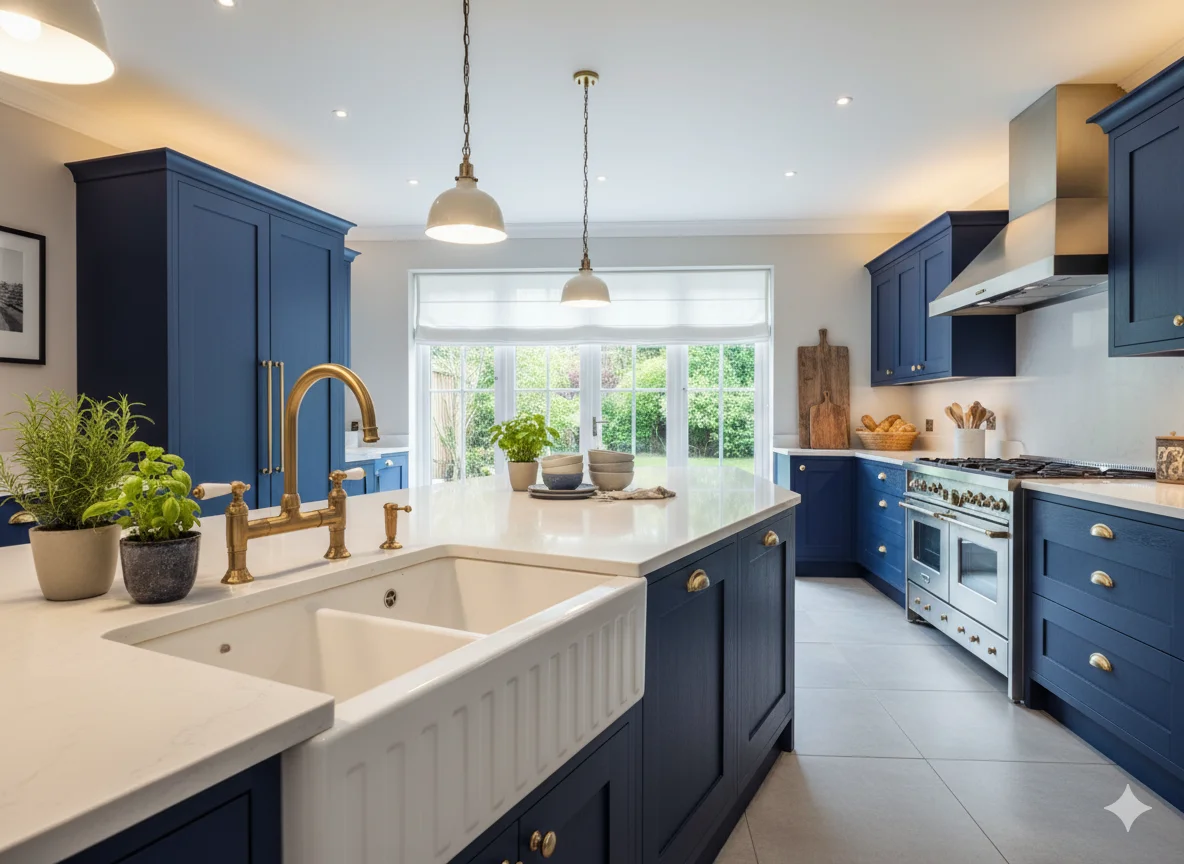
23 Stylish Kitchen Faucets & Sinks
The kitchen has long been the heart of the home, and nowhere is that truth more visible than at the sink. What was once a purely utilitarian fixture has evolved into one of the most expressive design choices a homeowner can make. A beautifully chosen faucet or sink does more than complete a kitchen renovation. It anchors the entire room, sets a visual tone, and speaks directly to how you live and cook.
Whether you are drawn to the warmth of a brass bridge faucet over a farmhouse sink or the sleek restraint of a matte black pull-down model mounted above polished quartz, the options available today are more thoughtful and diverse than ever before. Design professionals, plumbing manufacturers, and kitchen renovation specialists have spent the past few years pushing this category forward in remarkable ways. Finishes have multiplied, sink configurations have grown smarter, and technology has entered the space without sacrificing elegance.
This article presents 23 of the most stylish kitchen faucets and sinks on the market today, organized around the most compelling design directions. Whether you are planning a full remodel or simply looking to refresh a tired kitchen, these options offer a combination of beauty and function that holds up over time.
Farmhouse Sinks That Make a Statement
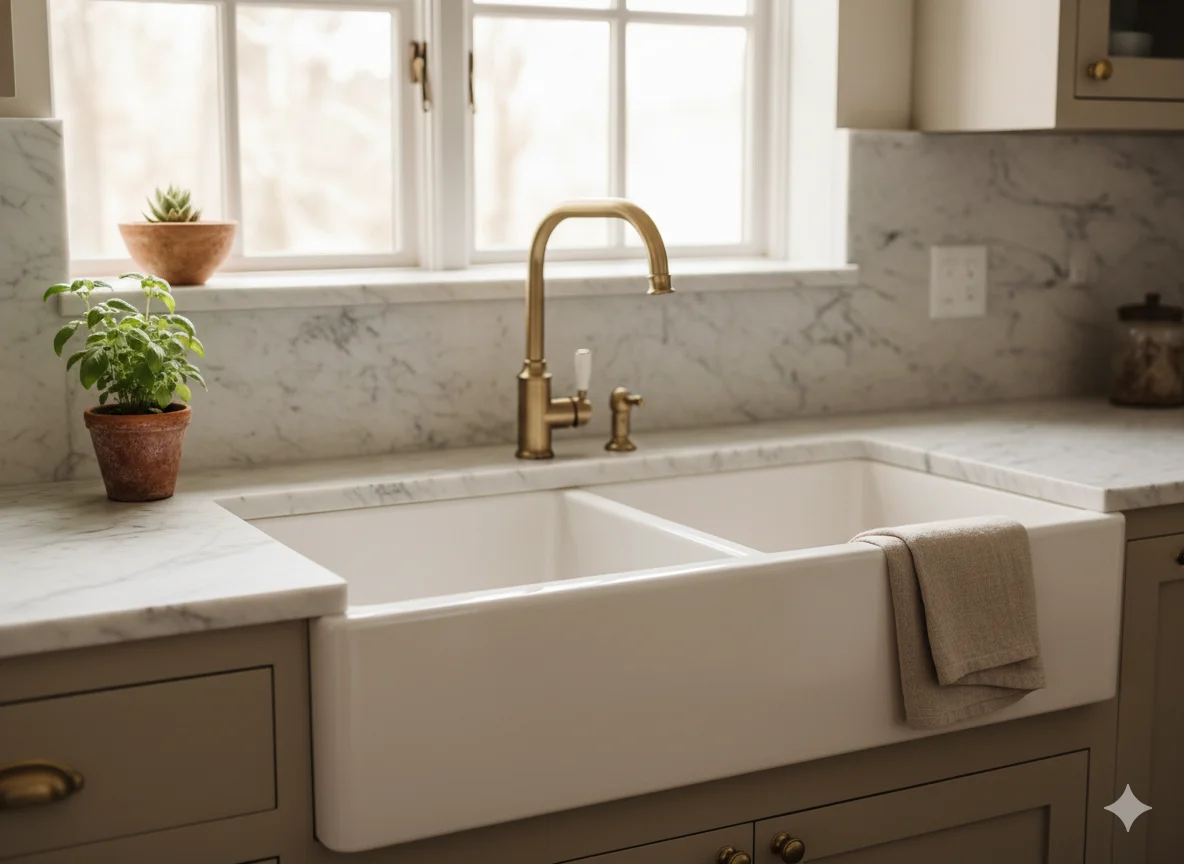
Farmhouse sinks, also called apron-front sinks, remain one of the most enduring design choices in the kitchen. Their deep basins and exposed front panels create an immediate focal point that few other fixtures can match.
Fireclay Farmhouse Sinks
Fireclay sinks are made by fusing clay with glaze at extremely high temperatures. The result is a surface that is both dense and glossy, resistant to staining, chipping, and everyday kitchen abuse. White fireclay is the classic choice, but manufacturers such as BOCCHI and Kohler have expanded their palettes to include matte black, biscuit, midnight blue, and a growing range of deep greens inspired by nature-forward kitchen design.
The appeal of a fireclay farmhouse sink is not just visual. The material is naturally resistant to heat and acidic foods, and its smooth glaze wipes clean without much effort. For homeowners who want a kitchen that feels both timeless and slightly European in character, a fireclay farmhouse sink in a large single-bowl configuration delivers exactly that.
Cast Iron Farmhouse Sinks
Cast iron sinks coated with porcelain enamel share many of the characteristics of fireclay but carry a different weight and heritage. Brands like Kohler and American Standard have offered cast iron farmhouse sinks for decades, and their designs have only grown more refined. The heavy weight requires proper cabinet support, but the payoff is a sink that feels as permanent and considered as any built-in feature of the home.
Workstation Sinks for the Modern Kitchen
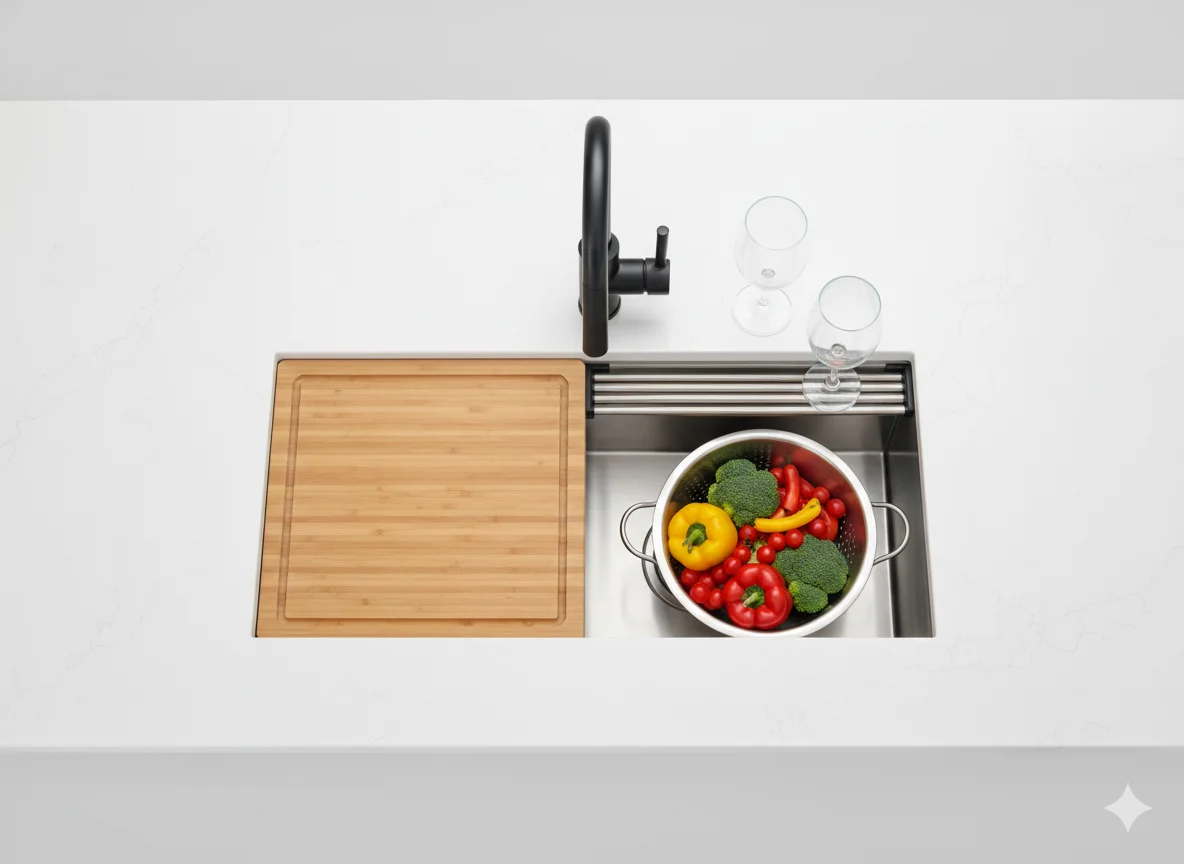
One of the strongest trends of the past several years is the workstation sink, and it shows no signs of slowing. These sinks are engineered with built-in ledges along the rim that hold accessories such as cutting boards, colanders, drying racks, and knife guides. The result is a fully integrated food preparation zone that makes the sink area dramatically more efficient.
Stainless Steel Workstation Sinks
Stainless steel remains the dominant material for workstation sinks because of its durability, food safety, and compatibility with the modular accessories that make these sinks so useful. Models from Moen, Kraus, and Kohler feature sixteen-gauge stainless steel with brushed or satin finishes that resist fingerprints while blending with almost any cabinetry finish. Sound-dampening technology, applied to the underside of the basin, reduces the noise of running water and clanging cookware, a detail that makes a genuine difference in a busy kitchen.
Undermount Workstation Configurations
Undermount installation is the preferred approach for workstation sinks because it creates a seamless transition from countertop to basin, making it easy to sweep debris directly into the sink. Many workstation designs now include a sloped basin floor that channels water toward the drain with greater efficiency, eliminating the puddles that collect in flat-bottomed sinks.
Faucet Finishes That Define the Mood of Your Kitchen
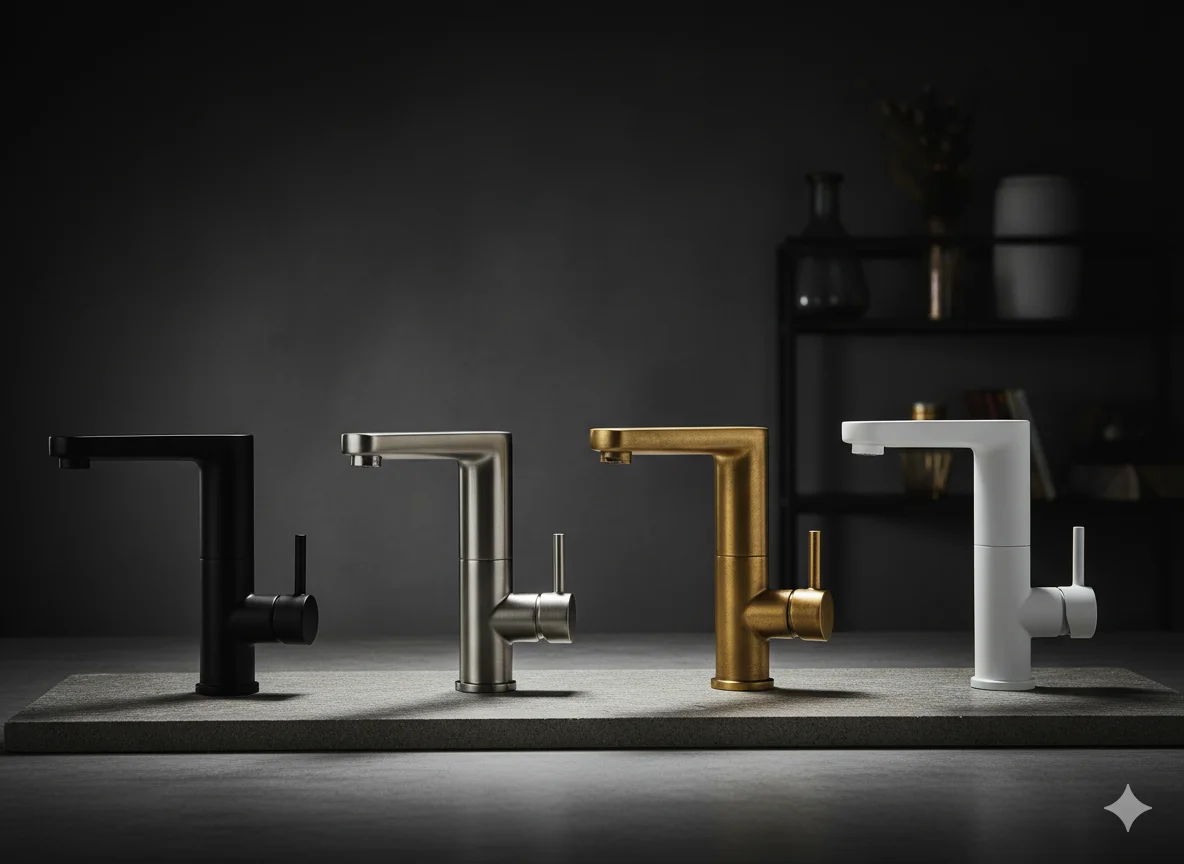
If the sink is the stage, the faucet is the leading character. Its finish does more than any other single element to communicate the style of the kitchen.
Matte Black Faucets
Matte black faucets have moved from novelty to near-universal availability over the past decade, and for good reason. Against white quartz countertops, shaker cabinetry, or open shelving, a matte black faucet reads as confidently modern without veering into cold or sterile territory. Pull-down models with flexible hoses and multiple spray functions have become the workhorse configuration for this finish, combining practicality with strong visual presence.
Brushed Nickel and Satin Faucets
Brushed nickel remains one of the most versatile finishes available. It reflects enough light to feel premium without the stark intensity of chrome, and its warm undertone pairs comfortably with both cool and warm cabinetry palettes. For homeowners who want a finish that will age gracefully and resist showing water spots, brushed nickel is consistently reliable.
Unlacquered Brass and Aged Brass Faucets
Brass faucets have experienced a genuine resurgence, and this time the preference leans toward living finishes rather than the high-lacquer gold tones of earlier decades. Unlacquered brass develops a patina over time, responding to water, light, and touch in ways that feel organic and characterful. Aged brass finishes mimic this effect from the start, giving a faucet a sense of history even when newly installed. According to the National Kitchen and Bath Association, gold finishes ranked as the number-one choice among design professionals surveyed in their most recent annual report, a shift away from the chrome and stainless dominance that defined the previous decade.
Matte White Faucets
For kitchens designed around warmth and softness, matte white faucets offer a fresh direction. They blend into white ceramic or fireclay sinks for a monolithic effect, and they introduce a quieter kind of elegance in spaces where black or brass might feel too assertive. Several European brands have refined this finish significantly, and it is increasingly available from American manufacturers.
Pull-Down and Pull-Out Faucets
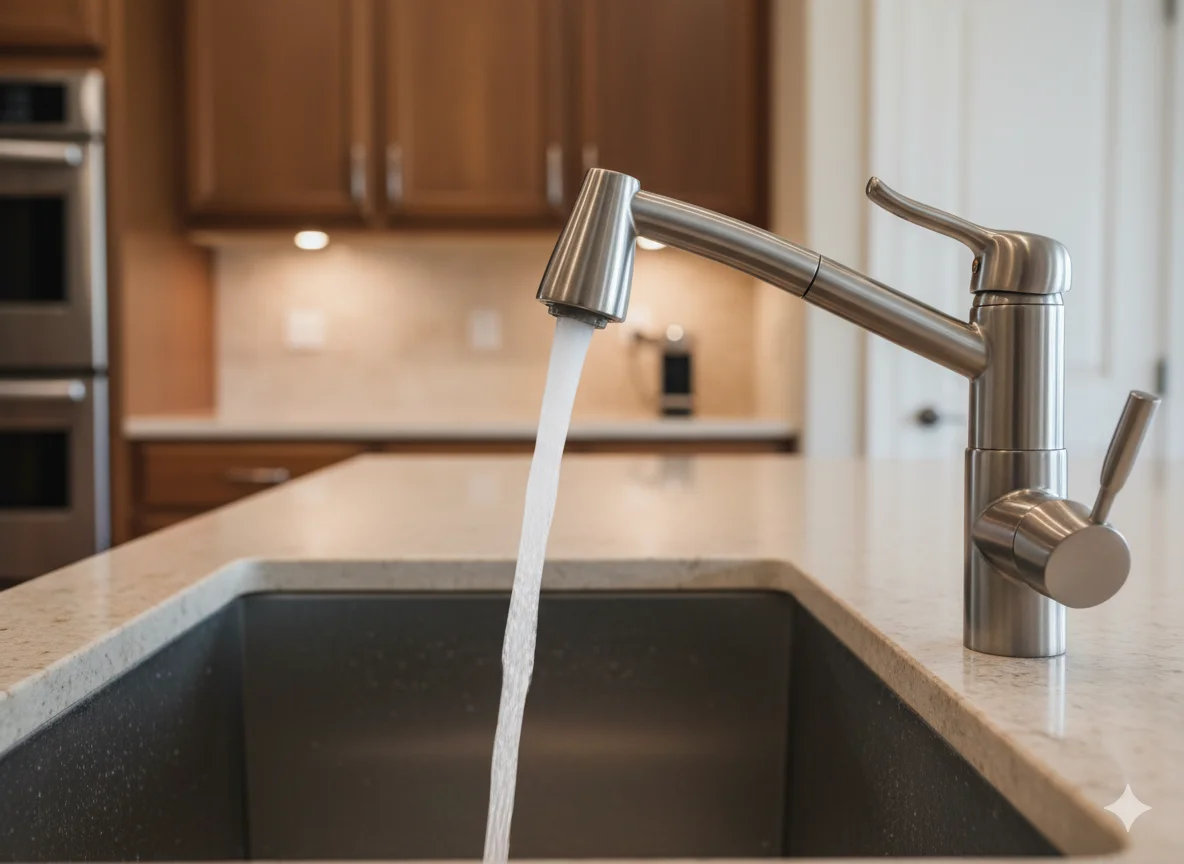
The functional distinction between pull-down and pull-out faucets is straightforward but important. Pull-down faucets have a higher arc and a spray head that descends toward the basin, making them ideal for filling tall pots and rinsing large surfaces. Pull-out faucets have a lower profile and a spray head that extends outward, giving more flexibility around the perimeter of the sink.
Both styles are available in every major finish and suit a wide range of sink configurations. High-arc pull-down faucets work particularly well over deep single-bowl sinks, where their height adds drama and their range of motion provides genuine utility. Pull-out models suit smaller kitchens or island sinks where clearance above the faucet may be limited.
Bridge Faucets for Traditional and Transitional Kitchens
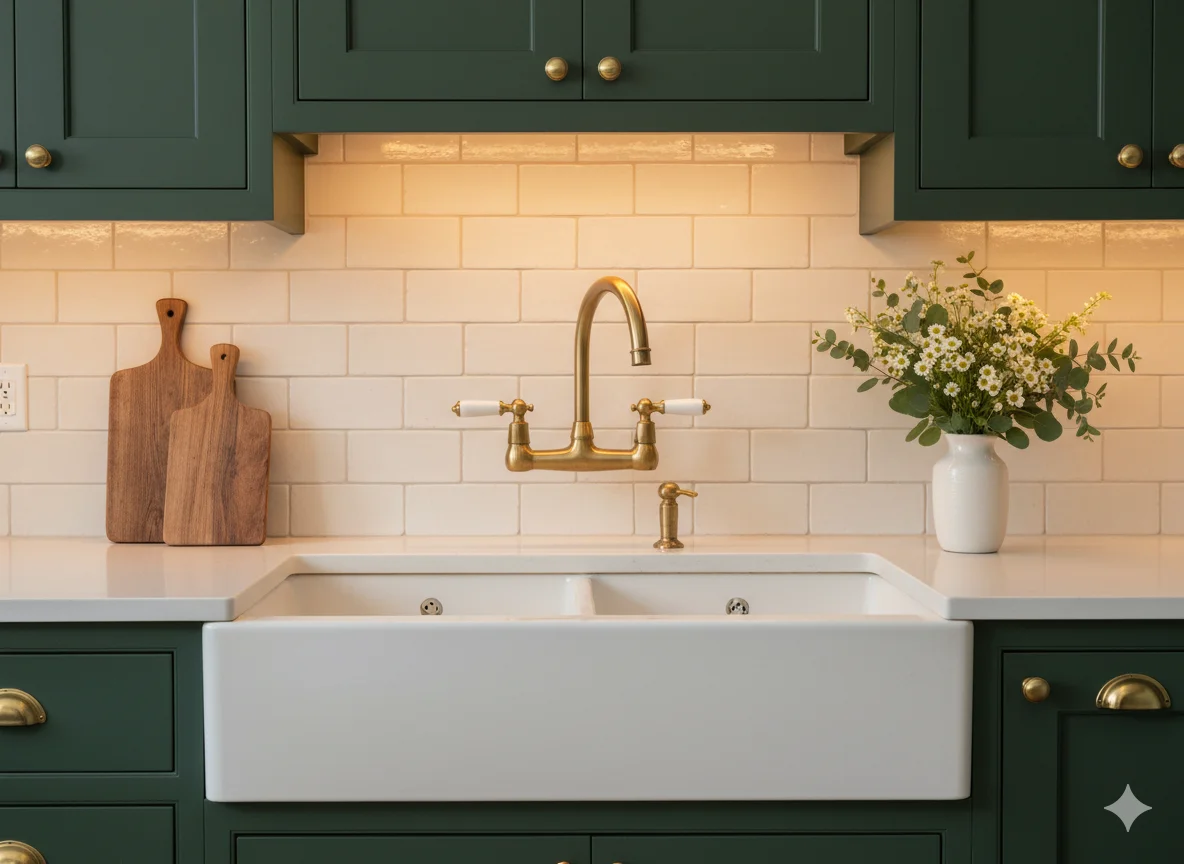
The bridge faucet is one of the oldest faucet configurations still in widespread use, and its visual logic is elegant. Two separate handles, one for hot and one for cold, connect via a horizontal bridge to a central spout. This arrangement was standard in kitchens of the early twentieth century, and its reintroduction over the past decade reflects the broader interest in vintage and historically informed kitchen design.
Bridge faucets pair naturally with farmhouse sinks, unlacquered brass finishes, and cabinets painted in deep, moody colors. They signal a commitment to a particular aesthetic in a way that more neutral configurations do not. Rohl, Perrin and Rowe, and Waterworks have produced some of the most refined examples in this category, with details such as ceramic disc cartridges, porcelain lever handles, and precise proportions that elevate the design well beyond mere nostalgia.
Wall-Mounted Kitchen Faucets
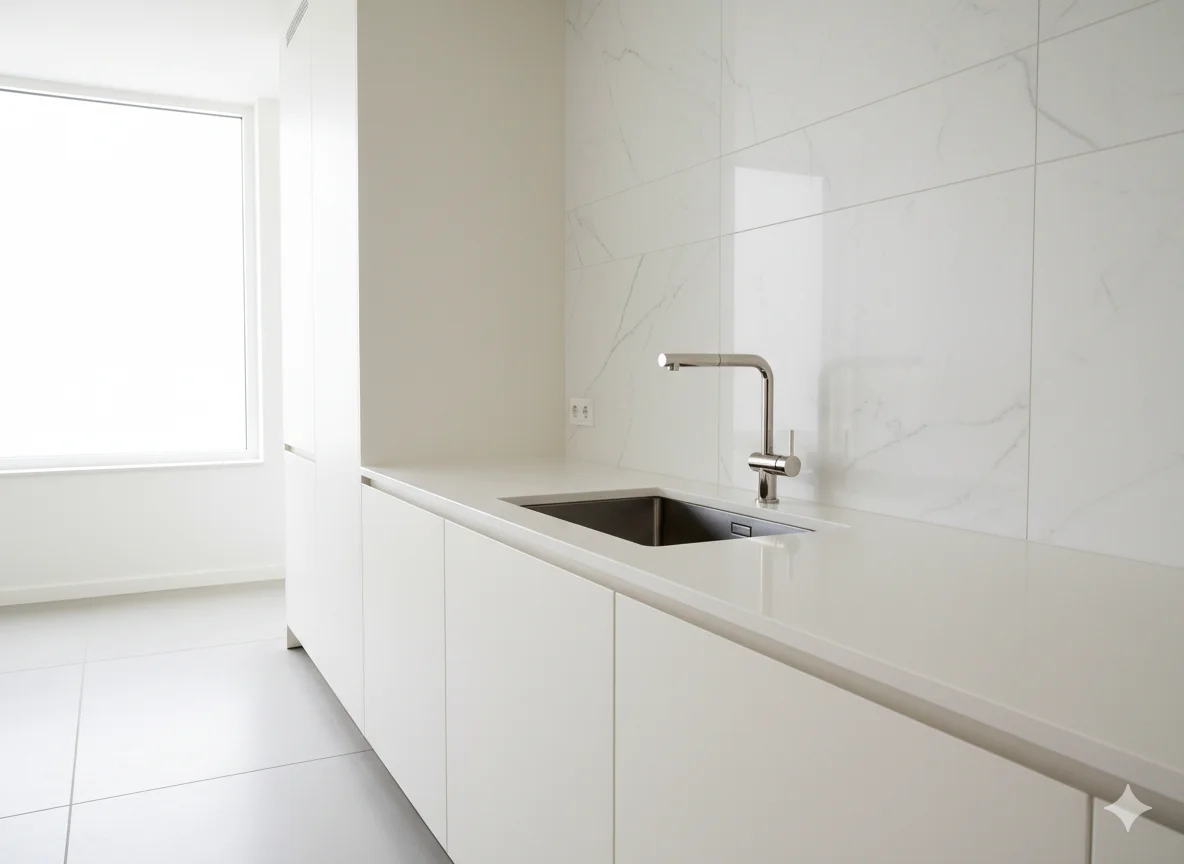
Wall-mounted faucets are less common in kitchens than in bathrooms, but they offer a compelling combination of practical and aesthetic benefits. Because the faucet mounts directly to the backsplash wall above the sink, the countertop and sink rim remain completely clear. This simplifies cleaning, eliminates countertop holes, and creates a very clean visual composition.
Installation requires plumbing connections in the wall, which makes wall-mounted faucets most practical in new construction or significant remodels. For the homeowner willing to make that investment, the effect is striking. A sleek wall-mounted faucet in polished nickel or matte black above an undermount or farmhouse sink creates a composition that looks as considered as a custom piece of furniture.
Quartz and Composite Sinks
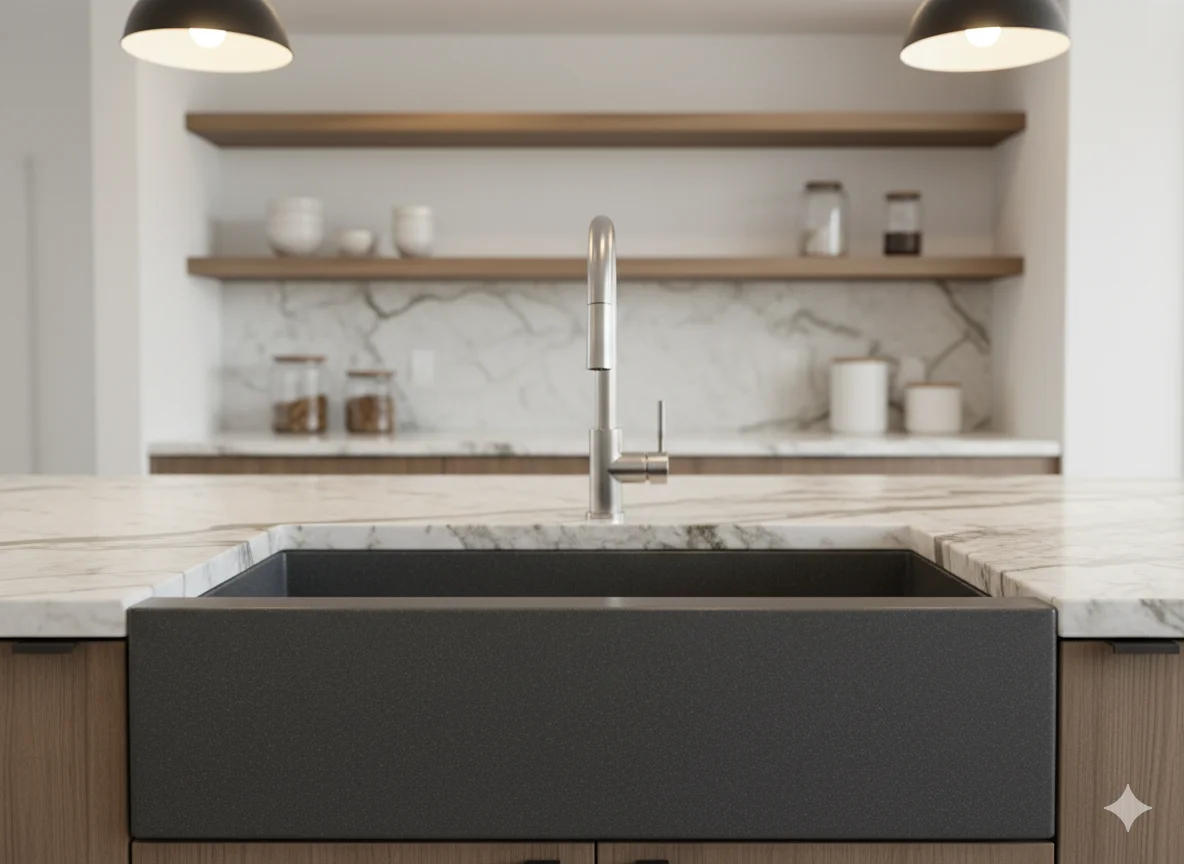
Quartz composite sinks are made from a mixture of crushed quartz stone and resin, producing a surface that is denser and heavier than stainless steel but less fragile than fireclay. The material comes in a range of muted colors, including white, off-white, graphite, anthracite, and warm gray, and its texture is subtly grainy rather than glossy, which complements the natural stone countertops that have become so popular in contemporary kitchen design.
The practical case for quartz composite sinks is strong. The material resists scratches, heat up to a surprisingly high threshold, and staining far better than many homeowners expect. It also absorbs sound effectively, making even a busy kitchen sink area quieter during cleanup.
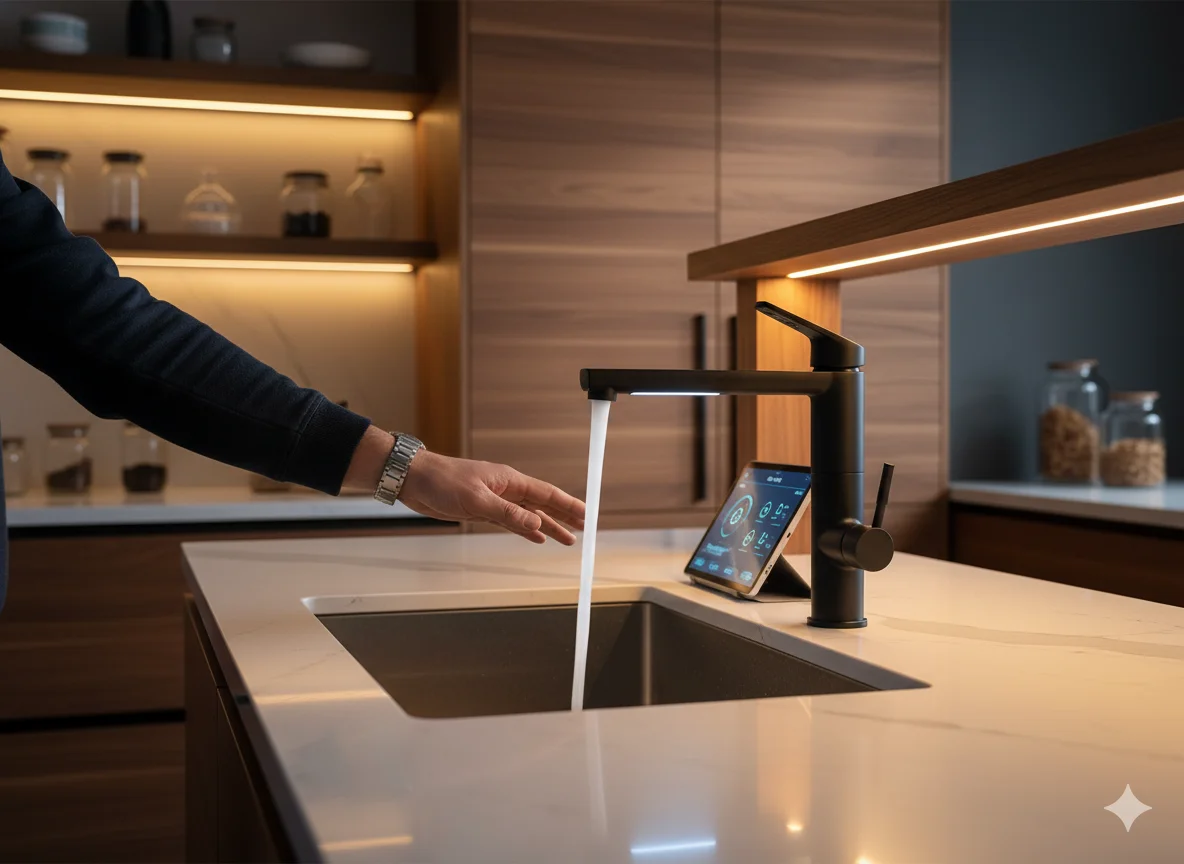
Touchless and Smart Faucets
Technology has entered the kitchen faucet category in a way that feels genuinely useful rather than gimmicky. Touchless faucets use motion or proximity sensors to activate water flow, which is particularly valuable when your hands are covered in raw chicken or bread dough. The hygienic benefit is real, and the convenience is something users report appreciating every single day.
More sophisticated smart faucets allow voice activation through integration with home assistant platforms, precise temperature presets, and water measurement by volume. For homeowners who cook carefully and care about water conservation, these features represent a meaningful upgrade rather than mere novelty.
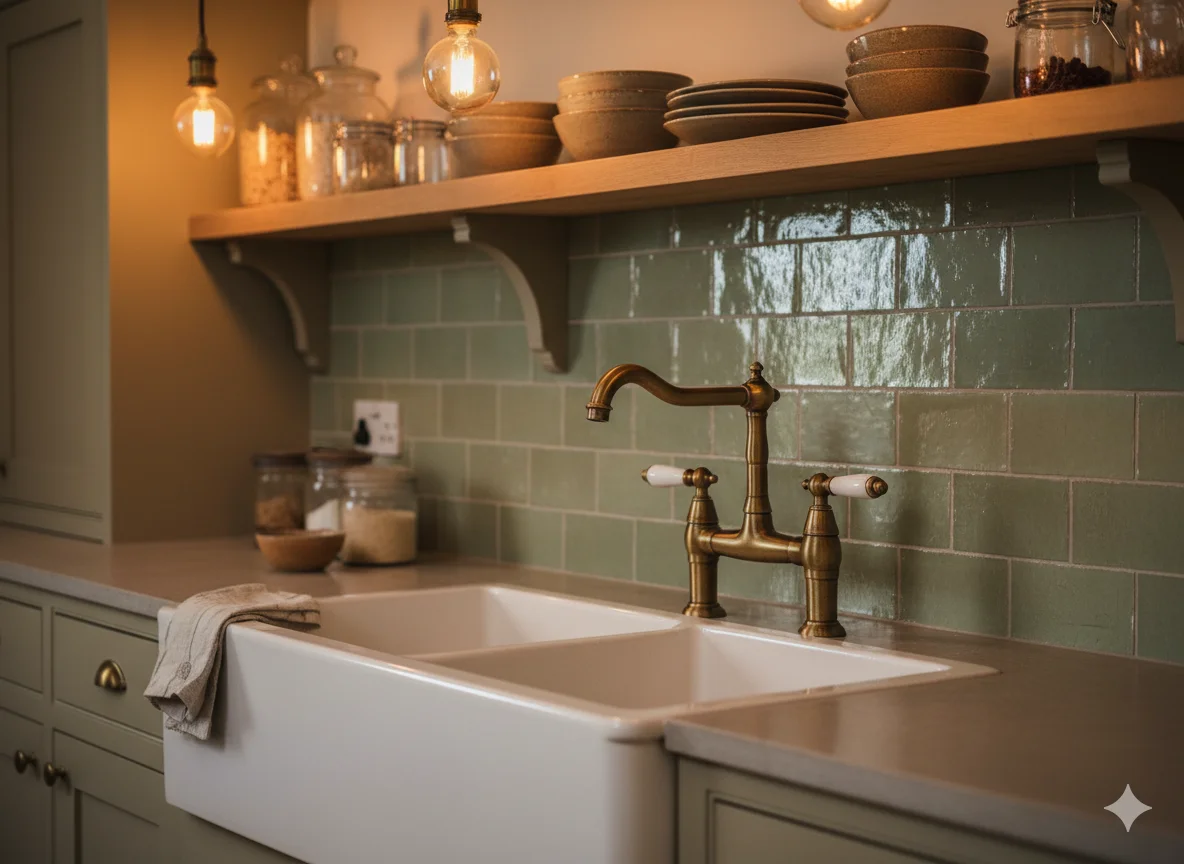
Vintage-Inspired and Retro Styles
The appetite for designs rooted in the past has produced some of the most interesting kitchen faucet introductions of recent years. Collections drawing from the midcentury period, the 1960s, and Victorian-era plumbing have appeared from brands including Rohl, Franz Viegener, and Perrin and Rowe. These faucets use grooved details, chamfered edges, curved spouts, and porcelain accents to evoke a sense of craft and tradition that mass-market designs rarely achieve.
A vintage-inspired faucet above a fireclay farmhouse sink, set against a handmade tile backsplash, creates a kitchen that feels assembled over time rather than selected from a catalog. This layered, personal quality is one of the most sought-after characteristics in residential kitchen design.
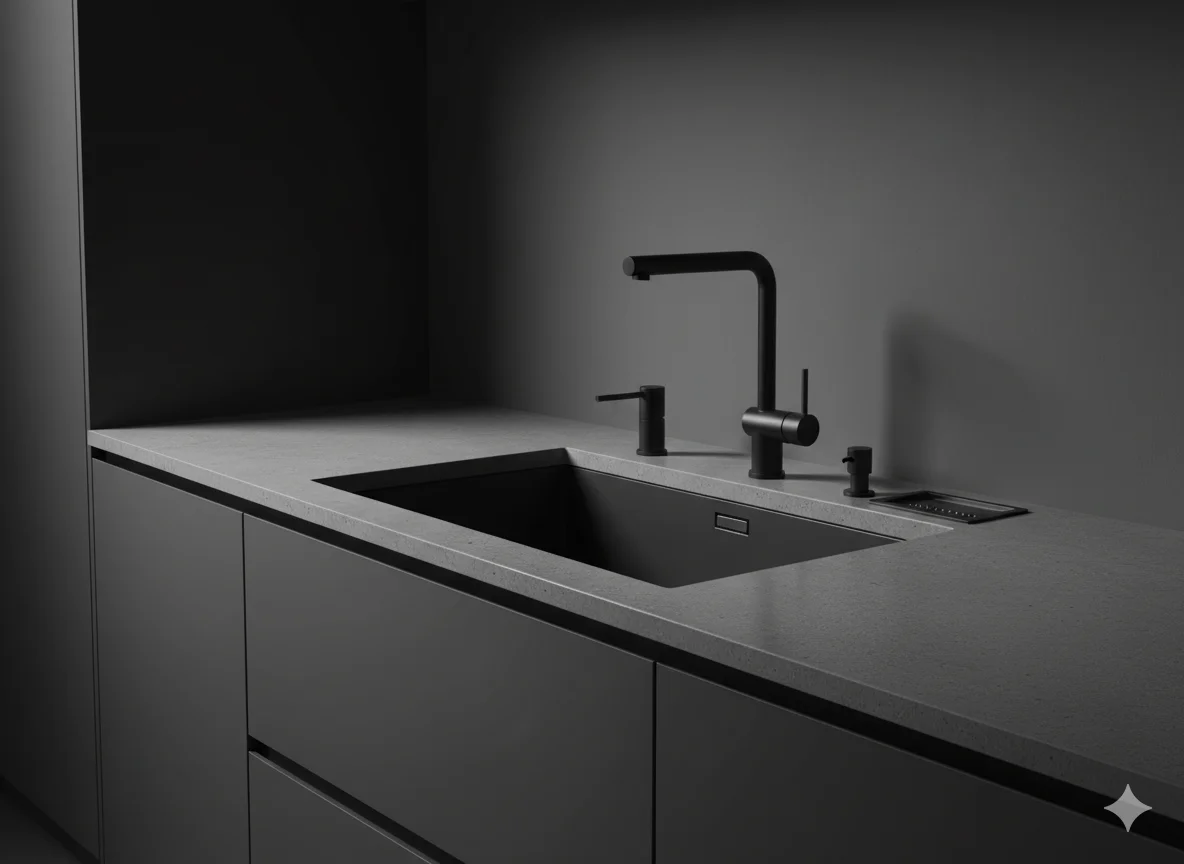
Integrated Sink and Faucet Systems
A newer development in premium kitchen design is the fully integrated sink system, where the sink, faucet, soap dispenser, hot water tap, and even a glass rinser are conceived and sold as a unified set. This approach eliminates the guesswork of pairing components from different manufacturers and creates a coherent visual and functional environment at the sink.
Delta, Kohler, and several European brands have invested significantly in this category. The best integrated systems manage to look effortless despite their complexity, with finishes and proportions calibrated so that every element belongs to the same visual family.
Conclusion
Choosing a kitchen faucet and sink is one of those decisions that rewards careful attention. Unlike paint colors or cabinet hardware, these fixtures are touched dozens of times every day. They are part of the rhythm of cooking, cleaning, and gathering. The right combination does not simply look good in a photograph. It makes daily life feel better.
The twenty-three directions explored in this article represent the full breadth of what thoughtful kitchen design looks like in the current moment, from the warmth of aged brass bridge faucets and fireclay farmhouse sinks to the precision of integrated workstation systems and touchless technology. Wherever your kitchen is headed, the guiding principle is the same. Choose fixtures that reflect how you actually live, that are built well enough to last, and that give you genuine pleasure every time you walk into the room.
Frequently Asked Questions
What is the most durable finish for a kitchen faucet?
Brushed nickel and matte black PVD finishes are among the most durable because they resist corrosion, tarnishing, and everyday wear. PVD, or physical vapor deposition, is a coating process that bonds the finish at a molecular level, making it significantly harder to scratch or chip than traditional plated finishes.
What is the difference between an undermount and a drop-in kitchen sink?
An undermount sink mounts below the countertop edge, creating a seamless surface that makes cleaning easier. A drop-in sink sits on top of the countertop with a visible rim around the basin. Undermount sinks generally look cleaner and more contemporary, while drop-in sinks are easier to install and replace.
Are farmhouse sinks practical for everyday use?
Yes. Despite their dramatic appearance, farmhouse sinks are highly practical. Their deep single-bowl configuration accommodates large pots, sheet pans, and cutting boards. Fireclay and cast iron models are durable and easy to clean. The main consideration is cabinet support, as these sinks are heavier than standard models and require reinforced cabinetry.
What is a workstation sink and who benefits most from it?
A workstation sink has built-in ledges along the rim that support accessories such as cutting boards, colanders, and drying racks. It benefits anyone who does significant food preparation in the kitchen, turning the sink area into an organized, multifunctional workspace that reduces the need for additional counter space.
How do I match my kitchen faucet finish to the rest of my hardware?
The most straightforward approach is to match the faucet finish exactly to cabinet hardware and appliance handles. A more sophisticated approach is to mix metals intentionally, such as pairing a brushed brass faucet with matte black cabinet pulls, using no more than two metal tones and repeating each one at least twice in the room to create cohesion rather than randomness.