21 Kitchen Trends To Avoid for a Timeless, Functional Space
A kitchen renovation is one of the most significant investments a homeowner can make. Unlike swapping out a throw pillow or repainting an accent wall, redesigning a kitchen costs tens of thousands of dollars and demands years of living with those choices. That is precisely why following every trend that surfaces on social media or design blogs can be a costly mistake.
Some kitchen trends look breathtaking in photographs but fall apart the moment you actually try to cook a meal, wipe down a surface, or host guests on a Tuesday night. Others simply date a space so fast that within three years you are already eyeing a renovation. The smartest kitchen design decisions blend personal taste with timeless practicality, producing a space that feels as good to use as it looks in pictures.
After years of watching trends cycle in and out of kitchens across the country, one truth becomes clear: the best kitchens are not trendy at all. They are intentional. This guide covers 21 kitchen trends to avoid, along with smarter alternatives, so your next remodel feels current and lasting for decades to come.
Outdated Aesthetic Trends That Age Poorly
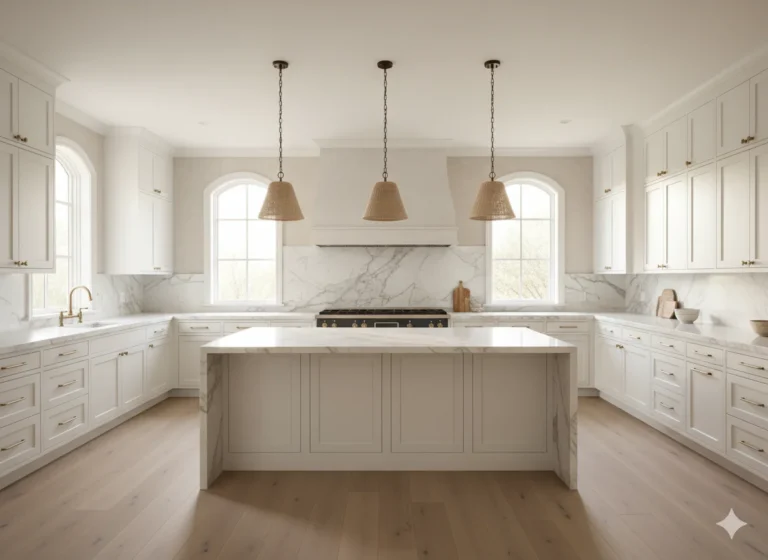
All-White Everything
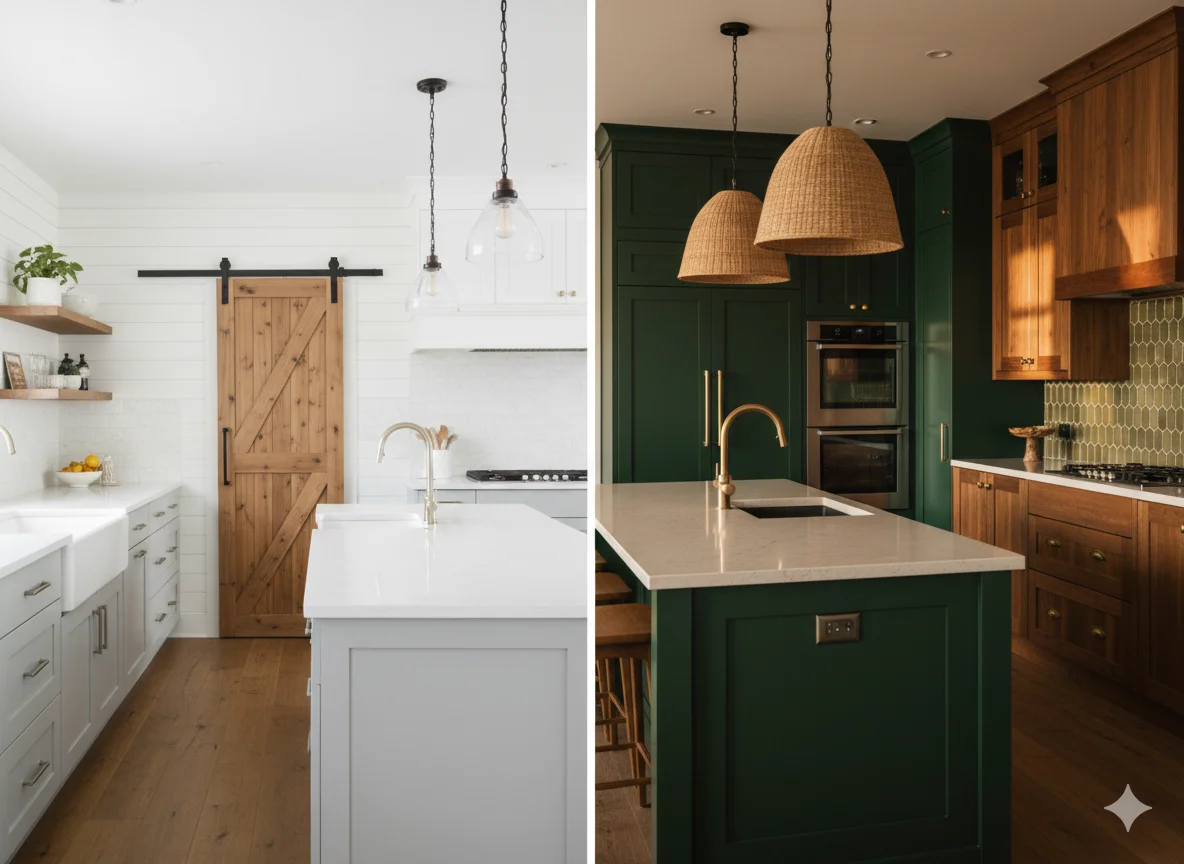
The all-white kitchen had a dominant run. White cabinets, white countertops, white backsplash, white appliances, and even white flooring were once the universal symbol of a clean, modern kitchen. Today, that approach feels sterile, overdone, and remarkably impractical. Every fingerprint, every splash of tomato sauce, and every scuff mark becomes a visible offense on a fully white surface.
Designers across the board are moving toward warm whites, creamy tones, and natural wood elements that bring life and texture into a space. If white appeals to you, warm white cabinetry paired with a contrasting island in a deep green, navy, or rich wood tone creates far more visual interest without sacrificing brightness.
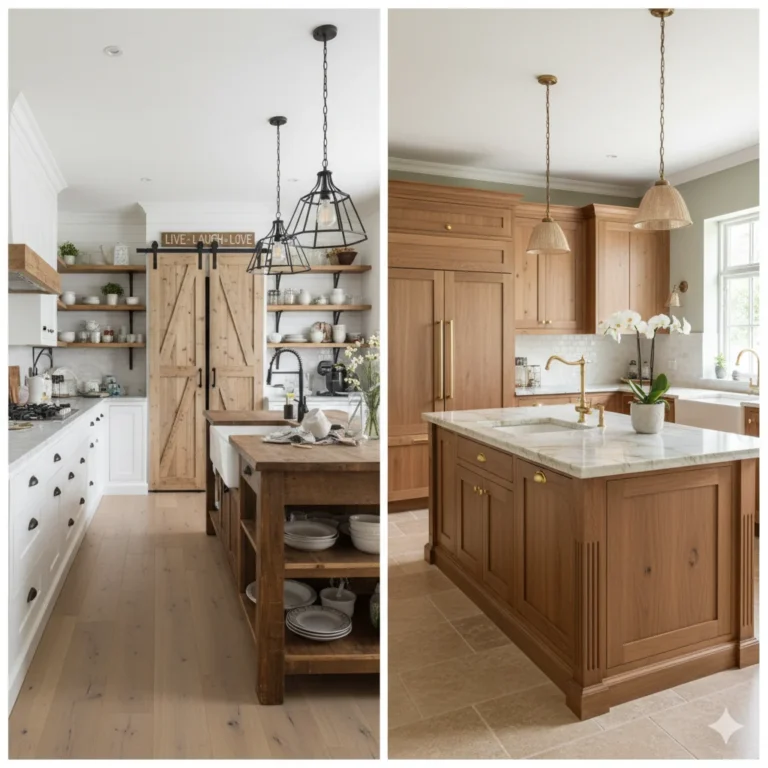
Farmhouse Style Overload
The modern farmhouse kitchen exploded in popularity nearly a decade ago and spent years dominating home renovation television and design feeds. Barn sinks, shiplap walls, barn-door cabinet fronts, and rustic wooden beams were staples of the style. While elements of farmhouse design remain appealing in rural or heritage homes, the wholesale adoption of this aesthetic has made it feel commercial, overused, and dated.
If you love the warmth of farmhouse style, lean into natural materials and handcrafted details without committing to every visual cue of the trend. A single apron-front sink can nod to that sensibility without locking your entire kitchen into a look that peaked several years ago.
The Gray Kitchen Obsession
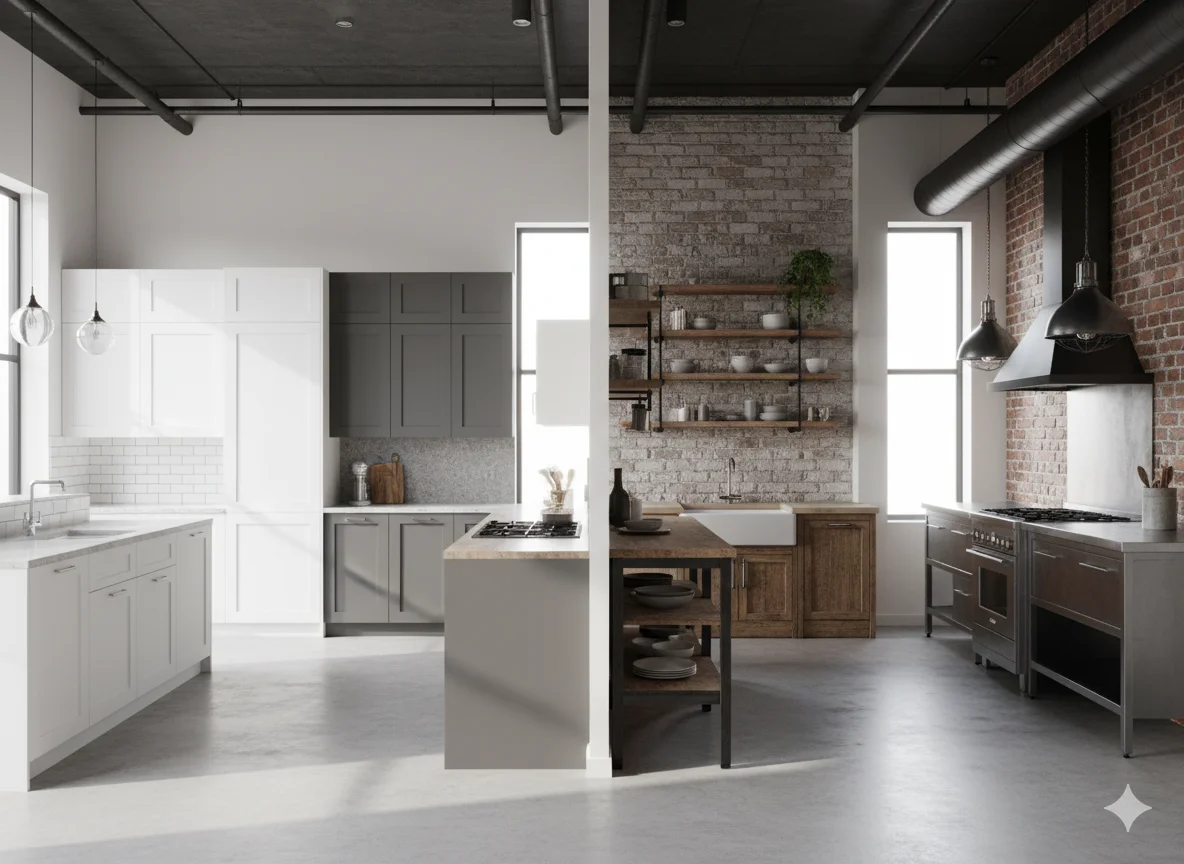
For much of the past decade, gray replaced white as the default kitchen color. Gray cabinets, gray countertops, gray walls, and gray tile created cohesive but often cold and lifeless kitchens that now feel like a time capsule. What designers once called “the new neutral” has quickly become the most recognizable signpost of a mid-2010s renovation.
Warm wood tones, earthy greens, deep blues, and rich terracotta are giving kitchens the personality and depth that gray consistently failed to deliver. These colors feel both current and personal, which is exactly what a kitchen should be.
Industrial Kitchen Design
Exposed brick, raw steel shelving, concrete surfaces, hanging pot racks, and commercial-grade fixtures once signaled a sophisticated urban kitchen. Today, that aesthetic reads as cold and exhausting to maintain. Most homeowners do not actually want to live in a space that resembles a restaurant kitchen, even if those spaces photograph beautifully.
Natural warmth is the direction modern kitchen design has firmly moved toward. Replacing harsh metal and concrete with warm stone, unpainted wood, and softer lighting transforms a kitchen from a workspace into a genuine gathering place.
Surface and Material Trends to Reconsider
Granite Countertops
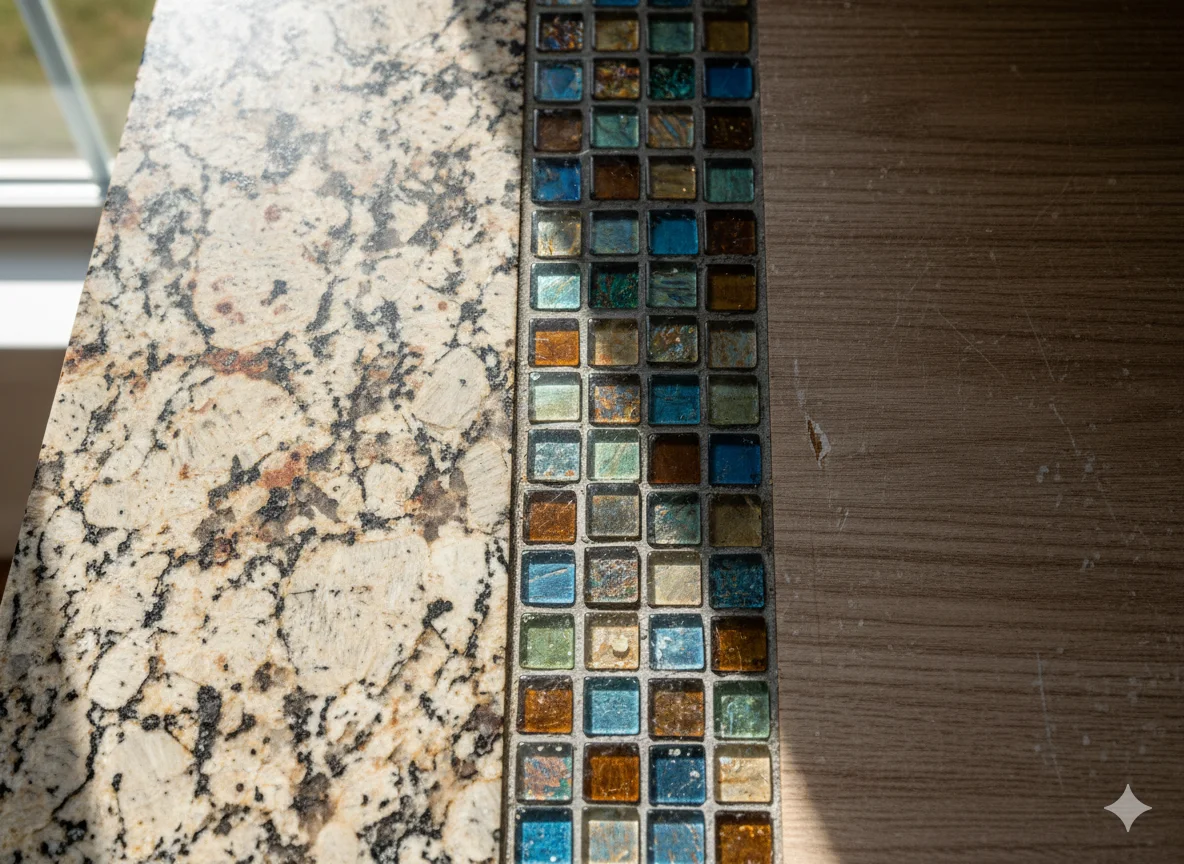
Granite was the luxury countertop material of choice for many years, and its presence in a kitchen once signaled significant investment. That association has faded. Granite’s busy veining and speckled patterns often clash with modern cabinetry, and the material requires regular sealing to prevent staining. Many design professionals now consider granite a marker of a dated kitchen.
Quartz has taken granite’s place as the practical and stylish alternative. It is non-porous, requires no sealing, resists scratches and stains more effectively, and comes in a far wider range of colors and finishes than natural granite.
High-Maintenance Marble Countertops
Marble countertops carry an undeniable sense of luxury, but the daily reality of owning them tells a different story. Marble stains, scratches, and etches from acidic foods and cleaning products. It must be sealed periodically and treated with considerable care. For families with children or homeowners who cook frequently, the upkeep becomes overwhelming.
Quartzite and engineered quartz surfaces can mimic the visual softness of marble while offering dramatically better durability. They provide the same elevated aesthetic without demanding the same level of caution every time you set down a glass of orange juice.
Laminate Countertops
Laminate countertops defined kitchens of the 1950s through the 1980s and were celebrated for their affordability and ease of installation. In contemporary design, however, they signal a dated space more clearly than almost any other single element. The material chips along edges, shows wear quickly, and cannot be refinished.
If budget is a genuine concern, butcher block, tile, or even concrete offer far more visual appeal and longevity at competitive price points.
Glass Mosaic Tile Backsplash
Glass mosaic tile backsplashes were enormously popular roughly a decade ago. Small, multicolored tiles in irregular arrangements created an artistic, handmade quality that was unlike anything else on the market at the time. Now that quality reads as busy, fragile, and firmly anchored to a specific era.
Clean slab backsplashes in natural stone, large-format porcelain tiles, or textured ceramic tiles in classic shapes have replaced the mosaic aesthetic with something both more sophisticated and more timeless.
Busy Decorative Tile Patterns
Ornate, heavily patterned backsplash tiles with elaborate contrasting designs reference an even older era of kitchen design, pulling from 1970s and 1980s decorating sensibilities. A busy backsplash competes with every other visual element in a kitchen and makes the space feel smaller and more chaotic.
Restraint in tile selection almost always produces a more enduring result. Simple, high-quality tile in a straightforward format allows cabinetry, countertops, and lighting to do their jobs without visual interference.
Cabinet and Storage Trends Worth Reconsidering
Open Shelving
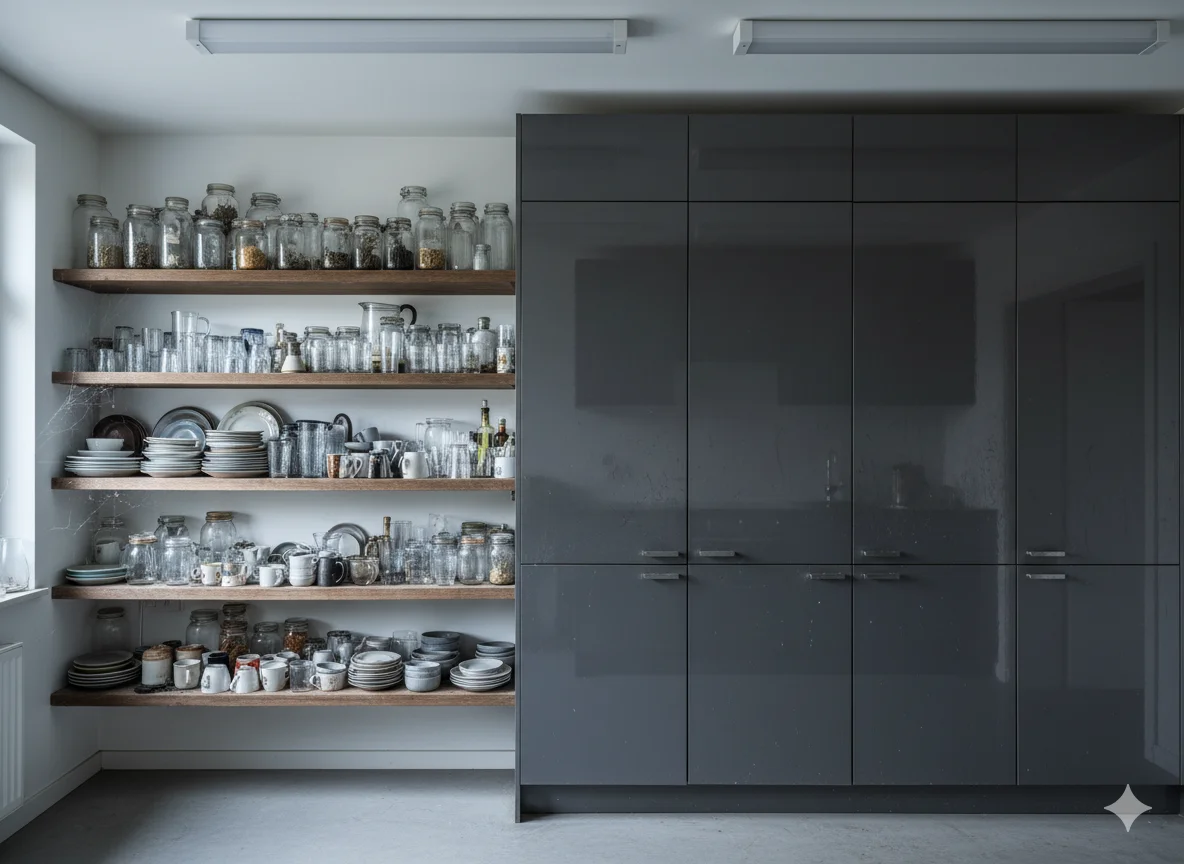
Open shelving became a fixture of aspirational kitchen design, driven largely by beautifully curated photographs showing neatly arranged ceramics, mason jars, and fresh herbs. In practice, open shelves accumulate dust, require constant reorganization, and expose everything you own to grease and moisture from cooking. For most households, the look collapses within weeks of installation.
If you love the idea of displayed dishware, glass-front cabinet doors offer a similar visual effect while keeping contents clean and contained. A single section of open shelving used thoughtfully is far more manageable than an entire wall of exposed storage.
Honey Oak Cabinets
Natural honey-toned oak cabinets were standard in kitchens built throughout the 1980s and 1990s. The warm but flat wood tone, often paired with similarly dated laminate countertops, defines an aging kitchen more powerfully than most other design elements. The natural grain of the wood is not the problem but the particular orange-yellow finish that characterized that era.
The good news is that oak itself has returned to kitchen design in a different form. Wire-brushed white oak, cerused oak with a lighter wash, and dark-stained oak all bring warmth and texture without any of the dated associations.
High-Gloss Cabinet Finishes
High-gloss cabinets promised a sleek, European-inspired look that photographs brilliantly. The reality is a surface that shows every fingerprint, smudge, and minor scratch in unforgiving detail. They demand constant wiping and scratch with surprising ease. As kitchens have moved toward warmer, more livable aesthetics, the clinical brightness of high-gloss finishes has fallen sharply out of favor.
Matte and satin finishes deliver a contemporary look that conceals daily use while contributing warmth and depth to the space.
Overly Ornate Cabinet Hardware
Heavy, intricately detailed cabinet pulls and knobs with excessive embellishment were once considered a mark of quality and craftsmanship. Today they collect grease, are difficult to clean, and fight against the cleaner lines that contemporary kitchen design favors. Builder-grade hardware in matching sets purchased in bulk has a similarly dated effect, making a kitchen feel like every other kitchen.
Thoughtful hardware selection in brushed brass, matte black, or unlacquered bronze can elevate an entire kitchen inexpensively. Simple, well-proportioned shapes in interesting finishes make a far stronger statement than ornate versions ever could.
Design and Layout Trends to Skip
Barn Doors in the Kitchen
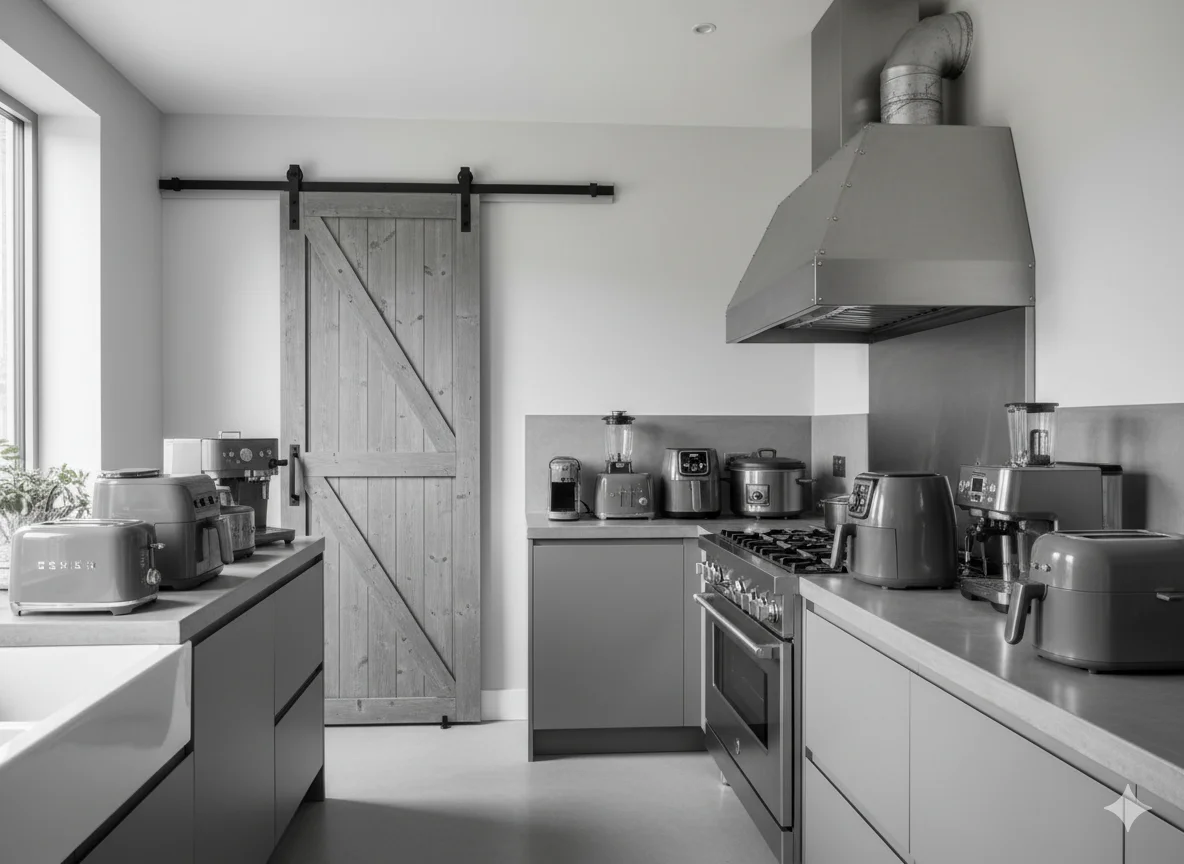
Barn doors were one of the more dramatically adopted farmhouse design elements, and they have aged correspondingly fast. Beyond the aesthetic issue, barn doors present genuine functional problems in a kitchen environment. They do not seal rooms properly, they slide rather than swing which can be disruptive in tight spaces, and they pick up grease and cooking odors readily.
A well-chosen traditional door in a clean style or a pocket door that disappears entirely into the wall serves the functional and aesthetic demands of a kitchen far better.
Appliances on Every Counter Surface
Countertop clutter from small appliances was once presented as a sign of a well-equipped kitchen. Air fryers, stand mixers, toasters, coffee machines, blenders, and juicers spread across every available surface do the opposite of what good kitchen design should accomplish. They reduce usable workspace, create visual chaos, and make cleaning genuinely difficult.
Appliance garages built into cabinetry, dedicated pantry space for equipment, and ruthless editing of what actually belongs on the counter transforms how a kitchen both looks and functions without a single structural change.
Matching Everything
Perfectly matched countertops, backsplash, floor tile, and cabinetry creates a kitchen that feels designed rather than curated. The overly coordinated approach takes away the layering and personality that makes a kitchen feel genuinely appealing rather than assembled from a catalog.
A mix of complementary materials, varied textures, and intentional contrast between surfaces produces a more sophisticated and personal result. Two-tone cabinetry, contrasting islands, and varied hardware finishes all contribute to this layered effect.
Oversized Range Hoods
Massive stainless steel or copper range hoods that dominate an entire kitchen wall were once celebrated as a bold design statement. Now they feel heavy, commercial, and disproportionate in most residential kitchens. The trend toward integrated and concealed ventilation has made these dominant hoods look dated.
Downdraft ventilation systems integrated into countertops, hoods concealed within cabinetry panels, or plaster hoods that blend into the surrounding wall create a far more cohesive aesthetic.
Technology and Appliance Trends to Approach Carefully
Colorful Retro Appliances
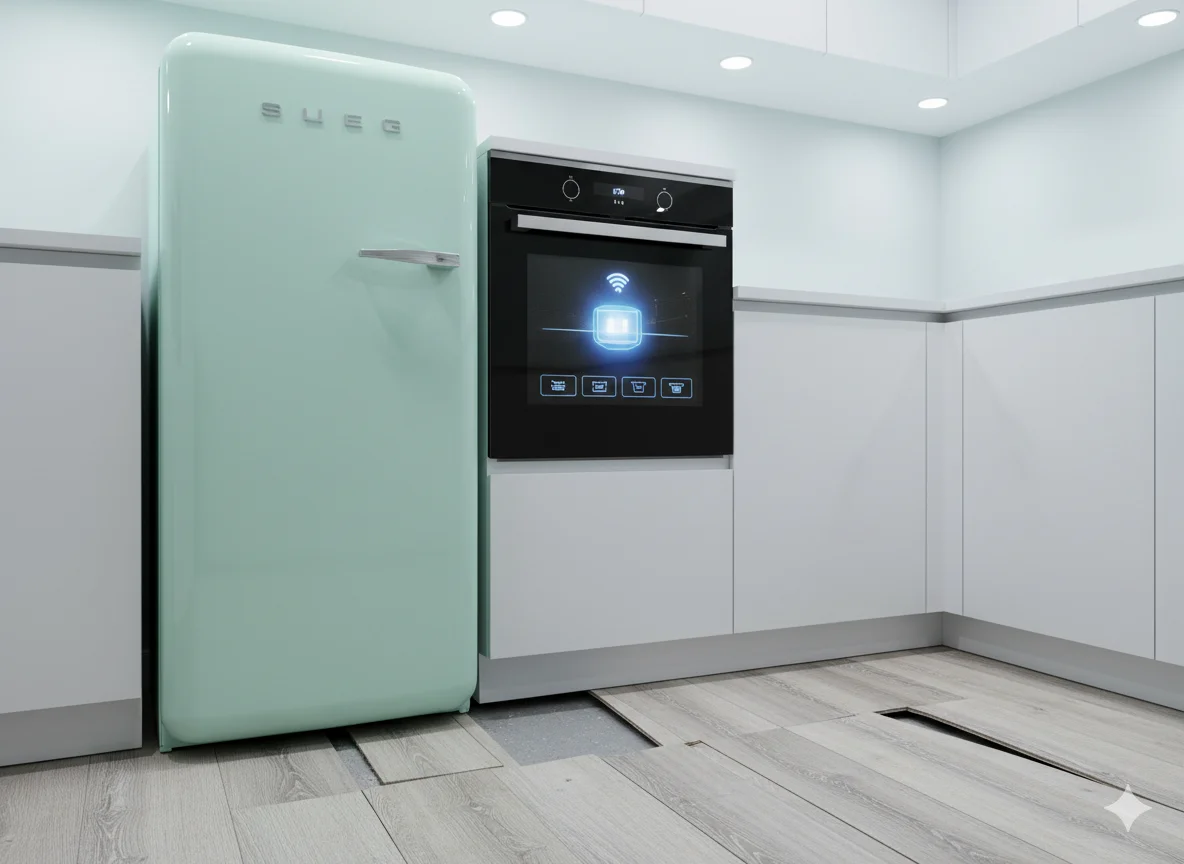
Pastel refrigerators, candy-colored range stoves, and retro-styled appliances in mint green or butter yellow had a genuine moment of popularity. They bring personality into a kitchen, but that personality comes with a significant limitation: the color of your appliances dictates every other design decision in the room, both now and any time you want to refresh the space.
Neutral appliances in stainless steel, matte black, or panel-ready finishes that integrate seamlessly with cabinetry provide flexibility for future updates while maintaining a clean and contemporary foundation.
Overly Futuristic Smart Appliances
Technology-forward kitchen appliances with screens, connectivity features, and unconventional forms were once seen as a premium investment. The problem is that digital interfaces age faster than any other design element, and a touchscreen refrigerator from several years ago already looks as dated as a first-generation smartphone.
Functional technology built into appliances in understated ways, without dominating the visual appearance of the equipment, offers the benefits of modern engineering without the liability of visible tech that will feel old within a few years.
Laminate or Vinyl Flooring Throughout
While vinyl flooring technology has genuinely improved in recent years, the widespread use of thin, inexpensive laminate or vinyl throughout a kitchen still signals a space where cost-cutting was prioritized over quality. It scuffs, lifts at the edges near water, and creates a sound underfoot that immediately communicates its nature.
Porcelain tile, natural hardwood, engineered hardwood, or high-quality stone are all more durable options that contribute meaningfully to the overall quality impression of a kitchen renovation.
Conclusion
A kitchen should be the most personal and functional room in a home. The trends that genuinely serve homeowners are the ones that have never actually been trends at all: quality materials, thoughtful layouts, appropriate lighting, and design choices that reflect how a household actually lives rather than how a kitchen is supposed to photograph.
Avoiding the 21 trends outlined here does not mean abandoning personality or playing it safe. It means redirecting investment toward choices that reward you every day for decades rather than choices that demand replacement in three to five years. The kitchens that age best are the ones built around clarity of purpose and honest quality, with personality expressed through details that can evolve rather than commitments baked into the bones of the space.
When you sit down to plan a kitchen renovation, the single most useful question to ask is not what is popular right now but rather what will still feel right ten years from now. The answer will almost always point you away from trends and toward something genuinely timeless.
Frequently Asked Questions
What is the most common kitchen trend people regret?
Open shelving consistently ranks as the most regretted kitchen trend. While it looks appealing in design images, the daily reality of dust accumulation, constant tidying, and exposure of all stored items to cooking grease makes it impractical for most households.
Are white kitchens completely out of style?
Not entirely. Warm whites and creamy off-whites remain a smart, versatile choice. What is declining is the all-white approach where cabinets, countertops, backsplash, and flooring are all the same stark white, which creates a cold and high-maintenance space.
What countertop material should I choose instead of granite?
Quartz is the most widely recommended alternative. It is non-porous, requires no sealing, resists stains and scratches effectively, and comes in a broad range of colors and patterns that suit both contemporary and traditional kitchen designs.
How do I add personality to a kitchen without following trends?
Focus on quality materials with natural variation, such as wood, stone, and handmade tile. Invest in cabinet hardware that reflects your personal taste rather than current trends. Use lighting as a design element. These details carry personality without dating a space.
Does following outdated trends affect a home’s resale value?
Yes, significantly. Kitchens are among the most scrutinized rooms during a home sale, and dated design choices can reduce buyer enthusiasm and negotiated value. Timeless design decisions consistently deliver stronger returns on renovation investment than trend-driven choices.