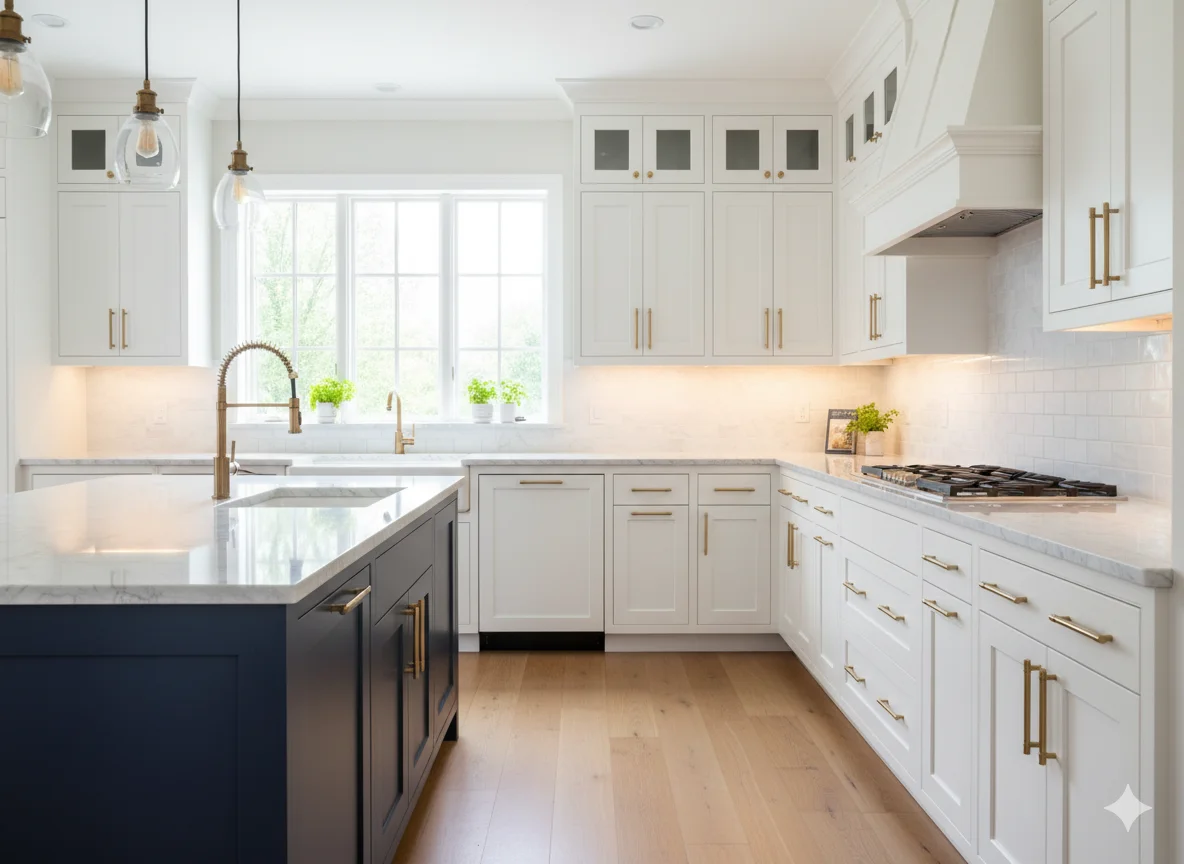
21 Kitchen Cabinet Refacing Ideas
Kitchen cabinets occupy more visual real estate than any other element in your cooking space. When they start showing their age through worn finishes, outdated colors, or damaged surfaces, the entire room can feel tired and uninviting. Cabinet refacing offers a practical solution that transforms your kitchen without the substantial expense and lengthy disruption of a complete cabinet replacement.
This comprehensive guide presents 21 creative kitchen cabinet refacing ideas that deliver professional results while respecting your budget and timeline. Whether you prefer timeless elegance or contemporary boldness, these strategies will help you reimagine your kitchen space.
Understanding Cabinet Refacing
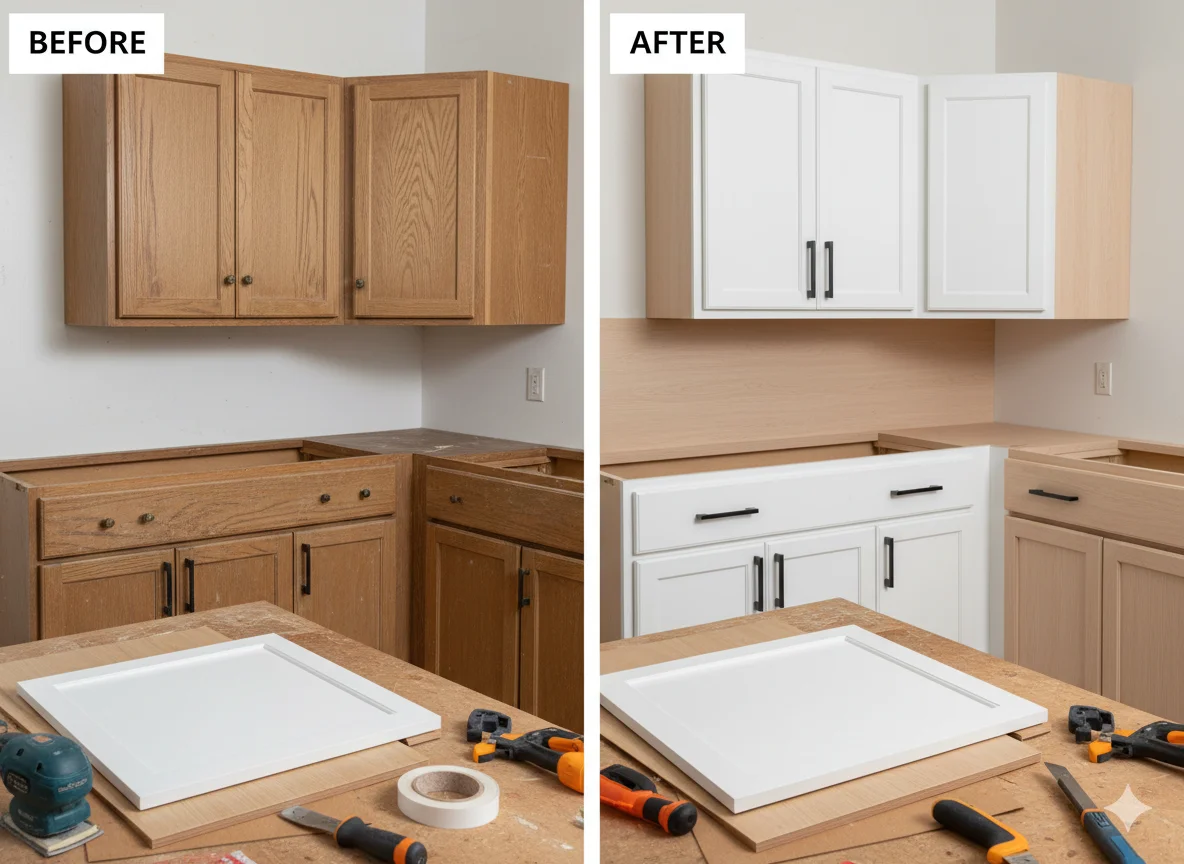
Cabinet refacing involves updating the visible surfaces of your existing cabinets while keeping the structural framework intact. Professional installers remove old doors, drawer fronts, and hardware, then apply new veneer or laminate to cabinet boxes before installing fresh doors and updated fixtures. This process typically costs one-third to one-half the price of full cabinet replacement while delivering comparable aesthetic improvements.
The refacing process preserves cabinets with solid structural integrity, making it an environmentally responsible choice that reduces waste. Homeowners benefit from faster completion times, often just a few days compared to weeks for complete renovations, which means less disruption to daily household routines.
Door Style Transformations
Classic Shaker Design
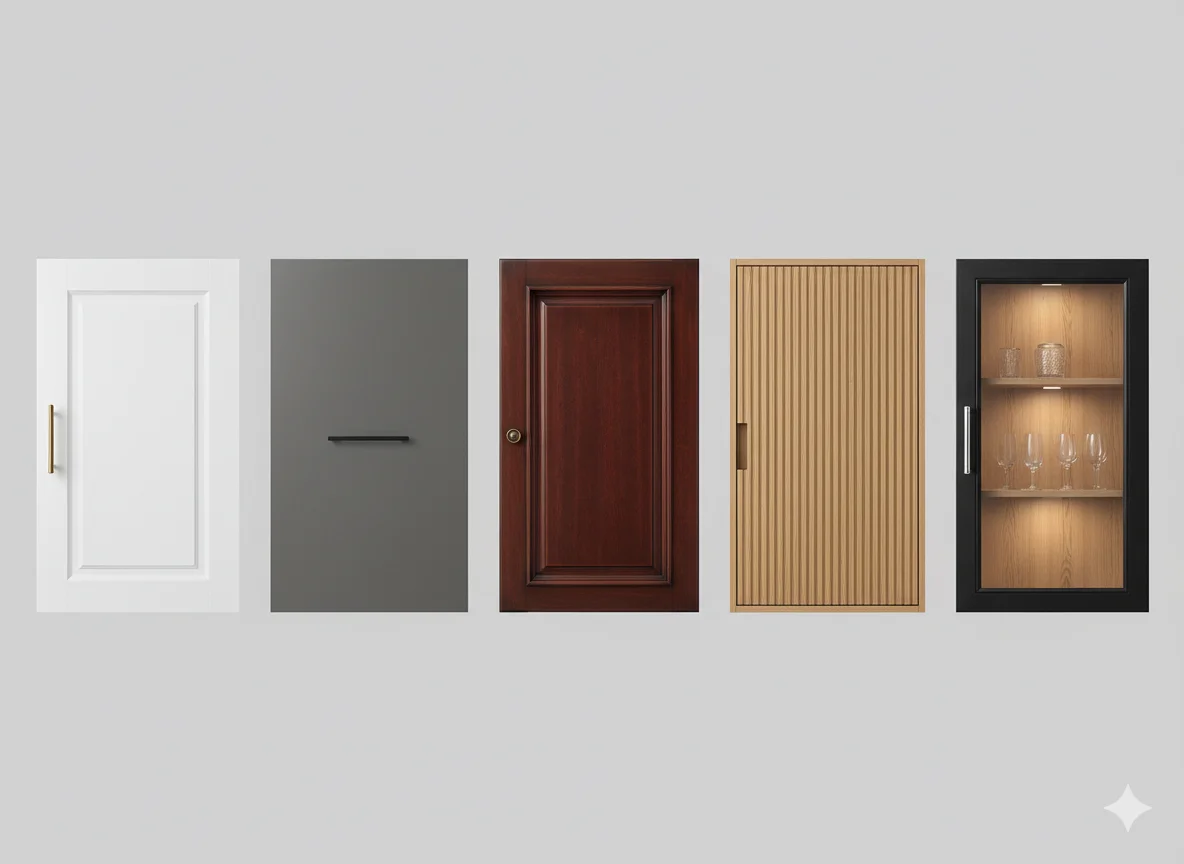
Shaker cabinets remain the most requested style for their clean lines and timeless appeal. This design features a recessed center panel surrounded by a simple frame, creating visual interest without excessive ornamentation. The versatility of Shaker doors allows them to complement both traditional and modern kitchens seamlessly.
Contemporary interpretations add subtle refinements like beveled edges or varied frame widths to distinguish your cabinets from standard builder-grade installations. Pairing Shaker doors with updated hardware transforms basic cabinetry into custom-quality craftsmanship.
Sleek Flat Panel Doors
Flat panel doors, also called slab doors, deliver a contemporary aesthetic with smooth, unadorned surfaces. These minimalist designs work exceptionally well in modern and transitional kitchens where clean lines take precedence over decorative details.
The simplicity of flat panels provides an ideal canvas for bold colors or dramatic wood grains. Without raised details to collect dust or grease, these doors also offer practical maintenance advantages for busy households.
Traditional Raised Panel
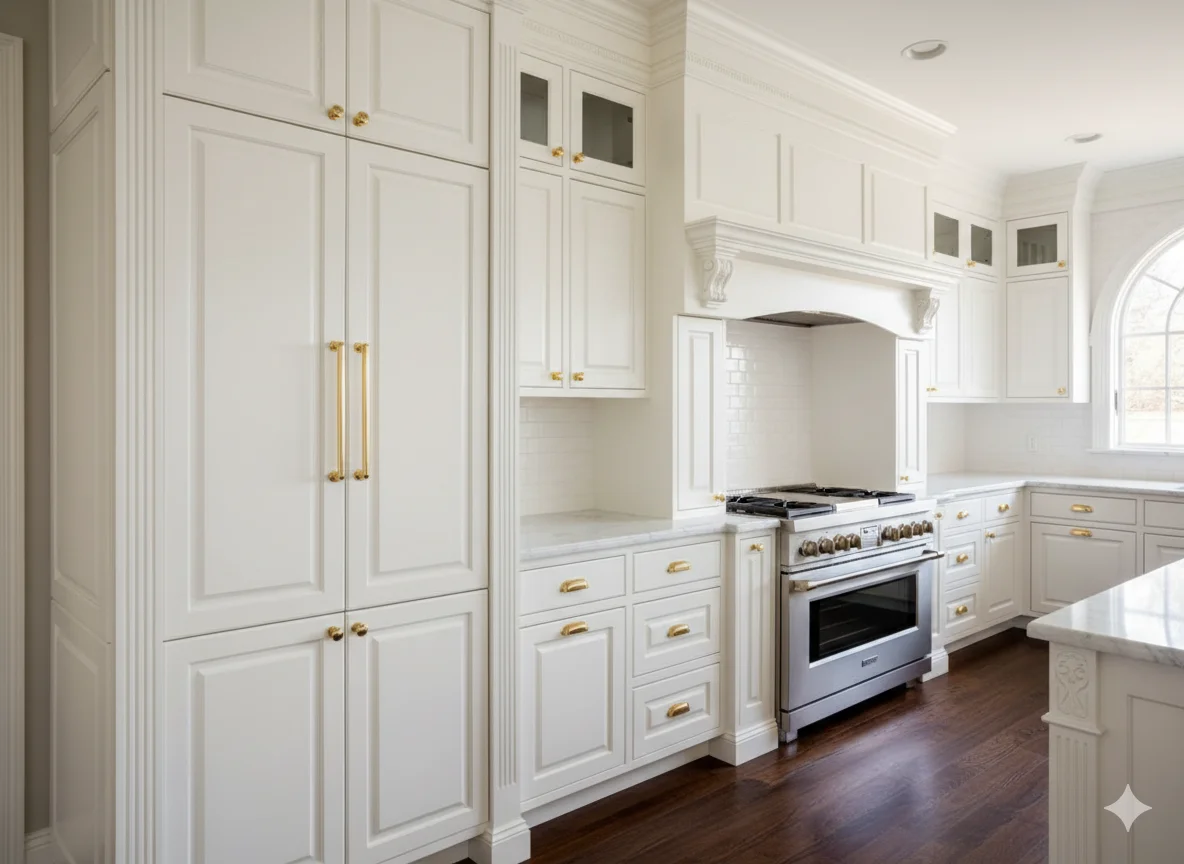
Raised panel doors feature an elevated center section that creates dimensional depth and classic elegance. This style suits traditional and formal kitchen designs, particularly when executed in rich wood stains or sophisticated painted finishes.
The three-dimensional quality of raised panels catches light differently throughout the day, adding subtle visual movement to your kitchen. When combined with glazing techniques, these doors achieve an heirloom furniture quality.
Fluted and Reeded Surfaces
Textured cabinet fronts with vertical grooves bring architectural interest and vintage charm to modern kitchens. Fluted designs reference mid-century and Art Deco aesthetics while feeling fresh and current in contemporary applications.
These textured surfaces work beautifully as accent elements on kitchen islands, range hoods, or select upper cabinets. The repetitive linear pattern adds depth without overwhelming smaller kitchen spaces.
Glass-Front Cabinets
Glass cabinet doors introduce transparency that visually expands kitchen space while showcasing cherished dishware or decorative items. Options range from clear glass for full visibility to frosted, seeded, or ribbed glass that obscures contents while maintaining luminosity.
Strategic placement of glass-front cabinets breaks up solid banks of doors and creates focal points. Consider installing interior cabinet lighting to illuminate displayed items and enhance the overall ambiance.
Color and Finish Innovations
Crisp White Transformation
White cabinets continue to brighten kitchens and create an impression of spaciousness. This classic choice reflects natural light effectively, making it particularly valuable in smaller kitchens or spaces with limited windows.
Modern white finishes include warm undertones that prevent the sterile appearance of pure white while maintaining brightness. Pairing white cabinets with contrasting countertops, backsplashes, or flooring prevents the space from feeling monotonous.
Earth Tone Elegance
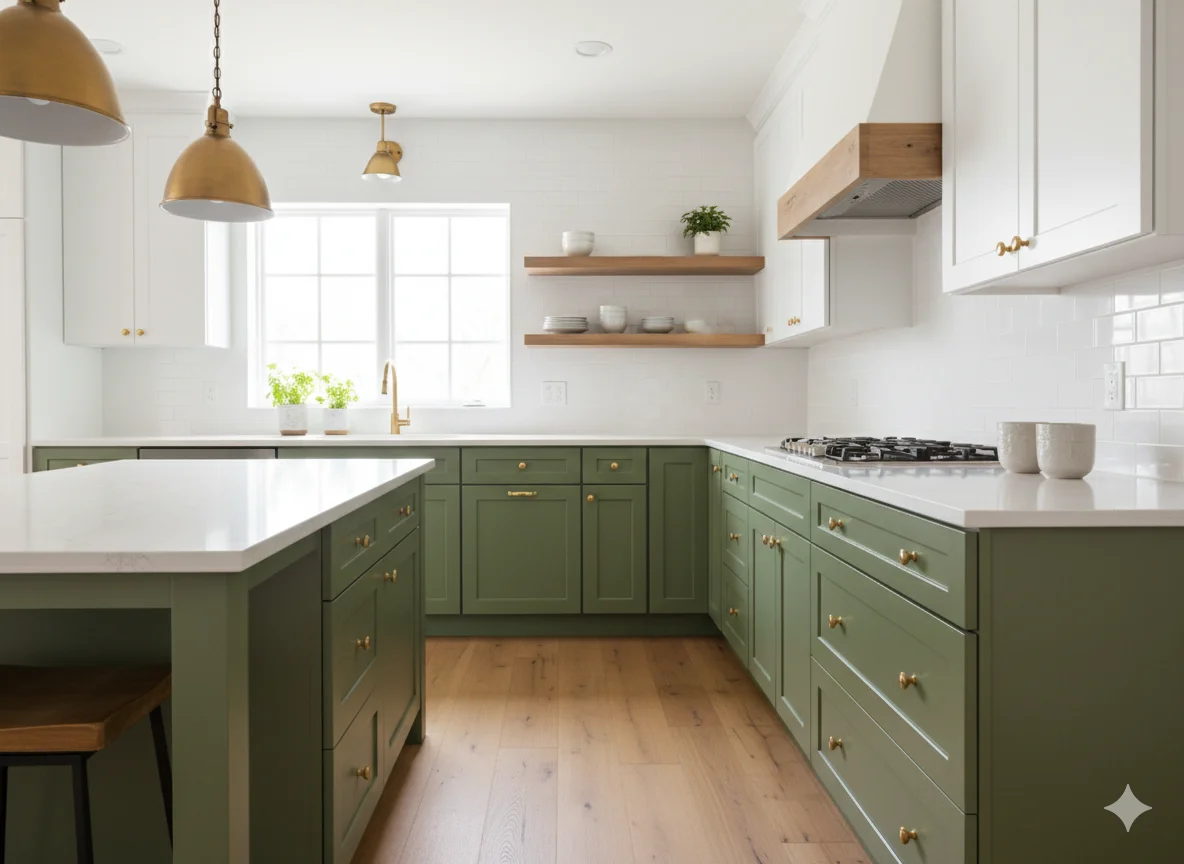
Warm, natural colors like olive green, terracotta, soft taupe, and warm beige bring organic comfort to kitchen environments. These earthy hues create welcoming atmospheres that feel grounded and serene, moving away from the stark coolness of previous gray trends.
Earth tones pair beautifully with natural materials like wood, stone, and brass, supporting biophilic design principles that connect indoor spaces with nature. These colors also demonstrate longevity, avoiding trendy extremes that quickly become dated.
Bold Dramatic Hues
Deep navy, forest green, charcoal, and even sophisticated black cabinets make powerful design statements. These saturated colors add personality and depth while creating striking contrasts with lighter countertops and walls.
Darker cabinets work particularly well in kitchens with abundant natural light or when balanced with lighter upper cabinets. The richness of bold colors elevates cabinet refacing from simple updating to genuine design transformation.
Natural Wood Stains
Showcasing genuine wood grain through staining highlights the inherent beauty of quality materials. Popular species include oak for its prominent grain pattern, walnut for deep chocolate tones, cherry for warm reddish hues, and maple for lighter neutral bases.
Clear or light stains preserve the natural character of wood while providing protection. Darker stains like espresso or ebony offer dramatic alternatives to black paint while maintaining visible grain texture.
Two-Tone Cabinet Combinations
Mixing cabinet colors creates visual interest and defines distinct kitchen zones. Common approaches include darker lower cabinets paired with lighter uppers to balance visual weight, or contrasting island colors to establish a focal point.
Successful two-tone designs maintain cohesion through complementary undertones and consistent hardware finishes. This strategy allows homeowners to incorporate trendy colors in limited applications while keeping the majority of cabinetry neutral.
Material Selections
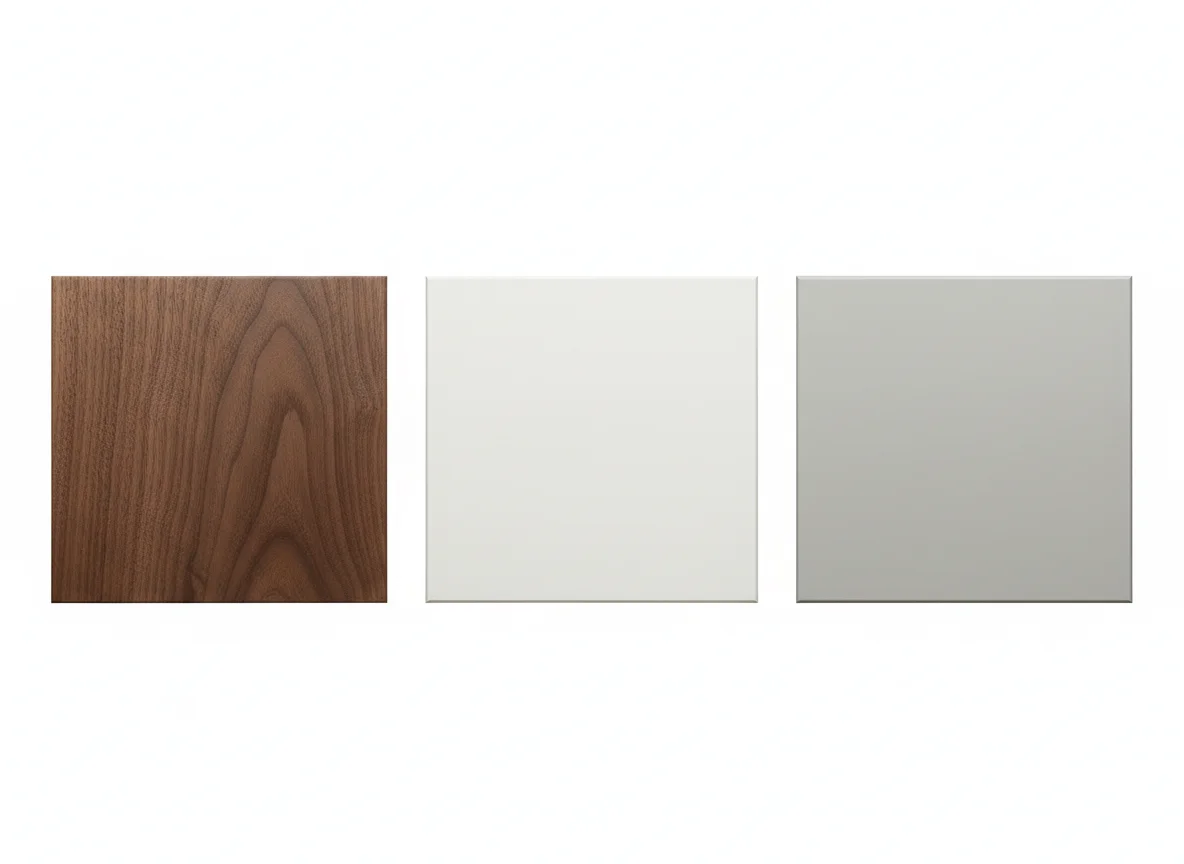
Premium Wood Veneers
Real wood veneer consists of thin slices of actual hardwood that provide authentic grain patterns and warmth. High-density wood veneers offer enhanced durability while maintaining the organic beauty that synthetic materials cannot replicate.
Wood veneers accept stains and finishes like solid wood, allowing for customization and future refinishing options. This material choice supports sustainable practices by maximizing the use of quality hardwoods.
Durable Laminate Options
Laminate materials provide extensive color selections, pattern varieties, and textures at accessible price points. Modern laminates convincingly mimic wood grain, solid colors, and even stone patterns while offering superior resistance to moisture, heat, and scratches.
The maintenance simplicity of laminate makes it practical for active households. These surfaces clean easily and resist common kitchen stains, maintaining their appearance through years of daily use.
Thermofoil Finishes
Thermofoil involves heat-applying vinyl film to medium-density fiberboard for smooth, seamless coverage. This material offers consistent color and finish across all cabinet components while providing moisture resistance valuable in humid environments.
Thermofoil works well for contemporary designs requiring uniform appearance and easy maintenance. The material resists fingerprints and wipes clean with minimal effort.
Architectural Enhancements
Crown Molding Addition
Installing crown molding along the top of cabinets introduces architectural sophistication that distinguishes builder-grade installations from custom millwork. This detail draws the eye upward and creates visual completion.
Crown molding bridges the gap between cabinets and ceilings, particularly effective when cabinets do not extend to full ceiling height. Various profiles accommodate different design styles from traditional to contemporary.
Decorative Trim and Baseboards
Adding trim elements to cabinet bases, sides, and edges refines the overall appearance. Detailed moldings transform plain cabinet boxes into furniture-quality pieces with distinctive character.
Base moldings create defined bottom edges while protecting cabinet bottoms from toe kicks and floor cleaning equipment. These elements contribute cohesiveness to the overall kitchen design.
Extended Height Cabinets
Extending cabinets to ceiling height maximizes storage capacity while creating dramatic vertical lines. This approach eliminates dust-collecting space above cabinets and delivers a more expensive custom appearance.
Ceiling-height cabinets make kitchens feel more expansive by emphasizing room height. Upper shelves accommodate infrequently used items while making the most of available cubic footage.
Hardware and Fixture Updates
Statement Hardware Selection
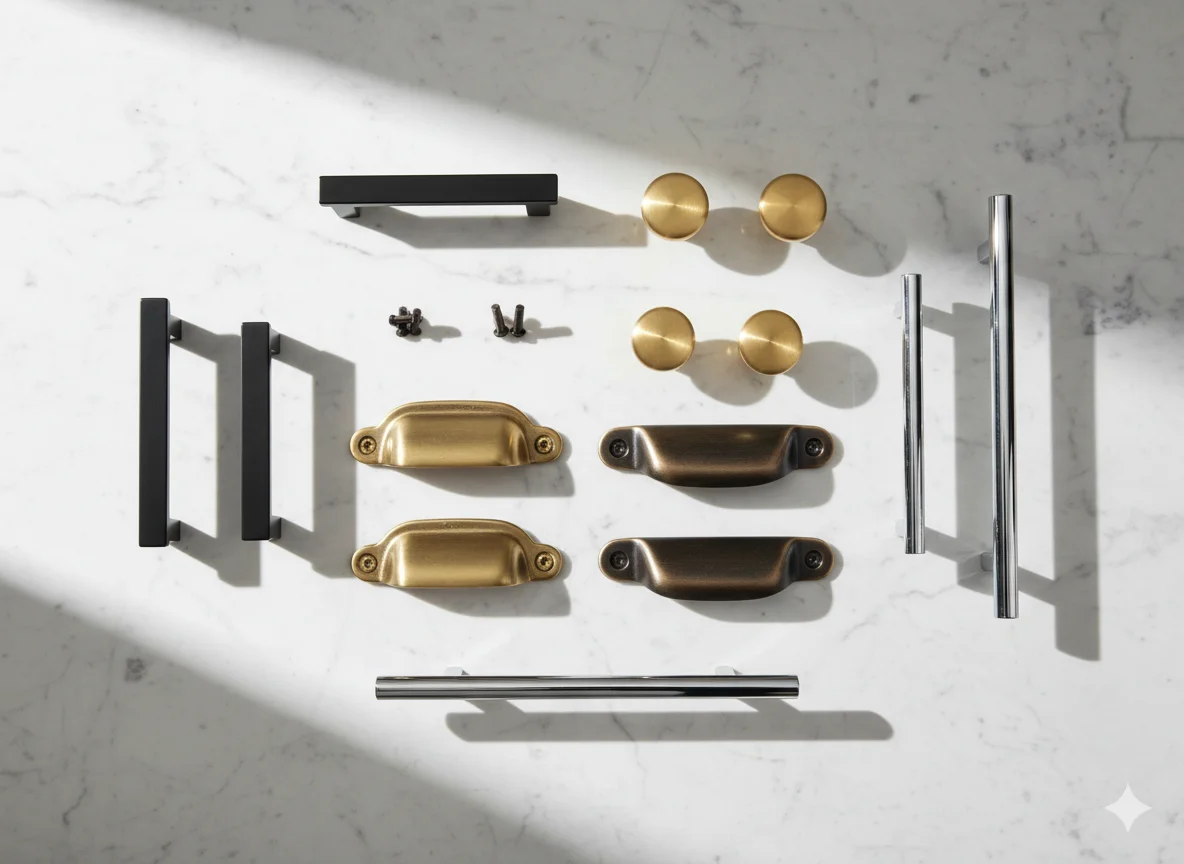
Cabinet hardware functions as jewelry for your kitchen, with knobs and pulls providing opportunities for personal expression. Current trends favor substantial pieces in mixed metals like aged brass, brushed gold, oil-rubbed bronze, and matte black.
The proper scale of hardware matters significantly. Larger doors and drawers require proportionally sized pulls while smaller doors work better with knobs or smaller handles. Consistent finish across all hardware unifies the design.
Minimalist Push-to-Open Systems
Handleless cabinets with push-to-open mechanisms create seamless contemporary aesthetics. These systems eliminate visual hardware entirely, resulting in smooth cabinet fronts that emphasize color and material.
Push-to-open technology works particularly well with flat panel doors where handles would interrupt clean lines. This approach also simplifies cleaning since there are no crevices around hardware to trap dirt.
Vintage-Inspired Fixtures
Period-appropriate hardware including cup pulls, bin pulls, and decorative knobs adds nostalgic charm to kitchen refacing projects. Mixing vintage aesthetics with modern functionality creates spaces with character and warmth.
Antique stores and specialty retailers offer authentic vintage hardware while contemporary manufacturers produce quality reproductions. These details personalize kitchens beyond current mass-market trends.
Island Focal Point Ideas
Contrasting Island Color
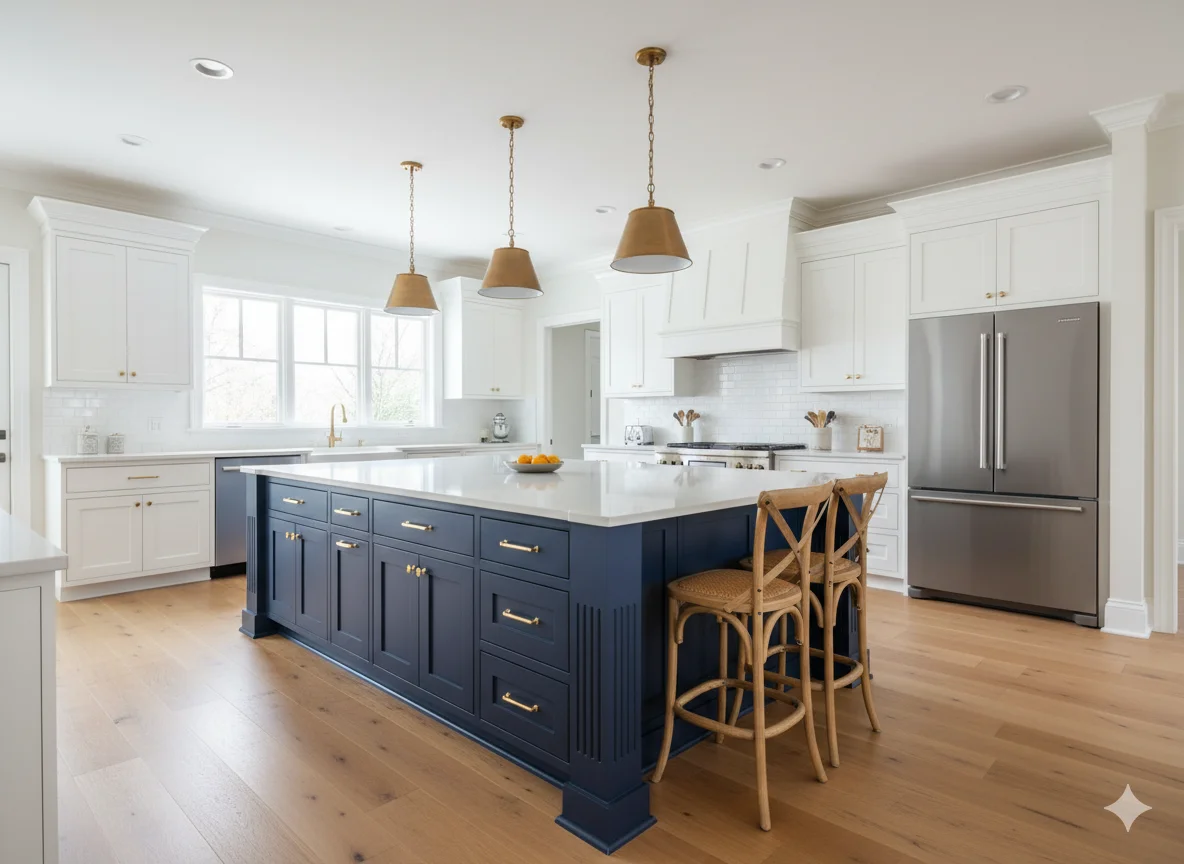
Kitchen islands serve as natural focal points, making them ideal candidates for bold color applications. Painting or staining the island differently than perimeter cabinets creates visual hierarchy and interest.
Popular contrasts include navy islands with white perimeter cabinets, wood-tone islands with painted surroundings, or dark islands anchoring lighter overall schemes. This strategy allows experimentation with trendy colors in limited scope.
Wainscoting and Panel Details
Adding decorative panels, beadboard, or wainscoting to island sides elevates basic box construction to furniture-grade appearance. These architectural details reference traditional design while adding tactile interest.
Painted wainscoting creates cottage charm while stained panels deliver refined elegance. Affixed door panels matching cabinet fronts provide cohesive integration with the overall cabinetry design.
Open Shelving Integration
Incorporating open shelving into island designs offers display space for cookbooks, decorative bowls, or frequently used items. This breaks up solid cabinetry while maintaining functionality.
Open sections can be styled with baskets for concealed storage or left empty to maintain visual lightness. This approach works particularly well in kitchens where the island provides seating areas.
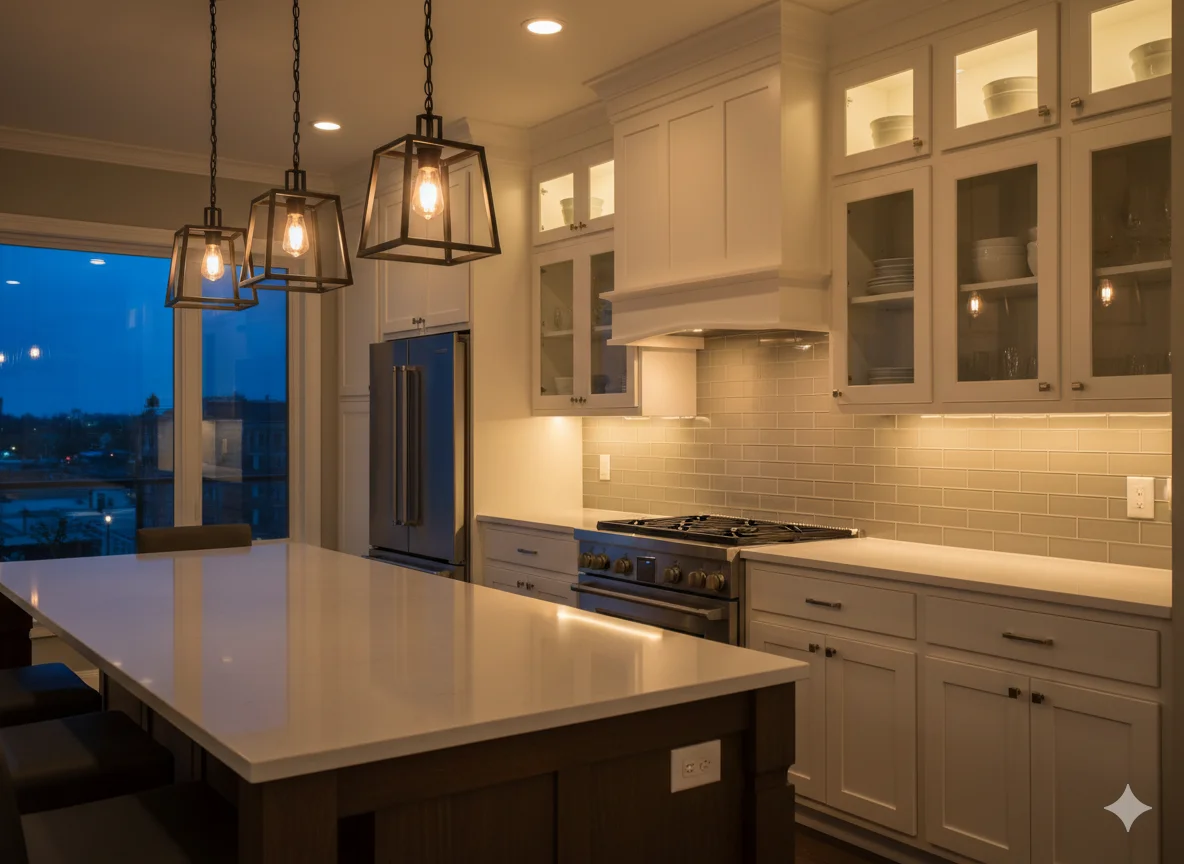
Lighting Enhancements
Under-Cabinet Illumination
Installing lighting beneath upper cabinets brightens work surfaces while creating ambient glow. LED strip lights, puck lights, or linear fixtures provide task lighting for food preparation while enhancing the overall kitchen atmosphere.
Under-cabinet lighting showcases backsplash materials and eliminates shadows on countertops. Modern LED options offer energy efficiency with minimal heat production and extended lifespans.
Interior Cabinet Lighting
Illuminating the interiors of glass-front cabinets highlights displayed items and adds sophisticated ambiance. Small LED lights attach easily inside cabinets without extensive electrical modifications.
This subtle lighting creates depth and visual interest during evening hours. Motion-activated interior lights add luxury while improving cabinet functionality.
Final Considerations
Kitchen cabinet refacing represents a strategic investment that transforms your most-used space without the cost and disruption of complete replacement. The 21 ideas presented here demonstrate the extensive customization possibilities available through thoughtful material selection, color choices, hardware updates, and architectural enhancements.
Successful refacing projects balance personal style preferences with practical considerations like maintenance requirements, budget constraints, and lifestyle needs. Whether you pursue professional installation or tackle the project yourself, careful planning ensures results that enhance both the beauty and functionality of your kitchen.
The current design landscape offers unprecedented freedom to create kitchens that reflect individual personalities rather than conforming to generic resale formulas. By combining classic elements with contemporary touches, you can develop a timeless kitchen that serves your household beautifully for years to come.
Consider which ideas resonate most strongly with your vision and current kitchen configuration. Small changes like updated hardware and fresh paint deliver immediate impact, while more comprehensive refacing with new doors and veneer produces dramatic transformations. The key lies in selecting approaches that align with your goals, resources, and timeline to create a kitchen you genuinely love using every day.
Frequently Asked Questions
How much does cabinet refacing typically cost compared to replacement?
Cabinet refacing generally costs between one-third and one-half the price of complete cabinet replacement. Professional refacing projects average between $4,000 and $10,000 for an average-sized kitchen, while full replacement often ranges from $15,000 to $30,000 or more. The significant savings come from preserving existing cabinet boxes and infrastructure.
Can I reface cabinets myself or should I hire professionals?
DIY cabinet refacing is possible for homeowners with basic carpentry skills and appropriate tools. Simple projects involving painting existing doors or replacing hardware work well as DIY endeavors. However, applying veneer, installing new doors with proper alignment, and achieving professional-quality finishes typically benefit from experienced contractors who ensure precise measurements and durable results.
How long does a cabinet refacing project take?
Professional cabinet refacing usually takes three to five days for an average kitchen, depending on the scope of work. This timeline includes removing old doors and hardware, applying veneer to cabinet boxes, installing new doors and drawer fronts, and adding finishing touches. DIY projects may extend over several weekends depending on your available time and experience level.
Will refaced cabinets last as long as new cabinets?
When properly executed with quality materials, refaced cabinets last just as long as new installations. The structural cabinet boxes remain unchanged, and high-quality doors, veneers, and hardware provide decades of service. The longevity depends primarily on the condition of existing cabinet boxes and the quality of materials used in the refacing process.
What cabinet conditions are suitable for refacing?
Ideal candidates for refacing have structurally sound cabinet boxes with solid frames, secure wall attachments, and level doors. Cabinets with water damage, warped boxes, broken frames, or significant structural issues require replacement rather than refacing. A professional assessment helps determine whether your existing cabinets provide a suitable foundation for refacing investment.