17 Small Blue Bathroom Ideas 2026 That Make Compact Spaces Feel Expansive
Transforming a small bathroom into a space that feels both functional and beautiful requires strategic design choices. Blue has emerged as one of the most versatile and effective colors for compact bathrooms, offering a natural connection to water while creating an atmosphere of calm and serenity. Whether you prefer the sophistication of navy or the airiness of powder blue, incorporating this timeless hue can fundamentally change how your bathroom feels and functions.
The right shade of blue paired with thoughtful design elements can make even the smallest bathroom feel open, inviting, and surprisingly spacious. From paint selections to tile patterns and fixture choices, these 17 ideas demonstrate how blue bathrooms can overcome the constraints of limited square footage while delivering style and tranquility.
Understanding Blue in Small Bathroom Design
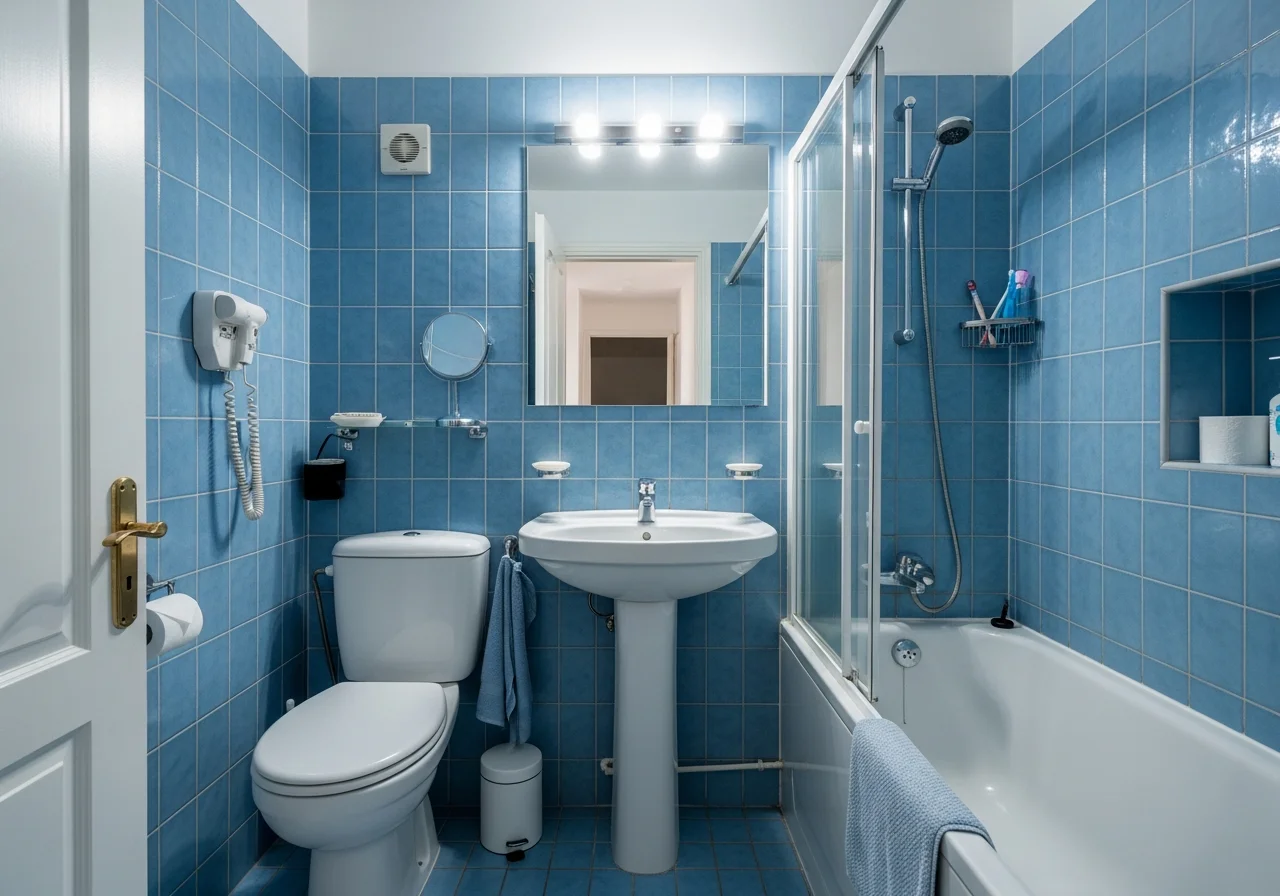
Blue naturally evokes feelings of peace and relaxation, making it an ideal choice for bathroom spaces where we begin and end our days. In compact bathrooms, this color offers distinct advantages beyond aesthetics. Lighter blues reflect natural light and create an impression of openness, while deeper shades add depth and sophistication without overwhelming the room when balanced correctly.
The psychological impact of blue in bathrooms cannot be overstated. Research consistently shows that cooler color palettes help reduce stress and promote calmness. For small bathrooms that might otherwise feel cramped or utilitarian, blue introduces an element of tranquility that transforms the space into a retreat rather than just a functional necessity.
Navy Painted Vanities for Bold Contrast
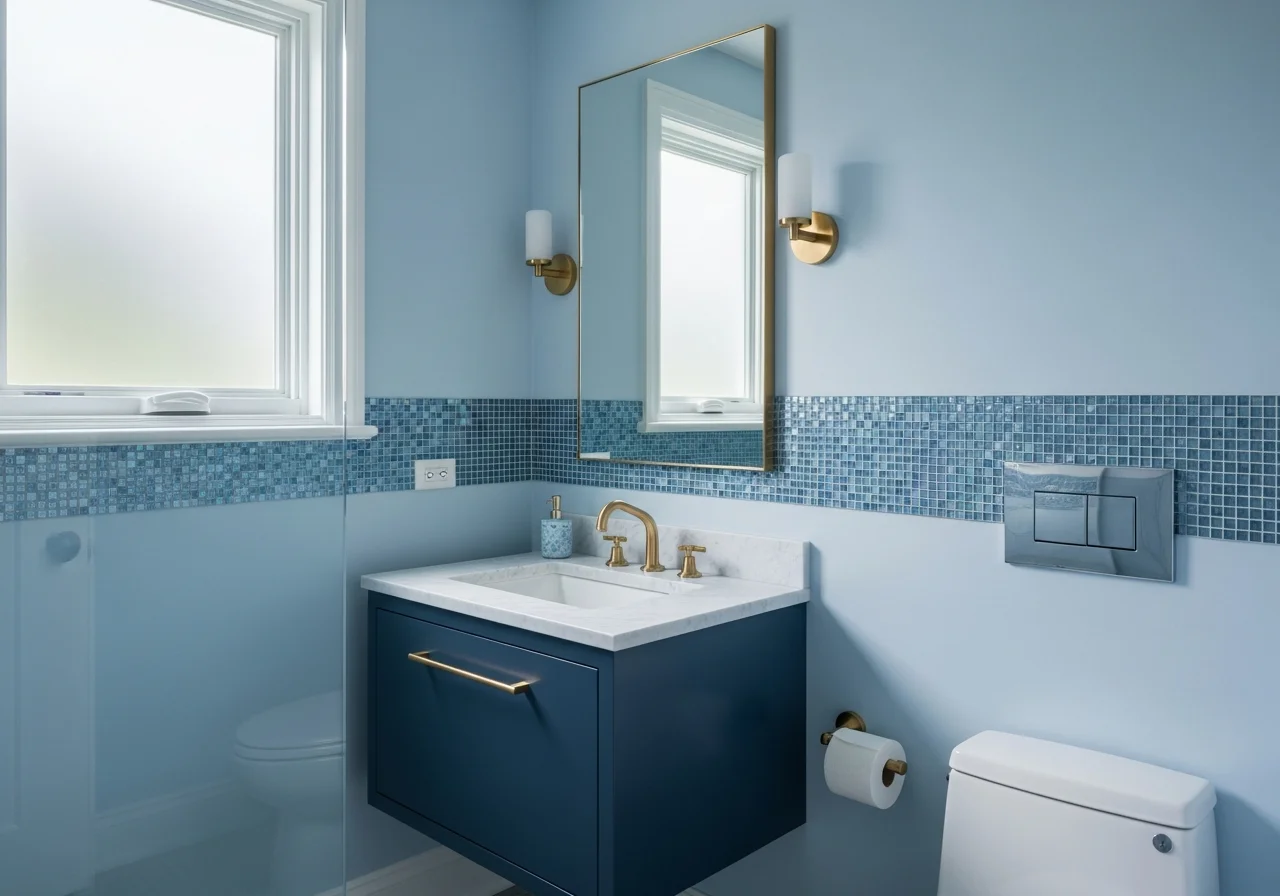
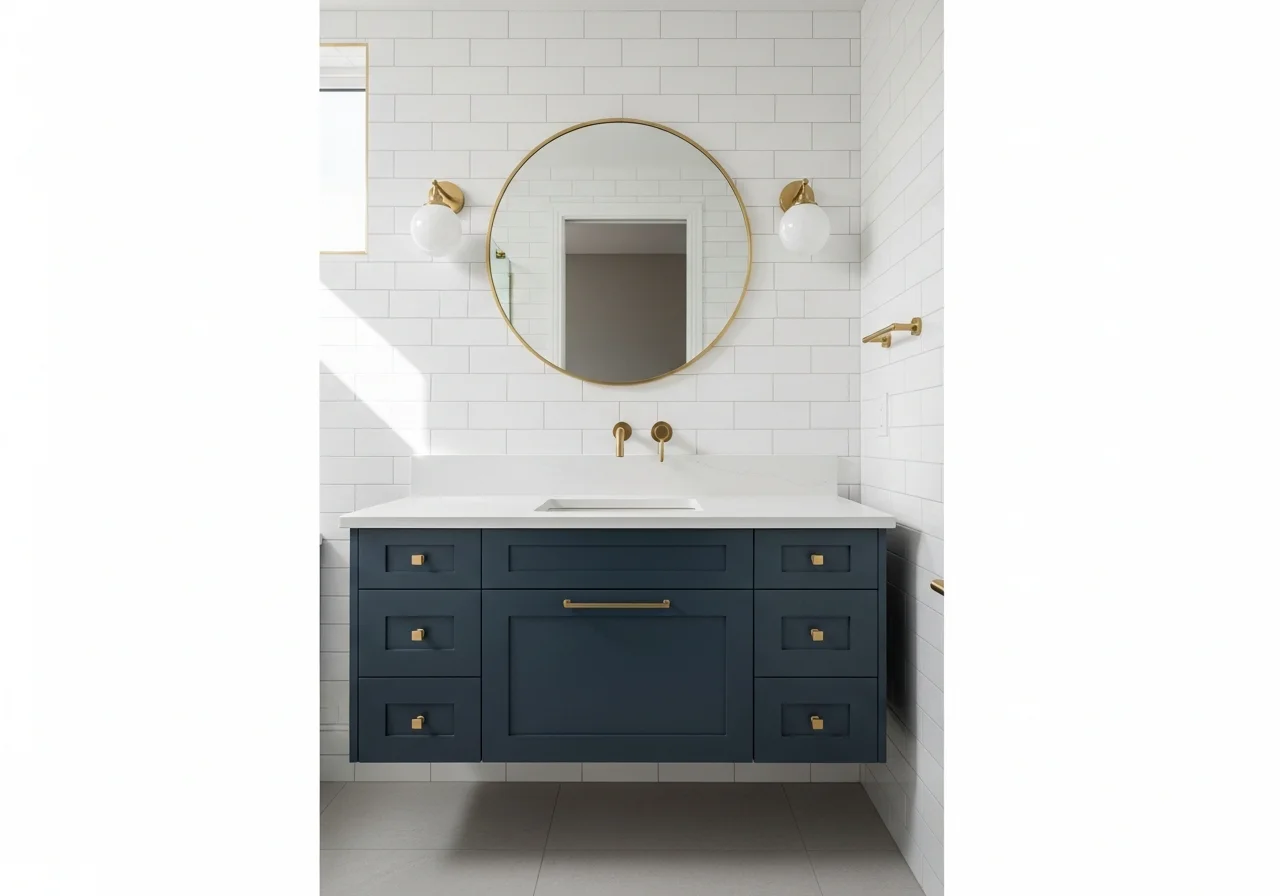
A navy blue vanity serves as a stunning focal point in small bathrooms while providing essential storage. This deep, rich shade grounds the space and creates visual interest without requiring extensive square footage. When paired with white or light gray walls, a navy vanity delivers the contrast needed to make a small bathroom feel intentionally designed rather than constrained by its dimensions.
The key to success with navy vanities lies in balancing the dark cabinetry with lighter elements throughout the room. White countertops in marble or quartz provide a crisp contrast that prevents the space from feeling too enclosed. Similarly, brushed gold or brass hardware adds warmth and elevates the overall aesthetic, creating a sophisticated look that feels both current and timeless.
Wall-mounted navy vanities offer an additional advantage in compact bathrooms by exposing floor space beneath the cabinet. This floating effect makes the room appear larger while maintaining all the storage functionality of traditional vanity styles. The visible floor area contributes to a sense of openness that benefits any small bathroom layout.
Powder Blue Walls for Airy Expansion
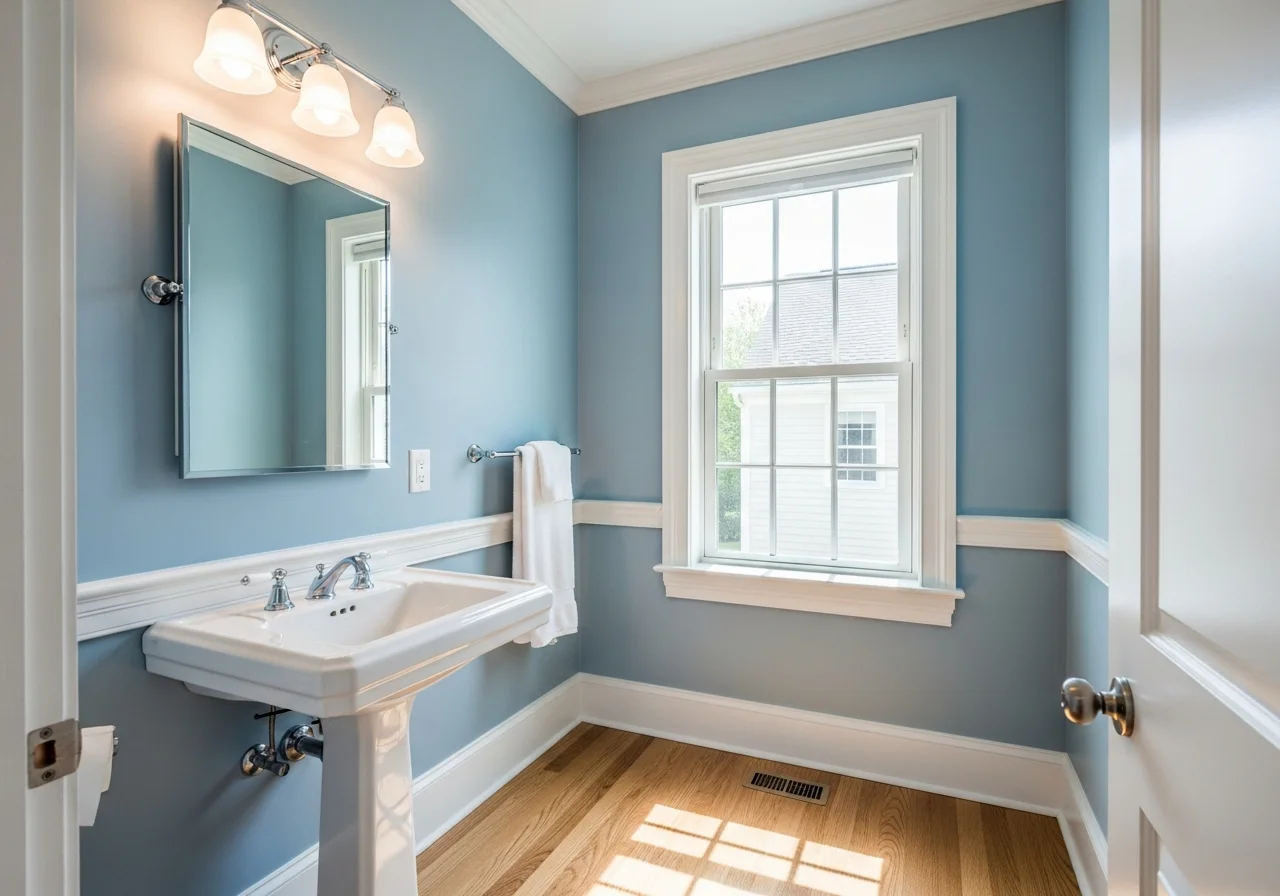
Powder blue or soft periwinkle walls create an immediately soothing backdrop that makes small bathrooms feel more spacious. These gentle hues reflect light beautifully and recede visually, pushing the perceived boundaries of the room outward. The effect is particularly pronounced in bathrooms with limited natural light, where every bit of brightness matters.
Pairing powder blue walls with white trim creates a classic combination that feels fresh and clean. This approach works exceptionally well in traditional and transitional design styles, offering a timeless quality that won’t feel dated as trends shift. The soft contrast between the wall color and trim also adds architectural interest without competing for attention in a small footprint.
For homeowners concerned about commitment to wall color, powder blue provides a forgiving option. Its subtle nature means it coordinates easily with a wide range of accent colors and decor styles, allowing for flexibility as your tastes evolve over time.
Subway Tile with Blue Accents
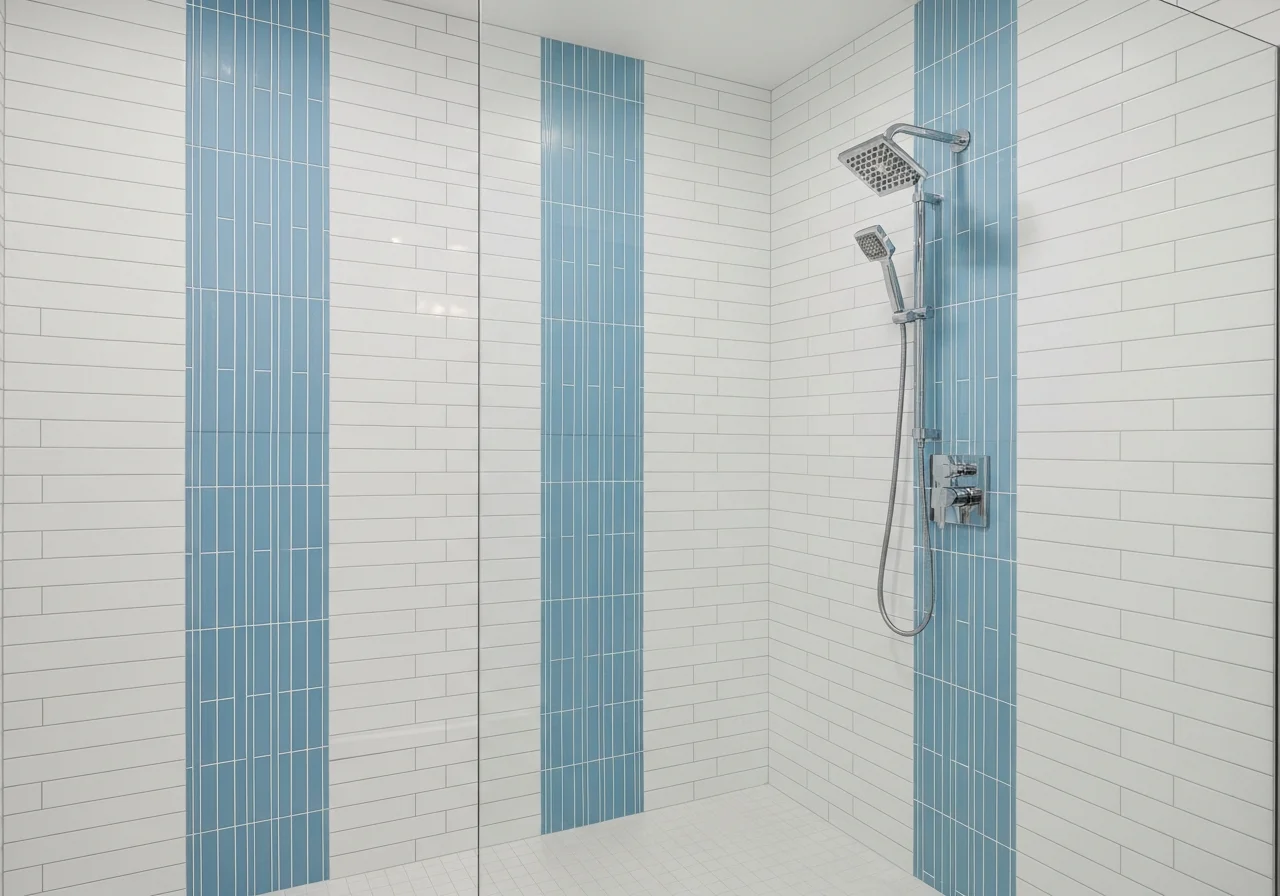
Classic white subway tile remains a smart choice for small bathrooms due to its ability to reflect light and create a clean, timeless look. Incorporating blue accent tiles within a subway pattern introduces color and personality without overwhelming the space. Vertical stripes of blue tile interspersed with white create visual height, making ceilings appear taller and the overall room more spacious.
This strategy works particularly well in shower areas where a concentration of tile is necessary. By alternating white and blue subway tiles in a linear pattern, you create dimension and interest while maintaining the light-reflective properties that help small bathrooms feel larger. The pattern draws the eye upward, enhancing the perception of vertical space.
Another approach involves using blue subway tile as a border or dado rail element. This technique adds a pop of color at eye level while keeping the majority of wall space light and neutral. The horizontal line created by the blue accent can also make narrow bathrooms appear wider.
Coastal Blue and White Combinations
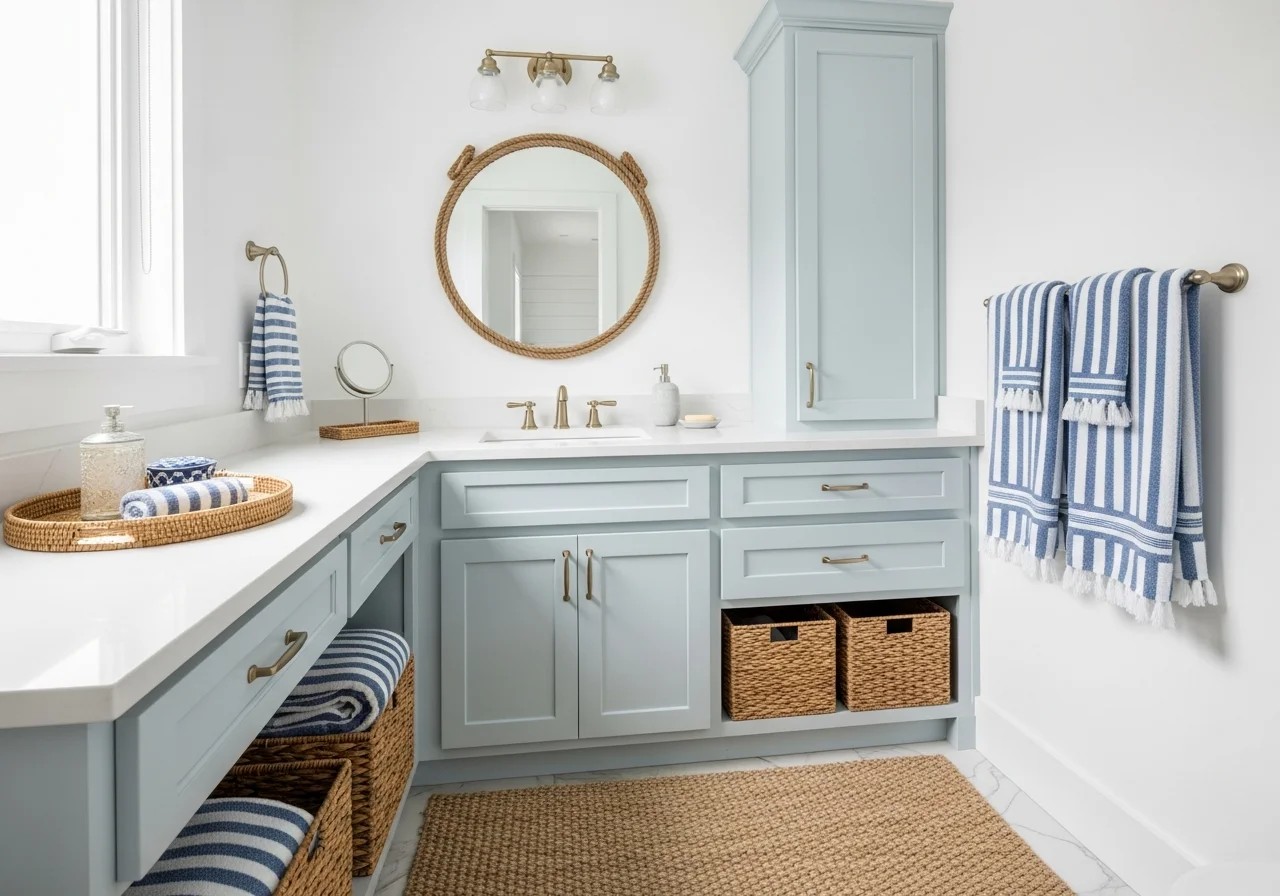
The coastal aesthetic naturally suits small bathrooms because it emphasizes light, open, and breezy design elements. Combining various shades of blue with crisp white creates a nautical-inspired palette that feels both relaxing and energizing. This pairing works across multiple design styles, from traditional to contemporary, making it remarkably versatile.
In practice, coastal blue and white combinations often feature light blue-gray cabinets with white walls and countertops, or white cabinetry with blue mosaic tile accents. The repetition of these two colors throughout the space creates cohesion and prevents the visual clutter that can make small bathrooms feel chaotic.
Natural textures enhance coastal blue designs significantly. Rattan baskets for storage, wooden accents, and organic fiber rugs introduce warmth and tactile interest that prevents the blue and white palette from feeling cold or sterile. These natural elements also reinforce the connection to beach and water that makes coastal design so appealing.
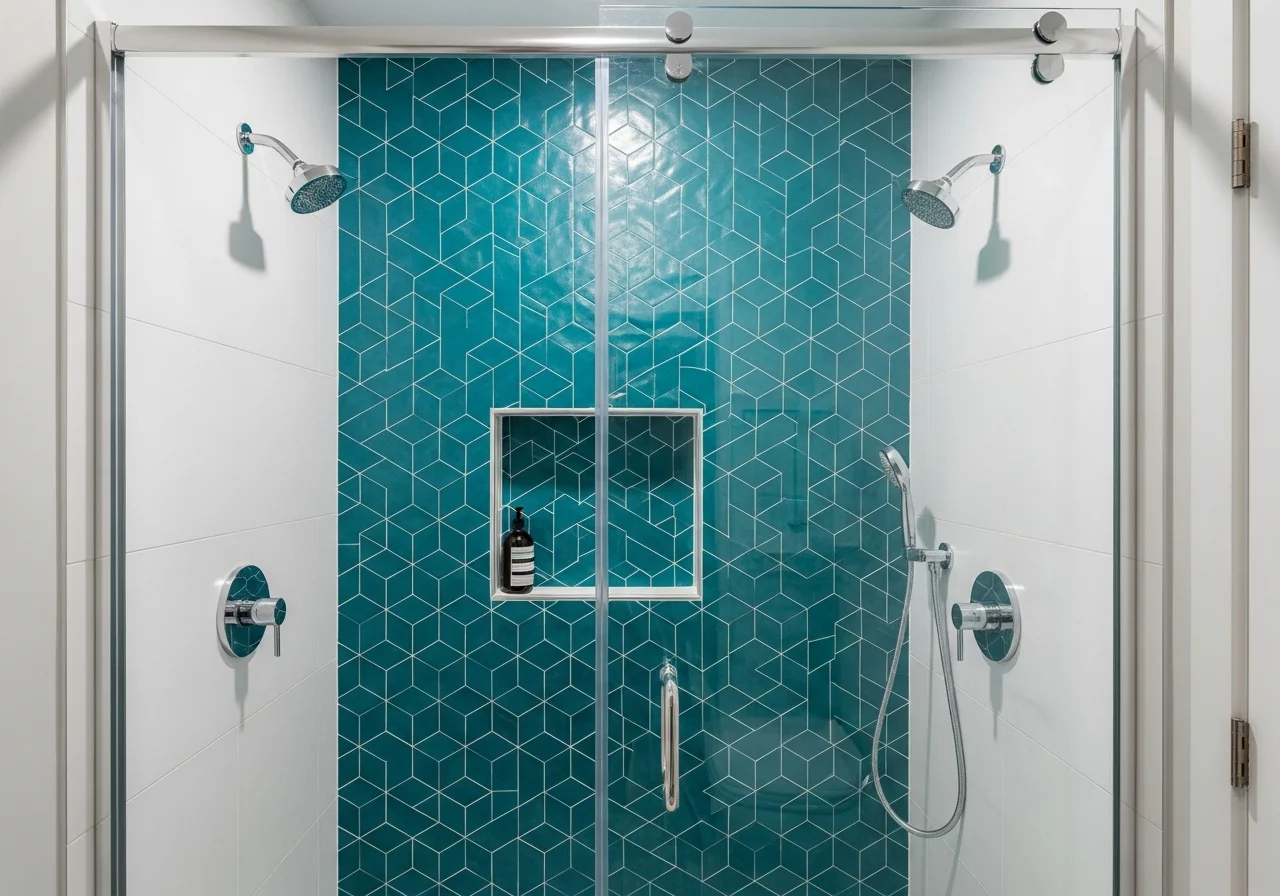
Teal Feature Walls in Shower Areas
A teal accent wall in the shower transforms this functional area into a design statement. This approach concentrates color in one section of the bathroom, allowing the rest of the space to remain neutral and light. The result is visual interest without color saturation that could make a small bathroom feel closed in.
Geometric tile patterns in teal shades create additional impact. Whether using hexagon tiles, chevron patterns, or abstract mosaics, the combination of color and pattern delivers maximum design effect in minimal square footage. The shower becomes a focal point that adds personality to the entire bathroom.
Glass shower enclosures are essential when using bold color in shower areas of small bathrooms. The transparency of glass prevents the colored tile from visually dividing the room, maintaining an open feel while still showcasing the teal design element. This balance between color impact and spatial openness is crucial in compact layouts.
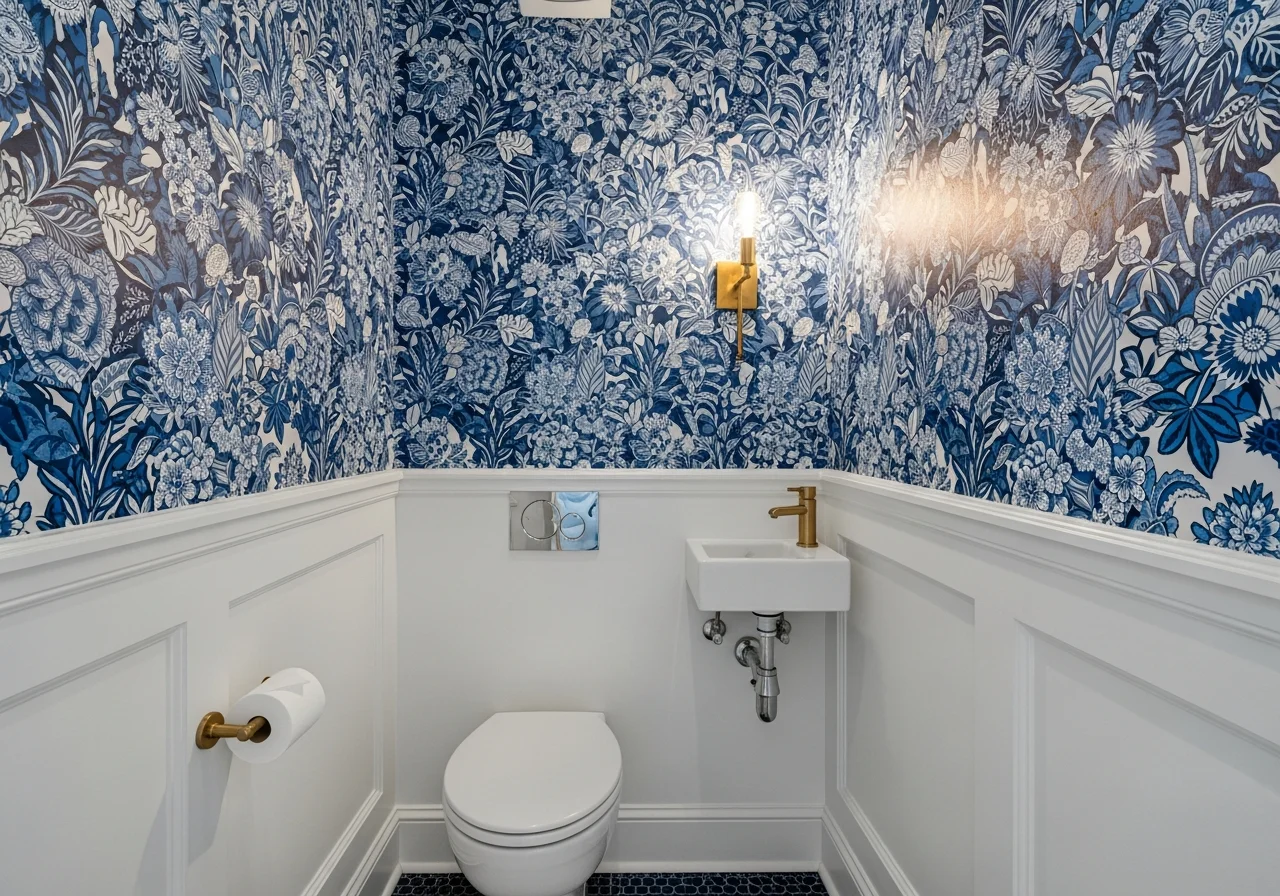
Blue Patterned Wallpaper for Personality
Wallpaper has experienced a renaissance in bathroom design, and small bathrooms are ideal candidates for bold patterns. Blue wallpaper with botanical prints, geometric designs, or traditional patterns adds significant personality without requiring permanent commitment or major renovation. The vertical nature of most wallpaper patterns also helps create the illusion of height.
In powder rooms and half baths, where space is extremely limited, wallpaper can transform the entire character of the room. A bold blue and white pattern creates visual interest on walls that might otherwise remain blank due to lack of space for artwork or accessories. The pattern itself becomes the primary decorative element.
When selecting wallpaper for small bathrooms, scale matters. Larger patterns can actually work better than tiny prints because they create fewer visual breaks and interruptions. A large-scale blue botanical print, for instance, feels more sophisticated and less busy than a small, repetitive pattern that can appear cluttered in tight quarters.
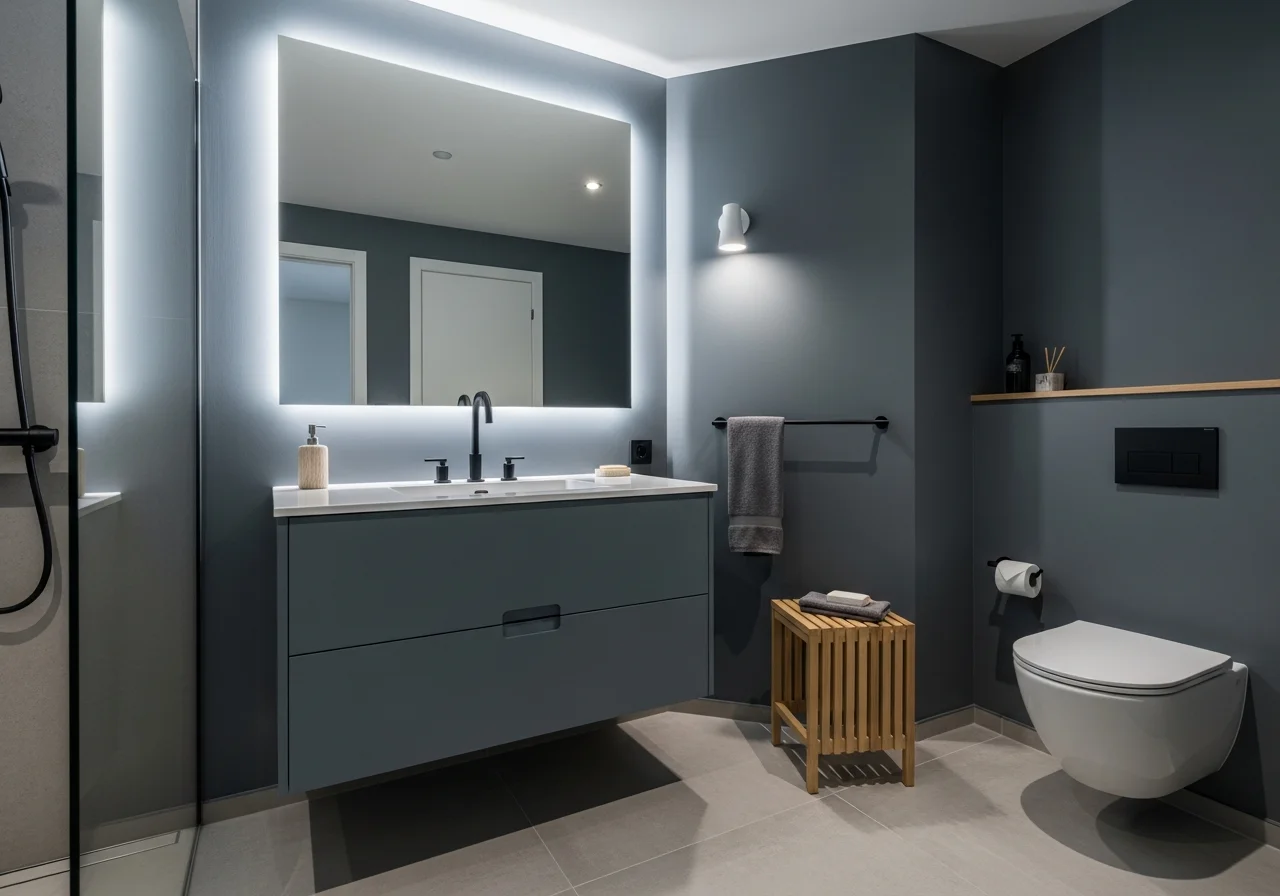
Slate Blue for Modern Sophistication
Slate blue occupies a unique position between gray and blue, offering a contemporary alternative to both traditional blue shades and neutral gray tones. This sophisticated hue works beautifully in modern small bathrooms, particularly when applied to cabinetry or as an accent wall behind floating vanities.
The understated nature of slate blue makes it an excellent choice for homeowners who want color without boldness. It provides visual interest and a calming atmosphere while maintaining a refined, professional appearance that appeals to a wide audience. This quality makes slate blue particularly valuable for those considering resale value alongside personal preference.
Pairing slate blue with natural materials creates a grounded, organic aesthetic. Light wood accents, concrete-look tiles, or stone textures complement the blue-gray tone beautifully while adding warmth that prevents the space from feeling cold or institutional.
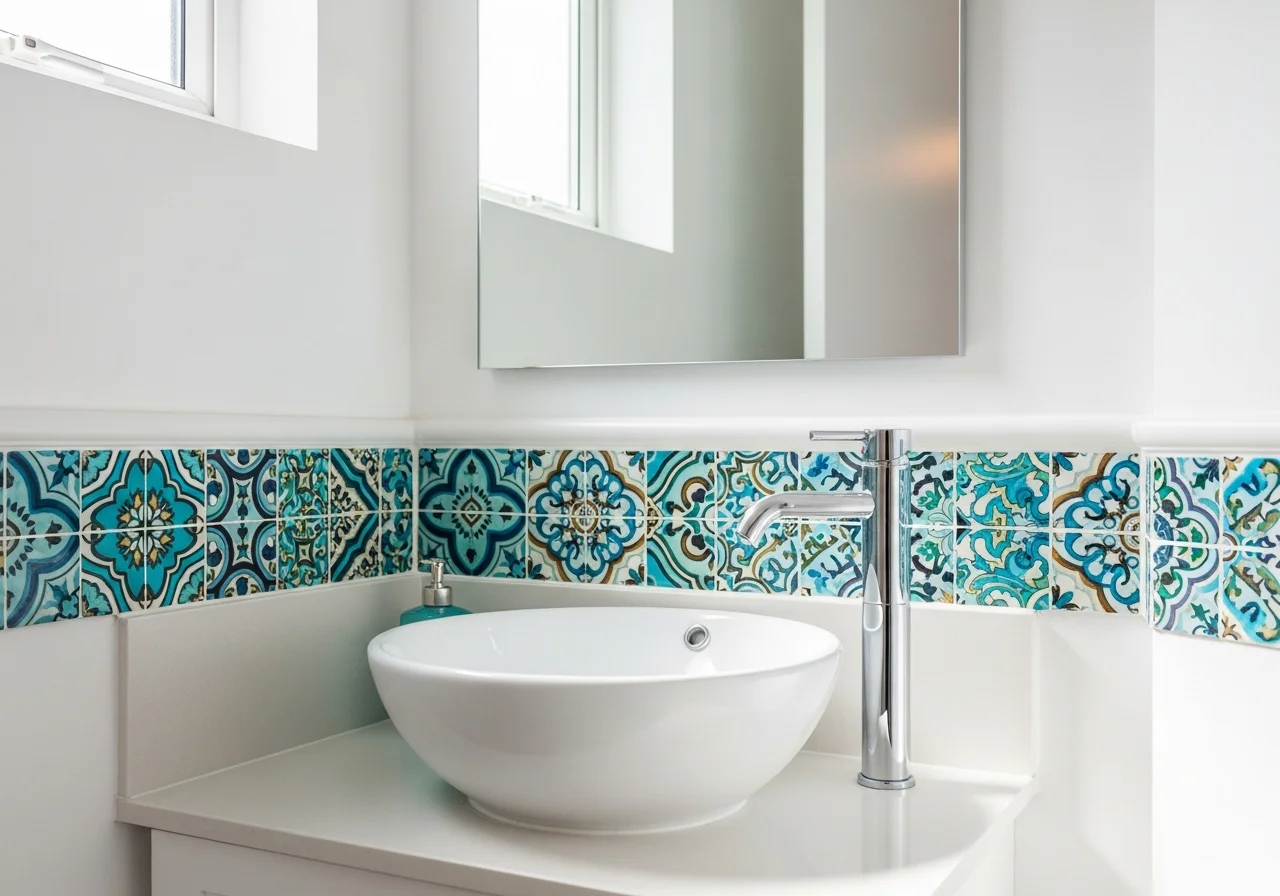
Turquoise Mosaic Tile Details
Small doses of vibrant turquoise in mosaic tile form deliver high impact in compact bathrooms. Whether used as a border detail, a backsplash behind the vanity, or as an accent strip in the shower, turquoise mosaic tiles catch the eye and add energy without dominating the space.
The small scale of mosaic tiles makes them particularly suitable for compact bathrooms because they can be used in narrow spaces where larger tiles wouldn’t fit effectively. A thin line of turquoise mosaic running horizontally around the room at dado rail height, for example, adds color and creates the illusion of width in narrow layouts.
Mediterranean and Moroccan-inspired designs often feature turquoise mosaic tiles paired with white or cream backgrounds. This combination brings a vacation-like quality to small bathrooms, transforming daily routines into more pleasurable experiences. The exotic character of these tile patterns adds visual interest that makes compact bathrooms feel intentionally designed rather than simply functional.
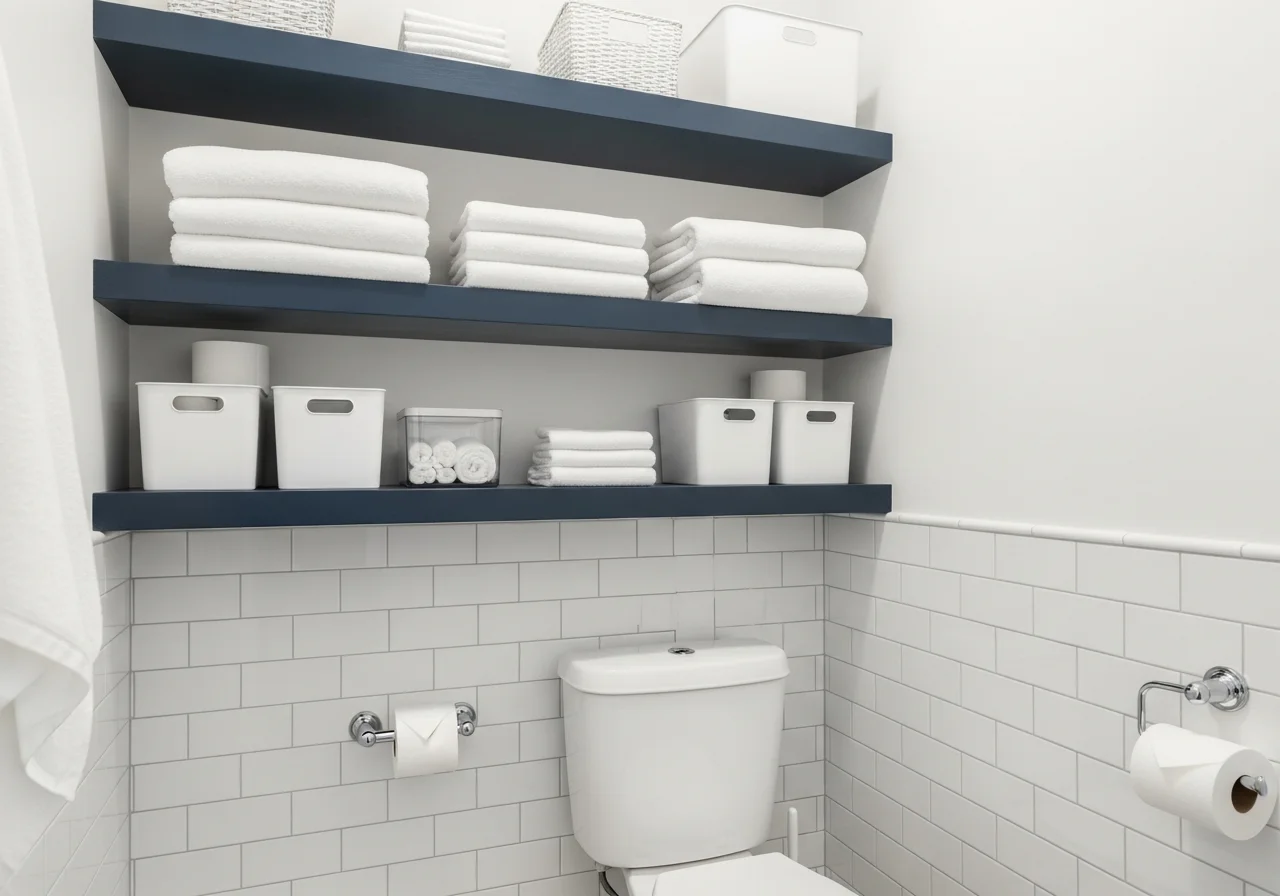
Floating Shelves in Blue for Storage
Open shelving in shades of blue provides essential storage in small bathrooms while contributing to the overall color scheme. Floating blue shelves above the toilet or beside the mirror offer practical space for toiletries and decor without the visual weight of closed cabinetry. This approach keeps frequently used items accessible while maintaining an open, airy feel.
The key to successful open shelving in small bathrooms is organization. Coordinated storage containers in complementary colors, neat stacks of white or neutral towels, and minimal decorative objects create an aesthetically pleasing display that enhances rather than clutters the space. The blue shelves themselves become part of the decor while serving a functional purpose.
For those concerned about visual clutter, combining one or two blue floating shelves with traditional closed storage strikes an effective balance. This hybrid approach provides the display opportunity that makes small bathrooms feel personalized while hiding less attractive necessities behind cabinet doors.
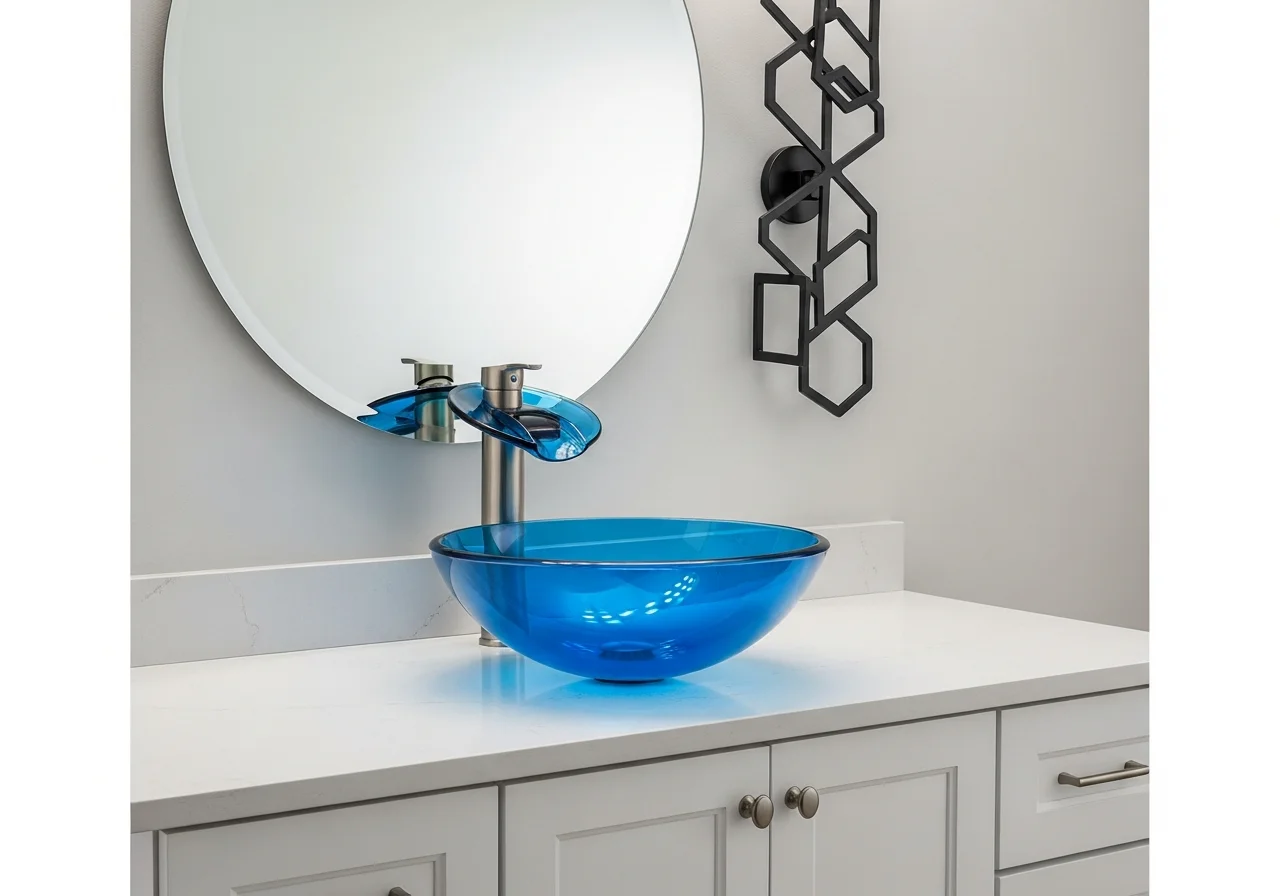
Blue Glass Vessel Sinks as Focal Points
A blue glass vessel sink creates an unexpected focal point that adds color and artistic interest to small bathroom vanities. These sinks sit atop the counter rather than dropping in, creating sculptural appeal that elevates the overall design. The translucent quality of blue glass also introduces light and reflection that benefits compact spaces.
Vessel sinks work particularly well in small bathrooms because they require less counter space than traditional undermount or drop-in models. This efficiency allows for narrower vanity depths, which can be crucial when working with limited square footage. The vertical presence of a vessel sink also draws the eye upward, creating a sense of height.
Coordinating the faucet finish with other metal elements in the bathroom creates cohesion around a blue glass vessel sink. Brushed nickel or chrome finishes complement cooler blue tones, while warm brass or gold coordinates beautifully with deeper navy or teal glass. This attention to detail makes even small bathrooms feel thoughtfully designed.
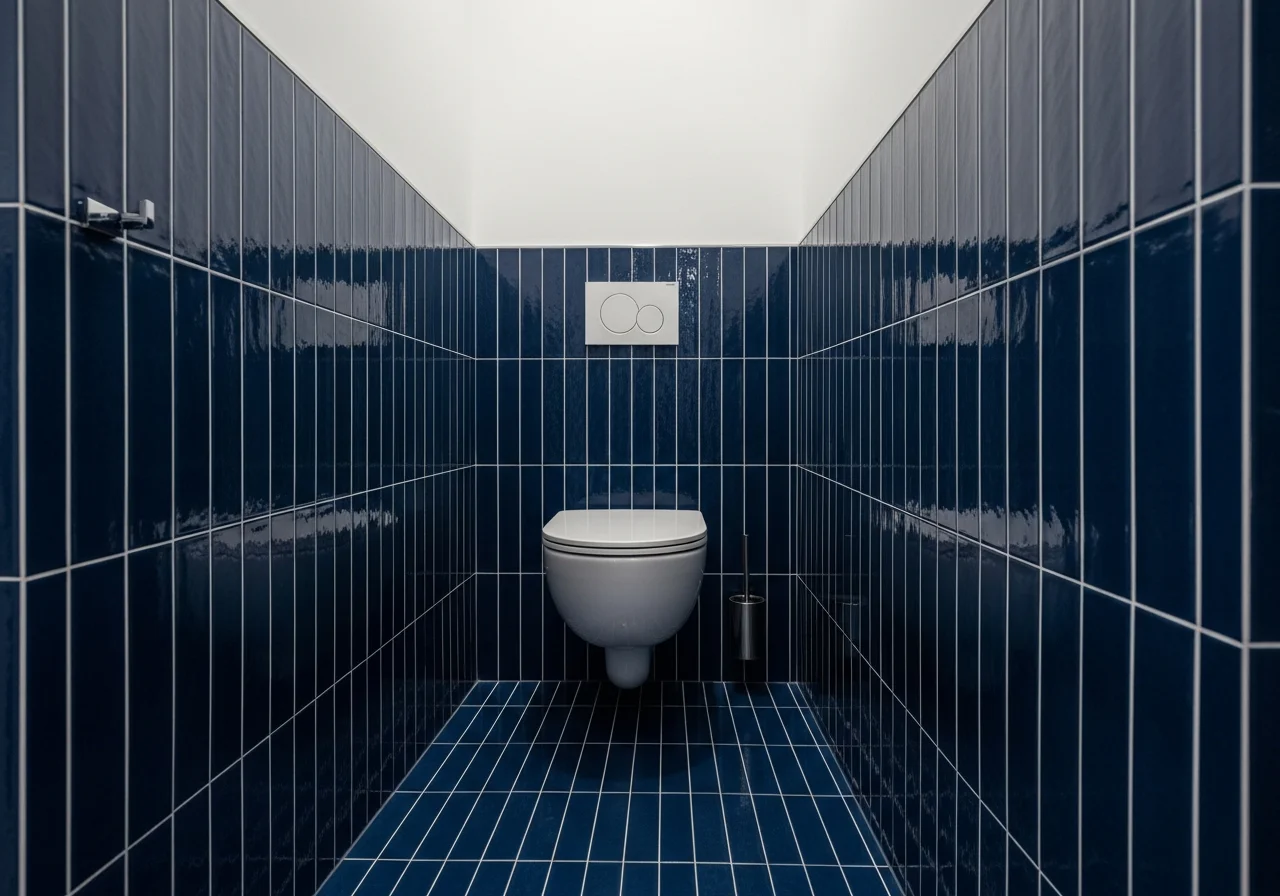
Vertical Blue Tile Patterns for Height
Installing blue tile in vertical rather than horizontal patterns creates the illusion of taller ceilings in small bathrooms. This simple orientation change makes a significant visual impact, drawing the eye upward and making compact spaces feel less cramped. Vertical patterns work with any tile size, from narrow subway tiles to wider plank styles.
The science behind this effect relates to how our brains process linear patterns. Vertical lines naturally encourage upward eye movement, which in turn makes us perceive greater height. In bathrooms with standard eight-foot ceilings, vertical tile patterns can create the impression of additional inches without any structural changes.
Combining vertical blue tile on one wall with neutral surfaces on others prevents the pattern from overwhelming small spaces. An accent wall of vertical blue tile in the shower, for instance, creates dramatic impact while allowing the rest of the bathroom to remain calm and open. This strategic use of pattern maximizes effect while minimizing spatial challenges.

Light Blue Ceilings for Unexpected Detail
Painting the ceiling a light blue shade introduces an often-overlooked design opportunity that can transform how a small bathroom feels. Light blue ceilings evoke the sky, creating an open, airy quality that counteracts the confined feeling common in compact bathrooms. This unexpected detail also adds visual interest without consuming valuable wall space.
The contrast between light blue ceilings and white or neutral walls creates architectural definition that makes small bathrooms feel more finished and intentional. This simple paint choice delivers significant impact with minimal investment, making it an ideal solution for budget-conscious updates.
When implementing blue ceilings, keeping walls and major surfaces light ensures the space maintains its open quality. The ceiling color becomes a pleasant surprise rather than a dominating element, adding character without sacrifice function or perceived space.
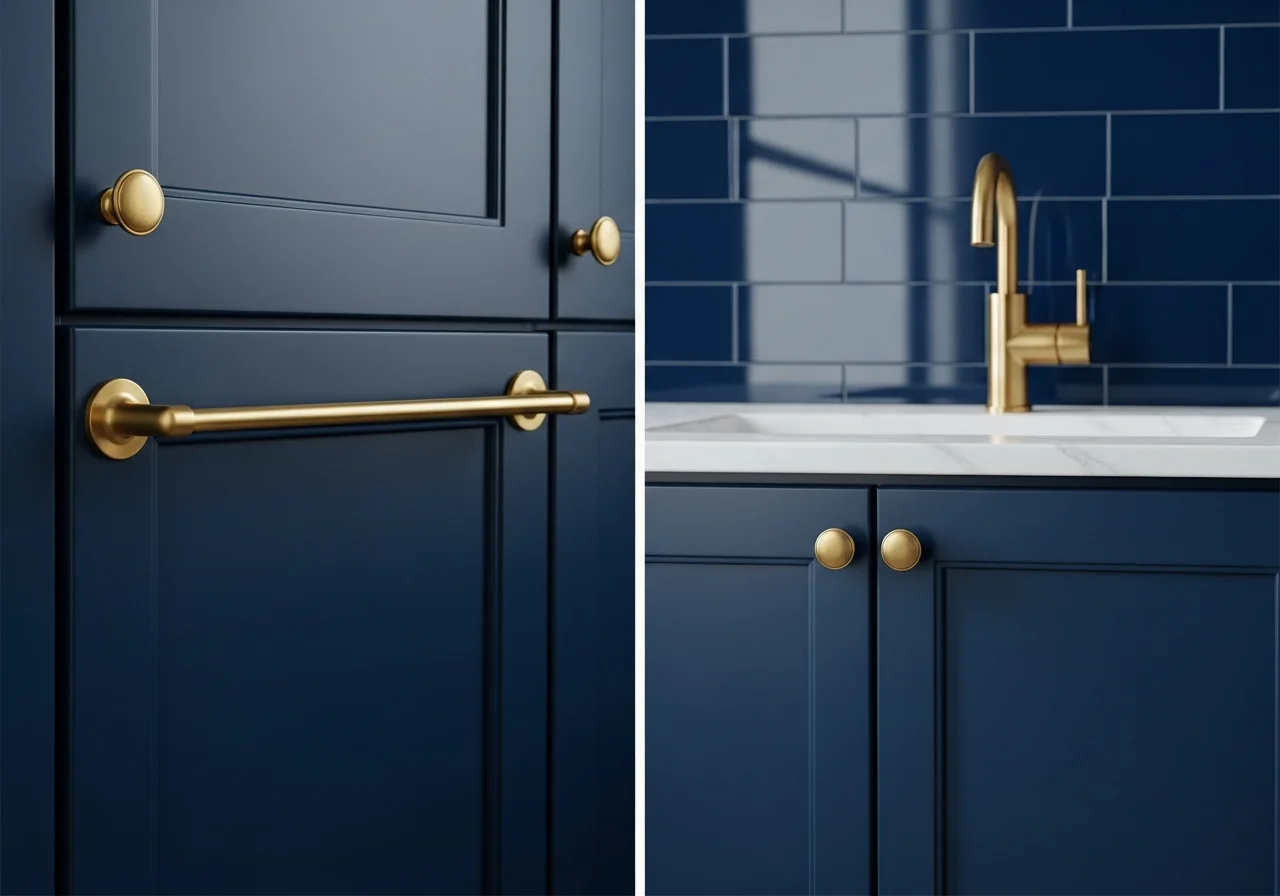
Blue and Brass Hardware Combinations
The warmth of brass or gold-toned hardware creates a sophisticated contrast against blue cabinetry and tile in small bathrooms. This metal finish adds a touch of luxury and elegance that elevates the overall design, making compact bathrooms feel more upscale. The combination of cool blue tones and warm metal creates visual interest and depth.
Consistency in hardware finish throughout the bathroom creates a polished, cohesive look. This means coordinating faucets, cabinet pulls, towel bars, and light fixtures in the same brass or gold tone. The repetition of this warm metallic finish against blue surfaces establishes a clear design narrative that makes small bathrooms feel intentional rather than haphazard.
Brushed or satin brass finishes tend to work better in bathrooms than shiny polished versions because they hide water spots and fingerprints more effectively. This practical consideration matters in high-use small bathrooms where every surface receives frequent contact.
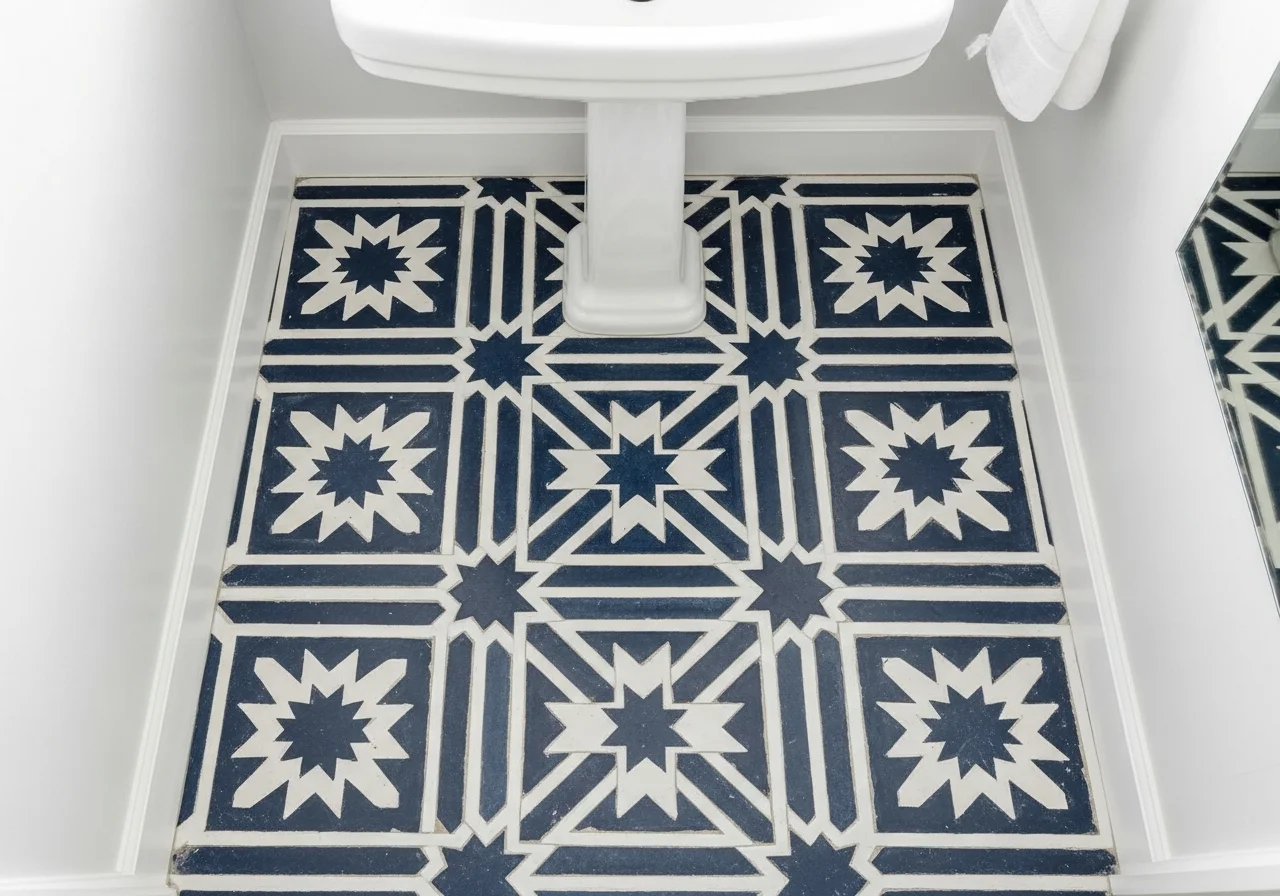
Blue Floor Tiles for Grounding Effect
Blue floor tile grounds a small bathroom and creates a foundation for the entire color scheme. Whether using deep navy for drama or soft blue-gray for subtlety, colored floor tiles add character that plain white or beige options cannot match. The floor becomes an active design element rather than simply a functional surface.
Patterned blue floor tiles deliver even greater impact in compact bathrooms. Geometric designs, Moroccan-inspired patterns, or classic encaustic tiles create visual interest that makes small floors feel special and considered. The pattern also helps define the space and create boundaries that give small bathrooms a more intentional layout.
For very small bathrooms, using the same blue tile on floors and partway up the walls creates a unified, cohesive look that makes the space feel larger. This approach eliminates visual breaks and transitions that can chop up small rooms, creating instead a seamless flow that enhances perceived square footage.
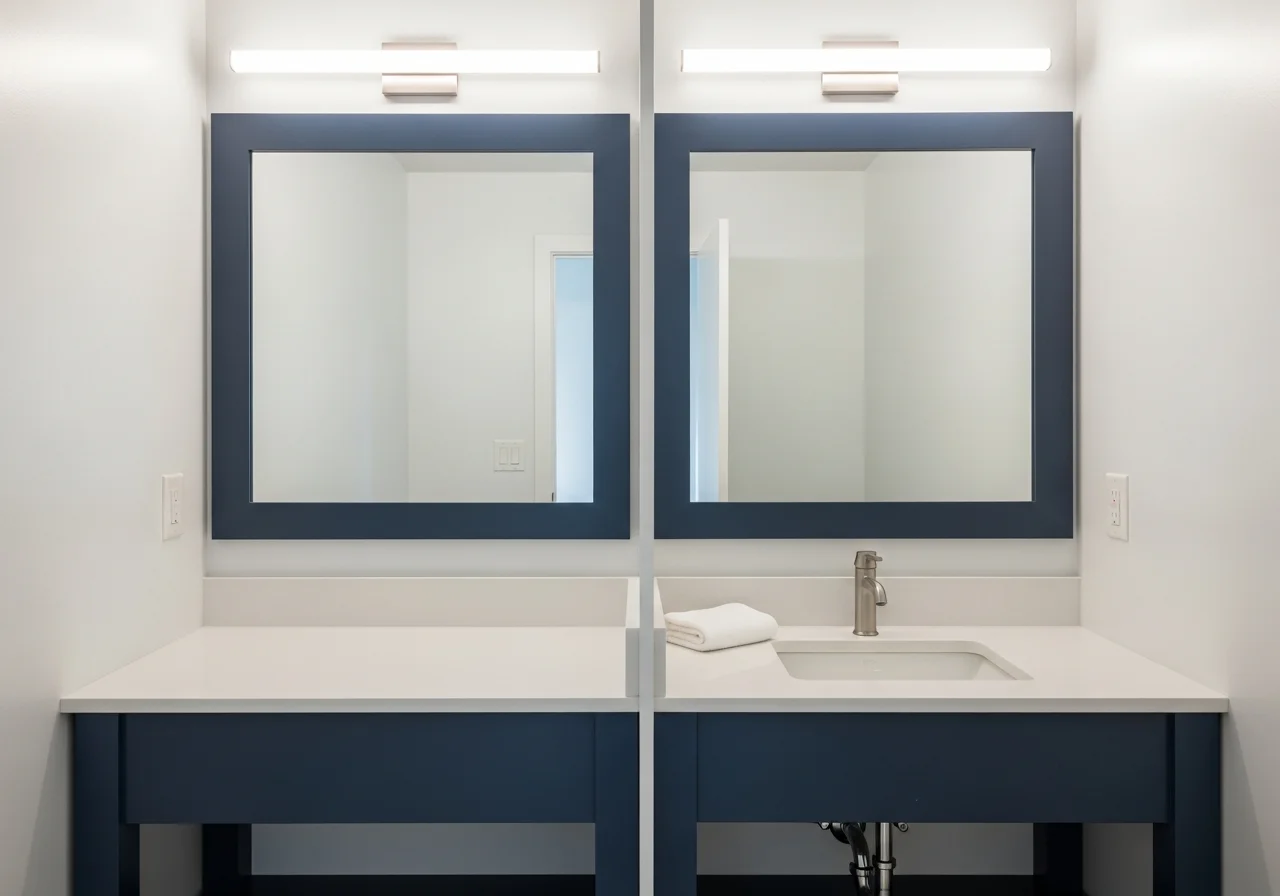
Mirrored Surfaces with Blue Frames
Mirrors are essential in small bathrooms for their ability to reflect light and create the illusion of doubled space. Adding blue frames to mirrors introduces color while maintaining these crucial spatial benefits. A navy blue framed mirror above the vanity, for instance, ties together other blue elements in the room while serving its practical purpose.
The size of mirrors matters significantly in small bathrooms. Larger mirrors create more dramatic spatial expansion than small ones, so selecting the biggest mirror that fits the wall space yields the best results. A blue-framed mirror that extends nearly wall to wall above a vanity makes a small bathroom feel substantially larger than a smaller, more conservative option.
Round mirrors with blue frames soften the hard angles common in small bathrooms. This shape choice adds visual variety and creates a gentler, more welcoming atmosphere. The circular form also helps break up the rectangular geometry of tiles, fixtures, and cabinetry that dominates most bathroom layouts.
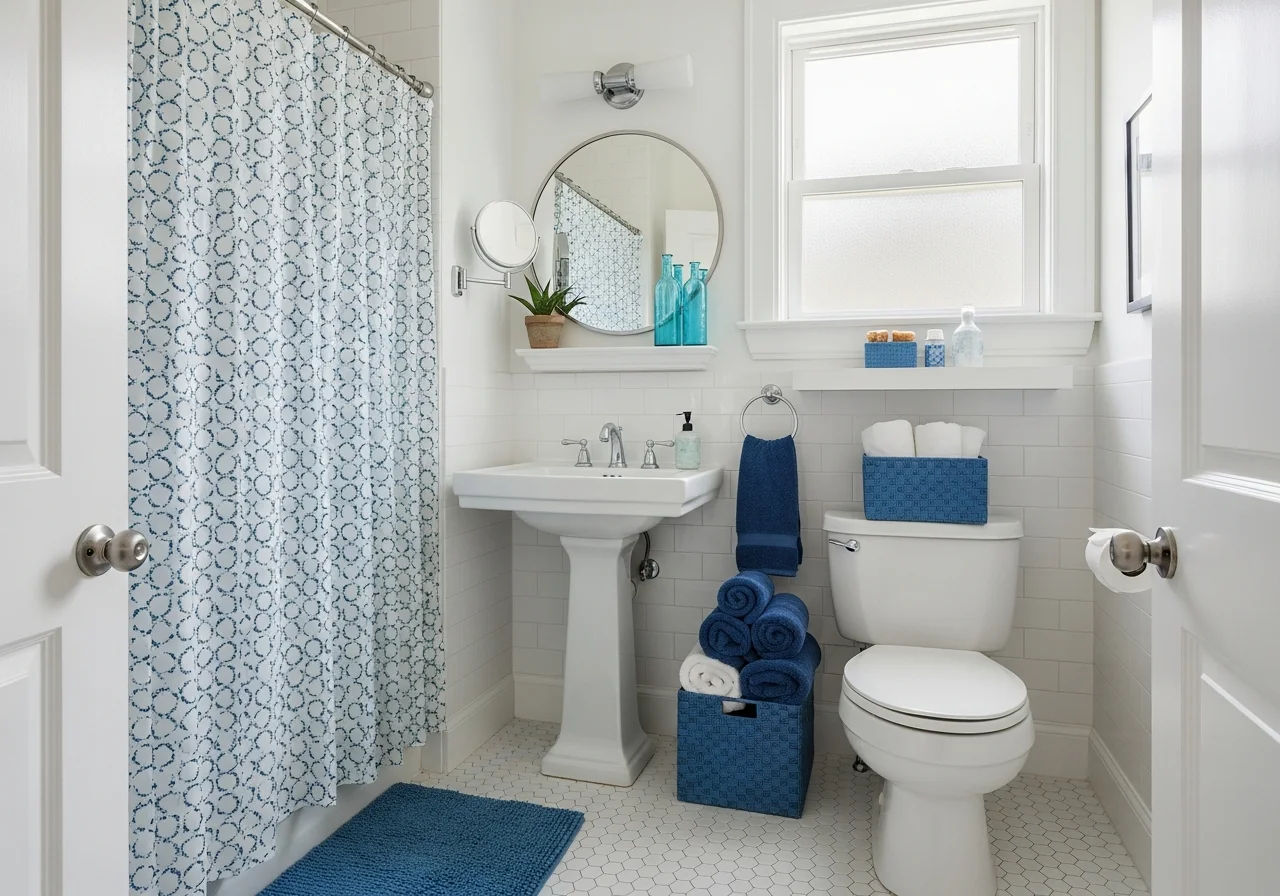
Blue Textiles and Accessories for Easy Updates
For those hesitant to commit to permanent blue installations, textiles and accessories offer a reversible way to introduce this calming color. Blue towels, bath mats, shower curtains, and storage baskets bring the hue into small bathrooms without renovation or long-term commitment. This approach allows for seasonal changes and easy updates as preferences evolve.
The beauty of using blue through accessories lies in the flexibility to adjust saturation and shade. Deep blue towels against white walls create bold contrast, while light blue accessories maintain a softer, more subtle presence. Mixing various shades of blue in textiles and accessories adds depth and interest without requiring multiple permanent installations.
Coordinating blue accessories with other design elements creates a cohesive look even in small bathrooms. Selecting towels that complement blue tile or match painted cabinetry pulls the entire space together, making it feel planned and polished rather than randomly assembled. This coordination matters particularly in compact spaces where every element is visible simultaneously.
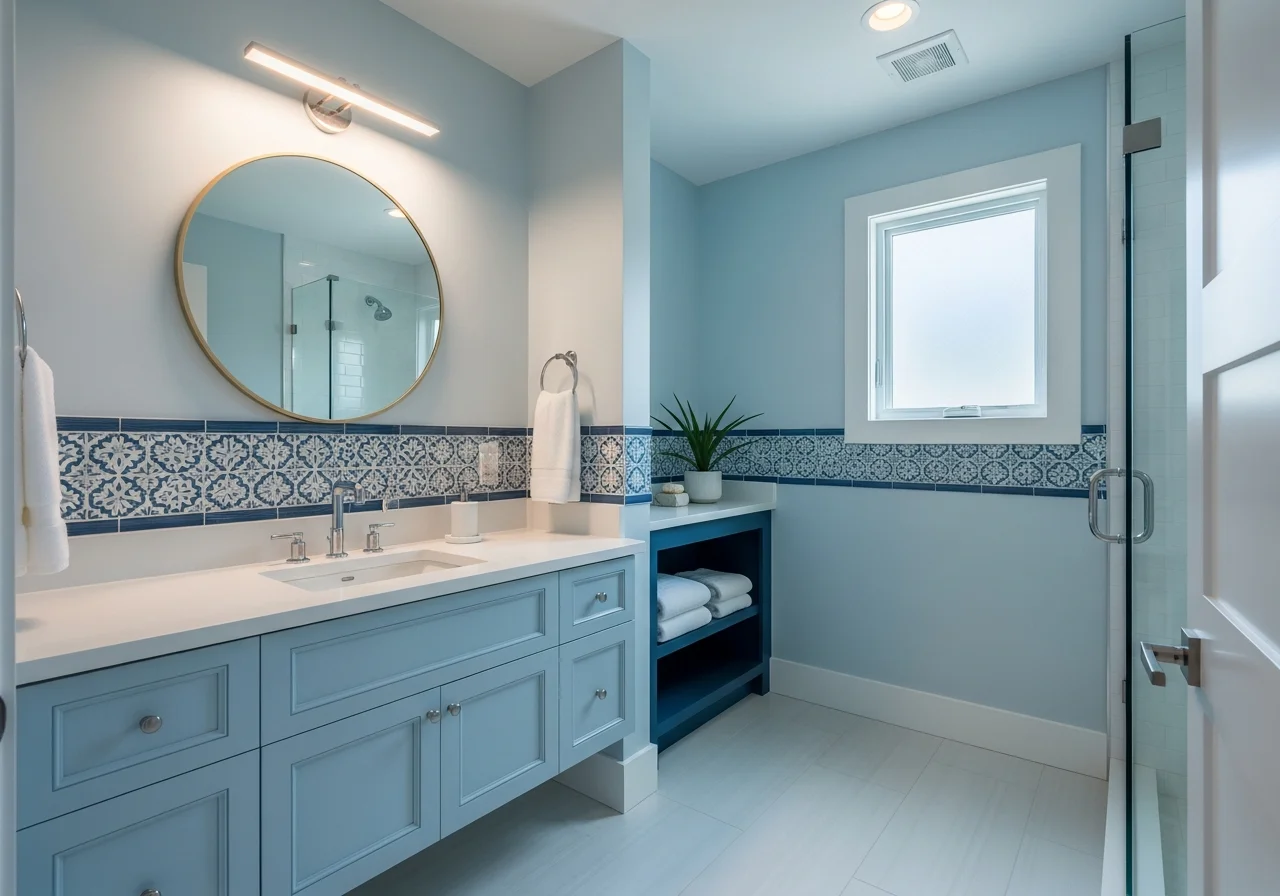
Maximizing Small Blue Bathrooms
Successfully designing small blue bathrooms requires balancing color with light, pattern with calm, and storage with openness. The most effective small blue bathrooms use color strategically, concentrating it in areas that create impact without overwhelming limited square footage. Whether through painted cabinetry, accent tiles, or thoughtful accessories, blue brings a sense of peace and expansion to compact bathroom spaces.
The versatility of blue makes it suitable for virtually any small bathroom, regardless of existing style or layout constraints. From traditional spaces that benefit from classic navy and white combinations to contemporary bathrooms that showcase slate blue with modern fixtures, this color family offers endless possibilities for creating beautiful, functional compact bathrooms.
When implementing these ideas, remember that small changes often yield significant results in limited spaces. A fresh coat of powder blue paint, new brass hardware against existing blue elements, or a striking blue vessel sink can transform how a small bathroom feels and functions. The key lies in selecting approaches that align with your personal style while addressing the specific challenges your compact bathroom presents.
Frequently Asked Questions
What is the best shade of blue for a small bathroom?
Light shades like powder blue, sky blue, and soft periwinkle work best for making small bathrooms feel larger because they reflect light and create an airy atmosphere. These lighter tones recede visually, pushing walls outward and enhancing the perception of space. For those wanting darker blues, navy can work well when balanced with plenty of white or light neutral elements and adequate lighting.
How can I add blue to my bathroom without painting?
Blue can be introduced through tile backsplashes, shower curtains, towels, rugs, accessories, and wallpaper. A blue glass vessel sink, blue-framed mirror, or blue floating shelves also add color without permanent paint commitment. These approaches allow for easy updates and changes while still delivering the calming benefits of blue in your bathroom space.
Does blue make a small bathroom feel cold?
Blue bathrooms only feel cold when not properly balanced with warm elements. Adding brass or gold fixtures, natural wood accents, warm lighting, and organic textures like rattan or woven baskets prevents this issue. The key is creating temperature balance through material and finish choices that complement the blue color palette.
Can I use dark blue in a very small bathroom?
Dark blue can work in small bathrooms when used strategically on a single element like a vanity or accent wall, balanced with light walls, floors, and ample lighting. The contrast between dark blue and lighter elements creates depth and sophistication without making the space feel cramped. Proper lighting is essential to prevent dark blues from closing in the space.
What colors pair well with blue in small bathrooms?
White remains the most popular and effective pairing with blue, creating clean, fresh contrast. Warm metals like brass and gold add sophistication, while natural wood tones bring warmth. Soft grays, beiges, and greens also complement blue beautifully. For a bolder look, coral or terracotta accents create an energetic, complementary contrast with blue tones.